ByMax Lee
Guide to Arkansas Auxiliary Lighting and Off-road Light Bar Legalities
If you have bolted a light bar onto your truck or Jeep in Arkansas, you have probably asked yourself one question: is this actually legal on a public road? It is a fair concern. The line between "looks great" and "here is your citation" is thinner than most people realize.
Arkansas auxiliary lighting and off-road light bar legalities get murky fast, especially when you factor in the annual safety inspection and enforcement that varies county to county.
The good news is the law is actually pretty specific. Arkansas Code Title 27, Chapter 36 spells out exactly how many auxiliary lights you can run, where you can mount them, and what colors are allowed. As of 2026, the rules have not changed dramatically.
But many drivers still get tripped up by details like SAE compliance markings or the difference between a fog lamp and a driving lamp. Let us walk through what you need to know so you can stay lit without getting lit up.
Quick Answer
Under Arkansas law you can have up to four auxiliary lights on public roads. Two fog lamps and two driving lamps. That is it.
They must be white or amber. Red and blue are illegal. No exceptions for off-road bars used on pavement.
Roof-mounted bars are almost never street legal. They sit above headlight height and create too much glare.
Use covers when driving on public roads unless the light carries a DOT or SAE stamp. Without that stamp it is an off-road only light.
Passing state inspection means no flashing lights. No red. No blue.
And no uncovered noncompliant bars.
What Arkansas Law Actually Says About Auxiliary Lights
Let us go straight to the source. Arkansas Code Title 27, Chapter 36, Subchapter 3 covers equipment on vehicles. The relevant sections for auxiliary lighting are 27-36-308 through 27-36-310.
These are the laws you need to understand before you install anything.
The two key types of auxiliary lights
Arkansas recognizes two distinct types of auxiliary road lights:
| Light Type | Purpose | Legal Limit | SAE Standard |
|---|---|---|---|
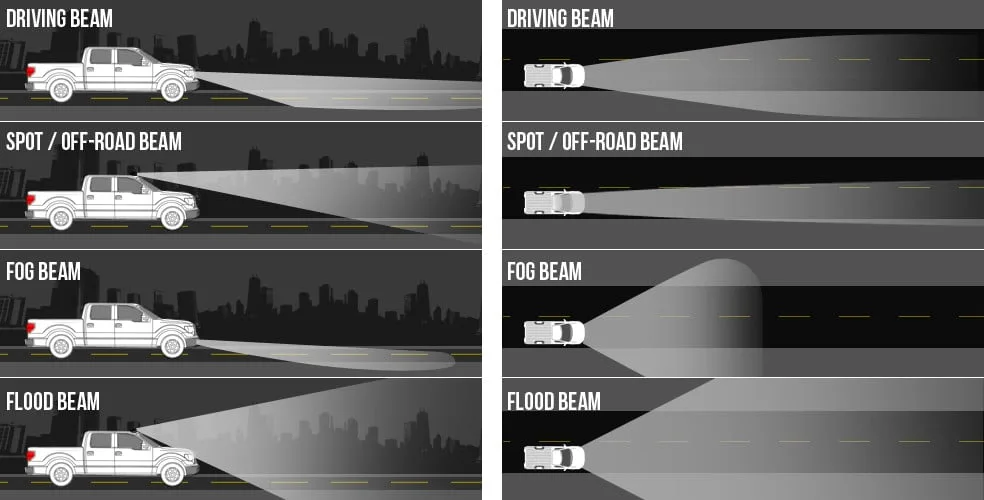
| Fog lamps | Cut through fog, rain, dust. Wide low beam. | 2 max | SAE J583 |
| Driving lamps | Supplement high beams. Narrower focused beam. | 2 max | SAE J581 |
A third category called "passing lamps" exists but is less common. They function similarly to driving lamps with a different beam spread. Most light bars sold today do not match any of these categories cleanly.
That is where the trouble starts.
What counts as an auxiliary light
The law defines auxiliary lamps as any additional lighting beyond standard headlamps. That includes:
- Fog lights mounted in the bumper or grille
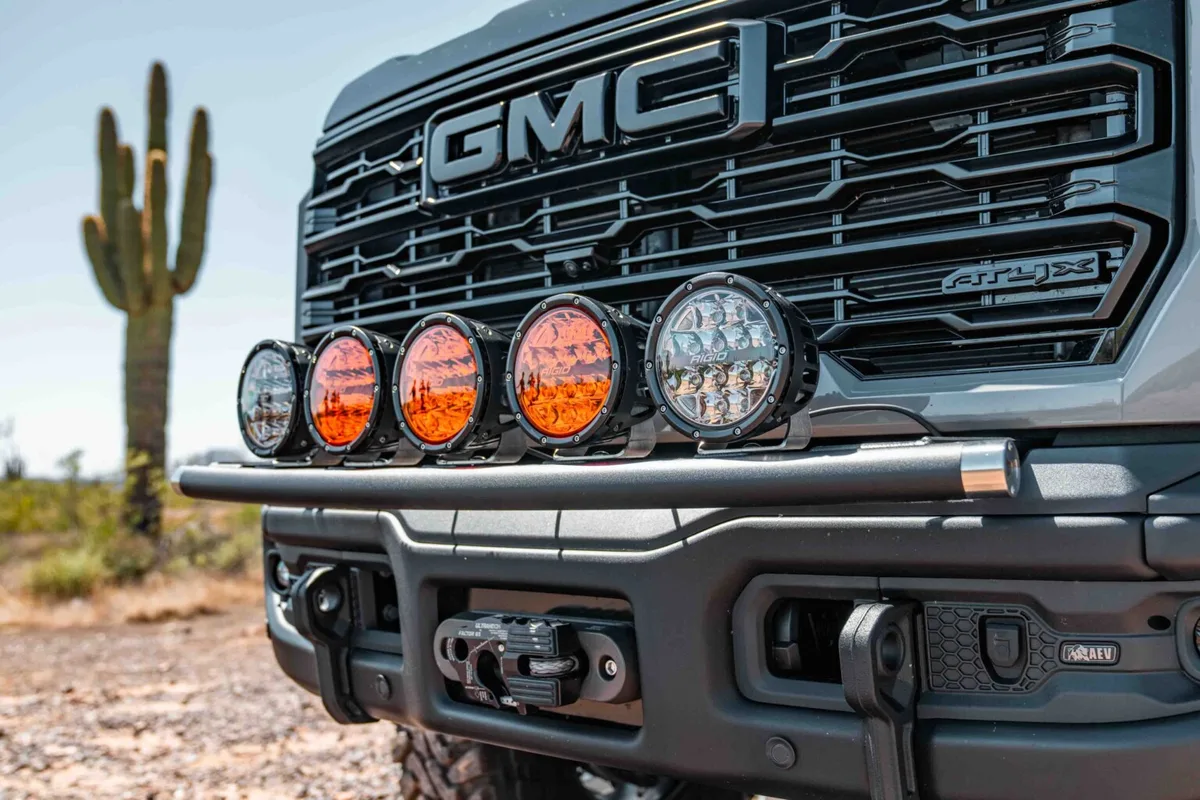
- LED light bars on the bumper or bull bar
- Pod lights on the A-pillar or ditch mounts
- Round driving lights on the front bumper
Roof-mounted bars and bed-mounted lights fall into a gray area. Technically they are auxiliary lighting. But the law also restricts mounting height, which we will cover later.
The critical distinction you cannot ignore
Manufacturer specifications indicate that most aftermarket off-road light bars are not SAE compliant. That means they do not meet the federal standard for on-road use. In Arkansas that makes them illegal to operate on a public road unless they are completely covered.
Our research shows this is the single biggest reason drivers fail inspection or get ticketed. They assume any light bar is legal as long as it turns on. That is not how the law works.
The DFA vehicle inspection manual is clear. If a light shows red or blue to the front, flashes, or lacks a DOT or SAE mark, it is a fail. Period.
The Four-Light Limit and What Counts
Let us dig into that four-light limit because it trips up more people than any other rule. Arkansas Code 27-36-308 says you can have no more than two fog lamps and two driving lamps illuminated at one time on a public road.
What lights are included in the count
Here is what counts toward your four-light total:
- Any auxiliary lamp mounted on the front of the vehicle
- Fog lamps whether stock or aftermarket
- Driving lamps including round off-road style lights
- Light bars mounted on the bumper or grille
Here is what does NOT count:
- Your standard factory headlamps (low and high beam)
- Turn signals and parking lights
- Reverse lights
- Interior lights and dash lighting
The roof bar problem
A 50-inch curved light bar mounted on your roof rack does not neatly fit into "fog lamp" or "driving lamp." That is the problem. The law did not anticipate wide LED bars in the 1990s when this code was written.
Law enforcement typically interprets roof bars as auxiliary lamps. If they are uncovered and turned on, they count against your four-light limit. And because they sit above headlight height, they violate the mounting restrictions anyway.
Reverse lights and the exception
You can add auxiliary reverse lights on the back of your truck. These do not count toward the front four-light limit. But they must only activate when the vehicle is in reverse gear.
Wiring them to a separate switch for use as work lights is technically a gray area. If they point forward or illuminate the road ahead while driving, you could still get cited.
A real-world example
Say you drive a lifted 2018 Ford F-150. You have two factory fog lights in the bumper. You added a 30-inch light bar on the grille and two cube pod lights on the A-pillar.
On a public road you can run the fogs plus one of the aftermarket setups. Run all four auxiliary lights and you are over the limit. That is a ticket waiting to happen.
The smart move is to wire your aftermarket lights to a separate switch. Keep them off on pavement. Save them for the trail.
Your inspection will go smoother and so will your interactions with law enforcement.
Roof-Mounted Light Bars: Legal or Not?
This is the question we hear most from truck and Jeep owners. The short answer is that a roof-mounted light bar is almost never legal for on-road use in Arkansas. Let us explain why.
The height restriction problem
Arkansas Code 27-36-309 says auxiliary lamps must be mounted at a height of at least 12 inches. No specific maximum is given for auxiliary lights alone. However headlamps must be between 24 and 54 inches from the ground.
Law enforcement and inspectors typically apply that same range to auxiliary lighting.
A roof-mounted light bar on a full-size pickup sits roughly 70 to 80 inches off the ground. That is well above the 54-inch maximum. On a Jeep Wrangler it sits around 65 inches.
Still over the limit.
The glare problem
Even if you could argue the height rule does not apply directly, there is another issue. Lights mounted above the windshield create dangerous glare for oncoming drivers. The light reflects off the hood and into the eyes of other motorists.
Arkansas State Police have been known to cite drivers for "glare" under broader vehicle equipment laws. You do not want to be the person blinding everyone on I-40.
The off-road only exception
You can absolutely run a roof bar on the trail. That is what they are made for. The key is covering it when you drive on public roads.
Use a rigid snap-on cover or a soft neoprene sleeve. Make sure it blocks all light output. If a police officer or inspector can see any light leaking through the cover, you are technically in violation.
A practical approach
If you want light for dark rural roads, a bumper-mounted bar is a much better choice. It sits lower, produces less glare, and is easier to cover. Pair it with quality LED fog lamps and you will have excellent visibility without the legal headache.
We have seen plenty of Arkansas drivers run roof bars with covers year-round. They pass inspection because the light is not visible. That works.
Just remember the cover has to stay on whenever that truck touches pavement.
Color Restrictions: Why Red and Blue Will Get You Pulled Over
This is the most straightforward rule in Arkansas lighting law. Arkansas Code 27-36-320 says only emergency vehicles may display red or blue lights to the front. Violating this is not just a fix-it ticket.
It can carry serious penalties.
What colors are legal
Legal for front-facing auxiliary lighting:
- White
- Amber
- Yellow
Legal for rear-facing auxiliary lighting:
- White (reverse lights)
- Amber
- Red (only for brake lights and turn signals)
What colors are illegal
Illegal for any forward-facing position:
- Red
- Blue
- Green (subject to local interpretation)
- Flashing or strobe patterns in any color
The underglow problem
Underglow lights are popular on trucks and Jeeps at car meets. In Arkansas they are legal as long as they do not emit red or blue light to the front. Here is the catch.
If the underglow is visible from the front of the vehicle and it is red or blue, you can be cited.
Our research suggests enforcement varies widely. Some officers ignore underglow entirely. Others use it as probable cause for a traffic stop.
The safest approach is to keep underglow off while driving and only use it when parked.
What happens if you get caught
A citation for illegal colored lights can cost anywhere from $100 to $500 depending on the county. In some cases the officer may order you to remove the lights on the spot. If the lights are wired into the vehicle's electrical system, that can be a real hassle.
We have seen drivers argue that red rock lights are for off-road use only. That argument rarely holds up in court if the lights are on while you are on a public road. Keep the colors white and amber and you will never have to make that argument.
This is also a good reminder that your vehicle needs to be in overall good shape before you hit the road. Our blog covers a wide range of ownership topics. Keeping your lighting legal is one of the easiest ways to avoid unnecessary stops.
Covers vs. SAE/DOT Compliance: The Smart Workaround
If your light bar does not carry an SAE or DOT stamp, you cannot legally turn it on while driving on a public road. That leaves most aftermarket bars in a tough spot. The solution is a cover that blocks all light output.
What counts as a legal cover
A cover must be opaque. It has to block every bit of light from escaping. A thin translucent lens cover will not cut it.
Neither will a mesh grille that still lets light bleed through.
| Cover Type | Opaque? | Passes Inspection? | Best For |
|---|---|---|---|
| Rigid snap-on plastic | Yes | Yes (if fully sealed) | Light bars and large pods |
| Neoprene sleeve | Yes | Yes (if snug fit) | Curved bars and odd sizes |
| Painted metal shield | Yes | Yes | Custom bumper mounts |
| Clear or smoked lens | No | No | Off-road only |
The SAE stamp shortcut
Lights that carry an SAE compliance stamp are legal to use on public roads without covers. You can find stamped lights from brands like Hella, PIAA, and some Rigid Industries models. They cost more but save you the cover hassle.
Check for the stamp on the lens or housing. It usually says "SAE J583" or "SAE J581" followed by a DOT approval code. No stamp means it is an off-road light only.
Why covers are not a permanent fix
You cannot wire a cover to a switch. You have to physically install it before driving. If you forget or lose it, you are technically in violation.
Our research shows most Arkansas drivers who run covers do just fine. They keep a second cover in the glove box. They put it on before leaving the trail.
That is the safest habit.
One more thing about covers at inspection
Inspectors will check that covers are secure and opaque. If they can see any light bleeding around the edges, it is a failure. Make sure your cover fits tight against the housing.
We cover more tips for keeping your vehicle road-ready on our blog. Proper lighting is just one piece of the puzzle.
How to Pass the Arkansas Vehicle Safety Inspection with Aftermarket Lights
The annual safety inspection is where most auxiliary lighting problems surface. The DFA inspection manual has specific rules for aftermarket lights. Understanding them saves you a return trip.
What inspectors look for
Inspectors check five main things:
- Number of auxiliary lights visible (four max to the front)
- Color of light emitted (white or amber only)
- Flashing or strobe function (none allowed unless turn signals)
- Covers on any noncompliant lights (fully opaque)
- Beam aim (no glare above horizontal)
Common fail reasons
The most common failures we see in Arkansas are:
- Roof-mounted bar with no cover
- Red or blue light visible from any angle
- More than four auxiliary lights lit
- Light bar wired to turn on with high beams automatically
- Cracked or missing lens covers on any light
Pre-inspection checklist
Before you go in, run through this list:
- Cover every aftermarket light that lacks an SAE/DOT stamp.
- Turn all auxiliary lights off at the switch. Double check.
- Remove any red or blue bulbs or lenses from forward-facing positions.
- Verify no lights are flashing unless they are turn signals.
- Check that your headlamps and taillamps work properly.
What to do if you fail
You get a 10-day window for reinspection. Fix the issue and return. Most inspectors will pass you on the second try if the problem is resolved.
If you drive a lifted truck, remember that suspension height can affect headlight aim. That is a separate issue but can cause a combined failure. Keeping up with general maintenance, like knowing the recommended psi for washing cars, helps with overall vehicle care.
But lighting is the focus here.
Common Mistakes That Lead to Tickets and Inspection Failures
Even experienced off-roaders make these errors. They are easy to avoid once you know what to watch for.
Leaving uncovered lights on during the day
You might think a light bar is not obvious in daylight. It is. An officer can see the housing even when off.
If the bar has no cover and is mounted above the bumper, it draws attention.
Wiring auxiliary lights to high beams
Many aftermarket kits include a harness that connects to the high-beam circuit. That means your auxiliary lights come on automatically with your high beams. In Arkansas that is a problem because you may exceed the four-light limit.
Wire them to a separate switch instead. That gives you full control.
Mounting lights that block the license plate
Any light or accessory that obscures your rear license plate is illegal. This includes bumper-mounted lights, light bars on a hitch step, or reverse lights that hang below the plate. Move the plate or relocate the lights.
Using strobe or flashing patterns
Some light bars have built-in flash patterns for off-road use. If you accidentally activate them on pavement, you will get pulled over. Make sure your switch configuration does not allow flashing on the road.
Installing lights behind the grille
Grille-mounted lights can still emit visible light. They are not automatically legal just because they are recessed. If the light is visible from the front and lacks an SAE stamp, it still needs a cover.
Step-by-Step: Installing Lights That Stay Legal
Follow this process to install auxiliary lights that will not cause problems on the road or at inspection.
Step 1: Choose compliant lights
Select lights that carry an SAE J581 or SAE J583 stamp if you want to use them on pavement without covers. If you only need them for off-road use, any light bar works as long as you cover it on the road.
Step 2: Mount at proper height
Mount bumper lights between 12 and 54 inches from the ground. Avoid roof mounts entirely for on-road use. A-pillar mounts are okay if aimed below horizontal and not above windshield height.
Step 3: Wire with a separate switch
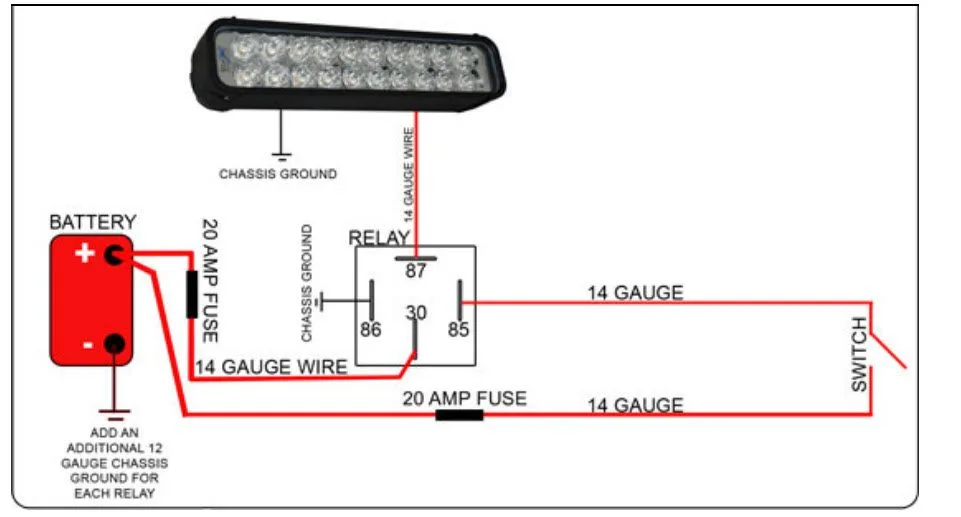
Run a dedicated switch into the cabin. Connect it to a relay and fuse. Do not tie it into the high-beam circuit.
A separate switch gives you full control and keeps you legal.
Step 4: Aim the lights
Park 25 feet from a wall. Adjust each light so the beam hits the ground 100 to 150 feet ahead. The cut-off should stay below the headlight level of oncoming cars.
Step 5: Add covers
For noncompliant lights, install opaque covers. Test them by turning the lights on in a dark garage. If you see any light escaping the cover, it needs replacement.
Step 6: Test the setup
Drive at night on a dark road. Verify you have not added glare. Ask a friend to drive toward you and confirm you are not blinding them.
Adjust as needed.
When to Consult an Expert or a Lawyer
Most lighting issues are straightforward. But a few situations justify professional help.
Volunteer firefighter and emergency responder lights
Arkansas law has narrow exceptions for red and blue lights on personal vehicles used by volunteers. You need proper authorization from the agency. Even then the lights must conform to specific standards.
If you think you qualify, check with your department and the Arkansas State Police. Do not assume you are exempt.
Commercial vehicle lighting
Commercial trucks have additional lighting rules under federal FMVSS and Arkansas state regulations. Auxiliary lights are heavily restricted. If you drive a commercial vehicle, consult a specialist.
If you receive a citation you believe is incorrect
You can contest a lighting ticket in municipal court. Bring a copy of the relevant Arkansas Code section. Show that your lights meet the requirements.
If the officer misinterpreted the law, you may win.
Local ordinances
Cities like Fayetteville, Little Rock, and Bentonville may have stricter lighting rules. A local attorney familiar with municipal codes can advise you.
When in doubt, it is better to ask than to assume. That applies to lighting and to other vehicle care topics like whether dish soap is good for cars. Know the rules before you hit the road.
FAQs from Arkansas Drivers
Can I run amber covers on a white light bar and be legal?
Yes. Amber covers are acceptable as long as they are opaque enough to block all white light. The emitted color must appear amber.
If the cover is translucent and lets white light bleed through, it may still draw a citation.
Are ditch lights on my A-pillar okay if I aim them down?
Possibly, but they must meet height and beam aim rules. A-pillar lights should be mounted below the windshield top and aimed so the beam hits the ground at least 100 feet ahead. If they produce glare above headlight height, they are illegal.
Do I have to remove lights before inspection or just cover them?
Just cover them. Opaque covers that block all light output are sufficient. You do not need to unbolt your light bar.
Make sure the cover fits snugly with no light leakage around the edges.
What about light bars on ATVs and UTVs on public roads?
ATVs and UTVs that are street legal in Arkansas must follow the same auxiliary lighting rules as passenger vehicles. Roof bars are still problematic. Covers are still required unless the light carries an SAE stamp.
Can I get a ticket even if my lights are covered?
It is unlikely if the cover is fully opaque and the light is not visible. However an officer could still cite you if the cover appears damaged or if the light bar is mounted in a position that is illegal regardless of coverage, such as above the windshield.
Final Verdict: Stay Lit, Stay Legal
Arkansas auxiliary lighting law comes down to three simple rules. Keep it white or amber. Keep it below the windshield.
And keep it covered unless it carries an SAE stamp.
Follow those guidelines and you will pass inspection, avoid tickets, and still have excellent visibility on the trail. If you are ever unsure, the safest move is to flip the switch off and cover it up until you hit dirt.