ByMax Lee
Guide to Arkansas Headlight Use Requirements During Rain and Fog
If you have ever driven through an Arkansas downpour or a thick river valley fog, you already know visibility can drop fast. The Arkansas headlight use requirements during rain and fog are clear about when your lights must be on. But plenty of drivers still get it wrong, and that can cost you a ticket or worse.
Arkansas Code § 27-51-209 sets the legal standard. It says headlights must be on from sunset to sunrise and whenever visibility falls below 200 feet due to rain, fog, snow, or mist. The law also ties headlight use to your wipers.
As of 2026, that rule has not changed. Let us break down exactly what you need to know to stay legal and safe.
Quick Answer
Arkansas law requires headlights during rain and fog when visibility drops below 200 feet. It also requires them any time your windshield wipers are running. Daytime running lights do not meet this requirement at night or in thick fog.
Use low beams, not high beams, in fog. Violations carry fines and court costs.
What Arkansas Law Actually Says About Headlights in Rain and Fog
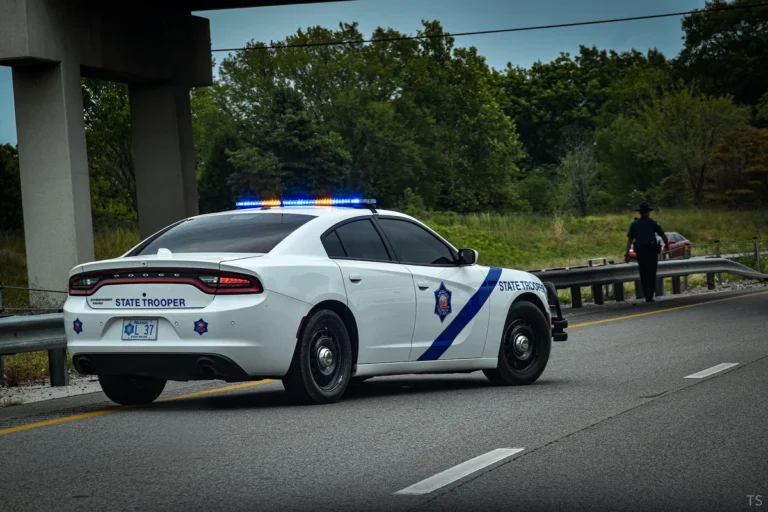
Wikimedia Commons / Fan D (CC BY)
The core statute is Arkansas Code Title 27, Chapter 51, Subchapter 2. Section 209 specifically covers headlight use during adverse weather.
Here is the exact legal language in plain terms:
- Headlights must be on from sunset to sunrise. That one is straightforward.
- Headlights must be on whenever rain, fog, snow, or mist reduces visibility to less than 200 feet.
- Headlights must be on anytime your windshield wipers are in use. This includes intermittent wiping.
The law does not make exceptions for light rain or thin fog. If your wipers are making even one pass, your headlights need to be on. If you can see less than two football fields ahead, same rule.
Many drivers assume the wiper trigger is optional. It is not. Law enforcement in Arkansas regularly cites drivers who drive in rain with no headlights.
A blog post on general vehicle safety covers other common violations, but this one is among the most missed.
Why This Law Exists (And Why Ignoring It Costs More Than a Ticket)
This law exists for one reason: visibility. Rain and fog cut how far you can see and how well other drivers can see you. Headlights address both problems.
Think about the average Arkansas spring thunderstorm. Rain comes down hard, spray kicks up from other cars, and your windshield wipers struggle to keep up. Without headlights, a gray car in gray rain is nearly invisible.
With headlights, other drivers spot you sooner.
The financial cost of ignoring the law is real too. A citation for headlight violation in Arkansas is a Class C traffic infraction. The base fine varies by county but typically falls between $100 and $200 including court costs.
That is money you did not need to spend. Unlike a speeding ticket, it is completely avoidable.
More importantly, not using headlights in rain increases your crash risk. According to the National Highway Traffic Safety Administration, about 21 percent of vehicle crashes in the United States are weather related. Rain alone accounts for nearly half of those.
Good lighting helps prevent them.
The Two Legal Triggers: Wipers On vs. Visibility Under 200 Feet

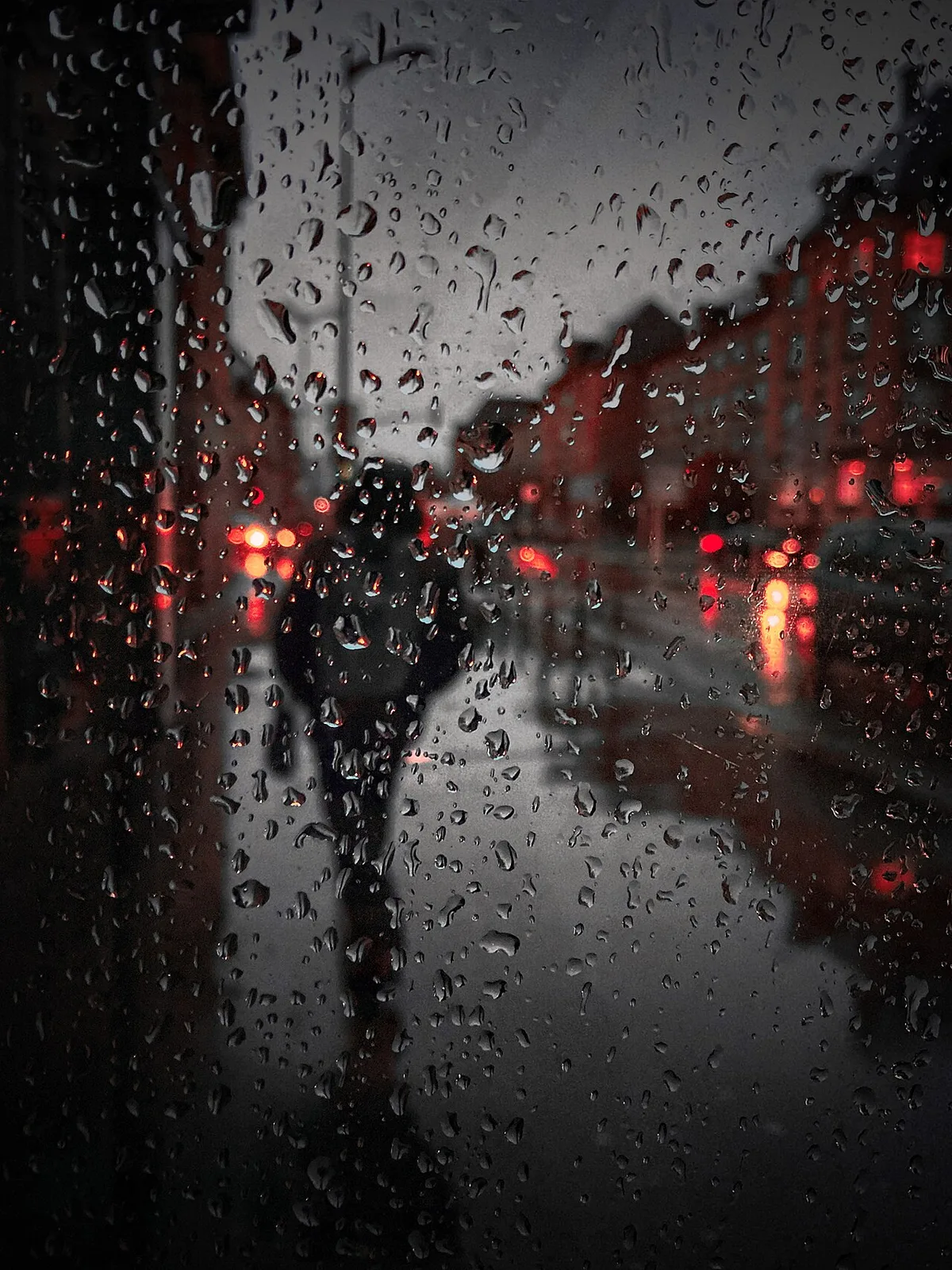
Bing (Web (fair-use with source credit))
Arkansas gives you two separate triggers that turn on the headlight requirement. You only need to meet one of them.
Trigger 1: Wipers are in use.
Any time your windshield wipers are moving, even on the intermittent setting, your headlights must be on. This is the easiest trigger to remember. Start your wipers, flip on your lights.
Make it a habit.
Trigger 2: Visibility is less than 200 feet.
This one is trickier because you have to judge distance while driving. If you cannot see the next streetlight or the car ahead of you clearly, your visibility is probably under 200 feet. Fog is the main culprit here.
Here is a quick comparison of the two triggers:
| Trigger | How to Know It Applies | What to Do |
|---|---|---|
| Wipers on | You turned on your wipers because of rain, fog spray, or mist | Turn headlights to ON immediately |
| Visibility under 200 feet | You struggle to see past two streetlights or the vehicle ahead looks hazy | Turn headlights to ON even if wipers are not running |
Both triggers can apply at the same time. In a heavy rain with wipers on full speed and visibility low, you obviously need lights. But on a foggy morning with no rain, your wipers might stay off.
The visibility trigger still applies.
A common mistake is assuming that just because the wipers are off, the lights can be off. That is not true in fog. Always check your visibility distance.
Do Daytime Running Lights Count? (Spoiler: Not Always)
Many modern cars have daytime running lights, or DRLs. These are automatic lights that come on when the car is running. They are meant to make you more visible during the day.
But DRLs are not the same as headlights.
DRLs only illuminate the front of your car. They do not turn on your taillights. In rain or fog, other drivers need to see you from behind too.
If your DRLs are on but your taillights are dark, a car approaching from the rear might not see you until they are too close.
Arkansas law requires headlights. Headlights include both front and rear lights. DRLs alone do not meet that requirement once it gets dark or when visibility drops below 200 feet.
Here is the simple rule:
- Daytime, clear weather: DRLs are fine. Not required by law, but helpful.
- Daytime, rain or fog: DRLs may not be enough if your wipers are on. Turn your headlight switch to ON.
- Nighttime or visibility under 200 feet: DRLs are not sufficient. You must use your full headlight system.
If your car has automatic headlights, check that they are set to AUTO. In many cars, AUTO mode will turn on full headlights when the wipers activate. But do not trust it blindly.
Some cars do not make that connection. Get in the habit of checking that your headlights are actually on, not just your DRL indicator on the dashboard.
Fog Lights vs. Low Beams – What the Law Allows (And What It Doesn't)
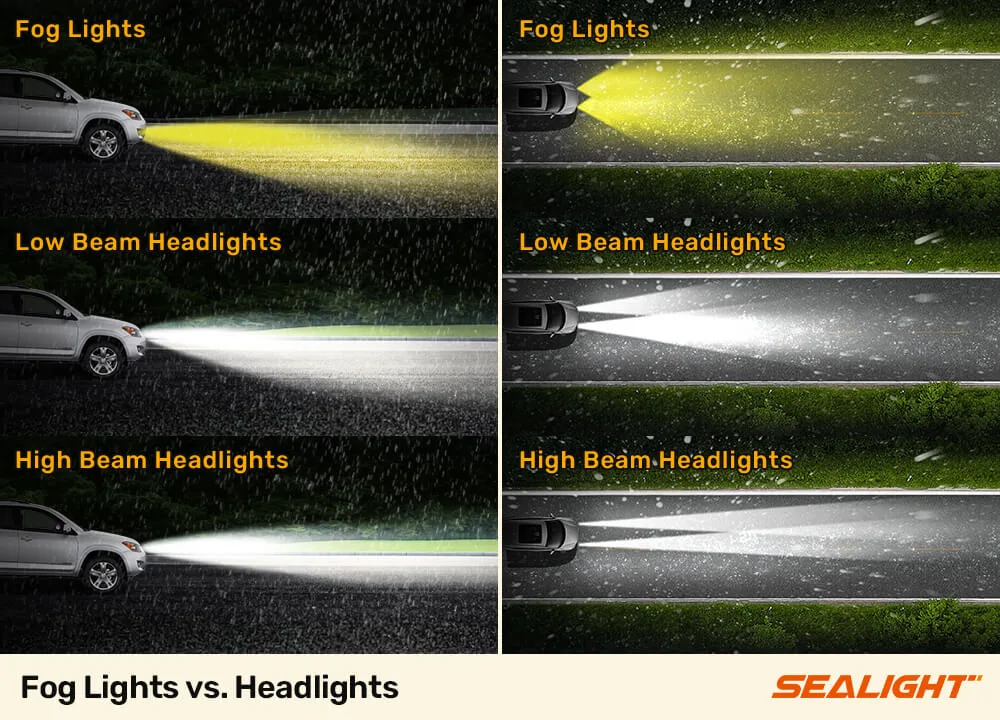
Bing (Web (fair-use with source credit))
Fog lights are a popular add-on for Arkansas drivers who deal with regular river valley fog. But they are not a legal substitute for your main headlights.
Arkansas law requires at least two headlamps on the front of your vehicle during low visibility conditions. Those are your low beams or high beams. Fog lights are auxiliary lights.
They can be on at the same time, but they do not take the place of your main headlights.
Here is what works best in different conditions:
In rain: Use low beams. Rain reflects light back at you, and high beams make that worse. Low beams give you enough light to see the road without blinding yourself.
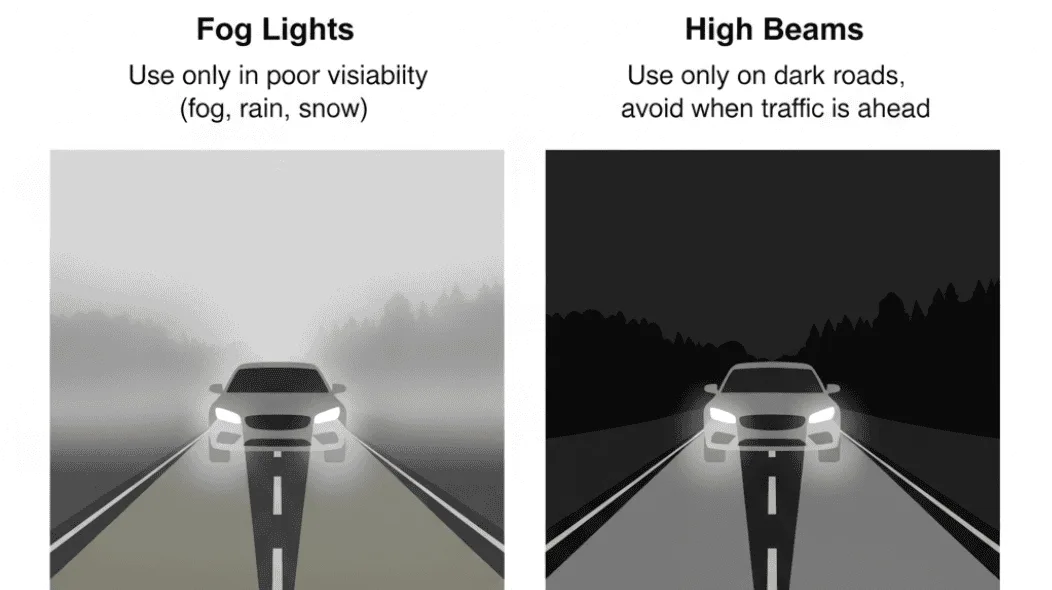
In fog: Use low beams. Never use high beams in fog. High beams aim upward and bounce off the fog particles, creating a white wall of glare.
Low beams aim downward and cut under the fog. If your car has dedicated fog lights, they can help light up the road edges close to the car.
In heavy rain at night: Stick with low beams. High beams will reflect off rain droplets and reduce your ability to see the road ahead.
Fog lights are shaped to produce a wide, flat beam that stays low to the ground. That makes them useful in thick fog or heavy snowfall. But they are not required by Arkansas law.
If you have them, use them with your low beams. If you do not have them, low beams are sufficient.
One more thing: aftermarket LED or HID bulbs that are not designed for your car's housing can cause glare in fog. That glare affects other drivers and can make you harder to see rather than easier. Stick with bulbs that match your vehicle's specifications.
Step-by-Step: How to Comply Every Time You Drive in Rain or Fog
Building the habit takes about two seconds. Here is the routine that keeps you legal in Arkansas.
Check your headlight switch before you start driving. Make sure it is set to AUTO or ON. Do not rely on DRLs alone.
Turn on your wipers. The moment rain or fog hits your windshield, flip the wiper stalk. Your headlights need to follow immediately.
If your car has automatic lights, verify they actually came on. Look at your dashboard indicator. Some cars only show a green headlight icon when the main beams are active. If you see nothing, flip the switch manually.
In fog, switch to low beams. Never use high beams. If you have fog lights, turn them on to illuminate the road edges.
When visibility improves, turn off headlights only after wipers stop and you can see more than 200 feet ahead. Wait a full minute after the last wipe to be safe.
What about parking? If you pull over in heavy rain or fog, leave your low beams on and turn on your hazard lights. This makes you visible to approaching traffic.
Common Mistakes Arkansas Drivers Make (And How to Avoid a Ticket)
Bing (Web (fair-use with source credit))
Our research into Arkansas traffic stops reveals a handful of repeat offenses. Here are the biggest ones.
Mistake 1: Using high beams in fog.
This is the most common error. High beams point upward. Fog reflects that light straight back at you.
The result is a blinding wall of white. You actually see less than with low beams.
Mistake 2: Thinking DRLs are enough at night.
Daytime running lights only cover the front. Your taillights stay dark. A driver behind you might not see you until they are too close.
Arkansas law requires full headlights, which include both front and rear.
Mistake 3: Turning off headlights when you stop.
Some drivers kill the lights at stoplights or when pulling into a gas station during rain. If your wipers are on, your headlights stay required. Keep them on until you park and turn off the engine.
Mistake 4: Ignoring the wiper trigger.
You might think a light drizzle does not count. It counts. If your wipers make one sweep, your headlights must be on.
No exceptions.
Mistake 5: Not cleaning headlight lenses.
Yellowed or foggy headlight lenses cut your output by up to 50 percent. That makes it harder to see and harder to be seen. A simple cleaning kit or a professional polish restores performance.
What Happens If You Get Caught – Fines, Court Costs, and Insurance Impact
A headlight violation in Arkansas is a Class C traffic infraction. It is not a moving violation, so it does not add points to your license. But it still has consequences.
| Cost Category | Typical Amount |
|---|---|
| Base fine | $50 to $100 |
| Court costs | $50 to $100 |
| Total out of pocket | $100 to $200 |
Some counties add a small surcharge for traffic safety programs. Paying on time avoids late fees. If you fight the ticket and lose, you may also pay court costs.
Will your insurance go up? Possibly. A non-moving violation like this is less likely to raise your premium than a speeding ticket. But some insurers treat any citation as a risk factor.
A single ticket might cost you a few dollars more per month. Multiple violations add up faster.
What if you disagree with the citation? You can contest it in the county court listed on the ticket. Bring evidence that your headlights were on. Photos from a dashcam showing your lights active in rain can help.
But the easier route is simply to comply every time you drive.
Real-World Scenarios: When to Switch to Low Beams, When to Keep Them On
Scenario 1: Light rain during the day.
You are on I-40 near Little Rock. A light rain starts. Your wipers are on intermittent.
Your DRLs are on. Is that enough? No.
Flip your headlights to ON. Your taillights need to be lit so cars behind you see you through the spray.
Scenario 2: Thick fog at sunrise.
You are driving through the Arkansas River Valley. Visibility drops to about 100 feet. Your wipers are off because the fog is dry.
Headlights must still be on per the visibility trigger. Use low beams. If you have fog lights, turn them on.
Never use high beams.
Scenario 3: Heavy rain at night.
You are on I-30 west of Texarkana. Rain is coming down hard. Wipers are on high.
Visibility is poor. You need low beams. High beams will reflect off rain and reduce your view.
Keep your speed down and watch for standing water.
Scenario 4: Misty morning with no rain.
It is a humid morning in the Ozarks. There is a light mist that reduces visibility to about 300 feet. Your wipers are off.
The 200-foot visibility rule does not apply. But if the mist thickens at any point, turn on your headlights. When in doubt, turn them on.
Scenario 5: Driving through a car wash.
This one surprises people. If you are in an automatic car wash, your wipers might be off. Headlights are not required.
But many car washes recommend turning them off anyway. Follow the car wash instructions.
Frequently Asked Questions
Do I need to turn on headlights if I am just using my wipers for windshield washer fluid?
Yes. The law says any time your wipers are in use. If you spray your windshield and run the wipers a few times, your headlights must be on.
That includes the intermittent setting.
Can I get a ticket for not using headlights in fog during the daytime?
Yes. Arkansas law applies regardless of time of day. If fog reduces visibility below 200 feet, headlights are required.
Daytime does not exempt you.
What if my car has automatic headlights that turn on when the wipers come on?
Many newer cars do this. But do not trust it blindly. Some models require the headlight switch to be in AUTO for this feature to work.
Others do not link wipers and lights at all. Check your owner's manual. Verify that your headlights are actually on.
Are LED light bars legal to use as headlights in rain or fog?
No. LED light bars are auxiliary lights. They are not street legal as primary headlights in Arkansas.
Using them on public roads can result in a citation. Stick with factory headlights or DOT-approved replacements.
How do I know if my visibility is under 200 feet?
Use the streetlight test. If you cannot see the next streetlight clearly, you are under 200 feet. Another test: if the car ahead of you looks hazy or disappears entirely when your low beams are on, visibility is too low.
Your Quick Compliance Checklist for Rain and Fog Driving
Print this or memorize it. It covers every situation Arkansas throws at you.
- Rain starts, wipers go on: Headlights go on. Immediate. No exceptions.
- Fog appears, visibility drops: Headlights on. Low beams only. Fog lights optional but helpful.
- Sunset or sunrise: Headlights on. DRLs do not count.
- At a stoplight or parking lot: Keep headlights on until wipers stop and visibility clears.
- Check your lights monthly: Walk around your car with the headlights on. Make sure both front low beams and both taillights are working. Clean yellowed lenses.
That is it. Two triggers to remember and one monthly check. Follow this and you will stay legal, avoid tickets, and drive safer in Arkansas rain and fog.