# Guide to Arkansas Window Tinting Legal Limits for Passenger Cars and Suvs
If you've ever driven through an Arkansas summer, you know the sun doesn't mess around. That glare bouncing off the dashboard, the heat baking through the glass. Window tint feels less like an upgrade and more like survival gear. But here's the catch: Arkansas window tinting legal limits for passenger cars and SUVs are not the same, and getting them wrong can cost you a ticket or a failed inspection.
As of 2026, the state sets different darkness rules depending on whether you drive a sedan or a multi-purpose vehicle. The key number to remember is 25% visible light transmission (VLT) for front side windows on every vehicle. But after that, the rules split. Let's walk through exactly what's allowed, where the traps are, and how to make sure your tint keeps you cool instead of pulled over.
## Quick Answer
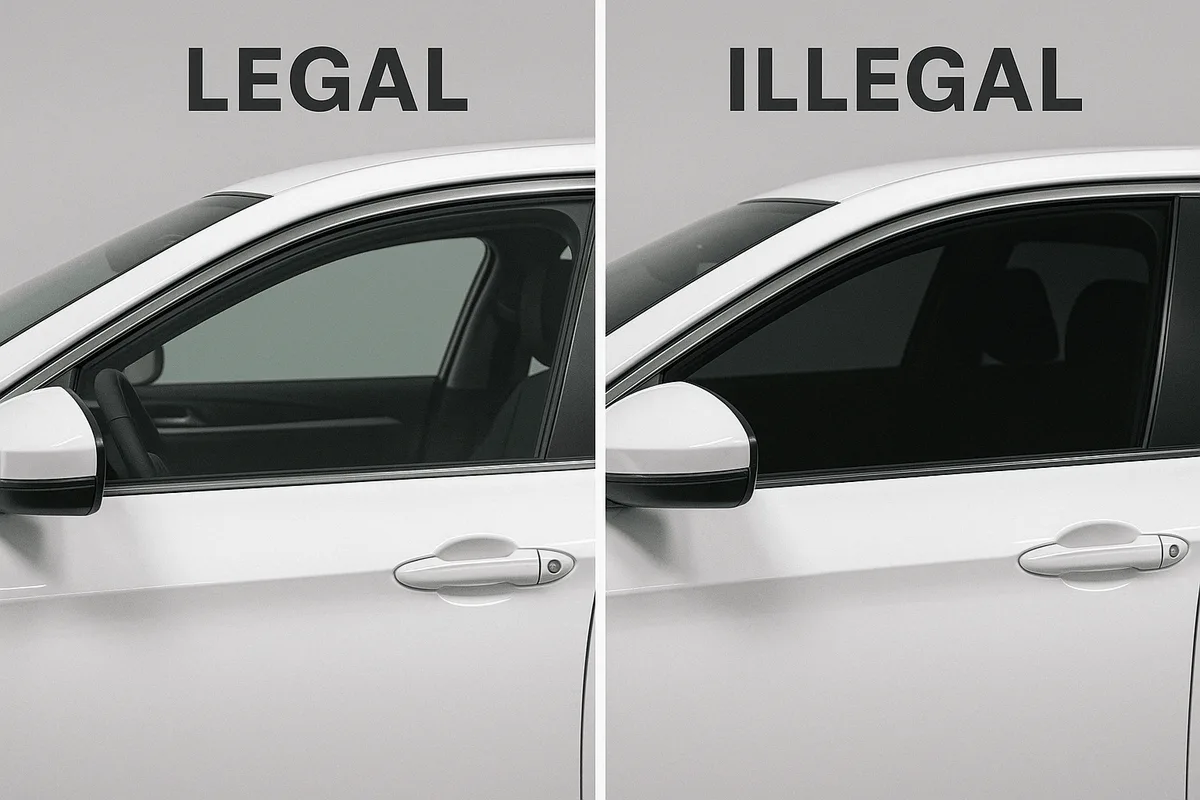
Arkansas law requires 25% VLT on all front side windows for every vehicle. Rear side windows on passenger cars must also allow at least 25% VLT. SUVs and trucks have no limit on rear side or rear windows. Windshield tint is limited to a 5-inch non-reflective strip above the AS-1 line. Medical exemptions can permit darker tint with approved documentation.
## Why Arkansas Tint Laws Trip Up So Many Drivers
The biggest source of confusion is the vehicle class distinction. Arkansas treats passenger cars differently from SUVs, trucks, and vans. Many drivers assume their mid-size SUV falls under car rules. Others follow a friend's advice without checking the law for their specific vehicle type.
Another common pitfall is the dual side mirror requirement. If you tint your rear window below the legal limit on a passenger car, you must have both side mirrors. Sounds simple. But many people skip that step and fail inspection.
The law also bans certain tint colors on the windshield. Red, amber, and blue are not allowed on the strip. Reflectivity has its own limit too: no more than 20% reflectance on any window. That shiny mirror finish you see on some trucks might be illegal in Arkansas.
Understanding these rules before you buy or install tint saves you time, money, and a potential ticket. The rest of this guide breaks down each requirement so you can check your own setup.
## The One Rule That Changes Everything: Passenger Car vs. SUV
This is the single most important distinction in Arkansas tint law. The state defines a passenger car as a vehicle designed to carry 10 or fewer people. Think sedans, coupes, and hatchbacks. An SUV, truck, or van is classified as a multi-purpose vehicle (MPV) and gets more lenient rear window rules.
Here's the quick breakdown:
| Window Position | Passenger Car | SUV / Truck / Van |
|----------------|---------------|-------------------|
| Windshield strip | Non-reflective, 5 inches max, above AS-1 | Same |
| Front side windows | 25% VLT minimum | 25% VLT minimum |
| Rear side windows | 25% VLT minimum | No limit |
| Rear window | 10% VLT minimum (or dual mirrors) | No limit |
| Reflectivity | Max 20% | Max 20% |
That table is your cheat sheet. Notice that rear side windows and the rear window on an SUV have zero VLT restriction. You can go as dark as you want. But on a passenger car, those windows must still let some light through. If you drive a sedan and you're considering limo tint (5% VLT) on the back, you'll need a medical exemption to do it legally.
The reason for the difference? SUVs and trucks are often used for work or hauling, where cargo privacy matters. Passenger cars need more visibility for the driver to see out the rear. Either way, knowing your vehicle's classification is step one.
## Quick Reference: Arkansas VLT Limits at a Glance
If you just need the numbers without the explanation, here are the raw limits. Keep this table handy when you shop for tint or talk to an installer.
| Window | Minimum VLT (passenger car) | Minimum VLT (SUV/truck/van) |
|--------|---------------------------|-----------------------------|
| Windshield (top strip) | Non-reflective, max 5 inches | Same |
| Front side (driver and passenger) | 25% | 25% |
| Rear side | 25% | No limit |
| Rear window | 10% (or dual mirrors required) | No limit |
| Reflectivity (all windows) | Max 20% | Max 20% |
A quick note on VLT: visible light transmission is the percentage of light that passes through the tint and glass combined. So 25% VLT means only a quarter of available light gets through. Factory glass is typically around 75-80% VLT. If you add a 25% film, the combined value is lower. Always measure the final installed VLT, not just the film's rating.
Manufacturer specifications confirm that most aftermarket tint films have a stated VLT value. But the actual installed VLT depends on the glass it's applied to. That's why professional installers use a light meter to verify compliance.
## Step 1: Determine Your Vehicle Class (Sedan vs. Truck/SUV/Van)
Before you do anything else, figure out which category your vehicle falls into. Check your registration or owner's manual if you're unsure. The DMV classification matters more than what you call your car.
**Passenger car** – Any vehicle with a seating capacity of 10 or fewer people that is not classified as a truck or multi-purpose vehicle. Examples: Toyota Camry, Honda Civic, Ford Mustang, BMW 3 Series.
**SUV / truck / van** – Vehicles designed primarily for carrying cargo or more than 10 passengers. SUVs and vans are classified as multi-purpose vehicles. Examples: Ford Explorer, Chevrolet Tahoe, Honda CR-V, Dodge Grand Caravan, Ford F-150.
If you drive a crossover like a Toyota RAV4, it's typically classified as an SUV (MPV) in Arkansas. Some older wagons or hatchbacks might be registered as passenger cars. When in doubt, check the vehicle's title or consult your local DMV office.
Once you know your class, you can apply the correct limits from the table above. This single decision branches into different allowed darkness levels for the rear of the vehicle. Get it wrong, and you could end up with illegal tint that needs to be removed.
## Step 2: Check the Windshield Strip Rule
Arkansas allows a tinted strip along the top of the windshield. But it comes with strict conditions. The strip must be non-reflective, with no mirror finish or metallic sheen. It cannot extend more than five inches down from the top of the windshield.
If your vehicle has an AS-1 line etched into the glass, the tint strip must stay above that line. The five-inch rule still applies. So if the AS-1 line is less than five inches from the top, the strip must end at the line.
The strip cannot be red, amber, or blue. Most drivers go with a light gray or black shade that blends with the rest of the tint. The purpose of the strip is to block glare from the sun without obstructing the driver's view of the road.
Full windshield tint below the strip is not legal in Arkansas. The entire windshield below the strip must remain clear and allow full light transmission. No exceptions for regular passenger vehicles.
## Step 3: Front Side Windows – Same 25% Limit for Everyone
This one is simple. No matter what you drive, your front side windows must allow at least 25% of visible light to pass through. The driver's window and the passenger's window have the same rule across every vehicle class.
If you install a tint film rated at 25% VLT on glass that already blocks some light, the final number drops lower. Factory glass usually sits around 75-80% VLT. Adding a 25% film brings the combined total to roughly 20% or less. That's illegal.
Professional installers use a light meter to measure the finished VLT. You can buy a handheld meter online for around 30 dollars if you want to check your own car. Just place it against the glass and read the number.
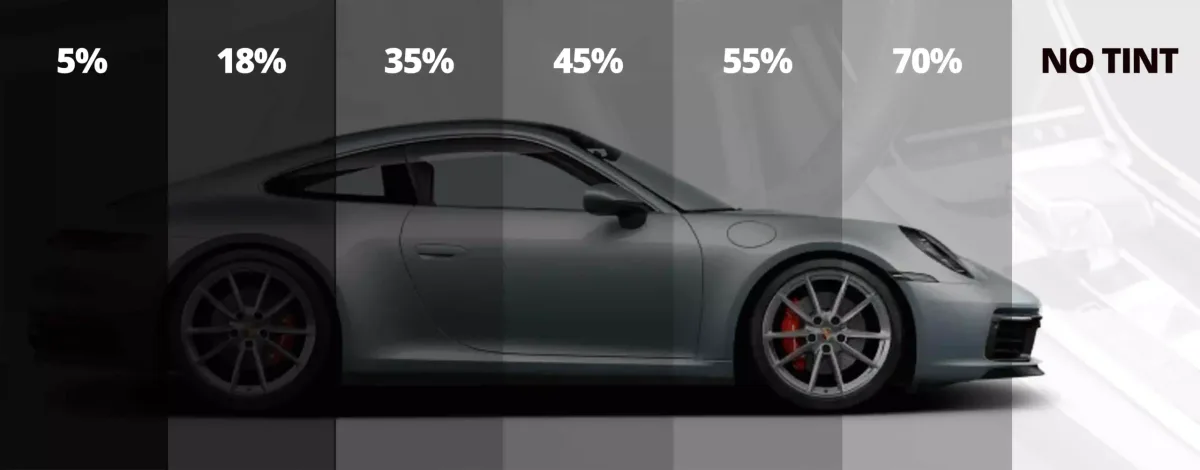
A quick reality check: 25% VLT looks moderately dark. You can still see shapes and people through it during the day. At night, it's darker but still safe for driving. If your tint looks limo black on the front windows, it's almost certainly below 25% in practice.
## Step 4: Rear Side Windows – Where Passenger Cars and SUVs Diverge
This is where the rules split. Passenger cars must maintain at least 25% VLT on rear side windows. SUVs, trucks, and vans have no limit at all on these windows.
What does that mean for you? If you drive a sedan and you want limo tint (5% VLT) on the back windows, you'll need a medical exemption. If you drive an SUV, you can go as dark as you want without any extra paperwork.
The image above shows the difference. The SUV on the left has very dark rear windows. The sedan on the right has lighter rear side windows to stay legal. That visual contrast is exactly what the law creates.
Why the difference? The state considers that SUVs and trucks often carry cargo or have passengers in the back who want privacy. Passenger cars, with their smaller cabins, need more visibility for the driver checking blind spots.
One practical tip: if you drive a passenger car and want a uniform look, you can still get windows that match. Choose a film that gives 25% VLT on all four side windows. It won't be as dark as an SUV's rear, but it will look clean and consistent.
## Step 5: Rear Window – The Dual Side Mirror Trap
The rear window rule catches more drivers than any other. On passenger cars, the rear window must allow at least 10% VLT. But there's a catch. If the rear window is tinted below the legal limit, you must have dual side mirrors.
Here's how it works. For a passenger car, 10% VLT is the minimum. But if you tint it darker than 25%, you still need both outside mirrors. The law says the rear window must have at least 10% VLT or the vehicle must have dual side mirrors. Most cars already have both mirrors. But if you removed one or drive an older model with a single mirror, you need to add the second one.
For SUVs and trucks, there is no rear window VLT limit. You can tint it to 5% or even 1%. But you still need both side mirrors for safety. That's a general Arkansas requirement for any vehicle with obstructed rear visibility.
The trap: many sedan owners assume the rear window can be as dark as an SUV's because it's the back of the car. Not true. If you install 5% tint on a passenger car's rear window, you're breaking the law. You'll likely fail inspection and risk a ticket.
## Step 6: Reflectivity and Prohibited Colors
Reflectivity is about how much light bounces off the tint's surface. Arkansas limits reflectivity to 20% maximum on all windows. Your tint cannot have a mirror finish that reflects more than one-fifth of incoming light.
Highly reflective tints are popular on trucks and off-road vehicles. They look aggressive and reduce heat by bouncing sunlight away. But in Arkansas, that shiny look is largely illegal. Most aftermarket films labeled mirror or chrome exceed 20% reflectance.
Color restrictions also apply. The windshield strip cannot be red, amber, or blue. Those colors could be confused with emergency vehicle lights. On side and rear windows, there are no specific color bans. But very dark tint may appear purple or green as it ages. That's not illegal, but it can draw unwanted attention.
If you're shopping for tint, ask the installer for a film that meets both the VLT and reflectivity limits. Good shops will have a light meter and a reflectance meter to test both. Don't trust a film package that only lists VLT without mentioning reflectivity.
## Medical Exemptions: Going Darker Legally in Arkansas
Some medical conditions require stronger UV protection or light sensitivity management. Arkansas allows a medical exemption that lets you install tint darker than the legal limits. But you can't just buy any tint and claim a condition.
The process requires a signed statement from a licensed physician. The doctor must certify that the patient has a medical condition requiring reduced light exposure. Conditions like lupus, photosensitivity, glaucoma, or certain skin cancers may qualify.
Once you have the doctor's note, submit the form to the Arkansas Department of Finance and Administration. There may be a small fee. The exemption typically allows tint as dark as 5% VLT on all windows, including the windshield strip area.
Important: the exemption applies to the patient's vehicle, not every car they drive. You also need to keep the approval paperwork in the vehicle at all times. Law enforcement may ask to see it during a traffic stop.
A word of caution: medical exemptions are not automatic. Some online services sell exemption kits that look official but are not recognized in Arkansas. Only use the official state form and follow the exact instructions. Counterfeit exemptions carry serious penalties.
If you don't have a qualifying medical condition, you're stuck with the standard limits. That's fine for most drivers. The allowed 25% VLT on front windows and no limit on SUV rears provide plenty of heat and glare protection.
## Common Mistakes That Cost You Money and Time
The most expensive mistake is assuming all windows follow the same rules. A sedan owner who darkens the rear windows to match their friend's SUV will likely fail inspection. That tint has to come off, and removal costs as much as installation.
Another frequent error is ignoring the combined VLT math. A 25% film on factory glass that already blocks 20% light drops the final value to roughly 20% VLT. Always measure the installed result, not just the film's label.
Skipping the manufacturer certification sticker is another trap. Arkansas law requires a sticker on the driver's door jamb identifying the tint's VLT and reflectivity ratings. Without it, law enforcement may assume your tint is illegal and cite you.
Finally, some drivers try to remove tint themselves before inspection. They use razor blades and adhesive removers that scratch the glass or damage defroster lines. That repair bill often exceeds what a professional removal would have cost. If you're maintaining your vehicle properly, you can find more detailed car care guidance on our [blog](https://roadworthylabs.com/blog/).
## Enforcement, Fines, and Inspection Fails
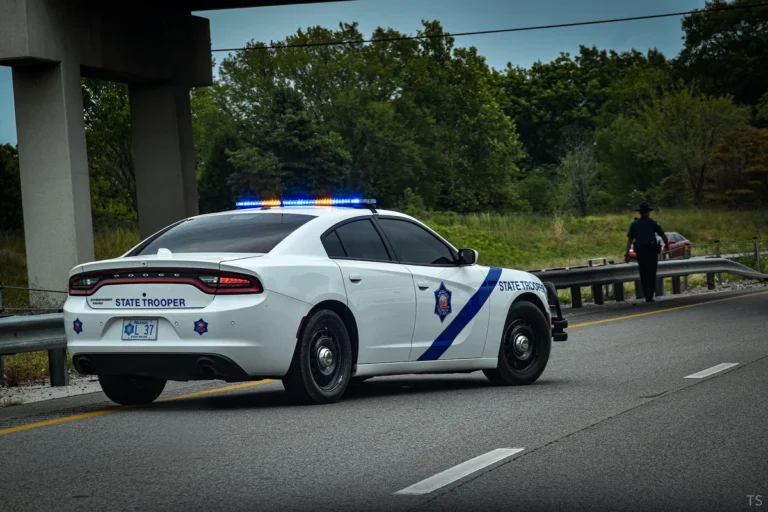
Arkansas State Police enforce the tint law during traffic stops. If an officer uses a light meter and your windows read below the legal limit, you'll receive a citation. The fine typically ranges from 50 to 200 dollars depending on the county.
Your vehicle also must pass an annual safety inspection. Inspection stations use a light meter on front side windows and check the rear window rule. If your tint fails, you cannot renew your registration until it's corrected.
Some drivers think they can pass by rolling down the windows during inspection. That doesn't work. Inspectors check the windows in their closed position. Tinted windshield strips must also be measured for height and reflectivity.
If you receive a fix-it ticket for illegal tint, you have a set number of days to remove or replace the film. You'll need to show proof of correction at a police station or inspection station. The fine is usually waived if you comply in time.
## Final Decision Guide: Is Your Tint Legal? (Checklist)
Use this checklist to verify your tint before you get stopped or fail inspection. Mark each item as you confirm it.
- I know my vehicle class (passenger car or SUV/truck/van)
- Front side windows: measured VLT is 25% or higher
- Rear side windows (passenger car): measured VLT is 25% or higher
- Rear side windows (SUV/truck/van): no limit, but I have dual mirrors
- Rear window (passenger car): VLT is 10% or higher, or I have dual side mirrors
- Rear window (SUV/truck/van): no limit, but I have dual side mirrors
- Windshield strip: non-reflective, 5 inches max, above AS-1 line
- Windshield strip: not red, amber, or blue
- Reflectivity: no window exceeds 20% reflectance
- Manufacturer certification sticker is affixed to driver's door jamb
- Medical exemption paperwork is in the vehicle (if applicable)
If you checked all boxes, your tint is legal in Arkansas. If you missed even one, fix it before your next drive or inspection.
## Frequently Asked Questions
### What is the legal tint percentage for front windows in Arkansas?
All vehicles must have at least 25% VLT on front side windows. That includes the driver and passenger windows. The limit applies to every passenger car, SUV, truck, and van.
### Can I have 5% tint on my SUV in Arkansas?
Yes, on rear side windows and the rear window. SUVs and trucks have no VLT limit on these windows. The front side windows still require 25% VLT minimum.
### Do I need a sticker on my tinted windows in Arkansas?
Yes. Arkansas law requires a manufacturer certification sticker on the driver's side door jamb. The sticker must list the film's VLT and reflectivity ratings. Without it, you can be cited.
### How do I get a medical exemption for darker tint in Arkansas?
You need a signed statement from a licensed physician certifying a medical condition that requires reduced light. Submit the form to the Arkansas Department of Finance and Administration. Keep the approval in your vehicle at all times.
### Will I fail Arkansas safety inspection with factory tint?
Factory tinted glass usually measures around 75-80% VLT, well above the legal limit. Factory tint alone will not cause a failure. Adding aftermarket film on top of factory glass may drop the combined VLT below the limit.
### What happens if I get pulled over for illegal tint in Arkansas?
The officer may issue a citation with a fine typically between 50 and 200 dollars. You'll be given a set number of days to remove or replace the illegal tint. Showing proof of correction can get the fine waived.