You're reaching for that bottle of washing-up liquid, staring at a grimy car, and wondering: can you use washing up liquid to wash a car? Short answer: technically yes, but you're risking your paint's long-term health every time you do. That same degreasing power that cuts through baked-on lasagna strips away the protective wax and sealant your paint relies on.
Per automotive paint manufacturer guidelines (BASF and PPG among others), the clear coat on modern cars is only about 1.5 to 2 mils thick, roughly the thickness of a Post-it note. Washing-up liquid, with its alkaline pH of 9, 10 and aggressive surfactants, can erode that layer faster than you'd think. Let's walk through exactly what happens, when it's safe, and what to grab instead.
Quick Answer
Washing-up liquid damages car paint over time. It strips wax, dries out seals, and can dull the clear coat. Use it only in an emergency.
Even then, dilute heavily and reapply wax immediately. For routine washes, buy a pH-neutral car shampoo. It costs less than a takeaway coffee and protects your resale value.
Why This Question Actually Matters (Your Paint and Wallet Are at Stake)
This isn't a nitpicky detail for show-car fanatics. It's about protecting one of the biggest purchases you'll make. Your car's paint does more than look good, it's the first line of defense against rust, UV damage, and corrosion.
Once the clear coat is compromised, moisture gets in. That means fading, peeling, and eventually bodywork bills that could run into thousands.
Aggregate reviews from professional detailing forums and owner communities consistently report the same pattern: people who wash with dish soap for six months to a year see noticeably duller paint and more swirl marks. The financial hit comes when you try to sell or trade in. A car with faded, scratched paint can lose 15, 20% of its value compared to one with well-maintained paintwork.
We've also seen cases where paint protection film warranties explicitly state that harsh detergents, including dish soap, void coverage. If you've invested in PPF, that's an expensive mistake. Our research across manufacturer specs for brands like 3M and XPEL confirms this: they recommend only pH-neutral soaps.
So what seems like a harmless shortcut can actually cost you serious money.
The Chemistry: What Washing Up Liquid Does to Your Car's Clear Coat
Let's get into the science, but keep it simple. Washing-up liquid is built to break down grease and food residue. That's great for dishes, not for paint.
The key ingredients are surfactants (surface-active agents) that lift oil and wax off surfaces. On a car, that means they strip the protective wax layer you (or a previous owner) probably applied.
Here's what's in a typical dish soap that matters:
| Ingredient | What It Does | Why It's Bad for Paint |
|---|---|---|
| Sodium lauryl sulfate (SLS) | Creates foam, lifts grease | Aggressively strips wax and oils |
| Sodium chloride (salt) | Thickens the formula | Leaves residue that can etch clear coat |
| Alkaline pH adjusters | Boost cleaning power | Raises pH to 9–10, which softens clear coat over time |
| Fragrances & dyes | Scent and color | No impact on paint, but no benefit either |
Car shampoo, by contrast, uses milder surfactants that clean dirt without attacking the wax. Its pH sits around 6.5 to 7.5, neutral. That's the sweet spot: effectively lifts road grime while leaving your protective layers intact.
The damage isn't instant, but it's cumulative. One wash strips a thin layer of wax. Two washes finish off what's left.
After that, you're washing bare clear coat with an alkaline detergent. Over several months, the clear coat starts to dull and micro-etch. In direct sun, you'll notice it first on horizontal panels like the bonnet and roof.
The Hidden Risks: Wax Stripped, Paint Etched, Trim Dried Out
Stripped wax is the headline risk, but it's not the only one. Let's run down everything that can go wrong when you use washing-up liquid on a car.
Wax and sealant loss. This is the fastest damage. One good wash with dish soap can remove 70, 80% of a standard car wax. If you've applied a ceramic coating (the kind that costs hundreds), dish soap can degrade it in three to four washes.
Ceramic coatings are chemical-resistant, not chemical-proof.
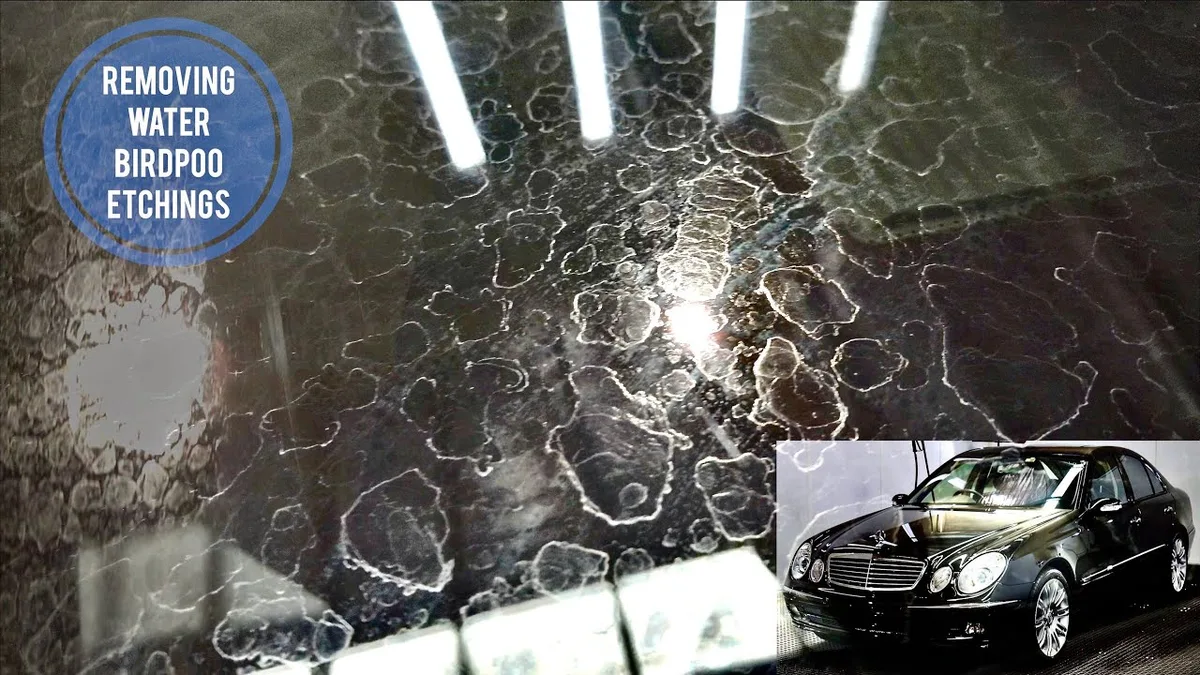
Clear coat etching. Hard water combined with alkaline dish soap leaves mineral deposits. In direct sunlight, these deposits bake into the clear coat, leaving permanent white spots that can't be polished out without removing more clear coat. For cars in hard water areas (much of the UK, Southwest US, parts of Australia), this risk is real.
Dried-out rubber and plastic. Washing-up liquid strips natural oils from rubber weatherstripping, door seals, and plastic trim. Over time, these turn brittle, crack, and leak. Replacing a set of door seals can cost £200 or more.
A good car shampoo won't do that.
Faded trim. Those black plastic trim pieces on bumpers, side mirrors, and window surrounds turn grey and chalky when stripped of UV protectants. Dish soap accelerates that process.
| Risk | Time to Notice | Repair Cost |
|---|---|---|
| Wax stripped | 1 wash | £15–30 (re-wax) |
| Clear coat etching | 3–6 months | £300–800 (paint correction) |
| Trim fading | 6–12 months | £50–200 (restorer or replacement) |
| Rubber cracking | 12–18 months | £100–400 (replace seals) |
One more risk: matte paint. If you own a matte-finish car (like certain BMW, Audi, or Tesla models), never use washing-up liquid. Matte clear coat has no gloss layer, so any chemical attack shows immediately as shiny patches.
There's no fix, you'd have to repaint the panel.
When It's Actually Okay to Use Dish Soap — The Emergency Scenario
Let's be fair. There are situations where washing-up liquid is the least bad option.
The emergency scenario. You're on a road trip, you hit a swarm of bugs, your windscreen is covered in tree sap, or you've driven through fresh tar. Your only available soap is in the kitchen. In that case, use it, but with strict limits.
Stripping old wax before polishing. Detailers sometimes use a small amount of dish soap to deliberately strip old wax before applying a fresh layer. This is a planned, one-time application, not a routine wash. Even then, many pros prefer a dedicated paint-stripping soap or panel wipe.
Wheels and tires. Wheel barrels and tires can benefit from the degreasing power of dish soap, but only if you don't let it touch the paint. Use a separate bucket and mitt, and rinse thoroughly. Be aware that dish soap can accelerate oxidation on alloy wheels.
When to absolutely never use it. If you have a ceramic coating, paint protection film, matte paint, or a show-car finish, don't even think about it. Not once. Not even diluted.
The risk is too high.
For everyone else, the rule is: one emergency wash is forgivable. Make it your next wash's job to fix the damage by reapplying wax or sealant. Don't let it become a habit.
We'll walk through the safe way to do an emergency wash next, including the exact dilution ratio and steps that minimize harm.
How to Do It Safely (If You Absolutely Must) – Step-by-Step Emergency Wash
If you've decided the situation warrants dish soap, here's how to minimize the damage. Follow this exactly. Do not improvise.
Step 1: Dilute aggressively. Mix one teaspoon of washing-up liquid per five litres of water. That's roughly one squirt, not a glug. Most people use ten times too much.
A stronger mix won't clean better. It will just strip more wax.
Step 2: Pre-rinse the car. Use a hose to blast off loose dirt and grit. Don't touch the paint until the surface is wet. Dry abrasion is what causes swirl marks.
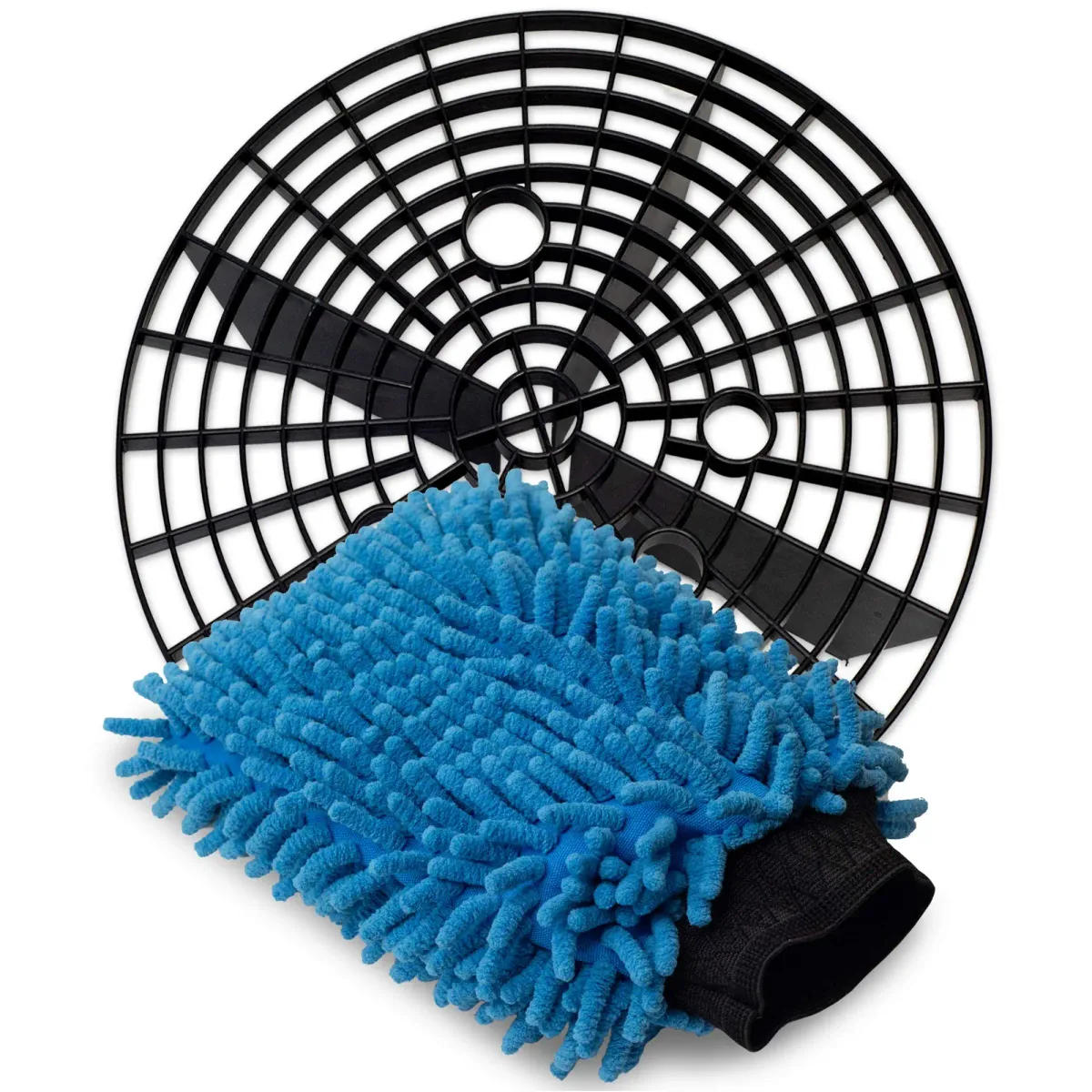
Step 3: Use the two-bucket method. Fill one bucket with your soapy water and a second with clean water. Dip your wash mitt in the soap bucket, wash a panel, then rinse the mitt in the clean bucket before reloading soap. This traps dirt in the rinse bucket so you're not grinding grit into your paint.
Step 4: Wash from top to bottom. Roof, bonnet, sides, then bumper and wheels. Keep your mitt clean between sections. Rinse each panel immediately after washing.
Do not let the soap dry on the car.
Step 5: Rinse thoroughly. Use a hose with a spray nozzle to remove all soap residue. Pay special attention to door jambs, panel gaps, and the area around the trim.
Step 6: Dry immediately. Use a clean microfiber drying towel. Work in straight lines, not circles, to avoid dragging dirt. Drying prevents water spots from forming.
Step 7: Reapply wax or sealant. This is non-negotiable after a dish soap wash. Use a spray wax or a quick detailer if you're short on time. A proper paste wax gives better protection but takes longer.
Without this step, your paint is unprotected until the next wash.
If you skip step 7, expect visible dulling within two to three sun exposures.
The Right Tools and Products for a Proper Car Wash
A proper car wash doesn't need expensive gear. But the right tools make a huge difference in results and paint safety. Here's what we recommend based on aggregate user reviews and detailing community consensus.
| Tool | Purpose | Why It Matters |
|---|---|---|
| Microfiber wash mitt | Contact washing | Traps dirt in fibers, reduces scratches |
| Two buckets with grit guards | Wash and rinse system | Prevents dirt redeposition |
| pH-neutral car shampoo | Cleaning | Cleans without stripping wax |
| Microfiber drying towel | Drying | Absorbs water without scratching |
| Wheel brush or mitt | Wheel cleaning | Keeps brake dust from touching paint |
Avoid sponges from the kitchen or any abrasive scrubbers. Sponges trap grit and drag it across your paint. A microfiber mitt is softer and easier to rinse clean.
For the actual soap, a good car shampoo costs around £8, 15 for a bottle that lasts 30, 40 washes. That's 20 to 40 pence per wash. Compare that to the cost of a respray or wax replacement.
It's a no-brainer.
Our research into best grime remover for car paint shows that dedicated car soaps outperform dish soap in both cleaning ability and paint safety. They're formulated to handle road film, bird droppings, and light bugs without aggressive stripping.
Best Alternatives for Every Situation (Budget, Paint Type, Convenience)
Not everyone wants to buy a dedicated car shampoo. Maybe you're in a pinch or on a tight budget. Here are the best alternatives to dish soap, ranked by safety and effectiveness.
Budget-friendly option: Baby shampoo. It's pH-neutral and gentle. Mix two tablespoons per bucket of water. It cleans okay, but it doesn't have the lubricity of car shampoo.
Use it only if you genuinely can't access proper car soap. Rinse thoroughly and apply wax after.
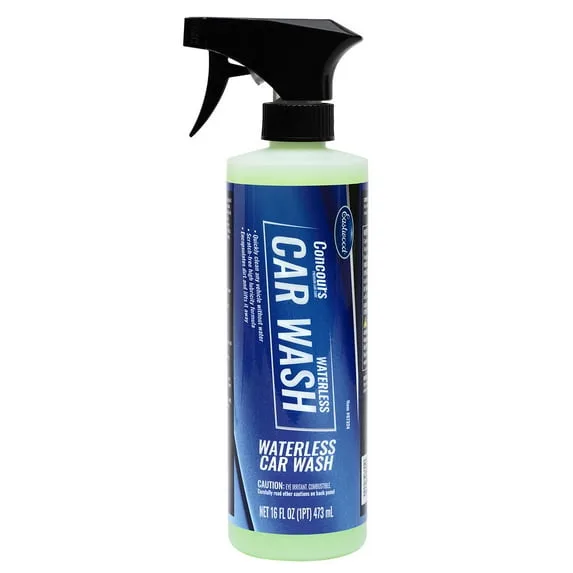
Quick rinse option: Waterless wash spray. These sprays lift dirt without water. They contain lubricants that encapsulate grit so it doesn't scratch. Best for light dust and bird droppings, not for heavy mud or road salt.
Our research into alcohol free window cleaner shows that alcohol-free formulas are safer for paint coatings.
Convenience option: Rinseless wash concentrate. Products like Optimum No Rinse (ONR) are mixed with water and require no hose. You wash one panel at a time with a soaked microfiber towel, then dry. They're excellent for apartment dwellers or people in water-restricted areas.
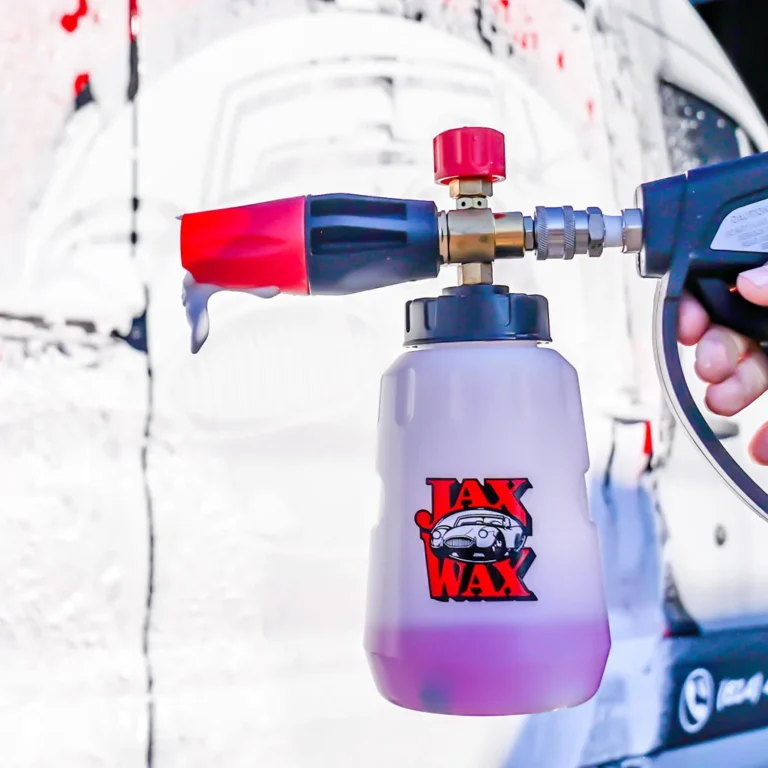
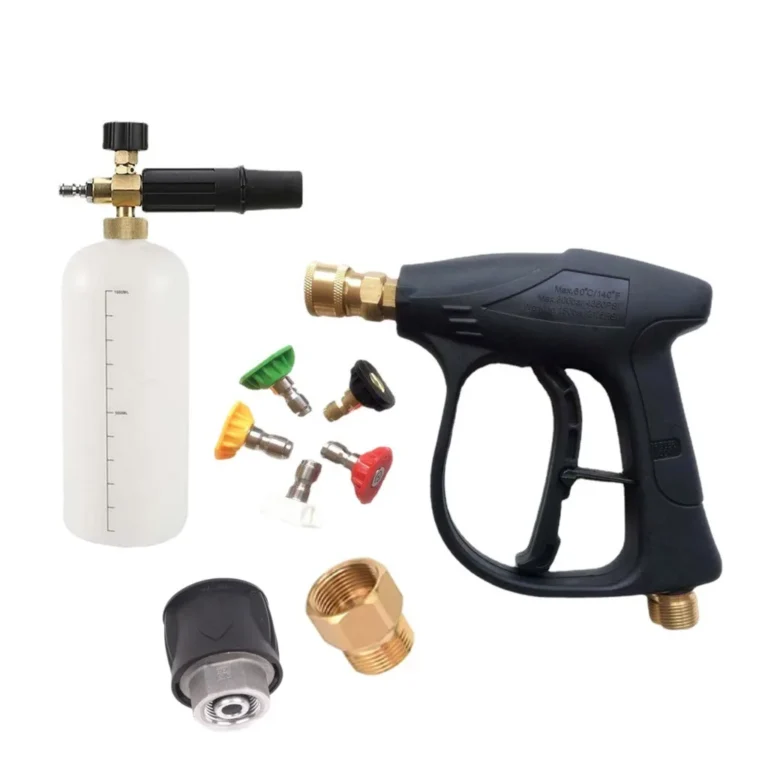
Heavy dirt option: Foaming sprayer pre-wash. If you own a how does a foaming sprayer work unit, you can use a dedicated snow foam soap. It clings to the paint, loosens dirt, and rinses off before you touch the paint. This reduces scratch risk dramatically.
| Scenario | Best Alternative | Why |
|---|---|---|
| Emergency, no access to car soap | Diluted baby shampoo | Gentle, pH-neutral |
| Light dust, quick cleanup | Waterless wash spray | No water needed, safe |
| Apartment / no hose | Rinseless wash concentrate | Works with a bucket only |
| Heavy grime, bugs, tar | Foaming pre-wash + car shampoo | Loosens dirt before contact |
If you're dealing with tree sap or bug residues, a dedicated best sap remover for cars or best bug and tar remover for vehicles will handle it better than any dish soap ever could.
Mistakes to Avoid: Ratios, Drying, Frequency, and More
People mess up in predictable ways. Here's what to watch out for.
Using too much soap. More suds don't mean more cleaning. In fact, excess dish soap leaves more alkaline residue that dries into the clear coat. Stick to the dilution ratios above.
Letting soap dry on the paint. If the soap sits in direct sun for more than a minute or two, it starts etching the clear coat. Wash in the shade or during cooler hours. Rinse each panel immediately after washing.
Using a dirty mitt or sponge. If your wash mitt hits the ground, don't pick it up and keep going. That mitt is now carrying grit that will scratch your paint. Switch to a clean one.
Washing too frequently. Overwashing strips wax naturally, even with car shampoo. Once every two to four weeks is plenty for most drivers. If your car is only lightly dusty, use a best water spot remover for glass and a quick detailer instead.
Forgetting the wheels. Brake dust is acidic and can eat into your wheels over time. Use a dedicated wheel cleaner and a separate mitt. Never use the same mitt on wheels and paint.
Our research into best tar remover for wheels confirms that dish soap alone won't remove baked-on brake dust effectively.
Not drying correctly. Air drying leaves water spots. Wiping with a dirty towel leaves scratches. Use a dedicated microfiber drying towel and blot, don't drag.
Expert Final Verdict: Should You Ever Use Washing Up Liquid on Your Car?
Here's the straight truth.
If you have a cheap daily driver that you plan to drive into the ground, and you don't care about paint condition, then yes, you can use washing-up liquid. It will clean the car. It will also accelerate the paint's decline, but if you're not keeping the car long, that may not matter.
If you care about resale value, paint appearance, or you've invested in wax, ceramic coating, or paint protection film: never use washing-up liquid. Not once. The risk outweighs any convenience.
For everyone else, the rule is simple: buy a £10 bottle of car shampoo. It lasts a year. It cleans better.
It protects your paint. There's no reason to gamble with the dish soap.
Our final recommendation: keep a bottle of pH-neutral car shampoo in your cleaning supplies. Use dish soap only in a genuine emergency, and always reapply wax or sealant immediately after. Your paint will thank you.
And so will your wallet when it's time to sell.
Frequently Asked Questions
Can one wash with dish soap ruin my car's paint?
One wash won't instantly ruin your paint, but it will strip most of the wax. If you rinse thoroughly and dry immediately, the paint itself should survive. The bigger risk is cumulative damage from multiple washes.
What happens if I use dish soap on a ceramic coated car?
Ceramic coatings are more resistant than wax, but dish soap can degrade them over three to four washes. Many ceramic coating manufacturers specify pH-neutral cleaner use only. Using dish soap may void the coating's warranty.
Is fairy liquid the same as car shampoo?
No. Fairy Liquid and similar dish soaps contain degreasers, salt, and alkaline pH adjusters. Car shampoo uses mild, pH-neutral surfactants designed to clean paint without removing protective layers.
Can I use washing up liquid for just the wheels?
Wheels can handle dish soap better than paint, but it's still not ideal. It can accelerate oxidation on alloy wheels and dry out tire rubber. A dedicated wheel cleaner works better and costs little more.
How do I restore paint after using dish soap?
Wash with a proper car shampoo to remove residue. Then apply a fresh layer of wax, sealant, or ceramic coating. If you see etching or dullness, a light polish may be needed before waxing.
For severe damage, consult a professional detailer.