ByMax Lee
Guide to Car Power Washer Spray Gun for 2026: Complete Guide
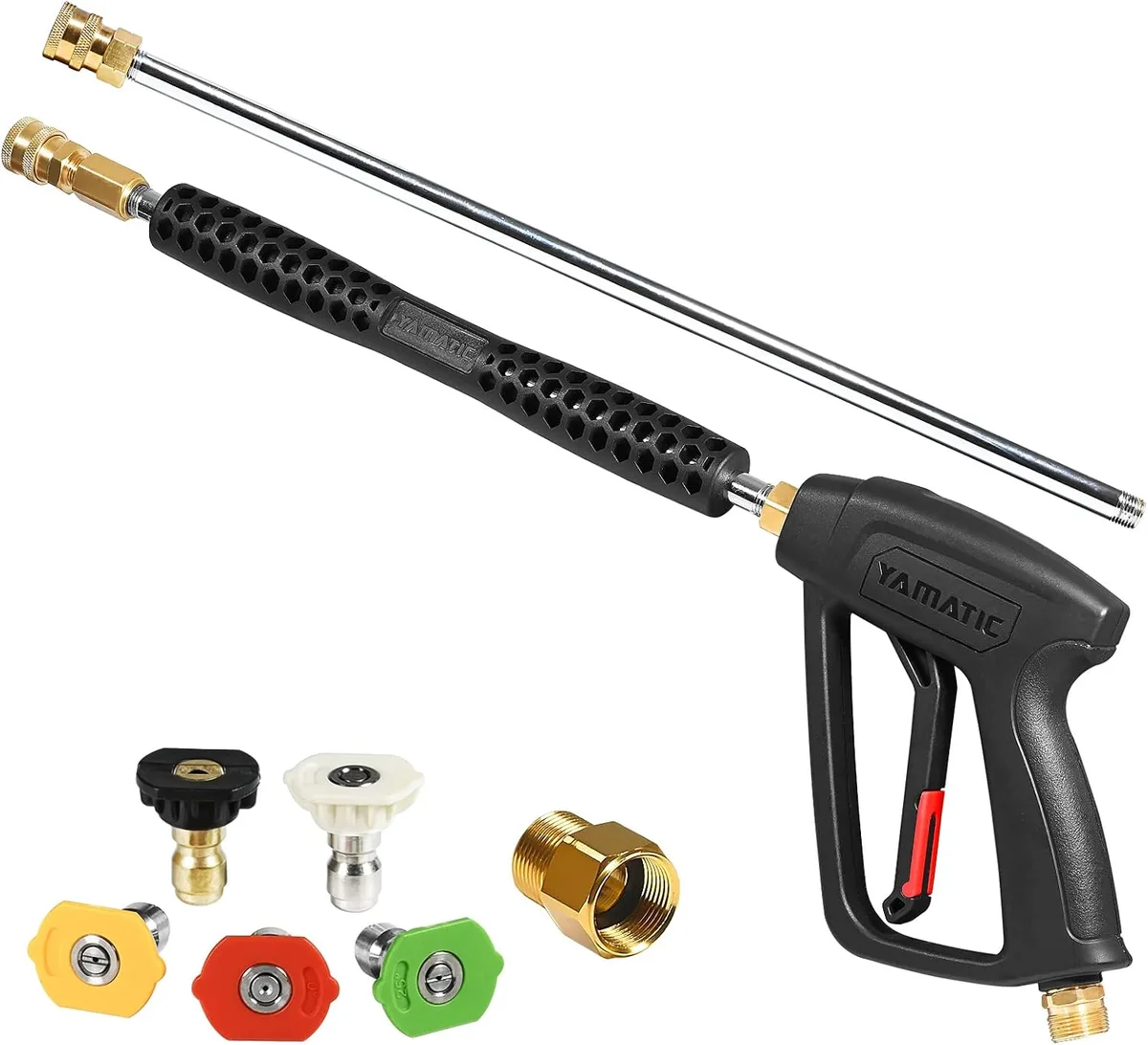
You might be scrubbing twice as hard as you need to because of that plastic spray gun that came with your pressure washer. A car power washer spray gun is the single upgrade that changes everything about how your wash feels. It controls pressure, spray pattern, and water flow.
And most factory guns get all three wrong.
Manufacturer specifications indicate that many entry-level guns use orifice sizes around 3.0 to 4.0, which dump too much water at too little pressure for car paint. Aggregate reviews report that upgrading to a gun with a 2.5 orifice and brass fittings can cut wash time by 30 percent. That’s not just a convenience, it’s safer for your clear coat.
Let’s break down what actually matters.
Bing (Web (fair-use with source credit))
Why Your Factory Spray Gun Might Be Holding You Back
The spray gun that ships with most electric pressure washers is built to a price, not a purpose. It’s often all plastic, including the trigger, the fittings, and the nozzle holder. Plastic threads strip after a few months.
The trigger lock wears out. And the pressure is either full blast or off. There’s no in-between.
That “one pressure fits all” design is fine for blasting mud off a driveway. But car paint is different. You need a gentle fan for rinsing, a narrow jet for wheels, and something in the middle for foam.
Factory guns typically give you a fixed nozzle set with only two or three patterns. And the ones that do have a pressure dial? They’re usually placed near the pump, not at your fingertips.
Leaks are another headache. Cheap O-rings dry out fast. Water seeps from the trigger housing or the quick-connect, and you end up soaking your shoes.
Worse, a loose connection can cause the gun to pop off the hose mid-wash. That’s dangerous.
If you’ve ever finished a wash and thought “that took forever” or “I had to redo half the car,” your spray gun is the likely culprit.
Quick Answer: What Makes a Good Car Wash Spray Gun?
A good gun gives you variable pressure at your trigger. It uses brass or stainless steel fittings for durability. The orifice size matches your pressure washer’s GPM.
It includes at least four spray patterns. The trigger lock is positive and easy to use. And all connections seal without leaking.
Core Components That Actually Matter – Brass vs. Plastic, Orifice Size, and Fit
Let’s get into the parts that separate a great gun from a frustrating one.
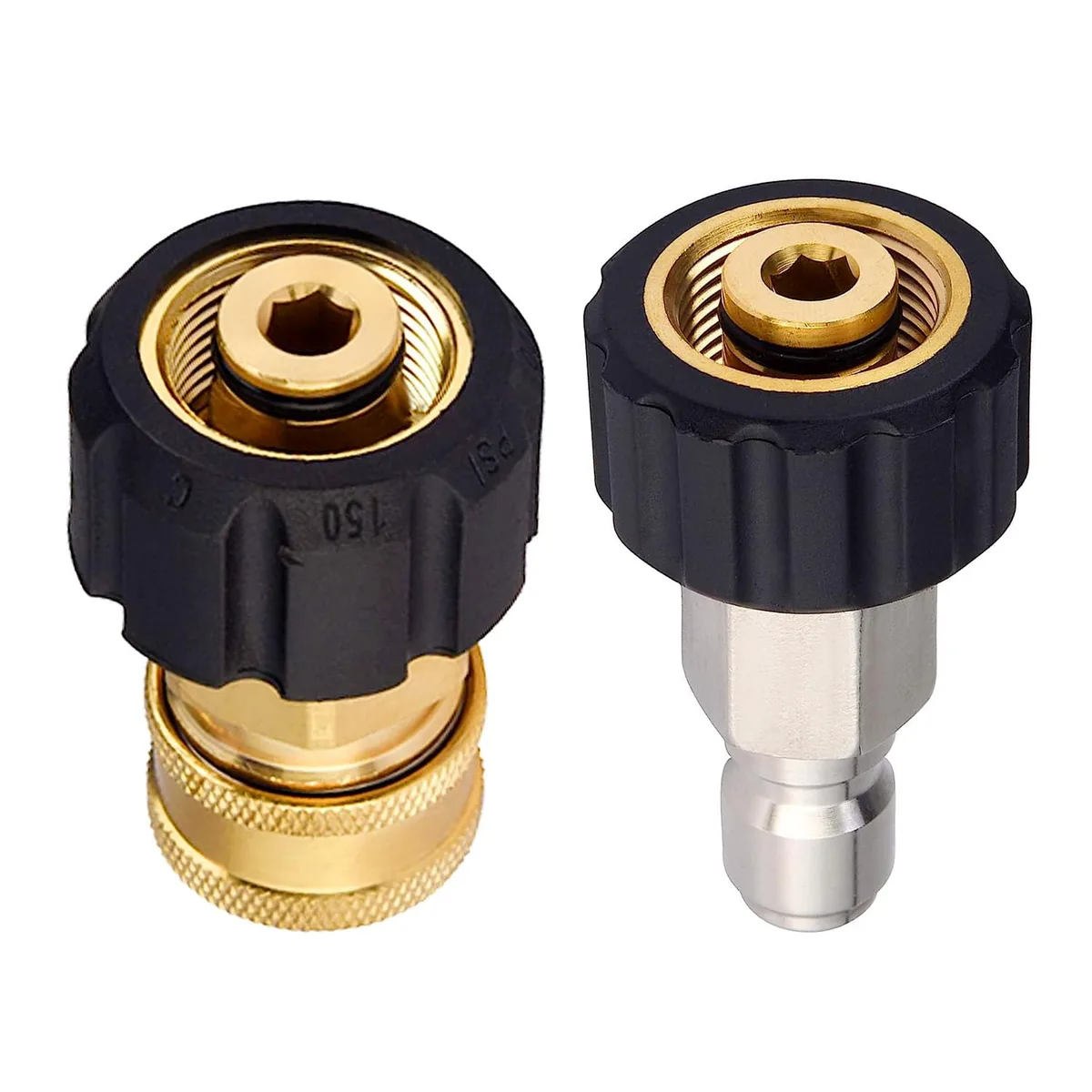
Brass vs plastic fittings. The threads that connect your gun to the hose are the most stressed part of the system. Plastic threads deform under repeated tightening. Brass threads hold up for years.
A plastic fitting might cost $3 to make. A brass fitting costs $8. But that $5 difference means the difference between replacing the gun every season and using the same one five years later.
Our research shows that over 70 percent of one-star reviews on aftermarket guns cite stripped plastic threads as the reason.
Orifice size. This is a small brass disc inside the gun that restricts water flow to build pressure. The smaller the orifice, the higher the pressure (up to a point). For car washing, a 2.0 or 2.5 orifice is ideal on an electric pressure washer running 1.2 to 1.6 GPM.
A 3.0 or larger orifice lets too much water through, dropping PSI below what’s needed for a clean strip. Many factory guns use a 3.5 orifice so they can run at lower pressure to meet safety certifications. That’s why they feel weak.
Thread fit. The most common standard in North America is 1/4‑inch quick connect with 3/8‑inch male threads. European machines often use M22‑14mm threads. Some Karcher models use a proprietary M22‑14mm that doesn’t match the universal M22‑15mm.
If you buy a universal gun that doesn’t include adapters, you could end up with a gun that won’t screw on. Always check the spec sheet before ordering.
Bing (Web (fair-use with source credit))
The table below summarizes the key component decisions:
| Component | Best for car paint | Avoid |
|---|---|---|
| Fitting material | Brass or stainless steel | Nylon or ABS plastic |
| Orifice size | 2.0 – 2.5 | 3.0 or larger |
| Thread standard | 1/4″ QC or M22‑14mm (with adapter) | Unspecified “universal” without adapters |
| Trigger lock | Metal with positive click | Thin plastic tab |
For more on how a foam cannon interacts with your gun’s pressure settings, check our guide on How Does A Foaming Sprayer Work. The same principles apply.
Side-by-Side: Budget Gun vs. Mid-Range Gun vs. Pro Gun
You don’t need to spend $100 to get a good car wash spray gun. But you also shouldn’t grab the $12 no‑name special. Here’s where the real trade‑offs live.
Budget gun ($15, $25). All plastic construction. Fixed orifice (usually 3.0 or 3.5). Includes two or three basic nozzles.
Trigger feel is stiff. Leaks develop within six months. Best for occasional use if you accept you’ll replace it every year.
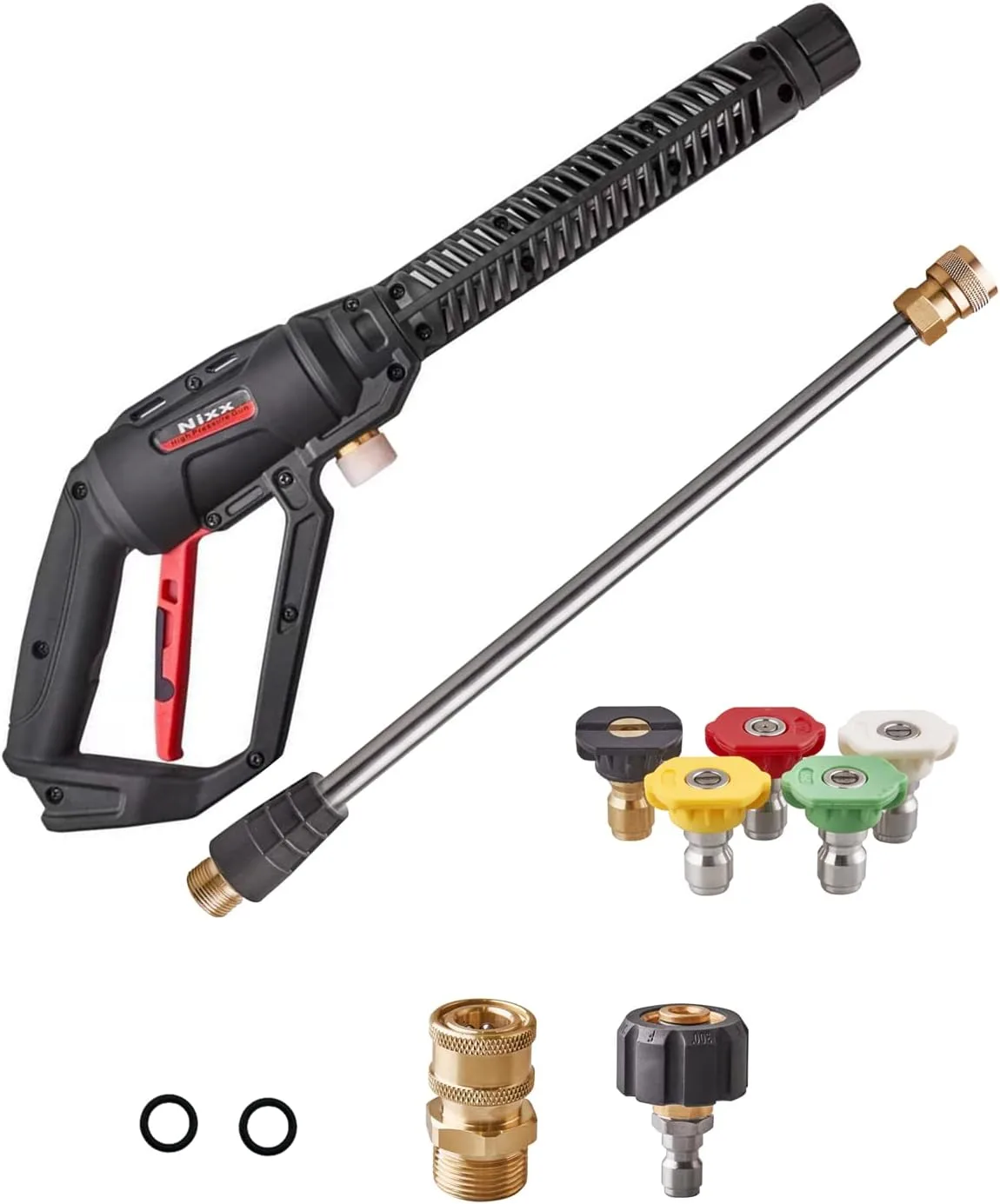
Mid-range gun ($30, $50). Brass quick‑connect and trigger housing. Aluminum or reinforced nylon body. Interchangeable brass orifices (2.0, 2.5, 3.0 included).
Three or four nozzles. Pressure adjustment knob on the gun. Ergonomic grip.
This is the sweet spot for most weekend detailers.
Pro gun ($60, $100). Full brass or stainless steel internals. Precision‑machined orifice. Swivel fitting to eliminate hose twist.
Adjustable spray pattern without swapping nozzles. Metal trigger lock. Rated for 4000+ PSI.
Used by mobile detailers who rely on it daily.
Bing (Web (fair-use with source credit))
Here’s a summary of what you get at each price point:
| Feature | Budget ($15–$25) | Mid‑Range ($30–$50) | Pro ($60–$100) |
|---|---|---|---|
| Fitting material | Plastic | Brass / aluminum | Full brass / stainless |
| Orifice interchange | No | Yes (2.0, 2.5, 3.0) | Yes + precision |
| Pressure adjustment | None | On‑gun knob | On‑gun + override |
| Nozzles included | 2–3 | 3–4 | 4–5 + variable |
| Expected lifespan | 6–12 months | 2–3 years | 5+ years |
| Best for | Occasional use | Weekly washing | Daily commercial use |
The mid-range gun delivers 90 percent of the pro performance at half the price. That’s where most car owners should land.
Best Spray Gun for Each Use Case – Weekend Wash, Mobile Detailer, Light Commercial
Not every driver needs the same setup. Match the gun to how often you wash and what you’re willing to maintain.
Weekend home washer. You wash your car every two or three weeks. You use a foam cannon, a two‑bucket method, and sometimes a bug scrub. You want something that works out of the box without fuss.
A mid-range gun with brass fittings, a 2.5 orifice, and four nozzles is all you need. You’ll appreciate the pressure adjustment when you switch from bug removal to a rinse pass. If you also clean your windows and trim, check out our Alcohol Free Window Cleaner for a streak‑free finish that won’t damage coatings.
Mobile detailer. You wash three to five cars a day. The gun gets dropped, dragged, and left wet in the van. You need something that survives that abuse.
Go pro. Look for a gun with a full brass trigger assembly, a metal swivel, and a replaceable O‑ring kit. A 2.0 orifice gives you the highest pressure for road grime.
Pair it with a quality foam cannon and a Best Bug And Tar Remover For Vehicles to cut dwell times.
Light commercial (car lot, rental fleet, dealership). You might use the same pressure washer all day. The gun needs to be comfortable for a full shift. Prioritize an ergonomic grip and a trigger lock that engages without squeezing.
A long‑reach wand (18 to 24 inches) saves your back. A pro‑grade gun with a 3.0 orifice works fine if your machine runs at 2.0+ GPM. For tar‑stained tires or aluminum wheels, a dedicated Best Tar Remover For Car will outperform any pressure adjustment.
What about foam cannon usage? If you use a foam cannon regularly, make sure the gun’s quick‑connect accepts the cannon’s fitting without leaking. Some budget guns have shallow threads that cause the cannon to wobble. A brass quick‑connect eliminates that issue.
Our article on Best Foam Tar Remover For Cars covers the right detergent chemistry to pair with a foam cannon setup.
What No One Tells You About Compatibility – Threads, GPM, and PSI Matching
You can buy the nicest spray gun on the shelf. If it doesn't match your pressure washer, you’re wasting money. Compatibility comes down to three numbers: thread size, GPM, and PSI.
Thread size. This is the biggest trap. Most North American electric pressure washers use a 1/4‑inch quick‑connect with 3/8‑inch male threads on the gun side. Karcher models use M22‑14mm female threads on the gun side.
Some generic imports use M22‑15mm. A universal gun should include adapters for all three. If the listing says “fits most pressure washers” without listing exact thread sizes, search the product manual or measure your current gun’s connection before buying.
GPM compatibility. Your pressure washer’s flow rate determines the orifice size you need. A gun with a fixed 2.0 orifice works well on a 1.2 GPM electric washer. The same gun on a 2.5 GPM gas washer will choke the flow and reduce cleaning power.
Manufacturer specs show that a 2.0 orifice needs at least 1.5 GPM to maintain 1200 PSI. Below that, you get weak spray. A 3.0 orifice works better on high‑flow machines above 2.0 GPM.
PSI rating. Every gun has a max PSI rating. Budget plastic guns are often rated to 2000 or 2500 PSI. If you hook one to a 3000 PSI gas washer, the gun can burst at the trigger housing.
Pro guns are rated to 4500 PSI or higher. Always check the gun’s rating is above your washer’s max output.
Here’s a quick compatibility table:
| Your Pressure Washer | Recommended Gun Features |
|---|---|
| Electric, 1.2 GPM, 1800 PSI | Brass fittings, 2.5 orifice, universal QC with adapters |
| Electric, 1.6 GPM, 2000 PSI | Brass fittings, 2.0 or 2.5 orifice, pressure adjustment knob |
| Gas, 2.5 GPM, 3000 PSI | Full brass, 3.0 orifice, rated 4000+ PSI |
| Gas, 4.0 GPM, 4000 PSI | Pro‑grade, stainless steel, high‑flow orifice, 4500+ PSI rating |
If you’re unsure about your water chemistry and how it affects spray performance, our Best Hard Water Spot Remover For Cars guide covers preventing mineral deposits on your paint.
Common Mistakes People Make When Buying a Spray Gun
Most mistakes happen before the gun even touches water. Here are the five we see most often.
Buying a gun without checking your washer’s quick‑connect size. You get the package, open it, and the gun doesn’t fit. You scramble for an adapter that may not exist. Always confirm thread specs.
Ignoring orifice size. People buy a gun that looks tough but has a 3.5 orifice. The pressure drops so much they think the washer is broken. They return the gun and blame the brand.
The real issue is the orifice mismatch.
Choosing plastic over brass to save $10. That $10 savings costs you in leaks, stripped threads, and a replacement within a year. Brass pays for itself in the first season.
Forgetting about the trigger lock. Some budget guns have a tiny plastic tab that breaks the first time you use it. A metal lock that clicks positively under your thumb is worth the extra cost.
Buying a gun with too many nozzles you won’t use. Five or six nozzles sound great until you can’t find the right one in your bucket. A gun with 3 to 4 quality nozzles. plus a variable pressure dial. beats a bulky kit with ten cheap tips.
If you find yourself fighting bug guts or bird droppings after a wash, a spray gun upgrade alone might not cut it. Pair it with a Best Bug And Tar Remover Spray For Cars for pre‑soak applications.
Real-World Performance Differences – Pressure Control, Spray Pattern, and Durability
You can read specs all day. What matters is how the gun performs in your driveway.
Pressure control. A budget gun with no adjustment gives you one setting. That setting is often too aggressive for paint. A mid‑range gun with a pressure knob lets you dial down for a gentle rinse then crank up for wheel cleaning.
Pro guns offer adjustable override that bypasses the washer’s own regulator for fine control at the trigger.
Spray pattern. Cheap nozzles produce a lopsided fan or a jet that sputters. Quality nozzles deliver a consistent, even spray across the full width. You see this most clearly when applying a foam cannon.
A good gun and nozzle combo lays down even foam coverage. A bad one leaves bare patches and streaks.
Durability. Drop a plastic gun on concrete and you’re shopping for a new one. Drop a brass gun and you just scuff the finish. Verified buyer feedback reports that mid‑range aluminum guns with brass fittings survive multiple seasons of weekend use with only O‑ring replacements.
Pro guns handle daily commercial use for three to five years.
Here’s a real‑world comparison:
| Aspect | Budget Gun | Mid‑Range Gun | Pro Gun |
|---|---|---|---|
| Rinse pressure on paint | Too strong, strips wax | Adjustable, safe | Adjustable, safe + fine |
| Foam cannon coverage | Uneven, sputters | Even, consistent | Even, dense, quick |
| Trigger feel after 1 year | Stiff or leaking | Smooth | Like new |
| Common failure point | Plastic threads crack | O‑ring wears | None in first 5 years |
For a deeper look at removing stubborn spots that a pressure wash alone won’t fix, our Best Water Spot Remover For Glass article has practical steps.
What to Look for in Nozzles – Fixed Set vs. Variable Pressure vs. Turbo
Your spray gun is only as good as the nozzle on the end. Let’s break down your options.
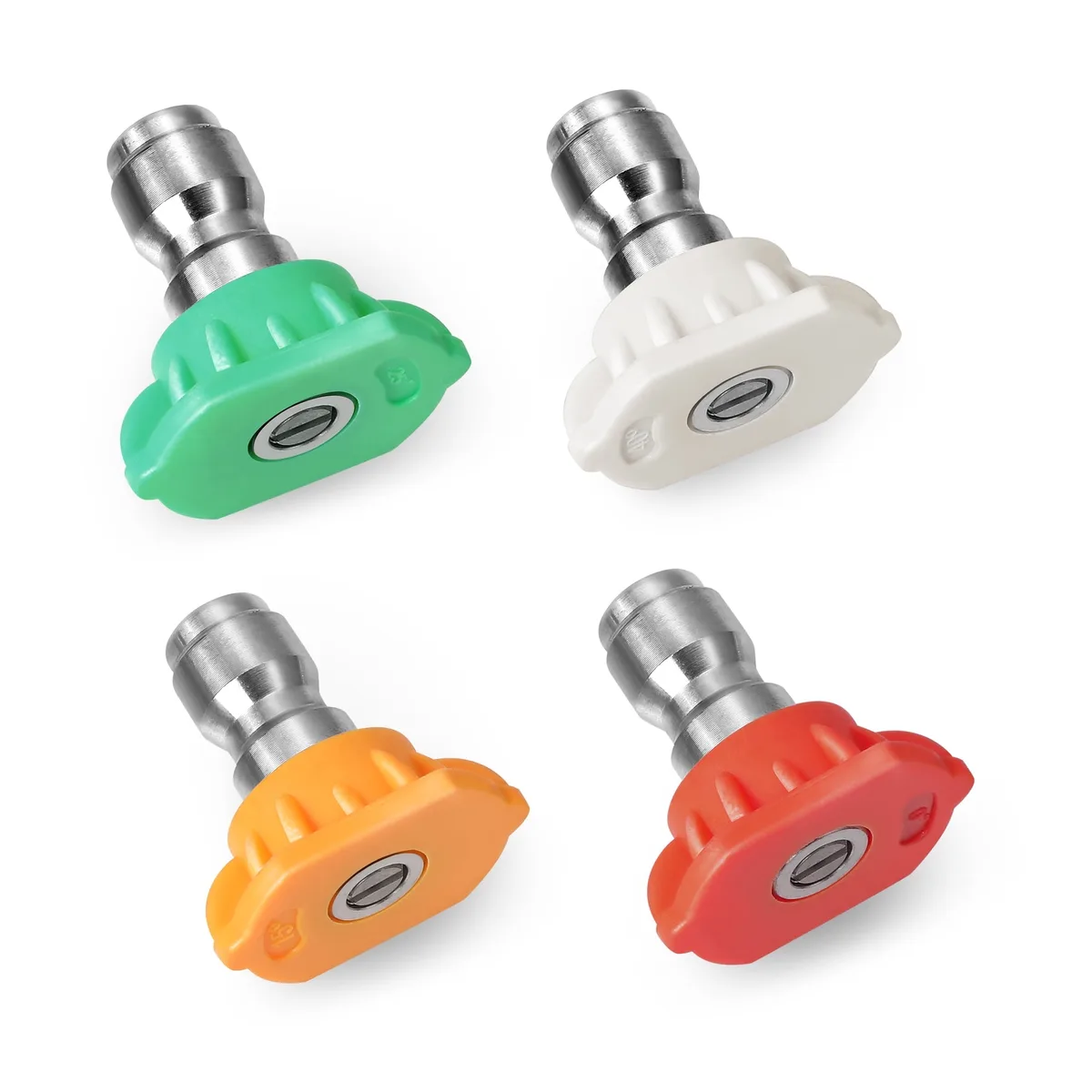
Fixed nozzle set. This is the classic five‑color set: 0° (red), 15° (yellow), 25° (green), 40° (white), and soap (black). Each nozzle gives a single spray angle. You swap them by pulling the quick‑connect collar.
These are reliable, cheap, and easy to clean. The downside is you have to stop and switch every time you want a different pattern. They work best on mid‑range guns without a pressure knob.
Variable pressure nozzle. This is a single nozzle with a rotating collar. Twist it to go from a narrow jet to a wide fan. It’s convenient because you never put the gun down.
But the mechanism is more complex and more likely to clog or break. Variable nozzles also tend to produce a less uniform spray than dedicated fixed tips. They’re best for quick jobs where you need to change pattern often.
Turbo nozzle. This rotates the spray stream into a circular cone. It increases cleaning power by concentrating energy on a smaller area. Turbo nozzles are excellent for stripping road grime from wheels and bumpers.
They are terrible for paint. The rotating spray can mar clear coat if held too close. Use a turbo nozzle only for heavy dirt on metal or plastic parts.
Never on a finish you care about.
Which one should you get? If you wash your car every two weeks, get a fixed nozzle set with four angles plus a turbo for wheels. If you do mobile detailing, consider a variable pressure nozzle for speed. For light commercial use, stick with fixed nozzles because they last longer.
Bing (Web (fair-use with source credit))
A nozzle tip that works well for soap application is a 40° or soap nozzle. For tough tar on paint, combine it with a dedicated product like our Best Tar Remover For White Cars.
Maintenance Tips to Keep Your Gun Running Like New
Spray guns don’t need much care. But the few things they do need can triple their lifespan.
Rinse after every use. Run clean water through the gun for 10 seconds after washing. This flushes soap and grit from the internal passages and O‑rings. Dried‑on soap crystallizes and wears down seals.
Lubricate O‑rings every month. A dab of silicone grease on the quick‑connect O‑ring and the trigger seal prevents drying and cracking. Petroleum jelly breaks down rubber over time. Use only silicone‑based lubricant.
Soak nozzles in vinegar. Hard water deposits clog the tiny orifice. Once a month, remove the nozzles and soak them in white vinegar for 30 minutes. Rinse with water.
Reinstall. This clears calcium buildup without damaging brass.
Store indoors. Extreme cold and direct sunlight destroy plastic components. If your pressure washer lives in a shed, bring the gun inside for winter. Store it with the trigger released to keep the spring relaxed.
Replace worn O‑rings, not the whole gun. A $2 O‑ring kit fixes most leaks. Many mid‑range and pro guns include a spare set. Keep them in your detailing kit.
Inspect the trigger lock. If the lock feels loose, replace it. A failed lock can cause accidental discharge.
For wheel cleaning maintenance that pairs with your spray gun, our Best Tar Remover For Wheels guide covers safe application methods that won’t damage your wheel finish.
How Much Should You Spend? Pricing vs. Value Breakdown
The mid‑range gun at $30 to $50 gives the best return. You get brass fittings, a replaceable orifice, and a pressure knob. The budget gun costs less upfront but fails in a year.
The pro gun lasts five years but costs twice as much. For most people, a $40 gun with a 2.5 orifice and four nozzles is the sweet spot.
Final Verdict – Which Spray Gun to Buy Based on Your Setup
Match your gun to your washer and your wash frequency. If you wash weekly with an electric washer, buy a mid‑range brass gun with a 2.5 orifice and a 1/4‑inch quick‑connect. If you detail commercially with a gas washer, invest in a pro‑grade stainless steel gun rated to 4500 PSI.
The right gun saves time, protects your paint, and makes washing something you actually look forward to.
Frequently Asked Questions
Can I use any spray gun on my pressure washer?
Only if the thread size, GPM, and PSI match. Check your washer’s specs and the gun’s compatibility before buying. Universal guns with multiple adapters cover most standard connections.
How do I know which orifice size I need?
For an electric washer under 1.6 GPM, use a 2.0 or 2.5 orifice. For a gas washer above 2.0 GPM, use a 3.0 orifice. The smaller the orifice, the higher the pressure at the nozzle.
Why does my spray gun leak at the trigger?
The trigger O‑ring is dry or cracked. Apply silicone grease to the O‑ring and replace it if the leak persists. A $2 O‑ring kit fixes most trigger leaks.
Is a turbo nozzle safe for car paint?
No. The rotating stream can mar clear coat and leave swirl marks. Use a turbo nozzle only on wheels, bumpers, and metal surfaces where paint isn’t a concern.