Families spend years getting it right. They research seats, watch installation videos, and check their child's height against limits. Then they worry about whether the next step is legal or, worse, safe.
You might be in that same spot right now, trying to sort through the noise.
Child Passenger Restraint Laws: Proper safety seats for children. aren't just about avoiding a ticket. They exist because crash data proves that the right restraint cuts injury risk by more than half. Per NHTSA testing, car seats reduce fatal injury by 71 percent for infants and 54 percent for toddlers when installed correctly.
But here is the real problem: nearly 6 out of 10 seats are used wrong. That gap between what the law says and what actually protects your child is what this article clears up. Let's walk through the stages, the limits, and the mistakes to avoid so you can drive with confidence.
Quick Answer
Child passenger restraint laws require four stages based on age, weight, and height. Rear-face until at least age two. Forward-face with a harness until the seat's limits.
Use a booster until the seat belt fits right. Seat belts alone start around 4 feet 9 inches tall. Always follow the highest limit on your seat's label.
Why Getting This Right Actually Saves Lives
Car crashes are a leading cause of death for children in the United States. But a properly used car seat changes those odds dramatically. The CDC reports that booster seats reduce the risk of serious injury by 45 percent for children ages 4 to 8 compared with seat belts alone.
The numbers don't lie.
What makes this tricky is that state laws often lag behind best practice. Many states only require a booster until age 7 or 8. But safety experts recommend keeping kids in a booster until they pass the five-step test, which often happens closer to age 12.
Legal minimums are floors. Safe practice aims higher.
That gap is where parents get confused. You might think your child is fine because they meet the legal requirement for your state. But meeting the law and being truly protected are two different things.
Our research across state regulations and pediatric safety guidelines shows that following the seat's manufacturer limits and the American Academy of Pediatrics recommendations gives you the best crash protection. Check out our blog for more resources on vehicle safety and maintenance.
The Four Stages of Car Seat Safety (And When to Move Up)
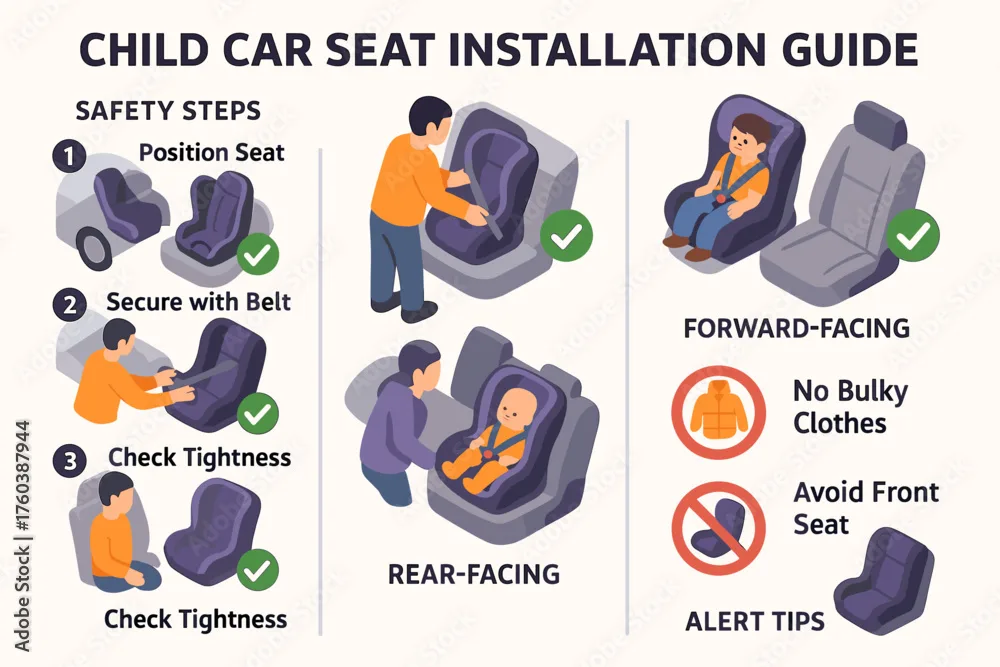
Car seats aren't one-size-fits-all. Your child moves through four distinct stages as they grow. Each stage is designed to protect their developing skeleton, which is different from an adult's.
A child's bones aren't fully ossified until the teenage years. Their ligaments stretch more. Their heads are proportionally larger.
That's why the stages exist.
Rear-Facing: Why Longer Is Safer (Even Past Age 2)
Rear-facing is the gold standard for infants and toddlers. In a front-end crash (the most common type), the seat cradles the head, neck, and spine. Forces spread across the shell rather than yanking the head forward.
The American Academy of Pediatrics recommends rear-facing until at least age 2, and longer if the seat allows.
Most convertible seats now have rear-facing weight limits of 40, 50, or even 65 pounds. That means many children can safely stay rear-facing until age 3 or 4. Leg room is rarely a real issue.
Children naturally bend their legs. The risk of leg injury in a crash is far lower than the risk of spinal injury from turning forward too soon.
Keep your child rear-facing until they hit the maximum height or weight limit for that mode. Check the sticker on the side of the seat. Do not guess.
Forward-Facing With a Harness: The Next Step
Once your child outgrows the rear-facing limits, it is time to face forward with a five-point harness. This stage uses the seat's built-in harness system to distribute crash forces across the strongest parts of the body: the shoulders, hips, and pelvis.
Forward-facing seats come in two main types: convertible seats (which also work rear-facing) and combination seats (harness only, then later a booster). The harness keeps smaller children secure when seat belts are still dangerous. Stay harnessed until your child reaches the forward-facing weight limit, usually 40 to 65 pounds depending on the seat.
Many parents rush this step because their toddler seems cramped rear-facing. Resist the urge. Every extra month rear-facing is safer.
Forward-facing still offers excellent protection, but rear-facing is superior for neck and spinal loads.
Booster Seats: Bridging the Gap to Seat Belts
When your child outgrows the forward-facing harness (usually between ages 4 and 6), it is time for a booster seat. Boosters position the vehicle's lap and shoulder belt correctly over the child's body. Without a booster, the lap belt rides up over the belly and the shoulder belt cuts across the neck.
In a crash, that can cause serious internal injuries.
High-back boosters offer head and neck support, especially in vehicles without adjustable head restraints. Backless boosters are more portable but require that your vehicle has head support. Use a high-back booster if your car seats have low seat backs.
Keep your child in a booster until the adult seat belt fits them properly. That usually happens between ages 8 and 12 and when they reach 4 feet 9 inches tall. It depends on your child's proportions, not their age.
Seat Belts Alone: The Five-Step Test
Before your child stops using a booster, run the five-step test every time they buckle up. The seat belt fits correctly when:
- The child sits all the way back against the seat.
- Their knees bend naturally at the edge of the seat.
- The lap belt sits low across the hips and thighs (not the stomach).
- The shoulder belt crosses the center of the collarbone (not the neck).
- The child stays in position for the whole ride.
If you answer no to any step, they are not ready. Keep using the booster. Most children need a booster until at least age 10 or 11.
Passing the test in one car does not mean they pass in another. Vehicle seats vary.
Weight, Height, and Age Limits: What the Labels Really Mean
Every car seat has a label printed on the side. That label shows minimum and maximum limits for weight and height in each mode. Use the most restrictive limit.
If your child reaches the height limit before the weight limit, move to the next stage. Same for weight.
The label also includes an expiration date. Car seats expire because plastic degrades over time. Heat and UV exposure accelerate that process.
Never use a car seat past its expiration day. Six to ten years from the manufacture date is typical.
Age recommendations on labels (like "suitable from birth to 4 years") are loose guides. The real indicators are weight and height. A tall two-year-old might hit the height limit before an average-sized child the same age.
Follow your child's measurements, not the marketing.
Convertible seats often have two sets of limits: one for rear-facing and one for forward-facing. Do not mix them up. The rear-facing weight limit may be 40 pounds, while the forward-facing limit is 65 pounds.
You can't forward-face a 50-pound child in a seat that allows rear-facing only to 40. Check the specific mode.
Aggregate reviews from certified child passenger safety technicians confirm that parents most often miss the height limit on rear-facing seats. They turn the child forward because their legs touch the seat back, not because they hit the actual limit. Leg touching is normal.
The height limit is where the top of the child's head is within one inch of the top of the shell. That is the signal to move.
LATCH vs. Seat Belt Installation: Which One to Use and When
LATCH (Lower Anchors and Tethers for Children) makes installation easier. The system uses built-in hooks in your vehicle's seat crease and a top tether for forward-facing seats. But LATCH has weight limits.
The combined weight of your child plus the car seat must not exceed the vehicle's LATCH limit. That is usually 65 pounds total.
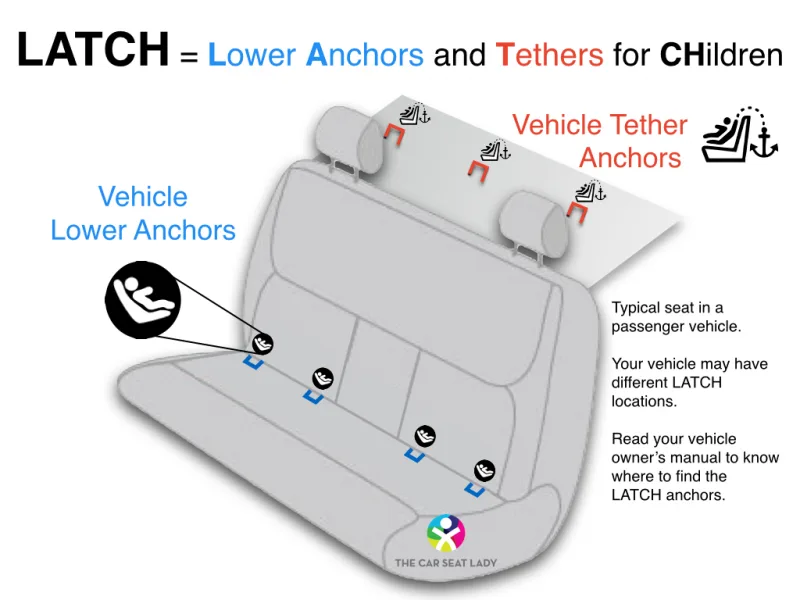
Once your child weighs more than that combined limit, switch to the vehicle's seat belt for installation. The seat belt is always safe when used correctly. It has no upper weight limit.
For heavy car seats or older children, the seat belt is usually the better choice.
| Installation Method | Best For | Weight Limit |
|---|---|---|
| LATCH (lower anchors + top tether) | Infants and light toddlers; easy center installation | 65 lbs combined (child + seat) |
| Seat belt (with locking retractor or clip) | Heavier children; no weight cap; works in any vehicle | None (follow seat manual) |
| LATCH + seat belt (rare) | Only if seat manual explicitly allows | Check manual |
Here is the trick: many vehicles have LATCH anchors only in the outboard seats. The center seat often uses the seat belt. Install where you get the tightest fit.
Both methods are equally safe when done right. Use your vehicle owner's manual alongside the car seat manual. Do not skip either one.
Also check for lower anchor positioning. Some vehicles have anchors recessed deep in the seat bight, making connection tricky. A LATCH connector strap may not reach.
If you cannot get a tight install with LATCH, use the seat belt instead. A tight belt install beats a loose LATCH install every time.
For proper car care that keeps your vehicle ready for safe travels, learn more about vehicle maintenance. A clean, well-maintained car interior supports safe driving habits overall. If you are looking at keeping your car seat covers in good shape, check out our guide on car seat cover care.
The Top Tether: The Most Overlooked Safety Feature
The top tether is a strap that connects the top of a forward-facing car seat to an anchor point in your vehicle. It reduces forward head movement in a crash by 4 to 6 inches. That margin prevents the child's head from striking the seat back in front of them.
It is one of the most effective safety features on a car seat, and one of the most commonly skipped.
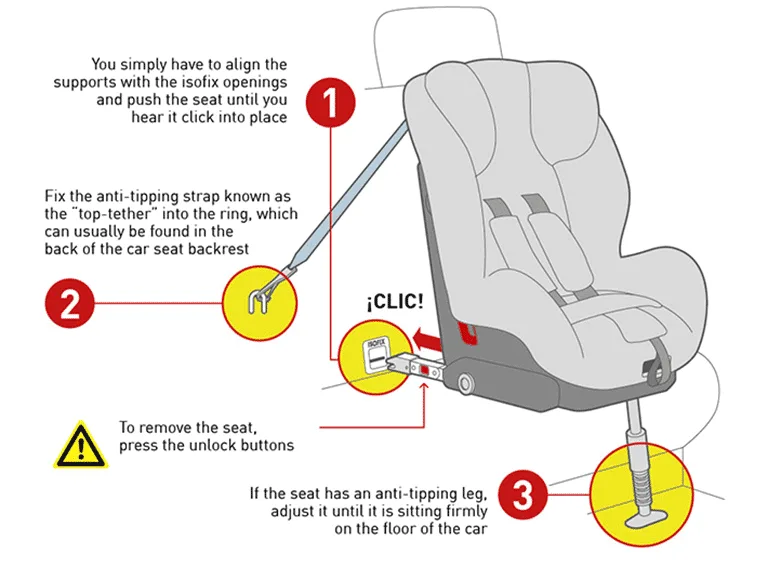
Every forward-facing seat sold in the United States since 1999 has a top tether. Every vehicle made since 2000 has tether anchor points. They are usually located on the back shelf of sedans, the ceiling of SUVs and minivans, or the back of the seat frame.
Check your owner's manual for exact locations.
To use it, route the tether strap over the designated path (often marked with a hook icon), attach it to the anchor, and tighten until the strap is snug. The seat should not move more than one inch side to side at the belt path. The tether also prevents the seat from rocking forward during sudden stops.
Never attach the top tether to a cargo tie-down hook, a seat belt buckle, or anything other than a designated tether anchor. That can cause the seat to fail in a crash. If your vehicle lacks tether anchors, contact the manufacturer.
Retrofitting is often possible for newer models.
If you drive through automatic car washes regularly, it is worth ensuring your car seat installation stays secure. Check your seat's tightness after every car wash visit. Vibration and movement can gradually loosen a seat.
Regular vehicle interior care also matters. Removing crumbs and spills from your car seat fabric keeps it clean and reduces wear on the harness system. For tips on keeping your car clean, review our manual cleaning equipment guide.
A clean interior helps you spot potential issues before they become problems.
Common Installation Mistakes (And How to Fix Them)
Even careful parents make errors. Certified technicians find mistakes in about 9 out of 10 installations they inspect. The good news is that most are easy to fix once you know what to look for.
The Pinch Test and Chest Clip Position
Two small checks make a huge difference. The harness should be snug enough that you cannot pinch any excess webbing at the collarbone. That is the pinch test.
If you can gather fabric between your fingers, tighten more.
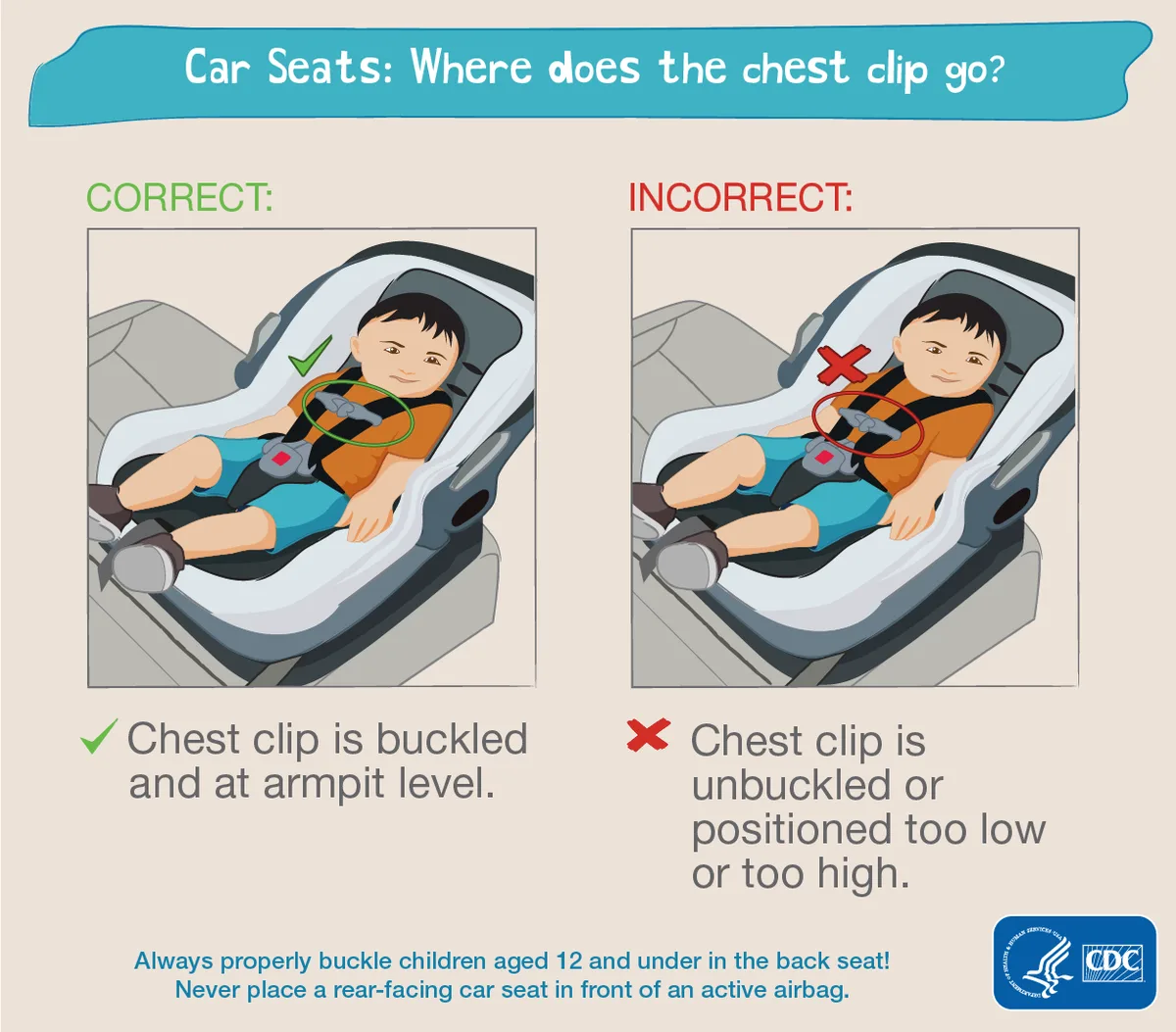
The chest clip belongs at armpit level. Not on the belly. Not up by the neck.
Armpit level keeps the harness positioned correctly over the sternum. In a crash, that prevents the child from sliding out or the harness from riding up.
Most parents place the clip too low. It slides down during the ride. Check it every time you buckle.
A quick armpit check takes two seconds and could save serious injury.
Winter Coats and Bulky Clothing: A Hidden Danger
A puffy winter coat looks warm. Under a harness, it is dangerous. The coat compresses in a crash, leaving slack webbing that the child can slip through.
NHTSA crash tests show that a harness tightened over a coat can be loose enough to allow ejection.
The fix is simple. Dress your child in thin layers. A fleece jacket or sweater works fine.
Buckle the harness snug against their chest. Then place a blanket over the harness for warmth. The blanket will not compress the same way.
Test it yourself. Buckle your child in a coat and tighten the harness. Remove the coat without unbuckling.
If you can pinch webbing, the coat was too thick. That slack is exactly what happens in a crash.
Expired Seats and Unknown Crash Histories
Car seats expire. The plastic degrades from heat, cold, and UV exposure over six to ten years. The date is stamped on the seat shell.
Never use a seat past that date. Expired plastic can shatter in a crash.
A used seat from a friend or garage sale carries risks. If you do not know its full history, do not use it. A seat that was in a moderate or severe crash must be replaced.
Many insurance companies cover replacement after a crash. Check your policy.
For seats in your own vehicle, register them with the manufacturer. That ensures you receive recall notices. You can register online or mail the card that came with the seat.
State Laws vs. Best Practice: Where They Differ
State laws set the legal floor. Best practice sets the safety ceiling. The two are not the same.
Many states allow children to move to a booster at age 4 or 40 pounds. The AAP recommends staying in a harnessed seat until at least age 4 and often longer.
Some states require rear-facing only until age 1. The AAP says at least age 2, and longer if the seat allows. That is a full year of unnecessary risk for families who follow only the law.
| Stage | Typical State Law Minimum | Best Practice (AAP) |
|---|---|---|
| Rear-facing | Until age 1 or 20 lbs | At least age 2, longer if seat allows |
| Forward-facing harness | Until age 4 or 40 lbs | Until max weight/height of seat |
| Booster seat | Until age 7 or 8 or 57 inches | Until the 5-step test passes (often age 10-12) |
| Seat belt alone | At booster limit | At 4'9" and 5-step test pass |
Booster laws vary widely. Some states stop requiring anything at age 8. Others go to 12.
If you drive across state lines, the rules change. Your child's safety should not change with the state sign.
Always follow the stricter standard. If your state says age 4 and the seat says 50 pounds, follow the seat. If the AAP says age 2 and your state says age 1, follow the AAP.
Legal minimums are for people who cannot do the research. You are doing the research.
When to Call a Certified Technician (And How to Find One)
Some installations are straightforward. Others fight you. If you cannot get a tight install (less than one inch of movement at the belt path), call a technician.
If you are unsure about the seat belt lock-off or the LATCH weight limit, call a technician.
Certified Child Passenger Safety Technicians (CPSTs) are trained and tested. They inspect installations for free or a small fee at check events, fire stations, and police stations. The National Child Passenger Safety Board maintains a searchable database of technicians.
Bring both manuals: the car seat manual and your vehicle owner's manual. The technician will check your installation, show you how to fix issues, and answer questions. It takes about 20 to 30 minutes.
Many parents feel embarrassed to ask for help. Do not. Technicians see every mistake imaginable.
They are there to keep kids safe, not to judge. A quick check can confirm you did it right, or catch something you missed.
If you are in a situation where you need to move seats between vehicles often, consider booking a technician visit annually. Car seats loosen over time. A yearly check keeps everything tight.
Taking care of your vehicle interior also helps. Spills and crumbs in car seats can degrade harness webbing and plastic components. For tips on keeping your car clean and well maintained, review our cleaning guide for car seats and interiors.
Quick Reference: Age-by-Age Safety Checklist
Here is a simple reference for each age range. Use it alongside your seat's specific limits.
| Age Range | Stage | Key Checkpoints |
|---|---|---|
| Birth to 12 months | Rear-facing infant seat or convertible | Harness at or below shoulders. Angle mark level with ground. Chest clip at armpits. |
| 1 to 3 years | Rear-facing convertible (stay as long as possible) | Head at least 1 inch below shell top. Weight under rear-facing limit. Legs touching seat back is normal. |
| 4 to 7 years | Forward-facing with harness | Harness at or above shoulders. Top tether always connected. Seat belt path used if child and seat exceed LATCH limit. |
| 8 to 12 years | Booster seat | High-back if no head support. Lap belt low on thighs. Shoulder belt across collarbone. Child sits all the way back. |
Keep a copy of this checklist in your glove box. Review it every time your child moves up a seat. Most injuries from improper restraint happen during the transition period, not during daily use.
Double check your seat at every transition. Read the manual again. Limits change, and your child's proportions matter more than their birthday.
Here is a simple reference for each age range. Use it alongside your seat's specific limits.
| Age Range | Stage | Key Checkpoints |
|---|---|---|
| Birth to 12 months | Rear-facing infant seat or convertible | Harness at or below shoulders. Angle mark level with ground. Chest clip at armpits. |
| 1 to 3 years | Rear-facing convertible (stay as long as possible) | Head at least 1 inch below shell top. Weight under rear-facing limit. Legs touching seat back is normal. |
| 4 to 7 years | Forward-facing with harness | Harness at or above shoulders. Top tether always connected. Seat belt path used if child and seat exceed LATCH limit. |
| 8 to 12 years | Booster seat | High-back if no head support. Lap belt low on thighs. Shoulder belt across collarbone. Child sits all the way back. |
Keep a copy of this checklist in your glove box. Review it every time your child moves up a seat. Most injuries from improper restraint happen during the transition period, not during daily use.
Double check your seat at every transition. Read the manual again. Limits change, and your child's proportions matter more than their birthday.
Frequently Asked Questions
Can I use a car seat that has been in a minor crash?
Only if the crash was minor by NHTSA standards. The vehicle was drivable away. No one was injured.
No door damage near the seat. No airbag deployment. If you are unsure, replace the seat.
Insurance often covers replacement.
What is the penalty for not using a proper child restraint?
It varies by state. Fines typically range from 50 to 500 dollars. Some states add points to your license.
More importantly, the risk of injury increases dramatically without a proper restraint.
How do I clean car seat straps without weakening them?
Use only mild soap and water. Never use bleach, fabric softener, or harsh chemicals. They degrade the harness fibers.
Wipe with a damp cloth and air dry. Check your manual for specific instructions.
Can my child use a booster without a back if the car has headrests?
Yes, if the vehicle seat has a head restraint and your child's ears are below the top of the head restraint or booster back. High-back boosters provide extra side impact protection and are generally preferred for younger children.
When can my child sit in the front seat?
The CDC recommends the back seat until at least age 13. Front seats have airbags that can injure children. If the back seat is full, move the front seat as far back as possible and disable the airbag if your vehicle allows.
Do I need a special car seat for air travel?
Any FAA approved car seat can be used on an airplane. Look for the "This restraint is certified for use in motor vehicles and aircraft" label on your seat. Use it on the plane for the safest travel option.