ByMax Lee
Guide to Move Over Law: Safety of Emergency Workers and the Driver’s Responsibility.
Here's the full opening and the first five H2 sections of the article.
Every time you pass a stopped emergency vehicle on the highway, you're making a choice that could save a life. The Move Over Law: Safety of emergency workers and the driver's responsibility isn't a suggestion, it's a legal requirement in all 50 states and Washington, D.C. And yet, most drivers don't fully understand what they're supposed to do.
As of 2026, the National Safety Council reports that roughly one roadside worker is struck and killed every week in the U.S. That's a police officer, a tow-truck operator, a firefighter, or a highway maintenance worker. The law exists to stop those deaths.
Here's why it matters more than you might think.
Bing (Web (fair-use with source credit))
Why This Law Matters More Than You Think
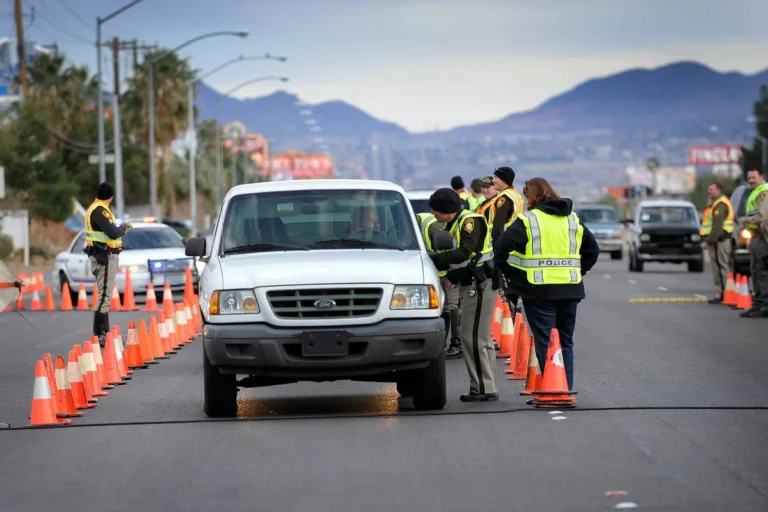
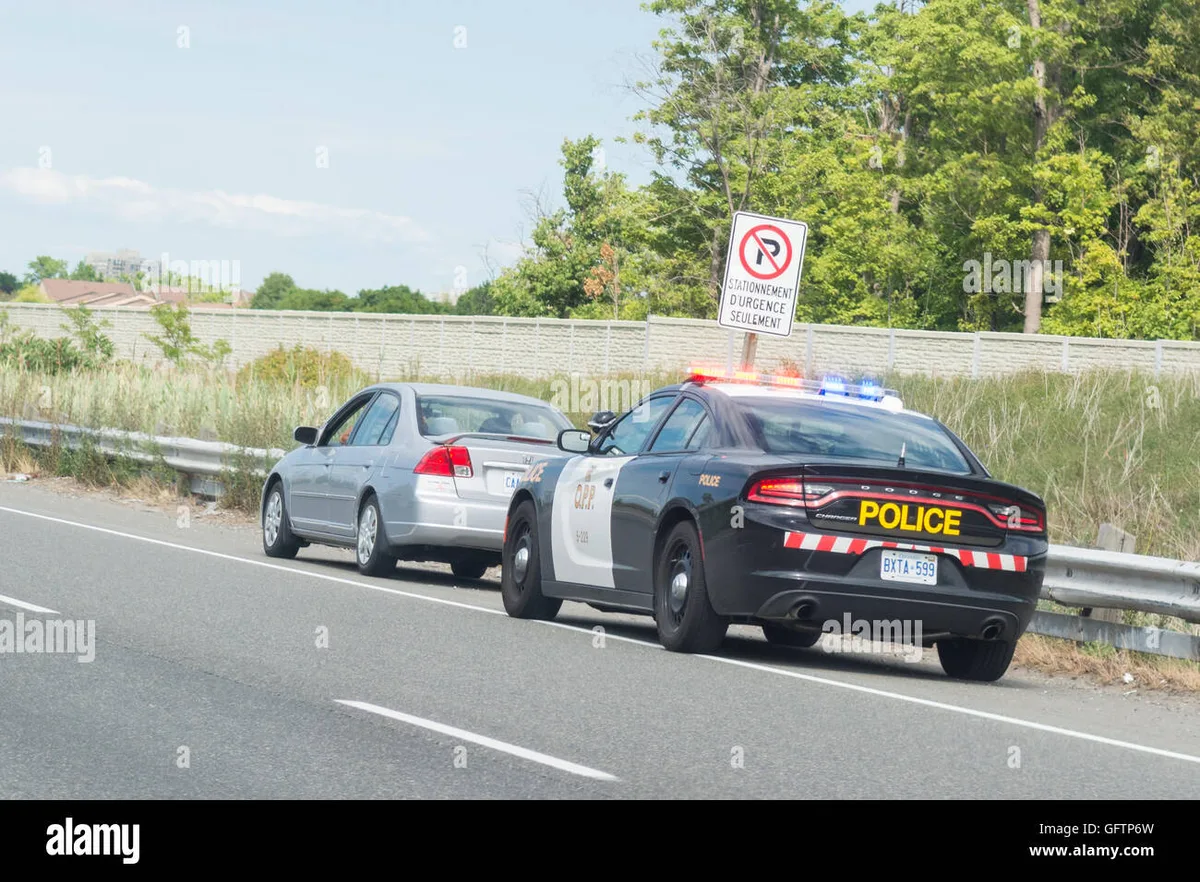
You've probably passed dozens of roadside stops without thinking twice. A patrol car with flashing lights, a tow truck hooked up to someone's sedan, it's easy to treat them as background noise on your commute. But the people standing outside those vehicles are in one of the most dangerous work environments in the country.
Here's the hard truth. Since 2017, the number of officers struck and killed while outside their vehicles has gone up, not down. According to the National Highway Traffic Safety Administration (NHTSA), in a single recent year, more than 40 law enforcement officers were killed after being hit by passing vehicles while on roadside duty. That's not counting tow-truck operators, who face similar risks.
| Metric | Numbers |
|---|---|
| Roadside worker deaths per year (all types) | ~50–60 |
| Law enforcement officers struck (single year) | 40+ |
| States with Move Over laws | 50 + D.C. |
| Average fine for first offense | $100–$1,000+ |
The law is simple in concept: give them space. But the real-world execution gets trickier. Bad weather, heavy traffic, and split-second decisions all come into play.
That's why knowing the law cold, not just vaguely, is the difference between a safe pass and a tragedy. For more on how to stay safe on the road, check out our blog for related driving safety topics.
What the Move Over Law Actually Says
Let's clear up the most common confusion right now. The Move Over Law is actually two requirements in one. Both apply when you approach a stopped emergency vehicle with its lights flashing.
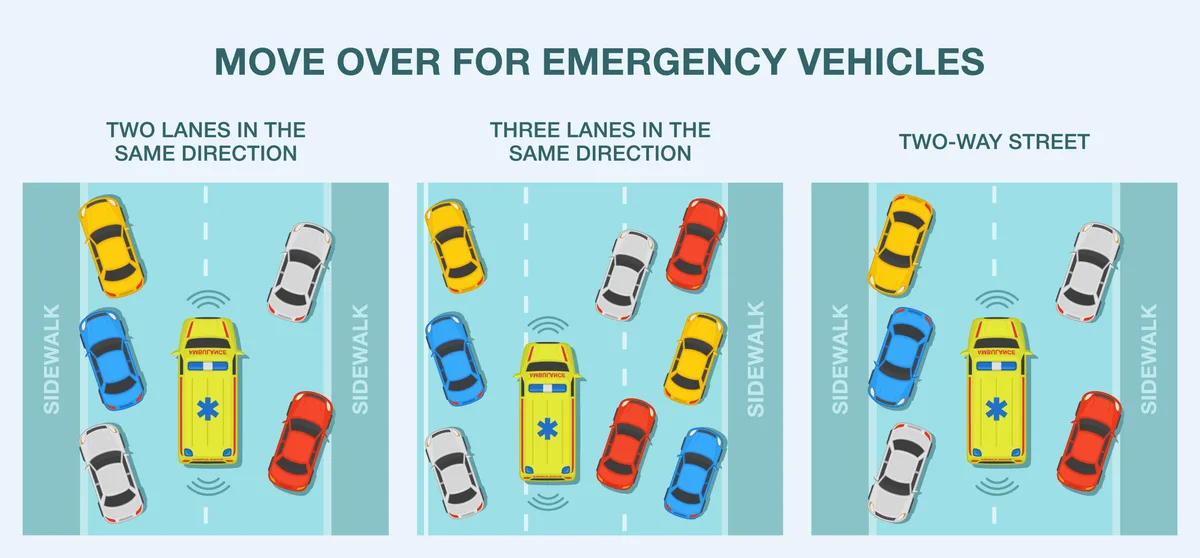
Requirement one: move over. If you're on a highway with two or more lanes in your direction, you must move out of the lane that's closest to the stopped vehicle. That means changing to the left lane if the vehicle is on the right shoulder, or the right lane if the vehicle is on the left shoulder (like on a divided highway).
Requirement two: slow down. This applies whether you can change lanes or not. You must reduce your speed significantly. Many states specify a number:
- 20 mph below the posted limit if the limit is 25 mph or higher
- 10 mph below the limit if the posted limit is under 25 mph
- Or simply travel at a "slow, safe speed" in states that use that language
The "when safe" clause. This is important. The law doesn't ask you to make an unsafe lane change. If traffic is heavy, if you can't merge, or if the road surface is dangerous, you don't have to force a lane change.
But you still have to slow down. A lot. NHTSA's official guidance reinforces that the safe option is always the right option.
The key is showing that you exercised reasonable care.
What about drivers who fail? The consequences are serious. A first offense in many states carries a fine of $200 to $1,000, plus points on your license. If someone is injured or killed because you didn't move over or slow down, you can face criminal charges, including jail time.
For specific state details, explore resources on our site.
One more thing. The law applies 24/7, in any weather, on any road with two or more lanes. It doesn't matter if you think the officer is just writing a ticket or if the tow truck driver is just hooking up a car. The law treats all roadside workers the same.
Which Vehicles Are Covered Under the Law
A common question we hear: "Does this only apply to police cars?" No. And it's one of the biggest gaps in public understanding.
The types of vehicles covered have expanded in most states over the last decade. Here's the full list as of 2026.
| Vehicle Type | Typically Covered | Notes |
|---|---|---|
| Police patrol cars | Yes | All states |
| Ambulances / EMS vehicles | Yes | All states |
| Fire trucks / fire department vehicles | Yes | All states |
| Tow trucks / recovery vehicles | Yes | 45+ states now include them |
| Highway maintenance / DOT vehicles | Yes | Most states |
| Utility service trucks | Yes | Expanding coverage |
| Construction zone vehicles | Yes | Usually when lights are active |
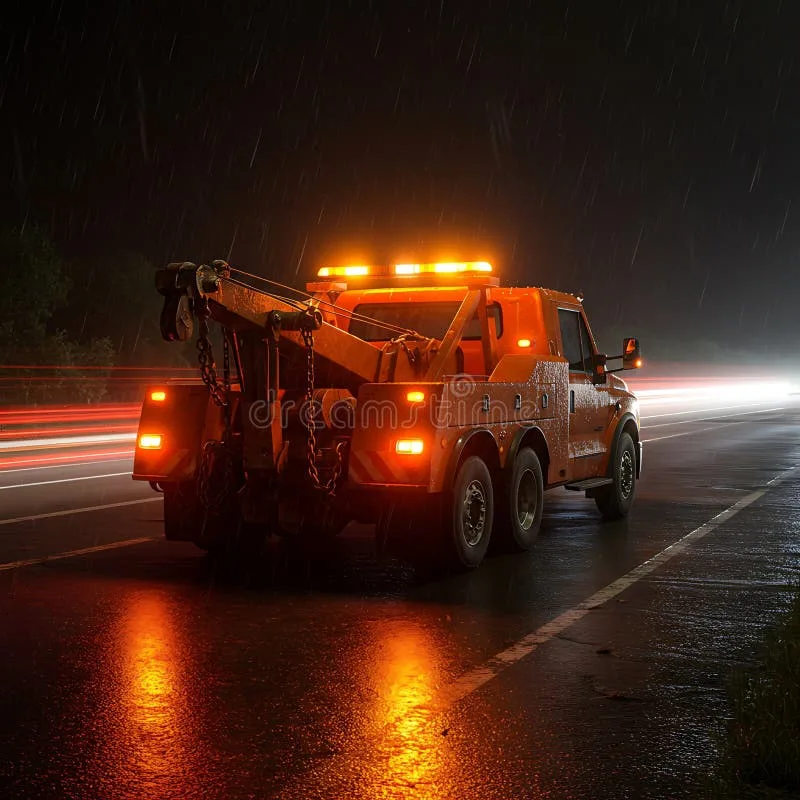
The tow truck addition is relatively recent. In many states, tow-truck operators were originally excluded from the law. That changed after a string of high-profile fatalities. As of 2026, more than 45 states explicitly cover tow trucks under the Move Over Law.
Check your state's DMV for the exact list.
Bing (Web (fair-use with source credit))
But here's the catch. The law only applies when those vehicles have their emergency or warning lights activated. A parked police car without lights doesn't trigger the law. A tow truck without its amber strobes doesn't either.
The lights are the signal that there's a person outside the vehicle. No lights? The law doesn't apply.
What about construction zones? In states that include them, yes, those orange and white barriers with flashing arrow boards count. But unlike a police cruiser, a construction zone may have multiple workers spread across a wide area. Slow down for the whole zone.
For more on understanding these distinctions, visit our blog.
Final point on this. Some states also include "public service vehicles" like digging crews, telephone repair vans, and even mail trucks if they're stopped on the shoulder with lights flashing. The trend is toward broader coverage, not narrower. If in doubt, treat any stopped vehicle with active warning lights as if the law applies.
Step by Step: How to Handle an Emergency Vehicle on the Roadside
Knowing the law is one thing. Executing it correctly under pressure is another. Here's the exact sequence of actions you should take every single time.
Bing (Web (fair-use with source credit))
Step 1: Scan your surroundings early. The moment you see flashing lights ahead, even a quarter mile out, start looking at your mirrors and blind spots. You need to know where other vehicles are, especially in the lane next to you. If you wait until you're 50 feet away, you're already too late for a safe lane change.
Step 2: Activate your turn signal. This tells other drivers what you intend to do. Don't assume they'll see the lights and give you space. Signal early, and signal clearly.
Step 3: Check your blind spot. This is the step most drivers skip. Turn your head and physically look over your shoulder. Mirrors have blind spots.
A motorcycle or a compact car can sit right there, invisible in your side mirror.
Step 4: Move over to the next lane. If it's safe, smoothly merge into the lane away from the stopped vehicle. Do it gradually. Sudden swerves can cause you to lose control or cause a chain reaction crash.
Aim to be in the new lane at least 500 feet before you reach the stopped vehicle.
Step 5: Reduce your speed. Even after you change lanes, slow down. The law requires a speed reduction, not just a lane change. Drop to 20 mph below the limit or to a speed that feels safe for the situation.
A good rule of thumb: if it feels too fast, it probably is.
Step 6: Pass cautiously. As you go by the stopped vehicle, keep your eyes on the road ahead, but be aware of people standing near the vehicle. They might step out unexpectedly. Don't gawk.
Keep moving.
Step 7: Stay in the new lane until you're well past. Don't immediately merge back into the lane closest to the stopped vehicle. Give yourself at least a few hundred feet before you change back. It shows you were paying attention.
A quick note about commercial drivers. If you're driving a truck or a bus, the steps are the same, but your stopping distance is longer. Start scanning earlier. Plan your merge farther out.
The FMCSA recommends scanning at least 1,500 feet ahead on highways.
What to Do When You Can't Safely Move Over
This is the scenario that trips people up. You see the lights, you want to move over, but the lane beside you is full of traffic. It happens on congested highways, during rush hour, or when merging is blocked by a concrete barrier.
So what do you do?
First, don't panic. The law includes a safety clause for exactly this situation. You are not required to make an unsafe lane change. Forcing yourself into a gap that doesn't exist is more dangerous than staying in your lane.
For practical driving tips, check out our blog.
Second, slow down aggressively. This is your primary action when you can't move over. Drop your speed significantly. In many states, the law says you must reduce speed to a "reasonable and prudent" level.
In practice, that means 20 mph below the posted limit or less. If the speed limit is 65 mph, slow to 45 mph or slower.
Third, do not brake check the lane next to you. That's a terrible idea. You're creating a crash behind you. Just focus on your own vehicle.
Fourth, create as much space as possible within your lane. If you can, edge away from the stopped vehicle within your lane. Drift to the far side of your lane, the side farthest from the emergency vehicle. It's not a full lane change, but every foot of extra distance helps.
Here's a common mistake. Some drivers pull onto the shoulder to "get out of the way." Don't do that. The shoulder is where the emergency workers are. You're moving toward them, not away from them.
Stay in the travel lane.
What if you're in the left lane and the emergency vehicle is on the left shoulder? This happens on divided highways. Move to the right lane instead. If that's not possible, slow down and stay left.
Same rules apply.
Last, be prepared for the unexpected. Sometimes a law enforcement officer will step out into the road to direct traffic. If you see a person standing in the lane, slow to a crawl or stop. They have the right of way.
Follow their gestures.
For more on handling roadside situations safely, take a look at our related content. And if you want to review the exact language for your state, your state's DMV website is the best place for that.

Bing (Web (fair-use with source credit))