Connecticut’s move over law for emergency vehicles and tow trucks exists to save lives, yet many drivers still don’t know the rules. The law requires you to change lanes or slow down when approaching stopped emergency or service vehicles with flashing lights. As of 2026, violations can cost up to $750, and the stakes are even higher for the workers risking their safety on the roadside.
This isn’t just about police cars and fire trucks, tow operators are protected too, and ignoring the law puts them in danger.
Quick Answer
The Connecticut move over law for emergency vehicles and tow trucks requires drivers to move over one lane when safe. If you can’t change lanes, you must slow down below the speed limit. It applies to any vehicle with flashing red, blue, or amber lights.
Fines start at $200 for first offenses.
Why This Law Exists (And Why It’s Not Just for Police Cars)
Roadside workers face serious risks every day. In Connecticut, tow truck operators and emergency responders are frequently struck by passing vehicles. The law was expanded to include tow trucks because they’re just as vulnerable as police or fire crews.
This isn’t just a Connecticut rule. All 50 states have some form of move over law, but Connecticut’s version is stricter than most. It covers more vehicle types and carries heavier penalties for violations.
The Exact Rules: Emergency Vehicles vs. Tow Trucks
The law applies to any vehicle with flashing lights, but the type of light determines who’s protected.
- Emergency vehicles: Police cars, fire trucks, and ambulances with red or blue flashing lights.
- Service vehicles: Tow trucks, highway maintenance vehicles, and utility trucks with amber flashing lights.

The key difference is the light color. Red and blue mean emergency response. Amber means service or maintenance.
Both require you to move over or slow down.
When You Must Move Over—and When You Can’t
You must change lanes if it’s safe to do so. If traffic or road conditions prevent a lane change, you must slow down to a reasonable speed below the limit.
- Multi-lane roads: Move over to the farthest lane from the stopped vehicle.
- Single-lane roads: Slow down significantly and proceed with caution.
- Highways: The same rules apply, but speeds are higher, so extra caution is critical.
Never assume it’s safe to maintain your speed. Even if you can’t change lanes, reducing your speed gives workers a better chance to react.
What Happens If You Don’t Comply
Violating Connecticut’s move over law isn’t just dangerous, it’s expensive. First offenses carry a fine of at least $200. Repeat offenses can reach $750 or more.
But the real cost is the risk to lives. According to the National Highway Traffic Safety Administration, hundreds of roadside workers are injured or killed each year by passing vehicles. In Connecticut, enforcement is taken seriously, and police actively watch for violations.
How to Safely Follow the Law in Real Traffic
The rule is simple in theory but requires quick thinking in practice. When you see flashing lights ahead, check your mirrors and blind spots first. If the lane next to you is clear, signal and move over smoothly.
If traffic is heavy and you can’t change lanes, slow down to at least 20 mph below the speed limit. This gives roadside workers a buffer zone.
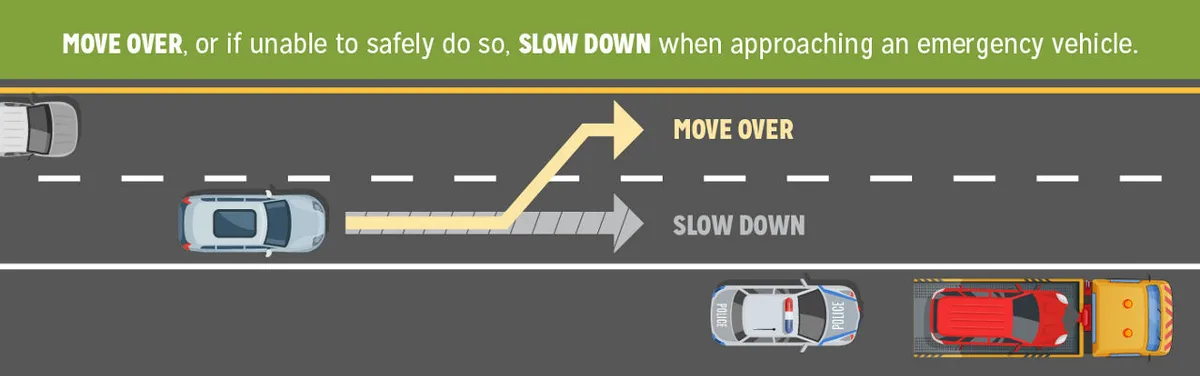
On multi-lane highways, the farthest lane from the incident is always the safest. If you’re in the leftmost lane and see lights on the right shoulder, don’t assume you’re fine. Slow down anyway.
Common Mistakes Drivers Make (And How to Avoid Them)
The biggest mistake is assuming the law only applies to police. Many drivers slow down for cops but ignore tow trucks or highway crews. That’s a violation.
Another error is waiting until the last second to react. You should start moving over or slowing down as soon as you see the lights. Sudden lane changes or braking can cause accidents.
Distraction is a third issue. Put the phone down. Scanning for flashing lights needs your full attention, especially at night or in bad weather.
Who the Law Protects (And Why It Matters)
This law covers more than just emergency responders. It protects anyone working on the roadside with flashing lights.
- Police officers, firefighters, and EMTs
- Tow truck operators
- Highway maintenance crews
- Utility workers

Tow truck drivers are particularly vulnerable. They often work in live traffic lanes with minimal protection. The amber lights on their vehicles are your signal to move over or slow down.
Connecticut vs. Other States: Key Differences
Most states have move over laws, but the details vary. Connecticut’s law is broader than many because it includes tow trucks and service vehicles.
Some states only require slowing down, not changing lanes. Others have lower fines or only apply to emergency vehicles. Connecticut’s penalties are among the steepest, which reflects how seriously the state takes roadside safety.
A few states also require drivers to move over for garbage trucks or postal vehicles. Connecticut currently does not, but the principle remains the same. If you see flashing lights, assume the law applies.
Quick Reference: What to Do in 3 Seconds or Less
Spot flashing lights ahead. That’s your cue.
If the next lane is clear, signal and move over immediately. If not, drop your speed by at least 20 mph below the limit.
This isn’t a suggestion. It’s the law, and it takes just seconds to comply.
FAQs About the Move Over Law in CT
Does the law apply on single-lane roads?
Yes. If you can’t change lanes, you must slow down significantly. The law doesn’t give you a pass just because there’s only one lane.
What if the emergency vehicle is moving?
The law applies to stationary vehicles with flashing lights. If the vehicle is moving with lights on, standard right-of-way rules take over.
Are motorcyclists required to follow the law?
Yes. Motorcyclists must move over or slow down just like any other vehicle. The same penalties apply.
Can you get a ticket if no worker is visible?
Yes. The law is about the vehicle’s lights, not whether you see a person. If the lights are flashing, you must comply.
How much is the fine for violating the law?
First offenses start at $200. Repeat violations can reach $750 or more, depending on the circumstances.