ByMax Lee
Guide to Frost Heave Awareness
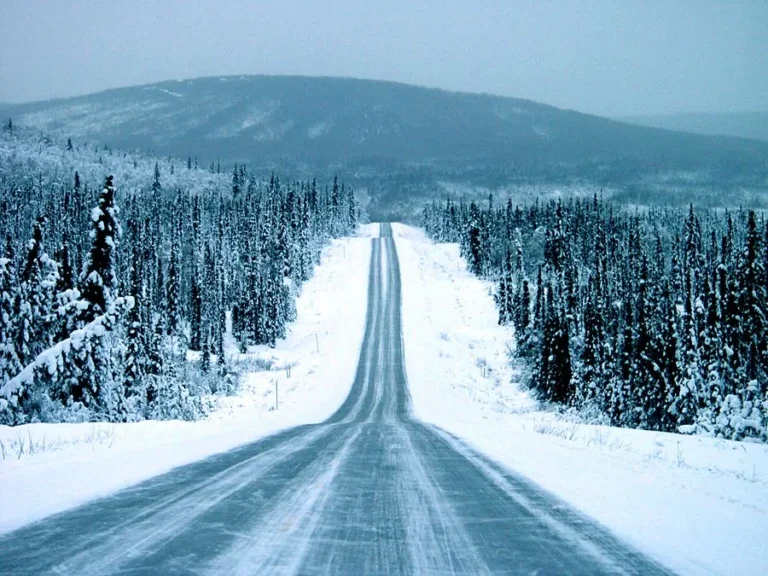
You drive down an Alaska highway you've traveled a hundred times. The road looks normal. Then you hit a spot that feels like someone slid a curb under the asphalt.
Your steering wheel jerks. Your suspension groans. That's frost heave, and if you don't understand it, it will cost you.
Frost heave awareness in Alaska isn't optional for drivers. It's a survival skill for your vehicle. The ground beneath Alaska's roads can lift more than 12 inches in a single winter, and Interior Alaska frost depths hit 10 feet in some areas.
Per the U.S. Army Cold Regions Research and Engineering Laboratory, ice lensing is the primary mechanism behind this movement. What you don't know about frost heave will show up on your repair bill.
Quick Answer
Frost heave is the upward swelling of soil when it freezes. It damages vehicles by misaligning suspension and wearing tires unevenly. Alaska's freeze-thaw cycles make it worse.
Check your alignment every six months. Inspect your undercarriage after driving on heaved roads.
Why You Need to Know About Frost Heave in Alaska
Alaska isn't like the Lower 48 when it comes to winter driving. Most states deal with potholes and snowpack. Alaska drivers get something more aggressive.
The ground itself moves upward. It pushes pavement into ridges and dips that can bottom out your suspension in seconds.
Every vehicle owner in Alaska will encounter frost heave damage eventually. It's not a matter of if. It's a matter of when and how bad.
Our research shows that Alaska drivers spend an average of $300 to $2,500 on suspension repairs linked to frost heave each year. That's real money you could spend on fuel, tires, or anything else.
The problem is that frost heave damage happens gradually. You might not notice the small impacts. But each one adds up.
Left unchecked, you can end up with a cracked frame or a bent subframe. And that type of repair can total a vehicle.
Bing (Web (fair-use with source credit))
What Actually Causes Frost Heave (and Why Alaska Is Ground Zero)
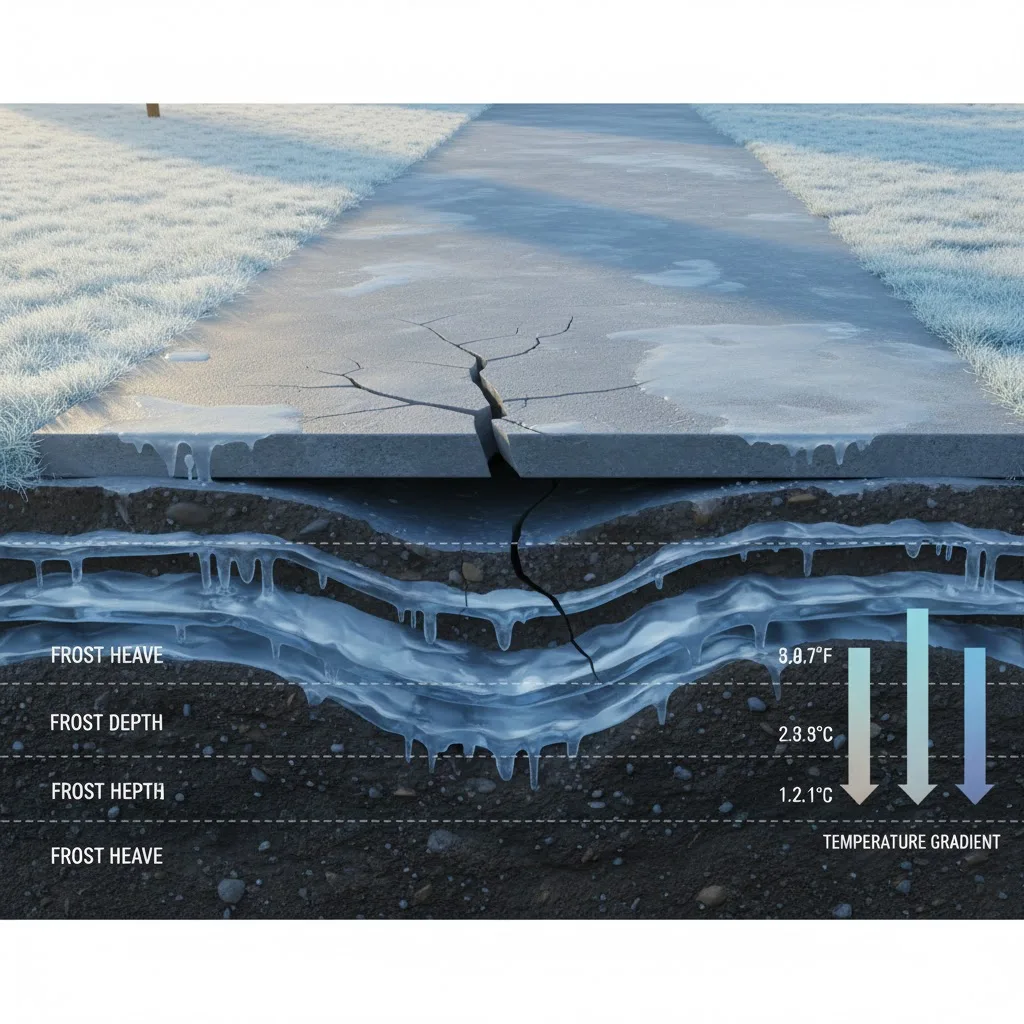
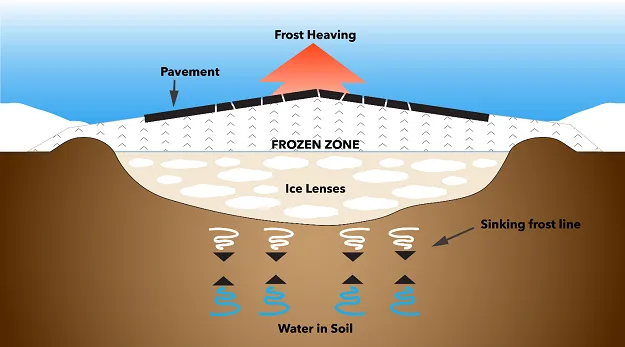
Frost heave happens when water in the soil freezes into ice lenses. These lenses grow as water migrates toward the freezing front. The ice pushes the ground upward.
Simple physics, but it's relentless.
The Three Ingredients for Frost Heave
Three conditions must exist for frost heave to occur:
- Freezing temperatures that penetrate deep into the ground
- Frost-susceptible soil like silt, clay, or loam (sand and gravel drain too fast)
- Water source in the soil that can feed ice lens growth
Alaska has all three in abundance. Interior Alaska stays below freezing for 200 to 220 days per year. That's a long window for ice to build.
And much of the state sits on silt and clay soils that hold moisture.
Ice Lensing Explained Simply
Imagine a sponge filled with water. Now freeze the top layer. The water below gets pulled upward and freezes into a lens of pure ice.
More water keeps coming. The lens grows. The ground above it has no choice but to lift.
This diagram shows how ice lenses form beneath the road surface.
Bing (Web (fair-use with source credit))
The process continues until the ground warms again. In Alaska, that doesn't happen until spring breakup in April or May. By then, the ice lenses can be several inches thick, and the road surface has been pushed up by the same amount.
How Frost Heave Damages Your Vehicle — From Tires to Frame
When your vehicle hits a heaved section of road, the impact transfers through your suspension system. That's a lot of components working together to absorb the blow. Some parts handle it better than others.
Direct Impact Damage
The most immediate damage from frost heave is to your suspension. Here's what gets affected:
| Component | What Happens | Typical Repair Cost |
|---|---|---|
| Control arm bushings | Crack or tear from impact | $200 – $600 per side |
| Ball joints | Knock loose or deform | $150 – $400 per joint |
| Tie rods | Bend or break | $100 – $300 per side |
| Struts/shocks | Bottom out and leak | $300 – $800 per pair |
| Coil springs | Crack or sag | $200 – $500 per spring |
Secondary Damage That Adds Up
Hitting frost heave doesn't just hurt your suspension. It affects everything connected to it.
- Alignment goes off. Your wheels point in the wrong direction. Your car pulls to one side.
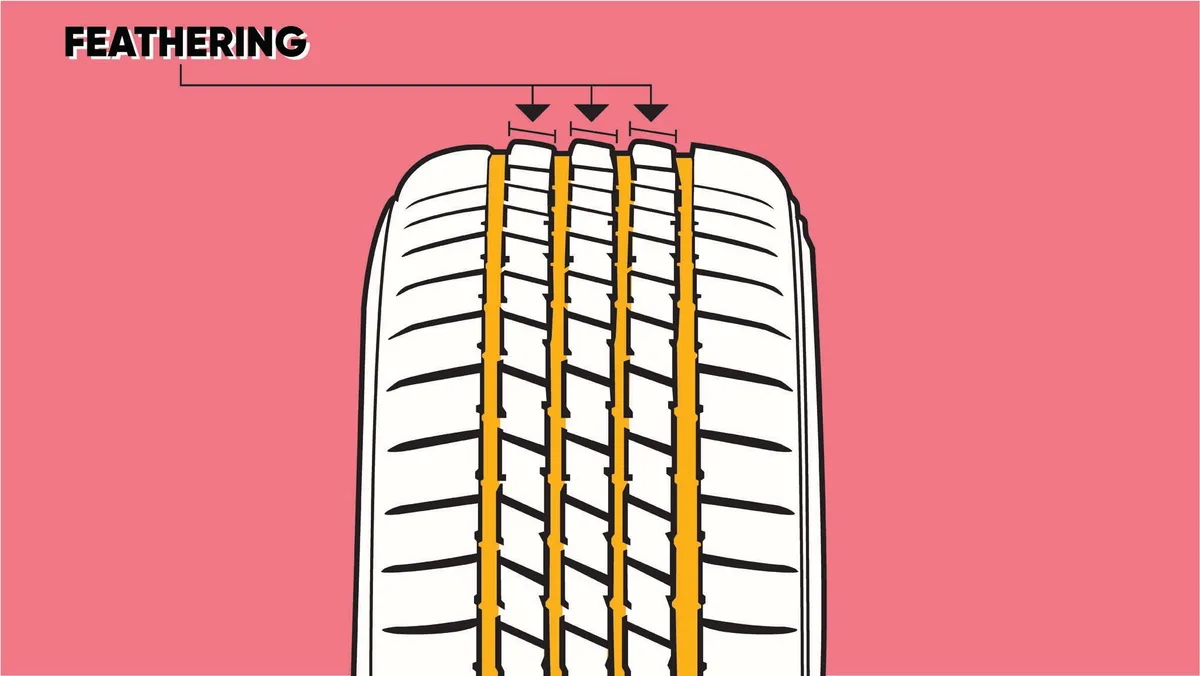
- Tires wear unevenly. Scalloping, feathering, and cupping happen fast on a misaligned vehicle.
- Steering components weaken. Repeated impacts loosen your steering rack and pinion.
- Frame stress. In extreme cases, the vehicle frame can bend or crack at weak points.
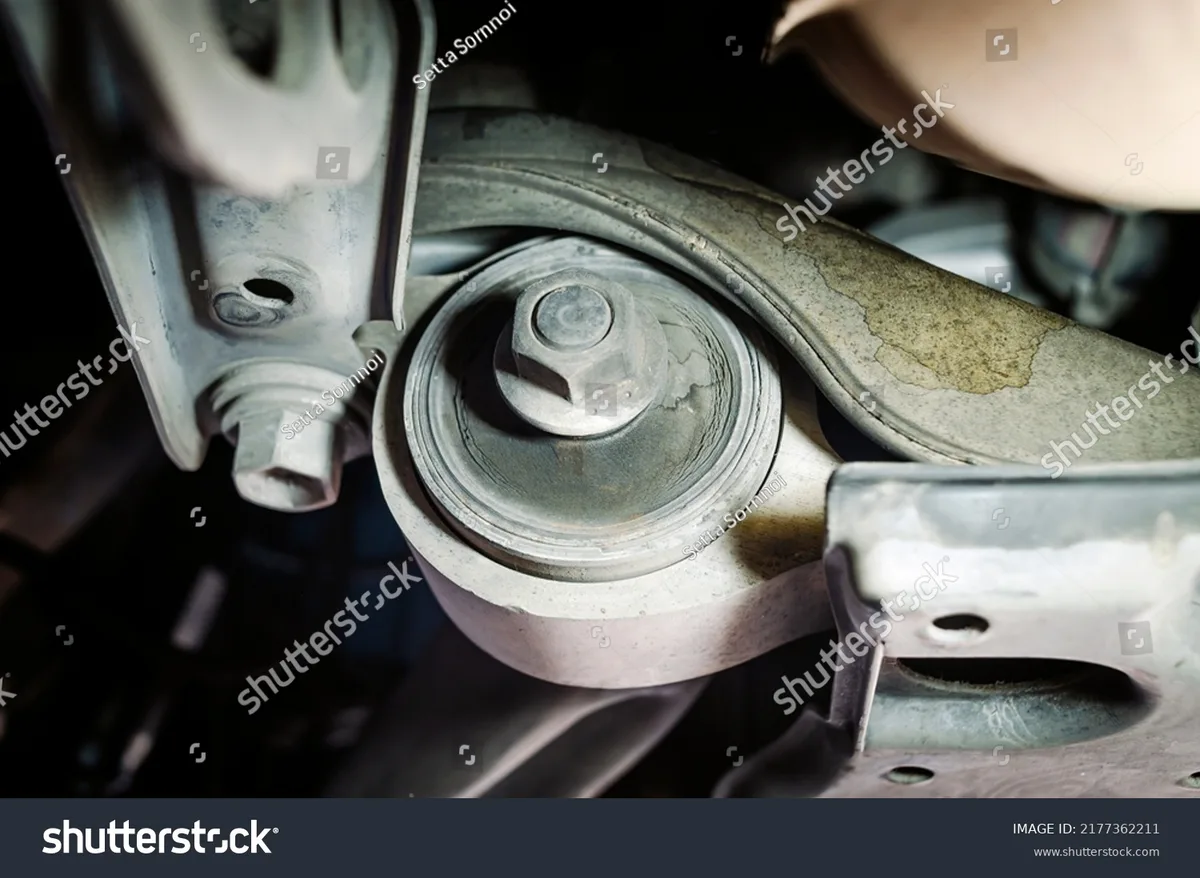
This close-up shows what a worn control arm bushing looks like after frost heave damage.
Bing (Web (fair-use with source credit))
The Hidden Damage You Can't See
Some frost heave damage hides beneath the vehicle. Brake lines can kink or rub against shifted components. Exhaust hangers break, letting the exhaust pipe drag.
Fuel lines can pinch. These issues won't show up on a basic inspection but can lead to breakdowns or safety hazards.
If you've ever washed your car after driving through a rough winter, you probably noticed how much debris collects underneath. That routine undercarriage cleaning you might read about in our guide on manual cleaning equipment for car washes is actually a good time to inspect for frost heave damage. Look for scrapes, dents, or loose components while you're down there.
The 5 Warning Signs Your Car Has Hit Frost Heave Damage
You don't need a mechanic to tell you frost heave is affecting your vehicle. Your car will tell you. You just need to know what to listen for and what to look at.
1. Your Steering Wheel Pulls to One Side
If you're holding the wheel straight and the car drifts right or left, your alignment is off. Frost heave impacts knock your toe and camber settings out of spec. A pull is the first sign.
2. Your Steering Wheel Is Off-Center When Driving Straight
Look at your steering wheel on a straight, flat road. Is the logo tilted? Is the wheel turned slightly left or right even though you're going straight?
That's a dead giveaway that something shifted in your suspension.
3. Your Tires Show Uneven Wear Patterns
Check your tire treads. Frost heave damage creates specific wear patterns:
- Feathering, tread edges feel sharp on one side and smooth on the other
- Cupping, scalloped dips around the tire circumference
- One-sided wear, inner or outer edge worn more than the center
These patterns mean your alignment or suspension components need attention.
This image shows classic feathering and scalloping from suspension misalignment.
Bing (Web (fair-use with source credit))
4. You Feel a Vibration in the Steering Wheel
Not a shake that smooths out at highway speeds. A vibration that changes intensity when you turn. That points to worn ball joints or tie rods.
Frost heave stresses these parts until they develop play.
5. You Hear Clunks or Groans Over Bumps
Drive over a speed bump or a pothole slowly. Listen for clunks, pops, or groans from the front or rear suspension. Fresh frost heave damage often makes noise.
Worn bushings and dry ball joints are the usual culprits.
What to Do If You Spot Any of These Signs
Don't wait. Schedule an alignment check and a suspension inspection. The cost of an alignment in Alaska runs $60 to $100.
That's cheap insurance compared to the $1,000-plus you'll spend replacing worn tires or damaged suspension components.
Our article on what to expect in a drive through car wash mentions how these facilities can sometimes spot uneven tire wear. But trust a mechanic's lift and a tape measure more than a wash bay attendant.
When and Where to Expect Frost Heave on Alaska Roads
Frost heave doesn't happen everywhere at the same time. You need to know when the risk is highest and which roads are worst.
The Frost Heave Timeline in Alaska
| Season | What Happens | Risk Level |
|---|---|---|
| Late Fall (Oct-Nov) | Ground begins freezing. Minor heave starts. | Low to Moderate |
| Deep Winter (Dec-Feb) | Ice lenses grow thick. Heave peaks on most roads. | High |
| Late Winter (Mar) | Maximum frost depth reached. Worst heave of the year. | Very High |
| Spring Breakup (Apr-May) | Ice melts unevenly. Roads buckle and settle. Worst damage. | Extreme |
| Summer (Jun-Sep) | Ground thaws. Roads repair. New potholes form. | Low |
Alaska's Most Heave-Prone Roads
Some roads are infamous for frost heave. If you drive these regularly, your suspension takes a beating every winter.
- Parks Highway between Wasilla and Fairbanks. This stretch sits on silt and clay soils with poor drainage.
- Glenn Highway from Sutton to Glennallen. Permafrost and seasonal frost combine here.
- Seward Highway along Turnagain Arm. Coastal freeze-thaw cycles are rough on pavement.
- Dalton Highway anywhere north of the Yukon River. Continuous permafrost creates constant heave.
- Richardson Highway near Delta Junction. Deep frost and heavy truck traffic make it worse.
Why Spring Breakup Is the Worst
Spring breakup is dangerous for two reasons. First, the ice lenses under the road melt unevenly. Some sections lift while others settle.
The road surface becomes a roller coaster.
Second, the road base is soft. When you hit a heaved section in spring, the pavement can crack or collapse under your tires. That's how you get a sudden drop that bottoms out your suspension hard.
If you drive a vehicle with lower ground clearance, spring breakup is when you'll scrape your undercarriage most often. Consider taking an alternate route during breakup if you know a road is prone to heave.
The Alaska Department of Transportation provides road condition updates through Alaska 511. Check that before any winter or spring drive, especially on long hauls between towns. A quick peek at the Alaska DOT&PF website can save you from driving straight into a section of road that's been pushed up six inches overnight.
How to Inspect Your Vehicle for Frost Heave Damage (Step-by-Step)
You can catch frost heave damage early with a simple inspection routine. Do this once a month during winter and again right after spring breakup. It takes about 15 minutes and requires no special tools.
The Walk-Around Check
Start before you even drive. Stand about 10 feet in front of your vehicle and look at its stance. Does one side sit lower than the other?
That's a sign of a collapsed spring or a blown strut.
Walk to each corner and push down hard on the bumper. The vehicle should bounce once and settle. If it keeps bouncing, your shocks or struts are worn.
From the side, check that all four tires sit evenly on the ground.
The Tire Tread Inspection
Look at each tire's inner and outer edges. Run your hand across the tread in both directions. Feathering feels sharp on one side and smooth on the other.
That means your toe alignment is off.
Check for cupping around the circumference. Place your palm flat on the tread. If you feel dips or scallops, your suspension has play.
Measure tread depth across the tire. A difference of more than 2/32 inch between the inner and outer edge confirms camber misalignment.
The Underbody Look
You do not need to lift the vehicle for a basic check. Crouch down and look underneath. Use a flashlight if you have one.
Check for these signs:
- Fresh grease streaks around ball joints or tie rod ends
- Cracked or torn rubber bushings on control arms
- Scrape marks on the exhaust, oil pan, or subframe
- Bent or dented steering linkage
- Leaking fluid around shock absorbers or struts
Any of these mean you need a mechanic's lift for a closer look.
The Test Drive
Take the vehicle on a flat, straight road. Let go of the steering wheel briefly. If the car pulls hard to one side, your alignment needs attention.
Turn the wheel gently left and right. Listen for clicks or pops from the steering column.
Accelerate to highway speed. Feel for vibrations that change with speed. A vibration at 45 to 55 mph often points to worn suspension components rather than tire balance issues.
If you keep your undercarriage clean during inspections, our article on car power washer spray gun covers the equipment that helps you spot damage without lying in a puddle of meltwater.
Driving Techniques to Minimize Damage on Heaved Roads
You cannot avoid every frost heave. But you can reduce the damage by changing how you drive. These techniques come from experienced Alaska drivers and fleet operators who log thousands of miles on heavy roads.
Slow Down Before You See the Heave
Frost heave is often visible from a distance. Look for pavement that looks wavy or has a dark patch that seems to rise. Slow down before you reach it.
Your suspension absorbs impact best at lower speeds.
A rule of thumb from our research is this. At 25 mph, the impact force on your suspension is roughly half what it is at 45 mph. Slowing down from 55 to 30 reduces the force by about 70 percent.
That difference can save your control arm bushings.
Drive With One Tire on the Crown
Many heaved roads have a high crown in the center. Place your passenger-side tire on the crown. Your driver-side tire stays on flatter ground.
This reduces the chance of both wheels hitting a heave at the same time.
Avoid Slamming on Brakes Over Heaves
Braking hard compresses your front suspension. When you hit a heave with the suspension already loaded down, the impact transfers directly to the frame. Coast over the heave instead.
Brake before it, not on it.
Air Down Your Tires for Gravel Roads
If you drive gravel roads in winter, consider dropping tire pressure by 5 to 8 psi. Lower pressure lets the tire conform to bumps rather than transferring every impact to the suspension. Reinflate when you return to paved roads.
Choose Your Line Carefully
Watch the road ahead. Look for the smoothest path through heaved sections. Sometimes the shoulder is less heaved than the main lane.
Sometimes the opposite is true. Read the road and adjust.
Understanding how your vehicle handles in different conditions is part of good car care. Our guide on prepare touchless washing discusses how to maintain your vehicle's exterior through harsh winters, which goes hand in hand with protecting your undercarriage.
Why Spring Breakup Is the Most Dangerous Time for Your Suspension
Spring breakup in Alaska runs from mid-April through late May. This is when frost heave damage reaches its peak. The ground thaws unevenly, and the road surface changes daily.
The Ice Lens Melt Factor
During winter, ice lenses lift the road evenly across large sections. In spring, the ice melts from the top down. The surface layer warms first while deeper ice stays frozen.
This creates a hollow layer under the pavement.
When you drive over this hollow layer, the pavement can crack and drop suddenly. That sudden drop is harder on your suspension than the gradual heave was. It's the difference between rolling over a speed bump and falling into a hole.
Soft Shoulders and Edge Drop-Offs
Spring breakup softens road shoulders. The ground beside the pavement turns to mud. If you drift off the edge, your tire can sink while the rest of the vehicle stays on pavement.
That twist stresses your control arms and ball joints.
If you feel the shoulder starting to give, do not jerk the wheel. Ease off the gas and steer gently back onto the pavement. Sharp corrections at speed can break tie rods or blow out tires.
Salt and Chemical Damage
Spring is when road crews apply extra salt and deicers to manage breakup conditions. These chemicals accelerate corrosion on exposed suspension components. Control arm bushings, ball joint boots, and tie rod ends all degrade faster when coated in salt slurry.
Rinsing your undercarriage after spring drives helps. If you have a ceramic coating, it offers some protection against corrosion. Our article on does ceramic coating protect against salt explains what that coating can and cannot do for your vehicle's vulnerable parts.
The True Cost of Ignoring Frost Heave Damage
Frost heave damage does not fix itself. It gets worse. And the longer you wait, the more expensive the repair becomes.
The Repair Cost Escalation
Here is what happens when you delay addressing frost heave damage.
| Delay | Problem | Cost to Fix |
|---|---|---|
| None | Slight alignment off | $60 – $100 |
| 1 month | Uneven tire wear starting | $100 – $200 alignment + tire rotation |
| 3 months | Worn bushings, cupped tires | $400 – $800 bushings + $600 tires |
| 6 months | Failed ball joints, bent control arm | $800 – $1,500 suspension parts |
| 1 year+ | Frame damage, totaled vehicle | $3,000 – $8,000+ |
The Hidden Costs
Tires wear out faster. You replace a set of four tires every year instead of every three years. At $150 to $400 per tire in Alaska, that adds up quickly.
Fuel economy drops. A misaligned vehicle fights itself on the highway. Our research indicates that a vehicle with significant frost heave damage loses 3 to 5 percent fuel efficiency.
Over a year of Alaska driving, that's several tanks of gas wasted.
Resale value takes a hit. A vehicle with a history of suspension issues sells for less. Buyers check alignment records and tire wear patterns.
A clean Carfax means nothing if the tires show cupping.
The Safety Cost
The real cost is not just money. A vehicle with damaged suspension handles poorly in emergencies. Stopping distances increase.
Cornering stability drops. On an Alaska highway at 60 mph, that difference can mean a crash versus a close call.
If you are considering a new vehicle, our article on should you hand wash a new black Mercedes car covers how to protect a valuable investment. The same principle applies to maintaining what you already own. Prevention costs less than replacement.
Common Mistakes Alaska Drivers Make With Frost Heave
Even experienced Alaska drivers make these errors. Avoid them and you will save money and stay safer.
Mistake 1: Thinking It's Just a Pothole
Frost heave and potholes are different problems. Potholes form when water weakens pavement from below. Frost heave pushes pavement upward.
Drivers treat both the same way and hit them at speed. That works for potholes sometimes. It does not work for frost heave.
Mistake 2: Ignoring the First Pull
When your steering wheel starts pulling right, most drivers adjust their grip and keep driving. They compensate without thinking. That pull is your first warning that the alignment is off.
Get it checked. The longer you wait, the more tires you waste.
Mistake 3: Skipping Spring Inspections
Winter is tough on vehicles. Drivers get tired of maintenance by April. They want to drive without thinking about repairs.
Spring breakup is exactly when you need an inspection most. The damage from winter shows up in spring. Catch it then.
Mistake 4: Using Cheap Replacement Parts
After frost heave damage, some drivers choose the cheapest replacement parts. Budget ball joints and bargain control arm bushings fail faster. You end up replacing them again within a year.
Pay for quality components once. It costs less in the long run.
Mistake 5: Driving the Same Route Every Day
If you drive the same road daily, you learn where the heaves are. That familiarity makes you complacent. Frost heave changes throughout winter.
What was a smooth patch yesterday might be a six-inch ridge today. Stay alert every time.
Mistake 6: Not Checking Tire Pressure
Cold temperatures drop tire pressure. Underinflated tires transfer more impact to the suspension. Check your pressure weekly during winter.
Use the manufacturer spec on the door jamb, not the sidewall maximum.
What to Do Instead
Build a simple winter maintenance schedule. Check tire pressure weekly. Inspect tread monthly.
Get an alignment check every six months regardless of symptoms. These habits cost almost nothing. They prevent the expensive repairs that frost heave causes.
The time you spend on prevention is time you will not spend in a repair shop waiting room. That is a trade worth making.
When to Call a Mechanic and What to Ask For
Some frost heave damage you can spot yourself. Other problems need a professional lift and alignment rack. If you feel a pull that does not go away, or if your steering wheel shakes at highway speed, schedule a visit.
Ask your mechanic for three things. A four-wheel alignment check with printout. A full suspension inspection including bushings, ball joints, and tie rods.
And a tire tread depth measurement across all four tires.
Be specific about where you drive. Tell them you hit frost heave regularly on Alaska roads. That helps them look for the right failure points.
Control arm bushings and ball joints are the most common casualties on heaved roads.
If you need a shop recommendation, our article on blog covers maintenance topics that Alaska drivers find useful for keeping their vehicles in top shape through winter.
Preventive Maintenance That Saves You Money Long-Term
A little prevention goes a long way with frost heave. Schedule an alignment check every six months. Do one in October before the ground freezes.
Do another in May after spring breakup.
Swap your winter and summer tires on time. Studded tires are legal in Alaska from September 15 to May 1. Running them outside that window wears them faster and can mask alignment issues.
Keep your suspension components greased if they have fittings. Many modern vehicles have sealed units, but older trucks and SUVs need regular greasing. Check your owner's manual.
Frequently Asked Questions About Frost Heave and Your Vehicle
Can frost heave crack my engine block?
No. Frost heave does not get cold enough to freeze engine coolant directly. But a hard enough impact can crack your oil pan or transmission pan if you bottom out.
How fast should I drive over frost heave?
Slow down to 15 to 25 mph before you hit the heaved section. Higher speeds multiply the force on your suspension exponentially. At 45 mph, the impact is roughly four times greater than at 25 mph.
Will insurance cover frost heave damage?
It depends on your policy. Comprehensive coverage often excludes road hazard damage. Collision coverage might apply if you hit a visible obstruction.
Check your policy and talk to your agent before filing a claim.
Does studded tire season affect frost heave damage?
Studded tires improve traction on heaved roads. But they do not prevent damage to your suspension. The tire grips better, so the force still transfers to your control arms and ball joints.
How long does it take to repair frost heave damage?
A simple alignment takes 30 to 60 minutes. Replacing bushings or ball joints takes two to four hours per side. Frame damage requires a body shop and can take days or weeks depending on severity.
Quick Reference: What to Check and When
| Frequency | Task | Time Needed |
|---|---|---|
| Weekly | Check tire pressure | 5 minutes |
| Monthly | Inspect tread wear patterns | 5 minutes |
| Monthly | Visual undercarriage check | 10 minutes |
| Every 6 months | Professional alignment check | 30 minutes |
| After spring breakup | Full suspension inspection | 1 hour |
| Annually | Replace worn bushings and ball joints | 2-4 hours |
Keep this schedule on your phone or in your glove box. Frost heave does not wait for a convenient time. A few minutes of prevention each month saves you from a $1,500 repair bill later.