Black Friday deals are live on Amazon · limited-time discounts, grab them before they’re gone
Grab the deals

ByMax Lee
How to Use a Manual Car Wash: Expert Tips for a Sparkling Shine
A manual car wash gives you more control than an automatic tunnel wash. You choose the pressure, cleaning order, tools, and amount of agitation—so you can remove grime without unnecessarily rubbing it across the paint.
The best results come from a simple principle: rinse first, wash gently, keep dirty tools away from clean surfaces, and dry promptly. This guide explains how to use a self-service manual car wash safely, what to bring, which mistakes cause scratches, and how to leave your vehicle clean without damaging its finish. You can also read our guide on best foam gun car wash for water hose.
What Is a Manual Car Wash?
A manual car wash, often called a self-service or coin-operated car wash, is a wash bay where you clean the vehicle yourself. The bay normally provides a pressure-washer wand with settings such as:
- Pre-rinse or high-pressure rinse
- Soap or foam
- Wheel cleaner
- Wax or protectant
- Final rinse
- Spot-free or deionized-water rinse
Unlike an automatic wash, a manual bay does not move your vehicle through rotating brushes or cloth strips. That gives you better access to grilles, wheels, emblems, mirrors, lower body panels, and other areas machines may miss.
However, manual washing is not automatically safer. A dirty shared brush can drag grit across the clear coat, and excessive pressure can force water behind seals or damage loose trim. Technique matters more than the word “manual.”
Choose the Right Time and Location
Wash when the paint is cool to the touch and, ideally, when the bay is shaded. Early morning, late afternoon, or an overcast day is usually better than the hottest part of the afternoon. You can also read our guide on will automatic car wash remove ceramic coating.
Avoid washing immediately after driving if the hood, roof, wheels, or brake components are hot. Cold water on very hot surfaces can cause rapid drying and uneven spotting, while wheel-cleaning chemicals may react unpredictably on hot brake components.
Before pulling into the bay:
- Check that the facility permits personal soap, mitts, buckets, or drying towels.
- Choose a bay with good drainage and enough room to open doors safely.
- Remove loose rubbish and personal items from the cabin.
- Close the windows, sunroof, convertible top, and trunk securely.
- Fold in mirrors only if the vehicle manufacturer allows it.
- Keep children, pets, and loose equipment away from the spray area.
Do not wash where runoff flows directly into a storm drain unless the facility is designed to collect and treat wash water. Detergent, brake dust, oil, and road residue should not be allowed to enter waterways. The U.S. Environmental Protection Agency provides general guidance on preventing polluted runoff and protecting stormwater systems. You can also read our guide on are brushless car washes better.
What to Bring to a Self-Service Car Wash
A self-service bay supplies water and the pressure wand, but the attached foam brush may be contaminated with grit from previous vehicles. For the safest finish, bring your own clean equipment where the facility allows it.
Recommended supplies
- pH-balanced automotive shampoo
- Clean microfiber wash mitt
- Separate wheel and tire brush
- Several plush microfiber drying towels
- Small detailing brush for badges and grille openings
- Glass towel and automotive glass cleaner
- Nitrile or waterproof gloves
- Tire-pressure gauge
- A small bag for used towels
- Optional drying aid or spray sealant
A two-bucket setup is usually impractical in a coin-operated bay unless the site allows it, but the same separation principle still helps. Use one mitt for painted panels and a different brush or mitt for wheels. For home washing, the two-bucket setup explains how to separate wash solution from rinse water. You can also read our guide on best car wash for paint protection.
Do not use household cleaners
Avoid dish detergent, laundry soap, powdered cleaners, bathroom spray, and abrasive sponges. These products may strip existing wax or sealant, leave residue, stain trim, or provide too little lubrication between dirt and paint.
Use a car-specific shampoo instead. It is formulated to clean automotive surfaces while reducing the likelihood of dulling trim or removing protection prematurely. You can also read our guide on is ceramic coating at car wash worth it.
How to Use a Manual Car Wash Step by Step
1. Inspect the vehicle before spraying
Walk around the car and identify:
- Heavy mud on the lower panels
- Bird droppings or insect residue
- Tar, tree sap, or road film
- Loose paint, damaged clear coat, or peeling trim
- Heavy brake dust on the wheels
A wash removes dirt; it does not repair failing paint or safely remove every bonded contaminant. If a panel has loose paint, use lower pressure and avoid directing the spray into the damaged edge.
2. Rinse the wheels and tires first
Wheels are usually the dirtiest part of the vehicle. Rinsing them first prevents brake dust and gritty road residue from splashing onto already-clean paint later. You can also read our guide on best hose filter for car washing.
Use the pressure wand to flush:
- Tire sidewalls
- Wheel faces
- Spokes and lug nuts
- Inner barrel openings
- Mud flaps and wheel-well liners
Keep the wand moving and do not hold it close to tire sidewalls, valve stems, wheel weights, or damaged clear coat. If the wheels are hot, allow them to cool before applying a wheel-cleaning chemical.
Use a dedicated wheel brush only on the wheels. Never bring that brush back to the paint.
3. Pre-rinse from top to bottom
Set the wand to a rinse setting and begin at the roof. Work downward so loosened dirt flows toward the ground rather than over areas you have already cleaned. You can also read our guide on best waterproof gloves for washing cars.
Hold the nozzle far enough away to avoid striking seals and trim. A practical starting distance is roughly 12–24 inches, then adjust according to the wand’s strength and the vehicle’s condition. Use a wider spray pattern for delicate areas and a more focused pattern only when the surface can tolerate it.
Pay particular attention to:
- Roof and glass
- Hood and trunk
- Door panels
- Rocker panels
- Bumpers
- Wheel arches
- License-plate recesses
The purpose of this stage is to remove loose grit. Do not begin scrubbing while the surface is still visibly sandy.
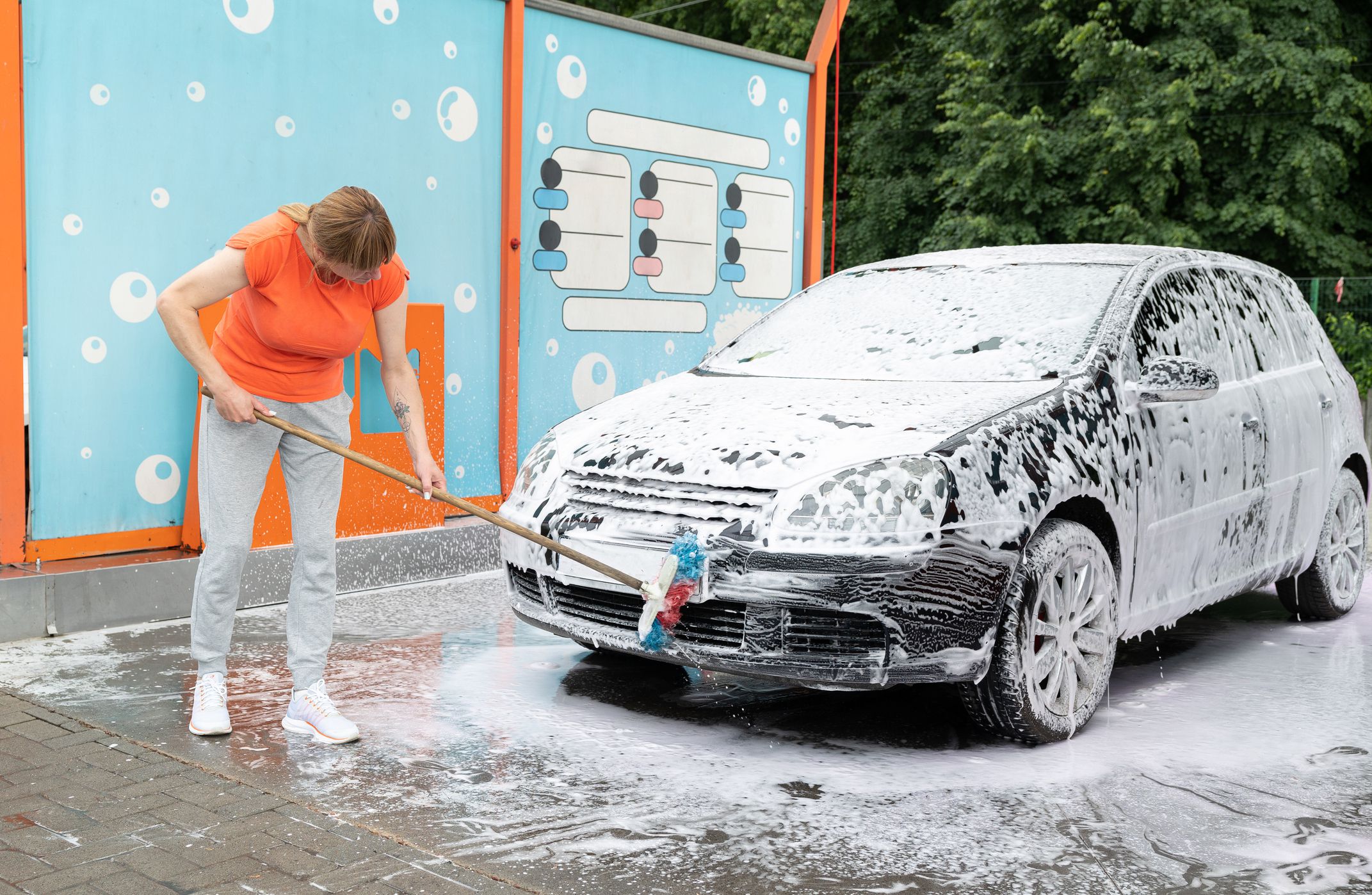
4. Apply soap or foam
Select the facility’s soap setting, or apply your own automotive shampoo if permitted. Cover the vehicle evenly, working from the top down. You can also read our guide on best microfiber towel for washing car.
Foam is useful because it softens and surrounds dirt, but it does not replace rinsing or gentle contact washing. Let the product dwell briefly according to the label or facility instructions. Do not allow it to dry on the paint.
If you use a mitt, clean one small section at a time:
- Roof
- Glass
- Hood and trunk
- Upper doors and fenders
- Lower doors and bumpers
- Wheels and tires with separate equipment
Use straight, light passes rather than aggressive circular scrubbing. Rinse the mitt frequently. A common mistake is to use the same dirty sponge on the rocker panels and the roof; lower panels collect the most abrasive grit. You can also read our guide on how to wash a black car without water spots.
5. Clean difficult areas carefully
For emblems, grilles, mirror housings, and door handles, use a soft detailing brush or low-pressure spray. Do not force a high-pressure jet behind badges, rubber seals, cameras, parking sensors, or loose trim.
Bird droppings and dried insects should be softened with water and shampoo. Give them time to loosen instead of scraping them with a fingernail or plastic card. Hard scraping can mark the clear coat. You can also read our guide on is graphene car wash worth it.
For tar, sap, or industrial fallout, washing may not be enough. Use a product specifically labeled for that contaminant and test it on an inconspicuous area first.
6. Rinse thoroughly
Switch back to rinse water and flush the vehicle from top to bottom. Move slowly enough to remove soap from panel gaps, mirrors, door handles, grilles, emblems, and around the license plate. You can also read our guide on are automatic car washes bad for your car.
Rinse the wheels and wheel wells again. Soap residue left in gaps can run down the paint after you leave the bay and create streaks.
If the facility offers a spot-free or deionized-water rinse, use it as the final rinse. It can reduce mineral spotting, particularly in areas with hard water. It does not eliminate the need for proper drying. You can also read our guide on do car washes damage paint black cars.
7. Dry without grinding in grit
Move to a permitted drying area or use clean microfiber towels in the bay if allowed. Start at the roof and work downward.
Use a blotting or light-dragging motion rather than pressing hard. Turn the towel to a clean side as it becomes damp or picks up residue. Keep separate towels for:
- Paint
- Wheels and tires
- Glass
- Door jambs
A blower can remove water from mirrors, grilles, badges, wheel spokes, and panel gaps before towel drying. If you use compressed air, keep the nozzle away from your skin, electrical connectors, and loose trim, and use clean, dry air. A properly sized compressed-air setup can also be useful for controlled drying and tire maintenance. You can also read our guide on best car shampoo for paint protection.
Do not let water sit in door mirrors or handles. It often reappears as streaks several minutes after the wash.
8. Clean the glass and inspect the finish
Use a glass cleaner made for automotive windows and a dedicated glass towel. Spray the product onto the towel rather than directly onto the dashboard, speaker grilles, switches, or door panels.
Clean the inside and outside separately. If the vehicle has aftermarket tint, avoid ammonia-based products unless the tint manufacturer specifically approves them. A clean windshield is also a safety issue: haze and streaks become especially distracting in low-angle sunlight or at night. For broader vehicle visibility considerations, review the relevant vehicle equipment guidance. You can also read our guide on how to keep a black car clean between washes.
Finish by checking:
- Headlights and taillights
- Cameras and parking sensors
- License plates
- Windshield edges
- Door jambs
- Wheel faces
- Lower bumpers
- Water trapped around mirrors and badges
A Safer Washing Order
The most reliable order is:
| Stage | Area or task | Why it comes first |
|---|---|---|
| 1 | Wheels and tires | They hold the most abrasive grime |
| 2 | Initial rinse | Removes loose dirt before contact |
| 3 | Roof and upper surfaces | Dirty water flows downward |
| 4 | Glass and upper panels | These areas are usually less contaminated |
| 5 | Lower panels and bumpers | They collect road film and grit |
| 6 | Final rinse | Removes loosened soap and residue |
| 7 | Drying | Prevents mineral spots and streaks |
| 8 | Glass and inspection | Restores visibility and catches missed areas |
This order prevents you from carrying wheel dust or rocker-panel grit onto clean paint.
Should You Use the Attached Foam Brush?
Use the shared foam brush only if you can inspect and thoroughly rinse it first. Look for trapped stones, visible dirt, or black residue in the bristles. Even then, it is generally safer to bring a clean microfiber mitt.
If you must use the facility brush:
- Rinse it thoroughly with the pressure wand.
- Keep it away from the paint until loose debris is gone.
- Use very light pressure.
- Reserve it for lower panels or wheels if possible.
- Rinse the brush again before returning it.
Never use a wheel brush on painted panels. Brake dust contains hard particles that can create fine scratches.
How to Protect the Paint After Washing
A wash removes contamination but does not provide long-term protection. If the surface is clean and dry, you can apply a compatible spray sealant, quick detailer, or drying aid according to its label.
Before applying any product:
- Confirm the panel is cool.
- Use a clean microfiber towel.
- Work in small sections.
- Avoid applying dressing to glass, brake components, pedals, or steering-wheel surfaces.
- Follow the product’s curing or buffing instructions.
Do not apply tire dressing to the tread. Overspray can reduce traction, and excess product can sling onto the lower body panels while driving.
If the car has ceramic coating, wax, or paint sealant, choose maintenance products that are compatible with that protection. A strong detergent or abrasive cleaner can shorten the life of some protective layers, while a pH-neutral maintenance wash is usually less disruptive.
Common Manual Car Wash Mistakes
| Mistake | What can happen | Better approach |
|---|---|---|
| Washing in direct, intense sun | Soap and water dry before rinsing | Work in shade or wash when cool |
| Holding the wand too close | Trim, seals, decals, or paint may be damaged | Keep the nozzle moving and start farther away |
| Using one mitt everywhere | Wheel grit can scratch paint | Separate wheel and paint tools |
| Scrubbing dry dirt | Abrasive particles drag across the clear coat | Pre-rinse and lubricate first |
| Letting soap dry | Water spots and residue remain | Wash smaller sections and rinse promptly |
| Using a shared dirty brush | Embedded grit can cause swirls | Bring a clean mitt |
| Drying with an old towel | Rough fibers can mark the finish | Use clean, plush microfiber |
| Spraying directly into openings | Water can reach sensitive components | Use indirect spray around seals and electronics |
| Applying tire dressing to tread | Traction may be reduced | Keep dressing on the sidewall only |
| Skipping the final inspection | Water hides in gaps and streaks later | Check mirrors, handles, badges, and glass |
Manual Car Wash vs. Automatic Car Wash
A manual wash is often preferable when you need control over delicate trim, wheels, cameras, or heavily soiled areas. It can also be useful for vehicles with unusual shapes, roof accessories, or areas an automatic machine cannot reach.
An automatic wash may be more convenient when time is limited. Touch-free systems reduce direct brush contact but may rely on stronger detergents or higher pressure. Tunnel washes are quick, but shared contact media and the wash process may not suit every finish or vehicle accessory.
Neither option is perfect for every vehicle. The right choice depends on:
- How dirty the vehicle is
- Whether the paint has sensitive protection
- The condition of trim and decals
- Whether the vehicle has roof racks or accessories
- How much control you need
- Whether the facility permits hand tools
For the lowest-risk finish, a careful hand wash with clean equipment remains the most controllable approach.
How Often Should You Use a Manual Car Wash?
Wash based on contamination rather than a rigid calendar. Road salt, coastal air, pollen, mud, bird droppings, tree sap, and construction dust may require earlier attention.
As a practical routine:
- Remove bird droppings and insect residue as soon as possible.
- Rinse salt and heavy road grime before they accumulate.
- Wash when the vehicle is visibly dirty or the paint feels contaminated.
- Clean wheels more frequently if brake dust builds quickly.
- Dry the vehicle after washing instead of allowing mineral-rich water to evaporate.
Frequent gentle washing is usually better for the finish than allowing heavy contamination to build up and then using aggressive scrubbing.
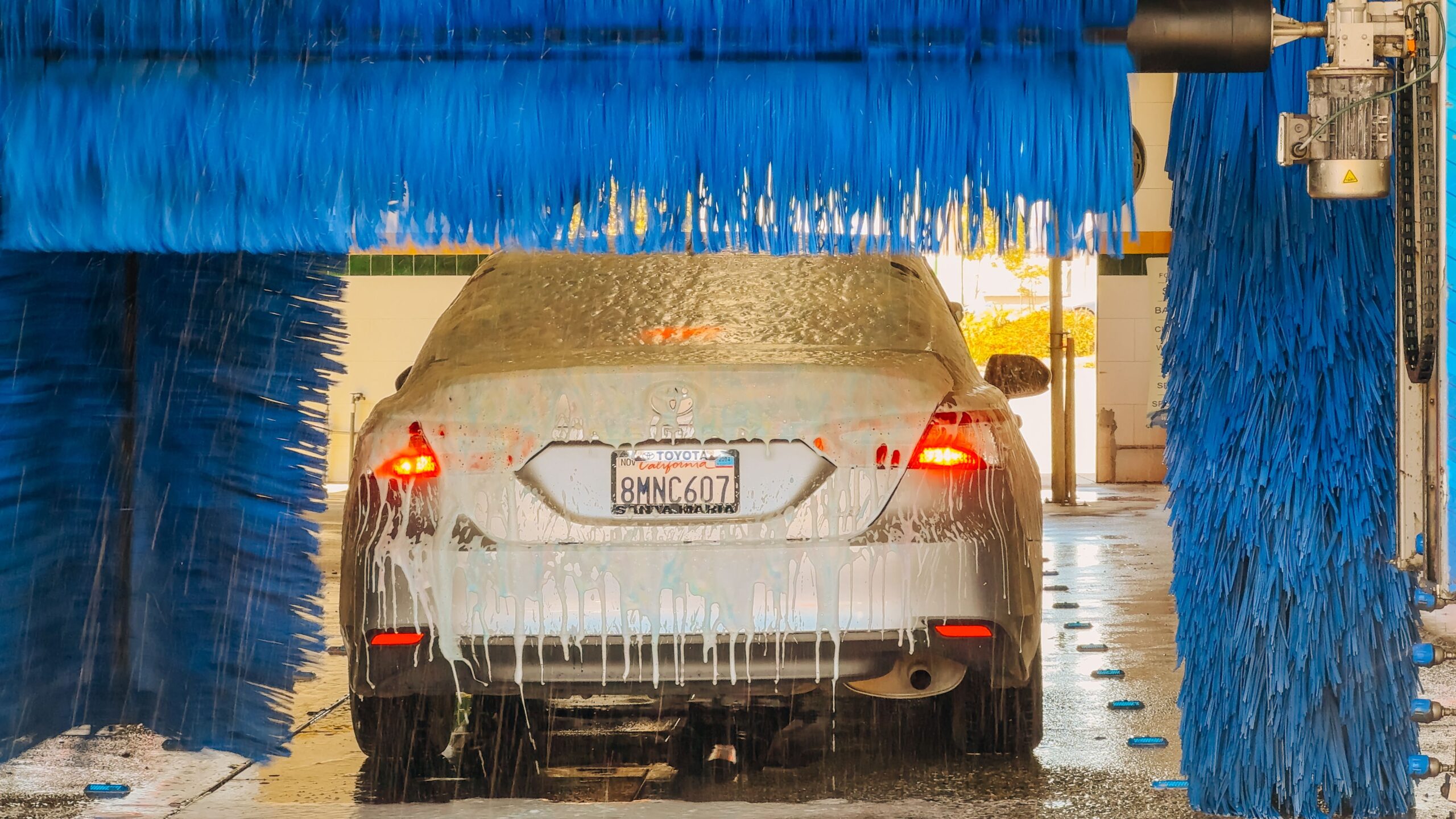
Pressure rinsing lifts loose road grime before contact washing.
Credit: www.cheapism.com
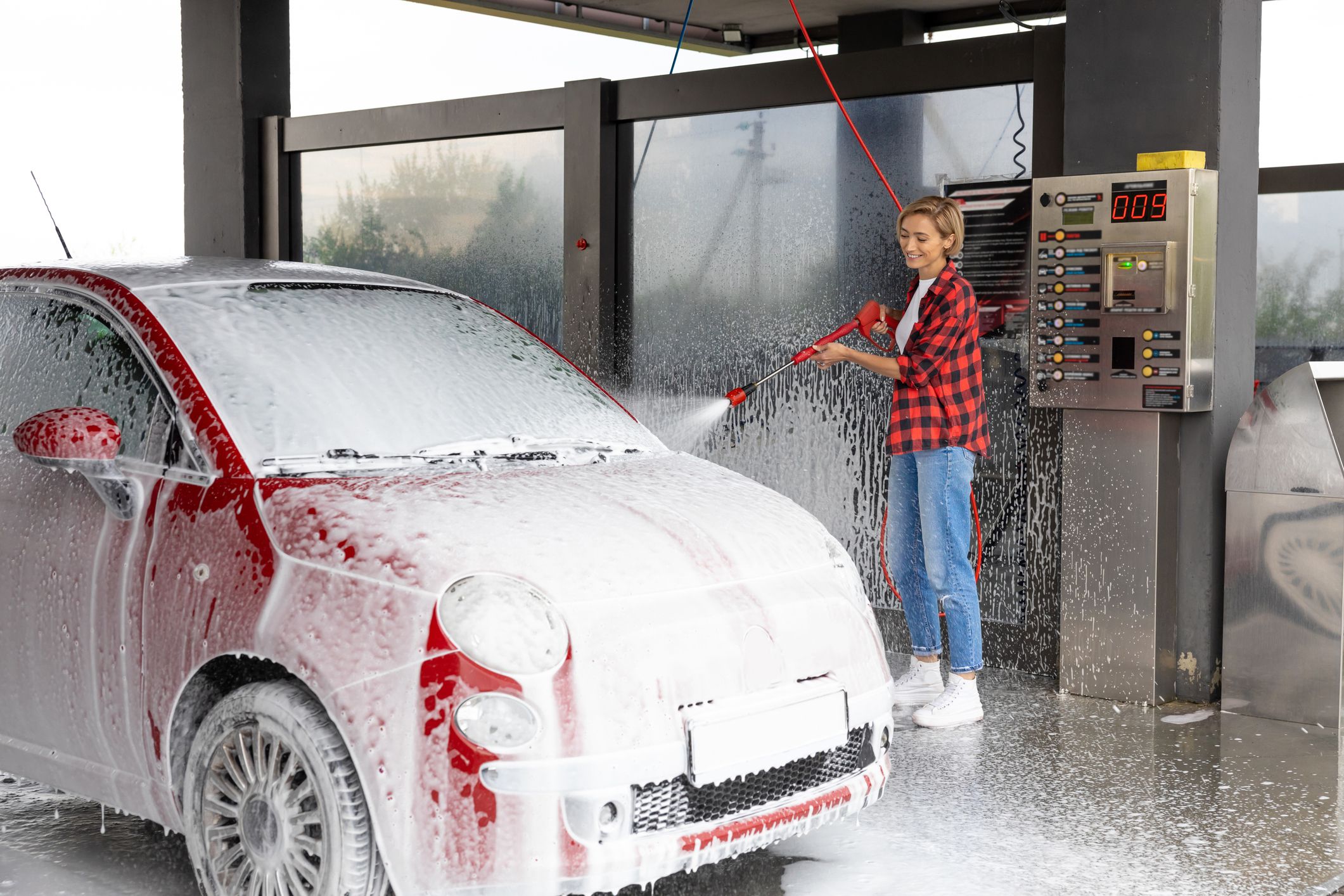
Clean microfiber helps remove remaining water without grinding grit into the paint.
Credit: www.cheapism.com
Frequently Asked Questions
Can I use a manual car wash with ceramic coating?
Yes. Use a gentle rinse and a compatible automotive shampoo, and avoid abrasive brushes. A spot-free final rinse can help reduce mineral deposits, but the coating does not make the vehicle scratch-proof.
Is it safe to use the pressure washer on car paint?
Yes, when used correctly. Keep the nozzle moving, start at a moderate distance, and avoid spraying directly into damaged paint, window seals, badges, sensors, electrical connectors, and loose trim.
Can I use the foam brush at a self-service car wash?
You can, but inspect and rinse it first. Shared brushes may contain grit. A personal microfiber mitt is the safer choice for painted surfaces.
Should I wash the wheels before the body?
Yes. Wheels and tires collect abrasive brake dust and road grime. Cleaning them first prevents dirty runoff and tools from contaminating freshly washed paint.
Can I use dish soap to wash my car?
It is better to use automotive shampoo. Dish soap may remove existing wax or sealant and is not designed for automotive paint, trim, or protective coatings.
How do I prevent water spots?
Wash on a cool surface, rinse thoroughly, use spot-free water when available, and dry promptly with clean microfiber towels. Do not allow soap or hard-water droplets to evaporate on the paint.
How do I clean a car with tinted windows?
Use a soft microfiber towel and a tint-safe, ammonia-free glass cleaner unless the tint manufacturer states otherwise. Avoid aggressive scrubbing around the film edges.
What should I do if the car is extremely muddy?
Rinse repeatedly before touching the paint. If mud remains thick on the lower body, avoid dragging a mitt through it. A second pre-rinse is safer than trying to remove everything in one pass.
Final Manual Car Wash Checklist
Before leaving the facility, confirm that you have:
- Rinsed the wheels and tires
- Removed loose dirt before scrubbing
- Used separate tools for wheels and paint
- Cleaned from top to bottom
- Rinsed all soap from panel gaps
- Dried mirrors, handles, badges, and grilles
- Cleaned the windshield and exterior glass
- Checked headlights, taillights, cameras, and sensors
- Removed any remaining bird droppings or visible residue
- Collected your towels, tools, and rubbish
Conclusion
Using a manual car wash safely is less about washing faster and more about controlling contamination. Rinse thoroughly, work from the cleanest areas to the dirtiest, keep wheel tools away from the paint, and use light contact with plenty of lubrication.
For the most consistent shine, wash when the vehicle is cool, use automotive-specific products, take advantage of a spot-free final rinse, and dry before water can evaporate. Follow this process and your self-service wash will leave the car cleaner, glossier, and less likely to develop avoidable swirl marks.








