Maryland commercial vehicle registration and weight restrictions trip up even experienced operators. The rules change based on vehicle class, intended use, and whether you’re running intrastate or interstate. Get it wrong and you’re looking at fines, impoundment, or delayed shipments.
As of 2026, Maryland enforces an 80,000 lb gross vehicle weight limit under federal standards, but state and local roads often have stricter seasonal or structural limits. Here’s how to stay compliant and keep your rig moving.
Quick Answer
Maryland commercial vehicle registration and weight restrictions depend on your vehicle’s GVWR. Single axle max is 20,000 lbs. Tandem axle max is 34,000 lbs.
Gross limit is 80,000 lbs. Seasonal thaw limits apply March to April.
Do You Need Commercial Registration in Maryland?
You do if your vehicle has a GVWR over 10,000 lbs or is used for business purposes. This includes trucks, buses, and trailers. Even some large vans fall under commercial rules.
Personal vehicles towing heavy loads may also need commercial tags. Check the Maryland MVA for specifics. The line between personal and commercial isn’t always obvious.
Maryland Commercial Vehicle Classes & Weight Limits Explained
Maryland follows federal weight classes but adds state-specific rules. The key classes are:
- Class A: GVWR 26,001 lbs or more (includes tractor-trailers)
- Class B: GVWR 26,001 lbs or more, but single vehicle (dump trucks, buses)
- Class C: GVWR under 26,001 lbs but designed to transport 16+ passengers or hazardous materials
Weight limits break down by axle configuration. Single axles max out at 20,000 lbs. Tandem axles allow 34,000 lbs.
The Federal Bridge Formula may further restrict weights based on axle spacing.
How to Register a Commercial Vehicle in Maryland Step by Step
Start by determining your vehicle’s class and intended use. You’ll need the title, proof of insurance, and VIN verification. For interstate operations, you may also need IRP and IFTA credentials.

Here’s the process:
- Gather documents , Vehicle title or manufacturer’s certificate of origin
, Proof of Maryland insurance
, VIN verification (Form VR-005)
, Power of attorney (if applicable)
- Complete the application , Fill out the MVA commercial registration form
, Indicate vehicle class and weight
, Declare intrastate or interstate use
- Pay fees , Base registration: $50, $500+ (scales with GVWR)
, Additional fees for plates, decals, or permits
- Pass inspection , Maryland requires a safety inspection for most commercial vehicles
, Emissions testing may apply in certain counties
- Receive your credentials , Plates and registration certificate arrive by mail
, Decals must be displayed as required
For fleets or interstate carriers, apportioned registration through IRP simplifies compliance across multiple states.
Maryland Weight Restrictions: Single Axle, Tandem Axle, and Gross Limits
Maryland enforces weight limits at both state and federal levels. The standard limits are:
| Axle Type | Weight Limit | Notes |
|---|---|---|
| Single axle | 20,000 lbs | Includes axle group with spacing under 8 feet |
| Tandem axle | 34,000 lbs | Axles spaced 8–10 feet apart |
| Tridem axle | 42,000 lbs | Requires proper spacing |
| Gross vehicle weight | 80,000 lbs | Federal limit on interstates |

The Federal Bridge Formula may further restrict weights based on axle spacing and distance between groups. Maryland also enforces seasonal weight restrictions during spring thaw, typically March to April. These limits protect roads from damage during vulnerable periods.
Seasonal & Special Weight Rules You Can’t Ignore
Maryland imposes spring thaw restrictions to protect roads. These typically run from March to April. During this period, weight limits may drop by 10 to 20 percent on certain routes.
Local jurisdictions can also set their own limits. Baltimore and Montgomery County often have stricter rules for urban roads. Always check with the Maryland SHA for current restrictions.
Oversize & Overweight Permits: When and How to Get Them
You need a permit if your vehicle exceeds standard weight or size limits. Maryland offers single-trip and annual permits. Fees range from $10 to over $100 depending on the load.
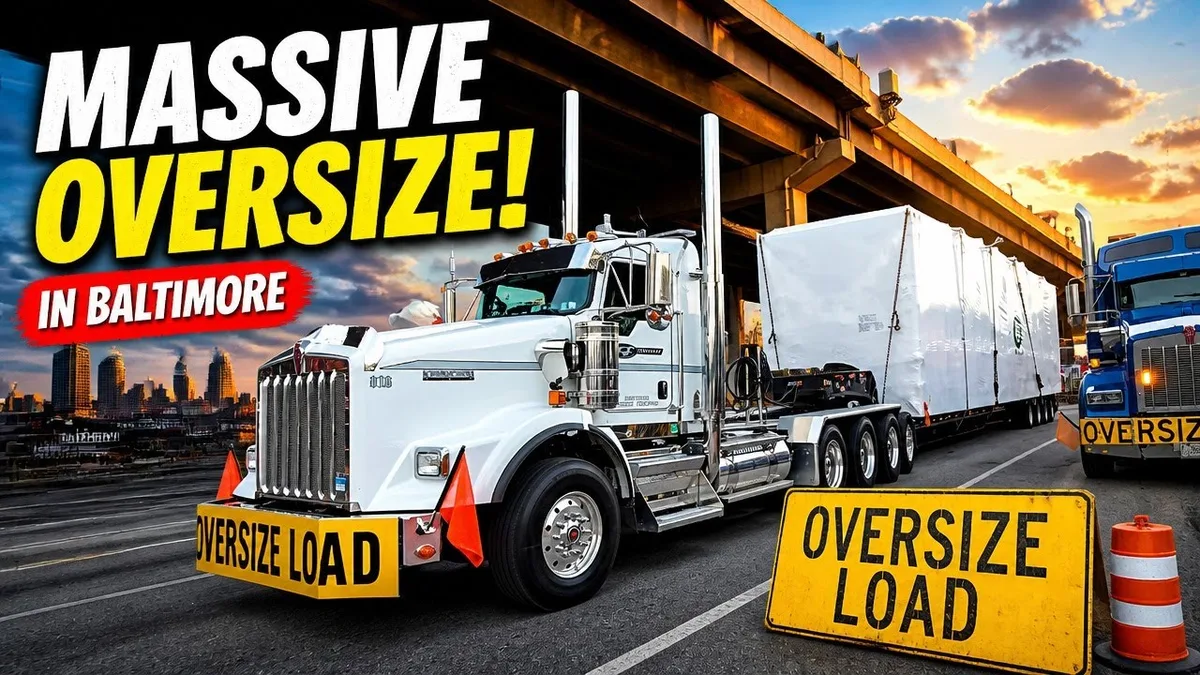
The application process requires:
- Vehicle and load dimensions
- Proposed route
- Proof of insurance
- Payment of fees
Permits are issued by the Maryland State Highway Administration. Processing can take 1 to 3 business days. Emergency permits may be available for critical situations.
IRP, IFTA, and UCR: What Interstate Truckers Must Know
Interstate carriers need three key programs. IRP handles registration across multiple states. IFTA simplifies fuel tax reporting.
UCR covers federal compliance fees.
IRP registration is apportioned based on the percentage of miles driven in each state. You’ll receive one set of plates and a cab card. IFTA requires quarterly fuel tax reports.
UCR fees are annual and based on fleet size.
Maryland Commercial Vehicle Inspection Requirements
Maryland requires safety inspections for most commercial vehicles. These are typically annual but may be more frequent for certain vehicle types. The inspection covers brakes, lights, tires, and other critical systems.
Emissions testing is required in some counties. This applies to diesel vehicles over 8,500 lbs GVWR. You’ll need to visit an approved inspection station.
Costs: Registration Fees, Permits, and Fines for Violations
Registration fees vary by vehicle weight and type. Light commercial vehicles may pay as little as $50. Heavy trucks can exceed $500 annually.
Permit fees add to the cost.
Fines for violations are steep. Overweight violations start at $0.10 per pound over the limit with a $100 minimum. Operating without proper registration can result in $500 or more in penalties.
Permit violations may cost $250 to $1,000.
Common Mistakes That Lead to Fines (And How to Avoid Them)
Overlooking seasonal weight restrictions is a top error. Many drivers assume federal limits apply year-round. Maryland’s spring thaw rules catch operators off guard every March and April.
Another frequent issue is incorrect registration class. Using personal tags for business purposes triggers fines. Always verify your GVWR and intended use before registering.
Improper load distribution causes overweight violations. Even if your total weight is legal, uneven loading can exceed axle limits. Use certified scales to check each axle group.
Maryland vs. Neighboring States: Key Differences in Weight Laws
Virginia allows 20,000 lbs on single axles like Maryland. Pennsylvania matches the 80,000 lb gross limit. But Delaware has stricter tandem axle rules at 32,000 lbs.
Maryland’s spring thaw restrictions are unique. Neighboring states may have different seasonal windows or no restrictions at all. Always check each state’s current regulations when crossing borders.
Interstate carriers should note IRP requirements vary. Some states have additional fees or documentation. Maryland’s apportioned registration simplifies this but doesn’t eliminate all differences.
FAQs About Maryland Commercial Vehicle Registration & Weight Limits
What’s the maximum weight for a tandem axle in Maryland?
The standard limit is 34,000 lbs for tandem axles spaced 8 to 10 feet apart. The Federal Bridge Formula may reduce this based on spacing.
Do I need a CDL for a 26,000 lb truck in Maryland?
Yes. Any vehicle with a GVWR of 26,001 lbs or more requires a CDL. This applies to both single vehicles and combinations.
How much does commercial registration cost in Maryland?
Fees start at $50 for light commercial vehicles. Heavy trucks can exceed $500 annually. Permits add to the total cost.
Are there seasonal weight restrictions in Maryland?
Yes. Spring thaw restrictions typically run March to April. Limits may drop by 10 to 20 percent on certain roads.
What happens if I’m caught overweight in Maryland?
Fines start at $0.10 per pound over the limit with a $100 minimum. Repeat violations can lead to higher penalties and potential impoundment.
Quick Decision Guide: What to Do Based on Your Vehicle Type
Under 10,000 lbs GVWR: Standard registration may suffice. Confirm with MVA if used for business.
10,001, 26,000 lbs GVWR: Commercial registration required. CDL not needed unless transporting hazardous materials or 16+ passengers.
26,001+ lbs GVWR: Commercial registration and CDL mandatory. IRP needed for interstate operations.
Oversize/overweight loads: Obtain permits before travel. Plan routes carefully to avoid restricted roads.