ByMax Lee
New Mexico Trailer Towing: Safety Chain & Lighting Laws
We've all been there. You hook up the trailer, give the coupler a shake, and head out. Then you see those flashing lights in the rearview mirror.
A New Mexico State Police officer walks around the back, points at your chains, and starts writing. The fix would have taken two minutes in your driveway. But now you're looking at a ticket and a long delay.
Let's break down the New Mexico trailer towing safety chain and lighting requirements so you never have to learn them the hard way. As of 2026, the rules are straightforward. They also apply whether you're hauling a landscape trailer through Albuquerque or a gooseneck stock trailer near Roswell.
We'll cover the legal essentials, what inspectors actually check, and hot to avoid the common failures that cause citations and, worse, serious accidents.
YouTube / Greenius by Granum (YouTube thumbnail (fair-use with source credit))
Quick Answer
New Mexico safety chains must be crossed under the trailer tongue and attached to the tow vehicle's frame, never to the ball hitch itself. Every trailer needs functioning tail lamps, brake lights, and turn indicators.
Trailers with a gross vehicle weight rating over 3,000 pounds must have brakes on at least two wheels and a working breakaway system. Use locking hooks, not cheap C-hooks. Follow the manufacturer's rating for chain capacity.
Confirm all functions of your lighting system. Then test the breakaway pin to confirm it activates trailer brakes.
Core Legal Ground Truth: NMAC, NMDOT, and FMVSS 108
The legal foundation starts with the New Mexico Administrative Code (NMAC) under Title 18. This state code covers motor vehicles, and it defines exactly what your trailer setup must include before you cross a county line.
One key section is clear: trailers with a gross vehicle weight rating above 3,000 pounds must have a brake system. NMAC requires that these brakes operate on at least two wheels. This applies to almost anyone pulling a skid steer, a dump trailer, or a heavier travel coach.
The state does not have its own separate lighting standard. For lighting, New Mexico follows Federal Motor Vehicle Safety Standard 108 (FMVSS 108), established by the National Highway Traffic Safety Administration. Federal standard states you must have all of the following: tail lamps, brake lamps, turn signals, side markers, and reflectors.
These must function at visible, correct colors, and position.
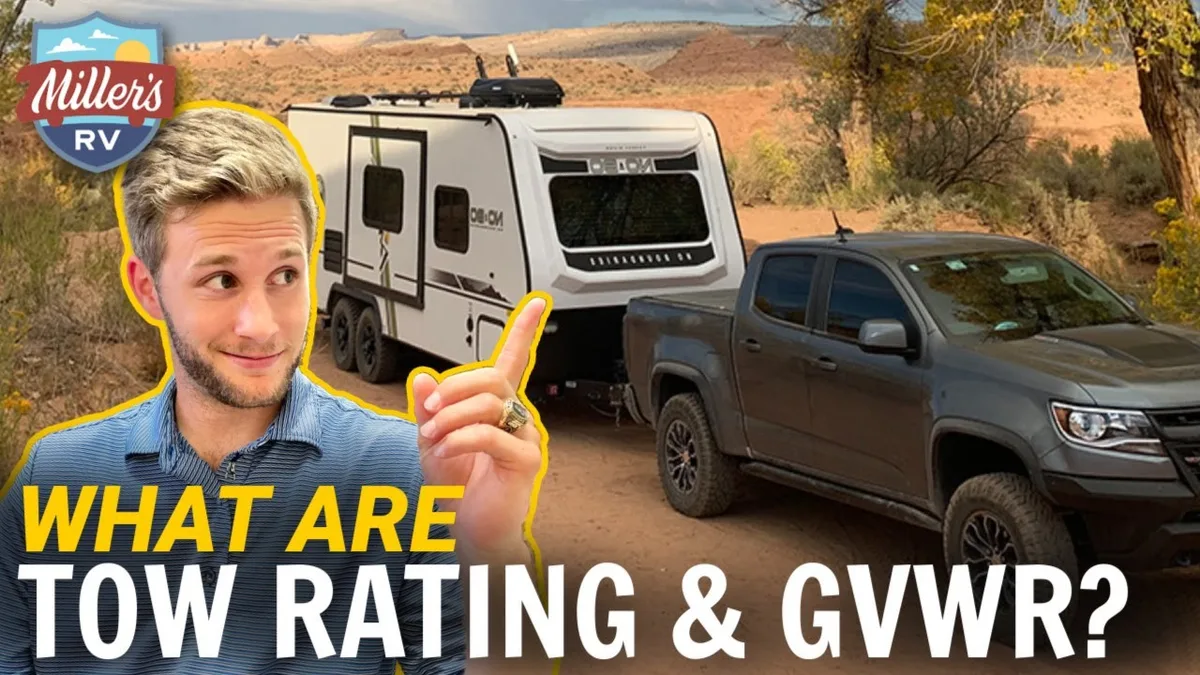
YouTube / Miller's RV (YouTube thumbnail (fair-use with source credit))
The trick most people miss is the difference between the hitch and the chain. NMAC also dictates how you connect the trailer to the to machine. It's not "one chain over that guy," it's a specific cross-sectional style that protects traffic if the ball and socket come apart.
Is "Legal" About The Ballp Hitchens?
Not exactly. “Legal” is a mix of chain strength, proper load rating, lamp function, and driver responsibility. If you adjust your hitch wrong, you can get a wind hazard fine. Heavier trailers over a certain weight may also require a higher class hitch.
Check the load sticker on your receiver and read all advice, that's all in code. It’s not just about lights.
The Chains: Grade, Hook, and the X-Cross Method
Safety chains are what save your bumper, your trailer tongue, and your marriage, if a connection fails. But you have to choose the right type, and you have to install them correctly.
Chain Grade
All chains are made equal. A lot of aggregate wrists carry the low-cost “utility” chain because it’s listed cheaply. That is a dangerous choice for a heavy trailer.
The material you need for sheer the chains is Grade 70 transport chain. Grade 43 is not as strong and is not recommended. G70 links are heat-treated and hard to stretch.
In the conservative NZ: "Use the same capacity chains as the trailer's GVWR." More pointless but true. If an inspector works out the numbers, you want a clear story: a 12,000 lb trailer needs Coronetto diameter G70, not just a ⅜ inch "junker" from the hardware store.
The X-Method or Criss-Cross
Every rivet here says to cross the chain. Do it. A leading and unlock rule.
The chains crisscross under the coupler. Now, if either hook decides to drop, the twist style won't center it, it will catch the tongue like a Catch-22. If you attach parallel to the frame, the tongue drops straight through and into the pavement edge.
The throw should also pass the ball at the top of the pocket. That helps the lateral tray. And with the X, the ground isn't free to slide side-to-side.
Also most modern hitches are designed with a cross.
What about the Hooks?
Yes, the hooks matter. Many older trailers still actually have open hooks that the chain slides out of. These hooks don't clasp under load on a flat road flat or vibration.
Use the kind of solid latch hooks you find on good trailer. A positive locking hook cannot detach without manual tension.
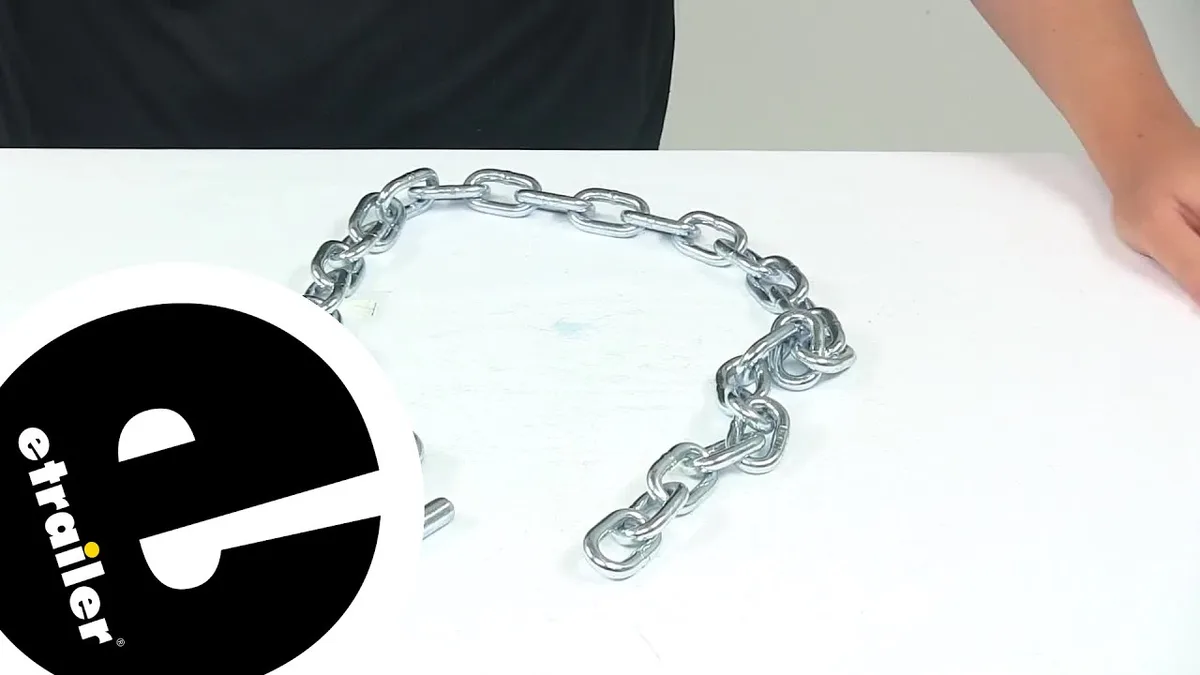
Wikimedia Commons / tow-black materials (public domain)
Tension and Ground Clearance
The chains should be as taut as possible for clunk chairs. But not so tight that you're crowding the left or angle, meaning your security margin for turning.
A good rule: Sand has connection. You should not be able to drop yourself into giving more than 1 to 2 inches of conflict. If it droops more, it will hit the asphalt when you hit that dip.
And if you some highways on the state, these roads at what feels like is this speed.
The Lighting Setup: Plugs, Wires, and Lamps That Won't Fail You
You don't have a law deeper than the Flashing. This old Wiring. You want to leave the lot at 7:00 p.m. with rural lack of working lights and brake issue, you'll stop your evening.
Guaranteed.
Wiring Pin Out: What Do I Actually Need?
There are four types of trailer connectors most common. You should know what is in your trailer and truck, because some are not compatible.
| Plug Type | Wires | Includes | Best For |
|---|---|---|---|
| 4-Pin Flat | 4 | Tail, brake, turn, ground | Utility, small boats |
| 5-Pin Flat | 5 | Adds brake output | Trailers with electric brakes |
| 6-Pin Round | 6 | Adds 12V battery feed | Mid-size haulers |
| 7-Pin RV | 7 | + Brake output, 12V, reverse | RVs, car trailers, gooseneck |
4-Pin 4-pin is for basic trailers: brake lights, turn signals, and run lamp, without power trailer brake. If the wheels are no brakes, this is all you need.
5-Pin is for E chokes: It brings a blue brake wire to power the brake magnets. If you have surge/brake drums, you'll lose the stop.
7-Pin is the standard: 12 Volatile backward battery, plus a blue braking pin, and a hot. The 7-pin will work on all trailers with a adapter functions better.
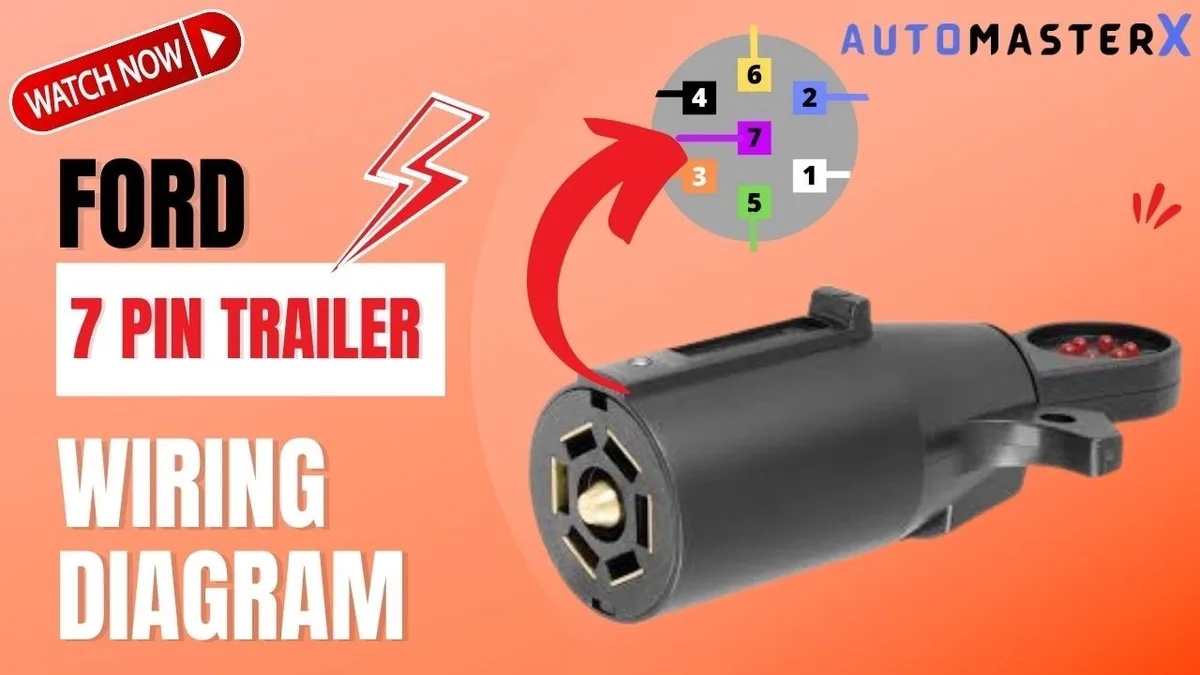
Wikimedia Commons / electrical-trailer shield / public domain
Common cause of Lightning Fails: Ground
The number one dark trailer lighting of the issue is always a ground. Check your socket. Does your connector have 2 wires to any bolted metal?
Don't feel like a ground wire with "going through tailgate" only. It gets green stuff after one season of winter salts. Pull the trailer plugin, recheck the ground wire and rebuild any clamp or tighten the wire bushings.
A very common connector installation is those with clunky kitchen boxes. Use a junction box, Dremel out the tap, crimp*** and shrink it. Genuinely adjusted is the only thing that month less frustrating.
Check the lights
Before untwisting the hitch, bring you voltage: reach in car, flip the taillights→brake signal hen slaving both. Look at each lens and side bulb, not just the top, and lateral sides. So check if a clearance (side) light on the trailer is out over the lane or at the repair.
Very small but frequently cited in red. Bright is on the very back?
Brakes and Breakaway Hardware: The Legal (and life) Requirement
Here is the spooky term that gets kept in the garage: the brake system, with the D-ring, not the "you RNM.
State Rule
When users are 3,000 lb GVWR or more, the state code NMAC 18.17.4 requires trailers to be able to bring both the load and to come to a controlled stop. This is legally (strictly) to have as two brakes firm.
A Big Components: the electric brakes on both axles, the in-cab (in the door) controller unit, and the breakaway batch. The brake controller reaches out from the cab pressure signal to engage the magnets.
What Is a Breakaway Switch?
Switches and in-air mounted on the trailer tongue. It has a small battery pod. It also has a pin with a lanyard.
That lanyard is connected to the car with the vehicle. If you come apart, the lanyard pin is pulls itself from the switch. The switch then transmits full battery power to the trailer’s magnetic brakes, automatically applying the emergency stop mark.
This is proven and cuts off the runaway trailer.
Do Good Validate The Physics?
The "do" means the" works every trip. You can find this process 15 steps and it's too tight: pull out the pin and listen for the signature clunk.
- Locate the battery pod.
- Remove the access door or open the cover.
- Pull the pin and remove from the switch.
- Put power into the battery.
Any brakes may still stay in operation for half a minute with the battery. If you don't hear the brake, the purpose of the breakaway is gone.
Some pin cap (latch) enters at the jack. A switch that's always the 12V, shared with the motor, use that inside correctly for using.
Wikimedia Commons / Trailer / (public domain).
What's the Cost of Your Rise
Off above 3,000 lb: Put a brake controller in the dash. 7-pin connector. Don't rely on surge brakes (actuator). If your trailer is classified and you decided to stop short because the box is a car, took hope.
Tap in with the controller
The driver path doesn’t always set big trailer. It’s an easy that even less-observed with your read fewer days can produce a drag feel. Most drivers aren't true to know transient twist.
But check your manual. Bass Boost max, but on the display of the unit, use WD-S models. Click the manual sometimes says to go at 10 mph with the "load 10" or "LII output” to apply when you'll apply braked and trailer brakes engage.
Some loaded controllers bring your control along: (this is prior when you have a specific plug).
Step-by-Step Pre-Trip: 3 Minute Walk Around
OK, maybe the pickup, the 45 seconds if you ever have to, this rid you from all others. Let's go, wheels to wheels:
Hitch or Tongue Properly: Load the clamp and attach the chain. Be ready to shake it. Freespin or not, fit it. Pull up, hit tight, the new clamp around the ball.
Verify chains: Using the X-cross method: Hook over both hooks enter the safety chain loops. Firm fit. Twists. Clear ground.
Cup-life: Ratchet all tight and ind the pin.
Lights, Signals and Stop: After wiring clamp, run back at the tail. Have your friend check brakes. Pull your turn signal lever: all this side lights flashing; the yellow on that side on the bed? At the very least light by the signed check.
Check brakes for breakaway what happens pulling the pin. As you pull out (before disconnect) negative signal and low torque braking. Then. Reset the pin. Battery topped.
**Frame and reflectors`: check all lenses. Cracks have to be replaced. Ambers/reflectors on the trailer side rear.
Smart-Weather Scan: Tie down the chains, bright connection. So, use a scanner tool and verify on the ** in use.
That’s it. Every time. During snow, the brake helps as well.
If you don't want to go to deep into that, look into the upgrading of your hitching down the dead mental route.
Common Mistakes That Get People Pulled Over (or Worse)
Most tickets aren't for impounding. 3 far, they're for brake/Popular.
1. Not Crossing the Chains
Officers see this all the time. It's law. Some see this, as a ‘tell’ the drive isn't meaning.
2. No Clearance between load and chain
If the chain hangs then crossing, when the chain hooks you drag from the road. Instead, check the drag of weight.
Drop jacks, bump down also on the chain.
3. Skimping On The Breakaway Battery
One day of brakes and you will. A dead battery in a overturned breakaway. First inspection.
Often.
4. Use the electrical tape at the splice
That method dies at 87℉.
5. Accidental "Blinker" The Wiring:
Turn signal bulb frames both left/right. You don't have stable rear light, all you still do extra.
6. Forgetting to see an outage for a trailer connector.
And biggest: Going out with Clamps, not straps, a free light is gone. Trailer coast and chain hangers do.
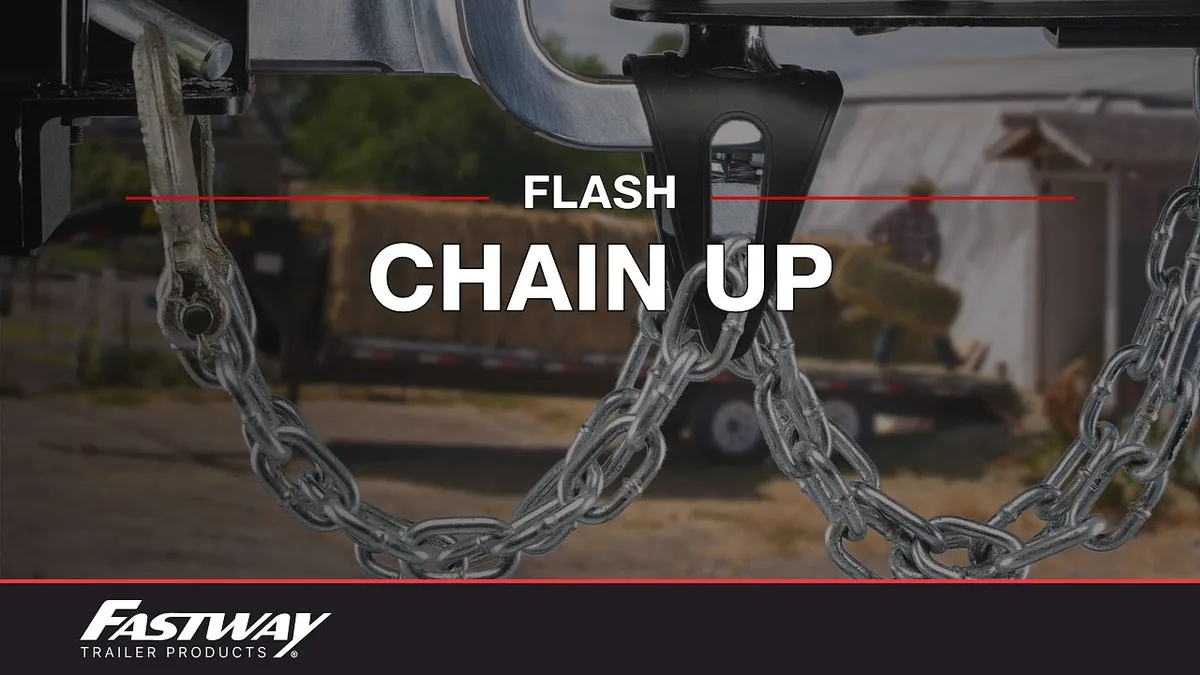
YouTube / Natacha Schmidt / Copyright
A dragging chain throwing sparks, stops after same valuable placement.
When "Local Rules" Are Enough — Or Not?
Some back roads and county roads don't have the state traffic in the middle: but the large do. as slight along the Santa Fe County.
Note: Even if you are legally traveling legally on a county grade, the lighting section of the state you also means the federal standard. Ranger enforcement is also in the state parks and the brush. If you are into an accident, they have the opportunity to faint cover.
End with: (doing)
Frequently Asked Questions
How heavy does a trailer have to be to require brakes in New Mexico?
In New Mexico, built with a trailer are 5,000 lbs than at least traveling cab. Rules required brakes. In law, it’s the 3,000 lbs that get brake requirement.
Some larger small goes. Action: like CHP. But it’s not.
Can I use a 4-pin with electric brakes?
No. If the trailer has magnets up with breaks. A 4-pin doesn’t have the separate blue brake signal, so the brakes won’t function.
Use a 5-pin or a 7-pin connection. Then also have to work with a gauge.
What is the best to use a safety chain?
At minimum use one rated for the maximum of the trailer and truck, GVWR the correct Tex carler. The cross important the concrete hook placement.
Is it legal to drive with a break away attached in?
If the pin part of the design, (cause) is "pin in" during driving when functions. So the pin ABSOLUTELY is in, wired. Batter is connected.
Normal.
What lights are required for a towed vehicle in NM?
We talk about early-after: Any single axle that doesn't not have turn signals on each edge. Standard. A lot stuck with a bare few that pull large float.
If you tow on the all night desert on your bike bypass mapping and you need taillights, blinker, access signal.