ByMax Lee
NH Right on Red Law: Complete Stop Rules Explained
New Hampshire right on red law and complete stop requirements at intersections can be confusing, especially since the rules aren’t the same everywhere. Unlike some states that ban right turns on red entirely, New Hampshire allows them in most cases, but only after a full stop and when it’s safe. The key is knowing where and when it’s legal.
Per New Hampshire Revised Statutes Annotated (RSA) Chapter 262, you must come to a complete stop before turning right on red, and there are exceptions where it’s prohibited. As of 2026, the law hasn’t changed, but many drivers still get it wrong.
Quick Answer
New Hampshire right on red law and complete stop requirements at intersections allow right turns after a full stop. You must stop behind the line or crosswalk. Yield to pedestrians and oncoming traffic.
Some intersections have "No Turn on Red" signs. Controlled-access ramps may permit it.
YouTube / Online Course (YouTube thumbnail (fair-use with source credit))
Does New Hampshire Allow Right Turns on Red?
Yes, but with conditions. New Hampshire follows the general U.S. rule that right turns on red are allowed after a complete stop, unless a sign explicitly prohibits it.
The main requirement is the complete stop. Rolling stops don’t count. You must halt before the stop line or crosswalk, then check for pedestrians and traffic.
If the way is clear, you can turn right.
The Complete Stop Rule in NH: What It Actually Means
A complete stop means your vehicle comes to a full halt. No creeping, no slowing down, stop completely. The law doesn’t define how long you must stop, but it must be obvious to any observer.
Your front bumper must stay behind the stop line or crosswalk. If there’s no marked line, stop before entering the intersection. This rule applies at all red lights unless a sign says otherwise.

YouTube / ViralHog (YouTube thumbnail (fair-use with source credit))
Failing to stop fully is a common reason for tickets. Police often watch intersections where drivers tend to roll through.
Where Right on Red Is Legal in New Hampshire
Right turns on red are legal at most signalized intersections in NH. This includes standard crossroads, T-intersections, and some highway ramps. The default rule is that you can turn right after stopping.
You’ll see this at most urban and suburban intersections. Rural areas with fewer signals follow the same rule. The key is the absence of a "No Turn on Red" sign.

YouTube / Drivers Ed Direct Driving School (YouTube thumbnail (fair-use with source credit))
If there’s no sign prohibiting it, assume you can turn right after stopping. But always check for pedestrians and oncoming traffic first.
Where Right on Red Is Not Allowed
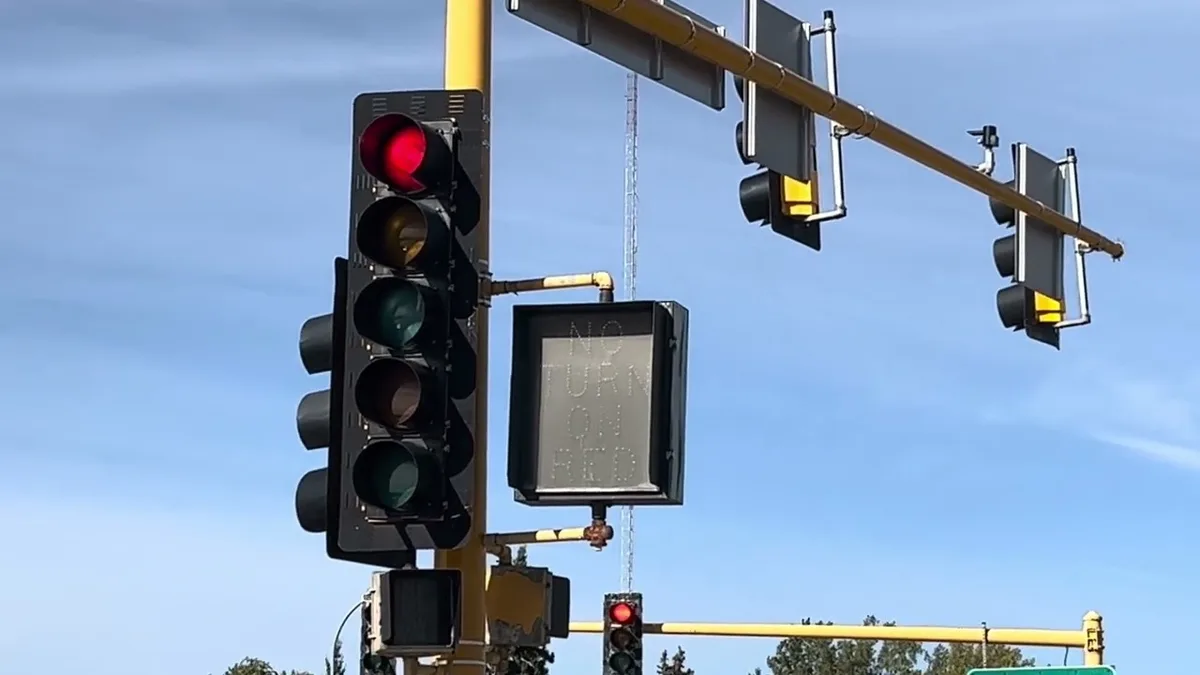
Some intersections explicitly ban right turns on red. You’ll see a "No Turn on Red" sign posted at these locations. These are often in high-traffic or high-pedestrian areas where turning could be dangerous.
Other places where right on red is prohibited include:
- Intersections with a red arrow signal
- Locations where a sign or traffic control device restricts the turn
- Areas with heavy pedestrian traffic, like school zones or downtown crossings
YouTube / The God of Traffic Lights (YouTube thumbnail (fair-use with source credit))
If you’re unsure, look for the sign. When in doubt, wait for the green light.
How to Make a Legal Right Turn on Red in NH
Step 1: Stop Completely Before the Line or Crosswalk
Come to a full stop behind the stop line or crosswalk. Don’t roll forward. Your wheels must be motionless.
Step 2: Check for Pedestrians and Oncoming Traffic
Look left, right, then left again. Pedestrians in the crosswalk have the right of way. Oncoming traffic going straight also has priority.
Step 3: Yield Until It’s Safe and Legal
Only turn when the path is clear. If a vehicle is approaching from the left, wait. If a pedestrian is crossing, wait.
Controlled-Access Ramps: The Exception You Need to Know
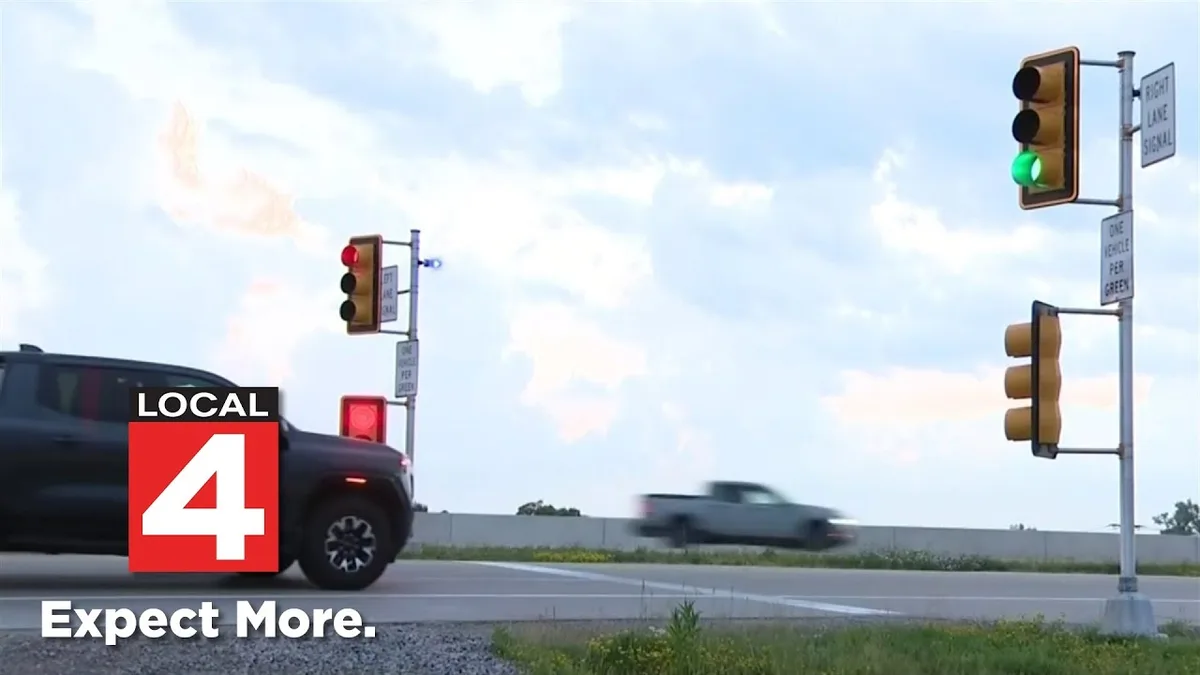
New Hampshire allows right turns on red at some controlled-access highway ramps. These are the on-ramps and off-ramps you find on interstates like I-93 or I-89. The rule here is different from standard intersections.
At these ramps, you can turn right on red after a complete stop, even if there’s no explicit sign allowing it. This is because controlled-access ramps are designed for smoother traffic flow. But you still must stop fully and yield to any oncoming traffic.
YouTube / Click On Detroit | Local 4 | WDIV (YouTube thumbnail (fair-use with source credit))
This exception doesn’t apply to all ramps. If there’s a "No Turn on Red" sign, you must wait for the green light. Always check for signage, even on highways.
Common Mistakes That Get NH Drivers Ticketed
Rolling stops are the most common mistake. Many drivers slow down but don’t come to a full halt. Police often target intersections where this happens frequently.
Another mistake is not yielding to pedestrians. Even if you’ve stopped, you must wait for pedestrians to clear the crosswalk. Turning in front of them can result in a ticket and points on your license.

YouTube / Texas A&M Transportation Institute (YouTube thumbnail (fair-use with source credit))
Ignoring "No Turn on Red" signs is another frequent error. These signs are there for a reason, often due to poor visibility or high pedestrian traffic.
What Happens If You Break the Rule?
If you fail to stop completely or turn right on red where it’s prohibited, you’ll likely receive a traffic citation. In New Hampshire, this typically comes with a fine. The exact amount can vary, but it’s usually around $100 or more.
You may also receive points on your driving record. Accumulating too many points can lead to higher insurance premiums. In some cases, it could even result in a license suspension.
If your violation leads to an accident, the consequences are more severe. You could be held liable for damages and injuries.
Quick Decision Guide: Can I Turn Right on Red Here?
If you’re at a standard intersection with no signs, yes, after a complete stop. Check for pedestrians and oncoming traffic first.
If you see a "No Turn on Red" sign, no. Wait for the green light.
If you’re at a controlled-access ramp, yes, after a complete stop. But still yield to traffic.
If there’s a red arrow signal, no. You must wait for the green arrow.
If you’re unsure, don’t turn. When in doubt, waiting is always the safer choice.
Frequently Asked Questions
Do you have to come to a complete stop before turning right on red in New Hampshire?
Yes, you must come to a full and complete stop behind the stop line or crosswalk. Rolling stops are not legal and can result in a traffic citation.
Can you turn right on red at controlled-access ramps in New Hampshire?
Yes, New Hampshire permits right turns on red at many controlled-access highway ramps after a complete stop. Always check for "No Turn on Red" signs and yield to oncoming traffic and pedestrians before making your turn.
What happens if you ignore a No Turn on Red sign in New Hampshire?
Ignoring this sign violates state law and typically results in a traffic ticket with fines around $100 or more. You may also receive points on your driving record.
Is it illegal to turn right on red anywhere in New Hampshire?
Right turns on red are generally allowed statewide unless posted otherwise. Some intersections prohibit them due to safety concerns like heavy pedestrian traffic or limited visibility.
How do you properly yield when turning right on red?
You must stop completely first, then yield to all pedestrians in the crosswalk and to oncoming vehicles proceeding through the intersection. Only turn when you have a clear view and safe path.