ByMax Lee
Ohio Move Over Law: Rules for Emergency Vehicles
You’ve seen flashing lights on the shoulder and hesitated, unsure if you’re required to move over. The Ohio move over law for emergency vehicles on roadside exists to protect first responders and roadside workers from passing traffic. Ignoring it can lead to fines, legal liability, and worse outcomes for people already in harm’s way.
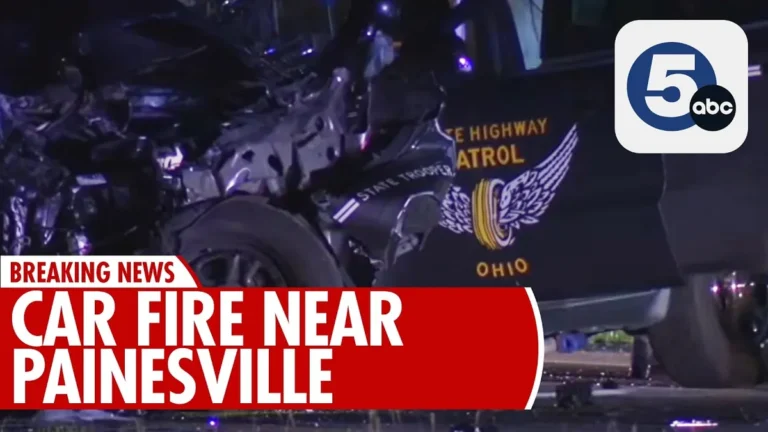
Image source: YouTube / Nathanael Kings (YouTube thumbnail (fair-use with source credit))
As of 2026, Ohio Revised Code 4511.213 requires drivers to vacate the lane adjacent to a stationary emergency vehicle with activated lights. If a lane change isn’t safe, you must slow to a prudent speed for conditions. Fines for violations top out at $250, and failure to comply can result in serious injury or death to roadside personnel.
Ohio Move Over Law: Rules for Emergency Vehicles
Quick Answer
The Ohio move over law for emergency vehicles on roadside requires you to change lanes away from stopped emergency vehicles. If you can’t move safely, slow to a prudent speed for road conditions. It applies to any vehicle with flashing red, blue, or amber lights.
Violations carry fines up to $250.
Why This Law Exists (And Why It’s Not Optional)
First responders face extreme risk every time they stop on Ohio roads. Between 2015 and 2023, at least five Ohio State Highway Patrol troopers were struck and killed while working roadside incidents. Tow truck operators and ODOT maintenance workers have also died in similar preventable crashes.
The law creates a mandatory safety buffer around stopped emergency vehicles. Without this rule, passing traffic would have no legal obligation to give workers space. Aggregate data from the Ohio Department of Transportation shows secondary crashes at emergency scenes are a top cause of worker injury and death.

Image source: YouTube / Linh Linh TV (YouTube thumbnail (fair-use with source credit))
The Exact Rules: What You Must Do in Ohio
Ohio Revised Code 4511.213 lays out clear, enforceable requirements for drivers. When you approach a stationary emergency vehicle with flashing lights, you must move to a lane that is not adjacent to that vehicle. If traffic or road conditions make a lane change unsafe, you must slow to a speed that is reasonable for the current situation.
The rule applies to all public roads in Ohio, from interstates to local residential streets. It covers any vehicle displaying activated red, blue, or amber flashing lights. That includes police cruisers, fire trucks, ambulances, licensed tow trucks, and ODOT maintenance vehicles.
There is no set speed number for “prudent speed” in state law. The term means you must slow enough to create a safe buffer for roadside workers. On a 65 mph highway, that usually means dropping to 45 mph or lower.

Image source: YouTube / Zula Driving School (YouTube thumbnail (fair-use with source credit))
When the Law Applies (And When It Doesn’t)
The law activates the second you see a stationary vehicle with flashing lights on the roadway. It doesn’t matter if the vehicle is on the shoulder, in a travel lane, or partially blocking the road. If it is stopped and lights are active, you must move over or slow down.
The law does not apply to moving emergency vehicles with lights on, like a police car responding to a call. It also doesn’t apply to parked vehicles without flashing lights, or emergency vehicles in parking lots off the main roadway. You are not required to move over if doing so would create a new hazard for other drivers.

Image source: YouTube / Emergency Vehicle Solutions LLC (YouTube thumbnail (fair-use with source credit))
How to Move Over Safely in Different Situations
On multi-lane highways, start scanning for flashing lights as soon as you crest a hill or round a curve. Check your mirrors and blind spots, signal your lane change, and merge smoothly only when there is a safe gap. Do not cut off other drivers to exit the adjacent lane.
On two-lane roads with no shoulder, slow to at least 20 mph below the posted limit. Move as far left as you can without crossing the center line. If you encounter an emergency scene at night, use low beams to avoid blinding roadside workers.
In heavy stop-and-go traffic, a lane change may not be possible. Slow to a crawl and proceed carefully past the stopped vehicle. When in doubt about whether a vehicle is covered by the law, err on the side of caution and slow down.

Image source: YouTube / Police Pursuits (YouTube thumbnail (fair-use with source credit))
What Happens If You Don’t Follow the Law
Failing to comply carries both legal and safety consequences. As of 2026, a first-time violation in Ohio results in a fine of up to $250, plus potential court costs if you contest the citation. The violation does not add points to your driver’s license, but repeat offenses can raise your insurance premiums.
The far larger risk is harm to roadside workers. If your failure to move over causes a crash that injures or kills a first responder, you can face felony charges in addition to civil lawsuits. Ohio State Highway Patrol data shows dashcam and bodycam footage is frequently used as evidence in these cases.
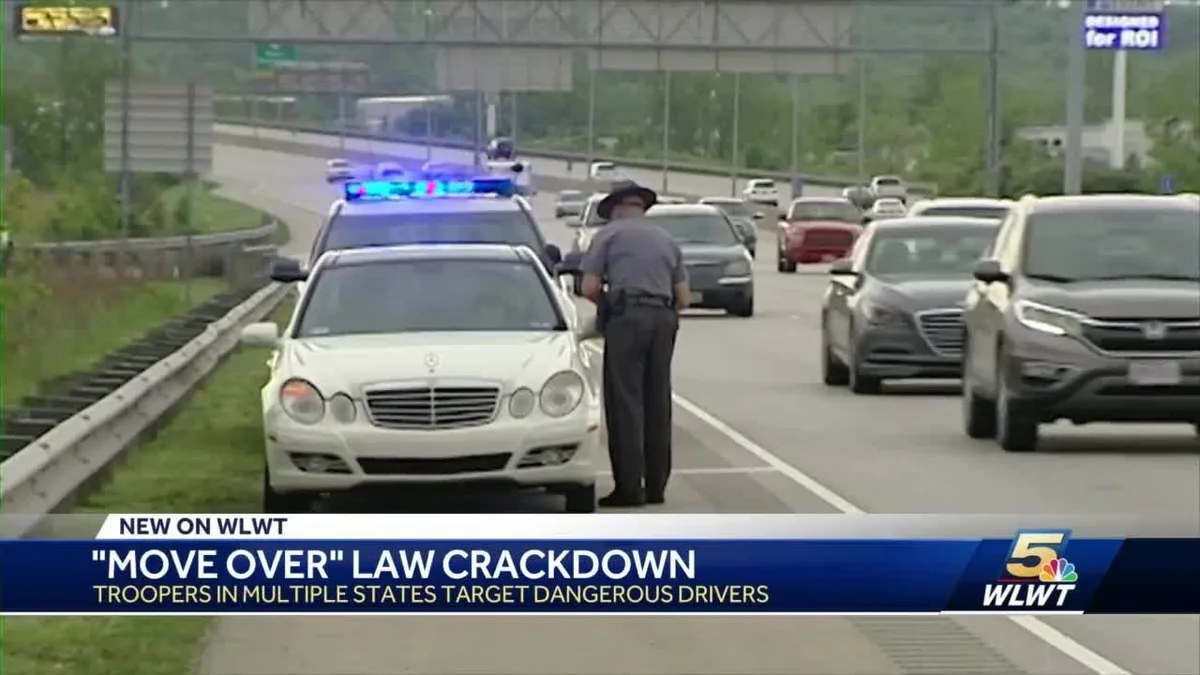
Image source: YouTube / WLWT (YouTube thumbnail (fair-use with source credit))
Common Mistakes Drivers Make (And How to Avoid Them)
Many drivers assume the move over law only applies to police vehicles. Tow trucks, ODOT maintenance crews, and licensed utility operators with flashing amber lights are all covered under ORC 4511.213. Ignoring these vehicles puts non-police roadside workers at risk.
Another common error is cutting off other drivers to move over. A lane change that causes a crash defeats the law’s purpose. If you can’t move over safely, slow down instead.
Many drivers also reduce speed too little. Prudent speed means dropping at least 20 mph below the limit on high-speed roads. Five mph slower isn’t enough to create a safe buffer for workers.
Ohio vs. Other States: How the Rules Compare
All 50 U.S. states have move over laws, but the rules vary significantly. Ohio’s “prudent speed” standard is less specific than Kentucky’s 20 mph reduction rule. Ohio’s $250 maximum fine is also lower than Michigan’s $500 penalty for the same violation.
Pennsylvania’s law covers garbage trucks, which Ohio’s does not. Out-of-state drivers face the same penalties in Ohio as residents. Review state rules before driving across state lines to avoid accidental tickets.
Real-Life Scenarios: What to Do in These Cases
On a multi-lane highway during rush hour, merge left only if there’s a safe gap. If traffic is too heavy, slow to 45 mph in a 65 mph zone and pass carefully.
On a two-lane rural road during a snowstorm, move as far left as possible without crossing the center line. Slow to at least 20 mph below the posted limit, and use low beams to avoid blinding the tow operator.
In a construction zone with blocked lanes, merge left as early as possible. Slow to the posted construction zone speed, which is already lower than the standard highway limit.
FAQs About Ohio’s Move Over Law
Does the Ohio move over law apply to two-lane roads?
Yes, the law covers all public roads in Ohio, including rural two-lane routes. If there is no safe lane to move into, slow to a prudent speed. Move as far from the stopped vehicle as possible without crossing the center line.
What counts as a “prudent speed” under Ohio law?
Ohio does not set a fixed number for prudent speed. It means reducing your speed enough to create a safe buffer for roadside workers. On 65 mph highways, that usually means dropping to 45 mph or lower.
Do out-of-state drivers have to follow Ohio’s move over law?
All drivers on Ohio roads must follow state traffic laws, regardless of residency. Out-of-state drivers who violate the law receive the same $250 citation as Ohio residents. Ignorance of the law is not a valid defense.
What if moving over would cause a crash?
The law explicitly allows you to slow down instead of moving over if a lane change is unsafe. Your first priority is to avoid endangering other drivers or pedestrians. If you cannot move over safely, reduce your speed and proceed carefully.
Final Checklist: Are You Following the Law Correctly
Use this quick check the next time you see flashing lights on the roadside. Scan ahead for flashing red, blue, or amber lights on a stationary vehicle. Check mirrors and blind spots before attempting any lane change.
Move over one full lane if it is safe to do so. Slow to a prudent speed if you cannot move over. Maintain your reduced speed until you pass the entire emergency scene.