If you’ve ever visited the Oregon DMV for a driver’s license renewal, new permit, or state ID, you can complete Oregon voter registration through motor vehicle division license services in the same trip. Most people assume these are separate processes handled by different government offices. That’s a common oversight, because Oregon has tied these two services together for years.
You don’t need a separate form or extra stop to get registered.
As of 2026, Oregon’s Motor Voter program has pushed voter registration rates to 90% of eligible residents, one of the highest in the U.S. It triggers automatically for any DMV transaction that updates your address or license status.
Does the Oregon DMV Automatically Register You to Vote?
Yes, the Oregon DMV automatically registers eligible residents to vote during most license transactions. This applies to new license applications, renewals, and address updates. You will be prompted to opt out if you do not want to register.
Non-citizens are never prompted to register, as the system checks citizenship status first. You will receive a voter notification card in the mail within 5 to 10 business days if you are added to the rolls.
How Oregon’s Motor Voter System Works
Oregon’s Motor Voter system is built on the federal National Voter Registration Act of 1993. The law requires states to let people register to vote when they apply for a driver’s license or state ID. Oregon expanded this rule in 2016 to make registration automatic for all eligible residents unless they choose to opt out.
The DMV shares your verified citizenship status and address with the Oregon Secretary of State’s elections office when you complete a qualifying transaction. No extra paperwork is needed on your end. The system uses encrypted data transfers between the two agencies, so your personal information is protected at every step.
You can learn more about the program’s compliance rules on the Oregon Secretary of State’s official Motor Voter page.
Aggregate reviews of the program from nonpartisan election oversight groups report zero confirmed cases of ineligible non-citizens being accidentally registered via the DMV as of 2026. The program is administered jointly by the Oregon DMV and the Oregon Secretary of State, with regular audits to ensure data is transferred securely and only eligible voters are added to the rolls. The program’s design was updated in 2022 to include real-time address syncing, so any address change you make with the DMV is reflected on your voter registration within 24 hours, no separate update needed.
Who’s Eligible (and Who’s Not)
You are eligible to register to vote via the Oregon DMV if you meet all three of these criteria:
- You are a U.S. citizen, verified by the DMV when you apply for a license or ID
- You are an Oregon resident
- You are at least 16 years old (you can pre-register at 16 or 17, and your registration becomes active on your 18th birthday)
Oregon also allows 17-year-olds to register to vote if they will turn 18 before the next general election. This means if you’re 17 and applying for a license, you can still register via the DMV if you’ll be 18 by election day. You can review the full eligibility requirements on the OregonVotes.gov official eligibility page.
People who cannot register to vote via the Oregon DMV include:
- Non-citizens, including permanent residents and visa holders
- Oregon residents under 16 years old
- People who are not Oregon residents at the time of their DMV transaction
Oregon restores voting rights to people with felony convictions immediately upon release from custody, with no waiting period. This means formerly incarcerated people are eligible to register via the DMV as soon as they have a valid Oregon address. DMV staff are trained to skip the voter registration prompt entirely for non-citizen applicants, so you won’t be accidentally added to the rolls if you’re not eligible.
| Group | Eligibility for DMV Voter Registration |
|---|---|
| Eligible | U.S. citizen, Oregon resident, 16+ years old |
| Ineligible | Non-citizen, under 16, non-Oregon resident |
| Special case | Felony conviction: eligible immediately upon release |
What Happens When You Apply for or Renew Your License
Your DMV transaction will follow one of three paths, depending on your eligibility and current registration status:
If you are an eligible U.S. citizen and not currently registered to vote The application will prompt you to confirm your address, select a political party (or choose non-affiliated), and opt in to registration. Once you submit the form, your registration is processed immediately, and you’ll receive a voter notification card in the mail within 5 to 10 business days.
If you are an eligible U.S. citizen and already registered to vote The system will pre-fill your existing voter registration information, and you’ll only need to confirm or update your address and party affiliation if anything has changed.
If you are not a U.S. citizen The voter registration prompt will not appear on your application at all.
This process works the same whether you’re applying in-person at a DMV office, online through the Oregon DMV portal, or by mail. The only difference is that in-person and online transactions process your registration immediately, while mail-in applications take 5 to 10 business days to process.
How to Opt Out If You Don’t Want to Register
Opting out of automatic voter registration at the DMV is simple, and you will not face any penalties or delays for doing so. If you are completing an in-person transaction, just tell the DMV clerk you do not want to register to vote when they hand you the application. They will check the opt-out box for you, no questions asked.
If you are applying online or by mail, there is a clear opt-out checkbox on the voter registration section of the application form. The box is labeled in plain language, so you won’t miss it if you don’t want to register. The DMV cannot deny you a license, renewal, or ID for choosing not to register, and staff are prohibited from asking you why you are opting out.
If you accidentally opt in and want to cancel your registration later, you can do so by contacting the Oregon Secretary of State’s elections office, or by opting out again the next time you complete a DMV transaction.
⚠️ Warning: It is a felony in Oregon to provide false information about your citizenship status to register to vote, and penalties include up to 5 years in prison and a $10,000 fine. It is also illegal for DMV staff to pressure you to register to vote, or to deny you services for opting out. If you experience this, you can file a complaint with the Oregon DMV’s consumer protection division.
Step-by-Step: Registering to Vote at the DMV
Start by gathering your documents before heading to the DMV. You’ll need proof of identity, Oregon residency, and legal presence. A U.S. passport or birth certificate works for citizenship, while a utility bill or bank statement can verify your address.
At the DMV, tell the clerk you’d like to apply for or renew your license or ID. They’ll hand you a form or guide you to a kiosk. The voter registration section appears automatically if you’re eligible.
You’ll see a prompt asking if you want to register to vote. Select “Yes” to proceed or “No” to opt out. If you opt in, confirm your address and choose a political party or “Non-Affiliated.”
Sign the form digitally or on paper. The clerk will process your license transaction and voter registration at the same time. You’ll get a receipt for your license and a voter notification card in the mail within 5 to 10 days.
Other Ways to Register in Oregon
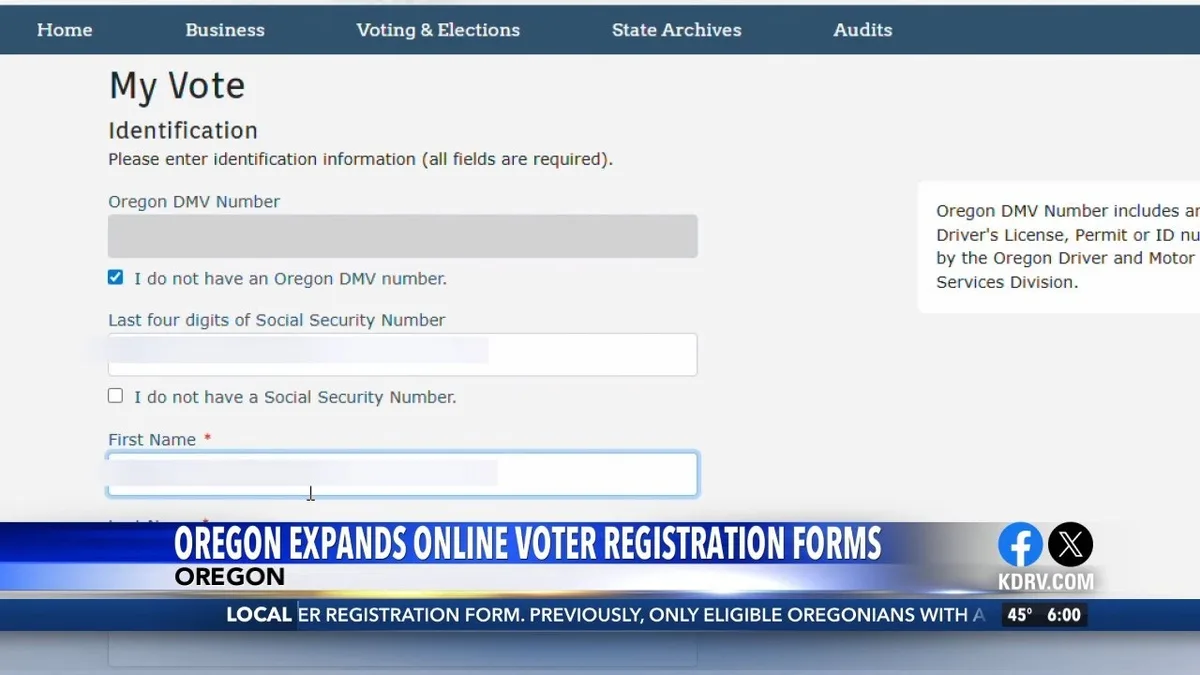
You can register online through OregonVotes.gov if you have a valid Oregon driver’s license or state ID. The online form takes about 5 minutes to complete. You’ll need your license number and the last four digits of your Social Security number.
Mail-in registration is another option. Download the form from the Oregon Secretary of State’s website, fill it out, and mail it to your county elections office. This method takes longer, so submit it at least 21 days before an election.
In-person registration is available at county elections offices, libraries, and some post offices. These locations provide paper forms and can answer questions about the process.
How to Check or Update Your Registration
Visit OregonVotes.gov and use the “Check My Registration” tool. Enter your name, date of birth, and ZIP code to see your current status. The tool will show your party affiliation, address, and polling place if applicable.
To update your registration, use the same online tool or visit a DMV office. Changes like address updates or name changes can be made instantly at the DMV during a license transaction.
If you need to change your party affiliation, do it at least 21 days before a primary election to ensure your new party’s ballot is mailed to you.
Key Deadlines You Need to Know

Oregon has a 21-day deadline for mail-in and online voter registration before any election. If you register by mail or online after this cutoff, your registration won’t be processed in time for that election.
Same-day registration is available in person at your county elections office or DMV up until 8 p.m. on Election Day. This option lets you register and vote in the same visit.
Primary elections have the same deadlines as general elections. However, party affiliation matters for primaries. You must be registered with a party to vote in its primary, or choose “Non-Affiliated” to receive a nonpartisan ballot.
| Election Type | Mail/Online Deadline | In-Person Deadline |
|---|---|---|
| Primary | 21 days before | Election Day, 8 p.m. |
| General | 21 days before | Election Day, 8 p.m. |
Common Mistakes and How to Avoid Them
Assuming you’re already registered is a common error. Even if you’ve lived in Oregon for years, moving or changing your name can affect your registration. Always check your status before an election.
Missing the 21-day deadline for mail-in or online registration can leave you unable to vote. If you realize you’re not registered close to Election Day, visit a county elections office or DMV for same-day registration.
Non-citizens sometimes worry about accidentally registering. The DMV system is designed to prevent this. If you’re not a citizen, the voter registration prompt won’t appear on your application.
Forgetting to update your address after moving can mean your ballot is sent to the wrong place. Oregon’s all-mail voting system relies on accurate addresses. Update your address with the DMV or online as soon as you move.
What Non-Citizens Need to Know
The DMV system will never prompt non-citizens to register to vote. Your license or ID application includes a citizenship question, and the voter registration section is skipped entirely if you’re not a citizen.
If you’re a permanent resident or visa holder, you can still get a driver’s license or state ID. The DMV issues these documents to all eligible residents regardless of citizenship status. Just be honest about your status on the application.
Providing false information about citizenship to register to vote is a felony in Oregon. Penalties include up to 5 years in prison and a $10,000 fine.
FAQs About Oregon DMV Voter Registration
Can I register to vote at the DMV if I don’t have a driver’s license?
Yes. You can register at the DMV when applying for a state ID card, even if you don’t drive. The process is identical to license transactions.
How do I know if my registration went through?
You’ll receive a voter notification card in the mail within 5 to 10 days. You can also check your status online at OregonVotes.gov.
What if I move after registering?
Update your address with the DMV or online. Oregon’s system syncs address changes between your license and voter registration automatically.
Can I change my party affiliation at the DMV?
Yes. During any license transaction, you can update your party affiliation. Just tell the clerk or select your new party on the online form.
Do I need to re-register every time I renew my license?
No. Your voter registration stays active unless you move, change your name, or opt out. Renewing your license won’t affect your registration.