Black Friday deals are live on Amazon · limited-time discounts, grab them before they’re gone
Grab the deals

ByMax Lee
Tesla Wheel Covers: Should You Remove Aero Caps Before an Automatic Wash? Expert Tips!
Tesla aero wheel covers are designed to improve airflow around the wheels, but their snap-in clips can be vulnerable to aggressive automatic car washes. The safest approach is usually to remove removable aero covers before entering a wash with rotating brushes or wheel-cleaning rollers.
A touchless wash is lower risk, but it is not automatically risk-free. High-pressure water, incorrect wash settings, poorly maintained equipment, and an incorrectly seated cover can still cause problems. The right choice depends on your Tesla model, the type of wash, and the condition of the wheel cover. You can also read our guide on tesla model y the best touchless settings for matte paint finishes.
Quick answer: remove aero covers for brush washes
Remove Tesla aero covers before using a conventional tunnel wash, especially one with:
- Rotating brushes or cloth curtains
- Dedicated wheel brushes
- Conveyor guides that contact the tires or wheels
- High-pressure nozzles aimed closely at the wheel face
- Staff who cannot confirm that the equipment is safe for removable wheel covers
Leaving the covers installed may be acceptable in a genuinely touchless wash when the covers are secure and the operator permits them. However, removing them eliminates the main risk: a brush catching an edge and pulling the cover loose.
Tesla’s official vehicle care guidance should take priority over generic car-wash advice. Wash-mode settings and restrictions can vary by model and software version, so check the current owner’s manual for your vehicle before using an automatic wash. For more on this, see our guide on do you pay az sales tax on an.
What are Tesla aero wheel covers?
Tesla aero wheel covers are removable aerodynamic panels fitted over certain Tesla wheels. They are most commonly associated with versions of the Model 3 and Model Y, although the exact design depends on the vehicle’s model year, wheel package, and trim.
The covers typically:
- Smooth airflow over the wheel face
- Reduce some aerodynamic turbulence
- Improve the vehicle’s efficiency compared with an exposed wheel design
- Protect parts of the wheel face from light road grime
- Change the vehicle’s appearance without replacing the wheels
They are not permanent wheel rims. Most attach with molded retaining clips, which means they can be removed for inspection, cleaning, tire service, or cosmetic changes. The clips are durable when handled correctly, but forcing an edge sideways or twisting the panel can crack the cover or damage a retaining point.
Aero covers also do not make the wheel completely clean. Brake dust and road salt can collect behind them, where it may remain unseen until the cover is removed.
Why automatic washes can be a problem
Automatic washes do not all use the same equipment. The risk to a Tesla wheel cover depends more on the wash mechanism than on the word “automatic.”
Friction washes
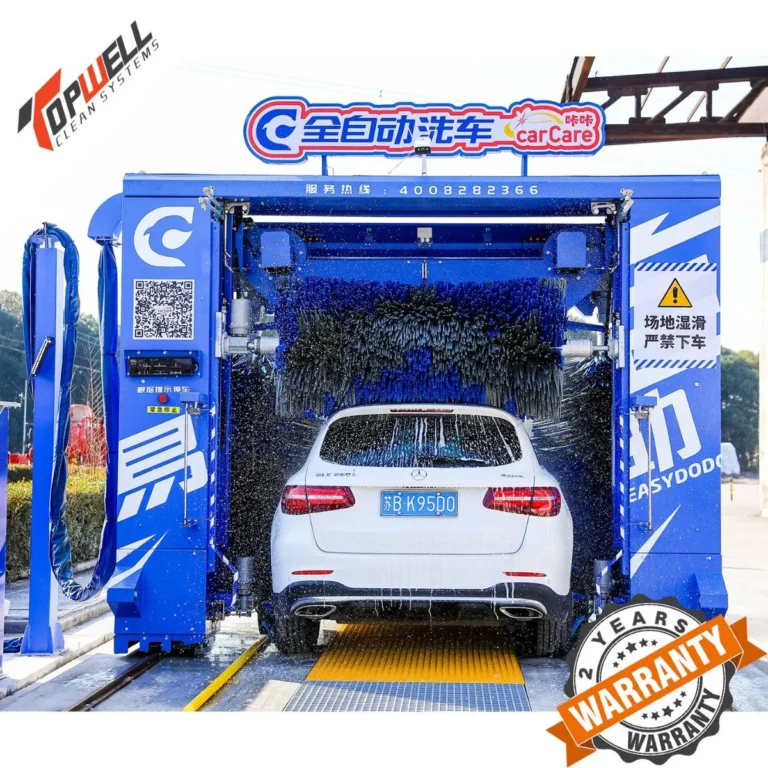
Tunnel washes with brushes, rotating cloth strips, or wheel scrubbers create the highest risk. A brush can catch a cover’s outer edge and apply force in a direction the retaining clips were not designed to tolerate.
Possible results include:
- A cover popping off inside the tunnel
- Scratches or scuff marks on the plastic
- Broken retaining clips
- Damage to the wheel finish underneath
- A lost cover if it comes off after leaving the wash
A common mistake is assuming that “soft cloth” equipment cannot cause damage. Soft material can still pull on a loose, cracked, or incorrectly fitted cover.
Touchless washes
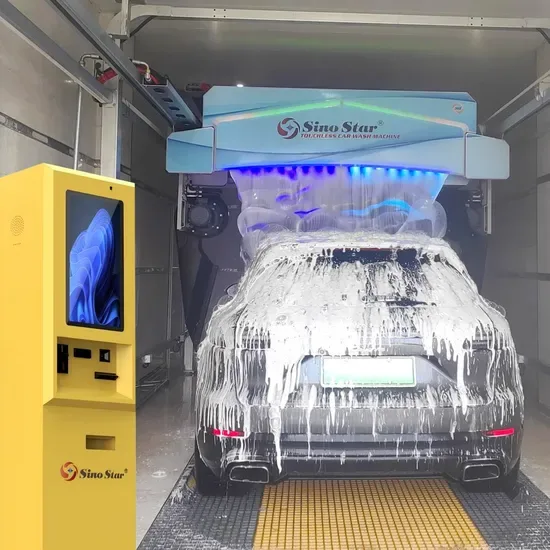
Touchless systems use chemical cleaners and pressurized water rather than direct-contact brushes. They generally reduce the chance of a cover being physically snagged, but they still deserve caution.
Potential concerns include:
- Excessive pressure at very close range
- Strong alkaline or acidic chemicals
- A cover that is already loose
- Water forced into damaged clips or trim
- Poorly adjusted equipment aimed directly at the wheel
Touchless is usually the better automatic option, but “touchless” does not mean “no inspection needed.”
Conveyor and wheel equipment
Some washes use tire guides, wheel brushes, or other equipment near the lower part of the vehicle. Even if the main wash is gentle, a separate wheel-cleaning device may contact the cover.
Ask the operator specifically:
Does any brush or wheel equipment contact removable aero wheel covers?
If the answer is unclear, remove the covers or choose another wash.
Should you remove the covers every time?
Remove them when:
- The wash uses rotating brushes or cloth curtains
- The cover has a crack, missing clip, or loose section
- The wheel was recently serviced
- You hear rattling from the cover while driving
- The wash operator cannot explain how the wheel equipment works
- You want the wheel face and the area behind the cover cleaned thoroughly
Leaving them on may be reasonable when:
- The wash is truly touchless
- The covers are correctly seated and undamaged
- The operator confirms that no brush contacts the wheels
- You follow the vehicle’s wash-mode instructions
- You inspect the covers afterward
The trade-off is simple: removing the covers takes a few minutes, while replacing a damaged or lost cover costs substantially more time and money. For a brush-based wash, removal is the sensible default.
How to remove Tesla aero wheel covers safely
The exact removal method varies by Tesla model and wheel design. Do not assume that every cover uses the same clips or center-cap arrangement.
- Park on a level surface. Select Park, apply the parking brake if needed, and make sure the vehicle cannot roll.
- Let the wheel cool. Do not handle a hot wheel immediately after driving or braking.
- Inspect the cover first. Look for cracks, lifted edges, missing clips, or a section that is already loose.
- Use both hands. Place your fingers around opposite edges rather than pulling from one small corner.
- Pull outward gradually. Release the cover with controlled, even pressure. Avoid twisting it against the wheel.
- Do not use metal tools. Screwdrivers and pry bars can mark the wheel, gouge the plastic, or break the retaining clips.
- Store the covers together. Place them in a clean, padded area where they cannot be driven over or scratched.
- Check the clips before refitting. If a clip is broken or distorted, do not force the cover back into place.
- Align carefully. Match the cover to the wheel and press around the perimeter until it is evenly seated.
- Confirm the fit. Run your hand around the edge and gently check for movement before driving.
If a cover will not release with reasonable hand pressure, stop rather than escalating force. Consult the current Tesla manual or a qualified service professional for that specific wheel design.

The cover should be released with even outward pressure, not twisted from one corner.
Credit: www.ebay.com
What to inspect after removal
Removing the cover is also an opportunity to check the wheel and tire. Look for:
- Cracks or bent sections in the wheel
- Curb damage around the rim
- Uneven tire wear
- A nail, screw, or embedded object
- Low tire pressure
- Dirt trapped around the valve stem
- Broken aero-cover clips
- Corrosion caused by road salt or trapped moisture
A reliable air supply is useful when checking and correcting pressure after cleaning; guidance on selecting equipment for vehicle tires is available in this compressor sizing guide. Always use the pressure shown on the Tesla vehicle label or in the vehicle display rather than the maximum pressure molded into the tire sidewall.
Do not remove a tire, loosen lug nuts, or attempt wheel repairs simply because you are cleaning the car. Those tasks require proper equipment and torque specifications.
Preparing a Tesla for an automatic wash
Before entering any automatic wash:
- Close the windows, trunk, frunk, and charge port.
- Remove loose exterior accessories that could catch equipment.
- Fold mirrors if the wash instructions require it.
- Disable automatic windshield wipers.
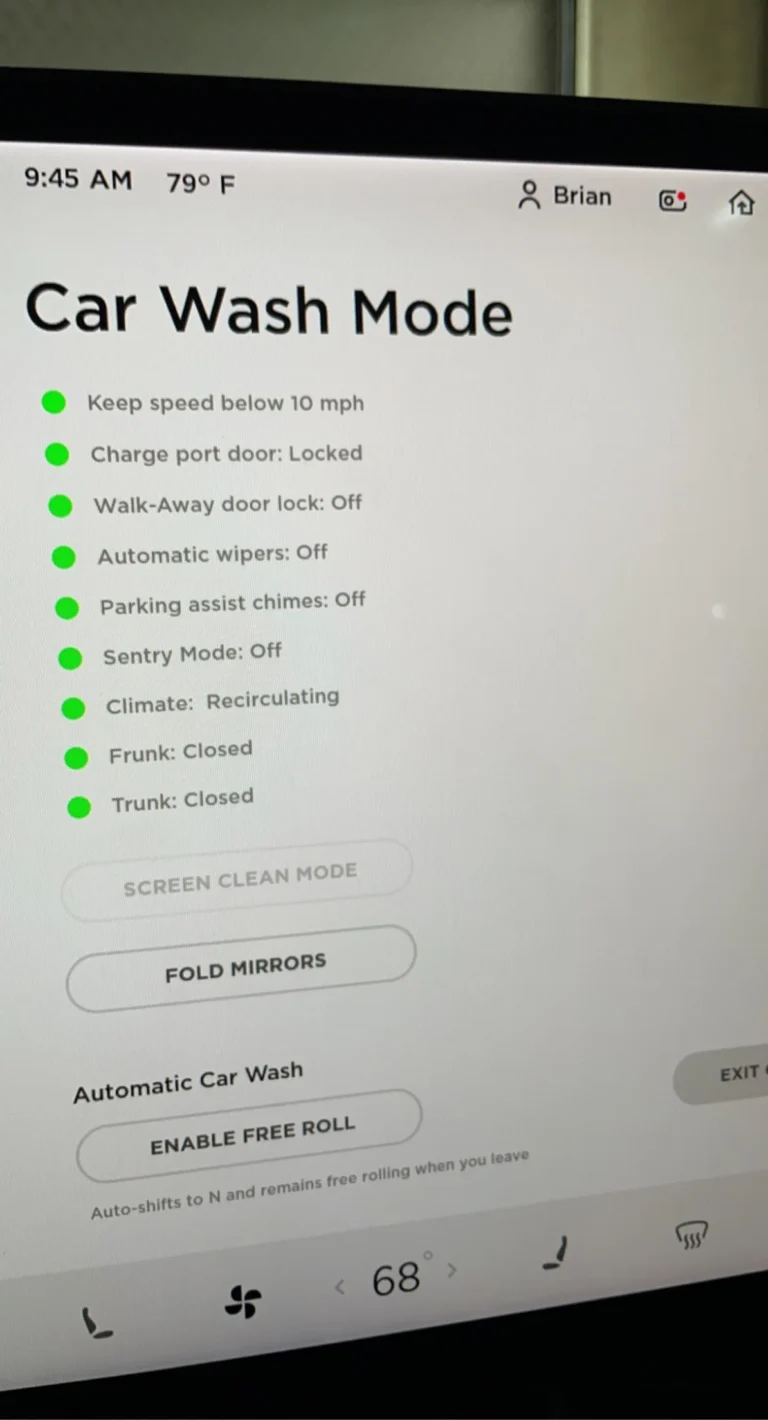
- Check whether your Tesla has a Car Wash Mode and use it according to the current on-screen instructions.
- Confirm that the wash permits your vehicle and wheel configuration.
- Tell the operator that the vehicle has removable aero covers.
- Select a touchless option when available.
- Avoid any service that directs a rotating brush directly at the wheel face.
- Inspect the vehicle before leaving the wash area.
For a paint-conscious cleaning routine at home, the two-bucket washing method can reduce the chance of dragging grit across painted surfaces. It is also easier to clean the removed covers gently by hand.
How to clean the covers and wheels by hand
Hand washing gives you the most control and is the safest method when the covers are dirty, loose, or already damaged.
Supplies
- A hose or low-pressure rinse
- Automotive shampoo
- Two clean buckets
- A soft wheel brush
- A microfiber towel
- A separate brush for the tire sidewall
- Optional pH-neutral wheel cleaner approved for the wheel finish
Procedure
- Rinse the wheel and cover to remove loose grit.
- Wash the removed cover separately with diluted automotive shampoo.
- Use a soft brush around the back of the cover and the retaining clips.
- Clean the exposed wheel without forcing debris into the brake components.
- Rinse thoroughly so cleaner does not dry on the finish.
- Dry with a clean microfiber towel or allow the parts to air-dry.
- Inspect the clips and the wheel before reinstalling the cover.
Avoid household degreasers, abrasive pads, stiff wire brushes, and cleaners that are not approved for automotive finishes. Do not spray a concentrated cleaner onto a hot wheel. If you are using a pressure washer, keep the nozzle at a safe distance and avoid directing a concentrated stream at seals, sensors, brake components, or cover clips.
Should you wash with the covers off?
Yes, if you want to clean both the visible wheel and the hidden surfaces behind the cover. Washing with the covers off makes it easier to spot:
- Brake dust buildup
- Road salt residue
- Curb rash
- Corrosion
- Loose wheel hardware covers
- Tire or valve-stem problems
Keep the removed covers away from the wash bay floor. A cover placed face-down on gritty concrete can pick up scratches that would not occur during a careful wash.

Cleaning the panel separately helps reach the rear clips and hidden dirt.
Credit: www.haloblk.com
When aero covers should stay off permanently
Some owners remove aero covers for appearance or to simplify cleaning. That is generally a cosmetic choice, but remember that the vehicle’s efficiency can change with different wheel configurations, tires, and accessories.
If you leave the covers off:
- Store them in a dry, protected place
- Keep the original clips and hardware together
- Check whether the exposed wheel requires different care
- Expect more visible brake dust and road grime
- Monitor energy use rather than assuming a specific efficiency change
If you are preparing for a mountain drive, check the vehicle’s tire condition, clearance, and equipment requirements in advance; this mountain vehicle checklist provides a useful reminder that wheel and tire preparation matters beyond appearance.
Comparison of wash options
| Cleaning option | Risk to aero covers | Cleaning quality | Best use |
|---|---|---|---|
| Brush tunnel wash with covers installed | High | Moderate | Avoid |
| Brush tunnel wash with covers removed | Lower for covers | Moderate | Acceptable if the wash permits the vehicle |
| Touchless wash with covers installed | Low to moderate | Moderate | Convenient maintenance wash |
| Touchless wash with covers removed | Low | Better around the wheel face | Good compromise |
| Careful hand wash | Lowest | Highest control | Best for damaged, loose, or valuable covers |
No wash method eliminates every risk. The cover’s condition, the equipment’s maintenance, and the operator’s instructions all matter.
Common mistakes to avoid
Pulling from one corner
A one-sided tug can bend the cover and overload one clip. Use both hands and release it progressively.
Reinstalling without checking the clips
A damaged clip may allow the cover to appear fitted while remaining loose. Inspect the back before pressing it into place.
Using a pressure washer too close
A concentrated jet can damage finishes and force dirt or water into places it should not go. Pressure should be controlled, not aimed aggressively at the wheel.
Treating every Tesla wheel cover as identical
Model year and wheel design matter. Confirm the correct removal process for your Tesla instead of copying a method from a different model.
Ignoring a rattling cover
Noise from the wheel area can indicate a loose panel, broken clip, or another wheel issue. Stop and inspect it before continuing to drive.
Assuming a wash guarantee covers lost parts
Some car washes exclude accessories and removable trim from liability. Ask about the policy before entering, particularly if the covers are aftermarket or already damaged.
FAQ
Can I leave Tesla aero covers on in a touchless wash?
Usually, a touchless wash presents less physical risk than a brush wash. However, check that the covers are secure, avoid excessive close-range pressure, and follow the wash operator’s instructions. Removing them remains the more cautious option if the covers are loose or damaged.
Can automatic brushes damage Tesla aero covers?
Yes. Brushes and cloth equipment can scratch the plastic, catch an exposed edge, or pull a poorly seated cover from its retaining clips. Wheel brushes are especially concerning because they are designed to make direct contact near the wheel face.
Will high-pressure water pop off a properly installed cover?
A properly fitted cover should not normally come off from ordinary washing alone, but a damaged, loose, or incorrectly installed cover is more vulnerable. High-pressure water should not be aimed closely at the edges or clips.
Do aero covers improve Tesla range?
Their purpose is to reduce aerodynamic turbulence around the wheel area, which can support efficiency. The real-world effect depends on speed, wind, temperature, tires, wheel design, and driving style. Do not treat a claimed improvement as a guaranteed range increase for every trip.
Can I use a tire shine product on the covers?
Avoid getting oily tire dressing on the aero-cover surface. Overspray can leave a greasy film, attract dust, and make the panel slippery to handle. Apply approved tire products carefully to the tire sidewall only.
What should I do if a cover comes off in the wash?
Ask the wash operator to stop the equipment if it is safe to do so, and do not reach into moving machinery. Once the area is safe, inspect the cover, retaining clips, and wheel for damage. Do not reinstall a cracked cover or one with broken clips until it has been properly assessed.
Should I remove aero covers before cleaning the wheels at home?
Yes, if you want to clean behind them or inspect the wheel. Remove them on a cool wheel, wash the panels separately, and reinstall them only after checking that the clips are intact and the cover is fully seated.
Can I drive without Tesla aero covers?
Many owners drive without them, but the covers may contribute to the vehicle’s aerodynamic efficiency. Store them safely and monitor your vehicle’s energy consumption if you change the wheel setup. If the cover was removed because it is damaged, replace or repair it before relying on it again.
Final recommendation
For a brush-based automatic wash, remove Tesla aero wheel covers before entering. The few minutes spent releasing and storing them are a practical way to prevent scratches, broken clips, and lost panels.
For a touchless wash, leaving secure, undamaged covers installed may be reasonable, provided the equipment does not contact the wheels and the pressure is used appropriately. When in doubt, remove the covers and inspect the wheels while they are exposed.
Before your next wash, confirm the wash type, check the cover clips, and use the vehicle’s current Tesla wash-mode instructions.