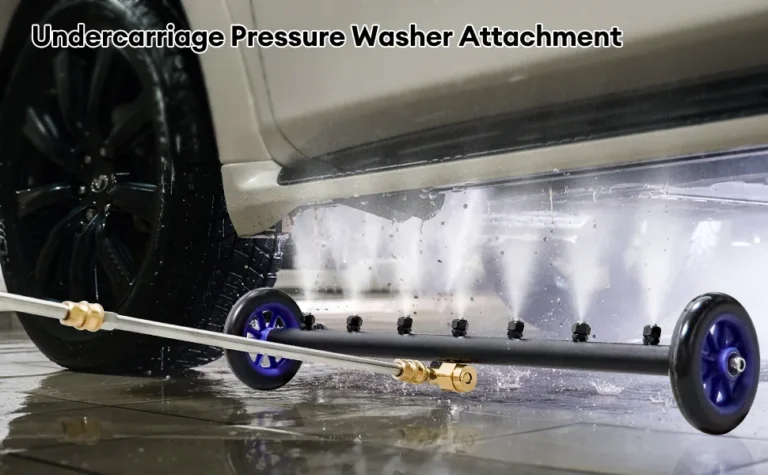
If you’ve ever stood in your driveway staring at a set of colorful pressure washer tips, wondering which one won’t ruin your car’s paint, you’re not alone. “Which pressure washer tip for car” is one of the most common questions new owners ask, and the answer isn’t one-size-fits-all. Use the wrong tip and you can etch the clear coat in seconds. Use the right one and you’ll rinse off dirt and soap safely without touching the paint.
Manufacturer specifications indicate that most residential pressure washers operate between 1200 and 2000 PSI. At that pressure, a 40° white tip or a 25° green tip is typically safe for automotive paint when held at least six inches away. But the choice also depends on your machine’s flow rate, the condition of your clear coat, and what you’re actually trying to do.
Let’s walk through it step by step.
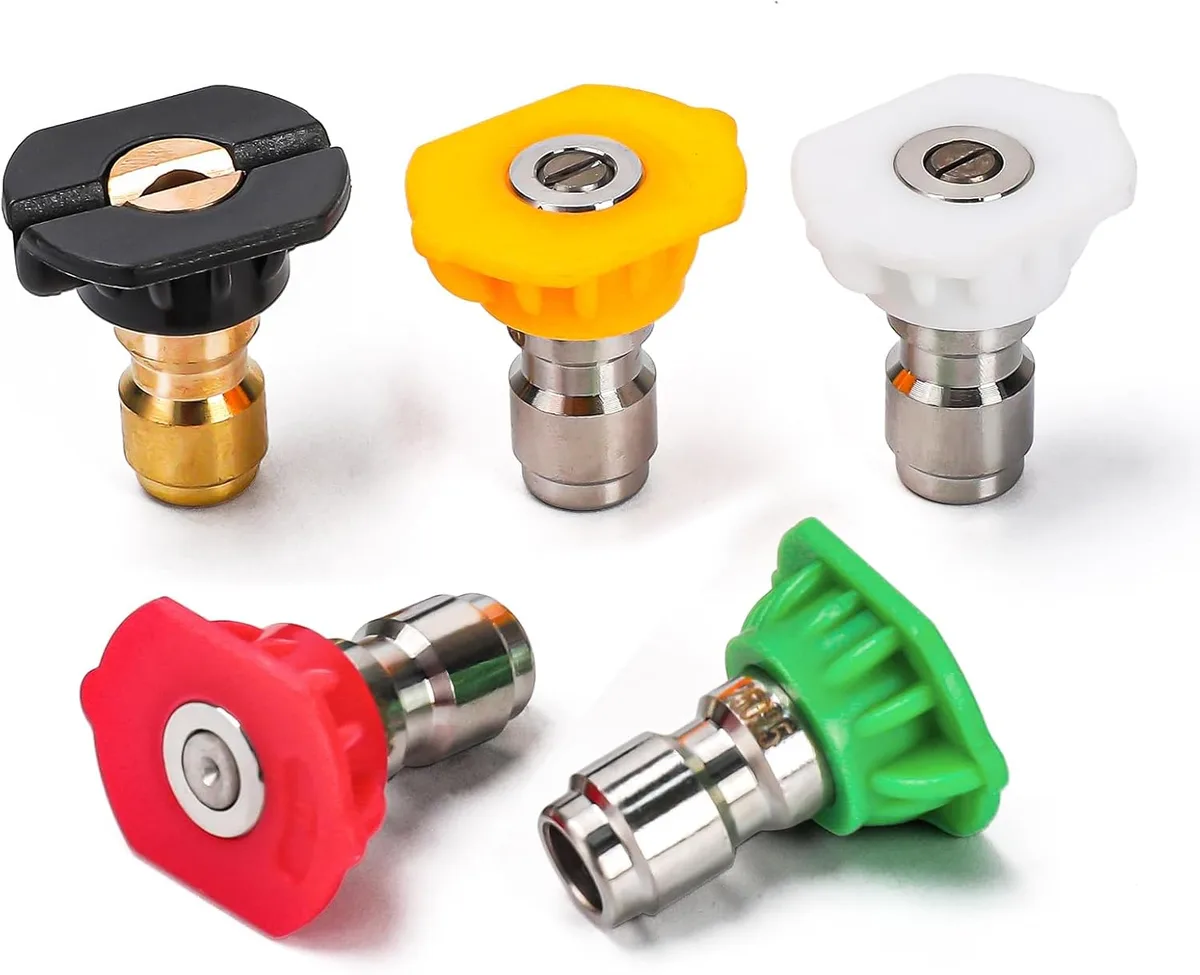
The Real Problem: Why the Wrong Tip Can Ruin Your Paint
Car paint isn’t indestructible. Modern clear coats are about 1.5 to 2 mils thick, roughly the width of a human hair. A narrow jet of water from a 0° or 15° tip can blast through that layer in a fraction of a second if you hold it too close.
That’s not an exaggeration. Aggregate reviews from professional detailers consistently report etched marks, peeling clear coat, and even exposed primer from a moment of inattention.
The real problem is that most people grab a tip based on color alone without understanding pressure and distance. A gas pressure washer at 3000 PSI with a 25° tip is still dangerous. An electric washer at 1500 PSI with the same tip is much safer.
So the question isn’t just “which tip,” it’s “which tip at what distance and at what pressure.”
Quick Answer: The One Tip Most People Should Use (and Why)
Start with the 40° white tip. It’s the safest choice. The wide spray pattern spreads the force.
It rinses soap gently. It won’t strip wax or damage clear coat.
Hold it six to twelve inches from the surface. Keep the spray moving. Never stop on one spot.
If your paint is fresh and well maintained, the 25° green tip works too. But the 40° is the default. Use it for rinsing dirt, soap, and foam.
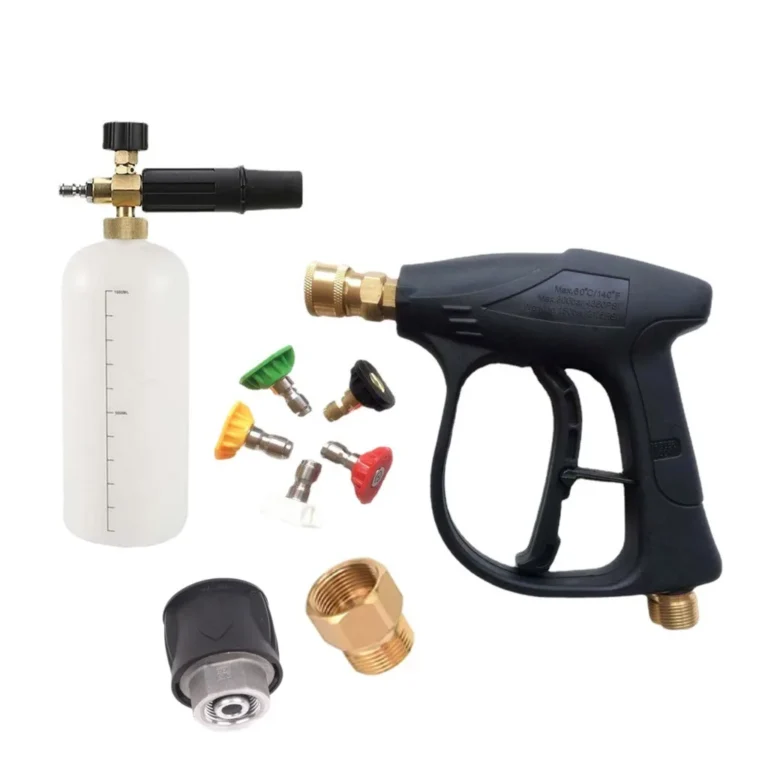
What Those Color Codes Actually Mean – A Quick Reference
Pressure washer nozzle colors follow an industry standard set by manufacturers like Sun Joe, Simpson, and DeWalt. Each color corresponds to a specific spray angle and application. Here’s the cheat sheet.
| Tip Color | Spray Angle | Application | Safe for Car Paint? |
|---|---|---|---|
| Red (0°) | Pencil jet | Stripping paint, concrete cleaning | No — will damage clear coat |
| Yellow (15°) | Narrow fan | Removing tough grime, mud | Only at 18+ inches with extreme caution |
| Green (25°) | Medium fan | General rinsing, light washing | Yes at 12+ inches |
| White (40°) | Wide fan | Soap rinsing, final rinse | Safest for paint |
| Black (65°) | Very wide, low pressure | Applying detergent | Yes — used for soap only |
The black tip is usually part of the set but often labeled “soap nozzle” or “detergent tip.” It has a much larger orifice, which reduces pressure so the washer can pull soap from a reservoir.
How PSI and GPM Change Your Tip Decision (Key Conditions)
Your pressure washer’s PSI and GPM, pounds per square inch and gallons per minute, are the two numbers that determine which tip works safely. A higher PSI means more force behind the water. A higher GPM means more volume, which helps rinse faster but doesn’t increase risk as much.
Electric vs. Gas – Why It Matters More Than You Think
Electric pressure washers typically produce 1300 to 1800 PSI. Gas units often push 2500 to 4000 PSI. That difference changes everything.
If you own an electric unit (most common for home use), a 25° green tip at the right distance is perfectly safe. You can even use the 15° yellow tip on stubborn bug residue, but only if you keep it moving and stay at least 18 inches away.
If you own a gas machine, stick with the 40° white tip for almost everything. The 25° tip at 3000+ PSI can still mar paint if you’re not careful. Gas pressure washers require more distance and more caution overall.
Orifice Size: The Hidden Number on Your Nozzle
Every tip has a tiny hole called an orifice. The size of that hole is matched to your pressure washer’s flow rate. Orifice sizes are stamped on the tip as a number: #2.0, #2.5, #3.0, #4.0.
- #2.0: For machines with 1.4 to 1.8 GPM
- #2.5: For 1.9 to 2.5 GPM (most common for home electric units)
- #3.0: For 2.6 to 3.0 GPM
- #4.0: For soap tips and low-flow detergent application
Using the wrong orifice size can cause your pressure washer to surge or run inefficiently. Check your owner’s manual for the recommended orifice size before buying a set. Most universal tip kits include multiple orifice options.
The Decision Flow: Pick the Right Tip Based on Your Situation
Now we get to the practical part. Your choice depends on three things: your car’s paint condition, your pressure washer’s output, and the task at hand.
If You’re Washing a Daily Driver with Decent Clear Coat
Use the 40° white tip for rinsing dirt and soap. Use the 25° green tip only on the lower panels where road grime builds up. Hold the nozzle at a 45-degree angle to the surface, this helps water sheet off and reduces the chance of forcing dirt into the paint.
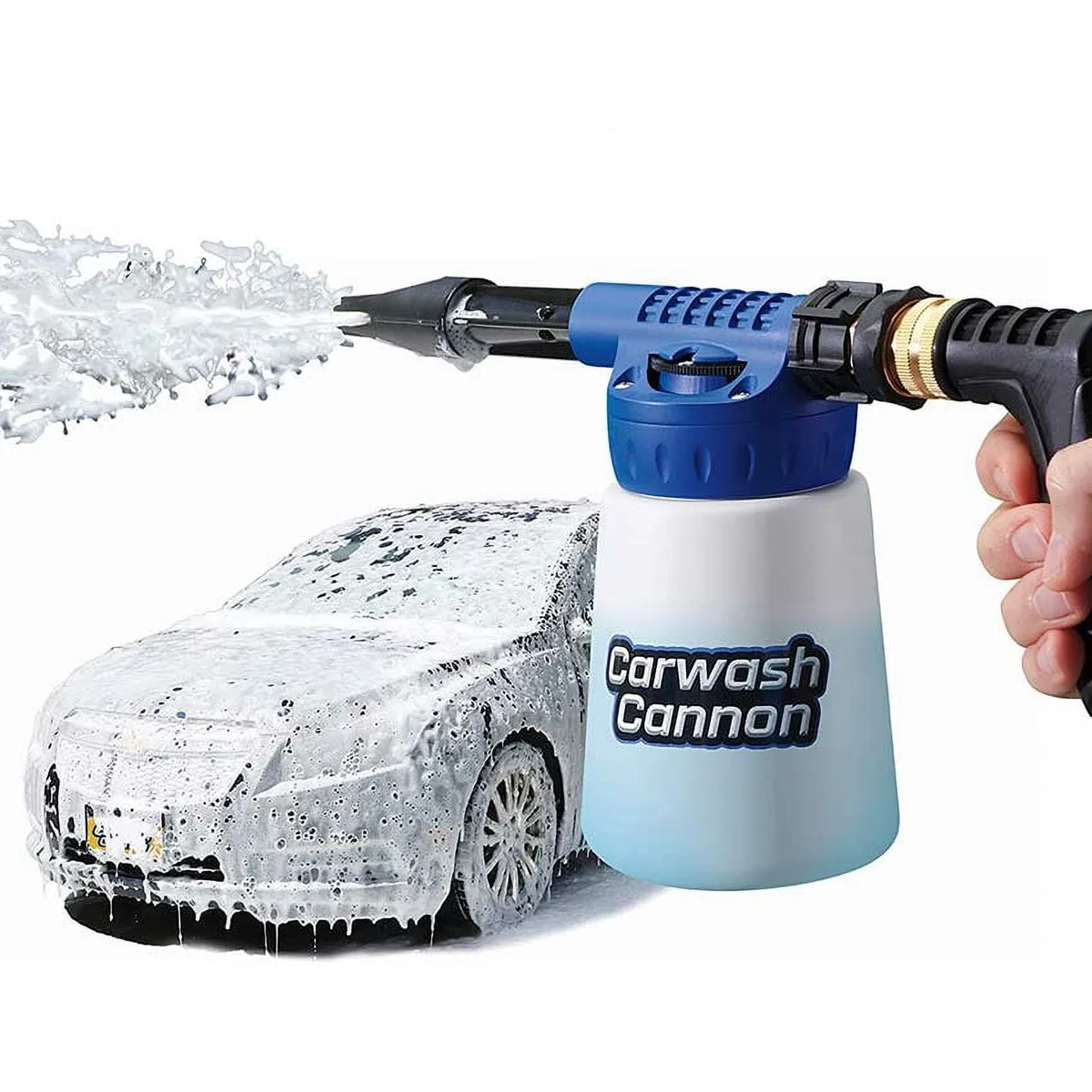
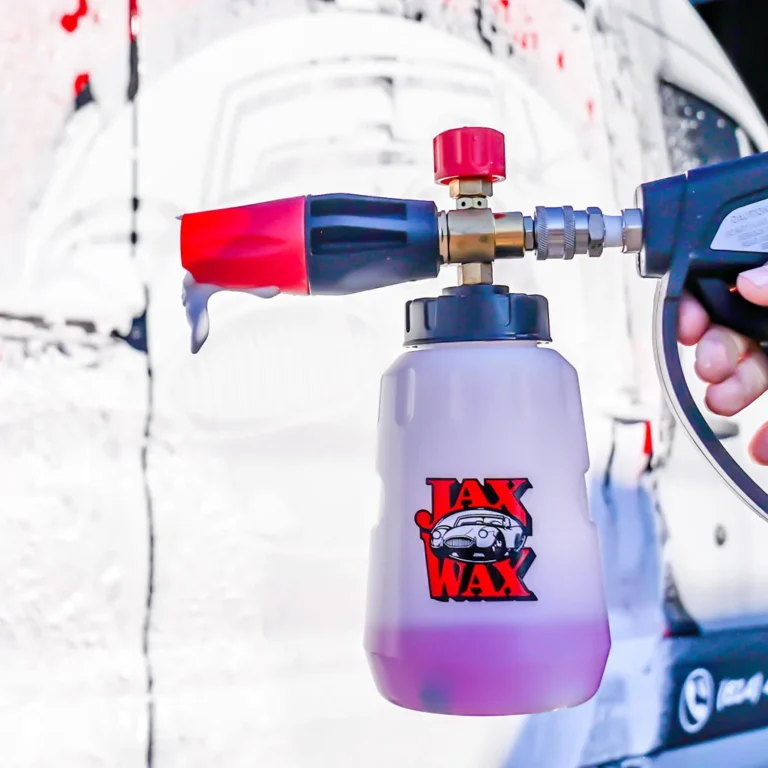
For applying soap, switch to the black 65° tip or a foam cannon. A foam cannon like the ones we cover on our blog clings longer and lubricates better than a standard soap tip.
If Your Paint Is Old, Faded, or Already Damaged
Stick to the 40° white tip for everything. Do not use the 15° or 25° tips at all. Aged clear coat is more brittle and can chip or peel under moderate pressure.
Keep your distance at 12 inches or more. If you need to remove stubborn contaminants, use a dedicated bug and tar remover for cars rather than cranking up the pressure.
If You’re Applying Soap or Pre-Wash
The black 65° soap tip is your tool. It creates a low-pressure spray that pulls detergent from the built-in reservoir. If your machine doesn’t have a soap tip, you can use a foam cannon instead.
Foam cannons attach to the gun and produce thick suds that cling to vertical panels. They’re especially effective for loosening dirt before the contact wash. For the best results, pair your pressure washer with a high-foaming car shampoo.
If You’re Trying to Remove Bugs, Tar, or Stubborn Grime
Aggregate reviews from detailers suggest a two-step approach. First, spray a specialized bug and tar remover spray for cars and let it sit for two to three minutes. Then rinse with the 40° white tip.
If the residue persists, you can carefully use the 15° yellow tip from at least 18 inches away, but only on the front bumper or lower panels where wax and clear coat are less critical. Never use the 0° red tip anywhere on your car’s bodywork.