ByMax Lee
Michigan Tractor Road Laws & Flashing Light Rules
Michigan farm tractor road use laws and flashing light requirements exist to keep farmers and other drivers safe when slow-moving equipment shares public roads. These rules aren’t just suggestions, they’re legal mandates that can mean the difference between a smooth harvest season and a costly fine or accident.
As of 2026, Michigan’s Vehicle Code requires tractors to display a flashing amber light and a slow-moving vehicle emblem when traveling under 25 mph. Get this wrong, and you risk violations that could ground your operation.
Quick Answer
Michigan farm tractor road use laws and flashing light requirements mandate a flashing amber beacon and SMV emblem for tractors moving under 25 mph. The light must be visible from 500 feet in all directions. Tractors over 12 feet wide may need additional permits.
Nighttime travel requires headlights, taillights, and reflectors.
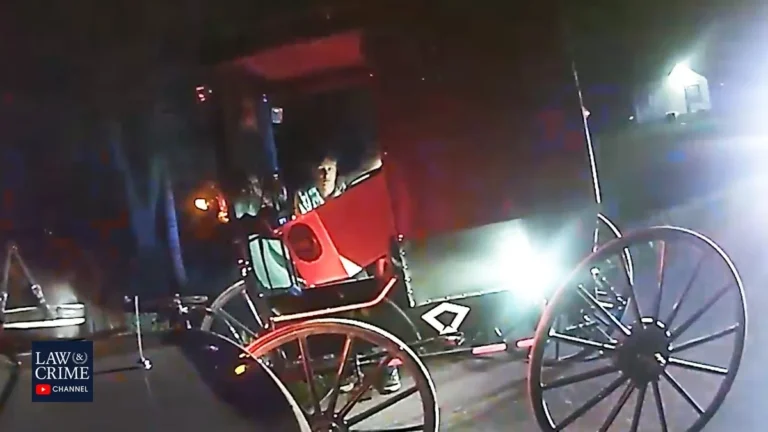
YouTube / Alltruckled (YouTube thumbnail (fair-use with source credit))
Why Michigan’s Farm Tractor Road Laws Matter for Safety and Compliance
Farm equipment isn’t built for highway speeds, and Michigan’s laws reflect that. Without proper lighting and signage, a tractor can become nearly invisible to drivers approaching at 55 mph or more. The state’s rules are designed to prevent collisions, especially at dawn, dusk, or night when visibility drops.
These regulations also protect farmers from liability. If an accident occurs and your tractor lacks required lighting or emblems, you could be held fully responsible. Compliance isn’t just about avoiding fines, it’s about avoiding lawsuits and keeping your operation running.
The Quick Answer: What’s Legally Required for Tractors on Michigan Roads
Here’s the non-negotiable checklist for any tractor on public roads in Michigan:
- Flashing amber light: Must be mounted as high as practical, visible from all directions at 500+ feet.
- SMV emblem: Orange triangle, 2, 6 feet above ground, clean and unobstructed.
- Headlights and taillights: Required 30 minutes after sunset to 30 minutes before sunrise.
- Reflectors: Front, rear, and side reflectors if traveling at night.
- Speed limit: Maximum 25 mph unless otherwise posted.
Skip any of these, and you’re not just risking a ticket, you’re risking a crash.
Michigan’s Core Farm Tractor Road Use Laws
Michigan’s Vehicle Code (MCL 257.682 and MCL 257.719) lays out the foundation for farm equipment on public roads. The key principle is visibility. Tractors must be identifiable as slow-moving vehicles from a distance, day or night.
The law doesn’t just apply to tractors. Any agricultural equipment, combines, balers, or wagons, must follow the same rules when on public roads. This includes implements being towed.
If it moves slower than 25 mph, it needs the full lighting and emblem setup.
Flashing Light Requirements: What You Must Have
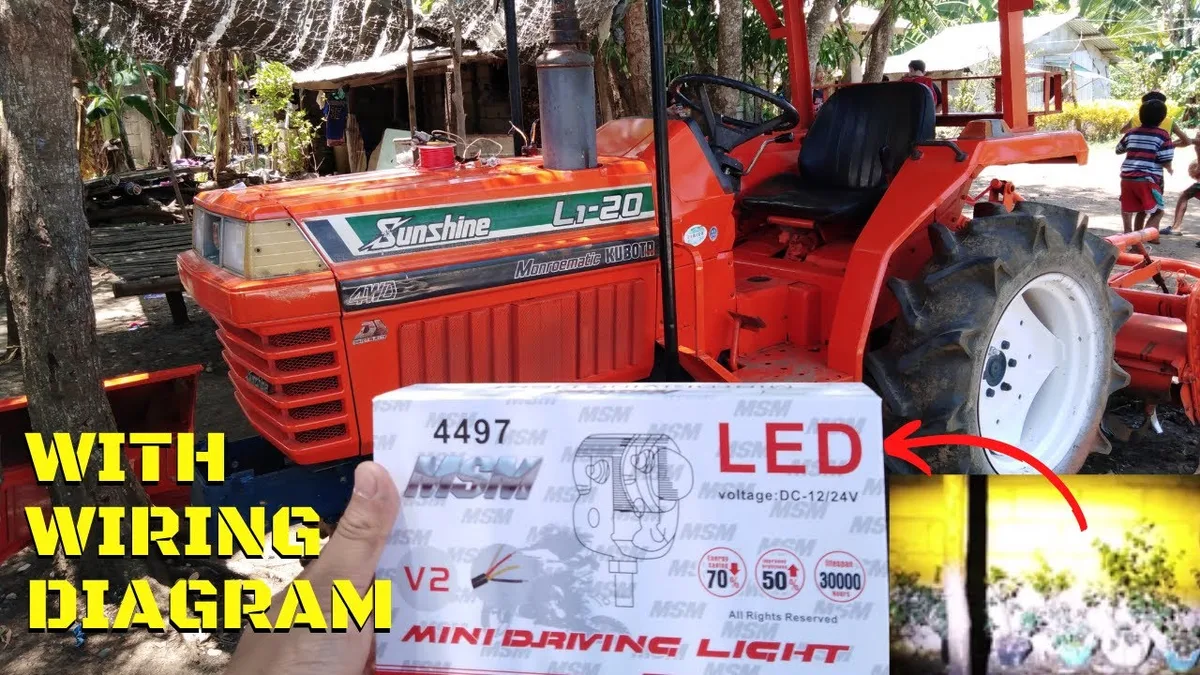
A flashing amber light isn’t optional. Michigan requires it for any farm vehicle traveling under 25 mph. The light must:
- Be mounted as high as practical, typically on the roof or highest point of the tractor.
- Flash at a rate of 60, 120 times per minute.
- Be visible from at least 500 feet in all directions, in normal sunlight.
Strobe lights are acceptable if they meet the same visibility and flash rate standards. Rotating beacons are also common and compliant.
YouTube / The Mechanic PH (YouTube thumbnail (fair-use with source credit))
Some farmers assume a single light is enough. It’s not. If your tractor is towing equipment wider than the tractor itself, you may need additional lights on the rear of the implement.
Check the Michigan Department of Transportation for specifics on wider loads.
Local county rules can add more. We've seen townships require extra marker lights on long combines during harvest.
SMV Emblem Rules and Proper Placement
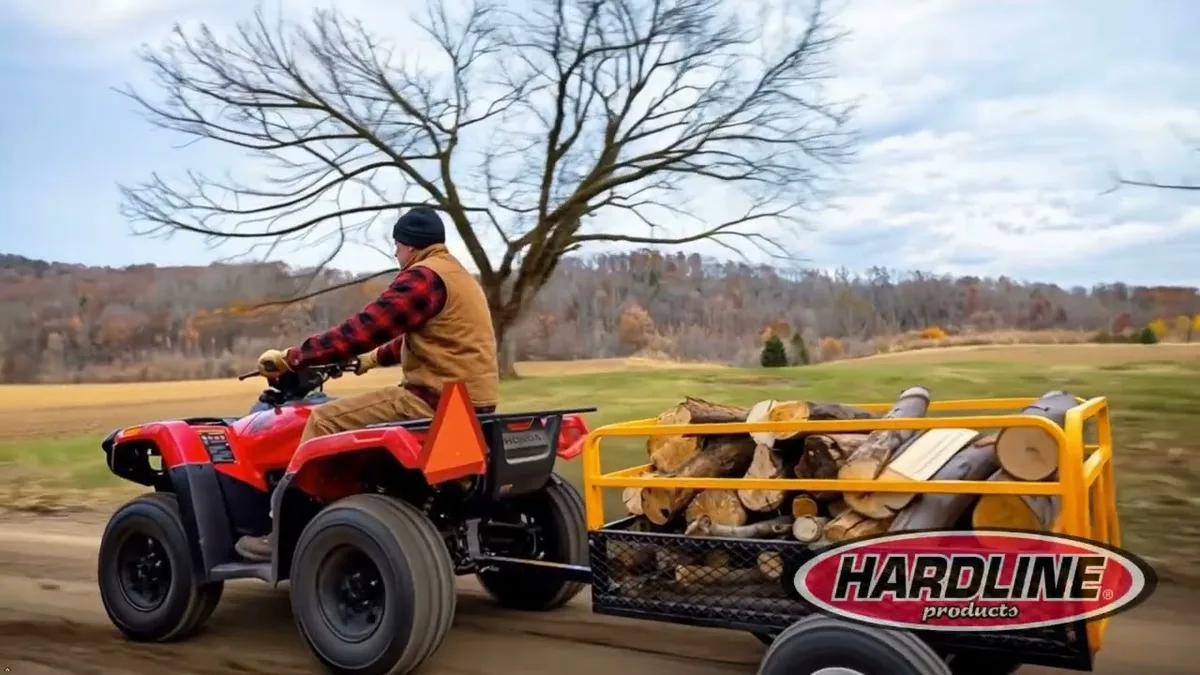
The slow-moving vehicle emblem is a retroreflective orange triangle with a red border. It tells other drivers you're moving 25 mph or less. Michigan law says it must sit at least 2 feet but no higher than 6 feet above the ground.
YouTube / Hardline Products® (YouTube thumbnail (fair-use with source credit))
Mount it on the rear of the tractor or implement, centered and unobstructed. Don’t tape it to a toolbox or hang it where a load blocks it. A dirty or faded emblem loses reflectivity and won’t pass a stop.
Replace the emblem if it’s cracked, peeled, or dull. The American Society of Agricultural and Biological Engineers sets the standard shape and reflectivity.
Speed Limits and Road Restrictions for Farm Equipment
Michigan caps farm tractors at 25 mph on public roads unless a sign says otherwise. That limit exists because tractors lack crash protection and stop slowly. Going faster puts you and traffic behind you at risk.
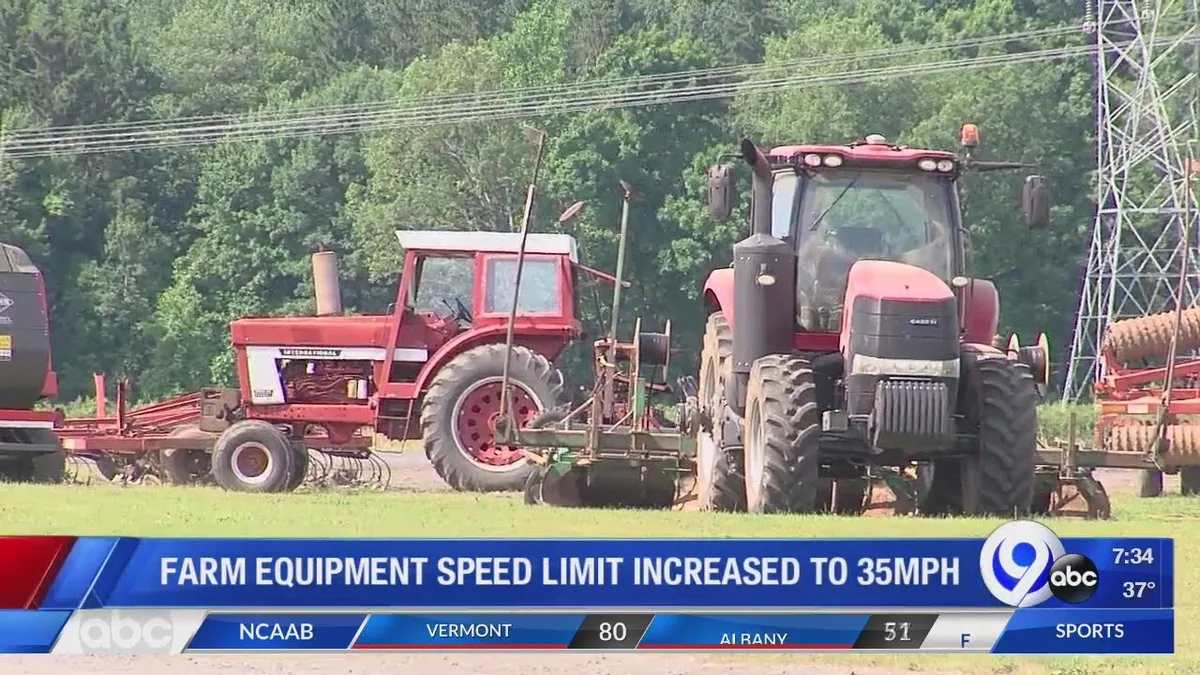
YouTube / NewsChannel 9 WSYR Syracuse (YouTube thumbnail (fair-use with source credit))
Width matters too. A tractor or combo over 12 feet wide needs a permit from MDOT. Over 14 feet brings escort vehicle rules during daytime moves.
Length limits apply when towing wagons, so measure before you roll.
Stay off limited-access highways unless the state issues a route permit. County roads are the usual path, but each county can set seasonal weight or width bans.
When You Need a Permit for Oversize or Overweight Tractors
Most farm tractors don’t need a permit at 12 feet wide or less. Cross that line and MDOT wants an oversize/overweight permit before you leave the field. The same goes for loads heavier than legal axle limits.
Apply online through MDOT’s permit portal. Have your route, dimensions, and weights ready. Harvest moves are often granted quickly, but don’t assume a verbal okay counts.
If you’re towing a full grain cart over a bridge, check the posted limit. Some rural spans ban loads above a set tonnage. A permit won’t save you from a collapsed deck, so read the signs.
Daytime vs. Nighttime Lighting: What Changes
Daytime runs need the amber beacon and SMV emblem, nothing more. Once the sun drops, headlights and taillights become mandatory. Side reflectors go on if your equipment lacks factory lighting.
We’ve reviewed crash reports where a tractor ran at dusk with no headlights. Other drivers simply didn’t see it until too late. Turn the lights on 30 minutes before sunset, not after.
Night towing means the rear implement needs its own taillights or a light board. A single tractor light won’t cover a 30-foot wagon behind you. Wire a board or you’re illegal and invisible.
Common Mistakes That Get Farmers Fined
The top error is a missing or faded SMV emblem. Officers look for it first. A second is a dead amber beacon, often from a loose wiring clip under the dash.
Some skip lights on short field-to-field hops. That’s still a public road, and the law applies. Others mount the emblem too low, below the 2-foot minimum, where a load hides it.
Width violations surprise a lot of growers. A corn head or sprayer wing can push you past 12 feet easy. Measure the whole rig, not just the tractor, before you drive.
How to Check Your Tractor for Road Legality (Step-by-Step)
Walk around the machine before each road trip. Use this quick list:
- Confirm the amber beacon flashes and is visible from all sides.
- Check the SMV emblem is clean, mounted 2, 6 feet high, and unblocked.
- Test headlights, taillights, and turn signals if equipped.
- Verify reflectors are present on front, rear, and sides for night moves.
- Measure total width and length with attached implements.
Fix any failure before you start the engine. A 10-minute check beats a 500-dollar citation.
County vs. State Roads: What’s Different
State roads follow the Vehicle Code uniformly. County roads can add weight bans in spring when frost leaves the base soft. Townships may limit widths during planting or harvest peak.
Call the county road commission before a long move. They’ll tell you active bans and detours. A five-minute phone call prevents a stuck loader on a posted bridge.
What Happens If You’re Pulled Over?
The officer will check your lighting and emblem first. They’ll ask where you’re headed and may measure your width. If you’re legal, you’re on your way in minutes.
If not, expect a citation from 100 to 500 dollars based on the miss. Repeated stops can trigger a compliance order on your operation. Keep paperwork for permits in the cab where you can reach it.
Expert Tips to Stay Safe and Legal
Run a pre-trip check every time, even on familiar lanes. Replace beacon bulbs in pairs so one doesn’t quit mid-week. Keep a spare SMV emblem in the toolbox.
Use a light board for any towed rig without lights. Tell neighbors your route so they watch for you. These small habits keep the move over rules mindset on shared roads.
Where to Find the Official Rules (And How to Read Them)
Michigan’s Legislature site posts the full Vehicle Code free. Search MCL 257.682 and 257.719 for the exact text. MDOT publishes a farm equipment permit guide with current fees.
The Michigan State Police traffic manual explains roadside enforcement. Read it before you argue a stop. Knowing the late tag rules style details saves you grief in any state stop.
Frequently Asked Questions
Do I need a flashing light if I only drive a tractor at noon?
Yes. Michigan requires the amber beacon whenever the tractor is on a public road under 25 mph. Time of day doesn’t remove that duty.
The emblem alone won’t meet the light rule.
Can I use a strobe instead of a rotating beacon?
You can. The law accepts any flashing amber light visible 500 feet in all directions. Strobe, rotating, or LED all work if they meet the flash rate.
Test it in sunlight before relying on it.
What is the fine for no SMV emblem in Michigan?
Fines start around 100 dollars and reach 500 for repeat or unsafe cases. The officer can also pull the tractor off the road. A faded emblem counts the same as a missing one.
Are county roads exempt from state tractor laws?
No. County roads follow the state code plus local bans. Spring weight limits and width rules can be stricter, not looser.
Always check the road commission before a move.
Do tractors need insurance to drive on Michigan roads?
The state doesn’t mandate farm tractor insurance for road use. Liability still falls on the owner if you cause a crash. Most farm policies cover road moves, so confirm yours before season.