ByMax Lee
Minnesota Trailer Towing Safety Chain & Lighting Rules
Towing a trailer in Minnesota without the right safety setup isn’t just risky, it’s illegal. The state’s Minnesota trailer towing safety chain and lighting requirements exist to keep you, your load, and everyone else on the road safe. Miss a detail, and you could face fines or worse.
Per Minnesota Statute 169.81, safety chains must be strong enough to hold the trailer’s gross weight if the hitch fails. As of 2026, lighting rules follow DOT standards, meaning every trailer needs visible brake lights, turn signals, and reflectors. Here’s what you need to know before you hook up.
Quick Answer
Minnesota requires safety chains rated for the trailer’s gross weight. Trailer lighting must include brake lights, turn signals, and tail lights visible from 500 feet. Chains must be crossed under the coupler.
Break-away systems are mandatory for trailers over 3,000 lbs.
Why Minnesota’s Trailer Towing Safety Chain and Lighting Rules Matter
Safety chains aren’t just a backup, they’re your last line of defense if the hitch fails. Without them, a detached trailer can veer into traffic, causing serious accidents. Minnesota enforces these rules strictly, and non-compliance can lead to fines or even liability in a crash.
Lighting is just as critical. Other drivers need to see your trailer’s signals, especially at night or in poor weather. Faulty lights or missing reflectors make your rig nearly invisible, increasing the risk of rear-end collisions.
The state’s requirements align with federal DOT standards, so what works in Minnesota will likely meet rules in most other states too.
Bing (Web (fair-use with source credit))
Core Requirements for Safety Chains
Minnesota law is clear: safety chains must be strong enough to hold the trailer’s full weight. That means using chains rated for your trailer’s gross trailer weight (GTW), not just the load you’re carrying. For most trailers, this means Grade 70 or higher steel chains.
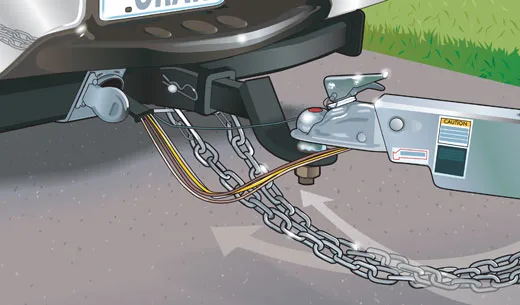
The chains must also be attached properly. They should be crossed under the coupler to create a cradle that catches the trailer if it disconnects. Straight chains can allow the trailer to drop, potentially dragging on the road.
Keep enough slack to allow turns, but not so much that the chains drag.
Here’s what the law specifies:
- Material: Steel or alloy chains (no ropes or cables)
- Strength: Rated for the trailer’s GTW
- Attachment: Crossed under the coupler, secured to the tow vehicle frame
- Length: Enough slack for turns, but not touching the ground
Avoid the mistake of using chains that are too weak or too short. If the chains can’t hold the trailer, they’re useless. And if they’re too tight, they can snap under stress.
Trailer Lighting Rules You Can’t Ignore
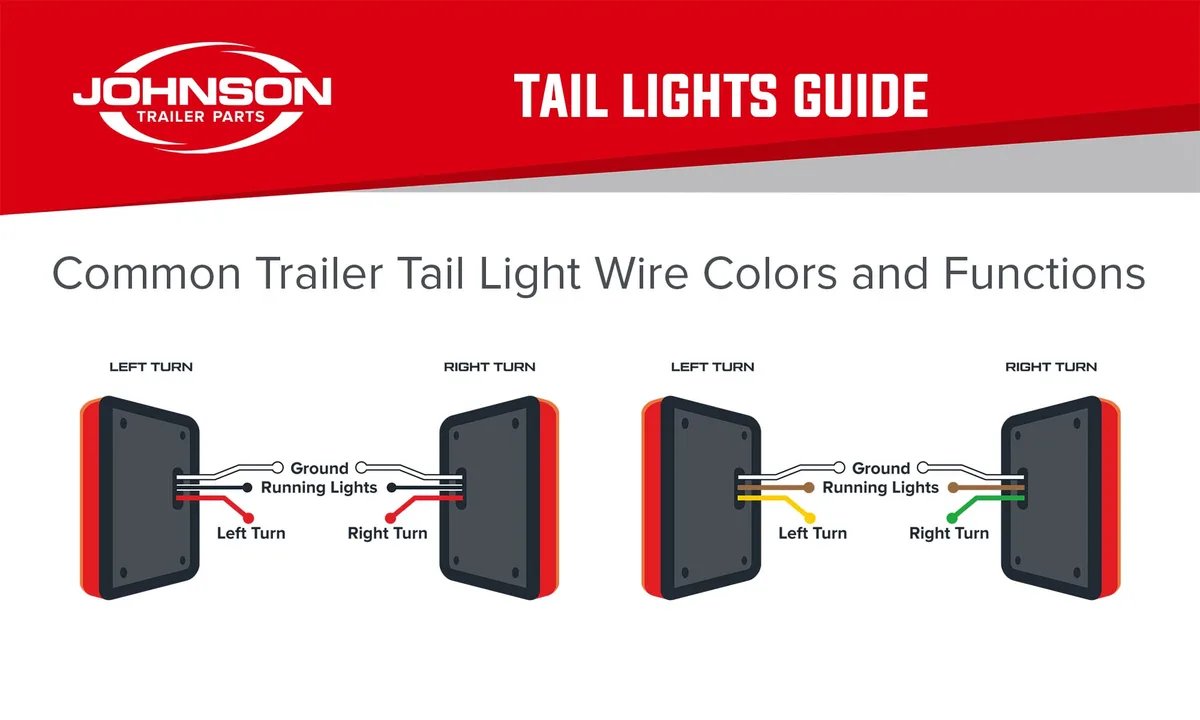
Minnesota follows the Federal Motor Vehicle Safety Standards (FMVSS No. 108) for trailer lighting. This means your trailer must have the following, at minimum:
- Tail lights: Red, visible from 500 feet
- Brake lights: Red, brighter than tail lights
- Turn signals: Amber or red, visible from 500 feet
- Reflectors: Red on the rear, amber on the sides (for trailers over 80 inches wide)
- Clearance lights: Amber on the front, red on the rear (for trailers over 80 inches wide)
Trailers under 80 inches wide need at least one tail light, one brake light, and one turn signal on each side. Wider trailers require additional lighting to ensure visibility from all angles.
Bing (Web (fair-use with source credit))
For more details on vehicle equipment standards, refer to the NHTSA’s lighting regulations.
Break-Away Systems: When and How They’re Required
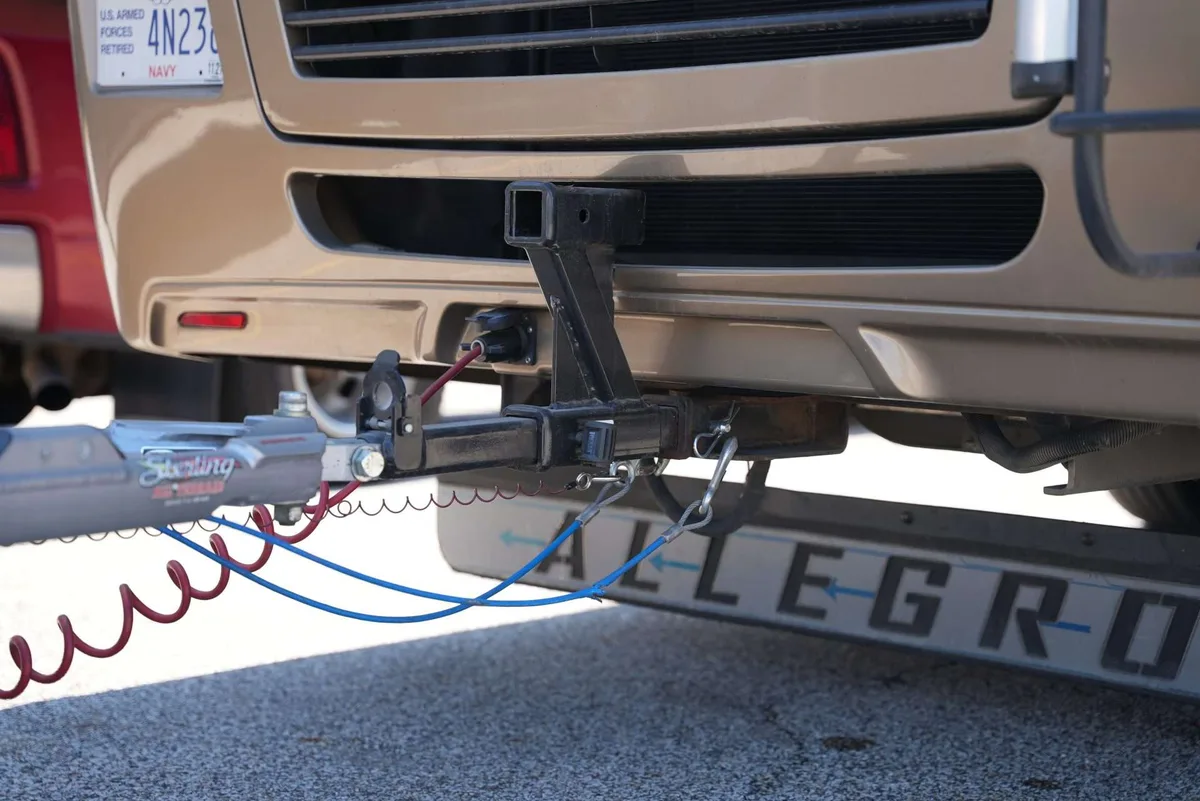
If your trailer weighs over 3,000 pounds, Minnesota requires a break-away system. This is a cable that connects the trailer to the tow vehicle. If the trailer disconnects, the cable pulls a pin, activating the trailer’s brakes and bringing it to a stop.
The system must:
- Be independent of the tow vehicle’s brakes
- Activate automatically if the trailer detaches
- Hold the trailer stationary on a 6% grade
Bing (Web (fair-use with source credit))
Even if your trailer is under 3,000 pounds, a break-away system is a smart addition. It’s a small investment for a lot of extra safety. Test it regularly to ensure it’s working, pull the pin manually to confirm the brakes engage.
Trailer Plugs and Wiring: What Works in Minnesota
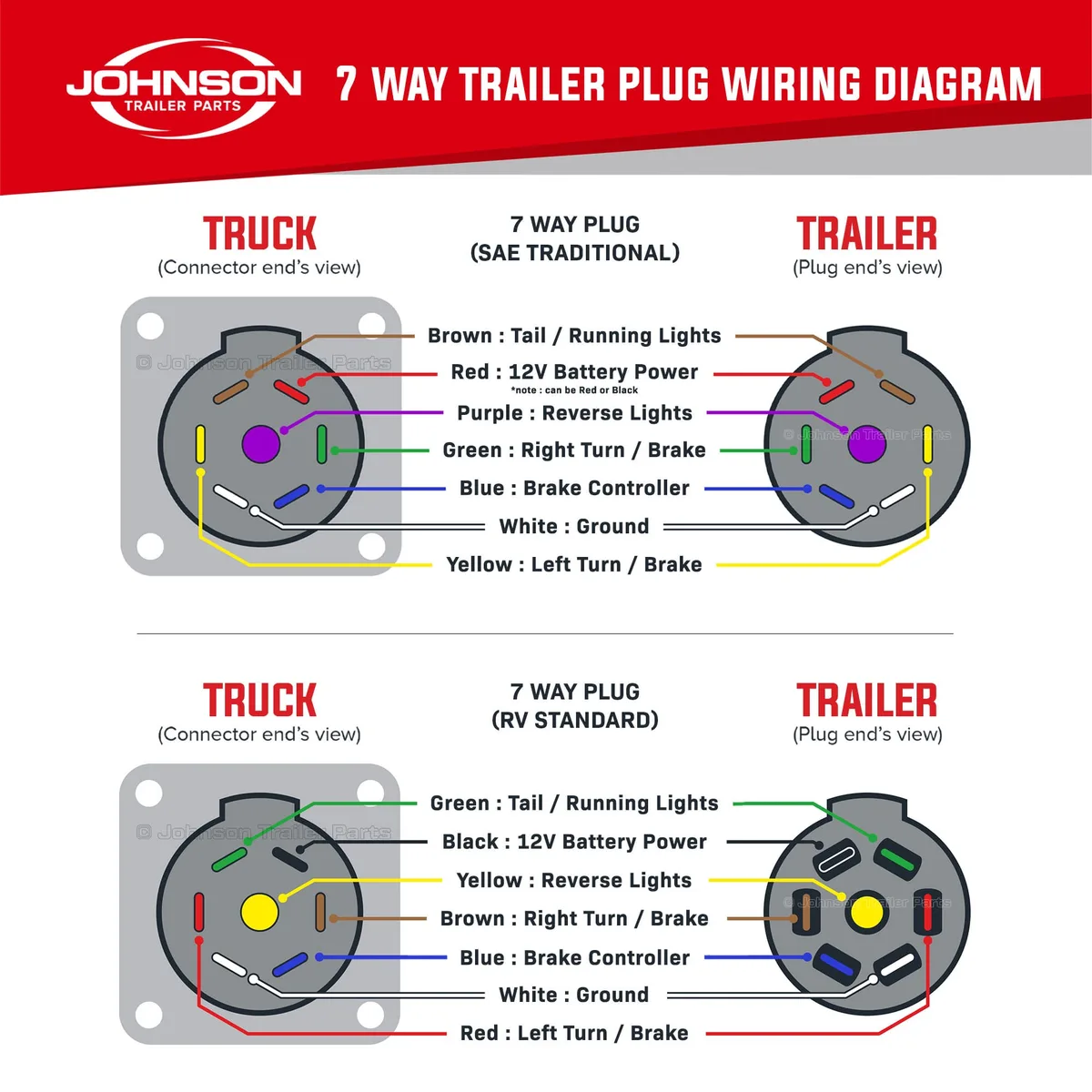
Most trailers use a 4-way, 5-way, or 7-way plug to connect lighting and brakes to the tow vehicle. Minnesota doesn’t mandate a specific type, but your plug must support all required lights and functions.
A 4-way plug covers basic lighting: tail lights, brake lights, and turn signals. A 7-way adds connections for electric brakes, a 12V power line, and a reverse light circuit. If your trailer has electric brakes, you’ll need at least a 6-way or 7-way plug.
Bing (Web (fair-use with source credit))
Before hitting the road, test every function. A faulty connection can leave your turn signals or brake lights dead. Use a circuit tester to verify each pin is working.
If you're wiring a new trailer, follow a standard color code to avoid confusion.
Step-by-Step: How to Check Your Setup Before Towing
Start with the hitch. Ensure the ball size matches the coupler, and the latch is secure. A loose fit can lead to detachment.
Next, inspect the safety chains. They should be crossed under the coupler with enough slack for turns but not dragging. Pull on them to confirm they’re tight.
Test all lights. Have a helper watch the trailer while you activate the turn signals, brake pedal, and running lights. Replace any burnt-out bulbs immediately.
Finally, check the break-away system if your trailer requires one. Pull the pin manually to ensure the brakes engage. If the cable is frayed or the battery is dead, replace it before towing.
Common Mistakes That Get You Pulled Over
Using chains that are too weak is a top violation. If they can’t hold the trailer’s weight, they’re useless in an emergency.
Another frequent issue is burnt-out or missing lights. Officers look for visible brake lights and turn signals. If they’re not working, you’ll get stopped.
Improper chain attachment is also common. Straight chains instead of crossed ones can let the trailer drop. And if the chains are too long, they’ll drag on the road.
Don’t forget the break-away system. If your trailer weighs over 3,000 pounds and lacks one, you’re breaking the law.
Weight and Size Limits That Change the Rules
Minnesota’s rules adjust based on trailer size and weight. Trailers under 3,000 pounds don’t require a break-away system. But once you hit that threshold, it’s mandatory.
For lighting, trailers over 80 inches wide need additional clearance lights. These must be amber on the front and red on the rear. Smaller trailers can get by with basic tail lights and turn signals.
Hitch capacity matters too. Your tow vehicle’s hitch must be rated for the trailer’s gross weight. Exceeding this limit risks hitch failure and loss of control.
Here’s a quick reference:
| Trailer Weight | Break-Away System | Lighting Requirements |
|---|---|---|
| Under 3,000 lbs | Not required | Basic tail, brake, turn |
| 3,000+ lbs | Required | Basic + clearance if wide |
| Over 80" wide | Required if heavy | Clearance lights added |
Minnesota-Specific Enforcement and Fines
Minnesota State Patrol and local law enforcement actively check trailer setups. If they spot missing or faulty lighting, you’ll likely get a fix-it ticket. Fail to correct it, and the fine escalates.
Safety chain violations are treated seriously. If your chains are missing or inadequate, you could face a fine and be ordered to stop towing until the issue is resolved.
Break-away system failures are another red flag. If your trailer is over 3,000 pounds and lacks one, expect a citation. The same goes for improperly connected or non-functional systems.
Pro Tips for Hassle-Free Towing
Use a weight distribution hitch if your trailer sways or feels unstable. This evens out the load between the tow vehicle and trailer, improving control.
Lubricate the coupler and hitch ball regularly. Rust or dirt can make it harder to connect or disconnect, and a stuck coupler is a roadside headache.
Carry spare bulbs and fuses. Trailer lights take a beating, and a burnt-out bulb can leave you stranded or ticketed. A small toolkit with basic wiring tools can save the day.
Check your trailer’s tire pressure before every trip. Underinflated tires overheat and can blow out, especially on long hauls. Follow the manufacturer’s PSI rating, not the max pressure on the tire sidewall.
FAQs About Minnesota Trailer Towing Laws
Do I need safety chains if my trailer has a break-away system?
Yes. Safety chains are required regardless of a break-away system. They serve as a secondary backup if the hitch fails.
How many safety chains are required in Minnesota?
Two chains are standard, crossed under the coupler. Some heavy-duty setups use more, but two properly rated chains meet the legal minimum.
What’s the minimum lighting requirement for a small utility trailer?
At minimum, you need tail lights, brake lights, and turn signals on both sides. Reflectors are also required.
Can I use LED lights on my trailer in Minnesota?
Yes, as long as they meet DOT brightness and color standards. LEDs are often brighter and more durable than incandescent bulbs.
Are reflectors required if my trailer has lights?
Yes. Reflectors are mandatory even if your lights are working. They provide visibility when the lights are off, such as when parked.
Final Checklist Before You Hit the Road
Verify the hitch and coupler are secure. A loose connection is a common cause of detachment.
Inspect safety chains for proper crossing and tension. They should be tight enough to prevent dragging but allow turns.
Test all lights, including brake, turn, and tail lights. Replace any non-functional bulbs.
Check the break-away system if your trailer requires one. Ensure the cable is connected and the battery is charged.
Confirm tire pressure and condition. Look for cracks, bulges, or uneven wear.