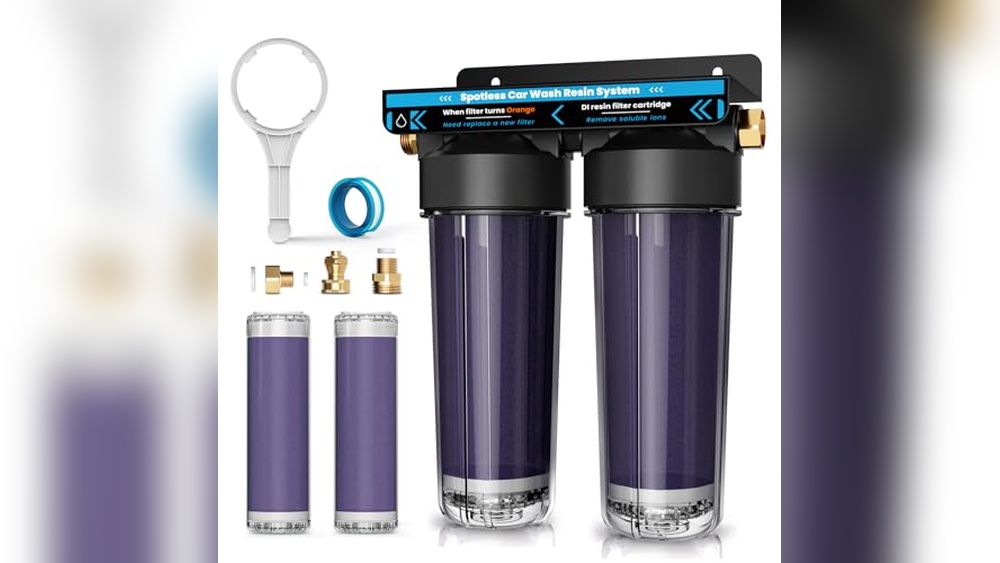
ByMax Lee
Best Drying System for Car Wash: Spotless Water Deionized Rinse Solution
Title: Best Drying System for Car Wash: Spotless Water Deionized Rinse Solution
You just finished a meticulous hand-wash, pulled your car into the sunlight, and watched water spots bloom across the hood. That frustration is exactly why a spotless water deionized rinse system has become the most effective upgrade for anyone serious about paint preservation.
Unlike blotting with a chamois or dragging a towel across the clear coat, a deionized (DI) rinse lets pure water sheet off every panel without leaving a single mineral deposit behind. For achieving a perfect finish with zero effort, it is hands‐down the best drying system for a car wash available today. For more on this, see our guide on power spray tips for a spotless car wash.
Why Standard Tap Water Ruins a Perfect Wash
Municipal tap water contains dissolved calcium, magnesium, and other total dissolved solids (TDS). When this water evaporates on your vehicle, the minerals remain as visible spots. Over time, those spots can etch into the clear coat and dull your paint.
According to the USGS Water Science School, water hardness varies dramatically by region — a detailer in the Pacific Northwest may never see a spot, while someone in the Southwest fights them every wash. If your home’s water is extremely hard, it is worth treating your water beforehand so that your DI resin lasts longer and your final rinse stays effective.
 Mineral deposits left behind by untreated tap water
How Deionized Water Works in a Spotless System
A spotless water system forces tap water through a cartridge packed with mixed‐bed ion‐exchange resin. The resin grabs positively charged mineral ions (calcium, magnesium, iron) and swaps them for hydrogen and hydroxide ions, which instantly recombine into pure H2O.
| Feature | DI (Deionization) | RO (Reverse Osmosis) |
|---|---|---|
| Upfront cost | Moderate | Higher (requires tank and booster pump) |
| Maintenance | Replace resin cartridge | Replace membrane and pre‐filters |
| Flow rate | Excellent (garden‐hose speed) | Slow (trickle) |
| Portability | Very portable | Usually plumbed in |
For vehicle rinsing, DI wins on simplicity and speed. The Water Quality Association provides sizing standards to match your system capacity to your local water chemistry.
Mixed‐Bed Resin and Color Indicators
Higher‐end units use color‐changing resin that shifts from green or blue to amber as it exhausts. This removes the guesswork and ensures you never rinse with spent media that fails to stop spots.
In practice, a common mistake is ignoring the color shift and continuing to use exhausted resin, which defeats the purpose of a spot-free rinse. Replacing the cartridge at the first sign of color change maintains consistent performance.
Bypass vs. Inline Systems
A bypass valve allows you to use regular tap water for the wash and pre‐rinse stages, then switch to DI water only for the final pass. This single feature can double or triple the life of your resin.
What to Look For in a Spotless Water System
Resin Capacity and Your Local Hardness
A 1‐cubic‐foot resin tank at 150 ppm TDS typically yields 200–300 gallons of spot‐free water. At 400 ppm, that drops to 100 gallons or less. Check your utility bill or use a cheap TDS meter to size your system correctly.
To get the most accurate reading, test your water at the hose bib where you’ll connect the system, as hardness can vary even within the same property. Using a suitable spray nozzle ensures an even final rinse.
Portability and Connections
Most units connect directly to a standard garden hose. Lightweight models (under 8 pounds) are ideal for moving between garage and driveway. Pair your system with a quality hose filter to reduce the load on your DI resin and extend its lifespan.
Build Quality and Freeze Protection
Resin housings can crack if water freezes inside them. If you live in a cold climate, look for a system that is easy to drain and store indoors during winter.
For added convenience, consider a system with quick-connect fittings, which simplify setup and teardown. This is especially useful if you frequently move the unit or share it between multiple wash locations.
DI Water vs. Other Drying Methods
While DI water systems are highly effective, it’s worth comparing them to other common drying techniques to understand their advantages:
| Method | Pros | Cons | Spot-Free? |
|---|---|---|---|
| DI Water Rinse | No physical contact, no spots, fast | Requires system setup, resin replacement | Yes |
| Microfiber Towel | Low cost, portable | Can introduce swirls, requires effort | No (if water is hard) |
| Blower (Leaf or Car Dryer) | Reduces physical contact, good for crevices | Expensive, noisy, still needs spot-free water | Only if paired with DI rinse |
| Chamois | Traditional, absorbs water | Can trap dirt, requires frequent cleaning | No (if water is hard) |
| Squeegee | Quick for large surfaces | Risk of scratching, uneven results | No |
A DI system eliminates the need for physical drying tools, reducing the risk of introducing scratches or swirl marks. It’s also the only method that guarantees a spot-free finish regardless of your local water hardness.
Top 5 Spotless Water Systems Compared
| Feature | WLSINJL | XINSHUO | AKM | DIC‐20 | Clearly MaD |
|---|---|---|---|---|---|
| Pre‐filled Resin | ❌ | ✅ | ✅ | ❌ | ✅ |
| Bypass Valve | ❌ | ❌ | ✅ | ✅ | ❌ |
| Color Indicator | ❌ | ✅ | ❌ | ❌ | ❌ |
| Weight | 7.16 lb | 7.16 lb | 7.5 lb | 42.6 lb | 6.5 lb |
| Best For | Budget builds | All‐around spot checking | Resin efficiency | Boats / RVs | First‐time buyers |
WLSINJL Spotless Water System – Best Entry Point
A compact DI system ideal for single-car washes
This system delivers solid DI filtration at a low barrier to entry. It is lightweight and comes with standard hose fittings. Because it lacks a bypass, you must swap it inline every wash, but for someone just getting into spotless rinsing it is a reliable way to start.
Pros: Affordable, compact, effective. Cons: No bypass, no color indicator.
CTA: For an affordable introduction to spot-free rinsing, see the latest WLSINJL price and current deals on Amazon.
XINSHUO Deionized Spot Free Car Rinse Unit – Best Visual Feedback
 The color-changing resin makes maintenance scheduling effortless
The standout feature here is the amber‐to‐green resin indicator that lets you see exactly when the media is exhausted. This prevents the common mistake of rinsing with spent resin and still getting spots. The unit works well for cars, RVs, and motorcycles.
Pros: Visual resin status, broad vehicle compatibility. Cons: No bypass valve, blue housing only.
CTA: For its intuitive color feedback, check the XINSHUO unit on Amazon here.
AKM Spotless Water System – Best Resin Efficiency
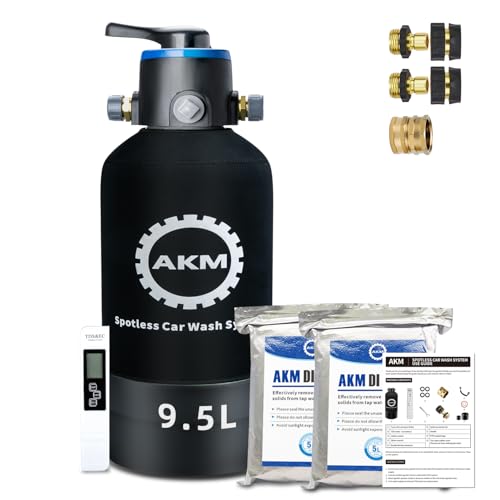 Quick-connect fittings and bypass valve for easy use
The AKM is the current sweet spot for most enthusiasts. The built‐in bypass allows you to wash under full pressure and only switch to DI for the final rinse. This single feature can double or triple the life of your resin compared to an inline system.
Pros: Bypass valve, pre‐filled resin, quick‐connect fittings. Cons: Slightly higher up‐front investment.
CTA: For the best resin mileage and long‐term savings, find the AKM system on Amazon.
Spotless Water Systems DIC‐20 – Heavy‐Duty Power (CR Spotless)
 Industrial-grade cart with dual cartridges for high-volume use
The DIC‐20 from CR Spotless is the gold standard for high‐volume users. Its dual‐cartridge tower delivers massive capacity, and the built‐in solar panel powers the pump. It is heavy (42 pounds) but rolls on wheels.
Pros: Very high resin capacity, solar pump, dual DI cartridges. Cons: Expensive, bulky, not ideal for small garages.
CTA: For heavy‐duty use on large vehicles, buy the CR Spotless DIC‐20 on Amazon.
Clearly MaD Deionized Spot‐Free Car Wash Rinse Plus – Best Value Bundle
 Complete starter kit with hose included for immediate use
This unit arrives pre‐filled and includes a dedicated hose, making it the simplest out‐of‐box experience. It is ideal for anyone who wants to try deionized rinsing without researching separate parts or refill methods.
Pros: Hose included, lightweight, Lifetime Products LLC build. Cons: No bypass valve, smaller tank means more frequent resin changes.
CTA: For a complete starter kit that works right away, see the Clearly MaD bundle on Amazon.
Installation and Setup Tips
Setting up your DI system correctly ensures optimal performance and longevity. Start by flushing the system with tap water for a few minutes to remove any loose resin dust before the first use. This prevents clogging and ensures clean water from the start.
Position the system as close to your water source as possible to minimize pressure loss. If you’re using a pressure washer, connect the DI system to the outlet side of the washer to avoid damaging the pump with high-pressure water. For those using a pH-neutral foam cannon soap, ensure the DI system is only used for the final rinse to conserve resin.
If you notice reduced flow rate, check for kinks in the hose or a clogged filter. Regularly inspect the O-rings and connections for leaks, especially if the system is stored outdoors.
How to Get the Most Out of Your DI System
Pre‐rinse with tap water. Use standard water for your soapy wash and the heavy rinse. Switch to DI water only for the final pass. This is the single biggest factor in extending resin life.
Match your wash technique. A spotless rinse works best when the surface is already clean. Follow the steps for using the correct pressure on your pressure washer and applying a dedicated shampoo through a foam cannon to lift dirt without grinding it into the paint.
For black cars, which show water spots and swirls more prominently, a DI system is especially valuable. Pair it with a gentle washing approach to maintain a flawless finish.
Monitor your outlet quality. A cheap handheld TDS meter confirms when your resin is fully exhausted. Target a reading of 0–10 ppm.
Store the system correctly. Drain the resin tank and store it indoors if temperatures drop below freezing. A cracked housing is an expensive mistake that is easily avoided.
Protect your trim. If mineral deposits have already formed on your vehicle, address them first with a dedicated cleaner and protecting plastic trim from further buildup. Using a hose filter can also help reduce the mineral load before it reaches your DI system.
Maintenance and Resin Replacement
Resin replacement is a straightforward process, but a few tips can make it easier and more effective. Always wear gloves when handling resin to avoid skin irritation. Before refilling, rinse the empty cartridge thoroughly to remove any remaining resin dust or debris.
When adding new resin, fill the cartridge slowly to avoid air pockets, which can reduce efficiency. After refilling, flush the system with tap water for 5–10 minutes to settle the resin and remove any fine particles. This step is critical for achieving the best performance from your new resin.
Keep a log of your resin usage and replacement dates. This helps you track the lifespan of each cartridge and predict when the next replacement will be needed. If you notice a sudden drop in performance, it may indicate a problem with the resin or a leak in the system.
Cost Considerations and Long-Term Savings
While the upfront cost of a DI system may seem high, it’s important to consider the long-term savings. By eliminating the need for microfiber towels, drying aids, and frequent detail corrections, a DI system pays for itself over time. Additionally, the reduced risk of paint damage from improper drying techniques can save you hundreds in paint correction or repainting costs.
For example, a mid-range DI system like the AKM may cost around $150–$200 upfront, but the resin replacement cost is relatively low—typically $30–$50 per cubic foot. If you wash your car weekly, the resin may last 2–3 months, depending on your water hardness. Over a year, this translates to a minimal ongoing cost compared to the benefits of a spot-free, scratch-free finish.
Advanced Tips for Enthusiasts
For those looking to maximize their DI system’s performance, consider these advanced tips:
- Dual-Stage Filtration: Add a sediment pre-filter to your system to remove larger particles before they reach the DI resin. This extends the life of your resin and improves water quality.
- TDS Monitoring: Invest in a high-quality TDS meter to track the performance of your system. Some advanced meters can also measure conductivity, giving you a more complete picture of your water quality.
- Custom Setups: For large vehicles or commercial use, consider a custom DI system with multiple cartridges. This allows for higher flow rates and longer resin life, making it ideal for RVs, boats, or detail shops.
- Water Softener Pre-Treatment: If your water is extremely hard (over 300 ppm TDS), consider adding a water softener before the DI system. This reduces the load on the resin and can significantly extend its lifespan.
Common Mistakes to Avoid
Even with the best DI system, a few common mistakes can undermine its effectiveness:
- Using DI Water for the Entire Wash: This wastes resin and reduces its lifespan. Reserve DI water for the final rinse only.
- Ignoring Resin Exhaustion: Continuing to use exhausted resin results in spots and defeats the purpose of the system. Replace the resin as soon as the color indicator changes or the TDS reading rises.
- Storing the System with Water Inside: Always drain the system before storing it, especially in cold climates, to prevent freezing and cracking.
- Skipping the Pre-Rinse: Failing to pre-rinse with tap water can lead to premature resin exhaustion and reduced performance.
Frequently Asked Questions
How long does a resin cartridge last? It depends entirely on your feed water hardness. At 150 ppm TDS a 1‐cubic‐foot cartridge typically provides 200–300 gallons. At 400 ppm that drops to 100 gallons or less.
Can I drink deionized water? No. DI water is aggressive and lacks beneficial minerals. It is designed purely for rinsing surfaces, not for consumption.
Will a DI system work with a foam cannon? Yes, but it wastes expensive resin. Use tap water for your foam cannon, pressure washer, and soap stage. Reserve the DI water for the very last rinse.
Does stored DI water expire? Yes. If you store DI water, it slowly absorbs CO2 from the air, which lowers its pH and reduces its spot-free performance. Use it fresh for the best results.
Is a bypass valve worth the extra cost? Absolutely. If you wash regularly, a bypass system pays for itself in resin savings within a year.
Does rain affect a spotless rinse? Rainwater is naturally low in TDS and won’t spot any more than your DI rinse. The real enemy is hard tap water drying in direct sunlight — a spotless system solves that entirely.
Can I use a DI system with well water? Yes, but well water often has higher TDS levels and may contain additional contaminants like iron or sulfur. Test your water with a TDS meter and consider pre-treatment, such as a sediment filter or water softener, to extend the life of your DI resin.
How do I know if my DI system is working? Use a TDS meter to test the water coming out of the system. If the reading is 0–10 ppm, your system is functioning correctly. If the reading is higher, it may be time to replace the resin.
Can I reuse or regenerate DI resin? No, mixed-bed DI resin cannot be regenerated at home. Once it is exhausted, it must be replaced with fresh resin.
What is the ideal flow rate for a DI system? For most car wash applications, a flow rate of 2–4 gallons per minute (GPM) is ideal. This provides enough water for a thorough rinse without overwhelming the resin’s capacity.
Final Verdict
The best drying system for a car wash is not a towel, a blower, or a chamois. It is a deionized rinse that makes water spots physically impossible.
For most enthusiasts, the AKM Spotless Water System delivers the best balance of features, resin efficiency, and price. The built‐in bypass alone saves enough over the first year to offset the initial cost.
If you are on a tight budget, the WLSINJL is a capable starter unit. For large vehicles or commercial use, the CR Spotless DIC‐20 is unmatched.
Stop fighting your water and start rinsing. Your paint — and your free time — will thank you.