ByMax Lee
NH Trailer Towing Laws: Safety Chains & Lights You Need
YouTube / Ford Motor Company (YouTube thumbnail (fair-use with source credit))
Towing a trailer in New Hampshire without proper safety setup is both dangerous and illegal. The New Hampshire trailer towing safety chain and lighting equipment requirements exist to prevent accidents and ensure visibility. One loose chain or burnt-out bulb can lead to fines, failed inspections, or serious crashes.
Per New Hampshire Revised Statutes Annotated (RSA) 266:78-a, every trailer must have safety chains and functional lighting. As of 2026, the state enforces these rules strictly, with no exceptions for smaller trailers.
Quick Answer
New Hampshire requires safety chains for all trailers, crossed under the tongue. Trailer lighting must include working tail, brake, and turn signals. Chains must match the trailer’s gross weight in breaking strength.
Breakaway brakes are mandatory for trailers over 3,000 lbs.
Why Getting Your Trailer Towing Setup Right in NH Isn't Optional
A detached trailer on I-93 or Route 101 can cause multi-vehicle accidents. New Hampshire’s towing laws aren’t suggestions, they’re legal requirements designed to prevent these scenarios.
Non-compliance can lead to fines, points on your license, or liability if an accident occurs. The NH DMV mandates safety chains and lighting for all trailers, with no exceptions.
The Short Answer: NH’s Towing Chain and Light Rules at a Glance
Here’s the quick breakdown of what’s required:
- Safety chains: Required for all trailers, crossed under the tongue, with strength matching the trailer’s gross weight.
- Lighting: Tail lights, brake lights, turn signals, and reflectors must be operational and visible.
- Breakaway brakes: Mandatory for trailers over 3,000 lbs.
| Requirement | Light Trailers (<3,000 lbs) | Heavy Trailers (≥3,000 lbs) |
|---|---|---|
| Safety chains | Required | Required |
| Breakaway brakes | Not required | Required |
| Lighting | Tail, brake, turn signals | Tail, brake, turn signals + side markers |
Safety Chains: Strength Ratings and the Crisscross Method
Safety chains are your last line of defense if the hitch fails. In New Hampshire, they’re mandatory and must be strong enough to handle the trailer’s weight.

YouTube / etrailer (YouTube thumbnail (fair-use with source credit))
Chain Strength
- Grade 70: Transport chain, suitable for most light to medium-duty trailers.
- Grade 80: Alloy chain, stronger and recommended for heavier loads.
The chains must have a minimum breaking strength equal to the trailer’s gross weight. For example, if your trailer weighs 5,000 lbs, each chain should handle at least 5,000 lbs of force.
The Crisscross Technique
Always cross the chains under the trailer tongue. This creates a cradle that catches the tongue if the hitch detaches, preventing it from dragging on the road.
Attach the chains to the tow vehicle’s frame, not the bumper, to ensure they can handle the load.
Trailer Lighting: What NH Requires for Every Trip
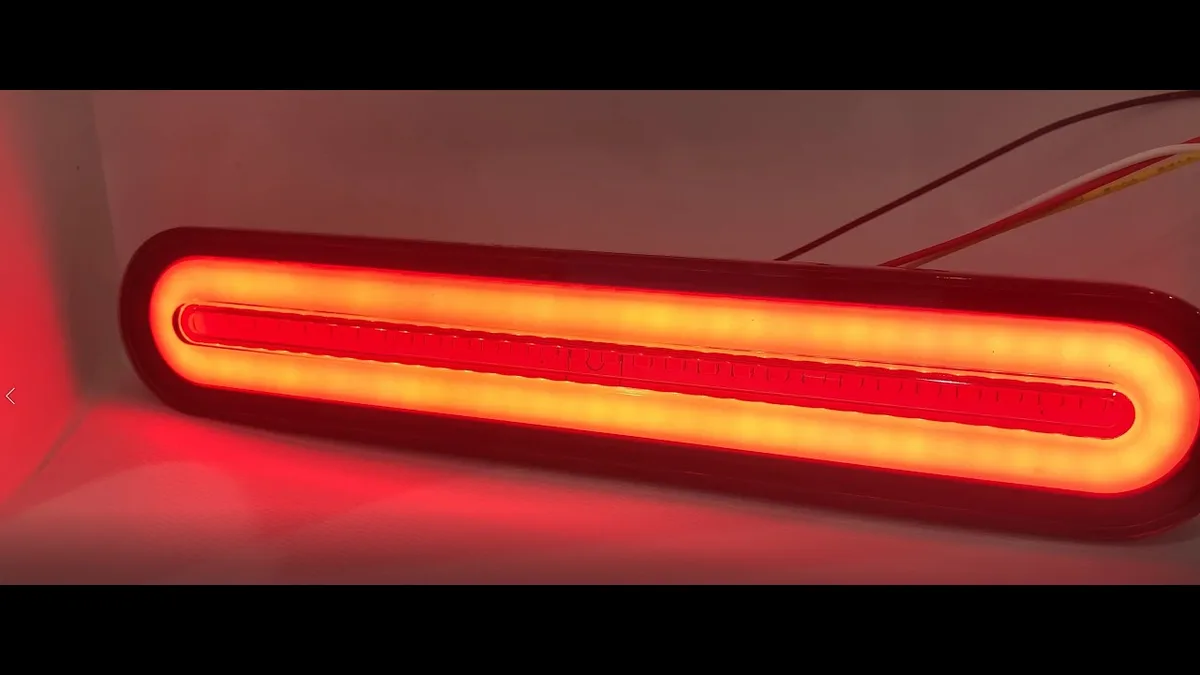
Lighting ensures other drivers can see your trailer’s intentions, especially at night or in poor weather.
YouTube / etrailer (YouTube thumbnail (fair-use with source credit))
Required Lights
- Tail lights: Red, visible from 500 feet at night.
- Brake lights: Red, must activate when the tow vehicle brakes.
- Turn signals: Amber, visible from 300 feet.
- Side markers: Amber (front) and red (rear) for trailers over 80 inches wide.
- Reflectors: Red on the rear, amber on the sides.
Wiring and Connectors
- 4-way flat: Basic setup for tail lights, brake lights, and turn signals.
- 7-way round: Includes additional circuits for auxiliary power, electric brakes, and reverse lights.
Testing Your Lights
Before every trip, perform a pre-trip light check:
- Connect the trailer to the tow vehicle.
- Turn on the headlights and verify tail lights.
- Press the brake pedal and check brake lights.
- Activate turn signals and hazard lights.
- Have a helper confirm all lights are working from outside.
When NH Requires Breakaway Brakes and Auxiliary Brakes
Trailers over 3,000 lbs gross weight require a breakaway brake system in New Hampshire. This independent system activates the trailer’s brakes if it detaches from the tow vehicle.

YouTube / Factory Outlet Trailers Inc (YouTube thumbnail (fair-use with source credit))
How Breakaway Systems Work
- A breakaway switch detects separation from the tow vehicle.
- An independent battery (usually 12-volt) powers the trailer brakes.
- The system applies brakes automatically if the safety cable is pulled taut.
Installation Requirements
- Mount the breakaway switch on the trailer tongue.
- Run the safety cable across the tongue and attach it to the tow vehicle’s hitch.
- Ensure the cable has enough slack for turning but will pull tight if the trailer separates.
- Test the system monthly by pulling the cable (with the trailer safely chocked).
Common Towing Mistakes That Get You Pulled Over in NH
Even experienced towers make mistakes. Here are the most common violations on New Hampshire roads.

YouTube / Conveying & Hoisting SolutionsTM (YouTube thumbnail (fair-use with source credit))
Mistake #1: Parallel Chains Instead of Crisscross
Running chains straight from hitch to trailer frame is dangerous. If the hitch fails, the tongue drops straight down instead of being caught.
The fix: Always cross chains in an “X” pattern under the tongue.
Mistake #2: Attaching Chains to the Bumper
Hooking chains to the tow vehicle’s bumper instead of the frame is unsafe. Bumpers aren’t designed to handle trailer weight in a separation event.
The fix: Use frame-mounted hitch points or reinforced chassis locations.
Mistake #3: Ignoring Lighting Failures
Towing with burnt-out brake lights or dim tail lights reduces visibility. Other drivers can’t see your signals, increasing collision risk.
The fix: Test all lights before every trip.
Mistake #4: Using Weak or Corroded Chains
Reusing damaged chains or using chains rated below the trailer’s weight can lead to failure. Chains can snap under stress, leaving the trailer unrestrained.
The fix: Inspect chains for wear, rust, and stretching. Replace any that look compromised.
Mistake #5: Forgetting About Side Markers
Only checking rear lights and not side markers reduces visibility. Wide trailers need amber front and red rear side markers to be visible.
The fix: Walk around the trailer and verify all markers are functional.
How to Pass a NH Towing Safety Check
New Hampshire doesn’t have mandatory annual trailer inspections, but law enforcement routinely checks towing setups during traffic stops.

YouTube / LJM Outdoors (YouTube thumbnail (fair-use with source credit))
Pre-Trip Inspection Checklist
- Visual inspection: Walk around the trailer. Check for damage, loose parts, and tire condition.
- Chain check: Verify both chains are present, crossed, properly attached, and free of damage.
- Light test: Confirm all lights work, tails, brakes, turns, hazards, and markers.
- Coupler security: Ensure the hitch ball is properly seated and the coupler latch is locked.
- Breakaway system: Test the breakaway switch and battery charge (if required).
- Tire pressure: Check both trailer and tow vehicle tires for proper inflation.
Seasonal Considerations
- Winter: Salt and moisture accelerate corrosion. Clean and lubricate chains after each trip.
- Spring: Inspect for damage caused by road debris and temperature changes.
- Summer: Heat can degrade wiring insulation. Check for cracks or brittleness.
NH Towing Safety FAQs
Do I need safety chains for a small utility trailer under 1,500 lbs?
Yes. New Hampshire requires safety chains for all trailers, regardless of weight. Even lightweight utility trailers must have crossed chains attached to both the trailer and tow vehicle.
What’s the legal penalty for towing without proper chains in New Hampshire?
A first offense is typically a civil violation with fines ranging from $50 to $150. Repeat offenses or violations that contribute to an accident can result in higher fines and potential liability.
Can I use synthetic rope instead of metal safety chains?
No. New Hampshire law specifically requires metal safety chains with adequate breaking strength. Synthetic ropes can stretch, slip, or degrade, making them unsafe for towing applications.
How often should I inspect my trailer’s wiring and lights?
Inspect your wiring and lights before every trip. Check for frayed wires, corroded connectors, and burnt-out bulbs. At minimum, perform a thorough inspection seasonally.
Are LED trailer lights legally acceptable in New Hampshire?
Yes. LED lights meet or exceed visibility requirements and are a popular upgrade. Just ensure they’re DOT-compliant and properly wired.
Do I need a breakaway brake system for a 2,500 lb trailer?
No. Breakaway brakes are only mandatory for trailers with a gross weight of 3,000 lbs or more. However, adding one can provide extra safety even on lighter trailers.