Black Friday deals are live on Amazon · limited-time discounts, grab them before they’re gone
Grab the deals

ByMax Lee
Why Your Automatic Braking Might Ruin Your Car Wash Experience (Lexus Safety System+): Shocking Truth Revealed!
A Lexus equipped with Lexus Safety System+ is designed to detect hazards and help prevent a collision. That is valuable on the road—but a moving car wash is not a normal driving environment.
Conveyor belts, rotating brushes, guide rails, hanging equipment, walls, and nearby vehicles can confuse driver-assistance sensors or trigger braking-related warnings. In some situations, the vehicle may stop or resist movement when the wash requires it to roll freely. You can also read our guide on tesla wheel covers should you remove aero caps before an automatic wash.
The important point is not that Lexus safety technology is defective. It is that collision-avoidance systems are designed for traffic, not for contact with car-wash equipment. The correct solution depends on your Lexus model, model year, wash type, and owner’s manual.
What Is Lexus Safety System+?
Lexus Safety System+ is a group of driver-assistance features rather than one single braking system. The exact equipment varies by vehicle and model year, but many versions include:
- Pre-Collision System with pedestrian detection
- Automatic emergency braking or braking assistance
- Lane departure or lane-tracing assistance
- All-speed dynamic radar cruise control
- Automatic high beams
- Road Sign Assist on some models
- Parking Support Alert or Parking Support Brake on equipped vehicles
These systems may use a forward-facing camera, millimeter-wave radar, ultrasonic parking sensors, or a combination of sensors. The sensors continually interpret the space around the vehicle and estimate whether an object presents a collision risk. For more on this, see our guide on north dakota car inspection requirements safety standards.
Lexus emphasizes that these features are driver aids—not autonomous driving. The driver remains responsible for controlling the vehicle, following the wash operator’s instructions, and monitoring the surroundings. The official Lexus website is the best starting point for model-specific technology information, but your vehicle’s owner’s manual takes priority over general descriptions.
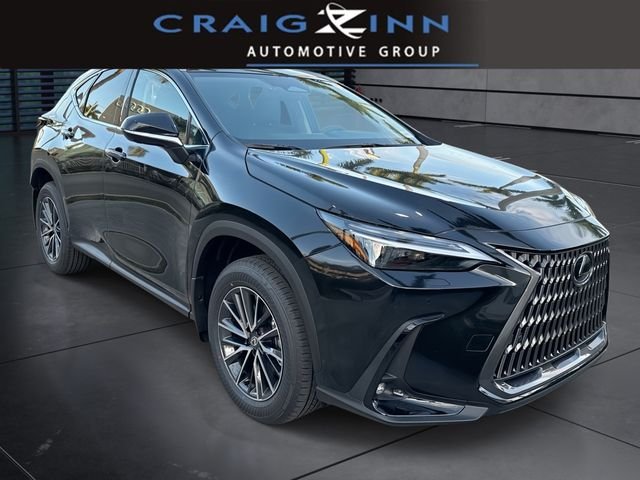
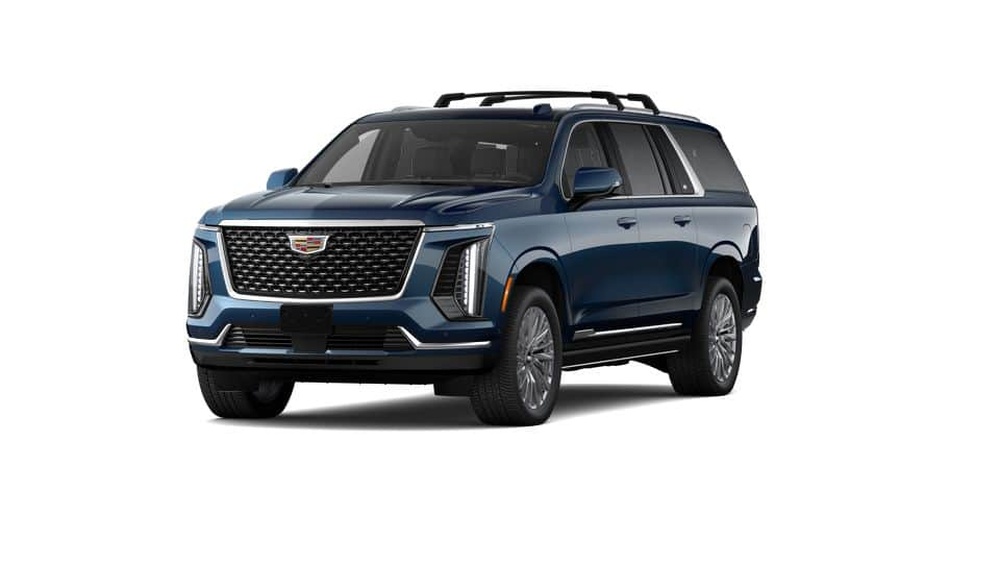
Forward-facing cameras and radar are designed for roadway hazards, not moving wash equipment.
Credit: www.lexusofnorthmiami.com
Why Automatic Braking Can Behave Differently in a Car Wash
On the road, a detected object is usually another vehicle, a pedestrian, or a stationary hazard. In a car wash, the environment is unusual:
- Objects move close to the vehicle from several directions.
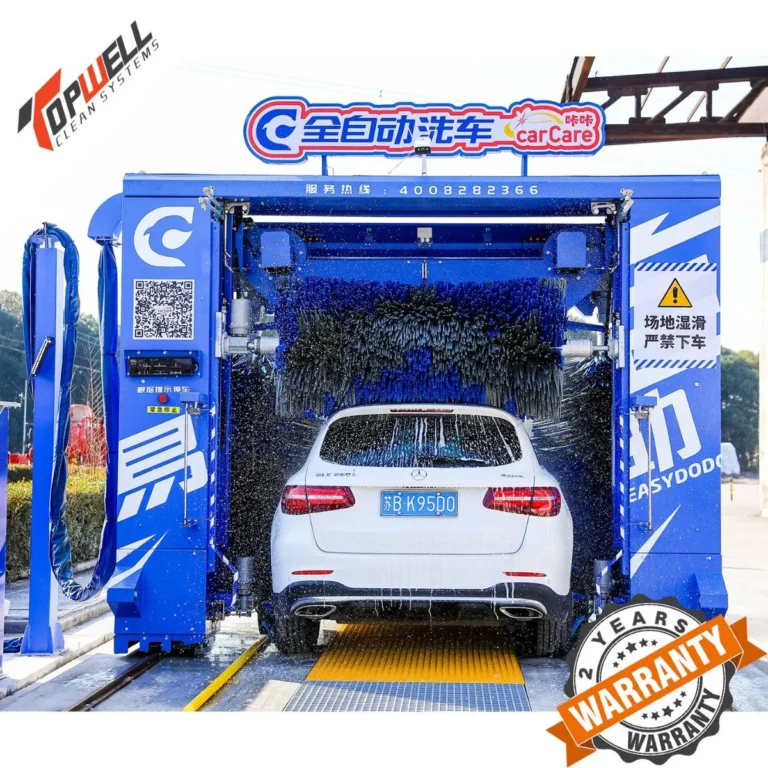
- Brushes and curtains may pass directly in front of sensors.
- The conveyor may move the vehicle while the wheels are not driving it.
- Guide rails and wheel tracks can appear as obstacles.
- Water, foam, glare, darkness, and spray can reduce sensor visibility.
- Another vehicle may be very close ahead or behind.
- The driver may be expected to remain in neutral without applying the brake.
A common mistake is assuming every unexpected stop comes from forward automatic emergency braking. It may instead involve the parking sensors, parking support brake, traction control, an electronic parking brake, or the driver accidentally pressing the brake pedal.
The result can feel similar: the Lexus slows, stops, refuses to roll, or displays a warning while the wash equipment continues operating around it.
Which Car Washes Present the Greatest Risk?
Conveyor tunnel washes
A conveyor wash pulls or pushes the vehicle along a track. The driver normally follows instructions to place the transmission in neutral, keep the wheels straight, avoid braking, and allow the vehicle to move with the conveyor.
This type creates the greatest conflict with systems that expect the driver to control forward motion. If the vehicle brakes or the driver shifts out of neutral at the wrong time, the conveyor may stop, the vehicle may be pushed incorrectly, or the wash operator may need to intervene.
Touchless automatic washes
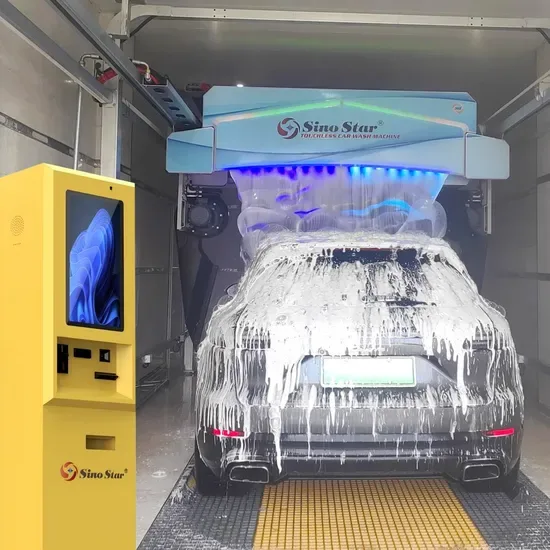
Touchless systems use high-pressure water and cleaning chemicals rather than brushes touching the paint. They usually present less physical contact risk, but sensors can still react to nearby structures, spray, walls, or another vehicle.
You must still follow the facility’s instructions. Some touchless washes require neutral; others use a stationary bay and tell you to remain in park.
Self-service bays
A self-service bay generally does not move the vehicle. Automatic braking is less likely to interfere, but close walls, posts, hoses, and pressure-wand equipment can still activate parking warnings. You retain full control, so there is normally no need to disable safety features merely because you are washing the vehicle.
Drive-through detailing or hand-wash areas
If an employee drives the Lexus, tell the employee about the vehicle’s driver-assistance features and follow the facility’s procedure. Do not leave the vehicle in a mode that allows it to move unexpectedly, and do not hand over a key if you are uncomfortable with the operator’s instructions.
The Difference Between Automatic Emergency Braking and Parking Braking
Understanding the system involved helps you choose the right response.
| System or feature | Typical purpose | Possible car-wash behavior |
|---|---|---|
| Pre-Collision System | Detects a possible forward collision | May issue a warning or assist braking if an object appears dangerously close |
| Automatic emergency braking | Helps reduce or avoid an imminent collision | May slow or stop the vehicle in limited circumstances |
| Parking Support Alert | Warns about nearby objects | May beep continuously around brushes, rails, walls, or equipment |
| Parking Support Brake | Can apply braking when a nearby obstacle is detected | May stop the vehicle during close-quarters movement |
| Dynamic Radar Cruise Control | Maintains speed and following distance on the road | Should not be relied on in a car wash |
| Lane-tracing assistance | Helps with lane positioning | Usually irrelevant in a tunnel, but should not be used as a substitute for control |
The exact names, menus, operating speeds, and warning behavior differ among Lexus models. A 2026 Lexus may not use the same controls or terminology as an older RX, ES, NX, UX, GX, LS, or Toyota-platform vehicle.
Can a Car Wash Damage the Lexus or Its Sensors?
A false brake event does not automatically mean damage will occur. However, a stopped vehicle can create a dangerous mismatch between the Lexus and the wash machinery.
Possible problems include:
- The conveyor stopping or losing synchronization
- Brushes continuing to press against a stationary vehicle
- A guide rail contacting a tire at an awkward angle
- A car behind you being brought too close
- Water or chemical equipment remaining over one area longer than intended
- A warning message requiring a restart or sensor inspection
- A mirror, antenna, trim piece, or wiper being struck if the vehicle is not positioned correctly
The greatest risk is often not the sensor itself. It is using a wash that requires conveyor movement without following its neutral and braking instructions.
Do not assume that disabling a feature makes every wash safe. Poorly maintained equipment, incorrect wheel placement, loose accessories, and unsuitable vehicle dimensions can cause damage independently of Lexus Safety System+.
Before choosing a narrow or automated facility, check the vehicle’s clearance, wheel-track compatibility, and operating instructions. Information about vehicle clearance requirements can also help when evaluating whether a particular facility is suitable, although the wash operator’s specifications remain controlling.
How to Prepare a Lexus Before Entering a Conveyor Wash
Use this checklist before the front wheels enter the track.
1. Identify the wash type
Ask whether the vehicle is:
- Pulled through on a conveyor
- Stationary while equipment moves around it
- Driven slowly by the customer
- Driven by an employee
Do not guess. The correct gear selection and driver-assistance settings depend on the answer.
2. Remove or secure loose exterior items
Retract or remove items that the wash does not permit, such as:
- Roof racks or removable accessories
- Hitch-mounted equipment
- Magnetic signs
- Loose antenna accessories
- Unsecured cargo
- Oversized aftermarket attachments
Close the windows, sunroof, and liftgate. Fold mirrors only if the facility specifically permits or requires it.
3. Check the owner’s manual for wash instructions
Search the manual for terms such as:
- “Automatic car wash”
- “Conveyor”
- “Neutral”
- “Pre-Collision System”
- “Parking Support Brake”
- “Driving assist systems”
- “Sensor cleaning”
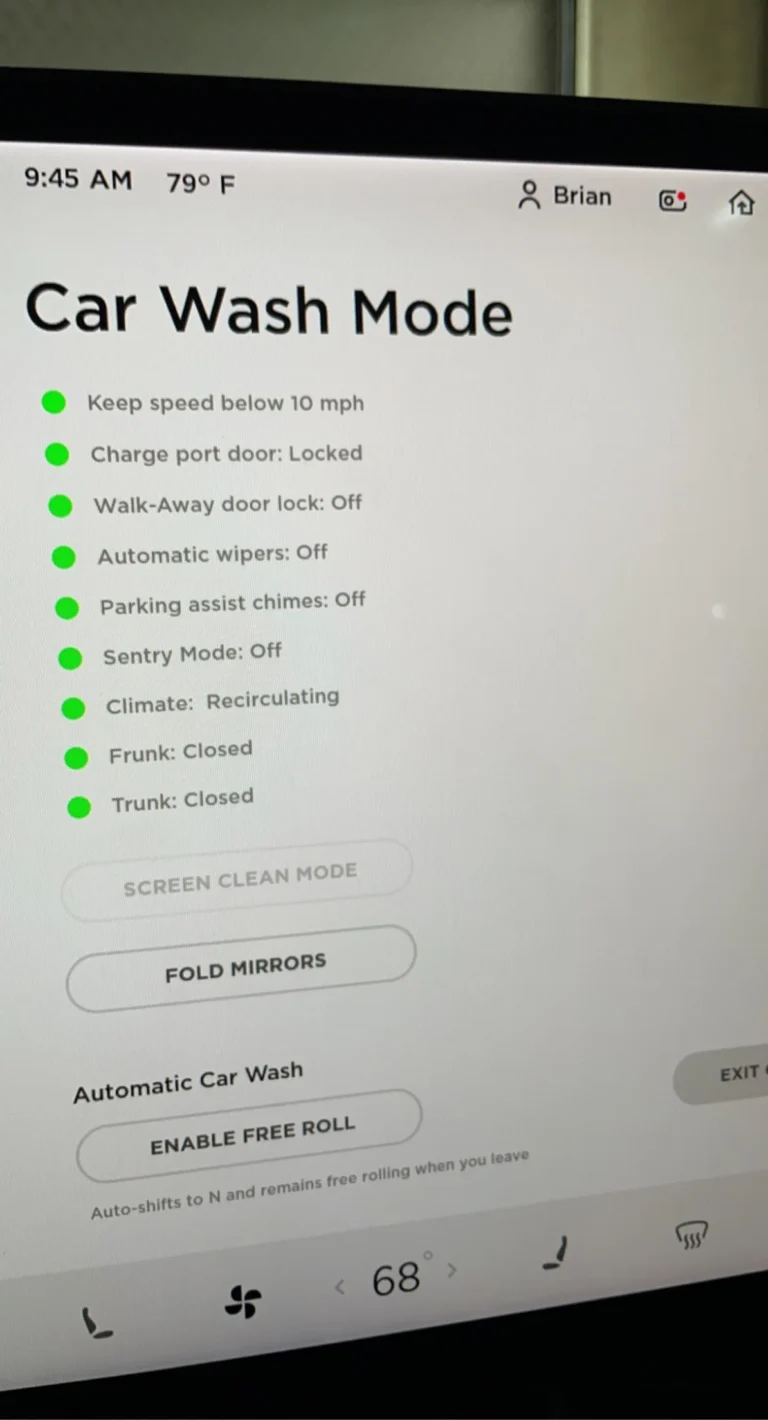
Lexus instructions vary by model and equipment. Some vehicles provide a temporary setting for a particular safety or parking function; others may not offer a single “car wash mode.”
4. Disable only the feature identified by the manual
Do not turn off every driver-assistance function automatically. If the manual instructs you to temporarily disable Pre-Collision System, Parking Support Brake, or another feature for a conveyor wash, do so only for that procedure.
A system may also be temporarily unavailable because of heavy rain, snow, dirt, glare, or a blocked sensor. That is different from deliberately disabling it. Never switch off collision-avoidance technology during ordinary road driving just to prevent an inconvenience at a wash.
5. Follow the gear and brake instructions exactly
For many conveyor systems, the usual procedure may include:
- Aligning the vehicle’s wheels with the track.
- Stopping where the attendant indicates.
- Keeping the steering wheel straight.
- Selecting neutral when instructed.
- Releasing the brake only when safe and permitted.
- Keeping your hands and feet away from controls while the conveyor moves.
- Remaining alert and ready to follow an emergency instruction.
Some Lexus models have an electronic parking brake or automatic hold function that behaves differently from a traditional handbrake. Do not assume that “neutral” alone is sufficient; follow both the vehicle manual and the wash operator’s instructions.
6. Use a consistent wash checklist
If you wash frequently, keep the steps simple and repeatable. A small note in the center console can remind you to check the windows, mirrors, transmission position, parking brake, and temporary driver-assistance settings.
If you prefer washing at home, the two-bucket paint-safe method reduces the need to place the Lexus in a conveyor environment at all.

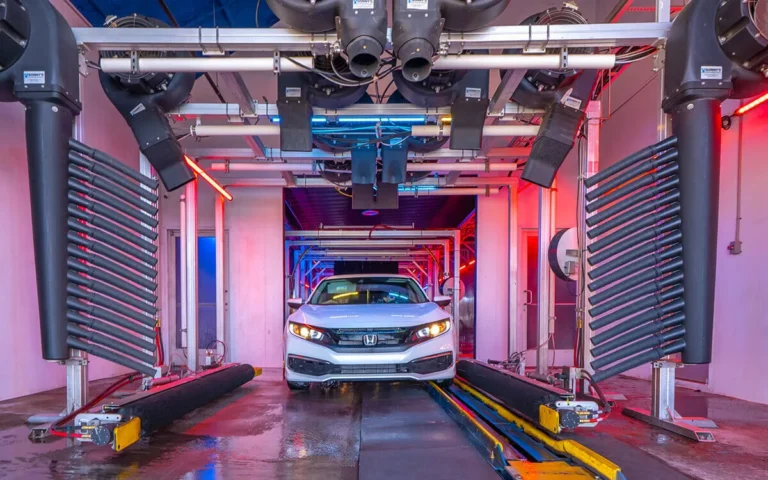
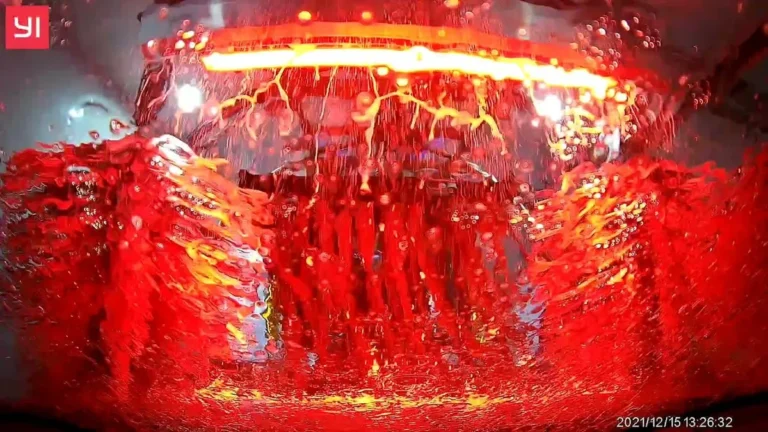
Rotating equipment can surround the vehicle, creating unusual conditions for driver-assistance sensors.
Credit: www.walser.com
If you wash frequently, keep the steps simple and repeatable. A small note in the center console can remind you to check the windows, mirrors, transmission position, parking brake, and temporary driver-assistance settings.
If you prefer washing at home, the two-bucket paint-safe method reduces the need to place the Lexus in a conveyor environment at all.
Rotating equipment can surround the vehicle, creating unusual conditions for driver-assistance sensors.
Credit: www.walser.com
What You Should Not Do
Avoid these common mistakes:
- Do not leave the transmission in drive on a conveyor unless the facility explicitly instructs you to do so.
- Do not repeatedly press the brake while the conveyor is moving.
- Do not use cruise control in a car wash.
- Do not rely on automatic braking to keep the vehicle safe.
- Do not disable safety features while driving on public roads.
- Do not shift into park while the vehicle is moving.
- Do not continue if a warning indicates a system fault rather than a temporary wash-related condition.
- Do not enter if the wheels, tires, mirrors, or accessories do not meet the facility’s requirements.
If the car begins braking unexpectedly, tell the attendant immediately. Stop the wash if necessary, follow the operator’s emergency procedure, and move the vehicle only when it is safe.
What to Do After Leaving the Wash
Once the Lexus is safely outside the wash:
- Return the transmission to the normal driving position.
- Confirm that the parking brake is set or released as appropriate.
- Re-enable any feature that you temporarily disabled.
- Check the dashboard for warning messages.
- Inspect the front emblem, windshield area, and parking sensors for soap, water, or dirt.
- Wipe sensor areas only as described in the owner’s manual.
- Test normal braking at low speed in a safe location before joining traffic.
A temporary “sensor unavailable” message may clear after the camera or radar area is clean and dry. If a warning remains, the vehicle brakes unexpectedly on ordinary roads, or multiple systems stay unavailable, arrange an inspection with a Lexus dealer or qualified repair facility.
Do not assume that a warning is harmless simply because it appeared during a wash.
How to Keep the Sensors Working Properly
Lexus driver-assistance features depend on clean, correctly positioned sensing hardware. Good maintenance includes:
- Keeping the windshield area in front of the forward camera clean
- Removing mud, ice, wax residue, and heavy water spots
- Keeping the front radar or emblem area unobstructed
- Avoiding stickers or accessories over sensor locations
- Repairing windshield damage according to Lexus requirements
- Checking for bumper damage after a minor impact
- Using properly fitted replacement parts
- Following recalibration instructions after windshield or body repairs
Tire condition also matters to the vehicle’s overall behavior in a conveyor and on the road. Check pressure using the door-jamb specification rather than the maximum pressure molded into the sidewall. A guide to maintaining correct tire pressure can be useful before a long trip or frequent washing routine.
When You Should Skip the Automatic Wash
Choose hand washing or a different facility if:
- The operator cannot explain the required procedure.
- The wash track does not fit your tires or wheelbase.
- Your Lexus has an active braking, camera, radar, or parking-system warning.
- The windshield or front sensor area is damaged.
- You have aftermarket modifications that may contact brushes or rails.
- The vehicle is heavily soiled with abrasive grit and you are concerned about paint marring.
- You cannot safely remain in the required gear.
- The facility has a history of stopping vehicles or poorly maintained equipment.
A touchless wash may reduce brush contact, but it is not automatically the best choice for every vehicle. Strong chemicals and high-pressure water can affect delicate trim, badges, wraps, or previously repaired areas. A careful hand wash may be the safest option for a modified or damaged Lexus.
Frequently Asked Questions
Does Lexus Safety System+ always brake in a car wash?
No. The system may not activate at all, particularly at very low speeds or when the sensors do not interpret the equipment as an imminent collision. However, unusual objects, close spacing, poor visibility, or parking-brake functions can produce warnings or braking in some situations.
Should I turn off automatic emergency braking before every wash?
Not automatically. Read the instructions for your exact Lexus and the specific wash. If the manual calls for a temporary setting change, apply it only for the wash and restore the setting afterward. Never disable the system during normal road driving as a routine workaround.
Is neutral required in every automatic car wash?
No. Conveyor washes commonly require neutral, but stationary touchless bays and other systems may use park or a different procedure. Follow the signs and attendant’s directions rather than relying on a generic checklist.
Can brushes trigger the Lexus radar?
Brushes may be detected as nearby objects, but it is not accurate to say they will always trigger the radar or automatic braking. Detection depends on the Lexus model, software, speed, object movement, angle, visibility, and the specific feature involved.
What if the Lexus stops on the conveyor?
Keep calm, notify the attendant, and follow the facility’s emergency procedure. Do not shift into park or attempt to drive off the conveyor unless instructed and the path is clear. Afterward, check for warning messages and inspect the vehicle for contact damage.
Why does the Lexus beep continuously inside the wash?
The sound may come from parking sensors detecting nearby walls, brushes, rails, or equipment. It can also relate to a parking support feature. A continuous warning does not by itself prove that automatic emergency braking has activated.
Can I use a car wash if a safety-system warning remains on?
Treat a persistent warning as a reason to investigate before using a conveyor wash. Clean the relevant sensor areas if appropriate and consult the owner’s manual. If the warning remains, have the vehicle inspected rather than assuming the wash caused a harmless glitch.
Final Takeaway
Lexus Safety System+ is valuable on public roads, but a conveyor car wash creates conditions the system was never designed to manage. Moving brushes, rails, spray, close walls, and conveyor motion can produce warnings, unexpected braking, or a mismatch between the vehicle and the wash equipment.
The safest approach is to identify the wash type, follow the facility’s instructions, consult the exact Lexus owner’s manual, disable only specifically identified features, use the correct gear, and restore every temporary setting before driving away.
A car wash should not require guesswork. If the procedure is unclear or the Lexus already shows a safety-system warning, choose a different wash or clean the vehicle by hand until the issue is resolved.