Black Friday deals are live on Amazon · limited-time discounts, grab them before they’re gone
Grab the deals

ByMax Lee
Are Car Washes Good for Your Car? Expert Insights Revealed
Yes—car washes can be good for your car, provided the wash method, equipment, and cleaning products are appropriate for the vehicle’s condition. Regular washing removes road salt, grit, bird droppings, tree sap, and other contaminants that can stain paint or accelerate corrosion.
However, not every car wash is equally safe. A poorly maintained brush tunnel, contaminated wash mitt, or aggressive drying process can create swirl marks and fine scratches. The best choice depends on your paint condition, protective coating, driving environment, budget, and how much control you want over the cleaning process. You can also read our guide on are car washes bad for your car.
Why Washing Your Car Matters
A vehicle’s exterior collects more than ordinary dust. Road film can contain oily residue, brake dust, salt, and abrasive particles. If these contaminants remain on the surface, they may bond to the paint or be rubbed across it during later cleaning.
Washing helps to:
- Remove abrasive grit before it can scratch the finish
- Reduce the impact of road salt and de-icing chemicals
- Prevent bird droppings, bug residue, and tree sap from etching paint
- Keep glass, cameras, lights, and sensors clearer
- Make it easier to identify chips, rust, or new damage
- Preserve the appearance and resale appeal of the vehicle
A clean car is not automatically mechanically healthier, but exterior maintenance can help you spot problems earlier. For example, bubbling paint, corrosion around a wheel arch, or a damaged underbody panel is easier to notice after the vehicle has been cleaned.
For practical advice between professional washes, use these simple upkeep habits to reduce dust buildup without repeatedly touching the paint.
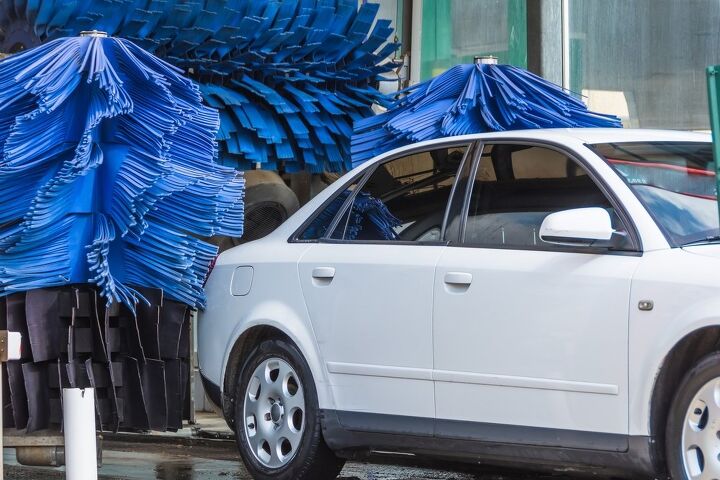
Rinsing away loose grit before contact washing helps reduce paint marring.
Credit: www.autoguide.com
Which Type of Car Wash Is Best?
There is no single best option for every vehicle. The main choices are automatic tunnel washes, touchless washes, self-service bays, and professional hand washing.
| Wash type | Main advantage | Main concern | Best suited to |
|---|---|---|---|
| Soft-cloth automatic | Fast and convenient | Shared cleaning material may cause swirls | Regularly driven daily vehicles |
| Touchless automatic | Minimal physical contact | Stronger chemicals may be needed | Vehicles with delicate paint or light dirt |
| Self-service bay | More control than a tunnel | Facility brush may contain grit | Owners who want a quick controlled wash |
| Professional hand wash | Detailed cleaning | Quality varies by operator | Valuable, coated, or heavily soiled vehicles |
| Careful home wash | Maximum control | Runoff, time, and incorrect technique | Owners with suitable space and equipment |
The quality of maintenance matters as much as the category. A well-maintained soft-cloth wash may be safer than a careless hand wash using one dirty sponge on every panel.
If you are comparing tunnel systems, review the difference between touch-free and contact washing before choosing a package.
Are Automatic Car Washes Good for Your Car?
Automatic car washes are generally safe for routine cleaning when the vehicle is in normal condition and the facility is clean and maintained. They are especially useful when you need to remove winter salt or road film quickly.
Advantages of automatic washes
- Convenient and fast
- Consistent cleaning in a controlled bay
- Usually less labor than washing at home
- Often includes underbody rinsing or a basic rinse cycle
- Useful during cold weather when outdoor hand washing is impractical
- May use water-recovery systems, depending on the facility
Possible disadvantages
- Friction from brushes or cloth strips can create fine swirls
- Shared wash material can transfer grit between vehicles if poorly maintained
- Strong detergents may shorten the life of wax or some sealants
- Brushes may not reach deep wheel-barrel areas or tight trim gaps
- Conveyor tracks can be unsuitable for vehicles with unusual clearance or loose body parts
- Aggressive dryers may expose loose trim, cracked seals, or unsecured accessories
The phrase “soft cloth” does not guarantee a scratch-free wash. Any contact material can cause marring if it carries sand or abrasive debris. In practice, the facility’s maintenance schedule and cleaning procedure are more important than the marketing label alone.
Before entering, check for visible signs of neglect: dirty hanging cloth, standing debris around the entrance, malfunctioning equipment, or staff ignoring damaged vehicle parts. If your paint already has severe oxidation, peeling clear coat, loose trim, or a failing wrap, a machine wash may make the condition worse.
For a closer comparison of equipment and paint risks, consider these automatic wash precautions and guidance for dark paint finishes.
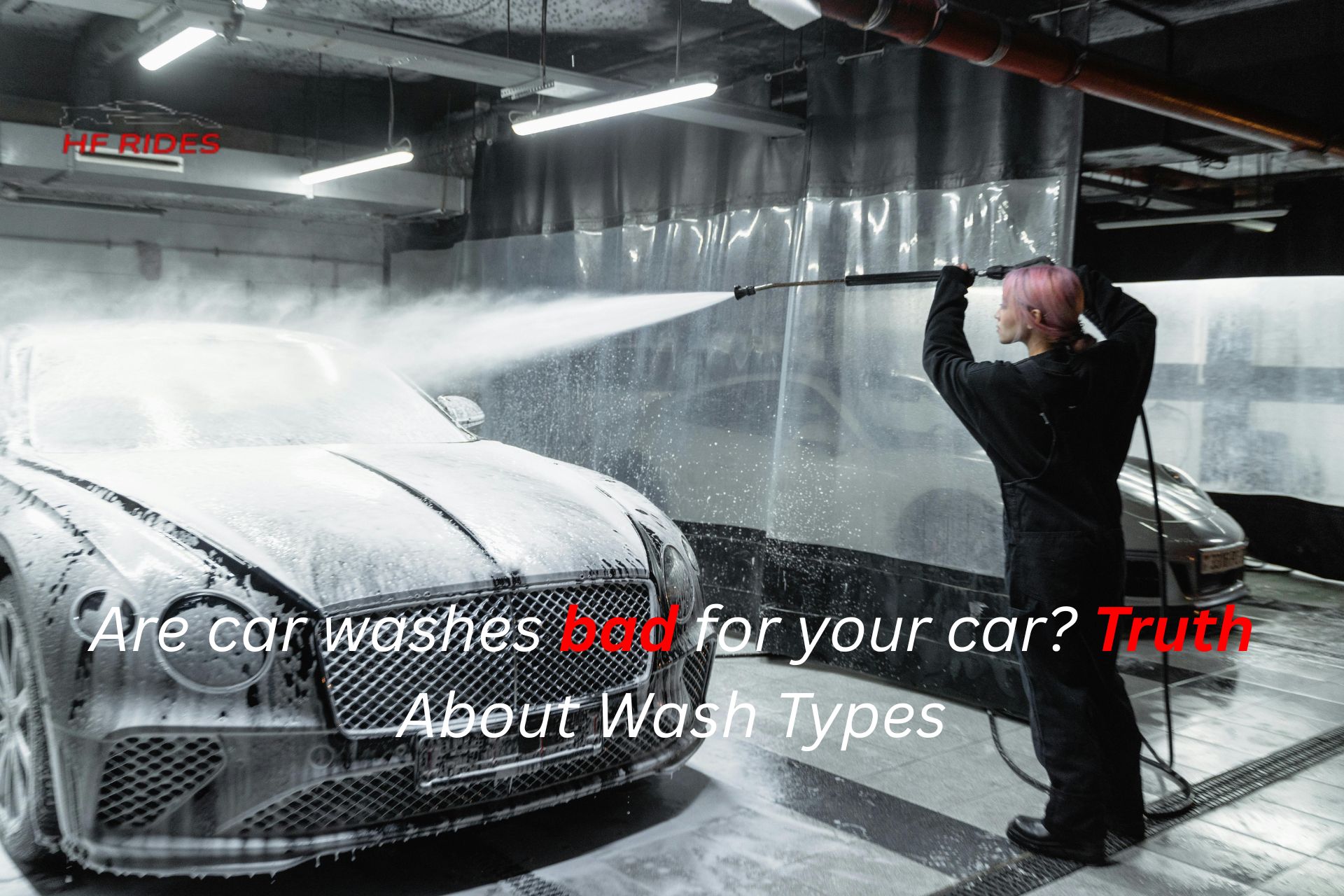
Contact and touchless systems use different cleaning methods and trade-offs.
Credit: hfrides.com
Are Touchless Car Washes Safer?
Touchless systems avoid direct contact between brushes and paint. Instead, they use pressurized water, detergents, and sometimes air drying. This significantly reduces the risk of scratches caused by contaminated wash media.
That does not make every touchless wash completely risk-free. The cleaning chemicals may be stronger, and the system may not remove bonded road film or heavy mud without manual agitation. A touchless wash can also leave some grime behind if the spray pattern, dwell time, or water pressure is inadequate.
Touchless is often a sensible choice when:
- The car has delicate or recently corrected paint
- You want to minimize contact between equipment and the finish
- The vehicle has a ceramic coating or paint protection film
- The car is only lightly or moderately dirty
- You plan to perform a more detailed wash later
For heavily soiled vehicles, rinse loose dirt thoroughly before any hand contact. Never assume that a “no-touch” label means the wash will remove every contaminant.
Are Hand Car Washes Better for Paint?
A professional hand wash can deliver the best results because the operator can vary the pressure, rinse difficult areas, and use separate tools for wheels and paint. It is particularly useful for vehicles with delicate finishes, intricate grilles, aftermarket accessories, or protective film.
The quality of the service depends on technique. A hand wash can be more damaging than an automatic wash if workers:
- Use one bucket for the entire vehicle
- Wash wheels and paint with the same mitt
- Drop a mitt and continue using it
- Wipe dry with a dirty or rough towel
- Scrub dry bird droppings or mud
- Use harsh degreasers on every exterior surface
Ask whether the facility uses separate wash media for wheels and body panels, changes its rinse water, and uses clean microfiber drying towels. A reputable operator should also inspect the vehicle for loose trim, roof racks, antennas, or other parts that require special handling.
If you prefer to wash the vehicle yourself, the two-bucket cleaning method provides better separation between rinsing water and soapy water.
How Often Should You Wash Your Car?
There is no universal schedule. Washing frequency should match the contaminants your vehicle encounters.
A practical starting point is:
- Every one to two weeks: normal daily driving in moderate conditions
- As soon as practical: bird droppings, tree sap, bug remains, or spilled chemicals
- After winter storms or salted roads: rinse the exterior and underbody when conditions allow
- More frequently: coastal areas, dusty roads, construction zones, or heavy commuting
- Less frequently: vehicles stored indoors and driven only occasionally in clean conditions
The priority is not washing as often as possible. It is removing harmful contaminants before they dry, bond, or etch the surface. A quick rinse may be enough after light dust, while a car covered in salt needs a thorough wash that reaches the wheel wells and underbody.
If the vehicle is visibly dirty but you cannot wash it safely, avoid dry dusting or wiping the surface with a household towel. Those actions can drag grit across the clear coat.
Can Washing Your Car Too Often Damage It?
Frequent washing does not inherently damage a vehicle. Damage usually comes from friction, contaminated tools, unsuitable chemicals, or poor drying technique.
Repeated contact washing can gradually add fine swirl marks, especially on dark-colored vehicles. Strong alkaline cleaners may also reduce the durability of waxes and some spray sealants. That is different from damaging the clear coat after a few ordinary washes; modern automotive finishes are designed to tolerate routine cleaning.
To reduce wear:
- Rinse the vehicle thoroughly before touching it.
- Use automotive shampoo rather than household dish detergent.
- Keep wheels, tires, and paint on separate cleaning tools.
- Work from the roof downward.
- Rinse the mitt frequently.
- Avoid washing when the panels are hot enough to dry soap immediately.
- Dry with a clean, soft towel or filtered air.
- Do not scrub stuck-on contamination; soften and rinse it first.
Use a paint-safe shampoo selection when the vehicle has a ceramic coating, sealant, wax, or paint protection film. Always follow the product maker’s care instructions, because some coatings require maintenance products with specific pH or additive requirements.
How to Choose a Safer Car Wash
Before paying for a wash, evaluate the facility rather than choosing solely by price.
Look for good maintenance
A quality operation should have:
- Clean, intact cloth or brush material
- Clearly maintained bays and drying areas
- Separate tools or processes for wheels and body panels
- A clear pre-rinse or pressure-rinse stage
- Staff who identify loose parts and special vehicle conditions
- A way to handle roof racks, antennas, convertibles, and oversized accessories
Choose the right service level
A basic wash may be sufficient for routine dust and road film. An underbody rinse is more valuable after salted-road driving. Wax or sealant add-ons can improve water behavior temporarily, but they should not be treated as a substitute for proper washing.
If the car has peeling clear coat, rust, cracked plastic, loose trim, a soft-top roof, or aftermarket modifications, ask the operator whether the equipment is suitable. When in doubt, choose a controlled hand wash or clean the vehicle yourself.
How to Protect Special Finishes and Vehicle Features
Ceramic coatings and paint protection film
Ceramic coatings and paint protection film make cleaning easier, but neither makes paint immune to scratches. Use low-abrasion tools, avoid harsh scrubbing, and follow the installer’s maintenance instructions.
Touchless washing can reduce contact, while a careful hand wash may remove more contamination. The correct choice depends on how dirty the vehicle is and which cleaning products the coating manufacturer permits.
Matte or satin paint
Matte finishes should not be polished like glossy paint. Avoid products that add gloss, abrasive compounds, or aggressive spot treatment unless the vehicle manufacturer specifically approves them.
Convertibles and soft tops
Confirm that the wash is approved for fabric or vinyl roofs. High-pressure water, strong chemicals, and rotating equipment may affect aging seals or a weakened soft top.
Cameras, sensors, and electronic features
Do not aim a pressure washer at close range directly at cameras, radar sensors, door seals, charging ports, or damaged trim. After washing, check that cameras and sensors are clear before driving. A dirty or water-covered lens can affect driver-assistance performance.
Professional Washes, Home Washing, and Water Use
A commercial wash may use water-reclamation equipment, but practices vary by location and facility. Home washing may use less water in some situations, but untreated runoff can carry detergent, oil, brake dust, and grime toward storm drains.
The environmental impact depends on:
- Water volume and pressure
- Whether the facility reclaims or treats wash water
- The detergent formula
- Local drainage and wastewater rules
- Whether the vehicle is washed on a permeable surface
- How much dirt, oil, and salt are removed
The U.S. Environmental Protection Agency provides broader guidance on preventing polluted runoff and protecting water quality. Follow local requirements, avoid letting concentrated chemicals enter storm drains, and use vehicle-specific products as directed.
A Paint-Safe Wash Routine
Whether you use a professional service or wash at home, this sequence reduces avoidable damage:
- Inspect the vehicle. Note loose trim, chips, peeling paint, or damaged seals.
- Rinse from top to bottom. Remove loose sand and grit before contact.
- Clean the wheels separately. Brake dust can be abrasive and chemically harsh.
- Wash the roof and upper panels first. Finish with the lower, dirtiest areas.
- Use straight, light passes. Excessive pressure does not clean better.
- Rinse thoroughly. Do not allow shampoo to dry on the surface.
- Dry promptly. Water spots form when minerals remain after evaporation.
- Inspect in good light. Check glass, lights, cameras, wheels, and lower panels.
- Treat remaining contamination appropriately. Use a compatible bug remover, tar remover, or clay process rather than scraping.
A common mistake is trying to remove dried contamination by rubbing harder. Soaking and repeating a gentle rinse is safer than increasing pressure.
When You Should Avoid an Automatic Wash
Choose a different method if:
- The vehicle has loose exterior parts
- The clear coat is peeling
- Paint is severely oxidized or flaking
- A convertible top is already damaged
- A roof rack or accessory is not approved for the conveyor
- The vehicle is unusually low, wide, tall, or modified
- The wash instructions conflict with a coating or film warranty
- You need careful cleaning around delicate decals or custom paint
Document existing damage with photographs before using any commercial wash. This will not prevent damage, but it can help distinguish a pre-existing issue from a new problem.
Frequently Asked Questions
Are car washes good for your car?
Yes, regular car washing is beneficial because it removes salt, grit, bird droppings, and other contaminants. The safest results come from a clean facility, suitable chemicals, and minimal unnecessary friction.
Do automatic car washes scratch paint?
They can. Scratches and swirl marks are more likely when brushes or cloth strips are contaminated, worn, or used with inadequate rinsing. Touchless systems reduce contact but may rely on stronger detergents and may leave heavy grime behind.
Is hand washing always better than an automatic wash?
No. A careful hand wash offers excellent control, but poor technique can scratch paint. A well-maintained automatic wash may be safer than a hand wash using dirty tools or excessive pressure.
How often should I wash my car?
For many daily drivers, every one to two weeks is a practical starting point. Wash sooner after exposure to road salt, bird droppings, tree sap, bug residue, mud, or industrial fallout.
Can a car wash remove road salt?
Yes. Rinsing and washing can remove surface salt, particularly from the lower body, wheel wells, and underbody. After winter driving, select a service that includes an underbody rinse when available.
Are touchless car washes safe for ceramic coatings?
They are often compatible because they limit physical contact, but the detergent formula still matters. Check the coating manufacturer’s care guidance and avoid services that use chemicals known to degrade the coating’s maintenance layer.
Should I use dish soap to wash my car?
Dish soap can remove grease and may strip protective wax or sealant. Use a pH-balanced automotive shampoo designed for exterior vehicle finishes instead.
Is it safe to wash a car in direct sunlight?
It is better to wash in shade or when the panels are cool. Direct heat can cause water and soap to dry quickly, leaving mineral spots or detergent residue.
Conclusion: Are Car Washes Worth It?
Car washes are good for your car when they remove harmful contamination without unnecessary abrasion. For routine maintenance, a clean and well-maintained automatic wash is convenient and generally appropriate. A touchless wash minimizes contact, while a skilled hand wash offers the most control over delicate or valuable finishes.
The safest approach is to match the method to the vehicle: rinse salt promptly, clean wheels separately, avoid aggressive rubbing, and follow the care requirements for coatings, films, matte paint, and soft tops. Inspect the facility before entering, and avoid any wash that appears poorly maintained.
Choose a suitable wash this week based on your car’s finish and current contamination, then protect the result with the correct drying and maintenance products.








