ByMax Lee
Guide to Colorado Mountain Snowflake Icon Tire Requirements for Winter Mountain Travel
Every driver who hits Colorado's mountain roads in winter runs into the same question eventually: does my car actually meet the legal tire requirements, or am I gambling with a ticket and worse? The Colorado mountain snowflake icon tire requirements for winter mountain travel aren't just suggestions. They're enforced law with fines that start around $130 and go up fast if you cause a closure or crash.
The state's Traction Law uses a simple but strict standard. Passenger vehicles need either tires marked with the three-peak mountain snowflake symbol (3PMSF), or tires with the M+S rating combined with chains in the vehicle, or an AWD or 4WD vehicle with M+S tires that have at least 3/16-inch tread depth. As of 2026, those rules haven't changed, but enforcement has gotten tighter.
Let's walk through what actually counts, what doesn't, and how to avoid being the car blocking I-70 during a storm.
Quick Answer
Colorado requires the three-peak mountain snowflake (3PMSF) symbol on tires for full compliance. M+S tires alone are not enough for most vehicles. AWD or 4WD vehicles qualify with M+S tires and 3/16-inch tread depth.
Chains are the backup option for any vehicle. The Traction Law is active on posted highways during winter storms. Fines start at $130.
These rules save lives on mountain passes.
What the Snowflake Icon Actually Means (and What It Doesn't)
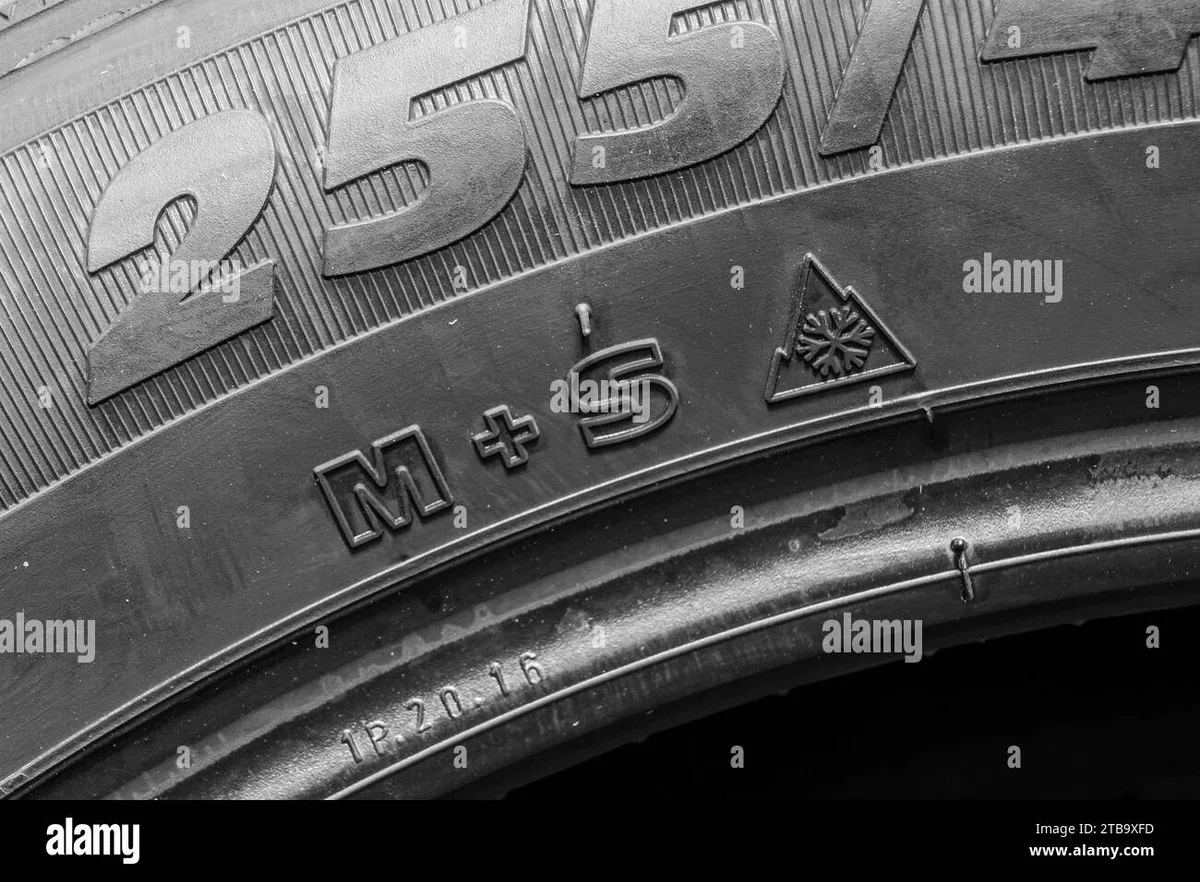
The three-peak mountain snowflake symbol is the only tire rating that certifies winter performance under real snow and ice conditions. It's not a marketing sticker. The Rubber Manufacturers Association and the Tire and Rim Association set the testing standard.
A tire earns the 3PMSF mark by achieving at least 110 percent of the traction of a reference tire in medium-packed snow testing.
That number matters. It means a snowflake-rated tire stops shorter on packed snow than an M+S all-season tire. Independent tests consistently show about 15 to 25 percent shorter stopping distances at 30 mph on snow with 3PMSF tires compared to M+S all-seasons.
That gap widens as temperatures drop below 45 degrees and the rubber compound stays flexible.
Here's what the snowflake icon does NOT mean. It does not mean you can drive like conditions are dry. It does not exempt you from chain requirements during a full Chain Law declaration.
And it does not make a 2WD vehicle as capable as a 4WD vehicle with the same tires. The icon is a minimum performance benchmark, not a superpower.
M+S tires are tested for mud and snow traction only during their initial design phase. There is no ongoing verification. A tire can carry the M+S mark for its entire production life without ever proving it still meets the standard.
The 3PMSF rating requires actual lab testing on snow. That's a meaningful difference.
Bing (Web (fair-use with source credit))
Colorado's Traction Law vs. Chain Law: Know the Difference
Colorado has two separate legal conditions that affect your tires. Mixing them up is the fastest way to get a ticket or get stuck.
The Traction Law is the milder requirement. It activates when Colorado State Patrol or CDOT decides the roads need winter tires or chains. Under the Traction Law, every vehicle on the affected highway must have one of the following:
- Snowflake (3PMSF) rated tires with at least 3/16-inch tread
- M+S tires with chains carried in the vehicle
- AWD or 4WD with M+S tires at 3/16-inch tread depth
- Studded tires (during the legal window: October 1 through May 1)
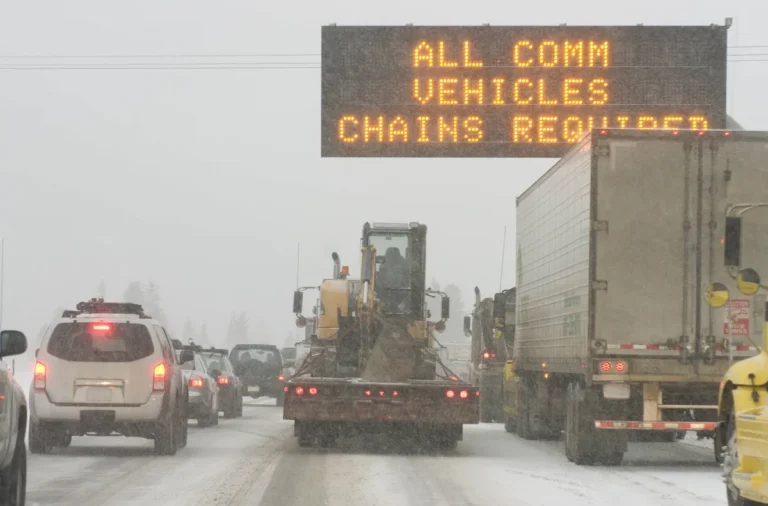
The Chain Law is the strict condition. It means chains or alternative traction devices are required on all vehicles, including AWD and 4WD. Snowflake tires alone are not enough.
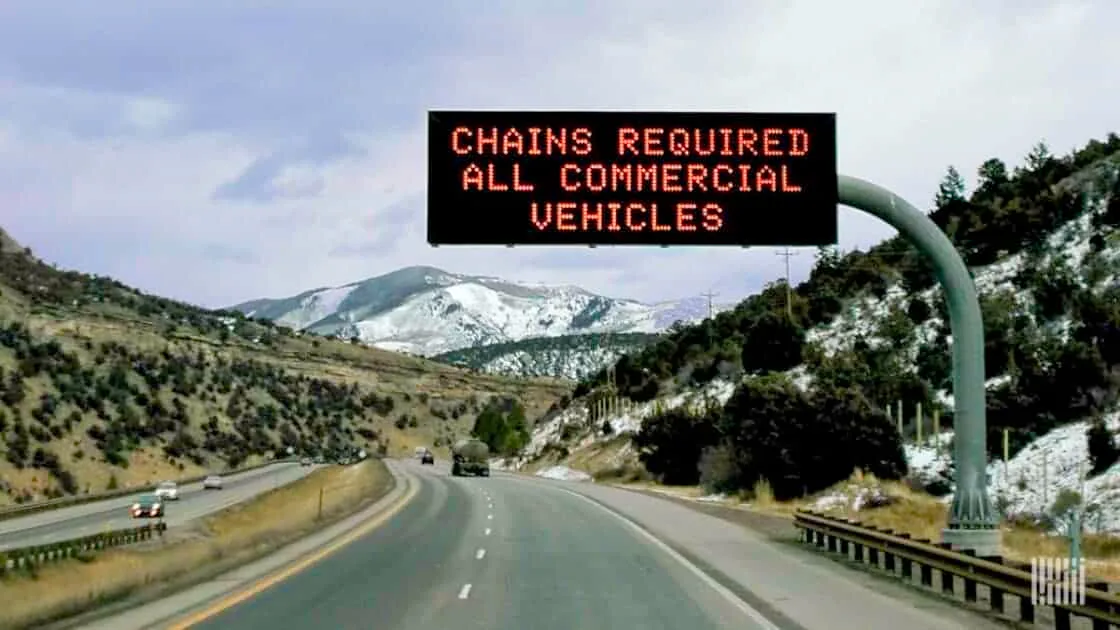
If you see the red "Chain Law" signs illuminated, you must install chains or approved tire socks regardless of your tire rating or drivetrain.
| Condition | Traction Law | Chain Law |
|---|---|---|
| Sign color | Blue | Red |
| 3PMSF tires only | Legal | Not legal |
| 3PMSF + chains | Legal | Legal |
| AWD + M+S only | Legal | Not legal |
| AWD + chains | Legal | Legal |
| 2WD + M/S + chains | Legal | Legal |
| Fine range | $130 plus fees | $130 plus fees, possible towing |
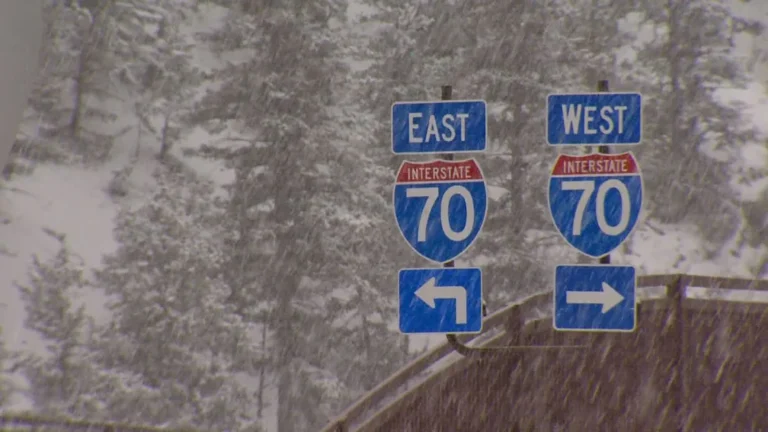
The Traction Law signs are posted along major corridors like I-70, US 6 over Loveland Pass, US 160 over Wolf Creek Pass, and US 50 over Monarch Pass. They light up when conditions require them. If the signs are dark, the law is not in effect at that moment.
But that's not a green light to drive on bald tires in a blizzard.
Bing (Web (fair-use with source credit))
Who These Laws Apply To — Passenger Cars, Trucks, SUVs, and RVs
The Traction Law applies to all motor vehicles on designated highways when the law is active. That includes passenger cars, SUVs, pickup trucks, vans, motorcycles, and RVs. Commercial vehicles have their own separate and stricter requirements under the Chain Law.
For passenger vehicles, the rules are straightforward. If you drive a sedan, hatchback, coupe, or small crossover without AWD, you need either 3PMSF tires or M+S tires with chains available. No workarounds.
A front-wheel-drive car with worn all-season tires and no chains will get a ticket at a checkpoint.
For SUVs and pickup trucks, the rules depend on drivetrain. A 4WD or AWD truck or SUV with M+S tires at adequate tread depth is legal under the Traction Law. But if the same vehicle has 3PMSF tires, it's also legal.
The key point is that 4WD with bald all-season tires is not legal. Tread depth matters separately from drivetrain.
RVs and motorhomes are subject to the same rules as passenger vehicles for the Traction Law. Under Chain Law conditions, RVs over 10,000 pounds GVWR must carry chains and install them when required. That's a common surprise for snowbirds heading to Arizona through Colorado in November.
Commercial vehicles over 26,000 pounds have their own set of rules. They must carry chains from September 1 through May 31, regardless of weather. During Chain Law activation, chains must be installed on all drive axles.
Snowflake tires are nice to have, but they don't replace chains for big trucks.
Motorcycles are not exempt. Riders need adequate tread and should carry approved traction devices. Most riders avoid Colorado mountain passes during winter storms.
That's wise.
The AWD/4WD Myth That Gets People Fined
The most dangerous myth on Colorado winter roads is that AWD or 4WD means you don't need snow tires. We hear it every year. "I have a Subaru, I'm fine." That belief gets drivers ticketed, stranded, and sometimes crashed.
Here's the truth. AWD helps you accelerate, especially from a stop on slick surfaces. It does almost nothing for braking or cornering in snow and ice.
Your tires are what stop the car. AWD with all-season tires at partial tread will slide past a 2WD car with proper snowflake tires in a panic stop. That's physics backed by tire testing data.
The Colorado Traction Law explicitly addresses this. An AWD or 4WD vehicle is legal under the Traction Law if it has M+S tires with at least 3/16-inch tread. That's the minimum.
But many AWD vehicles come from the factory with all-season tires that carry the M+S mark but have no real snow performance. The tire sidewall may say M+S, but the compound is hard and the tread is shallow.
If you drive a 4WD truck or AWD crossover in Colorado mountains during winter, get a set of 3PMSF-rated tires. The difference in safety is massive. You'll still have full AWD acceleration, and now you'll have braking and cornering grip to match.
The other half of this myth is that AWD exempts you from carrying chains. It does not. Under Chain Law, even AWD vehicles with snowflake tires must install chains.
The only exemption during Chain Law is for vehicles with tire chains already installed. No vehicle type gets a blanket pass.
Step-by-Step: How to Check If Your Tires Are Legal Right Now
You can verify your tire compliance in under five minutes. No special tools needed beyond a penny and your eyes.
Step 1: Find the sidewall markings
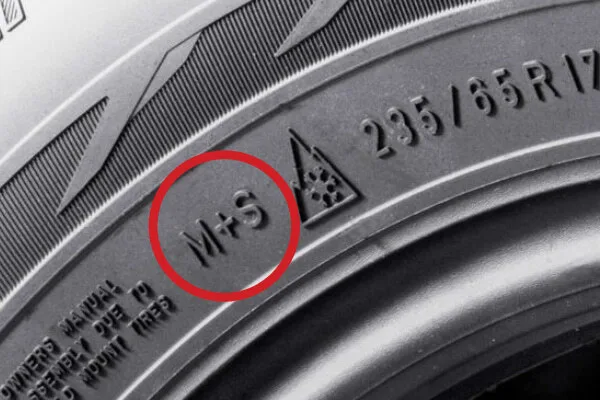
Look at the tire sidewall for the three-peak mountain snowflake icon. It's a graphic of a mountain with a snowflake. If your tires have it, you're in good shape for the Traction Law as long as tread is adequate.
If you only see "M+S" or "M&S" without the snowflake, read on.
Step 2: Check tread depth
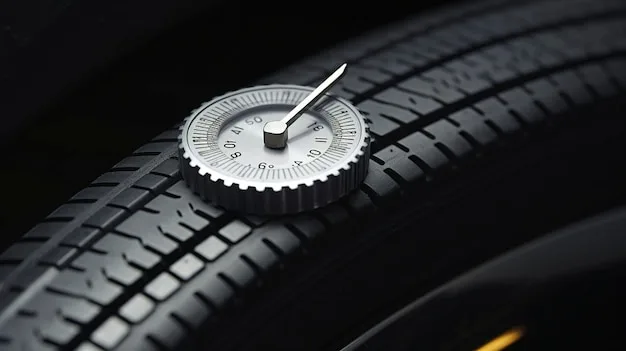
Insert a penny into the tread groove with Lincoln's head upside down. If the top of Lincoln's head is covered by tread, you have at least 2/32-inch. That's the bare minimum for summer driving.
For Colorado winter compliance, you need 3/16-inch. That's about 5/32-inch. If the tread doesn't reach the top of Lincoln's forehead, you're below the legal winter minimum.
A tread depth gauge costs about five dollars and gives you an exact reading. It's worth having one in your glove box.
Step 3: Verify your drivetrain and backup plan
If you have an AWD or 4WD vehicle with M+S tires that pass the tread test, you're legal under the Traction Law. But carry chains or an approved traction device anyway. Checkpoints don't care about intention.
They care about what's in your trunk and on your wheels.
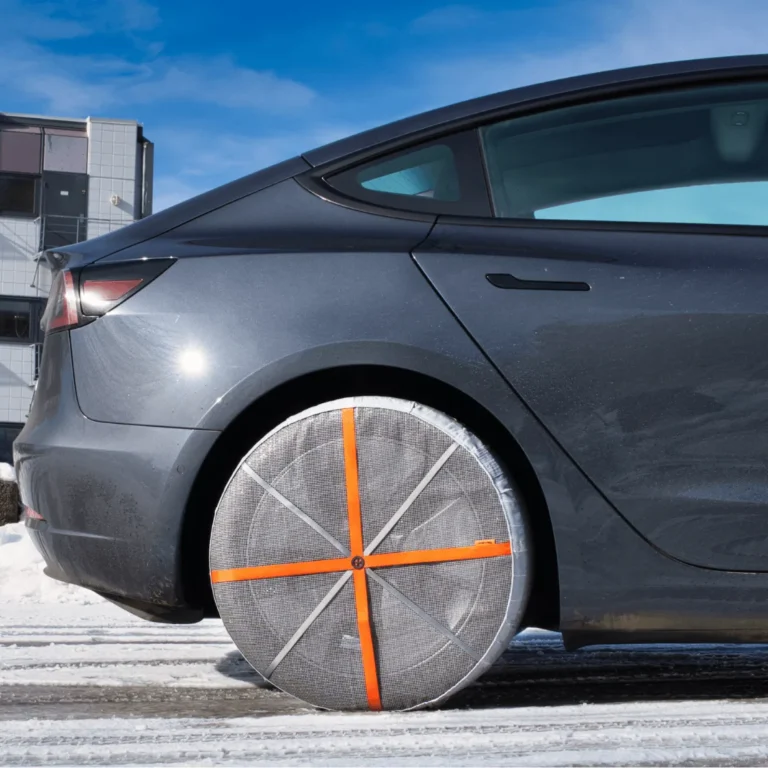
If you drive a 2WD vehicle without snowflake tires, you must carry chains or alternative traction devices. Tire socks like AutoSock are approved by CDOT for passenger vehicles. They're easier to install than traditional chains and work well on packed snow.
Step 4: Know the current conditions
Check CDOT's website or the COtrip app before you drive. The Traction Law status is posted per highway segment. If the signs are lit and you're not compliant, don't drive that route.
Turn around or wait. A ticket is the best outcome. Causing a road closure can cost thousands in fees and fines.
Step 5: Check your spare and your rental
Don't forget about your spare tire. If it's a compact spare or a donut, it likely has low tread and no snow rating. Driving on it during a Traction Law activation is not legal.
If you're in a rental car, the tires are almost certainly all-season M+S tires without the snowflake icon. That means you need chains in your rental vehicle.
Common Mistakes That Leave Drivers Stranded or Ticketed
The same patterns show up every winter on I-70 and the mountain passes. Knowing them is the best way to avoid becoming one of the statistics.
Mistake 1: Confusing "all-season" with "winter capable." Most all-season tires carry the M+S mark but perform poorly on ice and packed snow. The rubber compound hardens below 45 degrees. Traction drops sharply.
A set of all-season tires with 6/32-inch tread might feel fine on dry pavement but turn into hockey pucks on a snowy pass.
Mistake 2: Assuming tread depth doesn't matter. The 3/16-inch minimum is not a suggestion. Tires at 4/32-inch might pass a safety inspection but fail a Traction Law checkpoint. A tread depth gauge costs less than a fast-food lunch.
Keep one in your glove box.
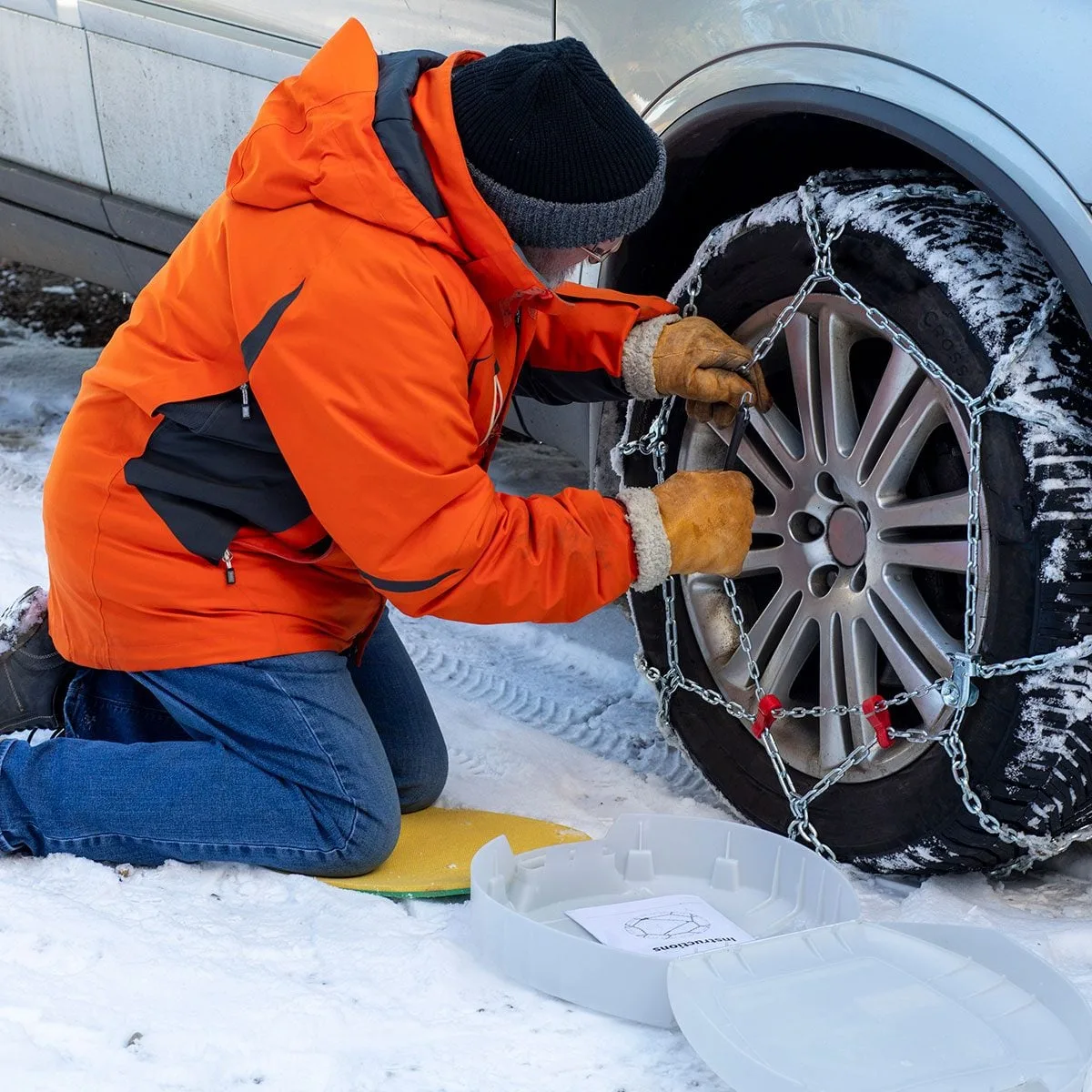
Mistake 3: Carrying chains but never practicing installation. A set of chains in the trunk is useless if you cannot install them in 15 minutes in a snowbank at night. Practice in your driveway before the first storm. Know where your chain hooks go.
Know your tire size for proper fitment.
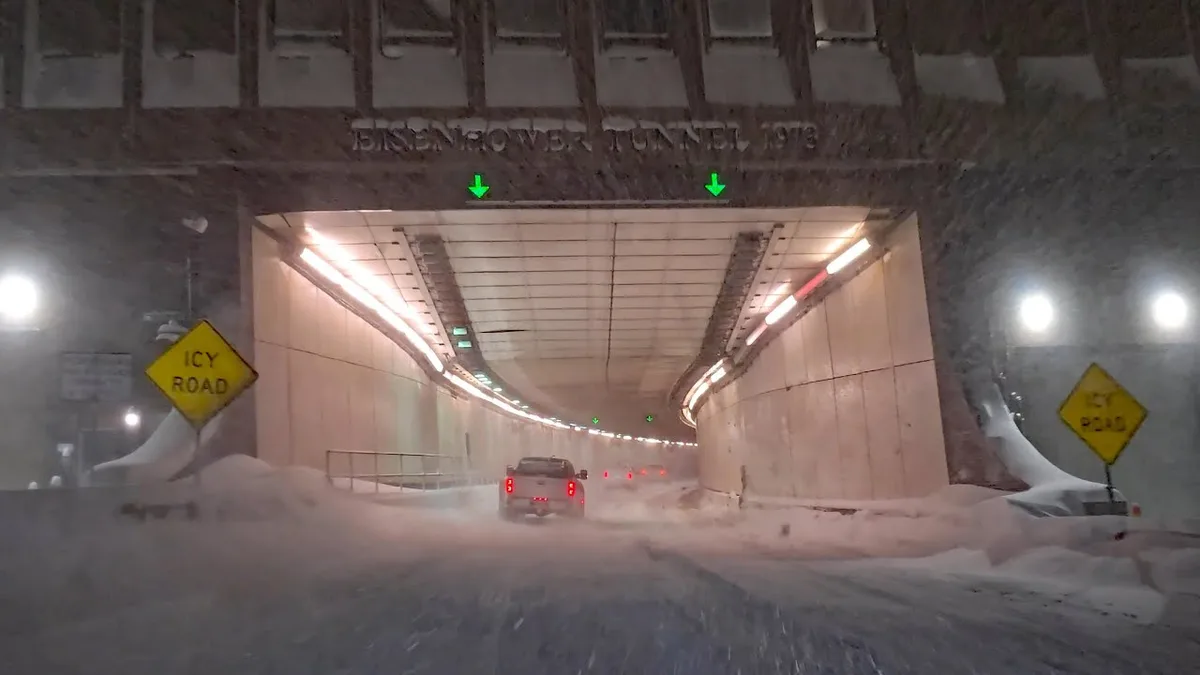
Mistake 4: Driving with a compact spare during a storm. A donut spare has almost no tread and no snow rating. If you get a flat on I-70 near the Eisenhower Tunnel and install the spare, you are now illegal under the Traction Law. Carry a plug kit and an air compressor as a better option.
Mistake 5: Ignoring the Chain Law signs. The blue Traction Law signs and red Chain Law signs are not decorative. They are activated by CDOT based on road conditions. If the red sign is lit, you stop and install chains regardless of your tires.
Ignoring it means a ticket and potentially a tow.
Tire Chains vs. Snowflake Tires — What You Actually Need
This is the question that comes up most often. The short answer is that they serve different roles and the best choice depends on your car, your driving patterns, and how much you want to spend.
Snowflake (3PMSF) tires are the best solution for anyone who drives Colorado mountain roads regularly during winter. They provide consistent traction on snow, ice, and cold dry pavement. You install them in November and drive through April without thinking about chains unless a Chain Law is active.
A good set costs between $600 and $1,200 for a typical passenger car including mounting.
Tire chains are the backup option. They provide superior traction on deep snow and ice but come with limitations. You can only drive at 30 to 40 mph with chains installed.
They damage pavement if driven on bare asphalt. Installing them on the roadside in a storm is unpleasant and sometimes dangerous.
| Scenario | Best Option |
|---|---|
| Daily mountain commuter (3+ days per week) | Snowflake tires plus carry chains for Chain Law |
| Weekend skier (6-12 trips per season) | Snowflake tires plus carry chains |
| One or two trips per winter | M+S tires plus chains (budget option) |
| Rental car driver | Chains required (rental tires are M+S at best) |
| Commercial vehicle driver | Chains required during Chain Law |
For the majority of Colorado mountain drivers, the right setup is snowflake tires from November through April plus a set of chains or AutoSocks in the trunk. That covers you for the Traction Law and gives you a path forward if a Chain Law gets activated while you are on the road.
If you drive a 2WD sedan or crossover, snowflake tires are not optional. They are the difference between making it up Vail Pass and blocking traffic for an hour. Front-wheel-drive cars with snowflake tires outperform AWD SUVs with all-season tires on the same road.
It comes down to the rubber compound and tread design.
Bing (Web (fair-use with source credit))
Studded Tires in Colorado: Legal Windows and Real-World Tradeoffs
Studded tires are legal in Colorado from October 1 through May 1 each year. Outside that window, they are prohibited statewide. The law exists because studs damage asphalt.
The tradeoffs are real. Studded tires are louder on dry pavement than standard winter tires. They reduce fuel economy slightly.
They wear faster on bare roads. And they hurt dry braking performance because the studs reduce rubber contact area. On ice, they are exceptional.
On dry pavement, a good 3PMSF studless tire may actually stop shorter.
For most Colorado mountain drivers, studless winter tires are the better choice. The 3PMSF studless designs from major manufacturers have improved dramatically in the last decade. They handle ice nearly as well as studs in most conditions.
They outperform studs on dry and wet pavement. And you can drive them all winter without worrying about the May 1 deadline.
If you live on a steep gravel road that ices over every night, studded tires might make sense. If you commute on I-70 or paved mountain roads, stick with studless snowflake tires.
Rental Car Warning: What's on Your Rental Might Not Cut It
This is a trap that catches thousands of visitors every winter. Rental cars at Denver International Airport almost always come with all-season tires. Those tires carry the M+S mark but lack the snowflake icon.
Under Colorado Traction Law, that means you need chains in the vehicle.
The rental agency will not tell you this. They will not offer you snow tires. Some agencies offer winter tire packages at an extra cost, but most do not.
If you rent a standard sedan or SUV from a major counter at DEN, assume the tires are not compliant for mountain travel.
Call the rental agency before you travel and ask specifically whether the vehicle has 3PMSF-rated tires. If the answer is no, ask about a winter tire upgrade. If that is not available, buy a set of AutoSocks or cable chains from an auto parts store near the airport.
They cost about $50 to $100 and fit in the trunk. Practice installing them before you need them.
Another option is to rent from a local company that specializes in mountain travel vehicles. Some Denver-area outfitters rent vehicles equipped with snow tires and chains. The daily rate is higher, but the peace of mind is worth it for a week-long ski trip.
Do not assume that a large SUV or a luxury sedan from the rental lot has winter tires. It doesn't. Rental fleets optimize for cost and year-round usability, not Colorado mountain safety.
What to Do If You Get Caught in a Traction Law Checkpoint
Traction Law checkpoints are common on I-70 during winter storms, especially near the Eisenhower Tunnel, Loveland Pass, and Vail Pass. Colorado State Patrol and CDOT set them up to check tire compliance. If you are waved through, you are good.
If you are pulled aside, here is what happens.
They check three things: the tire sidewall for the snowflake or M+S mark, the tread depth, and whether you have chains available if required. If your tires are compliant, you are back on the road within a minute.
If your tires fail the check, you will receive a citation. The fine starts at $130 plus court costs. If your vehicle is causing a road hazard, it can be towed at your expense.
In some cases, officers will require you to install chains before allowing you to proceed.
Pull over safely. Be polite and cooperative. Show the officer your chains or snowflake tires.
If you do not have chains and your tires are non-compliant, you will likely be directed to exit the highway at the nearest ramp. CDOT sometimes sets up chain installation areas near checkpoints where you can buy and install chains on the spot.
Prevention is better than any cure. Check the CDOT website or COtrip app before you drive. If the Traction Law is active on your route and your tires are not compliant, change your plans.
Drive a different route at a lower elevation. Wait for conditions to improve. The mountain roads will still be there tomorrow.
Real-World Scenarios: What Works on I-70, Wolf Creek, and Loveland Pass
Every Colorado mountain pass has its own personality. I-70 through the Eisenhower Tunnel is a high-speed interstate that turns into a parking lot during storms. Wolf Creek Pass is a steep two-lane road that gets some of the heaviest snowfall in the state.
Loveland Pass is a winding high-alpine route above treeline with no guardrails and extreme winds.
For I-70, the biggest challenge is the combination of high traffic volume and sudden weather changes. Snowflake tires with all-wheel drive are the gold standard here. You need the braking and cornering grip to handle stop-and-go traffic on packed snow.
A front-wheel-drive sedan with snowflake tires and chains in the trunk will also work. The key is being able to stop when traffic does.
Wolf Creek Pass requires a different approach. The pass gets over 400 inches of snow per year. Chain laws are common.
Even with snowflake tires, you should carry chains or AutoSocks. The steep grades and tight corners demand maximum traction. Vehicles with excellent tires get stuck here because they underestimated the conditions.
Bing (Web (fair-use with source credit))
Loveland Pass is the most demanding of the three. The road sits above 11,000 feet. It is narrow and winding with no shoulders.
Snow and ice can appear suddenly even when I-70 through the tunnel is clear. Only drive Loveland Pass with 3PMSF tires and chains available. AWD is strongly recommended.
If conditions look marginal, take the tunnel instead.
The common thread across all three passes is that snowflake tires are the baseline. Chains are the backup. AWD is nice to have but not a substitute for proper tires.
When to Swap Back to All-Seasons (and Why It Matters)
Colorado's studded tire law prohibits studs after May 1. Studless winter tires have no legal deadline, but running them all year is a bad idea. The rubber compound that keeps them soft in cold weather wears quickly on warm pavement.
You will lose tread fast and reduce handling in dry conditions.
The right time to switch is when daytime temperatures consistently stay above 50 degrees. For most Colorado mountain areas, that means late April or early May. If you live in Denver and drive to the mountains, you can swap earlier.
The Front Range warms up faster than the high country.
A second set of wheels and tires pays for itself over time. You get full tread life from both sets. You avoid the mounting and balancing costs twice per year.
And you always have the right tire for the conditions. Drivers with dedicated winter and summer sets get about 30 to 50 percent more total miles from their tires compared to running one set year-round.
Quick Reference: Fines, Tread Depths, and Chain Speed Limits
Here is the key data you need to stay legal and safe on Colorado mountain roads this winter.
| Requirement | Passenger Vehicle | Commercial Vehicle |
|---|---|---|
| Minimum tread depth (Traction Law) | 3/16 inch | 1/4 inch |
| Minimum tread depth (Chain Law) | Same | Same |
| Fine for non-compliance | $130 plus fees | $130 plus fees |
| Fine for causing road closure | Up to $650 | Up to $650 |
| Chain speed limit | 30 to 40 mph | 30 to 40 mph |
| Studded tire window | Oct 1 to May 1 | Oct 1 to May 1 |
The chain speed limit is not a suggestion. Exceeding 40 mph with chains installed can cause chain failure, which can damage your vehicle and create road hazards. If the roads are clear enough to drive faster than 40 mph, you should remove the chains.
Carry your chains even if you have snowflake tires. A Chain Law activation can happen without warning. Having chains in the trunk means you never have to choose between turning around and breaking the law.
Frequently Asked Questions
Do I need snowflake tires if I have AWD?
Yes. AWD helps you accelerate. It does not help you brake or corner on ice.
Colorado's Traction Law requires snowflake tires or chains for all vehicles without AWD. With AWD, you need M+S tires at 3/16-inch tread. But snowflake tires are still safer.
Can I use tire socks instead of chains in Colorado?
Yes. CDOT approves AutoSock and similar fabric traction devices for passenger vehicles under the Traction Law and Chain Law. They are easier to install than chains.
They work well on packed snow but are less effective on deep ice.
What happens if I get pulled over without proper tires?
You will receive a citation with a minimum fine of $130. If your vehicle is creating a hazard, you may be towed at your expense. In some cases, officers will allow you to install chains on the spot and proceed.
Are studded tires legal in Colorado?
Yes, from October 1 through May 1 each year. Outside that window, they are prohibited statewide. Studded tires damage asphalt and are not necessary for most drivers.
Studless winter tires are a better choice for most conditions.
How do I check my tread depth at home?
Use a penny inserted upside down into the tread groove. If the top of Lincoln's head is covered, you have at least 2/32-inch. For the 3/16-inch minimum under Colorado's Traction Law, use a tread depth gauge.
They cost about five dollars at any auto parts store.
Does my rental car have snowflake tires?
Almost certainly not. Rental cars typically come with all-season M+S tires. Check the sidewall before you leave the lot.
If there is no snowflake icon, you need chains or an approved traction device for mountain travel.