No, you can't turn a rear-facing seat forward at 18 months just because you've heard that somewhere.
Getting the Florida child restraint law and car seat requirements for ages 5 and under right is a lot less straightforward than it seems. Nearly 70% of car seats in the U.S. are installed incorrectly, and Florida's specific rules add another layer that trips up even experienced parents. The consequences go way beyond a ticket.
A loose strap or early stage switch can be the difference in a crash.
Florida's law, found in Statute 316.613, sets minimums for every stage from that first ride home until a child turns 6. But the legal floor and the safety ceiling are two very different things. Let's break down exactly what the law says, where most parents get it wrong, and how to make sure your child is both legal and as safe as possible.
Quick Answer
Florida law requires children under 5 to ride in a federally approved child restraint. Children under 2 must be in a rear‑facing seat unless they exceed the seat's limits. From 2 to 4, a forward‑facing seat with a harness is required.
At age 4, a booster seat is needed until the child turns 6. The fine is $60 and three points on your license.
Why Florida Parents Get Car Seat Laws Wrong (And the Real Cost)
Most parents don't set out to break the law or compromise their child's safety. They just get the wrong information. The 2015 update to Florida Statute 316.613 changed the rules significantly, but a lot of the advice still circulating predates it.
You hear "just turn them around at a year old" from family or see a booster seat ad that doesn't mention harness limits. Mix that with the fact that over 70% of car seats in the country are used or installed incorrectly, and you've got a recipe for honestly unsafe setups.
The financial cost is real: a first‑time violation runs around $60 plus court fees and three points on your driver's license. But the real cost is harder to calculate. A child in an incorrectly fitted seat or moved to the next stage too early faces a much higher risk of injury in a crash.
The law is not just red tape. It's based on crash data and engineering that saves lives. Understanding both the letter and the spirit of the rule makes a difference.
Florida Car Seat Law: The Exact Requirements for Every Stage (0–5)
The law breaks down into three clear stages based on your child's age and size. Here's the exact wording from the Florida statute.
| Stage | What the Law Says | When to Move On |
|---|---|---|
| Rear‑facing (0–2 years) | Must be in a rear‑facing child restraint. | Stay rear‑facing until your child reaches the seat's maximum height or weight. Do not turn early based only on age. |
| Forward‑facing (2–4 years minimum) | Child must be in a child restraint that meets federal standards. A forward‑facing harness seat is the usual choice. | Use the harness until your child hits the seat's harness limits (often 65 lbs). Then move to a booster. |
| Booster (4–6 years minimum) | A child under 6 must be in a child restraint. A booster with the vehicle's lap‑and‑shoulder belt meets this requirement. | Keep the booster until your child is 6 and the vehicle belt fits correctly. Many children need a booster until age 10–12. |
Key things to know:
- The law says "until the child exceeds the height or weight limit of the device." That means you don't have to move on by age alone. If your 4‑year‑old still fits the forward‑facing harness, they can stay in it.
- For a 5‑year‑old, you can legally use either a forward‑facing harness seat or a booster. Both are federally approved restraints. But safety experts tell you to keep the harness as long as it works.
- There is no law requiring a specific booster type (high‑back vs backless), but best practice says use high‑back if the vehicle seat lacks headrests.
For the exact statute text, check the Florida Legislature's page on 316.613.
Rear-Facing, Forward-Facing, or Booster – Knowing What Your Child Needs
Age gives you a starting point, but your child's actual height and weight decide when it's time to move up. Here's how to check.
Stay rear‑facing if: Your child's head is at least 1 inch below the top of the seat and they weigh less than the seat's rear‑facing limit. Many convertible seats go up to 40 or 50 pounds rear‑facing. Keep going until you hit that number.
Move to forward‑facing harness if: Your child has outgrown the rear‑facing limits (either height or weight). They need to be at least 2 years old. When you switch, the harness straps must sit at or above their shoulders.
Move to a booster if: Your child has outgrown the forward‑facing harness. They should be at least 4 years old. The booster must be used with a lap‑and‑shoulder belt.
If your child's ears reach the top of the booster's headrest or they weigh over the booster's limit, it's time for a new booster or seat belt.
One more thing: Every child is different. A 5‑year‑old who hasn't hit 40 pounds yet should stay in a harness seat, even though the law allows a booster at 4. Check your seat's manual for exact numbers.
Legal Minimums vs. Best Practices: A Side-by-Side Comparison
Florida law sets the absolute minimum. Safety experts set a much higher bar. The chart below shows where they differ.
| Factor | Florida Law Says | What the Experts Recommend |
|---|---|---|
| Rear‑facing age | Until 2 (or outgrow limit) | Extend to the maximum limits of the seat, often until 4 or heavier |
| Forward‑facing harness | Until 4 (or outgrow) | Keep the harness until the child reaches the seat's maximum weight (often 65 lbs) |
| Booster seat | Required until age 6 | Continue until the child passes the 5‑step test, usually around age 10–12 |
| Top tether use | Required for forward‑facing | Always use it – it reduces head injury by up to 45% |
| Seat belt alone | Legal at age 6 | Only when the car seat belt fits correctly: shoulder belt over collarbone, lap belt low over hips |
The takeaway is simple. Meeting the law is good. But each stage you extend beyond the minimum adds a big layer of safety.
Don't feel pressure to move your child to the next stage just because they hit the legal threshold. Let their growth and the seat's limits be your guide.
For more on extended 2‑stage usage and crash test data, the National Highway Traffic Safety Administration's car seat pages are an excellent resource.
The Most Dangerous Car Seat Mistakes Florida Parents Make
Most of the mistakes we see aren't out of neglect. They happen because a parent doesn't know what they don't know. Here are the seven most common errors we see with children under 6.
- Install is too loose. If you can move the seat more than 1 inch at the belt path, it's too loose. Push your weight into the seat while tightening. Use the built‑in lockoffs or the vehicle's locking retractor.
- Turning forward‑facing too early. Age 2 is the legal minimum, not a target. Many convertible seats allow rear‑facing up to 40+ pounds. The strongest bones come from staying rear‑facing for as long as possible.
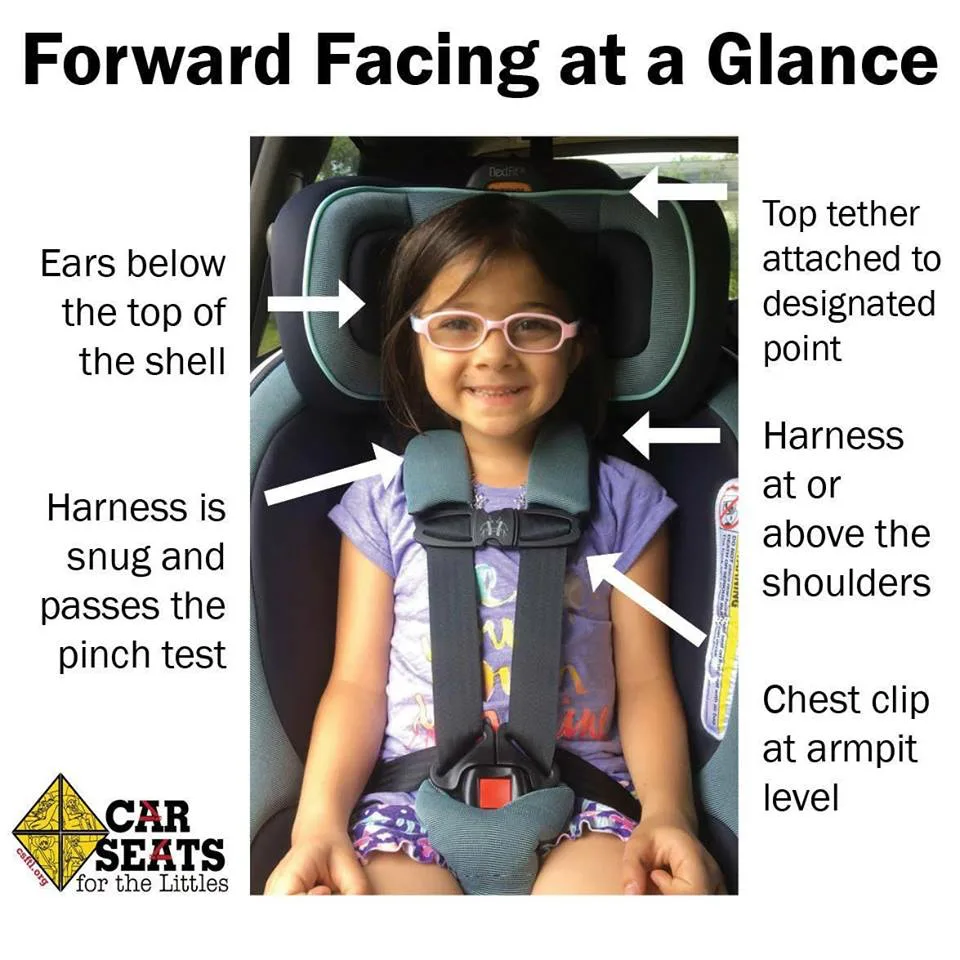
- Chest clip in the wrong spot. The clip should be at armpit level. Too low puts pressure on the belly; too high can cause neck injury. Check it every time you buckle.
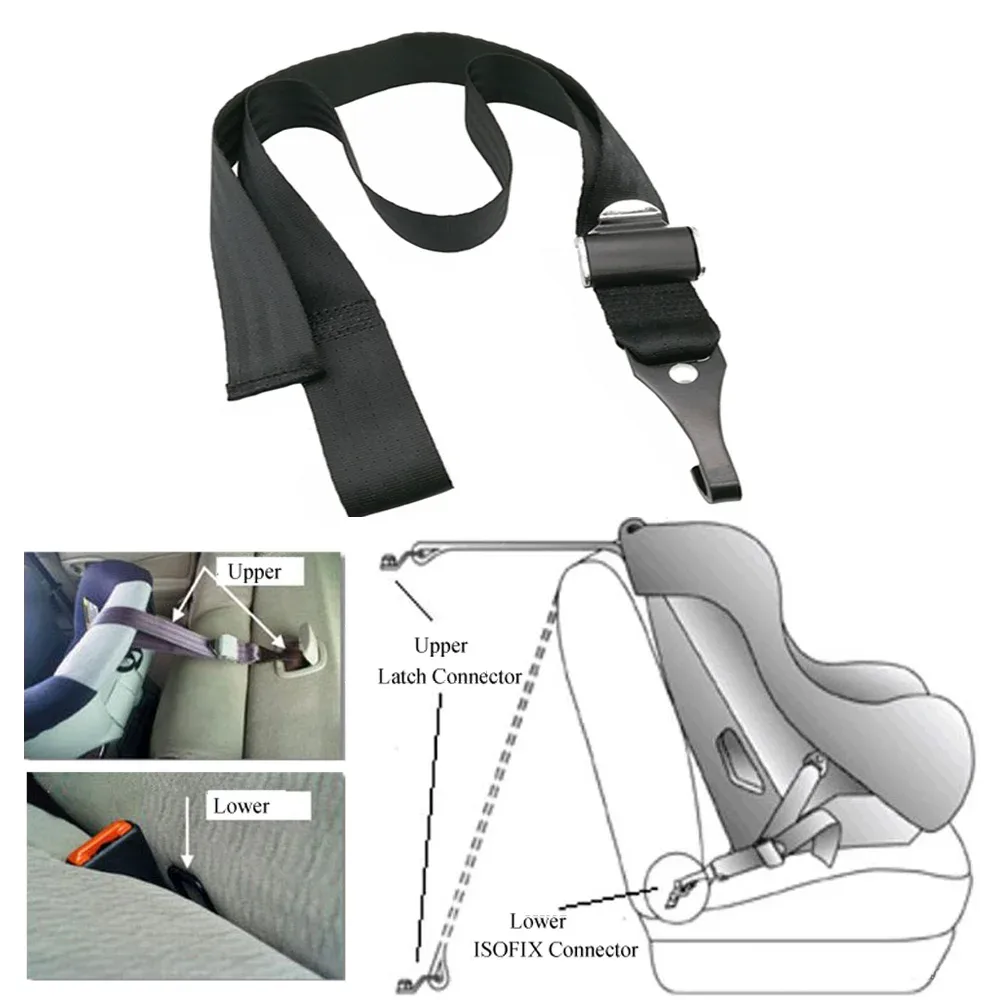
- Skipping the top tether. For forward‑facing seats, the top tether reduces head movement by over 40%. It's mandatory per the manual. Hook it to the proper anchor in your vehicle.
- Using an expired seat. Car seats expire after 6, 10 years. Florida heat degrades plastic. Check the sticker on the bottom for the expiration date. Never use a seat with an unknown history.
- Moving to a booster too soon. A 4‑year‑old who weighs 35 pounds is not booster‑ready. They need the 5‑point harness until at least 40 pounds and strong self‑control.
- Backless booster without head support. If the vehicle seat doesn't have a headrest that reaches the child's ears, use a high‑back booster to protect the neck in a crash.
Avoid these, and you've already closed most of the safety gaps.
Step-by-Step: How to Install Any Car Seat Correctly
Most installation failures come down to one thing: the seat moves more than an inch. Whether you use the LATCH system or the seat belt, the goal is a rock‑solid fit. Here's the process that works across nearly every seat model.
- Read both manuals. Your vehicle owner's manual and the car seat manual. Find the lower anchors or the belt path routing instructions. Every seat is different.
- Position the seat correctly. Rear‑facing seats go at the correct recline angle (usually 30 to 45 degrees). Forward‑facing seats sit upright. Check the indicator on the seat base.
- Tighten at the belt path. Put your full weight into the seat. Pull the LATCH strap or seat belt tight. You should not be able to move the seat more than 1 inch side to side at the belt path.
- Lock the seat belt or LATCH. If using the seat belt, pull it all the way out to engage the locking retractor. You should hear a click and feel it lock. LATCH straps should be tight with no slack.
- Attach the top tether (forward‑facing only). Hook the tether to the anchor in your vehicle. Tighten it until the strap is taut. This reduces head movement in a crash.
| Step | Common Mistake | How to Fix It |
|---|---|---|
| 1 | Not reading both manuals | Keep the manuals in the car for quick reference |
| 2 | Wrong recline angle for rear‑facing | Use a rolled towel under the seat if needed |
| 3 | Seat still moves after tightening | Push harder with your knee while pulling the belt |
| 4 | Belt doesn't lock | Try the locking clip that came with the seat |
| 5 | Tether not used | Find the anchor in your vehicle manual |
The pinch test. After installation, try to pinch the harness strap at the shoulder. If you can gather any webbing, tighten more. The harness should be snug with no twists.
Taxis, Rental Cars, and Ride-Shares: What the Law Says
Travel in Florida adds a layer of confusion. You hop in a taxi or an Uber with a 3‑year‑old. Do you need a car seat?
The short answer: Yes, legally, but the enforcement rules have exceptions.
Florida Statute 316.613 exempts "a taxicab, a public livery vehicle, or a for‑hire vehicle" from the requirement to provide a child restraint. But it does not exempt the parent. If you are the responsible adult, you are still required to use a federal‑approved restraint for a child under 5.
The driver is not required to supply one.
That means you must bring your own seat. Many taxi and ride‑share drivers will not have one. If you rent a car, rental companies in Florida offer car seats, but they are not legally required to provide them.
Always request one in advance. And know that rental car seats are often basic models. They may be expired or poorly maintained.
Many families choose to bring their own seat for peace of mind.
Airport travel tip: If flying into Florida, you can gate‑check your car seat for free on most airlines. This avoids the rental seat issue and keeps your child in a familiar, correctly sized seat.
What about the front seat? The law does not explicitly forbid a child under 5 from riding in the front passenger seat, but it is strongly discouraged. Car seat manufacturers recommend that children under 13 ride in the back. Florida law does not change this.
Always install the seat in the back seat if available.
When to Move Your Child to the Next Stage (Signs to Watch For)
Timing the transition between stages is the single most common car seat question we get. The law sets minimum ages, but your child's actual size is the real deciding factor.
Signs your child has outgrown rear‑facing
- The top of their head is less than 1 inch from the top of the seat shell.
- They exceed the weight limit for rear‑facing (check the sticker on the side).
- Their shoulders are above the harness slots when in the lowest position.
If any of these apply, it's time to turn the seat forward‑facing. Do not turn before age 2. Use the full height/weight capacity of the seat.
Signs your child has outgrown forward‑facing harness
- Their shoulders are above the top harness slots.
- Their ears are above the top of the seat shell.
- They exceed the weight limit for the harness (usually 65 lbs).
Once outgrown, move to a high‑back booster with the vehicle's lap‑and‑shoulder belt. The child must be at least 4 years old.
Signs your child is ready for a seat belt alone
The "5‑step test" from the National Highway Traffic Safety Administration says yes when:
- The child sits with their back against the vehicle seat.
- The lap belt fits low on the hips, not the stomach.
- The shoulder belt crosses the middle of the collarbone.
- Their knees bend at the edge of the seat (feet flat on the floor).
- They can stay in position the whole ride.
Most children do not pass this test until age 10 or 12. Keep using the booster even if they're 6 and the law allows a seat belt alone.
Car Seat Checks in Florida – Free Help That Could Save a Life
You don't have to install a seat on your own. Florida has a network of certified child passenger safety technicians who check installations for free. They meet you at fire stations, sheriff's offices, and safety events across the state.
What a check includes:
- Verifying your seat is the right fit for your child's size.
- Inspecting the installation for tightness and correct routing.
- Teaching you how to do it yourself next time.
- Checking that the seat isn't expired or recalled.
Where to find a check near you:
- Go to the NHTSA Car Seat Inspection Locator online.
- Search by zip code for certified technicians in Florida.
- Many county fire departments offer walk‑in hours.
A few tips for the appointment:
- Bring both your car seat and vehicle manuals.
- Install the seat yourself first if you can. The technician will check it.
- Expect it to take about 20 to 30 minutes.
Checkups are completely free. They are hands‑on. You learn exactly what to adjust.
Afterward, you'll feel confident that your install is correct. It is one of the best investments of 30 minutes you can make.
Your Safety Checklist – Staying Protected Beyond the Law
Meeting Florida law is the floor, not the ceiling. Use this checklist to make sure you are going beyond the minimum.
| Item | What to Do |
|---|---|
| Rear‑facing | Keep until your child reaches the seat's height or weight limit. Ignore the "turn at 2" law as a target; use it as a starting point. |
| Top tether | Always use it for forward‑facing seats. It is not optional. |
| Harness snugness | Do the pinch test every ride. No slack. |
| Chest clip | At armpit level. Check before every trip. |
| Seat expiration | Check the sticker. Replace if expired (6–10 years) or after any moderate to severe crash. |
| Registration | Register your seat with the manufacturer for recall alerts. |
| Seat belts for older kids | Use the 5‑step test. Do not let a child under 13 ride in the front seat. |
| Booster age | Keep the booster until the child passes the 5‑step test, regardless of age 6. |
| Installation check | Get a free inspection from a certified technician at least once per seat transition. |
One final thought. The law is enforceable, but safety is not enforced by a cop. It's enforced by physics. Taking the extra month or extra year to keep your child in a more protective stage is the right call, no matter what anyone else tells you.
Meeting Florida law is the floor, not the ceiling. Use this checklist to make sure you are going beyond the minimum.
| Item | What to Do |
|---|---|
| Rear‑facing | Keep until your child reaches the seat's height or weight limit. Ignore the "turn at 2" law as a target; use it as a starting point. |
| Top tether | Always use it for forward‑facing seats. It is not optional. |
| Harness snugness | Do the pinch test every ride. No slack. |
| Chest clip | At armpit level. Check before every trip. |
| Seat expiration | Check the sticker. Replace if expired (6–10 years) or after any moderate to severe crash. |
| Registration | Register your seat with the manufacturer for recall alerts. |
| Seat belts for older kids | Use the 5‑step test. Do not let a child under 13 ride in the front seat. |
| Booster age | Keep the booster until the child passes the 5‑step test, regardless of age 6. |
| Installation check | Get a free inspection from a certified technician at least once per seat transition. |
One final thought. The law is enforceable, but safety is not enforced by a cop. It's enforced by physics. Taking the extra month or extra year to keep your child in a more protective stage is the right call, no matter what anyone else tells you.
Frequently Asked Questions
What is the penalty for violating Florida's car seat law?
The fine starts at $60 plus court fees. You also receive three points on your driver's license. Insurance rates can increase as a result.
Can my 5-year-old sit in the front seat in Florida?
The law does not prohibit it, but it is strongly discouraged. Children under 13 should ride in the back seat. Airbags can injure young children in a crash.
Are Uber and taxis exempt from car seat laws?
Florida law exempts for-hire vehicles from providing car seats, but the parent is still responsible. You must bring your own seat for a child under 6.
When can my child stop using a booster seat in Florida?
Legally, at age 6. But safety experts recommend using a booster until the child passes the 5-step test, often around age 10 to 12.
How do I know if my car seat is installed correctly?
The seat should not move more than 1 inch at the belt path. The harness should be snug. Do the pinch test.
Get a free inspection at a Florida car seat check event.
Can I use a second-hand car seat in Florida?
Only if you know its full history. Never use a seat that has been in a severe crash, is expired, or is missing parts. Check the manufacturer date before using.