You spot a car that hasn't moved in weeks. The Florida abandoned vehicle removal process on private and public property starts with the same question every time: whose land is the car sitting on? The answer splits everything into two separate legal paths.
Get it wrong and you waste weeks or risk a lawsuit.
State law draws a sharp line between the two scenarios. On private property, Florida Statute 715.07 gives you a clear path forward. But it comes with a mandatory 35-day waiting period.
On public streets and rights-of-way, local law enforcement handles the job under FS 705.103. The timeline shrinks to a few days there. Getting these mixed up can cost you time, money, and legal exposure.
Let's walk through exactly how each side works.
Quick Answer
The Florida abandoned vehicle removal process splits by location. Private property requires written notice and a 35-day wait. Public property means calling law enforcement for removal.
Tenant cars and HOA areas have special rules. Follow the wrong process and you risk legal liability.

How Florida Defines an Abandoned Vehicle
Florida law doesn't use a single definition for "abandoned." It depends on where the vehicle sits and the specific statute that applies.
Criteria Under State Law
The state looks at several factors to determine abandonment. As of 2026, a vehicle is considered abandoned if it meets two or more of these conditions.
- No valid license plate. An expired tag or no plate at all is the biggest red flag.
- Inoperable condition. Flat tires, missing engine parts, a dead battery, or visible damage that prevents movement.
- Time left unattended. Typically 48 hours or more on public property. Private property rules start counting once the owner gives notice.
- No owner permission. The vehicle is parked without the consent of the property owner or authorized tenant.
| Factor | What Counts as Abandoned |
|---|---|
| License plate | Expired, missing, or switched plates |
| Operational status | Can't be driven safely (flat tires, missing wheels, engine damage) |
| Time on property | 48+ hours on public; varies on private |
| Owner present | No identifiable owner or driver nearby |
| Permission | Parked without consent of landowner |

Not every stationary car qualifies. If the owner is on vacation or the vehicle is parked legally with a current tag, you don't have a case yet. But once you spot two or more of the signs above, the process can start.
The Big Turn: Private Land or Public Right-of-Way?
This is the single most important question in the entire process. The answer determines which statute you follow, who initiates the removal, and how long you wait.
If the vehicle is on private property (your home, a rental lot, a commercial parking area you own or manage), you start the process yourself under FS 715.07. You send the notice, manage the timeline, and arrange the tow. You also have the right to recover your costs through a lien on the vehicle.
If the vehicle is on a public street or right-of-way (a city road, county road, or state highway), local law enforcement or code enforcement handles everything. You report the vehicle, they investigate, and they arrange removal. You don't manage the process, and you don't bear the cost.
What About Semi-Public Spaces?
Parking lots for apartment complexes, retail shopping centers, and HOA common areas sometimes fall in a gray zone. In most cases, they count as private property under FS 715.07, because a private entity owns the land. But some cities have their own ordinances that let code enforcement act on these lots too.
You need to check your local municipal code before assuming which process applies. These state-specific differences can shift the timeline and your responsibilities significantly.
Private Property Removal Steps (FS 715.07)
This statute is your playbook if the vehicle sits on land you own or control. Here's the full workflow.
Step 1: Confirm Abandonment
Make sure the vehicle meets the criteria above. Document everything with photos and notes.
Step 2: Identify the Owner and Lienholder
Run the VIN through the FLHSMV database or ask law enforcement to help identify the registered owner and any lienholder. You need names and addresses for the notice.
Step 3: Send Written Notice
Send a letter via certified mail to the owner and lienholder. The notice must state:
- The vehicle's location and description
- That the vehicle is considered abandoned
- That it will be removed if not claimed within 35 days
- Your intent to dispose of it if unclaimed
- The amount of any storage fees if applicable
Step 4: Post Notice on the Vehicle
If the certified letter bounces back, you must also post a physical notice on the vehicle itself. Use a weatherproof envelope and include the same information.
Step 5: Wait 35 Days
The clock starts from the date notice was sent. You cannot touch the vehicle during this period. Store it safely on your property if possible.
Step 6: Authorize a Licensed Tow Company
After 35 days with no response, call a licensed towing company. Do not move the vehicle yourself. A professional tow is legally cleaner and avoids trespassing claims.
Step 7: File for Abandoned Title
The tow company or you must file Form 82925 with the FLHSMV to get an abandoned title. The vehicle can then be sold at auction or scrapped. Any proceeds above your costs and fees must be held for the owner if they ever come forward.
That scenario is rare.
Public Property Removal Steps (FS 705.103)
This scenario is simpler because you are not the enforcer. Your job is only to report the vehicle. Law enforcement or code enforcement takes over from there.
How to Report
Call the non-emergency line for the local police department or the city's code enforcement office. Some cities offer online reporting forms. You will need:
- The vehicle's location (address or nearest intersection)
- License plate number (if any)
- Make, model, and color
- How long it has sat there
- Any visible damage or flat tires
What Happens Next
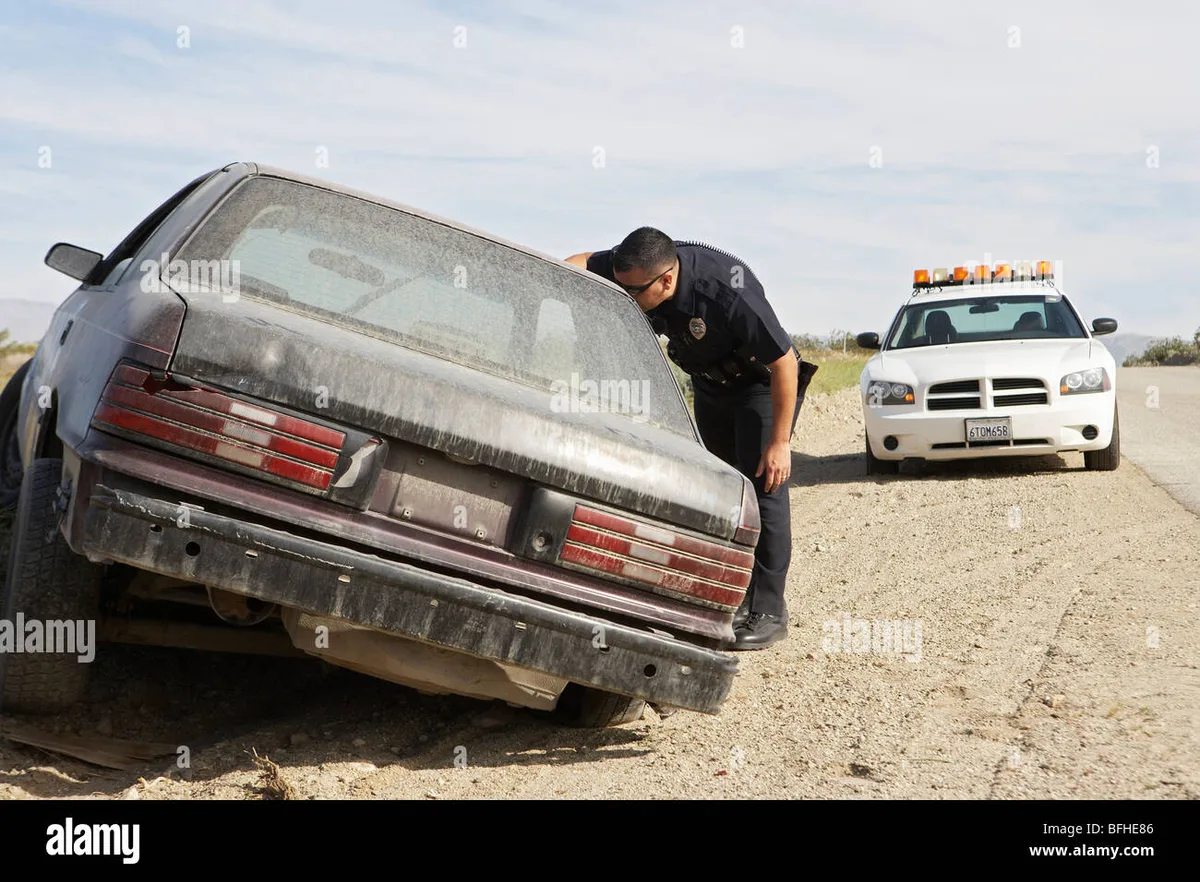
An officer or code inspector visits the vehicle and evaluates it. If it meets the abandonment criteria, they tag it. The tag gives the owner a short window (often 3 to 5 days) to move it.
If the owner does not respond, the tag authorizes a tow.
Timeframes You Can Expect
- Tag placed: day 1
- Owner notification: day 1
- Removal window: 3 to 5 days
- Tow occurs: day 4 to day 6
- Vehicle held in impound lot: varies
The whole public process usually wraps up within a week. You do not pay any fees. The vehicle becomes the responsibility of the impound lot, which can place a lien and auction it.
State Preemption on Timeframes
Florida law sets a floor, but many cities add their own rules. Some municipalities require a 48-hour window. Others give five days.
Check your local code enforcement office for exact timelines. Similar procedures exist in other states like what's outlined in California vehicle impoundment rules, though the notice periods differ.
Special Situations: Tenants, HOAs, and Commercial Lots
Tenant Abandoned Car
Landlords face a tricky situation. The tenant may still be under lease. That means the landlord cannot treat the car as abandoned on day one.
The tenant's right to the parking spot continues until the lease ends or the tenant abandons the unit.
If the tenant has moved out and left the car, the property owner should send a notice under FS 715.07. But the landlord must also check the lease. Some leases have specific clauses about abandoned property that shorten the timeline.
Always consult a local attorney when a tenant is involved. One mistake could lead to an illegal eviction claim linked to the vehicle.
HOA Common Areas
HOAs and condos usually manage parking through their covenants. The vehicle sits on common property owned by the association. That means the board, not an individual homeowner, starts the process.
The board follows FS 715.07 but must also follow its own enforcement rules.
Most HOAs require a warning letter first. Then a hearing. Then a fine.
The 35-day notice for abandonment can run parallel to that. But the board cannot skip its own covenant procedures. Aggressive towing without board authorization opens the association up to litigation.
Commercial Parking Lots
Retail centers, office parks, and restaurant lots are private property. The property manager follows FS 715.07. But they must also respect any posted parking restrictions.
If a vehicle is parked without authorization, that alone is not abandonment. It becomes abandonment when the criteria kick in (no plate, inoperable, no movement). Many managers rush to tow under a "trespass" policy, but that is different from the abandoned vehicle statute.
Trespass towing has shorter notice rules. Make sure you know which one you are using.
Common Legal Mistakes and How to Avoid Them
Mistake 1: Moving the Vehicle Yourself
You load the car onto a trailer and drop it at a scrapyard. That seems efficient. It is also a legal landmine.
The vehicle is still titled property. You have no right to destroy it before the notice period ends. If the owner shows up, you could face conversion charges.
Always use a licensed tow company and follow the statute.
Mistake 2: Ignoring the Lienholder
A bank or credit union holds a security interest in most financed cars. The lienholder must receive the same notice as the owner. If you sell the car without notifying the bank, the bank can come after you for the loan balance.
The smart move is to search for liens before you send any notice.
Mistake 3: Starting the Clock Too Early
The 35 days on private property starts when you dispatch the certified mail. Not when you spot the car. Not when you post a note on the windshield.
If you date the notice wrong or fail to track the delivery date, your entire timeline is invalid. Keep a log.
Mistake 4: Not Checking Local Ordinances
Some Florida cities have stricter rules than the state. For example, Miami-Dade requires a separate registration with code enforcement before towing. Broward has a different process for abandoned vehicles on commercial lots.
A quick call to the local code office prevents these surprises. You can also look at how other jurisdictions handle abandoned vehicles in California to see the range of variation.
Mistake 5: Selling Without Title
You tow the car and call a scrapyard. The scrapyard pays you cash. You think the problem is solved.
But without a properly transferred title, the vehicle is still registered to the original owner. The sale is illegal. The owner can still report the car stolen.
The scrapyard may also face penalties. Always file for the abandoned title first.
Cost Breakdown: Towing, Storage, and Administrative Fees
What You Will Pay on Private Property
The property owner typically fronts the towing and storage costs, then recovers them through the vehicle lien. Here are typical ranges:
| Item | Typical Cost |
|---|---|
| Towing fee (standard car, local) | $150-$250 |
| Storage fee (per day) | $20-$40 |
| Certified mail notice | $7-$15 |
| Newspaper publication (if needed) | $50-$150 |
| FLHSMV title transfer fee | ~$85 |
| Owner notification search (if VIN traced) | Free via FLHSMV |
Storage Fees Stack Fast
If the vehicle ends up in a private storage lot, fees add up daily. A 35-day wait plus 10 days in the lot could mean $700 to $1,400 in storage alone. That eats into any recovery.
Some property owners negotiate a "flat rate" with a towing company to hold the car for the notice period.
Who Pays on Public Property
You pay nothing. The city or county absorbs the towing and storage costs. The impound lot recovers its fees by auctioning the vehicle.
If the vehicle has no value, the government writes it off.
What Happens to Auction Proceeds
If the vehicle sells, the proceeds go toward:
- Towing and storage costs
- Lienholder payoff
- Remaining proceeds returned to the owner
Many cars sell for scrap value only. In those cases, the towing company may deduct its fees and send nothing back.
How to Transfer Abandoned Title to Yourself
If you want to claim the vehicle as your own (as the property owner or as someone who wants to restore it), you need an abandoned title from FLHSMV.
Eligibility
You can apply after the full 35-day notice period has passed and the owner has not responded. You must have sent the notice correctly. You must have a receipt of certified delivery or a returned envelope.
Application Steps
- Complete Form 82925 (Application for Certificate of Title With/Without Registration)
- Provide the original or a copy of the notice you sent
- Provide the certified mail receipt or returned letter
- Pay the transfer fee (~$85)
- Include a statement of the vehicle's condition and location
- Submit to a local FLHSMV office
The process takes a few weeks. Once you receive the title, you can register the vehicle, sell it, or scrap it with clear ownership. If you plan to keep the car, you will also need to pay sales tax on its value.
Some vehicles may need a police inspection for VIN verification.
This step matters for any state process. Even if you are comparing Florida to other regulations, the core title transfer logic is similar to what California abandoned vehicle programs require at their DMV.
Expert Tips for a Smooth Removal
These tips come from reviewing cases, talking to code enforcement officers, and working through the statute's nuances.
- Start the 35-day clock early. Send the certified notice as soon as you confirm abandonment. Every day you delay pushes resolution further out.
- Use a licensed towing company only. Check that the company is registered with the Florida Department of Agriculture. Unlicensed tows can void your lien.
- Photograph everything. Take date-stamped photos of the vehicle's condition, the notice posted, and the empty space after removal. These protect you if the owner sues.
- Don't accept payment from the owner mid-process. If the owner shows up during the 35 days, you can sell them the vehicle, but you must document the sale properly. Cash handshake deals cause trouble later.
- Check for city-specific rules first. A quick online search of your municipality's code (like "Miami code enforcement abandoned vehicle") can save you from procedural missteps.
Quick-View Decision Guide for Your Situation
| Your Scenario | Statute | Notifier | Time to Removal | Who Pays |
|---|---|---|---|---|
| Owner-occupied home, car on lawn | FS 715.07 | You | 35 days | You (recoup via lien) |
| Rental property, tenant left car | FS 715.07 | You | 35 days | You (recoup via lien) |
| HOA common area | FS 715.07 | Board | 35 days | Association (recoup via lien) |
| Public street | FS 705.103 | Police/code | 3-5 days | City/county |
| Commercial parking lot | FS 715.07 | Property manager | 35 days | Property (recoup via lien) |
| County road | FS 705.103 | Sheriff | 3-5 days | County |
Frequently Asked Questions
How long do I have to wait before towing an abandoned car on my property?
You must wait 35 days after sending certified notice to the owner and lienholder. Towing earlier opens you to liability. The clock starts from the date you mail the notice, not from when the car appeared.
Can I take ownership of an abandoned car on my land?
Yes, but only after the 35-day notice period ends and you file Form 82925 with FLHSMV. You also need to pay the transfer fee and any sales tax based on the vehicle's value. The process gives you a clean title.
What happens if the owner comes back during the 35-day notice period?
The owner can reclaim the vehicle at any time before the notice expires. You can charge reasonable storage fees (typically $20-$40 per day) for the time it sat on your property. If they pay, you release the car.
Does Florida require a police report for abandoned vehicles on private property?
No. On private property, you handle the process yourself under FS 715.07. A police report is not required.
However, if you are unsure whether the vehicle is truly abandoned, a call to local law enforcement can help confirm.
Can I scrap an abandoned car without a title?
No. Scrapping without a title is illegal. The vehicle is still the legal property of its registered owner.
You must complete the abandoned title process through FLHSMV before you sell it for scrap.
What if the abandoned car has no license plate or VIN?
A missing plate or VIN complicates things but doesn't stop you. Contact your local code enforcement or sheriff's office. They can run a title search using other identifiers.
You may need a VIN inspection from law enforcement before you can file the title application.