Traffic law in your state is one of those things you think you know until you get caught off guard. That's especially true for Florida's right on red rule. Nearly everyone "knows" it, but a surprising number of drivers get it wrong.
The Florida right on red law and complete stop requirements at intersections are straightforward on paper yet easy to fumble in real-world driving.
As of 2025, the base fine for a rolling stop at a red light starts at $158. After court costs and surcharges, many drivers walk away paying $300 or more. Three points on your license follow you.
Your insurance company will notice too. That's the kind of headache you can avoid with a few seconds of extra attention.

Quick Answer
Florida law allows a right turn on red after a complete stop. You must stop before the crosswalk or stop line. Yield to pedestrians and cross traffic.
A rolling stop is illegal. No Turn on Red signs and red arrows ban the turn entirely.
Why Getting This Right in Florida Matters More Than You Think
Most drivers treat the complete stop as a suggestion. You've done it. Slow to a crawl, check left, and roll through.
The problem is that Florida law treats a rolling stop as a full moving violation. That means a ticket, three points, and a mark that lingers on your record for years.
The average total cost of a right on red citation in Florida lands between $200 and $400 depending on the county. The real sting comes from insurance. A single three-point violation can raise your rates 20 to 30 percent for three years.
If you're already paying high premiums, that increase can be painful. You can manage some of that impact by comparing your options.
Beyond the money, three points put you closer to license suspension. Accumulate too many points and you could face a suspension with its own legal headaches. A simple right turn gone wrong can snowball fast.
What Florida Law Actually Says About Right on Red
The legal backbone for right on red in Florida is Statute 316.075. It says that when a traffic signal shows a steady circular red light, a driver may turn right after coming to a complete stop and yielding to all crossing traffic, pedestrians, and bicyclists.
You may also turn left on red, but only from a one-way street onto another one-way street. That's an easy rule to overlook if you've never needed it.
The turn is not allowed when you're facing a red arrow. A red arrow means you must wait for a green arrow or a full green light, even if you intend to turn right. The law makes a clear distinction between a circular red signal and a red arrow.
If you want the exact wording, read the official Florida Statute 316.075 online. The language is plain and leaves little room for interpretation.
The Complete Stop Requirement: What Counts as Legal
Here's the part that trips up the most people. Florida law defines a complete stop as the total cessation of vehicle motion. That's not a slow roll.
Not a crawl. Your wheels must stop moving entirely.
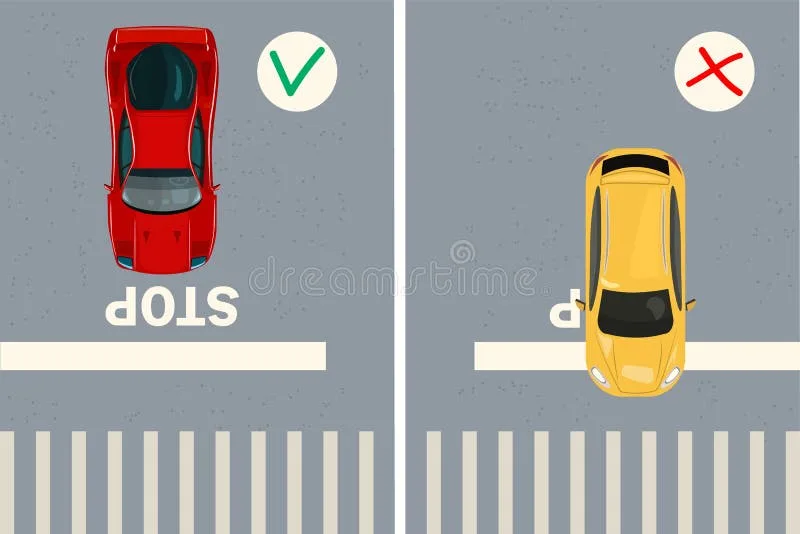
Where you stop matters just as much. You must stop at the marked stop bar if one is present. If there's no stop bar, stop at the crosswalk.
If there's no crosswalk, stop at the point nearest the intersecting roadway that gives you a clear view of cross traffic. That's the rule.
Do you need to stop for a minimum number of seconds? No. The law doesn't specify a timer.
But you must remain stopped long enough to yield the right of way. A brief, definite pause does the job. If a police officer sees your car rock backward from the stop, you're fine.
If they see your wheels still turning, you're getting a ticket.
Red light cameras also catch rolling right turns. The camera captures two images. One shows your vehicle before the stop line.
The other shows the turn still rolling. No stop, no excuse.
Where and When Right on Red Is Prohibited in Florida
Not every intersection allows a right on red. If you see a "No Turn on Red" sign, you must wait for a green signal. These signs appear most often in high-traffic urban areas, near schools, and in pedestrian-heavy zones.
Some cities impose time-of-day restrictions. You'll see signs that read "No Turn on Red 7 AM to 7 PM" or "7 AM to 6 PM Monday through Friday." These are common in tourist corridors like International Drive in Orlando, South Beach in Miami, and downtown St. Petersburg.
A red arrow also prohibits the turn. Even if you stop completely, you cannot turn right against a red arrow. You must wait for a green arrow or a full green circle.
Municipalities in Florida have the authority to restrict right on red at specific intersections to reduce pedestrian crashes. Some restrictions are permanent. Some are experimental.
Always scan for signage, even on roads you drive every day. A new sign can appear after a road improvement project.
How Red Light Cameras Enforce Right on Red Turns
Red light cameras in Florida are not just watching for straight-through runners. They also catch drivers who roll through a right turn on red. The camera system uses sensors buried in the pavement.
If you cross the stop bar after the light has turned red, the camera takes two photos.
The first photo shows your car approaching the intersection before the limit line. The second shows you in the middle of the turn. An officer reviews both images and issues a ticket if the turn was made without a complete stop.
Florida law under Statute 316.640(14) allows local governments to use cameras at signalized intersections. These cameras run 24 hours a day. They don't need a police officer on site.

What does a rolling stop look like on camera? You slow down. Your wheels cross the stop bar while still turning.
You never pause. The system records that as a violation. The fine for a camera-issued ticket is typically $158, though some municipalities add processing fees.
You have the right to contest the ticket. You can review the photos online before paying. If the images show a full stop, you can fight it.
If your brake lights didn't illuminate for at least a second, the evidence is clear.
The Real Cost of a Rolling Stop: Fines, Points, and Insurance
The base fine for a moving violation that includes a rolling stop at a red light is $158. But that number grows fast. Court costs, administrative fees, and surcharges push the total to $300 or more depending on the county.
Here's a typical breakdown for a Florida rolling stop citation:
| Fee Item | Estimated Cost |
|---|---|
| Base fine | $158 |
| Court costs (varies by county) | $60 to $120 |
| Surcharges (state and local) | $20 to $50 |
| Total | $238 to $328 |
That's just the ticket. The real hit comes from insurance. A three-point moving violation can raise your premium by 20 to 30 percent for three years.
If you currently pay $2,000 a year, you could be looking at $1,200 in extra costs over time.
You can avoid some of that by taking a state-approved defensive driving course. In Florida, completing a course does not remove the points from your record. It may qualify you for an insurance discount.
But the points stay unless you take a different route, like hiring a traffic attorney to negotiate a reduction.
Accumulate too many points and you risk license suspension. Twelve points in one year results in a suspension. A single rolling stop ticket plus one other violation can put you on the edge.
That's why pulling all the way to a complete stop isn't just about avoiding a ticket. It protects your license and your wallet.
Step by Step: How to Make a Safe and Legal Right Turn on Red
Here's the exact sequence that keeps you legal in Florida.
Step 1: Approach with controlled speed. Slow down well before the intersection. If you're going too fast, you won't be able to stop cleanly. Aim for 10 to 15 mph as you near the stop bar.
Step 2: Identify the signal and signage. Look for a red circular signal. If you see a red arrow or a "No Turn on Red" sign, you must wait for a green. If it's a circular red, you may proceed after stopping.
Step 3: Come to a complete stop. Your wheels must stop moving. Position your vehicle behind the stop bar. If there's no stop bar, stop before the crosswalk.
If there's no crosswalk, stop at the point nearest the intersecting roadway.
Step 4: Yield to everyone who has the right of way. Check for pedestrians in the crosswalk. Look for bicyclists approaching from your right or left. Scan the lane you're turning into for vehicles that might be turning or crossing.
Florida law requires you to yield to all lawfully moving traffic.
Step 5: Execute the turn. Once the intersection is clear, proceed with a smooth turn. Accelerate gradually and align with the correct lane. Don't cut across multiple lanes.
That's it. The whole process takes about 10 seconds. Skipping any step turns a legal maneuver into a citation.
Common Right on Red Mistakes That Get Florida Drivers Ticketed
Most tickets come from one basic error: the rolling stop. Drivers slow down to 2 or 3 mph and call it a stop. That's not a stop under the law.
The law demands total cessation. Officers watch for that telltale lurch forward before your wheels have fully stopped.
Another frequent mistake is stopping in the crosswalk or past the stop bar. You must stop before the white limit line. If you creep forward to see around a truck or a building, you've already committed a violation.
Stop first, then inch forward if needed.
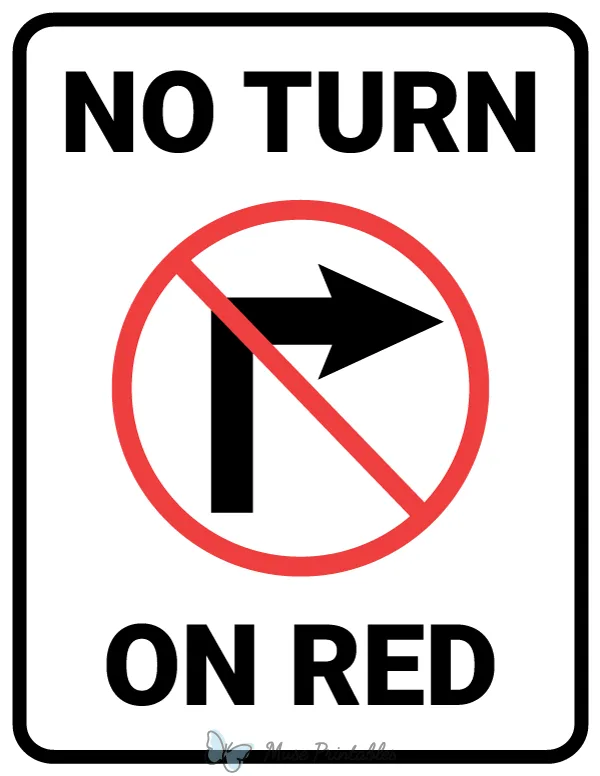
Overlooking signage is another trap. A "No Turn on Red 7 AM to 7 PM" sign can be easy to miss at a busy intersection. If you make a right on red during restricted hours, you get a ticket the same as if you ran a full red light.
Failure to yield to pedestrians is the most dangerous mistake. Florida law gives pedestrians the right of way at crosswalks. If you start your turn and a pedestrian is even one step into the crosswalk, you must stop and wait.
Tickets for failure to yield carry heavy fines and potentially two points.
Florida's Law vs. Other States: What Out-of-State Drivers Need to Know
If you're visiting Florida from another state, you might be used to different rules. Some states ban right on red entirely in certain cities. New York City and Washington D.C. are well known for this.
In Florida, right on red is permitted statewide unless posted otherwise.
Other states require a minimum duration of stop. In Florida, there's no set timer. You just need a bona fide stop.
That's a difference many out-of-state drivers miss.
Some states also have different stopping positions. A driver from California may be used to stopping at a specific line that's farther back. Florida's rule is to stop before the crosswalk or stop bar, whichever is first.
That's standard in most states, but the specific placement of the stop bar varies.
If you're moving to Florida, your driving habits may need adjustments. Other state-specific regulations you may encounter include rules about signal devices or the requirements for carrying proper documentation. But for right on red, remember: complete stop, yield, and obey signage.
That's all Florida asks.
When You Should Talk to a Traffic Attorney or Take Defensive Driving
Most right on red tickets are straightforward. You can pay the fine and move on. But there are times when a traffic attorney makes sense.
If you already have points on your license, another violation could push you toward suspension. An attorney can negotiate for a different charge with zero points. They may get the ticket reduced to a non-moving violation, which avoids the insurance hike.
Attorney fees vary. Expect to pay $100 to $300 for simple representation. Compare that to the cost of three years of higher insurance premiums.
The math often favors hiring one.
If the ticket was issued by a red light camera, you can contest it yourself. Review the photos online. If the evidence is weak, ask for a hearing.
Some drivers have successfully argued that the camera triggered before a full stop was possible.
Defensive driving courses offer a different path. In Florida, completing a course doesn't remove points, but it can qualify you for an insurance discount. Some insurers offer a 5 to 10 percent reduction for three years.
That can offset the cost of the ticket.
You may also choose to take a course voluntarily. It reinforces good habits, especially for out-of-state drivers adapting to Florida's rules.
Quick Reference: Florida Right on Red Rules at a Glance
Here's a cheat sheet for anyone driving in Florida.
| Rule | What To Do |
|---|---|
| Circular red light | Stop, yield, turn right |
| Red arrow | Stop, wait for green arrow |
| No Turn on Red sign | Stop, wait for green |
| Time-of-day restriction | Stop, wait until permitted |
| Crosswalk or stop bar | Stop before the white line |
| Pedestrian in crosswalk | Stop and wait until clear |
| Left on red (one-way to one-way) | Stop, yield, turn left |
| Rolling stop | Not allowed; complete stop required |
| Points if ticketed | 3 points on driving record |
| Camera-issued ticket | $158 base plus fees; can contest |
Print this table. Keep it in your glove box. It covers every common scenario you'll encounter.
Frequently Asked Questions
How long must I stop before turning right on red in Florida?
There is no set timer. The law requires a complete stop with no forward motion. A brief, clear pause is enough.
If your wheels are still rolling, it's illegal.
Can I turn right on red in Florida if a red arrow is showing?
No. A red arrow prohibits any turn in that direction. You must wait for a green arrow or a full green light before proceeding.
Does a red light camera ticket for a rolling stop add points to my license?
No. Camera-issued tickets are civil violations, not moving violations. They carry a fine but do not add points to your driving record.
What should I do if I get a right on red ticket in Florida?
You can pay the fine, contest the ticket in court, or request a hearing. If the ticket was from a camera, review the evidence online first. For a moving violation, consider a traffic attorney if your record is at risk.
Are there intersections in Florida where right on red is banned permanently?
Yes. Many intersections have "No Turn on Red" signs, especially near schools, in tourist districts, and in pedestrian-heavy downtown areas. Some restrictions are time-based.
Always check for signage before turning.
Does Florida allow left turns on red?
Only from a one-way street onto another one-way street. You must come to a complete stop and yield to all traffic and pedestrians. Left on red is not allowed from a two-way street.