Florida’s license plate frame law and tag visibility requirements exist to keep your tags readable for law enforcement and toll cameras. Get it wrong and you risk a citation, even if your plate is technically valid.
Per Florida Statute 316.217, any frame or cover that obscures the plate’s numbers, letters, or state name is illegal. As of 2026, enforcement hasn’t changed: if a cop or camera can’t read it, you’re in violation.
Quick Answer
Florida license plate frame law and tag visibility requirements ban any frame that blocks letters, numbers, or the state name. Frames must not obscure the registration sticker. The plate must be fully visible day and night.
Violations can result in fines.
Why Tag Visibility Matters (And What Happens If You Get It Wrong)
A blocked license plate isn’t just an aesthetic issue. Law enforcement and automated systems rely on clear tag visibility for identification, toll collection, and safety.
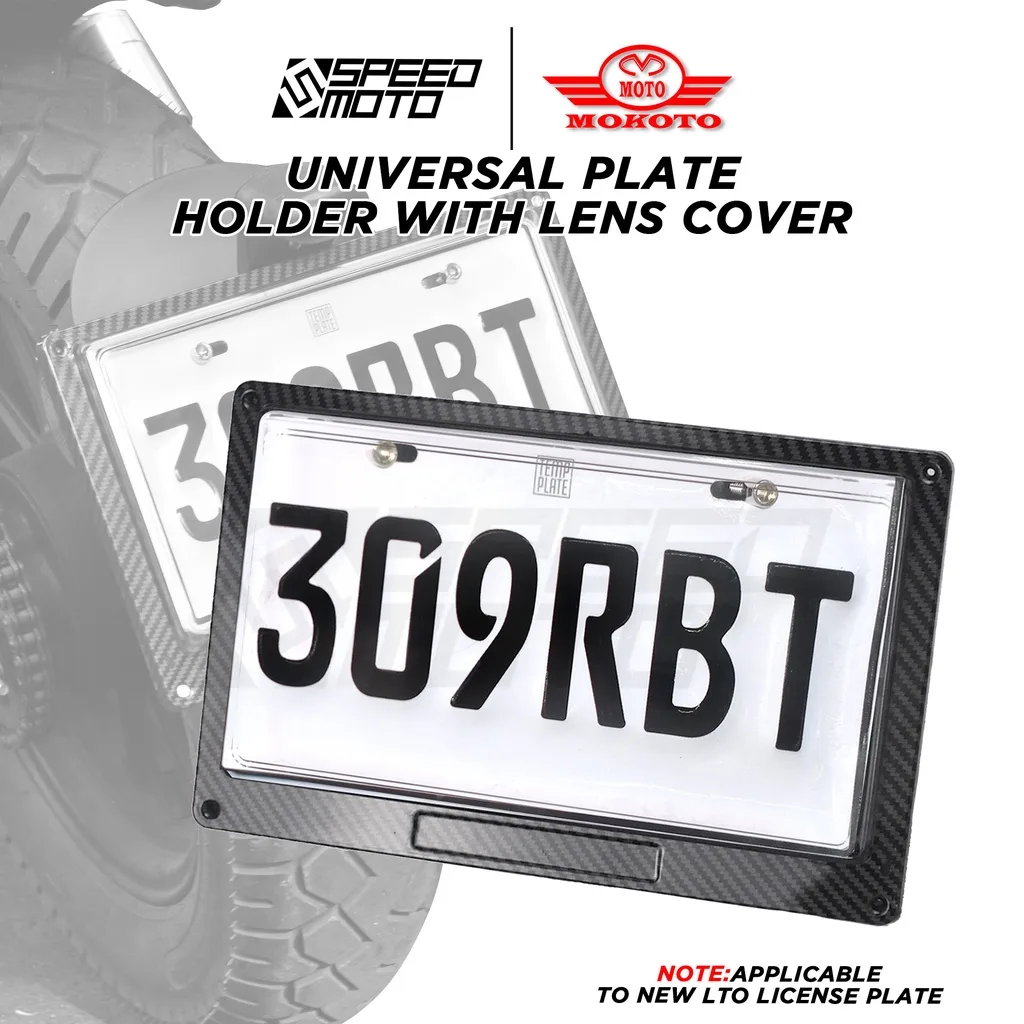
If your frame covers even part of a character, you could face a traffic stop. In Florida, this is a non-criminal infraction, but fines typically range from $50 to $100 depending on the county. Worse, an obscured plate might delay you during a routine check or toll plaza.
The Exact Rules: What’s Legal and What’s Not in Florida
Florida Statute 316.217(1)(a) is the governing law. It states that a license plate must be securely fastened in a horizontal position, at least 12 inches from the ground, and free from any obstructions.
Here’s what that means in practice:
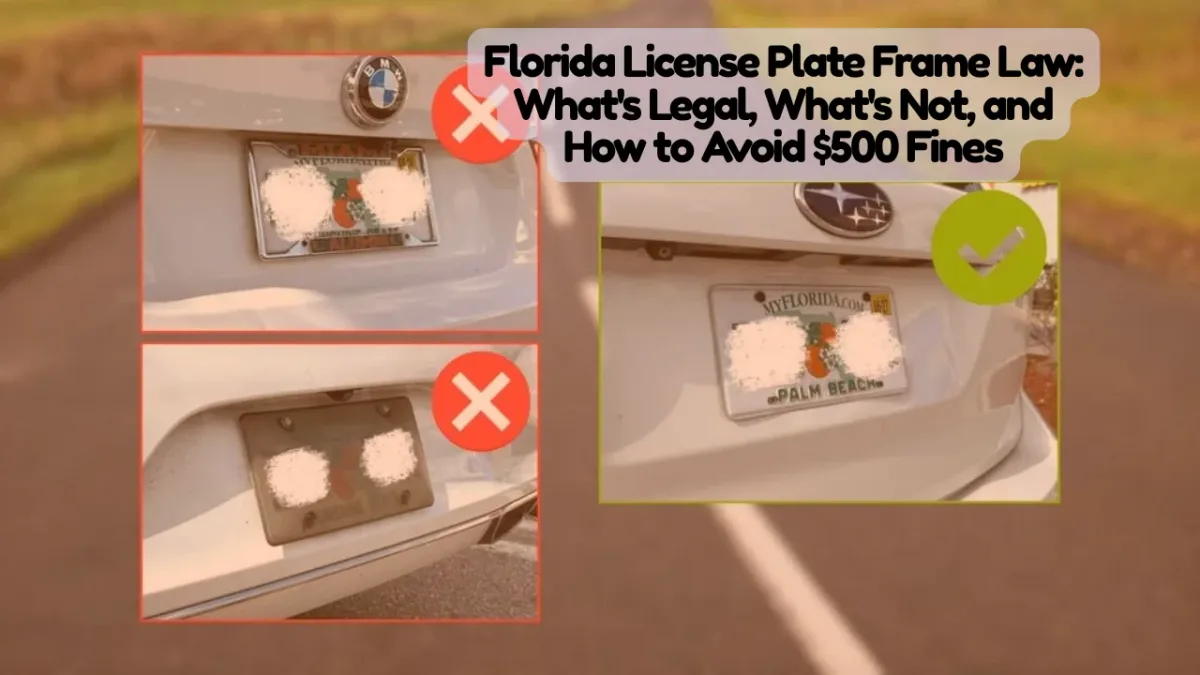
- Allowed: Frames that leave all characters, the state name, and registration stickers fully visible. Thin, non-reflective borders are generally fine.
- Not allowed: Frames that cover any part of the plate’s text, use dark tints, or have raised edges that cast shadows over the numbers.
- Gray area: Dealer-installed frames often push the limits. If the frame includes the dealership’s name, it’s usually fine as long as it doesn’t block the plate.
For the full legal text, refer to the Florida Senate’s official statutes.
How to Check If Your Frame Is Compliant
Start with a simple visual test. Stand 50 feet away from your vehicle in daylight and at night. If you can’t read every character on the plate clearly, your frame is likely illegal.
Next, check the physical fit:
- Measure the frame’s inner border. If it encroaches more than 1 inch into the plate’s display area, it’s probably non-compliant.
- Look for shadows or glare. Reflective or overly thick frames can create visibility issues, especially under streetlights.
- Verify the registration sticker. If the frame covers even part of the sticker, it’s a violation.
If you’re unsure, visit a Florida Department of Highway Safety and Motor Vehicles (FLHSMV) office. They can confirm compliance during a vehicle inspection.
Dealer Frames vs. Aftermarket Frames: What You Need to Know
Dealer frames are common on new cars, but they’re not automatically legal. Many include the dealership’s logo or contact info, which is fine as long as it doesn’t obscure the plate.
Aftermarket frames give you more customization, but they’re riskier. Cheap or poorly designed frames often block critical parts of the plate. If you’re buying one, look for:
- Thin borders: Less than 1 inch of frame overlap.
- Non-reflective materials: Avoid chrome or mirrored finishes that can cause glare.
- Open design: Frames with cutouts for the state name or registration sticker are safer.
Common Mistakes That Get Florida Drivers Pulled Over
The most frequent violation is a frame that covers the registration sticker. Even a small overlap can trigger a citation.
Another common issue is using a frame with a dark or reflective background. These can make the plate hard to read at night or under certain lighting conditions.
Some drivers assume that as long as the numbers are visible, the frame is legal. But Florida law requires the entire plate, including the state name and any stickers, to be unobstructed.
Step-by-Step: How to Install a Frame Without Breaking the Law
Start by removing any existing frame. Check the plate for damage or wear that might affect visibility.
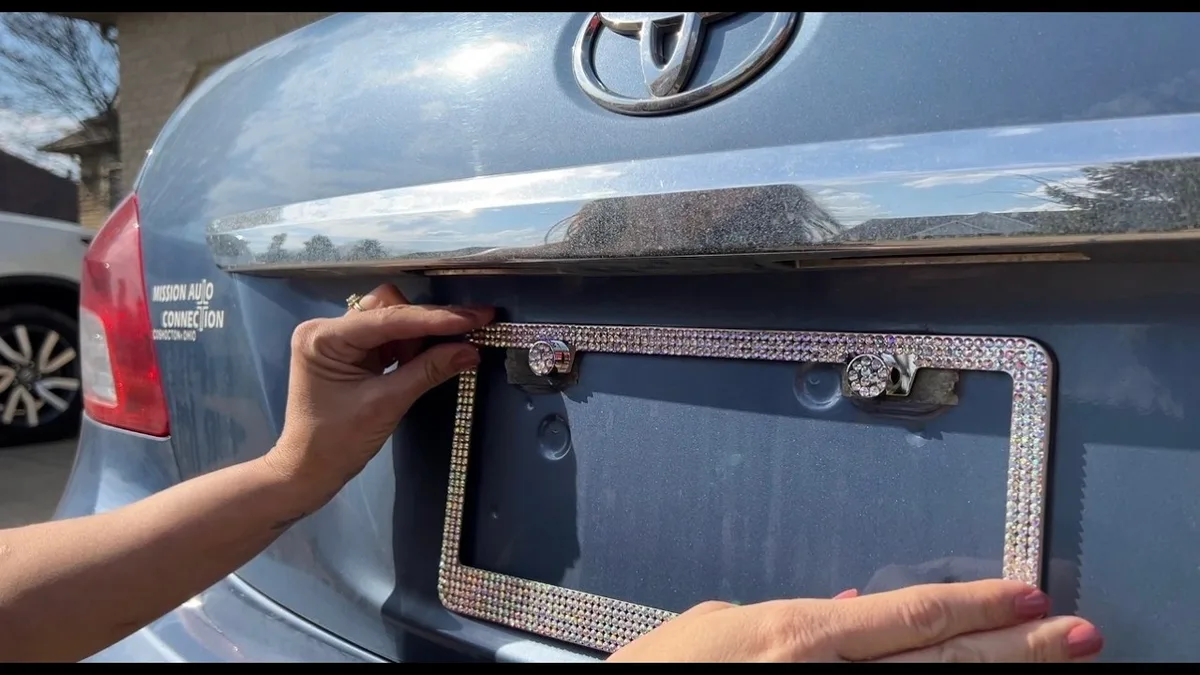
Position the new frame so it doesn’t cover any part of the plate’s text or stickers. The frame’s inner edge should stay at least 1 inch away from the plate’s characters.
Secure the frame tightly to prevent it from shifting. Loose frames can move and block the plate over time.
What to Do If You Get a Citation for an Illegal Frame
First, review the citation details. It will specify the exact violation, such as an obstructed plate or improper frame.
You have a few options. Pay the fine, which is usually the quickest resolution. Or, fix the issue and request a dismissal.
If you believe the citation was a mistake, you can contest it in court. Bring photos of your plate and frame to show compliance.
Florida’s Tag Visibility Rules for Special Cases
Trucks and trailers often have larger plates. The same visibility rules apply, but the frame size may differ.
For motorcycles, the plate is smaller. Frames must still leave all characters and the state name fully visible.
Temporary paper tags must be displayed in the rear window. No frame is allowed, as it would obscure the tag.
Where to Find the Official Florida Statutes and Enforcement Details
The Florida Senate website hosts the full text of Statute 316.217. This is the primary source for legal requirements.
For enforcement details, check with your local FLHSMV office. They can clarify how the law is applied in your area.
The Florida Highway Patrol also provides guidance on vehicle equipment standards.
Frequently Asked Questions
Are license plate frames legal in Florida?
Yes, but only if they don’t obscure any part of the plate. The frame must leave all letters, numbers, the state name, and registration stickers fully visible.
Can you get pulled over for a license plate frame in Florida?
Absolutely. If a frame blocks any part of the plate, law enforcement can stop you. The violation is typically a non-criminal infraction with a fine.
What’s the maximum frame size allowed in Florida?
There’s no explicit size limit, but the frame can’t cover any part of the plate. A safe rule is to keep the inner border at least 1 inch away from the plate’s edges.
Do dealer frames count as legal in Florida?
Dealer frames are legal if they don’t obstruct the plate. Many are designed to comply, but some may still cover the registration sticker or state name.
Is a tinted license plate cover legal in Florida?
No. Tinted covers reduce visibility, especially at night. Florida law requires the plate to be clearly readable at all times.
What happens if my frame blocks the registration sticker?
You’ll likely get a citation. The sticker must be fully visible, so adjust or remove the frame if it covers any part of it.