ByMax Lee
Best Pressure Washer PSI for Cars: Top Picks for Safe, Powerful Cleaning in 2026
Best Pressure Washer PSI for Cars: Top Picks for Safe, Powerful Cleaning in 2026
Washing a car with a pressure washer can turn a Saturday chore into a satisfying fifteen-minute job—but only if the pressure hitting your paint sits in the right window. Crank the PSI too high and you risk etching the clear coat or peeling trim. Dial it too low and you are simply misting the dirt.
This guide explains the specific PSI range that is safe for automotive paint, why flow rate (GPM) matters just as much, how different nozzles change the risk level, and which machines deliver the most useful balance for driveway detailing in 2026. For more on this, see our guide on bmw car wash guide safe effective cleaning tips.
What PSI Is Really Safe for Car Paint?
The industry consensus from most detailing professionals and automotive detailing best practices is clear: car paint should be washed with a pressure somewhere between 1,200 and 1,900 PSI.
At this level the water stream is forceful enough to remove loose dirt, road film, and bug residue without being strong enough to abrade the clear coat. Most corded electric washers live in this range, and they remain the most popular choice for home enthusiasts for a reason.
The Safe Zone (1,200–1,900 PSI)
A machine in this band gives you enough cleaning power to strip traffic film and rinse away soap quickly. The risk of paint damage is very low as long as you keep the nozzle at least 12 inches from the panel and avoid holding it in one spot.
Many top-rated units land around 1,500–1,800 PSI with a decent GPM. This is the sweet spot. For a full breakdown of what happens at every PSI level, check out our detailed psi guide.
The Danger Zone (2,500+ PSI)
Once you cross 2,500 PSI, the water jet can easily slice through clear coat, push water past weather seals, or delaminate paint edges. Washers at this level—like the 4,800–5,000 PSI models marketed for patios and driveways—are industrial tools. According to the International Carwash Association, pressures above 2,500 PSI are typically reserved for heavy-duty cleaning tasks and are not recommended for automotive paint.
If you already own a high-PSI machine and need to wash a car, you must set the unloader valve to the lowest pressure, fit a 40° nozzle, and stand three feet back. For routine car maintenance, a dedicated automotive washer in the safer range is a smarter purchase.
Why GPM (Flow Rate) Is Just as Important
PSI gets all the attention, but Gallons Per Minute (GPM) is what actually moves dirt off the surface. Think of PSI as the force of the jet and GPM as the volume of water removing the debris.
The standard metric for cleaning power is Cleaning Units: PSI x GPM. A machine with 1,500 PSI and 1.8 GPM (2,700 CUs) will rinse a car faster than one with 2,500 PSI and 1.2 GPM (3,000 CUs—not enough volume). For automotive use, a flow rate of at least 1.4–1.8 GPM is ideal. It shortens the rinse time and reduces the need to blast the paint at close range.
In practice, a higher GPM means you can rinse soap and grime more efficiently, which is especially useful for larger vehicles like SUVs and trucks. A common mistake is assuming that higher PSI alone will compensate for low GPM, but this often leads to holding the nozzle too close to the surface, increasing the risk of damage.
Nozzle Guide: How Spray Angles Change the Risk
The nozzle angle directly controls how much of the PSI hits a single square inch of paint. Choosing the wrong tip is the fastest way to damage a finish.
Nozzle Color Angle Best Use Risk to Paint
Red 0° Stripping paint, concrete cleaning Extremely high – never use on a car
Yellow 15° Tough mud, tires, wheels High – keep off body panels
White 25° Wheel wells, grilles, undercarriage Moderate – can etch paint if held close
Green 40° Car body panels, rinsing soap Low – the safest choice for paint
Black Low-pressure Applying detergent None – designed for chemical application
This makes choosing the safest nozzle angle for clear coat absolutely critical for anyone washing their own car.
Nozzle Distance and Technique
Even with the correct nozzle, maintaining the right distance from the surface is crucial. For a 40° nozzle, keep the wand at least 12–18 inches away from the paint. Holding it closer concentrates the pressure, increasing the risk of damage. For tougher areas like wheel wells or grilles, you can move slightly closer, but always keep the nozzle moving to avoid focusing the stream on one spot.
Top Picks for Safe Car Washing
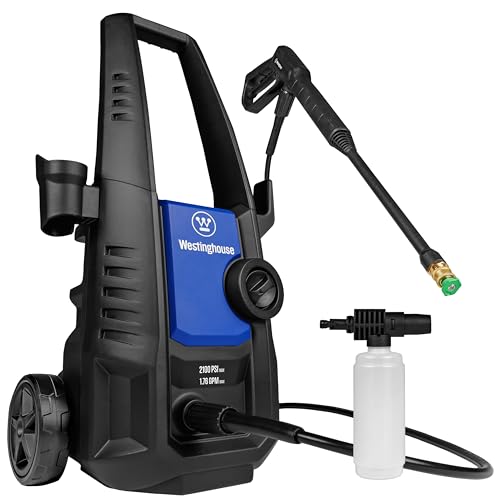
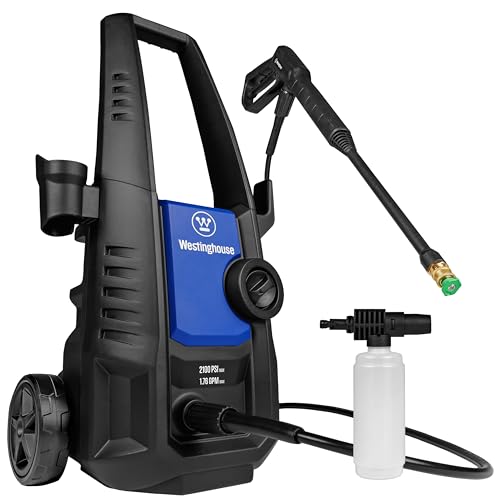
Westinghouse ePX3050 – The All-Arounder (2,100 PSI / 1.76 GPM)
The Westinghouse sits at the upper boundary of the safe car-washing range, but it works well because of its strong GPM. The 1.76 gallons-per-minute flow helps flush away grime without needing to blast the paint at close range.
The unit weighs only 17 pounds, so you can move around the car comfortably. The included foam cannon applies a thick layer of pre-soak, letting the detergent loosen dirt before the pressure stream touches the paint. For best results, pair this washer with a pH-neutral foam cannon soap to ensure streak-free cleaning and optimal lubrication.
What to watch out for: At 2,100 PSI you must stick to the 40° nozzle on body panels. Never switch to the 25° or 0° tip on paint. Spend some time understanding the foam cannon's mechanism to get the ideal soap-to-water ratio before your first wash.

Westinghouse ePX3050 balances pressure and flow for efficient automotive cleaning.
MZK 2,600 PSI – High Power, High Caution
The MZK delivers 2,600 PSI, which is firmly in the “needs respect” zone for automotive paint. At this pressure you can strip clear coat in a heartbeat if the nozzle touches the panel. The anti-tipping base keeps the unit stable on the ground, but the real safety measure is distance: work from 18–24 inches away and let the foam cannon do the chemical lifting.
This washer suits someone who cleans a truck or SUV with heavy caked-on mud, rather than a weekend show car.
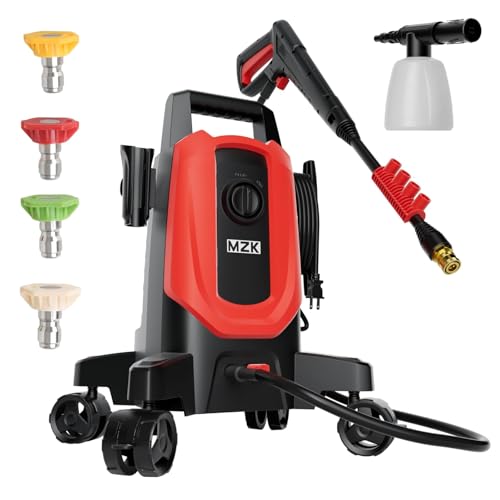
A 2,600 PSI washer requires a wider spray angle and greater distance to protect clear coat.
BAYOTAK 4,800/5,000 PSI – For Concrete, Not Cars
Pressure washers in the 4,800–5,000 PSI range, like the BAYOTAK models and the generic high-PSI cleaners, are designed to strip paint from concrete, clean heavy equipment, and remove stains from masonry. Using one on a car is gambling with the finish.
If you already own one, you can reduce the risk by setting the pressure regulator to its lowest setting, using a 40° nozzle, and standing three feet from the paint. But for regular car washing, a dedicated machine in the 1,500–2,100 PSI range is the safer investment.

4,800 PSI washers are built for patios and driveways, not automotive paint.

High-flow cleaners like this deliver impressive volume but excessive pressure for paint.
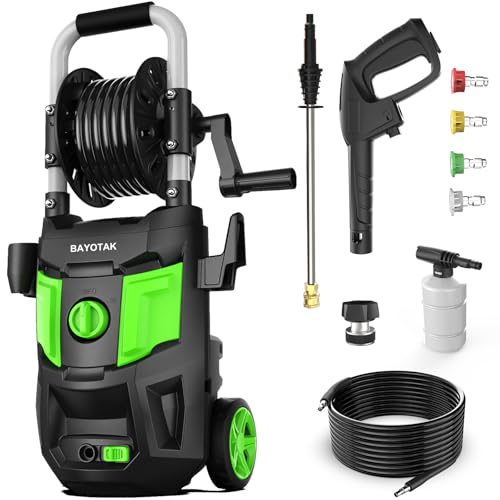
Always confirm the nozzle angle before using a high-PSI machine on any vehicle.
Pircaath 600 PSI Cordless – The Safe Touch-Up Tool
With only 600 PSI, the Pircaath is completely paint-safe. It cannot dent panels, force water past seals, or lift clear coat. It is ideal for apartment dwellers who lack a hose connection or for quickly rinsing bugs off the front bumper between proper washes.
The trade-off is battery life. You get about fifteen minutes of trigger time from the 21V battery, which is enough for a basic rinse on a small sedan. Plan your wash in two passes: one battery for the soap dwell, one for the rinse. You can pair this tool with rinsing techniques for minimal water use to stretch the charge further.
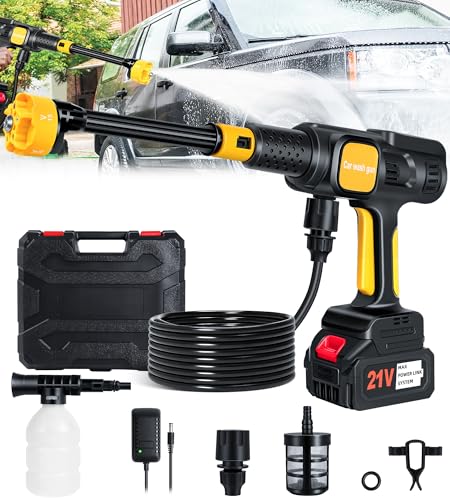
A cordless unit at 600 PSI is completely safe for paint but limited in runtime for full washes.
Pressure Washer Types Compared
| Type | PSI Range | GPM Range | Best For | Portability | Runtime | Paint Safety |
|---|---|---|---|---|---|---|
| Corded Electric | 1,200–2,100 | 1.2–1.8 | Full car washes, regular detailing | Limited | Unlimited | High |
| Cordless Battery | 400–800 | 0.4–0.8 | Quick rinses, touch-ups, small areas | High | 10–20 minutes | Very High |
| Gas-Powered | 2,500–4,000 | 1.8–4.0 | Heavy-duty cleaning, driveways | Moderate | 1–2 hours | Low (with caution) |
Best Accessories for Car Detailing
5-in-1 Pressure Washer Gun & Nozzles
If your stock wand feels flimsy or limits your options, a multi-tip gun is a practical upgrade. A 5-in-1 gun with built-in spray patterns lets you switch from a wide fan for rinsing soap to a concentrated jet for tires without pausing to swap tips. Most models include standard M22-14 and M22-15 adapters, making them compatible with the majority of residential pressure washers.
The foam cannons bundled with these kits can vary in quality, so check the cup size and nozzle adjustability if you want thick, clingy suds.

A versatile 5-in-1 gun simplifies switching between cleaning patterns during a wash.
Xaxuqtu Turbo Nozzle
The Xaxuqtu turbo nozzle spins the water into a tight 360° rotating jet. It concentrates the force into a small, fast-moving spot that is excellent for blasting dried bugs off the grille and scrubbing crud from tires and wheels.
Do not use this nozzle on painted body panels. The spinning jet can burn a visible ring into the clear coat if held in place. Reserve it for the grille, wheels, wheel wells, and the undercarriage.
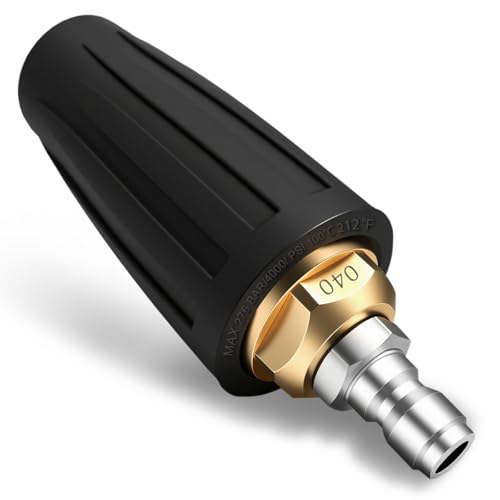
The turbo rotating nozzle creates a concentrated cleaning action best reserved for tires and grilles.
FREEYOU 40" Radiator Cleaning Wand
If you maintain your own vehicle, this wand is a game-changer for flushing out the A/C condenser and radiator without bending the delicate cooling fins. The 40-inch reach lets you access deeply buried radiators without disassembling the front end. The 25° fan tip provides a wide enough spray to cover the core without damaging the fins.
This is a useful tool to add if your regular detailing routine includes maintaining the engine bay's condition.

The radiator wand safely flushes debris from A/C coils without damaging the cooling fins.
How to Safely Pressure Wash Your Car – Step by Step
Even with the perfect PSI and nozzle, technique determines whether you finish with a clean car or a damaged one.
Pre-rinse. Knock off loose dirt using a 40° nozzle held about two feet from the surface. Work from the roof down.
Foam soak. Fill the foam cannon with a pH-neutral car soap. Cover the vehicle completely and let the foam dwell for 3–5 minutes. Don't let it dry in the sun.
Hand wash. Use a microfiber wash mitt and a bucket of soapy water. Wash from top to bottom, rinsing the mitt frequently. This step removes the contaminants the foam alone couldn't lift. The quality of the soap plays a major role here—using the right vehicle soap directly affects the lubricity during the contact stage.
Pressure rinse. Switch to the 40° nozzle and rinse all soap off the car. Keep the nozzle moving and maintain a 12-inch distance.
Dry. Blot the surface with a clean microfiber drying towel or use a dedicated car dryer to prevent water spots.
Protect. The best time to lock in a deep gloss is right after a clean wash. Look into protecting the fresh paint finish afterward with a wax or sealant for long-term protection.
Pre-Wash Considerations
Before you begin, ensure your car is cool to the touch, especially if it has been parked in direct sunlight. Washing a hot surface can cause soap to dry too quickly, leading to streaks and water spots. Additionally, if your vehicle has sensitive paint, such as black or dark-colored finishes, take extra care to avoid swirl marks by using a high-quality microfiber mitt and a grit guard in your wash bucket.
Cordless vs Corded: Which Is Better for Car Care?
Corded washers in the 1,200–2,100 PSI range offer unlimited runtime and consistent water pressure. They are the best choice for a full detail, especially if your car has heavy road grime or dried mud. The main downside is managing the power cord and extension cord around a wet car.
Cordless washers around 600 PSI are portable and safe for paint, but they lack the sustained power for a deep clean. They work best for quick touch-ups, rinsing light dust, or applying a foam pre-soak before a bucket wash. Battery runtime typically limits you to under twenty minutes of continuous spray.
If you can only own one machine, buy a corded electric washer in the safe PSI range. If you already have a corded washer for the house, a cordless unit is a convenient second tool for quick bug removal.
Maintenance and Longevity Tips for Your Pressure Washer
To extend the life of your pressure washer and ensure consistent performance, follow these maintenance tips:
- Flush the system after each use: Run clean water through the pump for 1–2 minutes to remove any detergent or debris. This prevents clogs and corrosion.
- Store in a dry place: Keep your washer in a garage or shed to protect it from freezing temperatures, which can damage the pump and hoses.
- Inspect hoses and connections: Check for leaks or wear before each use. Replace damaged hoses immediately to avoid pressure loss or bursts.
- Use the right detergent: Only use soaps designed for pressure washers. Household detergents can damage the pump seals over time.
- Winterize if needed: If you live in a cold climate, drain all water from the system and add a pump protector fluid before storing for the winter.
Frequently Asked Questions
What PSI should I look for in a car-safe pressure washer? Aim for a maximum pressure between 1,200 and 1,900 PSI. This range is forceful enough to remove dirt without damaging the clear coat. Models above 2,000 PSI can still be used safely, but they require more careful technique and nozzle discipline.
Will a 2,000 PSI pressure washer damage my paint? It can, depending on how you use it. With a 40° nozzle held at a proper distance, it is safe. With a 0° or 15° nozzle held close, it will strip paint. The tool itself is not the danger—the nozzle angle and distance determine the risk.
Is higher PSI better for washing a car? No. High PSI without matching GPM means you are hitting the paint with a focused stream that can etch the surface. A balanced machine with 1,500 PSI and 1.5 GPM will clean faster and safer than a 2,500 PSI unit with low flow.
What is the best nozzle for car paint? The 40° (green) nozzle is the safest for painted surfaces. It spreads the pressure over a wide area, significantly reducing the force per square inch. Use the 25° nozzle only on tires and wheel wells.
Are cordless pressure washers effective for cars? For light dust and quick bug removal, yes. The low pressure is paint-safe and the portability is convenient. For a deep clean of a heavily soiled vehicle, a corded machine with higher PSI and GPM will do a faster and more thorough job.
Can I use a turbo nozzle on my car's paint? You should avoid it. Turbo nozzles create a spinning, concentrated jet that can burn the clear coat easily. Use them strictly on the grille, wheels, and undercarriage where tough grime builds up, not on broad body panels.
How often should I pressure wash my car? For most vehicles, a thorough pressure wash every 2–4 weeks is ideal to prevent dirt buildup and protect the paint. If you drive frequently on dusty or salted roads, consider washing weekly. Always follow up with a hand wash and wax for optimal protection.
Can I use a pressure washer on a car with a ceramic coating? Yes, but with extra caution. Ceramic coatings are durable, but high pressure or incorrect nozzles can still damage them. Stick to the 40° nozzle, maintain a safe distance, and avoid holding the spray in one spot. A pH-neutral soap is also recommended to preserve the coating’s hydrophobic properties.
Conclusion
Choosing the right pressure washer for cars comes down to understanding the safe pressure window and respecting the role of water volume and nozzle selection. The best tools for your paint live in the 1,200–2,100 PSI range and deliver a GPM of at least 1.4.
Stick with a 40° nozzle, keep your distance, and always pair the machine with a pH-neutral car shampoo. The foam cannon and the two-bucket routine are your allies in keeping the finish safe.
Avoid the temptation of high-PSI machines that are rated for concrete. For your car, a well-balanced electric washer with the right accessories will give you a deeper clean than any garden hose without adding risk to your paint. If you also clean driveways and patios, you can manage a single high-PSI machine for both tasks, but only after you have internalized the nozzle discipline it takes to protect the car. Pick a washer that fits your washing habits, follow the technique steps above, and your paint will reward you with a glossy, scratch-free finish every time.