Black Friday deals are live on Amazon · limited-time discounts, grab them before they’re gone
Grab the deals

ByMax Lee
How to Start a Mobile Car Wash Business: Ultimate Guide to Success
A mobile car wash brings professional cleaning services to a customer’s home, workplace, apartment complex, or fleet yard. Instead of paying for a permanent wash site, you travel to the vehicle with the equipment, water, cleaning products, and skills needed to complete the job.
The model can be attractive because it offers lower fixed overhead than a traditional car wash and gives customers something valuable: convenience. However, success depends on more than buying a pressure washer and posting on social media. You must understand wastewater rules, price jobs profitably, protect customers’ vehicles, manage travel time, and deliver a consistent experience. You can also read our guide on how to keep a black car clean between washes.
This guide explains how to start a mobile car wash business in 2026, from validating demand and choosing equipment to registering the business, setting prices, finding customers, and scaling operations.
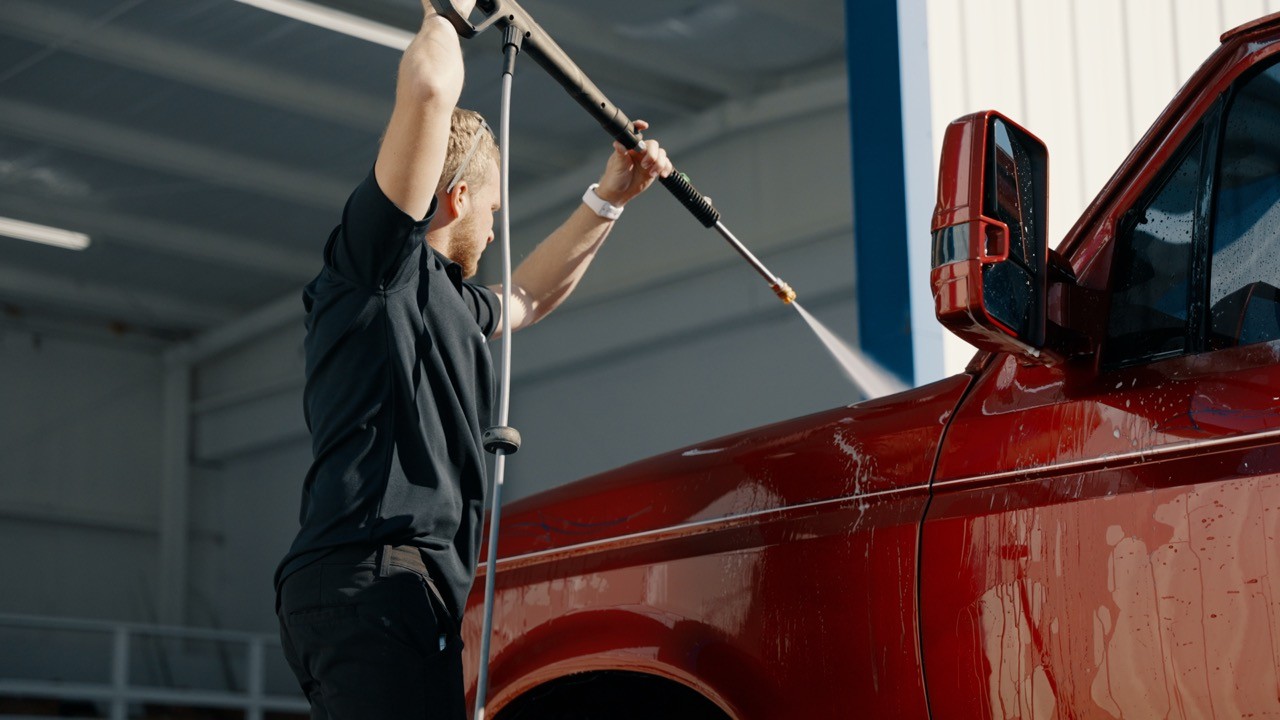
Mobile washing succeeds when professional equipment is combined with a reliable, repeatable process.
Credit: fieldd.co

Credit: www.youtube.com
What Is a Mobile Car Wash Business?
A mobile car wash is a vehicle-cleaning business that operates at the customer’s location rather than from a fixed wash tunnel or detailing shop. Depending on your service model, you may clean:
- Exterior paint and bodywork
- Wheels, tires, and wheel wells
- Windows and mirrors
- Floor mats, carpets, and upholstery
- Dashboards and interior plastics
- Pet hair, stains, and odors
- Paint surfaces with wax, sealant, or light polishing
Some mobile operators use the customer’s water and electricity. Others carry their own water tank, generator, pressure washer, vacuum, and wastewater-control equipment. Your choice affects startup cost, vehicle size, job capacity, and the locations you can serve. You can also read our guide on how to use drive through car wash.
A car wash generally focuses on efficient cleaning, while auto detailing is more labor-intensive and may include paint correction, ceramic coatings, deep interior restoration, and other specialist services. Decide which category you are entering before buying equipment or advertising.
Is a Mobile Car Wash a Good Business?
A mobile operation can work well when there is enough local demand and your pricing covers both cleaning time and travel time. The strongest opportunities are usually in areas with:
- Busy professionals who value convenience
- Apartment communities with limited washing facilities
- Office parks and business campuses
- Dealerships and independent vehicle sellers
- Rideshare and delivery drivers
- Corporate or municipal fleets
- Luxury-car owners seeking careful, at-home service
- Residential neighborhoods with multiple nearby customers
The main advantage is convenience. A customer can schedule a wash while working or staying at home instead of driving to a facility and waiting. You can also read our guide on how to put graco car seat back together after washing.
The main disadvantage is operational complexity. Weather, traffic, water access, parking restrictions, wastewater rules, equipment breakdowns, and cancellations can reduce your daily capacity. A common mistake is to calculate revenue from a full day of appointments without subtracting travel, setup, cleanup, supply use, payment fees, and unpaid gaps between jobs.
Advantages and trade-offs
| Potential advantage | Practical trade-off |
|---|---|
| Lower fixed overhead than a wash site | You must manage travel and vehicle costs |
| Flexible service area | Long distances reduce hourly earnings |
| Convenient for customers | Weather can disrupt the schedule |
| Opportunity for repeat bookings | Quality must remain consistent on every visit |
| Easy to add packages and maintenance plans | More services require more training and equipment |
| Can begin as a solo operation | The owner often performs sales, washing, driving, and bookkeeping |
Validate the Market Before Spending Money
Do not begin by purchasing the most expensive van or building a large equipment setup. First test whether people in your service area will pay for the services you plan to offer. You can also read our guide on do car washes damage paint black cars.
Research local demand
Search local listings, social media groups, neighborhood forums, and map results for existing mobile detailers and car washes. Record:
- Services offered
- Starting prices and package structure
- Service radius
- Customer reviews and recurring complaints
- Booking availability
- Whether businesses serve fleets or only private customers
Look for gaps rather than assuming low competition is automatically good. A lack of competitors may indicate weak demand, difficult regulations, or poor local economics.
Run a small pilot
A practical pilot might involve a limited number of paid jobs in one or two nearby neighborhoods. Use it to measure:
- Actual cleaning time per package
- Average travel and setup time
- Water and chemical consumption
- Which services customers request
- How often customers reschedule
- Whether customers accept your price
- Which types of vehicles are most profitable
Ask every pilot customer what made them book, what nearly stopped them, and what service they would purchase next. This information is more useful than guessing from national business advice. You can also read our guide on how to do a car wash for fundraising.
Choose a Clear Business Model
You can operate several types of mobile car wash businesses. Choosing one primary model makes your marketing and equipment decisions easier.
Residential maintenance washes
These are recurring exterior or interior-and-exterior services for individual vehicle owners. They are relatively easy to market and can produce repeat revenue when customers book every few weeks.
Premium mobile detailing
Premium services require more time and training but can command higher prices. They may include deep interior cleaning, stain treatment, decontamination, wax, sealant, or paint correction.
Do not advertise paint correction or ceramic coatings until you can perform them safely. Mistakes on paint, leather, trim, or electronic controls can create expensive claims.
Fleet and commercial accounts
Fleets can provide multiple vehicles at one location, reducing travel time per vehicle. Potential customers include:
- Real estate agencies
- Plumbing and electrical contractors
- Delivery companies
- Car dealerships
- Rental businesses
- Taxi and rideshare operators
- Company vehicle fleets
Commercial work may involve lower per-vehicle pricing, but the concentrated location and repeat schedule can improve productivity.
Water-conscious or low-water cleaning
Some locations do not permit unrestricted runoff into storm drains. Waterless or low-water methods may be useful for lightly soiled vehicles, but they are not appropriate for every condition. Heavy grit increases the risk of scratching if you use insufficient lubrication or an unsuitable technique.
Create a Simple Business Plan
Your first plan does not need to be a lengthy document. It should answer practical questions:
- Who is the ideal customer?
- Which geographic area will you serve?
- What services will you provide?
- What equipment and vehicle do those services require?
- How much does each job cost you to perform?
- How will customers book and pay?
- What permits, insurance, and environmental controls are required?
- How many jobs can you complete safely in a day?
- What monthly sales level covers your expenses?
- What will make customers choose you instead of a fixed wash?
Define a service radius before advertising. A smaller, dense territory is often more profitable than accepting jobs scattered across a large region. You can expand once your schedule is consistently full.
Register the Business and Check Local Rules
Requirements vary by city, county, state, and country. Before taking paid jobs, contact the relevant government offices and verify the rules that apply to your exact location and service method.
Possible requirements include:
- Business registration
- Trade-name or assumed-name registration
- Local business license
- Sales-tax registration
- Mobile vending or commercial activity permits
- Home-based business approval
- Commercial vehicle registration
- Water-use restrictions
- Wastewater discharge or stormwater compliance
- Rules for operating in apartment or commercial parking lots
A mobile car wash may not be allowed to let dirty wash water flow into a storm drain. The water can carry detergent, oil, brake dust, and other pollutants. Ask the local environmental or public-works department how to collect, contain, filter, or dispose of wastewater lawfully. The U.S. Environmental Protection Agency provides general environmental information, but local authorities control many site-specific requirements.
For general business formation and planning considerations, the U.S. Small Business Administration is a useful starting point. It does not replace advice from your local licensing office, accountant, or attorney.
Separate legal and tax decisions from equipment decisions
Choose a business structure with professional advice where appropriate. An accountant can help you understand bookkeeping, estimated taxes, sales tax, payroll, and deductible business expenses. Keep business and personal funds separate from the beginning, even if you are starting as a one-person operation.
Obtain the Right Insurance
Standard personal auto insurance may not cover business use, equipment, or damage to a customer’s vehicle. Ask an insurance professional about coverage such as:
- Commercial general liability
- Commercial auto insurance
- Garagekeepers or care-custody-and-control coverage
- Equipment coverage
- Workers’ compensation if you hire employees
- Business interruption coverage where appropriate
Coverage names and availability vary by jurisdiction. State-specific rules can differ substantially; for example, review the relevant requirements before relying on general assumptions about commercial liability coverage.
Also create a written damage and claims process. Photograph the vehicle before work begins, including existing scratches, dents, cracked glass, damaged trim, and warning lights. Have the customer acknowledge the pre-existing condition and confirm the services ordered.
Build an Equipment Setup That Matches Your Services
Buy equipment around your workflow, not around an impressive shopping list. A basic setup for exterior and light interior work may include:
| Equipment | Purpose and buying considerations |
|---|---|
| Pressure washer | Removes loose dirt efficiently; use appropriate pressure and safe nozzles |
| Water tank | Allows independent operation where customer water is unavailable |
| Pump and hose reels | Improve flow, reach, and setup speed |
| Wet/dry vacuum | Handles carpets, mats, seats, and liquid spills |
| Buckets and wash media | Supports controlled hand washing |
| Microfiber towels | Use separate, clean towels for paint, glass, wheels, and interiors |
| Wheel and tire brushes | Keep wheel tools separate from paint tools |
| Foam sprayer or foam cannon | Helps loosen dirt before contact washing |
| Interior brushes | Reach vents, seams, trim, and textured surfaces |
| Air blower or compressor | Removes water from mirrors, grilles, badges, and tight gaps |
| Generator or battery power station | Supplies power when the customer’s outlet is unavailable |
| Extension cords and hoses | Use outdoor-rated equipment and manage trip hazards |
| Chemicals and labeled bottles | Choose vehicle-safe products and follow dilution directions |
| Shade canopy | Protects the work area and reduces product drying |
| Wastewater-control equipment | Helps comply with local discharge requirements |
| Gloves, eye protection, and footwear | Reduce exposure and improve safety |
A high-capacity compressor can be useful for drying and interior work, but tank size alone does not determine performance. Compare the tool’s required airflow with the compressor’s delivered CFM and duty cycle; a portable air-capacity guide can help you understand those specifications.
Use paint-safe methods
The greatest preventable quality problem is dragging abrasive dirt across the paint. Use separate tools for wheels and bodywork, rinse or replace contaminated media, and avoid placing used towels on the ground.
For hand washing, follow a controlled process such as the two-bucket cleaning method. In practice, small process details—clean towel storage, frequent media rinsing, and working in manageable sections—often matter more than buying a more powerful machine.
Keep chemicals organized
Label every bottle with its contents and dilution ratio. Never mix chemicals unless the manufacturer specifically permits it. Store products upright, secure them during transport, and keep safety information available. Use the least aggressive product that will accomplish the job.
Select and Organize the Service Vehicle
A van, pickup, or enclosed trailer can work. Choose based on:
- Payload capacity
- Interior height and floor space
- Water-tank weight
- Fuel economy
- Maintenance history
- Weather protection
- Ability to secure chemicals and equipment
- Ease of loading and unloading
Water is heavy, and equipment weight adds up quickly. Confirm the vehicle’s payload rating before installing a tank, generator, shelving, and pressure washer. Keep heavy items low and secured so they cannot shift during braking.
Create a standard layout. Every item should have a designated location, and the same restocking checklist should be used after every job. This reduces wasted time and prevents arriving without a hose, towel, payment device, or required chemical.
A professional appearance also matters. Keep the vehicle clean, use clear business identification where permitted, and ensure any signage complies with local rules. If operating in a state or region with special vehicle standards, verify those requirements before modifying the vehicle; local specifications can differ, as shown by guidance on regional vehicle requirements.
Build Standard Operating Procedures
Written procedures make quality repeatable and help prevent damage. Create a checklist for each package.
Before the appointment
- Confirm the address, vehicle type, package, and price
- Check weather and access conditions
- Ask whether water and power are available
- Confirm parking permission and space requirements
- Tell the customer to remove valuables and personal items
- Load chemicals, towels, tools, payment equipment, and safety gear
- Photograph equipment and verify that everything is secured
At arrival
- Introduce yourself and confirm the requested service
- Inspect the vehicle in good lighting
- Photograph existing damage and unusual conditions
- Check for loose trim, failing clear coat, fragile decals, or aftermarket accessories
- Confirm the final price if the vehicle’s condition requires additional work
- Establish where wash water will go or be collected
During the job
- Work from cleaner areas toward dirtier areas
- Keep wheel tools separate from paint tools
- Avoid cleaning hot panels or working in direct sun when products may dry too quickly
- Use manufacturer-approved products on leather, screens, matte finishes, and sensitive trim
- Do not force water into door seals, electronics, speakers, or convertible-top mechanisms
- Protect the customer’s property and keep hoses away from walkways where possible
Before leaving
- Inspect the vehicle from multiple angles
- Check glass, mirrors, door jambs, wheels, and trim
- Remove equipment, towels, trash, and standing water
- Take completion photos
- Collect payment and provide care instructions
- Ask for a review only after confirming the customer is satisfied
- Record products used, time spent, and any follow-up needed
Set Prices That Produce a Profit
Avoid copying a competitor’s price without knowing your own costs. A useful pricing calculation is:
Required price = direct job costs + labor value + travel cost + overhead allocation + profit
Direct costs include chemicals, towels, water, payment processing, and disposable supplies. Labor value includes your time for loading, driving, setup, cleaning, drying, customer communication, and cleanup—not just the minutes spent washing.
Overhead may include:
- Vehicle payments and maintenance
- Fuel
- Insurance
- Licenses and accounting
- Phone and booking software
- Equipment replacement
- Advertising
- Storage
- Taxes
Use a clear package structure
Your menu might include:
| Package | Typical scope |
|---|---|
| Maintenance exterior | Pre-rinse, wash, wheels, tires, dry, exterior glass |
| Interior refresh | Vacuuming, mats, dusting, wipe-down, interior glass |
| Full clean | Exterior wash plus interior refresh |
| Deep interior | Detailed vacuuming, extraction where suitable, stain and pet-hair treatment |
| Protection upgrade | Wax, sealant, or another clearly defined protection service |
| Fleet maintenance | Repeated service for multiple vehicles at one location |
Use “starting at” pricing only when you explain the conditions that change the price. Vehicle size, condition, pet hair, excessive sand, stains, oxidation, and travel distance can all affect labor.
Set a minimum mobile service charge or service-area fee when a job is too small or too far away to be profitable. Offer discounts for multiple vehicles at one location rather than discounting every individual appointment.
Manage Water, Runoff, and Weather
Environmental compliance is part of operating professionally, not an optional upgrade. Before launching, determine:
- Whether wash water may enter a storm drain
- Whether you need drain covers, berms, a vacuum recovery system, or a collection tank
- Where collected wastewater may be disposed of
- Whether detergents must meet local requirements
- Whether the customer must provide an approved work area
Never assume that biodegradable soap makes unrestricted discharge legal. Product biodegradability does not eliminate dirt, oil, metals, or other contaminants in the runoff.
Weather planning is equally important. Establish policies for rain, lightning, high winds, freezing temperatures, extreme heat, and unsafe work surfaces. Offer rescheduling rather than promising a result that weather will immediately undo.
Set Up Booking, Payments, and Records
Customers should be able to understand and book your service without a long exchange of messages. A simple booking system should capture:
- Customer name and contact information
- Address and parking instructions
- Vehicle make, model, size, and condition
- Selected package
- Requested date and arrival window
- Access to water and electricity
- Notes about pets, stains, or special finishes
- Cancellation and weather policies
Send an appointment confirmation and reminder. Use an arrival window instead of promising an exact minute when traffic and prior jobs can cause delays.
Accept convenient payment methods, issue receipts, and reconcile transactions regularly. Track revenue and costs by service type so you know whether a package is genuinely profitable.
Market the Business Locally
Your marketing should sell an outcome, not just a list of chemicals and equipment. Emphasize benefits such as:
- No trip to a car wash
- Service at home or work
- Clear appointment windows
- Careful handling of delicate interiors
- Recurring maintenance plans
- Multi-vehicle household appointments
- Fleet service at one location
Effective early marketing channels
- A complete business profile on major map platforms
- Before-and-after photos taken with customer permission
- Local neighborhood groups
- Partnerships with apartment managers and offices
- Referral offers for existing customers
- Business cards or door hangers where permitted
- Direct outreach to small commercial fleets
- Follow-up messages for repeat maintenance
Do not use misleading “before” images, hide additional charges, or claim to remove damage that your service cannot safely correct. Accurate expectations generate better reviews and fewer disputes.
A useful local offer is specific and easy to understand, such as a first-service package for one vehicle within a defined area. Make the benefit clear and give the customer a straightforward way to book.
Increase Repeat Bookings
One-time washes require constant marketing. Repeat maintenance gives you a more predictable schedule and lowers the cost of acquiring each customer.
At the end of a successful appointment, suggest a realistic maintenance interval based on the customer’s driving conditions and vehicle use. You can offer:
- Every-two-week exterior maintenance
- Monthly interior-and-exterior service
- Seasonal deep cleaning
- Multi-vehicle household scheduling
- Fleet service days
- Pre-sale vehicle preparation
Do not lock customers into a membership before proving that you can deliver consistent service. Start with a simple recurring appointment option, then add subscriptions only when scheduling, payment, cancellation, and service capacity are reliable.
Protect the Business From Common Risks
Vehicle damage
Document pre-existing damage and do not promise that a wash will remove scratches, stains, oxidation, or permanent odors. Stop and explain the issue when a requested service could worsen the condition.
Theft and loss
Secure equipment in the vehicle, use inventory checks, and avoid leaving tools unattended in public areas. Vehicle security matters more as the equipment value increases; operators can also review practical theft-prevention measures when planning their work vehicle.
Road and site safety
Use cones or visible hose management where appropriate, keep walkways clear, and never create a trip hazard around customers or pedestrians. Drive conservatively when the vehicle is loaded. Guidance on safe roadside operation illustrates why visibility, speed, and positioning matter when operating around traffic.
Chemical exposure
Wear suitable gloves and eye protection, ventilate enclosed areas, and follow label instructions. Store products away from food, children, and incompatible chemicals.
Customer property
Ask customers to remove valuables before service. Keep keys, wallets, electronics, and other personal items in the same location where you found them, and report anything unusual rather than moving it unnecessarily.
Understand Your Break-Even Point
Calculate how many jobs you need each month to cover fixed expenses:
Break-even jobs = monthly fixed costs ÷ average contribution per job
Your contribution per job is the price minus variable costs such as chemicals, payment fees, fuel allocation, and disposable supplies. This calculation does not mean every job after break-even is pure profit; it simply shows the sales volume needed to cover recurring costs before owner compensation and taxes.
Track these figures weekly:
- Leads received
- Bookings completed
- Cancellation rate
- Average ticket
- Average job time
- Travel time
- Revenue per working hour
- Chemical and supply cost
- Repeat-booking rate
- Review volume and rating trends
If a package takes too long, raise the price, narrow its scope, improve the process, or remove it. More bookings do not help if each one loses money.
Common Mistakes to Avoid
- Buying a large vehicle before validating demand
- Underpricing because competitors advertise a low starting rate
- Ignoring travel and setup time
- Allowing runoff into storm drains without checking local rules
- Using the same dirty towel on wheels and paint
- Offering advanced paint correction without training
- Taking jobs outside a profitable service radius
- Failing to photograph pre-existing damage
- Mixing chemicals without checking compatibility
- Accepting more appointments than weather and daylight allow
- Relying only on one-time customers
- Treating bookkeeping and taxes as an afterthought
- Leaving equipment unsecured in the work vehicle
How Much Does It Cost to Start?
Startup costs vary widely because the business can begin with customer-supplied water and power or operate as a fully self-contained unit.
| Cost category | What changes the cost |
|---|---|
| Vehicle | Existing pickup, used van, enclosed trailer, or purpose-built vehicle |
| Pressure washer and pump | Electric or gas power, flow rate, durability, and portability |
| Water system | Tank, pump, filtration, hoses, and recovery equipment |
| Vacuum and interior tools | Basic cleaning versus extraction and professional detailing |
| Generator or battery system | Required when customer power is unavailable |
| Towels and chemicals | Number of vehicles served and quality of products |
| Insurance | Coverage type, location, vehicle, and claims history |
| Licenses and permits | City, county, state, environmental, and business requirements |
| Branding and marketing | Vehicle graphics, website, booking tools, and local advertising |
| Working capital | Fuel, repairs, replacement supplies, and slow-weather periods |
A low-cost setup may work for testing a small local market, while a self-contained professional rig can require substantially more capital. Do not treat a generic startup range as a promise. Build your own budget from quotes, then keep cash available for repairs, insurance renewals, permit fees, and replacement equipment.
Frequently Asked Questions
Do I need a business license for a mobile car wash?
Often, yes, but the exact requirements depend on your location and how you operate. You may need a business registration, local license, tax registration, wastewater approval, or permission to work at particular properties. Contact your city, county, and environmental authorities before accepting paid jobs.
Can I use the customer’s water and electricity?
You can in some business models, provided the customer agrees and your equipment is compatible. A self-contained setup gives you more flexibility but adds weight, cost, maintenance, and water-management responsibilities.
How do I dispose of mobile car wash wastewater?
Follow local public-works or environmental rules. You may need to prevent runoff from entering storm drains, collect the water, filter it, or dispose of it at an approved location. Never assume that ordinary soap makes discharge acceptable.
What is the minimum equipment needed?
For a basic service, you need safe wash media, vehicle-safe chemicals, buckets, microfiber towels, a vacuum, wheel tools, hoses, water access, and a reliable way to transport everything. Add a pressure washer, water tank, generator, recovery system, or extractor as your service menu requires.
How should I price a mobile car wash?
Calculate labor, travel, supplies, payment fees, overhead, and profit. Set prices by vehicle size and condition where appropriate, and use a minimum service charge or travel fee for distant or small jobs.
Is a mobile car wash the same as auto detailing?
No. A wash generally removes surface dirt efficiently. Detailing can involve deeper interior cleaning, paint decontamination, polishing, stain extraction, or protective treatments. Advertise only the work you can perform safely and consistently.
How can I get my first customers?
Start within a compact service area. Use a map-based business profile, local community groups, referrals, partnerships with businesses, and clear before-and-after photos taken with permission. A simple introductory package can encourage first bookings, but do not discount so heavily that the work becomes unprofitable.
How many vehicles can one person clean in a day?
There is no universal number. It depends on package scope, vehicle condition, travel distance, weather, water setup, and cleanup time. Measure your actual job times during a pilot and schedule conservatively until your process is proven.
Should I offer memberships?
Recurring plans can improve predictable revenue, but only after you can deliver reliable appointments and consistent quality. Begin with scheduled maintenance visits and add formal memberships once cancellation, billing, and capacity controls are working.
Conclusion
Starting a mobile car wash business in 2026 is possible without a permanent wash site, but convenience alone does not guarantee success. The profitable operators usually combine a focused service area, clear packages, careful equipment choices, lawful wastewater handling, strong insurance, accurate pricing, and dependable customer communication.
Start with a small pilot instead of overspending. Measure the real time and cost of every job, document vehicle condition before work, refine your procedures, and build repeat service into the customer experience. Once demand is consistent and your numbers work, invest in better equipment, commercial accounts, additional staff, or a second service vehicle.
Your next practical step is to choose one target neighborhood, confirm local operating requirements, price three service packages from your actual costs, and schedule a limited number of paid test jobs.








