ByMax Lee
Kentucky Vehicle Registration: Step-by-Step Guide
Kentucky vehicle registration requirements catch many drivers off guard. The 6% motor vehicle usage tax and annual county property tax are the big surprises. If you just moved here or bought a used car, the paperwork feels messy.
Most folks expect a quick sticker swap, not a stack of forms.
As of 2026, the state requires minimum liability insurance of 25/50/25 before any County Clerk issues plates. That coverage standard blocks people who carry out-of-state policies. Here is the quick answer, then we will walk through each step.
Kentucky Vehicle Registration: Step-by-Step Guide
Quick Answer
Kentucky vehicle registration requires a title, proof of insurance, and ID. You must pay a 6% usage tax and county property tax. Plates are issued by the County Clerk's office.
New residents have 30 days to register. Online renewal works for existing tags.
Kentucky Vehicle Registration: What You Actually Need (And How to Avoid Mistakes)
The core of Kentucky vehicle registration is simple on paper. You need proof of ownership, state compliant insurance, and payment of taxes. The exceptions we cover below are where people get stuck.
- Vehicle title or manufacturer's certificate of origin
- Kentucky insurance policy with 25/50/25 minimums
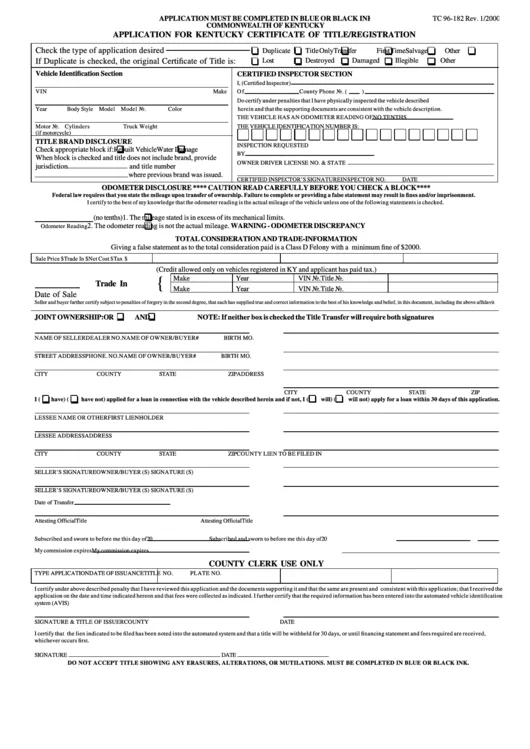
- Completed TC 96-182 form
- Driver's license or state ID
- VIN verification for out-of-state cars
If you've handled title transfer processes elsewhere, the Kentucky version feels similar. The big difference is the local County Clerk handles everything, not a central DMV.
Kentucky avoids no emissions testing rules that some states enforce. That saves you a trip to an inspection station.
| Document | Purpose |
|---|---|
| Title | Proof of ownership |
| TC 96-182 | Application for tag |
| Insurance card | Shows 25/50/25 coverage |
| ID | Confirms identity |
Why Kentucky’s Registration Rules Trip People Up
The 6% tax surprise catches most newcomers. Many expect a simple sales tax and nothing more.
The 6% tax surprise (and how to calculate it right)
The Motor Vehicle Usage Tax hits 6% of the NADA trade-in value or purchase price. Buyers often budget for the sticker price only. You pay this one time at registration.
Out-of-state vehicles: Temporary permits vs. full registration
New residents get a 30 day temporary permit for $5. After that, full registration is mandatory. The permit lets you drive while you gather documents.
Several states treat new resident deadlines in other states differently. Kentucky's 30 day window is strict.
Leased cars, salvage titles, and other exceptions
Leases need a power of attorney from the financing company. Salvage titles require a state police inspection first. Both add steps that catch people unprepared.
Kentucky's plate system is local, unlike the county based plate systems used out west. Your Clerk's office is your one stop.
Your Kentucky Registration Cheat Sheet (By Situation)
We broke this into the common paths you might be on. Pick the one that matches your case.
New Kentucky resident? Here’s your exact checklist
- Get KY insurance before visiting the Clerk
- Bring title, ID, and proof of insurance
- Pay 6% usage tax plus county property tax
- Grab a temp permit if plates are delayed
- Expect plates in the mail within 2 to 4 weeks
- Get KY insurance before visiting the Clerk
- Bring title, ID, and proof of insurance
- Pay 6% usage tax plus county property tax
- Grab a temp permit if plates are delayed
- Expect plates in the mail within 2 to 4 weeks
Buying from a private seller? Don’t skip these steps
- Seller signs the title over to you
- You obtain Kentucky insurance same day
- Clerk files TC 96-182 with the county
- You pay tax on the purchase price or NADA value
Leasing a car? The power of attorney you’ll need
- Request a POA from the leasing company
- Bring the lease agreement to the Clerk
- No 6% usage tax applies on leased units
- Plates still issue in your name at the county
Military or student? How to avoid double taxes
- Active duty stationed in KY stays exempt with home state tags
- Students may keep out-of-state registration while enrolled
- Always carry military or school ID as proof
Salvage or rebuilt vehicle? The inspection you can’t skip
- Schedule a KSP salvage inspection first
- Submit the certificate to the County Clerk
- Pay standard fees once cleared
Trailer or motorcycle? What’s different (and what’s not)
- Utility trailers under 2,000 lbs need no title, just an affidavit
- Motorcycles follow car rules with no emissions test
- Boat trailers over 2,000 lbs require a titled transfer
The local process feels old school, but you can compare it to online renewal portals used in other states. Kentucky still leans on in person visits for first timers.
Step-by-Step: How to Register Your Vehicle in Kentucky
Follow this workflow exactly. If/then logic applies based on your situation.
1. Gather These Documents (No Exceptions)
The Clerk will turn you away without these. Line them up before you leave home.
- Title or MCO for new vehicles
- Proof of Kentucky insurance, 25/50/25 minimum
- Valid driver's license or state ID
- TC 96-182 application form
- VIN verification if the car came from another state
2. Calculate Your Costs (Taxes, Fees, and Hidden Charges)
The 6% Motor Vehicle Usage Tax is based on NADA value or receipt. You can dispute the NADA number with a bill of sale.
Annual property tax varies by county, typically 1 to 2% of value. Registration runs $21 for passenger cars. Standard plates cost $5.
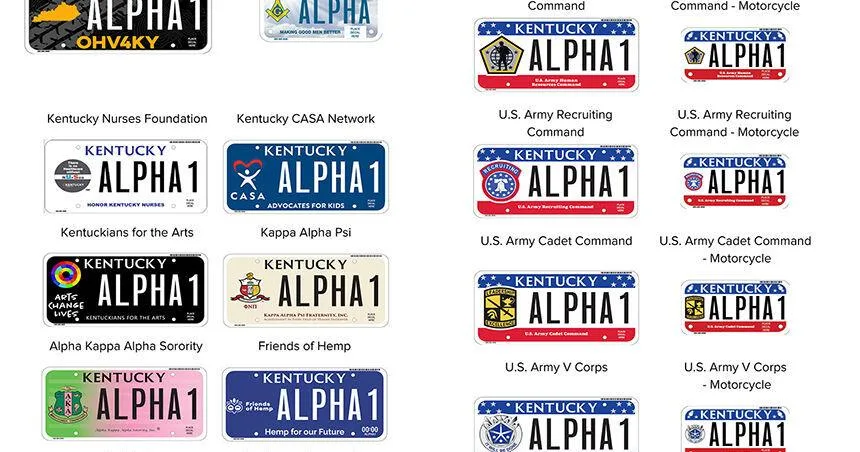
Specialty plates add $25 to $50 depending on the design. Late filing brings $10 to $50 penalties by county.
Fee structures differ from the age based fee schedules seen elsewhere. Per the Kentucky Transportation Cabinet, the state sets base fees but counties set tax rates.
3. Where to Go (And How to Skip the Line)
Your County Clerk's office is the only place for first time registration. Dealerships handle it for new car buyers and charge a fee.
Online renewal works only for existing tags, not first titles. Avoid the end of month rush if you can. Call ahead in rural counties with short hours.
4. What Happens Next?
You'll leave with a temporary permit or permanent plates same day. Mail tags take 2 to 4 weeks for new residents.
- Temporary permit costs $5 and lasts 30 days
- Update address at the Clerk within 10 days of moving
- Lost plates get replaced for a small duplicate fee

The Most Common Registration Mistakes (And How to Fix Them)
These are the snags we see most. Fix them early to avoid fines.
Missing the 6% tax deadline
People think the tax is quarterly. It is due at registration. File a waiver if the Clerk made an error.
Forgetting to transfer the title
Private sales stall when the seller never signed. Get a notarized bill of sale as backup. Visit the Clerk with both papers.
Using out-of-state insurance
Kentucky rejects policies from non compliant insurers. Switch to a KY licensed agent before you go. Keep the dec card in the car.
Leased cars without a power of attorney
The lessor must sign a POA. Without it, the Clerk refuses the file. Request it two weeks early.
Salvage titles without an inspection
Driving a rebuilt car before KSP clears it is illegal. Book the inspection first. Bring photos of the repair.
Trailers you didn’t know needed registration
Utility trailers get skipped by mistake. If it weighs over 2,000 lbs, title it. Small ones still need a tag and affidavit.
Kentucky vs. Neighboring States: What’s Different?
Kentucky’s registration process stands out in the region. The 6% usage tax and annual property tax are unique. Indiana and Ohio skip property tax on vehicles.
Tennessee charges sales tax but no annual levy.
| Requirement | Kentucky | Indiana | Ohio | Tennessee |
|---|---|---|---|---|
| Sales Tax | 6% | 7% | 5.75% | 7% |
| Property Tax | Yes | No | No | No |
| Emissions Testing | No | Some counties | No | No |
| Temporary Permit | $5 | $9.50 | $15 | $5 |
| Leased Vehicle Rule | POA required | Lease okay | Lease okay | Lease okay |
Why Kentucky’s tax structure costs more upfront
The 6% usage tax applies once at registration. Indiana and Ohio spread costs over time. Kentucky’s property tax adds another 1 to 2% yearly.
That double tax hits budgets hard.
Emissions testing: Kentucky’s advantage
Kentucky requires no emissions testing. Indiana mandates it in some counties. Ohio dropped testing in 2020.
Kentucky’s clean air rules focus on factories, not cars.
Temporary permits: Kentucky’s $5 deal
Kentucky’s 30 day permit costs $5. Indiana charges $9.50. Ohio asks $15.
Kentucky’s low fee helps new residents transition.
Military exemptions: Kentucky’s flexibility
Active duty stationed in Kentucky keep home state tags. Indiana and Ohio require local registration after 30 days. Kentucky’s rule eases military moves.
Special Cases: Military, Students, and Non-Residents
Kentucky cuts special breaks for certain groups. The rules change based on your status.
Active-duty military: How to keep your home-state registration
Service members stationed in Kentucky stay exempt from local taxes. You keep your home state tags and insurance. Bring your orders and military ID to the Clerk.
The exemption lasts as long as you’re stationed here.
College students: Temporary registration rules
Full time students from other states can keep out-of-state tags. You must show enrollment proof at the Clerk. The rule applies only while you’re enrolled.
Dropouts must register within 30 days.
Snowbirds and part-time residents: What counts as “residency”
Kentucky defines residency as living here 183 days a year. Snowbirds who split time must register if they cross that line. The Clerk checks utility bills and voter records.
Part timers often get caught unaware.
How to Renew Your Registration (Without the Stress)
Renewal is simpler than first time registration. You can do it online, in person, or by mail.
Online renewal: Step-by-step (and when it fails)
Visit the Kentucky Transportation Cabinet portal. Enter your plate number and last four of the VIN. Pay the fee with a credit card.
Print the temporary receipt. Permanent plates arrive in 7 to 10 days.
Online renewal fails if your insurance lapsed. It also rejects specialty plates. In person fixes both issues.
In-person renewal: What to bring (and how to avoid fees)
Bring your current registration, ID, and proof of insurance. The Clerk checks for unpaid property tax. Pay the fee and get a new sticker same day.
Skip the line by going mid month.
Late renewal penalties (and how to get them waived)
Late fees start at $10 and cap at $50. The Clerk waives them once per decade. Bring proof of hardship like a hospital bill.
Military deployments also qualify for waivers.
FAQs: The Questions Everyone Asks (But No One Answers Clearly)
Can I register a car without a title in Kentucky?
No. Kentucky requires a title or manufacturer’s certificate of origin before any plates are issued. Private sellers must sign the title over to you with a notarized bill of sale.
Dealerships handle the title transfer for new cars automatically. Lost titles need a duplicate from the prior state.
How long do I have to register a car after moving to Kentucky?
You have 30 days from your move date to visit the County Clerk. The state issues a $5 temporary permit to cover the gap while you gather papers. After 30 days, late fees start at $10 and climb to $50 by county.
Do I need a Kentucky driver’s license to register a car?
No. You can register with an out-of-state license if you are a new resident. You must get a Kentucky license within 30 days of establishing residency.
The Clerk checks your proof of address like a lease or utility bill. Military and students are exempt with proper ID.
What if my car is financed or leased?
Financed cars list the lienholder on the title and you keep a copy. Leased cars require a power of attorney from the lessor before the Clerk processes them. Both add paperwork but do not change the base registration fee you pay.
The lessor pays the usage tax on leases, not you.
Can I register a car online for the first time?
No. First time registration must be done in person at the County Clerk with paper documents. Online renewal works only for existing tags with clean insurance on file.
Dealerships can file new car paperwork electronically on your behalf.
What’s the penalty for driving with expired registration?
Fines range from $50 to $200 per stop. Police may tow the car if it is over 30 days expired and uninsured. The Clerk offers a one time waiver for first offenders with proof of hardship.
Repeat offenses lose the waiver and add court costs.
Your Kentucky Registration Decision Guide
Use this flowchart to pick your path. Each situation leads to a different set of steps.
First-time registration?
Start at the County Clerk with title, insurance, and ID. Pay the 6% tax and property tax. Get a temporary permit if plates are delayed.
Renewing?
Check if you qualify for online renewal. If not, visit the Clerk with current registration and insurance. Pay the fee and get a new sticker.
Moving from out of state?
Get Kentucky insurance first. Visit the Clerk within 30 days. Bring title, ID, and proof of insurance.
Pay the 6% tax and property tax.
Buying a used car?
The seller must sign the title over to you. Get Kentucky insurance same day. Visit the Clerk with the signed title and pay the tax.
Leasing?
Request a power of attorney from the lessor. Bring the lease agreement to the Clerk. Pay the registration fee but skip the 6% tax.