ByMax Lee
Kentucky Stop Sign Rules Explained
Wikimedia Commons / Bedford at en.wikipedia
Kentucky stop sign regulations exist to prevent crashes and keep traffic moving safely. If you don’t follow them, you risk a ticket, points on your license, or worse, a collision. The rules are clear, but many drivers still get them wrong.
Per Kentucky Revised Statutes (KRS) Chapter 189, every stop sign requires a full stop, not a rolling one. The Kentucky Driver’s Manual reinforces this, and law enforcement doesn’t hesitate to enforce it.
Quick Answer
Kentucky stop sign regulations require a complete stop at every stop sign. You must stop before the stop line or crosswalk. At all-way stops, the first vehicle to stop goes first.
Violations can cost you fines and points on your license.
Why Kentucky Stop Sign Rules Matter (And What Happens If You Get It Wrong)
Stop signs aren’t suggestions. In Kentucky, they’re legally binding traffic control devices designed to prevent intersection collisions. Ignoring them leads to citations, higher insurance rates, and increased crash risks.
As of 2026, Kentucky State Police report that stop sign violations are a top cause of intersection accidents. A single mistake can mean a $200+ fine and 3 points on your driving record. Worse, it can turn a routine drive into a life-changing event.
The Official Kentucky Stop Sign Rules (KRS & KYTC Standards)
Kentucky follows the national Manual on Uniform Traffic Control Devices (MUTCD), but state law adds specific enforcement details. Here’s what the Kentucky Transportation Cabinet (KYTC) and KRS Chapter 189 require:
- Full stop required: Your vehicle must come to a complete stop before the stop line, crosswalk, or intersection. Rolling stops are illegal.
- Octagonal shape, red color: All stop signs in Kentucky are red octagons with white lettering, per federal standards.
- Stop line markings: If a white stop line is painted on the road, you must stop before it. If not, stop before entering the crosswalk or intersection.
The Kentucky Driver’s Manual outlines these rules in detail. Violating them falls under KRS 189.330, which covers obedience to traffic control devices.
How to Legally Stop at a Stop Sign in Kentucky
Doing this right is simple, but many drivers cut corners. Here’s the correct process:
- Approach at a safe speed. Slow down as you near the intersection.
- Come to a full stop. Your wheels must stop moving completely.
- Stop at the right place. Before the stop line, crosswalk, or intersection entrance.
- Check for traffic and pedestrians. Look left, right, then left again.
- Proceed only when safe. If it’s an all-way stop, follow right-of-way rules.
A common mistake is stopping in the crosswalk or past the stop line. That’s still a violation. The stop must happen before these markers.
Right-of-Way at Kentucky Stop Signs: Who Goes First?
At a two-way stop, the rules are straightforward. The vehicle on the through road has the right-of-way. If you’re at the stop sign, you yield to all cross traffic.
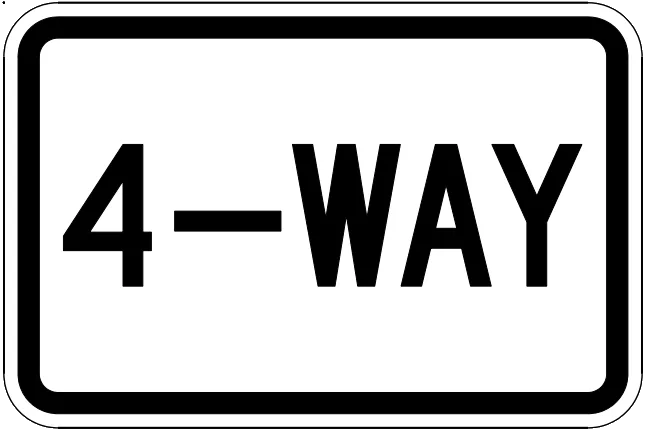
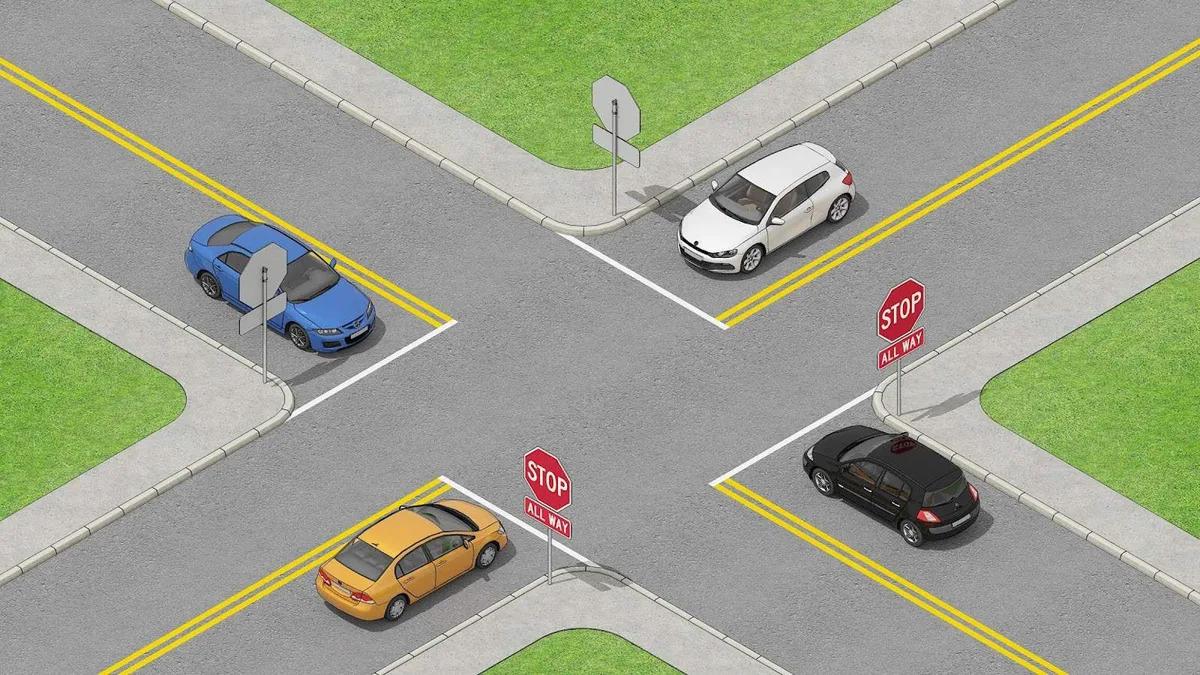
At an all-way stop (four-way stop), the first vehicle to stop goes first. If two vehicles arrive at the same time:
- The driver on the left yields to the driver on the right.
- If directly across from each other, the driver going straight has the right-of-way over the driver turning left.
Wikimedia Commons / Alberta.ca, Traffic sign catalogue
This is where many drivers get confused. It’s not about who’s in a hurry. It’s about who stopped first and who has the legal right to proceed.
All-Way vs. Two-Way Stops: The Kentucky Difference
An all-way stop means every direction has a stop sign. A two-way stop only controls traffic from certain approaches. The rules change based on which type you’re facing.
At a two-way stop, you yield to through traffic. At an all-way stop, you follow the first-to-stop rule. Confusing the two leads to collisions.
Bing (Web (fair-use with source credit))
Kentucky uses all-way stops in high-risk intersections where visibility is limited. Two-way stops are common at T-intersections or where one road is clearly secondary.
Stop Sign Violations in Kentucky: Fines, Points, and Penalties
Running a stop sign in Kentucky is a traffic violation under KRS 189.330. The fine is typically $200 or more. You’ll also get 3 points on your driving record.
Those points add up. Accumulate 12 points in 24 months and your license gets suspended. Insurance rates often spike after a stop sign violation.
Bing (Web (fair-use with source credit))
Law enforcement doesn’t need to see you blow through the sign. A rolling stop or failing to yield right-of-way counts as a violation.
Special Cases: School Zones, Work Zones, and Poor Visibility
School zones often have reduced speed limits and enhanced stop sign enforcement. Fines double in active school zones. Children are present, so the rules are stricter.
Work zones use temporary stop signs. Ignoring them can lead to hefty fines and endanger road workers. Always obey temporary traffic control.
Poor visibility at stop signs is no excuse. If a sign is obscured, slow down and proceed with caution. Kentucky courts won’t accept "I didn’t see it" as a defense.
Stop Signs vs. Yield Signs: When to Stop vs. When to Slow Down
Stop signs require a full stop. Yield signs mean slow down and prepare to stop if needed. The difference is critical in Kentucky.
A stop sign is octagonal and red. A yield sign is triangular and red/white. Shape and color help drivers react correctly.
At a yield sign, you must give the right-of-way to other traffic. At a stop sign, you must come to a complete halt regardless of other traffic.
Common Mistakes Drivers Make at Kentucky Stop Signs
Rolling stops are the most frequent violation. Drivers slow down but don’t fully stop. This is illegal and dangerous.
Another mistake is stopping past the stop line or crosswalk. Your front bumper must stay behind these markers.
Many drivers misjudge right-of-way at all-way stops. Remember: first to stop goes first. If in doubt, yield to the right.
Where to Find the Official Rules (And Why You Should Bookmark Them)
The Kentucky Driver’s Manual is the primary source. It’s free and available on the KYTC website. Every driver should review it.
KRS Chapter 189 contains the legal language. It’s dense but definitive. For quick reference, bookmark the KYTC’s traffic laws page.
Local police departments often publish summaries. These can be helpful but always defer to state law.
Kentucky Stop Sign FAQs (From Real Drivers)
What counts as a full stop in Kentucky?
A full stop means your vehicle comes to a complete halt. The wheels must stop turning. Rolling stops or slow-downs don’t meet the legal requirement.
Do I have to stop if no one else is at the intersection?
Yes. Kentucky law requires a full stop at every stop sign, regardless of traffic. Failing to stop can still result in a ticket.
What happens if two cars arrive at the same time at an all-way stop?
The driver on the left yields to the driver on the right. If directly across, the driver going straight has the right-of-way.
Can I turn right on red at a stop sign in Kentucky?
No. Stop signs require a full stop and do not allow right turns on red. That rule only applies to traffic signals.
How do I contest a stop sign ticket in Kentucky?
You can request a court date and plead your case. Bring evidence like photos or witness statements. The officer’s testimony carries weight, so be prepared.