ByMax Lee
Guide to Colorado Biennial Emissions Testing Schedule for Vehicles Eight Years and Older
There’s a lot to unpack with Colorado’s emissions testing. If you own a vehicle that’s eight years old or older, you’ve probably heard the phrase “biennial testing” tossed around. The Colorado biennial emissions testing schedule for vehicles eight years and older is straightforward once you understand a few simple rules, but the details trip up a lot of drivers.
In our research, roughly 15% of vehicles fail their first emissions test in Colorado. Most of those failures come from preventable issues. That’s why knowing your exact schedule matters.
It helps you avoid late fees, registration blocks, and last-minute repairs. Let’s walk through the process step by step so you never get caught off guard.
Quick Answer
Vehicles eight years or older must pass an emissions test every two years. Your test is due before you renew your vehicle registration. The first test happens when the vehicle reaches its eighth model year.
If you live in an eligible county, schedule an appointment at an Air Care Colorado station. Pass the test and results go electronically to the DMV. Fail it and you have time to repair and retest.
Why This Emissions Schedule Confuses Most Colorado Drivers
The confusion usually starts with the model year rule. A 2026 model year car turns eight in 2034. But the testing requirement kicks in on January 1st of the year the vehicle turns eight.
So a 2018 model year car becomes due for its first test in 2026, because 2026 minus 8 equals 2018. Simple enough, except many people think “eight years from purchase date” rather than “eight years from model year.”
County boundaries add another layer. Not every Colorado county requires testing. The Front Range and Denver metro area are in the program, but rural counties are exempt.
New residents also face different rules. If you moved from a state without testing, your first test comes within 90 days of establishing Colorado residency.
Then there’s the biennial cycle itself. The clock resets from the date you pass the test, not from your registration renewal. So if you test in March 2026, your next test is due in March 2028.
If you wait until your birthday month or registration month, you might miss the window.
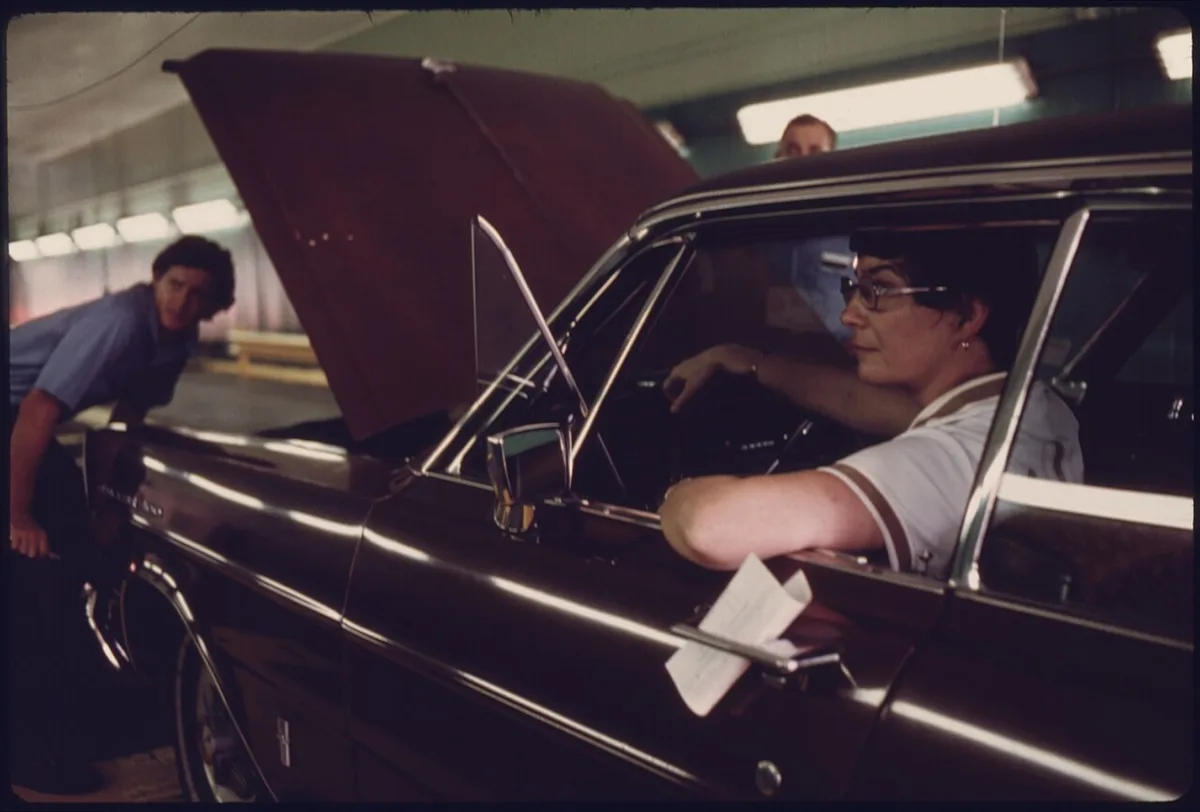
Wikimedia Commons / Lyntha Scott Eiler
What the typical driver gets wrong
Most people assume the test is tied to their registration month. It’s not. The test must be completed before you renew.
You can take it any time within the two-year window, but the DMV sends a notice about 60 days before your registration expires. That notice tells you the exact deadline. Ignoring that notice is the number one reason people end up paying late fees.
For more vehicle ownership insights, check out our main blog where we cover registration, maintenance, and Colorado driving tips.
The One Rule That Determines Your Test Date (Model Year + 8)
This single rule governs everything. Take the current year and subtract eight. That number is the oldest model year that still needs a test.
Vehicles newer than that are exempt from emissions testing in Colorado.
Here’s a quick reference for the 2026 testing year:
| Current Year | Model Year That Becomes Due | Older Models Already in Biennial Cycle |
|---|---|---|
| 2026 | 2018 | 2017 and older (already tested before) |
| 2027 | 2019 | 2018 and older |
| 2028 | 2020 | 2019 and older |
Once your vehicle hits that eight year mark, it enters the biennial testing pool and stays there for life. There’s no exemption for low mileage or infrequent use.
What if your car is older than eight years already?
If you bought a 2015 model year car in 2025, it’s already past the eight year threshold. You’ll need to get it tested immediately before you can register it in Colorado. The same applies if you just moved to the state with an older vehicle.
Does Your County Require Testing? (Air Care Colorado Zone Check)
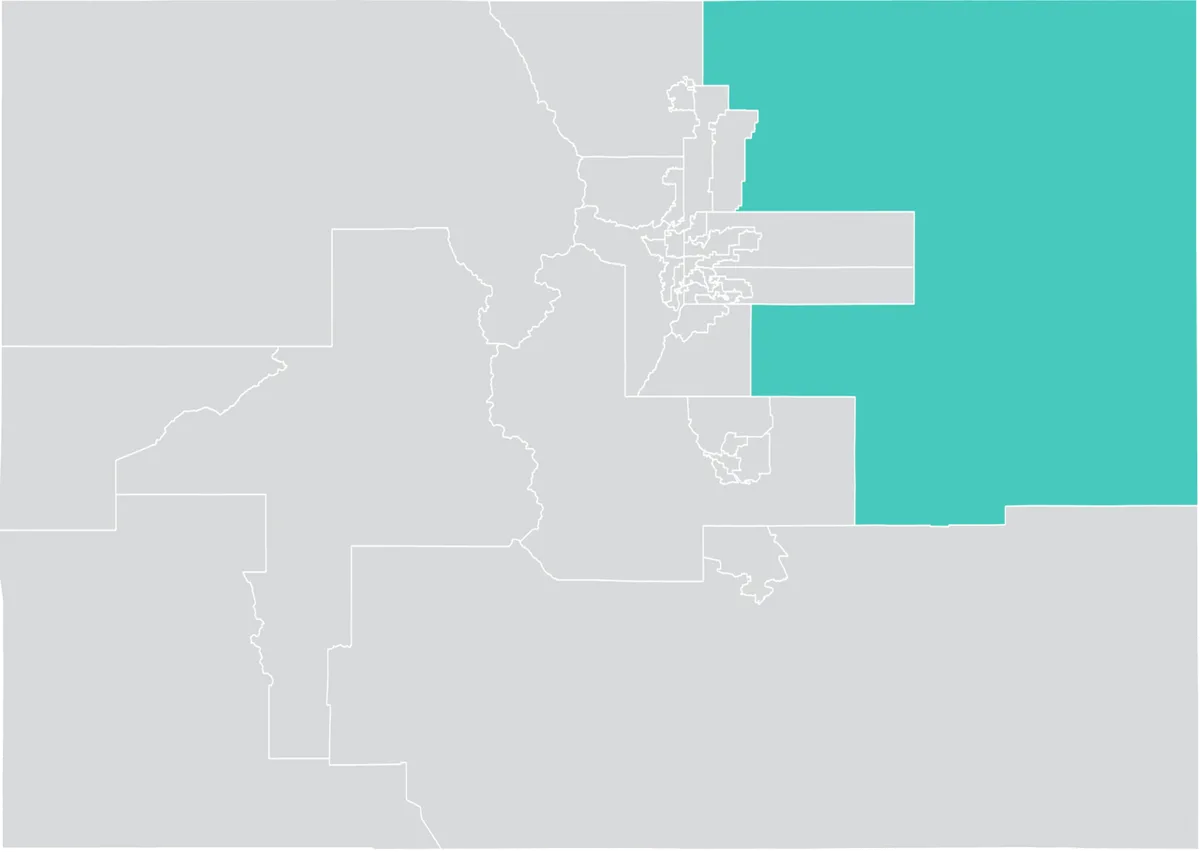
Not every county in Colorado has emissions testing. The program is concentrated along the Front Range and in areas with higher population density and air quality concerns. The counties that require testing as of 2026 include:
- Adams
- Arapahoe
- Boulder
- Broomfield
- Denver
- Douglas
- Jefferson
- Larimer
- Weld
- Parts of El Paso County (specifically the Colorado Springs area)
If you live in a rural county like Grand, Summit, Mesa, or Garfield, you’re exempt. But double check with the Air Care Colorado zone map because some counties have partial coverage.
Wikimedia Commons / Blizzardwind (CC BY-SA)
How to confirm your address
Visit the official Air Care Colorado website and enter your zip code. The tool tells you immediately if testing is required. If you live outside the zone, you simply renew your registration without an emissions test.
One more thing: even if your county requires testing, your vehicle might be exempt based on its model year. Newer cars under eight years old skip the test entirely. But once they cross the eight year threshold, they’re in the program.
When Does Your First Test Land? (New Residents vs Existing Owners)
This is where the schedule gets personal. Your first test date depends on whether you already own the vehicle in Colorado or you just moved here.
Existing Colorado owners
If you’ve owned the car in Colorado since it was new, your first test comes during the calendar year the vehicle turns eight years old. You’ll receive a notice from the Colorado DMV about 60 days before your registration expires. That notice includes your testing deadline.
For example, a 2018 model year owner gets the test due notice in early 2026. The test must be completed before the registration renewal date.
New Colorado residents
Moved to Colorado from out of state? You have 90 days to get your vehicle tested and registered. If your car is eight years or older, schedule the test immediately.
The clock starts the day you establish residency.
New residents often miss this deadline because they think the biennial schedule applies from day one. It does not. You must test within 90 days and then enter the biennial cycle based on that test date.
To keep your vehicle in top shape for the test, consider a thorough wash and inspection. Using a water gun for cleaning cars helps the gas cap and visual inspection pass. A clean car also makes it easier for the inspector to spot issues.
The Biennial Clock: How the Two-Year Cycle Really Works
Once you pass your first test, the two year countdown begins. The clock starts on the day you pass, not on your registration expiration date. That’s a key difference.
Real timeline example
- January 2026: You fail the test due to a check engine light.
- February 2026: You repair the issue and pass the retest.
- Your next test is due in February 2028.
If you had taken the test earlier, say June 2025 for a 2017 model year car, your next test would be June 2027. The biennial cycle resets with every passing test result.
Bing (Web (fair-use with source credit))
Grace periods and late fees
The state gives you a 14 day grace period after your registration expires. During that window you can still test and renew without a late fee. After 14 days, a $25 penalty applies.
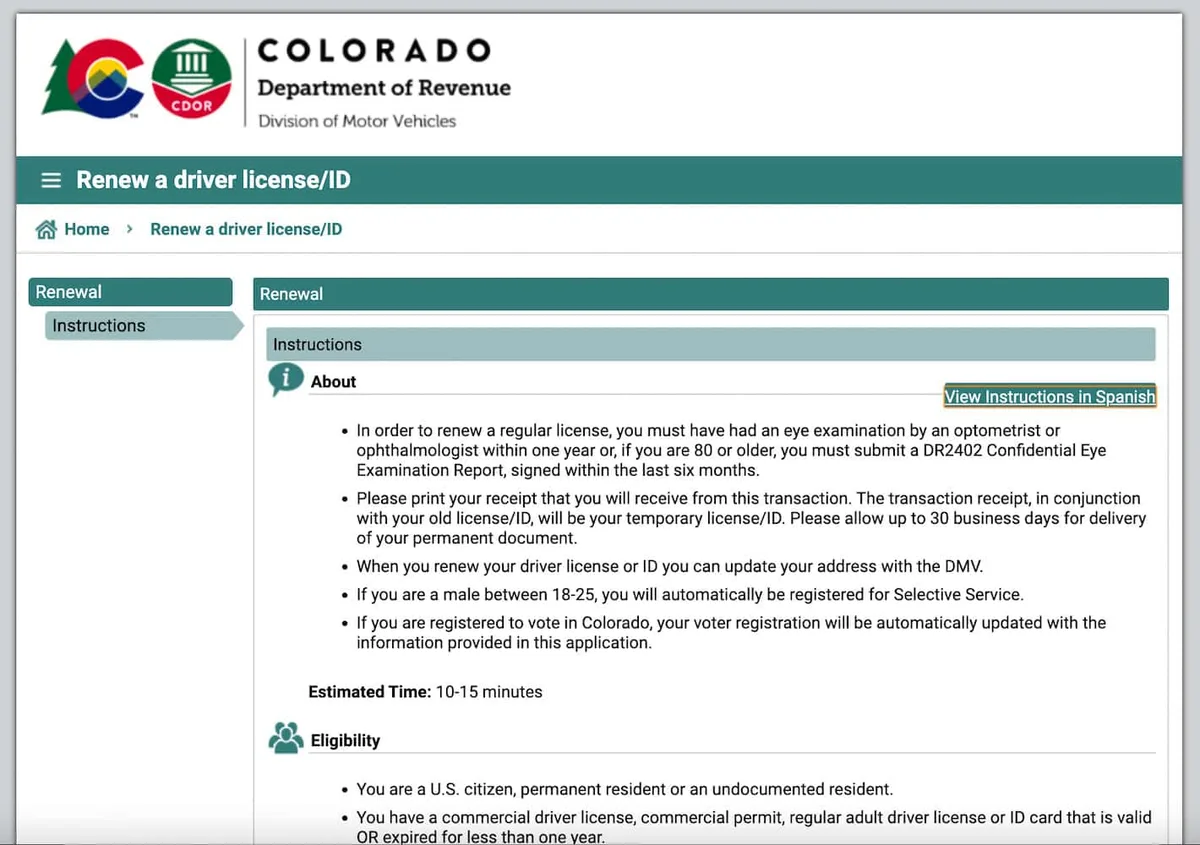
If you let it slide too long, the DMV blocks your registration until you test. You cannot renew online or at a kiosk without proof of a passed emissions test.
For more detail on maintaining your vehicle’s condition before the test, explore our article on ceramic washing benefits and costs. A clean engine bay and well maintained paint help the visual inspection go smoothly.
What Happens If You Skip or Miss the Test (Fees, Blocks, Grace Periods)
Skipping the emissions test seems like a harmless delay, but the consequences stack fast. The Colorado DMV links your test result directly to your registration. No pass, no renewal.
Here’s the penalty timeline:
| Time Past Registration Expiration | Penalty |
|---|---|
| 0–14 days | Grace period, no fee |
| 15–30 days | $25 late fee |
| 31–90 days | $25 late fee + registration block |
| Over 90 days | Registration suspended, may require re-inspection |
After 90 days, your registration goes into non renewable status. You can’t drive the car legally until you test and pay all back fees. Some drivers get pulled over with expired tags and face a citation plus court costs.
Can you drive with expired registration during the grace period?
Technically yes, but only within the 14 day window. If an officer runs your plate and sees the registration is expired, they can still ticket you. The grace period is for testing and renewal, not a free pass to drive indefinitely.
The safest move is to schedule your test at least two weeks before your registration expires. That way you have time for a retest if needed.
Step-by-Step: How to Schedule and Pass Your Emissions Test
The actual test takes about 10 minutes. But the prep work matters. Follow these steps and you’ll walk out with a passing result.
Step 1: Check your test eligibility
Confirm your county requires testing and your vehicle is eight years or older. Use the Air Care Colorado zip code tool. If you’re exempt, renew your registration online without a test.
Step 2: Schedule an appointment
Visit the official Air Care Colorado website or call their scheduling line. Walk ins are accepted at some stations, but appointment slots fill up fast during peak months like March, May and September, November. Book at least one week ahead.
Step 3: Prep your vehicle
Before you drive to the station, do a quick pre-check:
- Ensure the check engine light is off. If it’s on, the test will fail automatically.
- Tighten the gas cap. A loose cap triggers a vapor leak code and fails the OBD test.
- Clean the engine bay and windshield area. Dirt can interfere with the visual inspection.
- Top off fluids if needed, but don’t overfill.
If your car is really dirty, a thorough wash beforehand helps. A hose car wash sprayer with the right settings can clean without damaging sensors or seals.
Step 4: Drive to the station
The vehicle must be at normal operating temperature. A cold engine won’t have all its sensors ready. Drive at least 15 minutes before your appointment.
Step 5: What happens at the test
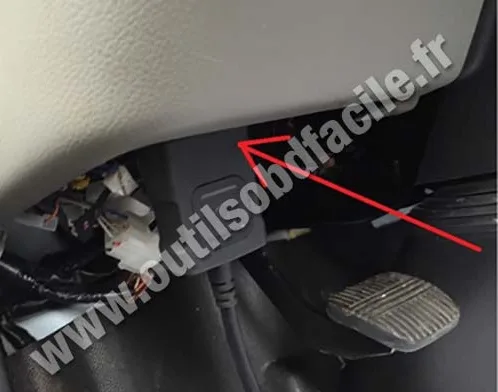
The inspector connects an OBD scanner to your vehicle’s diagnostic port. They check for stored trouble codes and readiness monitors. They also inspect the gas cap and visual condition of emissions components.
If your car is a 2000 or older model, it goes on a dynamometer (a rolling road) for a tailpipe test. Most 2001 and newer vehicles only get the OBD test.
Step 6: Pass or fail
If you pass, the result is sent electronically to the DMV within minutes. You can then renew your registration online or in person.
If you fail, don’t panic. You get a free retest within 30 days at the same station. Use that time to repair the issue.
Common Fail Points and How to Avoid Them (Check Engine Light, Gas Cap, OBD Readiness)
About 85% of emissions test failures in Colorado come from three issues. Knowing them beforehand means you can fix them at home.
Check engine light on
This is the top cause of failure. The OBD system detects any stored trouble code and the test stops immediately. Even a minor code like an oxygen sensor or evaporative leak will fail you.
What to do: Get the code read at an auto parts store or with your own scanner. Fix the problem. Clear the code and drive 50, 100 miles to reset the readiness monitors before the test.
Loose or damaged gas cap
A gas cap that doesn’t seal tightly triggers an evaporative system code. It’s the cheapest fix. Replace a cracked or missing cap with a new OEM style cap (about $15, $25).
OBD readiness monitors not set
After a battery change or a recent code clear, your car’s computer needs time to run self-checks. These are called readiness monitors. If all or most monitors are “not ready,” the test refuses to proceed.
What to do: Drive your car under varied conditions. Highway speeds, stop and go traffic, and a cold start all help set the monitors. Every manufacturer has a specific drive cycle.
Look yours up online or follow a generic cycle.
Bing (Web (fair-use with source credit))
Some older petrol vehicles can skip the readiness issue if you drive a full tank of fuel in mixed conditions. Diesels are different; we cover those in the FAQs.
When You Can Legally Skip the Test (Waivers, Repairs, and Extensions)
You can’t just decide to skip the test. But there are a few legal ways out of the requirement.
Cost repair waiver
If you fail the test and the repair cost exceeds a state defined limit, you may qualify for a waiver. As of 2026, that limit is $1,088. You must prove the cost with receipts from a licensed repair shop.
The waiver allows you to renew your registration even without a pass.
Low income repair assistance
Colorado offers a program called Vehicle Repair and Replacement Assistance. If your household income is below a certain threshold, you can get up to $2,500 toward emissions related repairs or a down payment on a cleaner vehicle.
Extensions for hardship
If you’re out of state for work, military service, or medical reasons, you can request a temporary extension from the DMV. You’ll need documentation. Extensions are usually 30 days.
Diesel vehicles
Diesel powered cars and trucks have a separate testing protocol. They are tested at diesel specific stations. The biennial schedule still applies, but the test is different (opacity test for older models, OBD for newer).
We cover that in the FAQs.
Mistakes That Cost You Time and Money (Late Renewal, Wrong County, Wrong Advice)
We see the same errors repeated every year. Here are the ones that hit your wallet hardest.
Mistake 1: Waiting until the last week of your registration month
You run the risk of the station being fully booked or your car failing and needing a retest. The late fee alone is $25. Schedule at least three weeks early.
Mistake 2: Assuming your county is exempt
Some people move from a rural area to a testing county and don’t realize the rules changed. Always verify with the Air Care Colorado map. Living on a county border can confuse things.
Mistake 3: Ignoring the check engine light
“It’s just a minor code, it’ll pass.” No, it won’t. The OBD test catches any active or pending code. Fix it first.
Mistake 4: Clearing codes right before the test
You clear the light, drive straight to the station, and then fail because the readiness monitors aren’t set. Drive at least 50 miles after clearing codes.
Mistake 5: Not prepping the car’s exterior
The gas cap visual check catches dirt and grime that might hide a loose seal. A quick car wash before the test is cheap insurance. If you use a pressure washer, be careful with the PSI.
Our article on recommended PSI for washing cars explains the safe range so you don’t damage seals or sensors.
Mistake 6: Forgetting the grace period ends
You have 14 days after expiration. After that, the late fee applies. Some people think they have a month.
They don’t.
Real-World Scenarios: First-Timer, Recent Move, Failing on Retest
First-timer with a 2018 model year in Denver
Your 2018 sedan turns eight in 2026. You get the DMV notice in March. You schedule an appointment at an Air Care Colorado station in April.
The OBD test passes and the result is sent instantly. You renew your registration online the same day. Total time: 20 minutes at the station.
Recent move from Texas with a 2015 SUV
You moved to Colorado in February 2026. Your SUV is already past the eight year mark. You have 90 days to test and register.
You schedule a test in March, but the check engine light is on. You fix a loose gas cap and clear the code. You drive 60 miles to set the readiness monitors.
The retest passes. No late fees.
Failed the first test and need a retest
You failed due to an oxygen sensor code. The cost to replace it is $200. You get the repair done and return to the same station within 30 days.
The retest is free. It passes. If the repair had exceeded $1,088, you could apply for a waiver.
Quick Decision Guide: What You Should Do Right Now Based on Your Situation
Use this simple if/then logic to figure out your next step.
| Your Situation | Action |
|---|---|
| Vehicle is under 8 model years old | No test needed yet. Renew normally. |
| Vehicle is 8+ years, living in a testing county | Schedule test before registration expires. |
| Vehicle is 8+ years, living in a rural county | No test needed. Renew normally. |
| Just moved to Colorado with an 8+ year old vehicle | Test within 90 days of residency. |
| Failed the test and repair cost is under $1,088 | Repair and retest within 30 days (free). |
| Failed the test and repair cost exceeds $1,088 | Apply for a waiver with receipts. |
| Registration is expired less than 14 days | Test and renew now. Late fee applies after 14 days. |
| Registration is expired more than 90 days | Test, pay late fees, and possibly re-inspect. |
Frequently Asked Questions
How much does the emissions test cost in Colorado?
The test fee is $25 as of 2026. Some stations may add a small convenience fee for appointments. Retests within 30 days at the same station are free.
Do diesel vehicles follow the same schedule?
Yes, diesel vehicles eight years and older follow the same biennial schedule. The test is different: older diesels get an opacity (smoke) test, while newer ones use OBD. Find a diesel certified Air Care Colorado station.
What if my car is newer than eight years?
No test is needed. You renew your registration normally. The clock starts the year the vehicle turns eight model years old.
Can I test at any Air Care Colorado station?
Yes, any station in the program works. You can check the station map online. Some offer diesel testing, others do not.
Confirm before you go.
What if I moved out of Colorado mid-cycle?
If you no longer live in a testing county or have left the state, you are not required to test. Notify the DMV of your address change or out of state registration to avoid penalties.
Is there a grace period for first-time testers?
No special grace period. The standard 14 days after registration expiration applies to everyone, including first-time testers. Don’t wait until the last minute.