ByMax Lee
Guide to Colorado Motorcycle Helmet Law Requirements for Riders Under 18
If you're under 18 and want to ride a motorcycle in Colorado, here's the short version: you must wear a helmet. It's not optional. The Colorado motorcycle helmet law requirements for riders under 18 are clear, specific, and enforced.
As of 2026, the law still requires any rider or passenger under 18 to wear a DOT-approved helmet and eye protection on any public road.
That might sound simple, but there's more to it than just strapping on any helmet you find. Colorado is one of many states with a partial helmet law. Riders 18 and older can choose to ride without one.
But if you're under 18, the law draws a hard line. Get the details wrong and you're looking at a ticket, fines, and potential hits to your driving record. Let's walk through exactly what you need to know.
Why This Law Matters More Than You Think
Colorado's helmet law for minors isn't just another rule on the books. It exists for a reason. According to the National Highway Traffic Safety Administration (NHTSA), helmets are 37 percent effective in preventing fatal injuries to motorcycle riders.
For young riders with less experience and developing brains, that number matters even more.
If you're pulled over for a helmet violation, you'll get a class A traffic infraction. That goes on your driving record. It can affect your insurance rates.
Multiple violations can lead to a suspension of your driving privileges. Not just for the motorcycle. For any vehicle.
The law matters for two reasons. It keeps you safer. And it keeps your record clean.
Quick Answer
Colorado law requires every motorcycle rider and passenger under 18 to wear a helmet. The helmet must meet DOT standards. You also need eye protection.
This applies on any public road. Riders 18 and older do not have to wear a helmet. Violations result in a class A traffic infraction.
Colorado's Helmet Law for Minors at a Glance
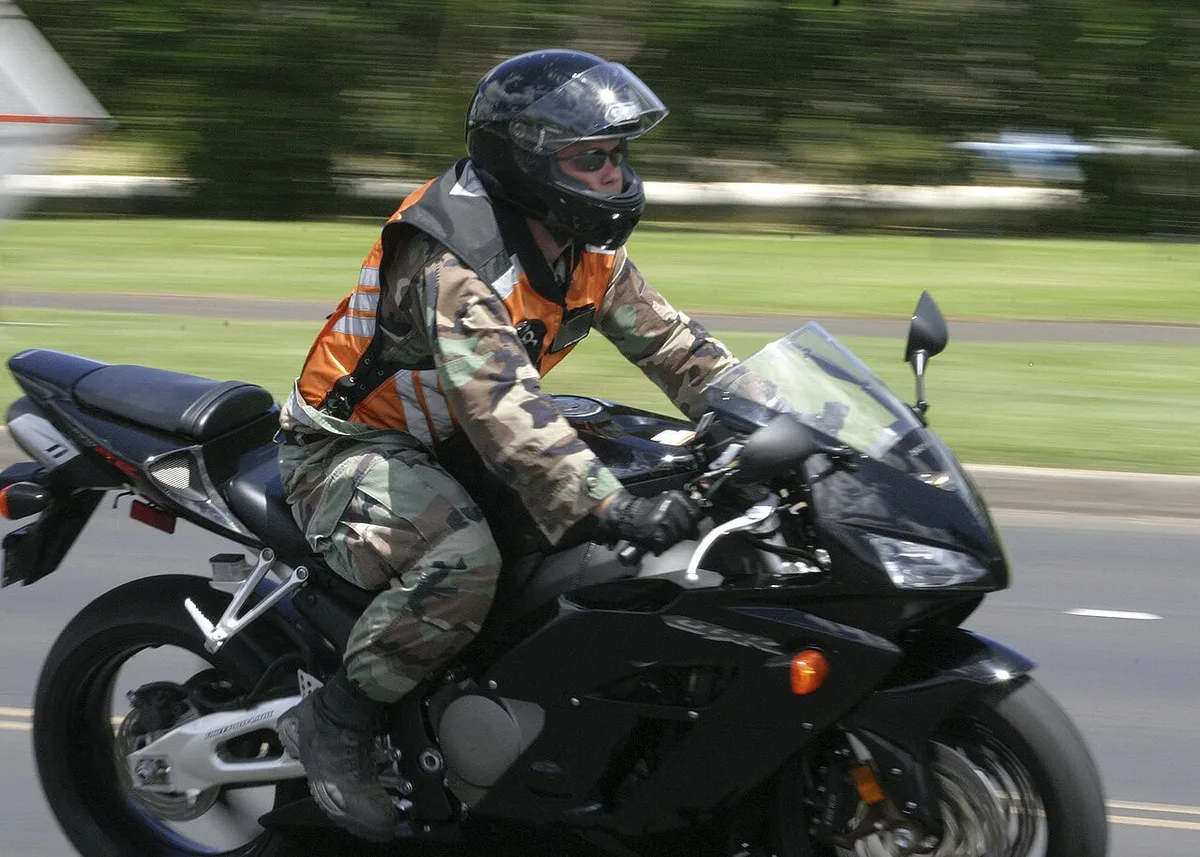
Wikimedia Commons / U.S. Navy photo by Chief Journalist David Rush
Here's your checklist for riding legally in Colorado if you're under 18:
- A DOT-approved helmet. Must have the DOT certification label permanently affixed inside. No sticker, no complaint.
- Eye protection. If your helmet doesn't have a face shield, you need goggles or a windshield that meets the standard. Prescription glasses don't count unless they're shatter-resistant.
- Passengers count too. If you're under 18 and riding on the back of a motorcycle, same rules apply. The operator can also be cited for letting an unhelmeted minor ride.
The law applies on every public road. Not just highways. Not just interstates.
Side streets, county roads, parking lots open to the public. All of it.
Exactly Who Is Covered (And Who Isn't)
The law targets anyone under 18 who is operating or riding as a passenger on a motorcycle. That includes:
- Motorcycle operators with a permit or endorsement who are under 18
- Motorcycle passengers under 18, regardless of the operator's age
- Scooter and moped riders under 18, as long as the vehicle meets Colorado's definition of a motorcycle (generally 50cc or larger engine capacity)
Who is not covered? Anyone who is 18 or older. Colorado's law only requires helmets for minors.
If you turn 18 on Tuesday, you can legally ride without a helmet on Wednesday. That doesn't mean you should, but the law lets you make that choice.
Riders under 18 operating low-speed electric scooters or bicycles may have different rules. The motorcycle helmet law applies to vehicles defined as motorcycles under Colorado law. If it has a motor and can go over a certain speed, assume the helmet law applies.
What the Law Actually Says: Statute 42-4-1502
Colorado Revised Statute 42-4-1502 covers motorcycle helmets for all riders. Subsection (3) specifically addresses minors. Here's what it says in plain language:
No person under 18 years of age shall operate or ride upon a motorcycle unless the person wears a helmet meeting the requirements established by the department. The helmet must be fastened securely.
The "requirements established by the department" refers to the Colorado Department of Transportation. They require a helmet that meets Federal Motor Vehicle Safety Standard (FMVSS) No. 218. That's the DOT standard.
The statute also says:
No person shall operate a motorcycle if the person knows or should know that a passenger under 18 is not wearing a helmet.
This matters for parents or older friends who let a minor ride without a helmet. You can catch a ticket for allowing it.
Are There Any Exceptions?
No. There's no medical exemption for minors. There's no religious exemption that applies in Colorado for minors.
If you're under 18 and on a motorcycle on a public road, you need a DOT-approved helmet. End of story.
The only gray area is private property. The law applies to public roadways. If you're riding on private land, the helmet requirement doesn't technically apply.
Most riding happens on public roads.
What Happens If You Get Caught?
A helmet violation for a minor is a class A traffic infraction. It's not a criminal charge. But it's not a slap on the wrist either.
| Violation | Typical Fine | Court Costs | Total Cost |
|---|---|---|---|
| First offense | $15 – $100 | $30 – $50 | $45 – $150 |
| Second offense | $50 – $150 | $30 – $50 | $80 – $200 |
| Third offense | Up to $300 | $30 – $50 | $330 – $350 |
Colorado does not assign points for a helmet violation. But the infraction stays on your driving record. Insurance companies see it.
Your rates can go up.
For young drivers under 18, Colorado has a graduated licensing system. Multiple infractions can trigger a license suspension. That means you could lose your car driving privileges too.
Most officers will issue a warning for a first offense if you're polite and put the helmet on immediately. Don't count on it. Some enforce this strictly, especially in Denver, Colorado Springs, and Fort Collins.
DOT-Approved Helmets: The Only Kind That Counts
Bing (Web (fair-use with source credit))
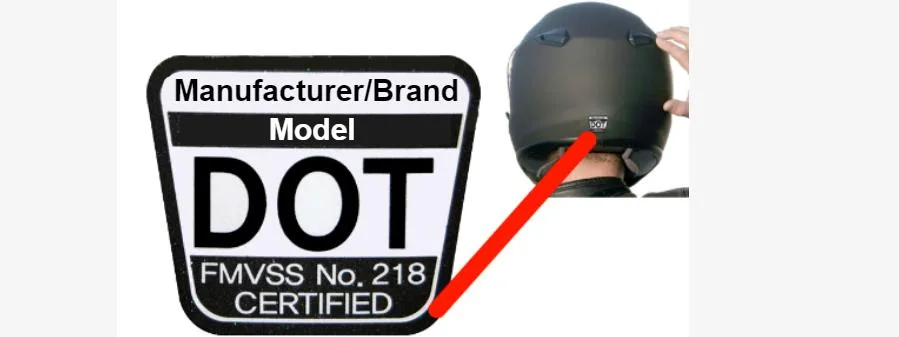
If you're under 18, your helmet must be DOT-approved. That means it meets FMVSS 218. You find proof by looking for the DOT certification label.
How to Verify the DOT Label
The DOT certification label is your proof. Here's what to look for:
- Location. Usually on the back or inside of the helmet. Sometimes under the liner.
- Appearance. A circle with "DOT" in the center. The manufacturer's name and model number are nearby.
- Permanence. The label must be permanently affixed. If it peels off, it's not compliant.
- Readability. If the label is faded, scratched, or worn away, the helmet is not legal.
Buy from a reputable dealer. If the price seems too good to be true for a $40 helmet, it probably is. Counterfeit DOT stickers exist.
Snell and ECE Standards
You'll see helmets that meet Snell or ECE standards in addition to DOT. Snell requires higher impact protection. ECE is the European standard.
Both are excellent. But for Colorado law, only DOT matters.
A Snell-only helmet is not legal for minors in Colorado. Neither is an ECE-only helmet. If you're buying a premium helmet, look for the DOT label plus Snell or ECE certification.
Used Helmets Are Risky
You don't know if a used helmet has been dropped or in a crash. A helmet that's been impacted can have hidden damage. The foam liner compresses on impact and doesn't bounce back.
Buy a new entry-level DOT helmet. It's safer than a used premium helmet with unknown history.
Eye Protection: The Easy Thing to Overlook
Bing (Web (fair-use with source credit))
Colorado law requires eye protection for minors even if you're wearing a helmet. A half helmet with no face shield doesn't count. You need separate eye protection.
What Counts as Legal Eye Protection
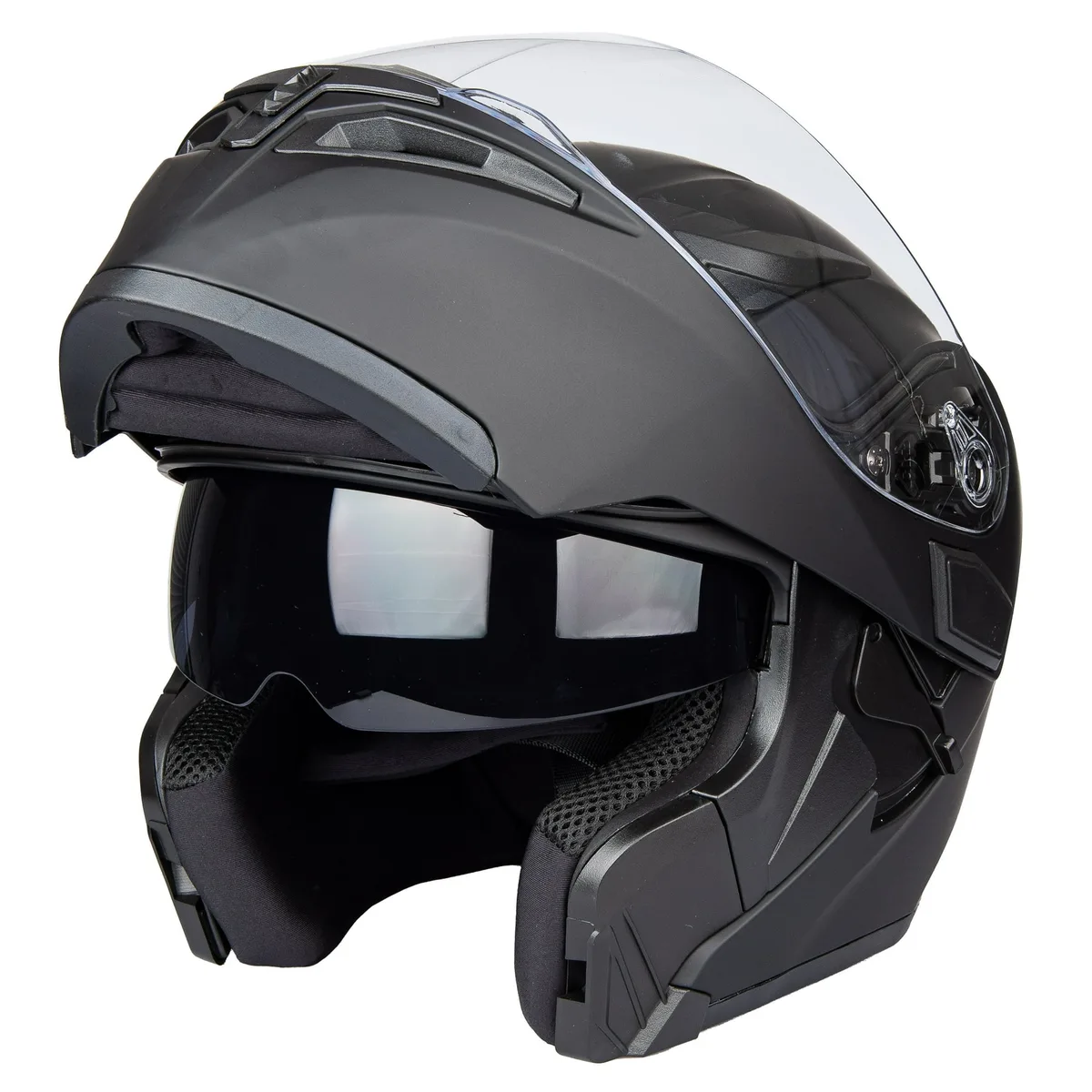
- Face shield. Built into a full-face or modular helmet. Best option. Keeps bugs, wind, and debris out.
- Goggles. Must be shatter-resistant. Over-the-glasses goggles work if you wear prescription lenses.
- Windshield. A motorcycle windshield counts if it's tall enough to protect your eyes at riding height.
What Does Not Count
- Sunglasses. Not shatter-resistant. They can break on impact.
- Prescription glasses. Same problem. Regular lenses aren't designed for impact protection.
- Open face with no shield or goggles. Not legal. You must have something covering your eyes.
Officers check for eye protection because it's easy to spot. If you're riding a cruiser with a half helmet and sunglasses, you're getting pulled over if you're under 18. The fix is simple: wear a full-face helmet or carry DOT-approved goggles.
Common Mistakes Young Riders Make (And How to Avoid Them)
Mistake 1: Borrowing a Friend's Helmet
A friend hands you his spare helmet. Is it DOT-approved? Does it fit you properly?
A loose helmet can come off in a crash. An ill-fitting helmet can cause neck strain.
Fix: Buy your own helmet. One that fits your head shape. One you know is DOT-certified.
Mistake 2: Using a Novelty Helmet
Novelty helmets are cheap and look cool. They don't meet DOT standards. If you're under 18 and wear one, you're breaking the law.
Fix: Look for the DOT label. If it's not there, don't buy it. Don't wear it.
Mistake 3: Skipping Eye Protection
You bought a half helmet. You forgot the goggles. You think sunglasses will work.
They won't.
Fix: If your helmet doesn't have a face shield, carry goggles. Put them on before you start the engine.
Mistake 4: Letting a Friend Ride Without a Helmet
You're 17. Your friend is 15. You let her ride on the back without a helmet.
If you get pulled over, you get the ticket.
Fix: No helmet, no ride. Tell your passengers the rules before you start.
Mistake 5: Thinking the Law Doesn't Apply on Side Streets
Colorado's law applies on all public roads. Not just highways. Residential streets.
County roads. Public parking lots.
Fix: Treat every ride as if an officer is watching.
Where to Buy a Legal Helmet (And What to Expect to Pay)
Local Motorcycle Shops
The safest option. You can try helmets on. You can see the DOT label in person.
Staff can help with fit. Expect to pay $100 to $300 for a solid entry-level helmet.
Online Retailers
Convenient but risky. Only buy from reputable sellers. Check the product description for "DOT certified" or "meets FMVSS 218." Read reviews that mention fit and certification.
What to Expect to Pay
| Helmet Type | Price Range | DOT Certified? |
|---|---|---|
| Entry-level full-face | $80 – $150 | Yes |
| Mid-range full-face | $150 – $400 | Yes |
| Premium full-face | $400+ | Yes |
| Half helmet (DOT) | $60 – $120 | Yes |
| Novelty helmet | $30 – $60 | No |
Helmets in the $100 to $200 range offer the best balance of safety and value. You don't need to spend $500 to be legal. But don't buy the cheapest option either.
What to Look For in a Store
Check for the DOT label inside the helmet. Make sure the fit is snug with no pressure points. The chin strap should fasten securely.
The face shield shouldn't fog up easily. Ask about the return policy if the fit is wrong.
The MOST Course: A Smarter Way to Get Your Endorsement
If you're under 18, you need a motorcycle endorsement to ride legally. The Colorado Motorcycle Operator Safety Training (MOST) course is the best path to get it. Completing the course waives the skills test at the DMV.
It also teaches defensive riding techniques that reduce crash risk.
The course costs around $200 to $300. It takes about 15 hours over a weekend. You'll need your own DOT-approved helmet and eye protection.
The course provides motorcycles for training. Pass the class and you get a completion certificate that counts toward your endorsement.
What Parents and Guardians Need to Know
If your child rides a motorcycle, you have responsibilities under Colorado law. You can be cited for knowingly allowing a minor to ride without a helmet. The law says no person shall operate a motorcycle if they know or should know a passenger under 18 is unhelmeted.
Talk to your teen about the risks. Set clear rules: no helmet, no keys. Buy them a quality DOT-approved helmet.
Model good behavior if you ride yourself. The helmet law for minors exists because the data shows it saves lives.
When You Turn 18: The Law Changes (But Should Your Choices?)
Bing (Web (fair-use with source credit))
On your 18th birthday, Colorado's helmet requirement vanishes. You can legally ride without one. But the law and good judgment are two different things.
NHTSA data shows helmets reduce fatal injury risk by 37 percent. That statistic doesn't change at midnight on your birthday.
Many experienced riders choose to wear helmets anyway. Wind fatigue, debris, and crash protection matter at any age. The smart play is to keep wearing your helmet even when the law stops requiring it.
Frequently Asked Questions
Can I ride without a helmet in Colorado if I'm 17?
No. If you are under 18, you must wear a DOT-approved helmet and eye protection on any public road. The law applies until the day you turn 18.
What happens if I get caught without a helmet as a minor?
You receive a class A traffic infraction. Fines range from $15 to $100 plus court costs. It goes on your driving record and can affect insurance rates.
Does the passenger have to wear a helmet too?
Yes. If the passenger is under 18, they must wear a DOT-approved helmet and eye protection. The operator can also be cited for allowing it.
Are novelty helmets legal for minors in Colorado?
No. Novelty helmets lack DOT certification. They do not meet the legal standard.
Wearing one is the same as wearing no helmet at all.
Do I need eye protection even with a helmet?
It depends on the helmet. A full-face helmet with a built-in shield counts. A half helmet does not.
You need separate goggles or a face shield in that case.
The Bottom Line on Colorado's Helmet Law for Riders Under 18
The rule is straightforward. If you are under 18 and on a motorcycle in Colorado, wear a DOT-approved helmet and eye protection. The law is clear.
The consequences for ignoring it include fines, a mark on your record, and serious injury risk.
Buy a helmet that fits. Check for the DOT label. Wear it every time you ride.
It's the law. More importantly, it's the smartest decision you can make on two wheels.