ByMax Lee
Guide to Colorado Slow Mover Pull Out Law for Five or More Trailing Vehicles
You're driving along a winding Colorado mountain road when you look in your rearview mirror and see a line of cars stacked behind you. Five, six, seven vehicles. Are you supposed to pull over?
The Colorado slow mover pull out law for five or more trailing vehicles says yes, but the details matter more than most drivers realize. Get it wrong, and you could face a fine, cause road rage, or create a dangerous situation.
Colorado Revised Statute 42-4-304 makes it clear. If you're driving slower than the normal flow of traffic and have five or more vehicles behind you, you must pull off at the next designated turnout or safe area. As of 2026, the law remains actively enforced along mountain corridors and rural highways.
Let's break down exactly what this means for you.
Bing (Web (fair-use with source credit))
Quick Answer
The law requires slow-moving vehicles to pull over when five or more vehicles are trailing behind. You must use a designated turnout or safe shoulder. Failure to comply can result in a fine between $100 and $300.
Exceptions exist for emergencies and poor road conditions. Always yield safely and never slam on brakes.
Why This Law Matters More Than You Think
Colorado's geography makes this law critical. Our two-lane mountain highways often lack passing zones for miles. A single slow vehicle can create a backlog of frustrated drivers.
That frustration leads to risky behavior. Aggressive passing on blind curves, tailgating, and serious accidents follow.
The law keeps traffic moving and reduces those risks. It is not about punishing slow drivers. It is about sharing the road responsibly.
Whether you are in an RV, a tractor, or just taking it easy, understanding this rule helps everyone stay safe.
According to the Colorado State Patrol, slow-moving vehicle congestion contributes to collisions on I-70 and similar routes. Enforcement has helped reduce those numbers. This is a practical tool for safer roads, not just legal theory.
What Exactly Is the "Five or More" Pull-Out Law?
The law is codified in Colorado Revised Statute 42-4-304. It states that any vehicle traveling slower than the posted speed limit must yield to faster traffic when five or more vehicles are behind it. The driver must pull off the roadway at a designated turnout or safe area.
This applies on any public roadway. It covers two-lane roads, mountain passes, and county roads. The trigger is simple.
Count the cars behind you. If the number reaches five, find a spot to let them by.
A safe area does not mean a narrow shoulder with soft gravel. The law asks you to pull off where you can do so safely. That could be a designated turnout, a wide shoulder, a side road, or a parking lot.
The goal is to get out of the travel lane.
When Does the Law Actually Apply?
This is where most drivers get confused. The law applies when you are impeding the normal flow of traffic. If you are already going the speed limit and cars are stacking up behind you, the law does not require you to pull over.
The trigger is being slower than the traffic around you.
The Five-Vehicle Trigger Explained
Count the vehicles in your mirror. If five or more are behind you and you are going slower than they want to go, you must pull over. The trailing vehicles must be "following" you.
If some have already passed or are in a different lane, the count resets.
The law does not apply if you are in a left-turn lane or preparing to turn. But if you are cruising along and the line builds up, you need to act. The fine for failing to do so ranges from $100 to $300 per the Colorado Driver Handbook.
Exceptions That Catch People Off Guard
Emergency vehicles actively responding to a call are exempt. Road construction vehicles operating within a work zone are also exempt. If road conditions make pulling over unsafe, such as icy roads or heavy fog, the law allows you to stay in the lane.
If you are traveling at the posted speed limit and the people behind you are simply speeding, you are not required to pull over. The law targets slow movers, not drivers following the limit. However, if you are 10 mph or more below the limit, the expectation to yield kicks in.
Where You're Most Likely to Run Into This Law
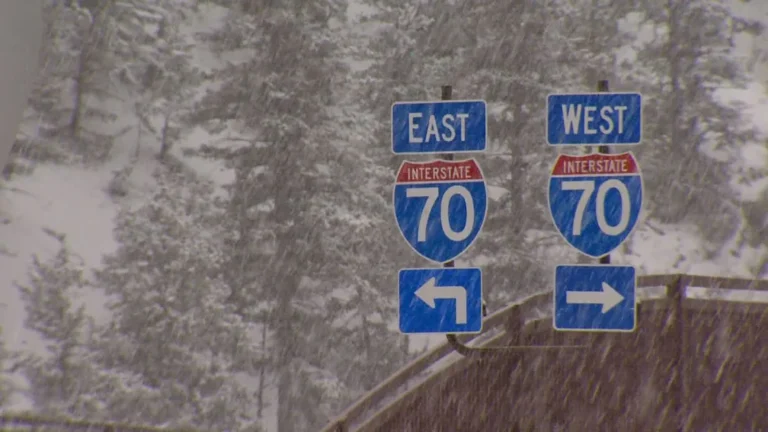
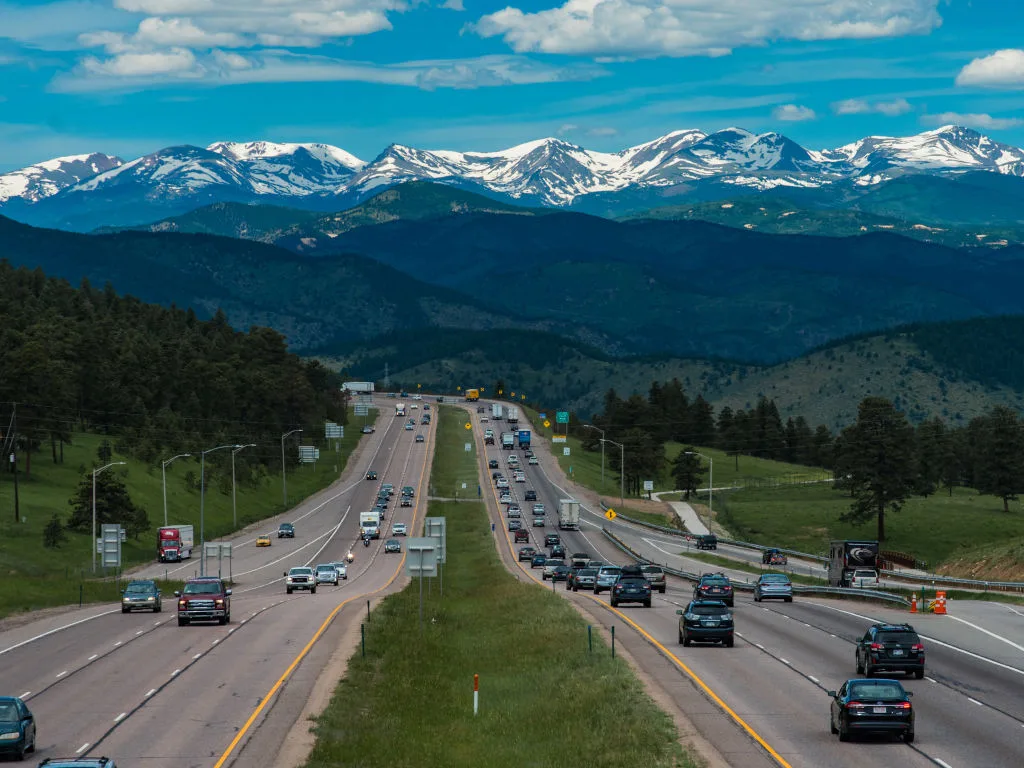
Certain Colorado roads are hotspots for enforcement. I-70 through the mountains, especially between Denver and the ski resorts, is a prime location. Steep grades, slow RVs, and impatient drivers create frequent congestion.
Other notable corridors include US-285 from Denver to Fairplay, CO-9 from Silverthorne to Kremmling, and US-24 from Colorado Springs to Buena Vista. These routes see heavy tourist traffic and limited passing opportunities. On the eastern plains, farm-to-market roads see frequent slow-moving tractors and combines.
Local law enforcement and the Colorado State Patrol patrol these areas regularly. They know where the bottlenecks occur. If you are driving a slow vehicle on any of these routes, expect to be watched.
Bing (Web (fair-use with source credit))
How to Legally Pull Over for Traffic
Pulling over correctly matters as much as when to do it. The law requires you to use a designated turnout area or safe location. Here is the step-by-step process.
Check your mirrors. Count the vehicles behind you. Confirm there are five or more. Then look ahead for a turnout, wide shoulder, or side road.
Signal your intent. Use your right turn signal well before you slow down. This alerts drivers behind you that you are about to pull off. It prevents confusion and reduces rear-end collision risk.
Slow down gradually. Move to the right side of your lane. If you are on a two-lane highway, pull onto the shoulder or into the turnout. Come to a complete stop if necessary.
You do not have to stop if there is enough room to let traffic pass while you roll slowly.
Wait for the trailing vehicles to pass. Once you are off the roadway, let the entire line go by. Do not merge back until there is a safe gap. If more vehicles are coming, stay put.
Merge back carefully. Use your left turn signal and check your blind spot. Accelerate to match the speed of traffic before merging. Do not cut off anyone.
A common mistake is pulling over too quickly onto a narrow shoulder that is not safe. If you cannot find a good turnout within a reasonable distance, continue driving until you find one. The fine is for failing to pull over at all, not for driving a bit longer to find a safe spot.
Bing (Web (fair-use with source credit))
Common Mistakes Colorado Drivers Make
The most common mistake is miscounting the trailing vehicles. Drivers often guess and assume they have five behind them when they only have three or four. Count carefully using your mirrors.
The law requires exactly five or more.
Another frequent error is slamming on brakes when the line forms. That causes rear-end collisions. Signal early, slow gradually, and pull off smoothly.
Some drivers pull over onto unsafe shoulders. Soft gravel, narrow drop-offs, or muddy edges can get you stuck or damage your vehicle. Keep moving until you find a solid turnout.
Others merge back improperly. They pull into traffic without checking blind spots or accelerating to match speed. That creates a new hazard for the same drivers they just let pass.
Use your signal and build speed before merging.
What Happens If You Don't Pull Over
The direct consequence is a traffic citation. Colorado State Patrol officers can cite you for impeding traffic under CRS 42-4-304. Fines typically range from $100 to $300.
That amount can increase if the violation contributes to a collision.
Beyond the ticket, there are real safety risks. A backlog of frustrated drivers leads to dangerous passing attempts on blind curves. Slow-moving vehicles are a factor in many accidents on two-lane mountain highways.
There is also the road rage factor. Tailgating, aggressive horn use, and unsafe passing happen more often when drivers feel trapped behind a slow vehicle that refuses to yield. Pulling over keeps everyone calm and safe.
Prosecutors can pursue more serious charges if a collision occurs. Reckless driving or careless driving resulting in injury carries much steeper penalties. A simple failure to yield can escalate fast.
How This Law Differs From Other States
Colorado is stricter than many states. Some states require slow vehicles to pull over for three or more trailing vehicles. Others have no specific number and use vague language like "impeding traffic."
A few states have no pull-over law at all. They rely on passing lanes and driver courtesy. Colorado chose a specific five-vehicle threshold because of its mountain geography and tourist traffic patterns.
The key difference is enforcement. Colorado State Patrol actively patrols known bottleneck routes. Other states may have the law on the books but rarely enforce it.
Colorado drivers face real consequences.
Another difference is turnout availability. Colorado has invested in designated pullouts on major mountain corridors. States with less traffic may not have as many turnouts, making compliance harder.
The Difference Between This and the "Move Over" Law
These two laws are frequently confused. The slow mover pull-out law applies to slow vehicles with five or more trailing cars. The move over law requires drivers to change lanes or slow down for stopped emergency vehicles on the shoulder.
They serve different purposes. One keeps traffic flowing. The other protects emergency personnel and tow truck operators.
They are separate statutes with separate penalties.
The move over law applies to all drivers when you see flashing lights on the shoulder. You must move to the far lane or reduce speed significantly. It has nothing to do with how many cars are behind you.
The slow mover law only applies when you are the slow vehicle. If you are driving at or above the speed limit, you can ignore the five-vehicle rule. But you still must obey the move over law.
Knowing the difference matters. A driver who confuses the two might pull over incorrectly or fail to yield properly. Each law has its own trigger and its own proper response.
Law Enforcement Perspective on Enforcement
Colorado State Patrol officers focus on two key factors. They look for a speed differential of 10 mph or more below the limit. They also watch for a long line of traffic building behind a single vehicle.
Officers have discretion. They may warn first-time offenders, especially tourists unfamiliar with the law. Repeat violations or aggressive behavior likely result in a citation.
The fine amount varies by county.
Enforcement peaks during tourist seasons. Summer and ski season see the highest traffic volumes on mountain roads. Officers set up patrols near known bottleneck areas and turnouts.
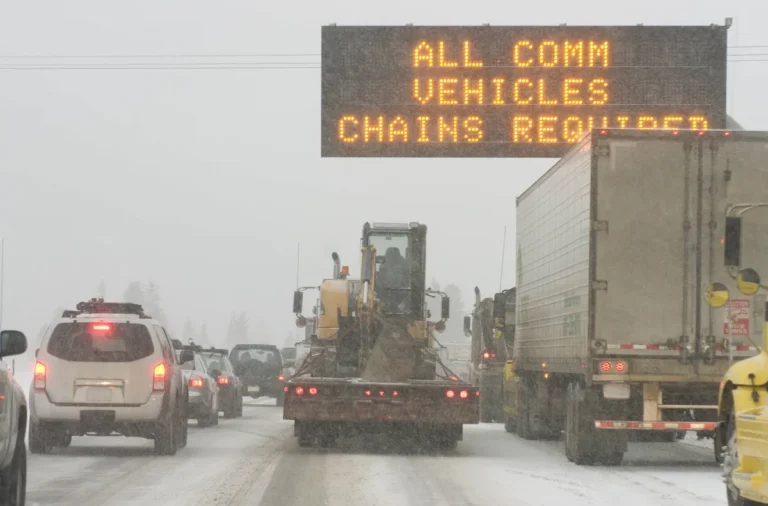
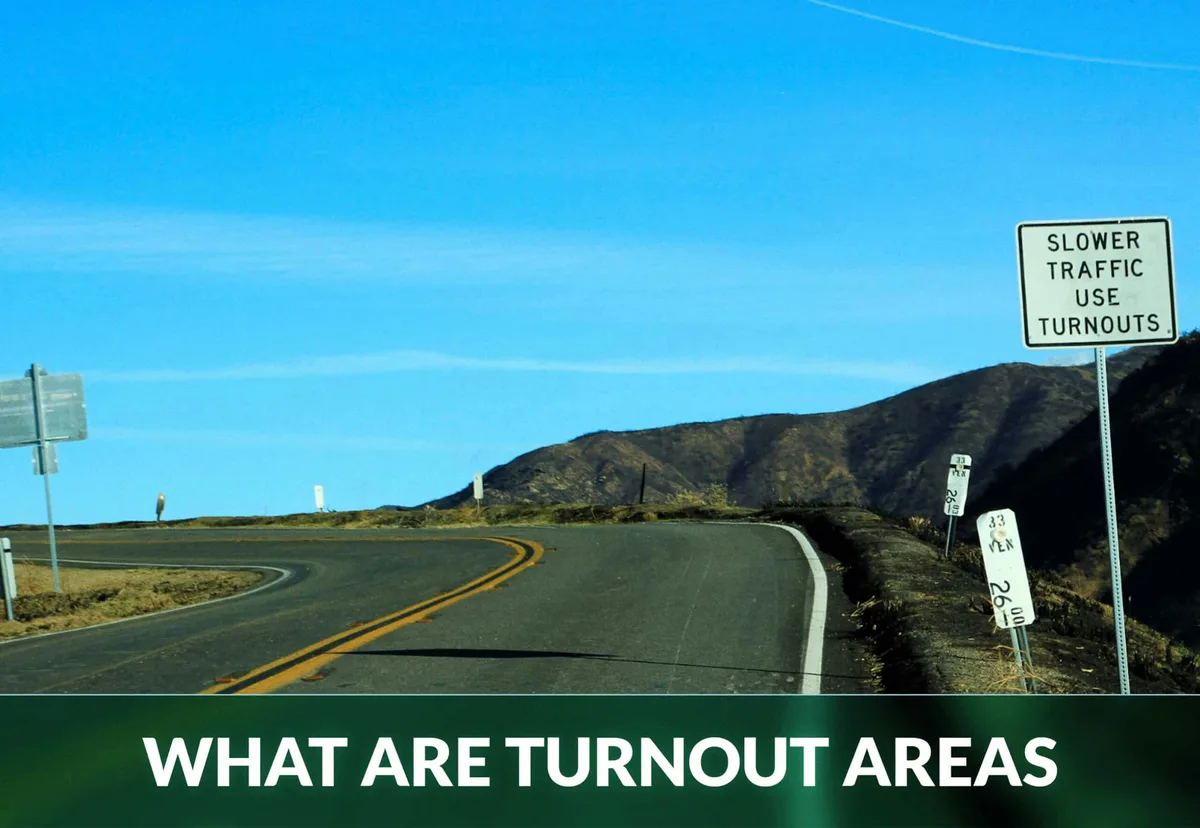
CDOT posts signs that say "Please Use Turnouts" or "Slow Traffic Must Pull Over." These are common on I-70 and US-285. They serve as reminders and legal notice.
Our research indicates that enforcement has improved compliance rates. Still, many drivers ignore the law. The Colorado Driver Handbook includes a clear explanation, but not everyone reads it before hitting the road.
For more on Colorado driving rules, check out the basics of Colorado driving laws.
Practical Tips for Slow-Moving Vehicle Owners
If you drive a slow vehicle regularly, a tractor, RV, or loaded truck, plan your route ahead. Know which roads have frequent turnouts. Use maps or apps that show shoulder width and designated pullouts.
Install a slow-moving vehicle emblem if you are on a farm vehicle. It legally identifies you and warns other drivers. This reduces frustration and gives you some legal cover.
Use your flashers when you are going well below the speed limit. It signals that you are aware of the situation. Other drivers appreciate the heads up.
Check your mirrors every 30 seconds. Count the trailing vehicles. If you see five building up, start looking for a turnout immediately.
Do not wait until the line grows to ten.
Signal early. A right turn signal lets drivers behind you know you are about to yield. It prevents them from trying to pass you on the right as you slow down.
Keep a printed copy of CRS 42-4-304 in your glovebox. If an officer pulls you over, you can show you understand the law. This may help in a warning situation.
Regular vehicle maintenance helps prevent unexpected breakdowns that force you to drive slowly in the first place.
What Fast Drivers Need to Know Too
The law is not just for slow movers. Fast drivers also have responsibilities. Tailgating or aggressive passing creates danger, even if the other driver is legally required to yield.
If you encounter a slow vehicle with five or more cars behind it, give them space to pull over. Do not try to pass them on the shoulder or in a no-passing zone. Wait for the turnout.
When a slow vehicle signals to pull over, do not speed up and block them. Let them merge onto the shoulder safely. Then proceed past without aggressive acceleration.
If you see a slow vehicle that refuses to pull over, note the license plate and location. Report unsafe driving to Colorado State Patrol at star CSP ( star 277 ). Do not take matters into your own hands.
Remember that slow vehicles have a right to be on the road. Farming equipment, oversized loads, and rental RVs are legal traffic. The law balances their need to travel with your need to get somewhere faster.
Real Scenarios on Colorado Mountain Roads
Imagine you are driving a rental RV on I-70 west of Denver. The speed limit is 65, but your RV struggles to maintain 50 on the uphill grades. You check your mirror and see six cars stacked behind you.
You spot a designated turnout near the Georgetown exit. You signal right, slow gradually, and pull into the turnout. The six cars pass.
You merge back when clear. That is the correct response.
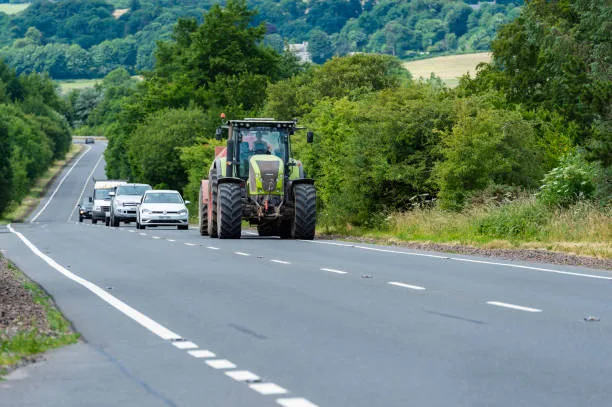
Now consider a farmer on a tractor on US-285 near Fairplay. He has 10 vehicles behind him. There is no turnout for two miles.
He continues driving at 25 mph until a pullout appears. He pulls over. That is also legal.
A common bad scenario. A driver in a sedan going 45 in a 65 zone on CO-9. They have eight cars behind them but refuse to pull over because they feel they are not "slow." They get pulled over by a state trooper and receive a citation.
Bing (Web (fair-use with source credit))
Frequently Asked Questions
Does the law apply on interstates with multiple lanes?
Yes. If you are in the right lane and slower than traffic, and five vehicles are behind you, you must move to the shoulder or a turnout. The law applies on all public roadways, including interstates.
What if I can't find a safe place to pull over?
Keep driving until you find one. The law does not require you to stop on an unsafe shoulder. It requires you to pull off at the next available turnout or safe area.
Can I get a ticket even if I'm going the speed limit?
No. The law applies when you are impeding traffic below the normal flow. If you are at or above the limit, you are not required to yield to faster drivers behind you.
How many points does a violation add to my license?
A violation of CRS 42-4-304 adds three points to your Colorado driving record. Too many points can lead to license suspension.
Does this law apply to bicycles?
No. Bicycles are not considered slow-moving vehicles under this statute. Cyclists should still yield to faster traffic when safe as a matter of courtesy.