ByMax Lee
Guide to Colorado Window Tinting Legal Limits for Front Side and Rear Windows
If you are looking up Colorado window tinting legal limits for front side and rear windows, you probably already know the rules are not the same for every vehicle. It is easy to get confused, especially when you hear different things from friends, shops, or online posts. The truth is that Colorado law clearly separates passenger cars from SUVs and trucks.
And the limits for front windows are stricter than most people realize.
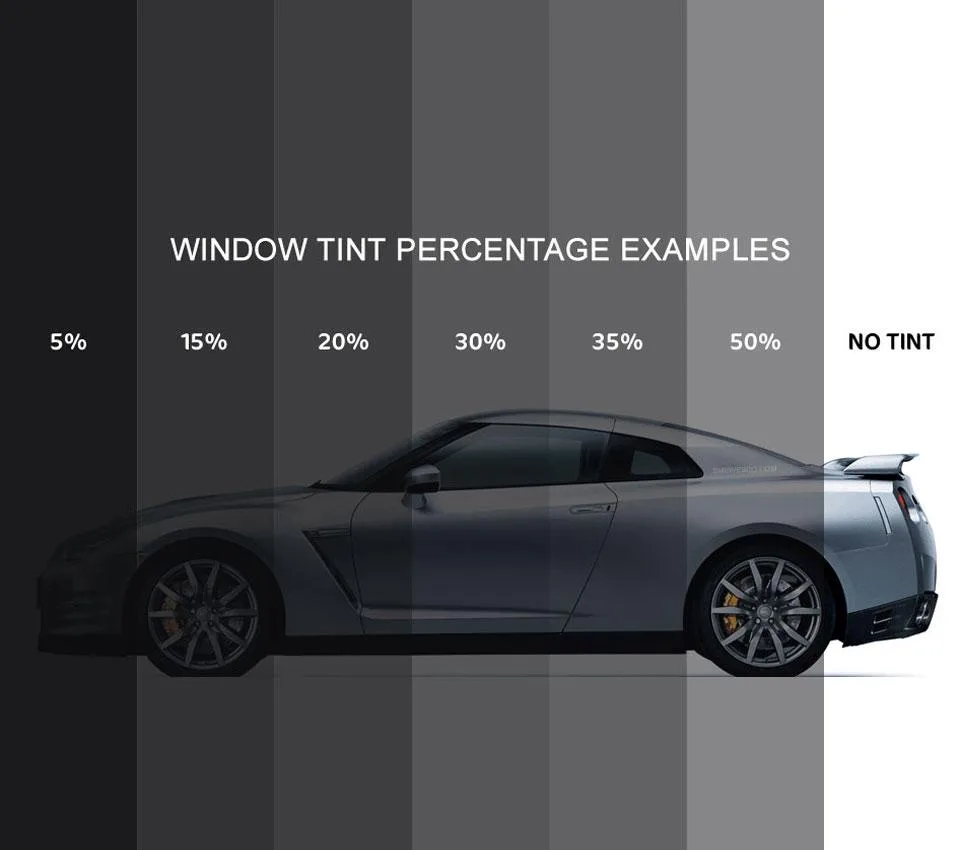
In our research of Colorado Revised Statute 42-4-227, the key number to remember is 27 percent visible light transmission for front side windows. That means your driver and passenger windows must let in more than a quarter of the available light. Anything darker is illegal unless you have a medical exemption.
Let us walk through exactly what is allowed, what is not, and how to stay on the right side of the law as of 2026.
Bing (Web (fair-use with source credit))
Why Getting Colorado's Tint Law Right Actually Matters
Getting caught with illegal tint in Colorado is a Class A traffic infraction. That means a fine, court costs, and a mark on your driving record. Law enforcement officers carry handheld tint meters.
They can pull you over and measure your windows on the spot.
Illegal tint can also cause you to fail a vehicle inspection. In Colorado counties that require emissions testing, your tint is part of the check. If your windows are too dark, you will not get a passing sticker.
Dark tint reduces your visibility at night. It makes it harder for other drivers to see you and for you to see pedestrians, cyclists, or animals on mountain roads. Colorado has plenty of all three.
Here is what is at stake if you get it wrong.
- A citation typically costs between 100 and 300 dollars plus court fees.
- You may have to remove and reapply compliant tint, which costs time and money.
- Your insurance company could factor illegal tint into liability after an accident.
- Out-of-state drivers with darker tint often get surprised by Colorado enforcement.
Staying legal protects your wallet and your safety. It also means one less thing to worry about when you see those red and blue lights in your rearview mirror.
Quick Answer
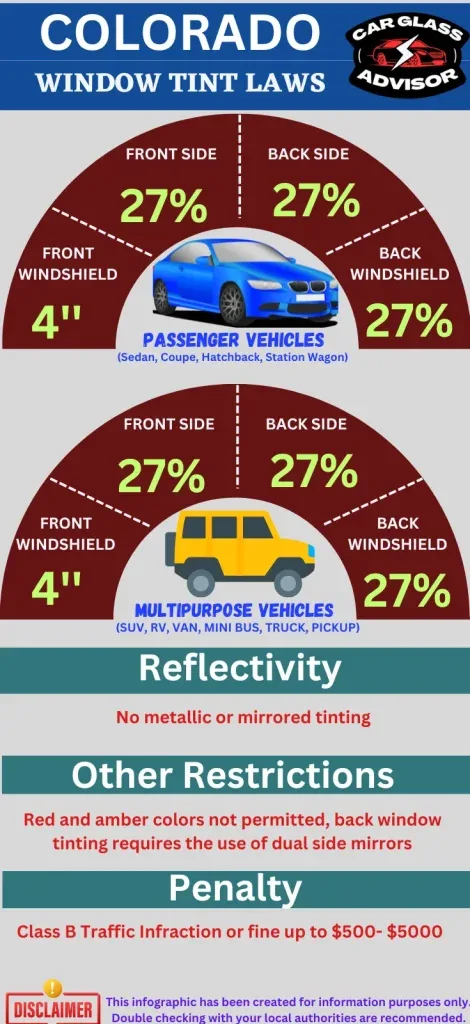
Colorado requires 27 percent VLT for front side windows. Rear side windows have no VLT limit. SUVs and trucks follow the same front window rule.
Medical exemptions allow darker tint with a doctor's note. Tint reflectivity cannot exceed 20 percent on front windows.
That is the short version. The full picture depends on your vehicle type and whether you qualify for an exemption. Read on for the details.
Passenger Cars vs. SUVs and Trucks: Yes, the Rules Are Different
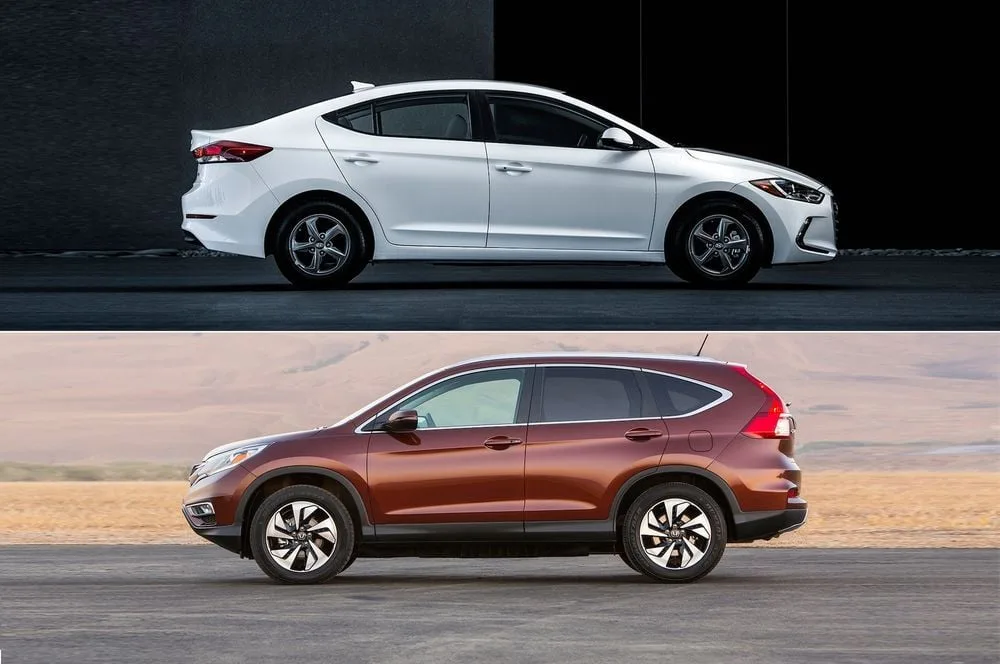
Colorado law divides vehicles into two categories for tint purposes. The first is passenger cars. The second is multipurpose vehicles, which includes SUVs, vans, pickup trucks, and minivans.
The rules for rear windows differ between the two.
Here is the breakdown in plain terms.
Passenger cars (sedans, coupes, hatchbacks)
- Front side windows: minimum 27 percent VLT
- Rear side windows: any VLT, no limit
- Rear window: any VLT, no limit, but you need dual side mirrors if the rear window is tinted
Multipurpose vehicles (SUVs, trucks, vans)
- Front side windows: minimum 27 percent VLT
- Rear side windows: any VLT, no limit
- Rear window: any VLT, no limit, with the same mirror requirement
The biggest takeaway is that the front windows are treated exactly the same for both classes. The rear windows are wide open for both. The confusion usually comes when people assume their SUV can have darker front windows than a sedan.
It cannot.
Bing (Web (fair-use with source credit))
If you drive a sedan, your rear passenger windows can be as dark as you want. That is true for most vehicles in Colorado. The only real difference between vehicle classes is how the law defines them.
It does not change what is allowed on the front doors.
Front Side Windows: The 27 Percent VLT Limit and Why It Is Strict
The front side windows are the driver and front passenger windows. Colorado sets a hard limit of 27 percent VLT for both. VLT stands for visible light transmission.
It is the percentage of light that passes through the glass and film combined.
A completely clear window would measure 100 percent VLT. A window with no glass at all would be 0 percent. Factory glass usually measures around 70 to 80 percent before any tint is added.
That means adding a film that claims to be 35 percent VLT will actually result in a lower number when combined with the factory glass.
Here is a quick reference for how stacked layers work.
| Nominal film VLT | Factory glass VLT | Actual combined VLT |
|---|---|---|
| 50% | 75% | 37.5% |
| 35% | 75% | 26.25% (illegal) |
| 20% | 75% | 15% (illegal) |
That is why you cannot just buy a 35 percent film and assume it is legal. The actual measurement after installation is what matters. Professional installers know this.
They measure the final result with a tint meter before calling the job done.
The 27 percent limit is strict for a reason. Law enforcement needs to see inside your vehicle during a traffic stop. Dark tint makes that harder and raises safety concerns for officers.
Colorado lawmakers set the number after balancing privacy with public safety.
If you want a dark look on the front, 27 percent is still fairly dark. It provides good heat and UV reduction without attracting unwanted attention from the highway patrol.
Rear Side Windows: Where It Gets Surprisingly Flexible
Here is the good news. Colorado places no VLT restriction on rear side windows for any vehicle type. That includes passenger cars, SUVs, trucks, and vans.
You can go as dark as you want on the back doors.
This flexibility is great for privacy, heat reduction, and protecting passengers from the sun. Many owners choose a very dark film like 5 percent, commonly called limo tint, for the rear. It looks cohesive with a lightly tinted front window and provides maximum UV and glare protection for back seat passengers.
There are two conditions to keep in mind.
First, if you tint your rear window, you must have dual side mirrors. That is the law in Colorado. The rear window tint can make it hard to see behind you.
Side mirrors compensate for that loss of visibility.
Second, the rear windows are not restricted by reflectivity limits either. The 20 percent reflectivity cap applies only to front side windows. That means you can use a reflective or mirrored film on the rear if you want.
Just be aware that reflective films are not everyone's style and can draw attention.
Some people worry that tinting the rear windows too dark will make the car look mismatched. That is a personal choice. Many professional shops recommend matching the rear film to the front within a few shades for a uniform appearance.
But legally, you have full freedom on the back doors.
If you carry children, pets, or cargo in the back, dark rear tint is a practical upgrade. It keeps the interior cooler and reduces glare for everyone in the vehicle. Just remember to check that your side mirrors are properly adjusted before you drive away.
The Reflectivity Rule Nobody Talks About
Most Colorado drivers focus on VLT and forget about reflectivity. The law limits how shiny your front window tint can be. Specifically, the reflective coating cannot exceed 20 percent on front side windows.
What does that mean in plain terms. A mirrored or highly reflective finish is not allowed on your driver or passenger windows. If the film looks like a mirror from outside, it is almost certainly illegal.
This rule exists for a practical reason. Highly reflective tint can blind other drivers. It creates a glare hazard, especially in bright Colorado sun or when headlights hit the windows at night.
Rear side windows and the rear window have no reflectivity limit. You can use a chrome or mirror finish back there if you want. But on the front windows, keep it matte or low reflectivity.
Professional installers carry a reflectivity meter just like a tint meter. They will check the surface before they finalize the installation. If your film reflects more than 20 percent of light, it needs to come off.
One common mistake is buying a film advertised as mirror finish for the front. That is an automatic ticket in Colorado. Stick with standard dyed, carbon, or ceramic films for the front doors.
Medical Exemptions: When You Can Legally Go Darker
Colorado allows darker front window tint for people with certain medical conditions. The law recognizes that some individuals need extra protection from sunlight. If you qualify, you can apply for a medical exemption.
The conditions that typically qualify include photosensitivity, lupus, skin cancer, and certain eye disorders. A licensed physician must certify that you have a medical need for tint darker than the standard 27 percent VLT.
Here is the process step by step.
- Visit your doctor and explain your condition. They will need to complete a medical exemption form.
- Submit the completed form to the Colorado Department of Revenue or your local DMV office.
- Receive an approved exemption certificate and a window sticker or decal.
- Keep the approved documentation in your vehicle at all times.
Once approved, there is no VLT limit for your front windows. You can go as dark as your medical needs require. The exemption applies only to the vehicle listed on the certificate.
Important note: the exemption does not apply to the windshield below the AS-1 line. You still must comply with windshield tint rules regardless of your medical condition.
If you sell your vehicle, the exemption does not transfer. The new owner would need their own medical approval to keep dark tint on the front.
Some drivers try to skip the official process and just put dark tint on. That is a risk. If you get pulled over and cannot show an exemption certificate, you will get a citation.
The law does not accept verbal claims about a medical need.
What Happens If You Get Pulled Over for Illegal Tint
Law enforcement in Colorado can stop you if they suspect your tint is too dark. They do not need probable cause for a tint violation. It is a primary offense, meaning they can pull you over for that alone.
When an officer stops you, they will typically ask for your license, registration, and proof of insurance. Then they may ask about your tint. If they have a handheld tint meter, they will ask you to roll down your window so they can measure it.
Bing (Web (fair-use with source credit))
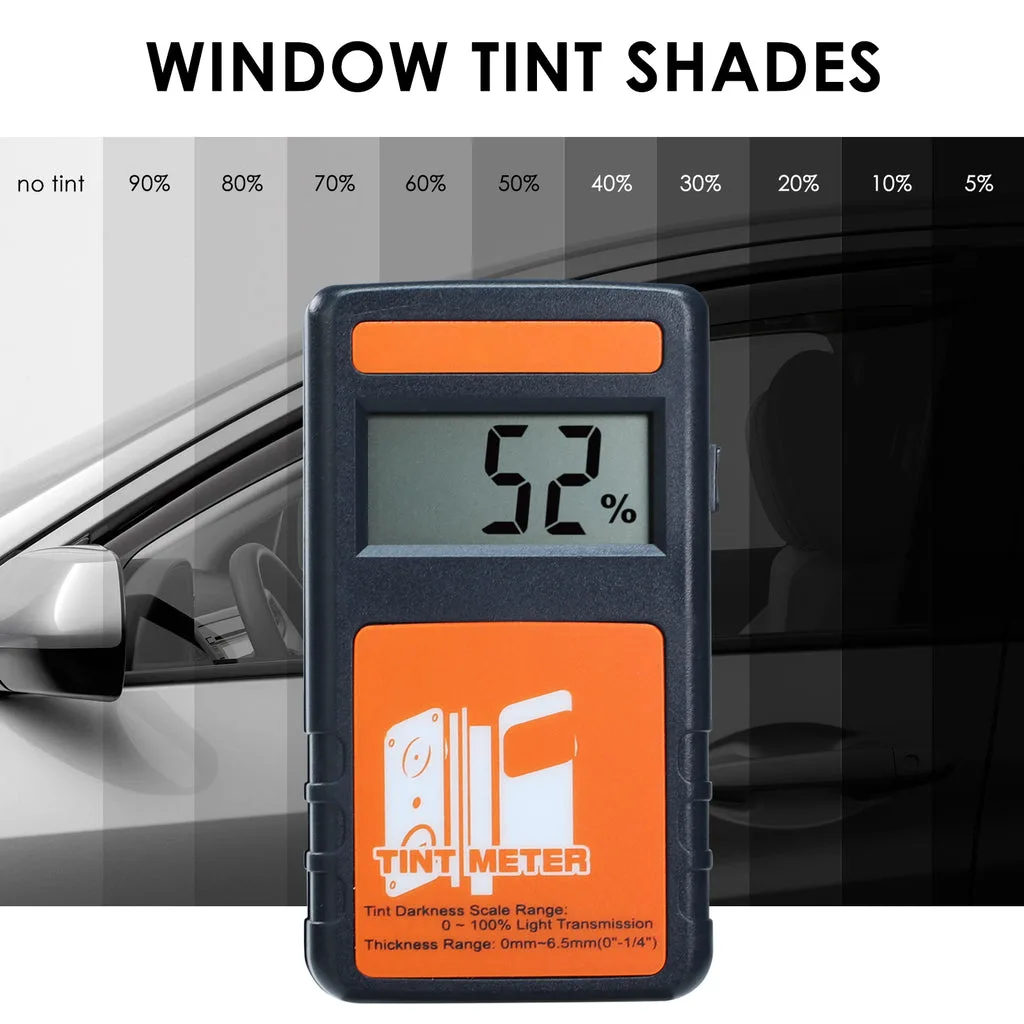
The meter reads the combined VLT of your factory glass and aftermarket film. If the reading is below 27 percent on a front side window, you are in violation. The officer will issue a citation for a Class A traffic infraction.
What happens next depends on the situation.
- First offense: fine plus court costs, typically 100 to 300 dollars total.
- You may be ordered to remove the illegal tint and provide proof of removal.
- Repeat offenses can result in higher fines and potential points on your license.
In some cases, the officer may let you go with a warning. That is not common, but it happens. If you are pulled over, be polite and honest.
Do not argue about the tint measurement.
The best defense is having your tint professionally installed and certified. A certified installer provides a sticker or certificate that shows the measured VLT. Keep that document in your glove compartment.
It can help if you are stopped by an officer who is unsure about the measurement.
If you receive a citation, you can contest it in traffic court. You will need to present evidence that your windows meet the legal standard. A professional tint meter reading from an independent shop can help.
How to Check Your Own Tint Before an Inspection
You do not need to wait for a traffic stop to find out if your tint is legal. Checking it yourself is straightforward. There are a few methods you can use at home or at a shop.
The most accurate way is with a tint meter. These handheld devices cost between 50 and 150 dollars. You place the meter on the window glass.
It gives you a digital readout of the VLT percentage.
If you do not want to buy a meter, most professional tint shops will test your windows for free or a small fee. Call ahead and ask. Many shops are happy to help, especially if you are a potential customer.
A rough visual check is possible but not reliable. Here is what to look for.
- Roll down your window partway. Compare the tint with the window fully closed. Factory glass alone is usually 70 to 80 percent VLT.
- Hold a piece of white paper behind the glass. If the paper looks very dark through the window, your tint is probably below 27 percent.
- Check at night under streetlights. If you can barely see inside the car from outside, the tint is likely too dark.
These visual checks are not exact. They give you a ballpark idea. For a precise measurement, use a meter or visit a shop.
If you have a medical exemption, keep your documentation handy. Even if your tint looks dark, the paperwork makes it legal. But you still need to carry the exemption certificate in your vehicle.
Choosing the Right Film Type for Colorado's Climate
Not all window films are the same. Colorado's high altitude means more UV exposure. The sun is intense, even on cloudy days.
You need a film that blocks heat and UV rays effectively.
There are four main types of window tint film.
| Film type | Heat rejection | UV protection | Cost | Best for |
|---|---|---|---|---|
| Dyed | Low to moderate | Good | Low | Budget builds |
| Metalized | Moderate | Good | Mid | Heat reduction |
| Carbon | High | Excellent | Mid to high | UV protection |
| Ceramic | Very high | Excellent | High | Premium performance |
Bing (Web (fair-use with source credit))
Dyed film is the cheapest option. It uses layers of dye to absorb light. It fades over time and does not block heat as well as other types.
It is fine for rear windows where you want privacy on a budget.
Metalized film adds small metal particles. It reflects heat and provides good durability. The downside is that it can interfere with radio, GPS, and cell signals.
That is rare with modern films but still possible.
Carbon film uses carbon particles. It blocks a significant amount of infrared heat without interfering with signals. It does not fade like dyed film.
This is a solid middle ground for most Colorado drivers.
Ceramic film is the top performer. It blocks up to 99 percent of UV rays and rejects a high percentage of infrared heat. It is completely non-metallic, so no signal interference.
The cost is higher, but the performance is worth it for daily drivers in Colorado sun.
For front side windows, choose carbon or ceramic. They meet the 27 percent VLT requirement while giving you maximum UV and heat protection. For rear windows where darkness is not restricted, any film type works.
Most owners match the rear film to the front for a consistent look.
Professional installation is strongly recommended. A bad DIY job can leave bubbles, peeling, and inaccurate VLT readings. Paying for a pro installation costs more upfront but saves you from tickets and rework.
Common Mistakes That Cost Colorado Drivers Money
The biggest mistake we see is assuming any 35 percent film will measure 35 percent after installation. Factory glass eats up transmission. That same film can land at 26 percent, which is illegal.
Another common error is tinting the windshield below the AS-1 line. That line or the top five inches is the only legal spot for windshield tint. Going below it is a ticket waiting to happen.
Some drivers also forget the dual side mirror rule. If your rear window is tinted, you need both side mirrors. Missing one means a citation even if the tint itself is fine.
Tint Certification and Keeping Proof in Your Car
Colorado law requires that aftermarket tint film carry a manufacturer certification label. That sticker should be placed between the film and the glass on the driver side window. It identifies the film's VLT rating and the manufacturer.
If you have a medical exemption, keep the certificate and any DMV-issued decal in your glove box. Do not leave it at home. If you are stopped, you need to show it on the spot.
Professional installers know to include the certification sticker. If you do a DIY job, make sure the film you buy comes with one. Without it, an officer has no way to verify your tint is legal.
Real-World Example: Out-of-State Tint and Colorado Enforcement
A friend moved to Denver from Arizona, where front window tint can go as low as 33 percent. His car had 20 percent film on the front. He drove for months without issue until a state trooper pulled him over on I-25.
The officer used a tint meter. It read 15 percent after factoring in the factory glass. He got a citation for 175 dollars plus court fees.
He had to remove the tint and pay for a new legal installation.
The lesson is simple. If you move to Colorado, check your tint before you register your vehicle. Out-of-state legal limits do not carry over.
Your previous state's allowance means nothing here.
Frequently Asked Questions About Colorado Window Tint
Can I tint my windshield in Colorado?
You can tint only the top five inches or down to the AS-1 line, whichever is greater. The rest of the windshield must remain clear. No colored or reflective film is allowed on the windshield.
Do I need a prescription for a medical exemption?
Yes. A licensed physician must certify your medical need. The doctor completes a specific form.
You submit it to the DMV for approval. Keep the approved certificate in your car.
What is the fine for illegal tint in Colorado?
A first offense is a Class A traffic infraction. Fines typically range from 100 to 300 dollars plus court costs. Repeat offenses can add points to your driving record.
Does Colorado law apply to rental cars?
Yes. Rental vehicles registered in Colorado must follow the same tint laws. If you rent a car with illegal tint, you are responsible for the citation.
Can I get a tint meter reading at a shop for free?
Many tint shops offer free VLT checks. It takes less than a minute. Call ahead to confirm.
It is a cheap way to avoid a costly ticket.
The Bottom Line: Staying Legal Without Sacrificing Comfort
Colorado window tint laws are clear. Front side windows need at least 27 percent VLT. Rear windows have no limit.
Reflectivity stays under 20 percent on the front.
Pick a quality film like carbon or ceramic. Have it installed by a pro who will certify the work. If you need darker tint for medical reasons, get the exemption approved first.
You can enjoy UV protection, heat reduction, and privacy without breaking the law. Know the rules. Measure your tint.
Drive with confidence.