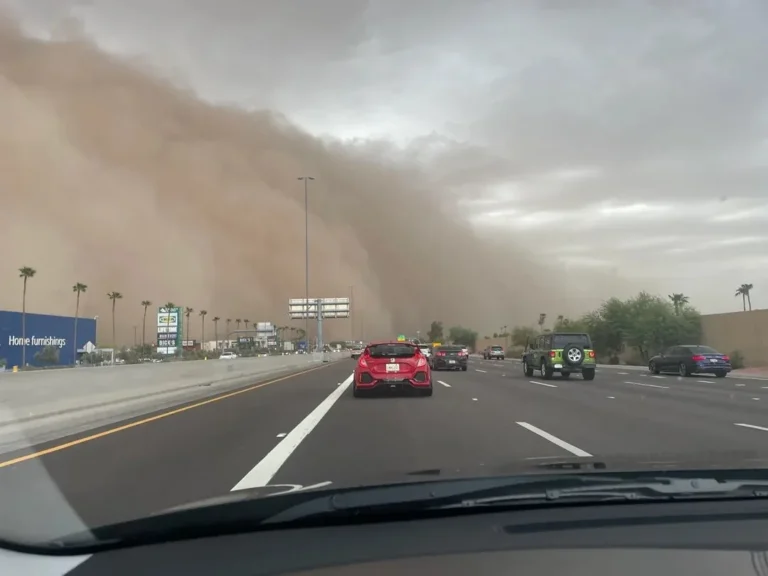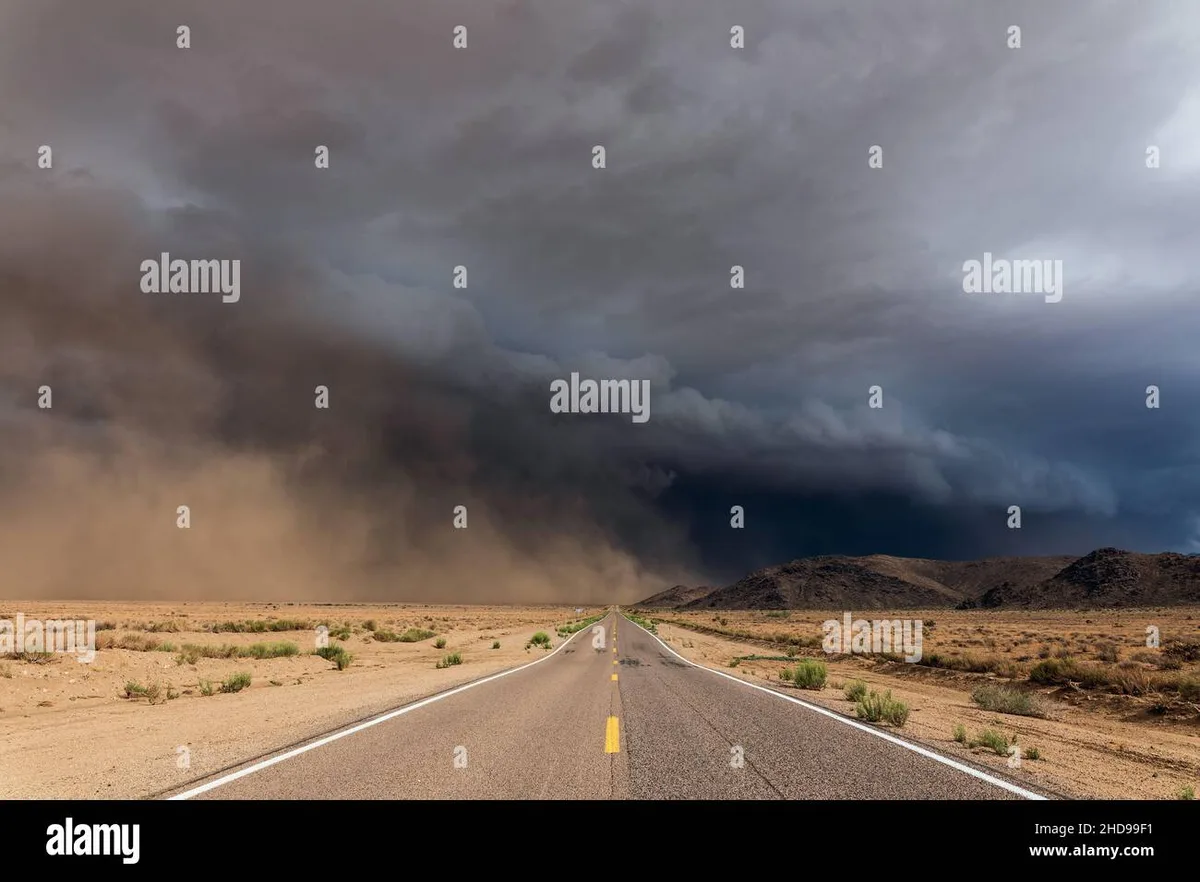
You are cruising down I-10 between Phoenix and Tucson. The sky ahead looks clear. Then a massive brown wall stretches across the horizon.
In minutes, visibility drops to zero. This is an Arizona haboob. Knowing the exact driving in Arizona dust storms safety protocol can mean the difference between pulling over safely and ending up in a forty-car pileup.
The official guidance from the Arizona Department of Transportation is called "Pull Aside, Stay Alive." It sounds simple, but most drivers get it wrong. As of 2026, these storms remain one of the deadliest weather hazards on Arizona roads. Let's walk through exactly what you need to do.
Quick Answer
Pull completely off the paved roadway. Turn off all lights. Keep your foot off the brake pedal.
Stay belted in the vehicle. Wait for visibility to reach at least 300 feet before moving. Do not stop in the travel lane or on the paved shoulder.
Why This Protocol Could Save Your Life
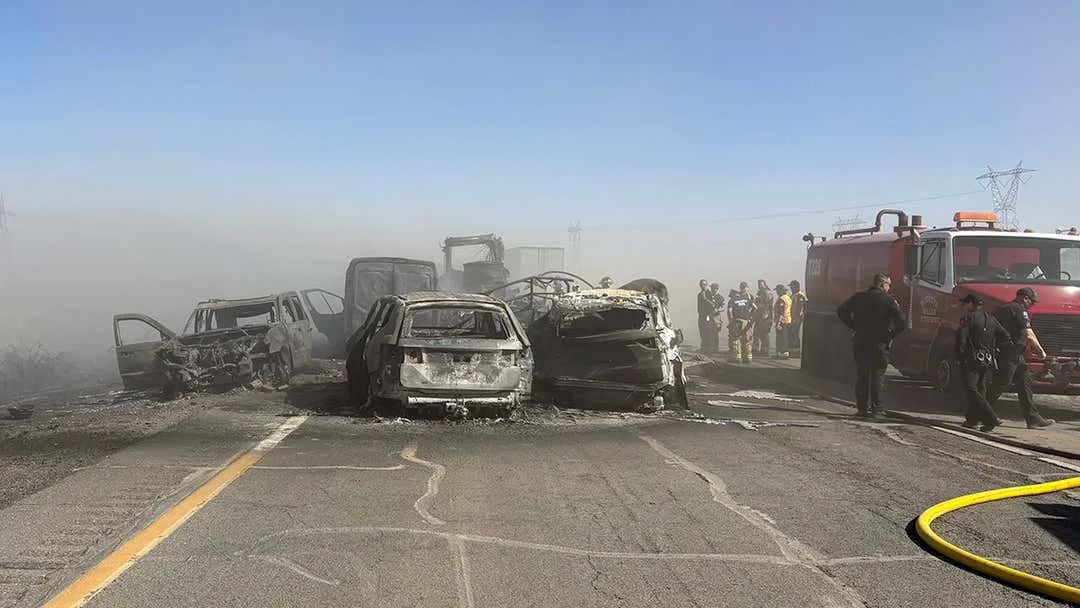
Dust storms cause massive chain-reaction crashes. In September 2024, a storm on I-10 involved over 20 vehicles. Drivers panic.
They slam on their brakes. Cars behind them do the same, but they cannot stop in time.
The protocol stops this cascade. By pulling off the road and turning off your lights, you eliminate your vehicle as a target. You also prevent the driver behind you from following your taillights into a collision.
The National Weather Service reports that most dust storm fatalities happen when drivers stop in the travel lane. That single mistake turns a survivable situation into a deadly one. Following the correct steps keeps you and your passengers safe.
What Exactly Is an Arizona Dust Storm (Haboob)?
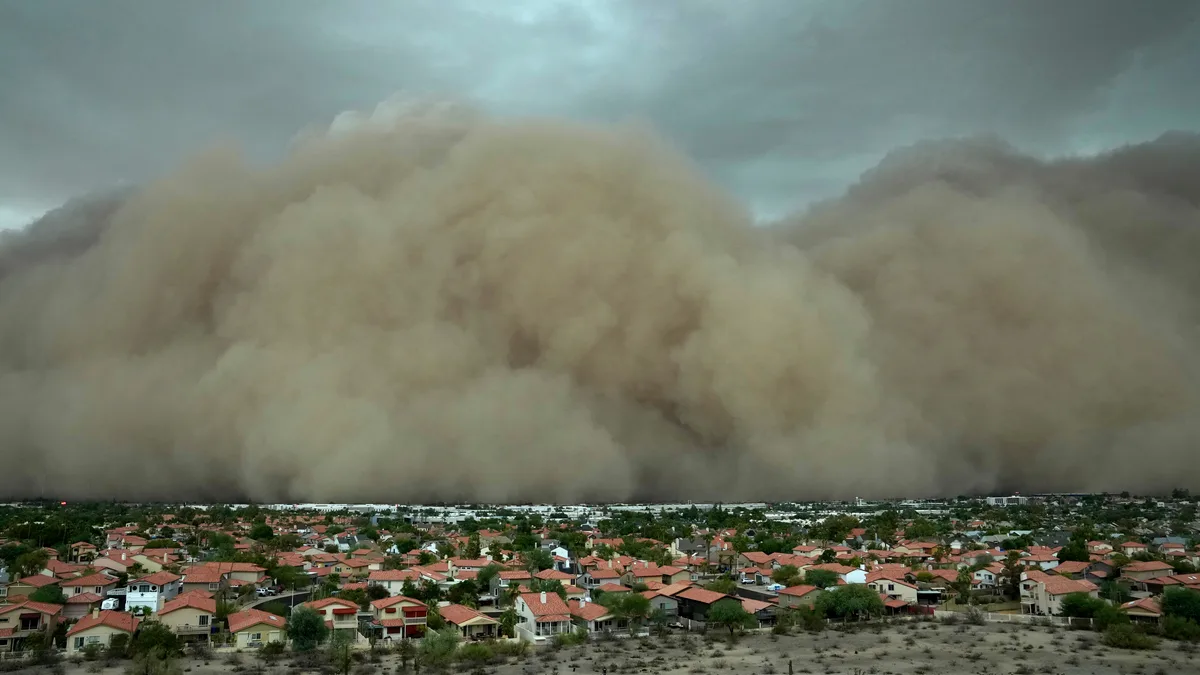
A haboob is a wall of dust caused by thunderstorm downdrafts. These winds hit the ground and sweep up loose soil. In Arizona, the monsoon season runs from mid-June to the end of September.
These storms can be 1,000 to 5,000 feet tall. They move at 40 to 60 miles per hour. Visibility drops to near zero in seconds.
When you see that wall on the horizon, you do not have much time. Your window for safe action is measured in seconds, not minutes.
The Core Facts Every Arizona Driver Must Know
- Stopping on the roadway: Never. You will get rear-ended.
- Stopping on the paved shoulder: Still dangerous. Other drivers may follow your lights.
- Turning off all lights: Yes. It prevents chain-reaction crashes.
- Waiting before driving: Wait until visibility exceeds 300 feet.
These rules are not suggestions. They come from crash analysis by ADOT and the National Highway Traffic Safety Administration. Every violation of these rules has resulted in injuries or deaths on Arizona highways.
The Step-by-Step Protocol: How to Survive a Dust Storm
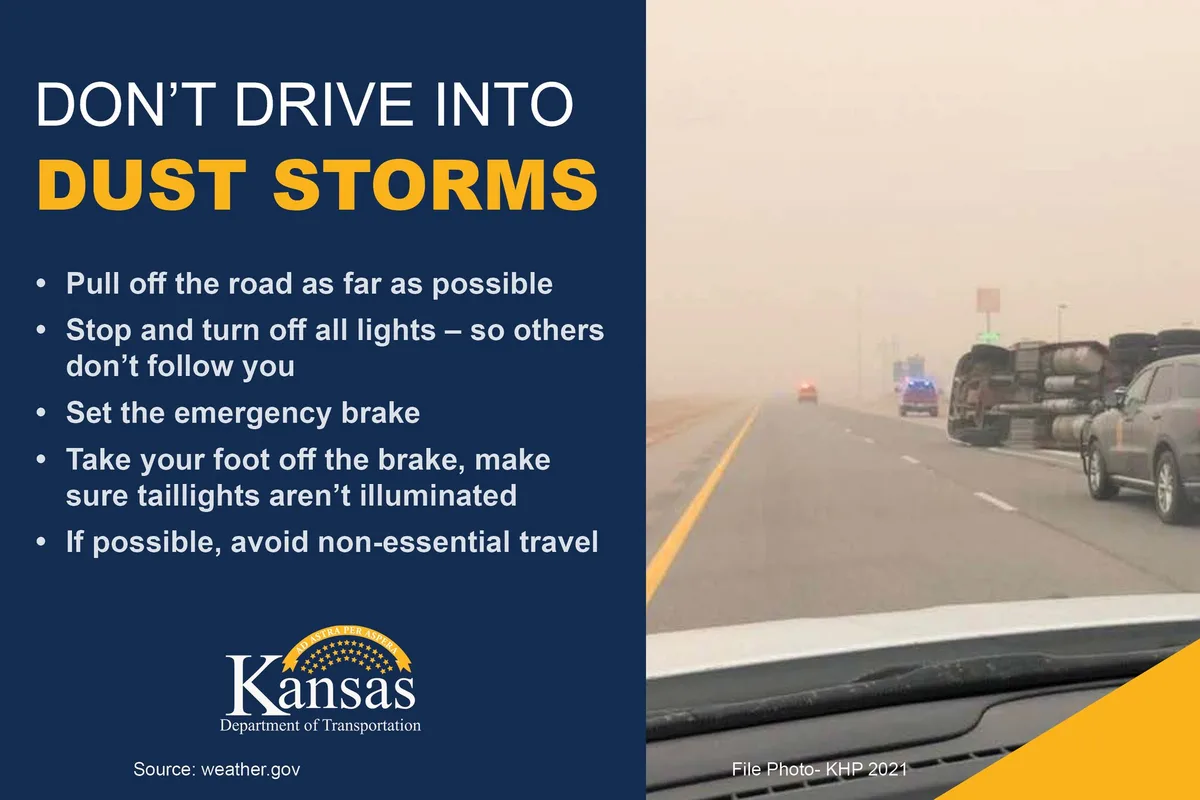
When you hit a dust storm, do this:
Step 1: Check your speed. Do not brake hard. Ease off the gas. Hard braking causes rear-end collisions.
Step 2: Look for a safe place to pull off. A dirt area away from the road is best. Avoid dry washes and ditches. You need solid ground.
Step 3: Pull completely off the pavement. Set the parking brake. Make sure your entire vehicle is clear of the travel lane.
Step 4: Turn off all lights. This includes headlights, taillights, and hazard lights. Remove your foot from the brake pedal. Any light can attract another driver.
Step 5: Stay in the vehicle with your seatbelt on. Do not exit. You can become disoriented in zero visibility. You also risk being struck by another vehicle.
Step 6: Wait for the storm to pass. Most haboobs last 30 to 60 minutes. Listen to local radio for updates. Resume driving only when visibility is 300 feet or more.
Common Mistakes That Kill (And How to Avoid Them)
| Mistake | Why It's Dangerous | Correct Action |
|---|---|---|
| Stopping in the travel lane | You will be hit from behind | Pull completely off the road |
| Leaving hazard lights on | Attracts other drivers to your location | Turn off ALL lights |
| Exiting the vehicle | You can be struck or lost in zero visibility | Stay belted inside |
| Driving slowly without stopping | You create a moving obstacle | Pull over and stop |
| Following taillights | You may crash into a stopped car | Do not rely on other drivers' lights |
The deadliest mistake is stopping in the travel lane. Multiple fatalities have occurred this way. If you remember nothing else, get your vehicle off the pavement.
What About Trucks, SUVs, and High-Profile Vehicles?
If you drive a lifted truck or a large SUV, crosswinds can push you off course. Your center of gravity is higher than a sedan. A sudden gust at highway speed can cause a rollover if you brake hard or jerk the wheel.
Commercial drivers face even greater risk. A semi-trailer has a massive surface area. ADOT recommends that trucks reduce speed to 10 to 20 miles per hour in zero visibility.
But the safer call is to pull off the roadway entirely.
If you drive a large vehicle, look for a wide dirt pull-off. Avoid soft shoulders where a heavy vehicle might sink. Set the parking brake, turn off all lights, and stay put.
The ADOT "Pull Aside, Stay Alive" Campaign — What It Actually Says
The Arizona Department of Transportation created this campaign after the deadly pileups of the 1990s. It is the most authoritative dust storm safety resource in the state. The campaign boils down to six steps.
- Check the weather before you drive.
- If you see a dust storm, reduce speed immediately.
- Pull completely off the paved roadway.
- Turn off all lights. Do not use hazard lights.
- Set the parking brake and remove your foot from the brake pedal.
- Stay in the vehicle with your seatbelt fastened until visibility clears.
The most counterintuitive part is turning off lights. Drivers instinctively want to be seen. But research shows that lights make other drivers steer toward you.
They follow your taillights right into your vehicle. ADOT's own crash data supports this.
When to Pull Over vs. When to Keep Driving (Decision Guide)
| Condition | Action |
|---|---|
| Visibility drops below 300 feet | Pull over immediately. Find a spot off the pavement. |
| Dust wall is visible but distant (more than one mile) | Slow down and prepare to exit. |
| Visibility is more than 300 feet but blowing dust is present | Reduce speed to 20 mph or less. Stay alert. |
| You are already surrounded by zero visibility | Do not move. Wait for the storm to clear. |
| A safe exit is within one mile | Exit the highway before the storm hits. |
If you are inside a dust storm with zero visibility, never try to drive through it. You cannot see stopped vehicles, debris, or road edges. Many pileups happen because a driver thought they could push through.
Pull over.
What Belongs in Your Dust Storm Emergency Kit
- N95 mask or respirator. Fine dust particles can irritate your lungs.
- Bottled water. One gallon per person.
- Flashlight with extra batteries.
- Phone charger with a cigarette lighter plug.
- First aid kit.
- Emergency blanket.
- Non-perishable snacks.
- Whistle.
Store everything in a small duffel bag. Keep it in your trunk or behind the seat. Check it once a month for expired items or dead batteries.
The Legal Side: Liability, Fines, and Insurance After a Dust Storm Crash
Arizona law holds drivers responsible for operating their vehicles safely in hazardous conditions. If you cause a crash by failing to pull over, you can be cited for careless driving.
Arizona Revised Statutes Title 28 covers traffic violations. Driving too fast for conditions is a civil offense. Following too closely is another common citation in dust storm pileups.
Insurance companies will investigate whether you followed standard safety protocols. If you stopped in the travel lane or left your lights on, they may argue you contributed to the crash. This can reduce your payout or deny coverage.
Following the ADOT protocol protects you legally. It shows you acted as a reasonable driver would. It also gives you a stronger case if another driver hits you.
Real Scenarios: What Happens When You Follow (or Ignore) the Protocol
A driver on I-8 near Gila Bend spots the dust wall a mile ahead. She eases off the gas, signals, and pulls onto a dirt access road. She turns off her engine and all lights.
The storm passes in 45 minutes. She drives away without incident.
Another driver on the same highway panics. He slams the brakes in the travel lane. The car behind him cannot stop.
Both vehicles are totaled. Three people are injured.
The difference is not luck. It is knowledge and action. The protocol works every time.
The only variable is whether you follow it.
Frequently Asked Questions
Should I turn off my hazard lights in a dust storm?
Yes. Once you have pulled off the roadway, turn off all lights. Hazard lights attract other drivers who may steer toward you.
This is a leading cause of secondary collisions.
How far should I pull off the road?
Pull completely off the paved shoulder. Your entire vehicle must be clear of the travel lane. A dirt or gravel area is best.
Avoid dry washes and soft sand.
How long do these storms typically last?
Most haboobs last 30 minutes to one hour. Some can persist for up to two hours. Wait for full clearance.
Do not resume driving until visibility exceeds 300 feet.
Is it safer to drive through a dust storm or pull over?
Pulling over is always safer. Driving through zero visibility puts you at high risk of hitting stopped vehicles, debris, or running off the road. No route is worth the gamble.
Can I use my GPS to navigate out of a storm?
No. GPS cannot compensate for zero visibility. Your focus should be on pulling over safely and waiting.
Do not rely on electronics.
Your Final Checklist Before Monsoon Season Hits
Run through this list before June 15 each year.
- Review the protocol with everyone in your household.
- Pack a dust storm emergency kit (water, mask, flashlight, first aid).
- Check your spare tire and jack.
- Ensure your phone charger works in your vehicle.
- Know the most dangerous corridors: I-10 between Phoenix and Tucson, I-8 near Gila Bend, and SR 85 south of Buckeye.
The monsoon season is predictable. Dust storms are a fact of life in Arizona. You cannot stop them from coming.
But you can control how you respond. Memorize the steps. Practice them mentally.
It could save your life.
Run through this list before June 15 each year.
- Review the protocol with everyone in your household.
- Pack a dust storm emergency kit (water, mask, flashlight, first aid).
- Check your spare tire and jack.
- Ensure your phone charger works in your vehicle.
- Know the most dangerous corridors: I-10 between Phoenix and Tucson, I-8 near Gila Bend, and SR 85 south of Buckeye.
The monsoon season is predictable. Dust storms are a fact of life in Arizona. You cannot stop them from coming.
But you can control how you respond. Memorize the steps. Practice them mentally.
It could save your life.