ByMax Lee
Guide to Frozen Waterway Crossing Permits 2026: Simple Steps
If you're planning to drive across a frozen river or lake in Alaska, you need to understand Frozen Waterway Crossing Permits. These are not a suggestion. They are a legal requirement for crossing any waterway within a state highway right-of-way.
Drive without one and you risk fines up to $10,000 plus liability for any damage you cause.
As of 2026, the Alaska Department of Transportation and Public Facilities sets the rules. They tie permit approval directly to your vehicle weight and measured ice thickness. A standard passenger vehicle needs at least 12 inches of clear, solid ice.
That requirement jumps for trucks and commercial loads. Let's break down exactly what you need to know before you drive onto the ice.
Quick Answer
A frozen waterway crossing permit is a legal authorization from ADOT&PF. It allows you to drive across a frozen waterway within a state highway right-of-way. The permit sets your load limit and approved crossing dates.
It does not guarantee safe ice conditions. Check local ice reports every day before crossing.
How It Works: Permit Types and What They Cover
ADOT&PF issues two main types of permits. Residential permits are for personal vehicles like cars, pickups, and ATVs used for private access. Commercial permits cover trucks, heavy equipment, and vehicles used for business purposes such as hauling fuel, supplies, or construction materials.
Single-Use vs Seasonal Permits
A single-use permit covers one crossing on a specified date. Seasonal permits allow unlimited crossings over a set period, typically the entire winter season. Seasonal permits cost more upfront but save money if you cross regularly.
Public vs Tribal Managed Routes
Some crossings are managed directly by ADOT&PF. Others fall under tribal or village jurisdiction, especially in rural western Alaska. Always confirm which authority oversees your specific crossing.
Our research shows that crossing on tribal land without proper approval can result in immediate denial of access regardless of your state permit.
What Permits Do Not Cover
A permit does not guarantee the ice is safe. It does not cover crossing after a closure order is issued. It does not cover private land without the landowner's separate permission.
Understanding these limits is critical for every driver.
For a broader look at driving in Alaska's winter conditions, check out our blog for tips on vehicle preparation and maintenance.
The Core Facts: Ice Thickness, Load Limits, and Vehicle Requirements
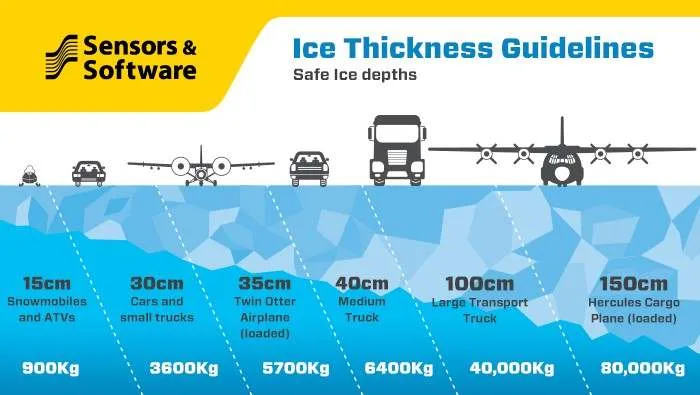
This is where the math matters. ADOT&PF bases every permit on minimum ice thickness requirements. These numbers come from decades of data on ice strength and load distribution.
Minimum Ice Thickness by Vehicle Type
| Vehicle Type | Minimum Ice Thickness | Maximum Load |
|---|---|---|
| Snowmachine / ATV | 6 inches | 1,000 lbs |
| Passenger car / SUV | 12 inches | 5,000 lbs |
| Light truck (1/2 ton) | 15 inches | 7,000 lbs |
| Medium truck (1 ton) | 20 inches | 14,000 lbs |
| Heavy commercial truck | 30+ inches | Varies by axle |
Important Factors Beyond Thickness
Clear blue ice is the strongest. White or cloudy ice is weaker because it has trapped air or water. Snow on top acts as insulation, slowing freeze rates and hiding cracks.
Always drill test holes in multiple spots before committing to a crossing. One hole is not enough.
Load Limits and Speed
Even with a permit, you cannot exceed the posted load limit for that crossing. Driving too fast creates waves under the ice that can cause failure. Keep your speed under 10 mph on ice roads.
Avoid sudden stops and sharp turns. Spread your load evenly across the vehicle.
Salt and road treatments can accelerate ice melt on crossings. If you're concerned about protecting your vehicle's undercarriage during winter driving, our article on Does Ceramic Coating Protect Against Salt offers useful guidance.
Step-by-Step Guide: How to Apply for an Alaska Crossing Permit
The application process is straightforward if you prepare properly. Here is the exact process based on ADOT&PF's current procedures.
Step 1: Check Your Crossing Location
Identify which ADOT&PF district office covers your crossing. The state is divided into three districts: Northern, Central, and Southeast. Each office manages its own permit schedule.
Contact them early because application windows vary.
Step 2: Gather Required Information
- Vehicle make, model, and year
- Gross vehicle weight rating
- Purpose of crossing (personal, commercial, emergency)
- Exact GPS coordinates of the crossing location
- Landowner permission if crossing private property
Step 3: Submit Your Application
Applications are accepted online, by mail, or in person at the district office. Commercial applications require additional paperwork including proof of insurance. A $1 million liability policy is standard for commercial vehicles.
Step 4: Pay the Permit Fee
Fees vary by permit type and duration. You will receive a receipt and permit number after payment.
Step 5: Receive and Display Your Permit
Approved permits are issued as printed documents. You must carry the permit in your vehicle while crossing. Digital copies on your phone are not accepted.
Step 6: Verify Ice Conditions Daily
Your permit does not mean the ice is safe forever. Check local ice reports every day before crossing. ADOT&PF posts updates on their website and through local radio stations.
If conditions change, the permit can be suspended without notice.
After crossing, clean your vehicle thoroughly to remove ice, salt, and debris. If your vehicle has ceramic coating, you will want to use the right products. Learn more with our guide on Car Shampoo for PPF to keep your finish protected.
How Much Does a Permit Cost? Fees, Insurance, and Timelines
Costs vary depending on where you cross, for how long, and whether you drive a personal or commercial vehicle.
Typical Fee Ranges
| Permit Type | Residential | Commercial |
|---|---|---|
| Single crossing | $25 to $50 | $100 to $300 |
| Seasonal (per winter) | $100 to $200 | $500 to $1,500 |
| Annual (rare) | $150 to $300 | Not typically offered |
Additional Costs
Commercial permits often require a refundable bond or performance deposit. This covers potential environmental damage or vehicle recovery costs. Expect a bond of $2,000 to $10,000 depending on load size and risk.
Timelines for Approval
Residential permits are usually processed within 1 to 3 business days. Commercial permits take 5 to 14 business days due to insurance and bonding review. Apply at least two weeks before your planned crossing to avoid delays.
When Permits Get Expensive
Heavy hauling, oversized loads, and multiple crossings in remote areas can push fees higher. Some western Alaska ice roads charge premium rates because of the extreme conditions and limited monitoring resources.
If you frequently handle heavy equipment or commercial vehicles in winter, you might benefit from proper cleaning and maintenance tools. Our article on Heavy Equipment Wash Soap covers products designed for tough winter grime.
Common Mistakes That Get Permits Denied (or Worse, Approved)
Applying for a permit seems simple. But people mess it up all the time. Some mistakes delay your application.
Others get you approved for a crossing that is not safe. That second kind is the dangerous one.
Mistake 1: Applying Too Late
Ice forms on a schedule. Permits do not. ADOT&PF opens the application window based on historical freeze dates, not current conditions.
If you apply in late November for a December 1 crossing, you might get approved. But the ice might not be thick enough yet. Apply early but build in a two week buffer before you actually need to cross.
Mistake 2: Guessing Your Vehicle Weight
You might think your pickup weighs 5,000 pounds. Fully loaded with gear, fuel, and passengers, it might weigh 7,000 pounds. That difference matters.
An extra 2,000 pounds can push you past the ice thickness requirement for your permit. Always weigh your vehicle at a certified scale before applying. If you have added a camper shell, tools, or heavy winter supplies, the number changes.
Mistake 3: Ignoring Local Conditions
ADOT&PF issues permits based on general ice data. But local conditions vary. A river with current underneath freezes slower than a lake.
A crossing near a spring or warm water outlet has weaker ice. You are responsible for knowing these conditions.
Mistake 4: Forgetting Landowner Permission
A state permit only covers crossings within state highway rights of way. If your route crosses private land, you need separate written permission from the landowner. This is a common issue in rural Alaska where property lines cross traditional travel routes.
Mistake 5: Relying on Last Year's Approval
Ice conditions change every winter. A crossing that was safe last February might not form at all this year. ADOT&PF does not automatically renew permits.
You must apply fresh each season. Assume nothing from previous years.
If you drive through mud or slush after a crossing, clean the undercarriage properly. Our article on Pre Car Wash Spray explains how to prep your vehicle before a thorough wash.
Permitted vs. Unpermitted Crossing: What's the Real Difference?
You might be tempted to skip the permit. Maybe you are only crossing once. Maybe the ice looks thick.
Here is what you are actually giving up.
What a Permit Gives You
| Factor | Permitted Crossing | Unpermitted Crossing |
|---|---|---|
| Legal authorization | Yes | No |
| Ice inspection before opening | Required by ADOT&PF | None |
| Load limit established | Yes | Your guess |
| Liability protection | Limited | None |
| Fine if caught | None | Up to $10,000 |
| Insurance coverage | Maintained | Potentially voided |
The Real Risk of Going Unpermitted
Crossing without a permit is illegal under Alaska law. But the legal risk is only part of the story. The bigger issue is that no one has inspected that crossing.
You do not know the ice thickness. You do not know if there are cracks, overflow, or weak spots. You are betting your vehicle, your cargo, and your life on a guess.
When People Try It Anyway
In remote areas with limited enforcement, some people cross without permits. They tell themselves the risk is low. But Alaska has no shortage of stories about vehicles breaking through ice on unpermitted crossings.
Recovery costs are your responsibility. And if that happens, your insurance company will ask if you had a permit. If the answer is no, they can deny your claim.
Safety & Legal Warnings: What Happens If You Cross Without a Permit
Let's be direct about this. Crossing without a permit carries consequences that go far beyond a ticket.
Legal Penalties
Alaska Statute 19.05.040 governs crossings within highway rights of way. Violating permit requirements is a misdemeanor. Fines start at $500 and can reach $10,000 for repeat or commercial violations.
You can also face civil penalties for damage to the roadway or surrounding land.
Environmental Liability
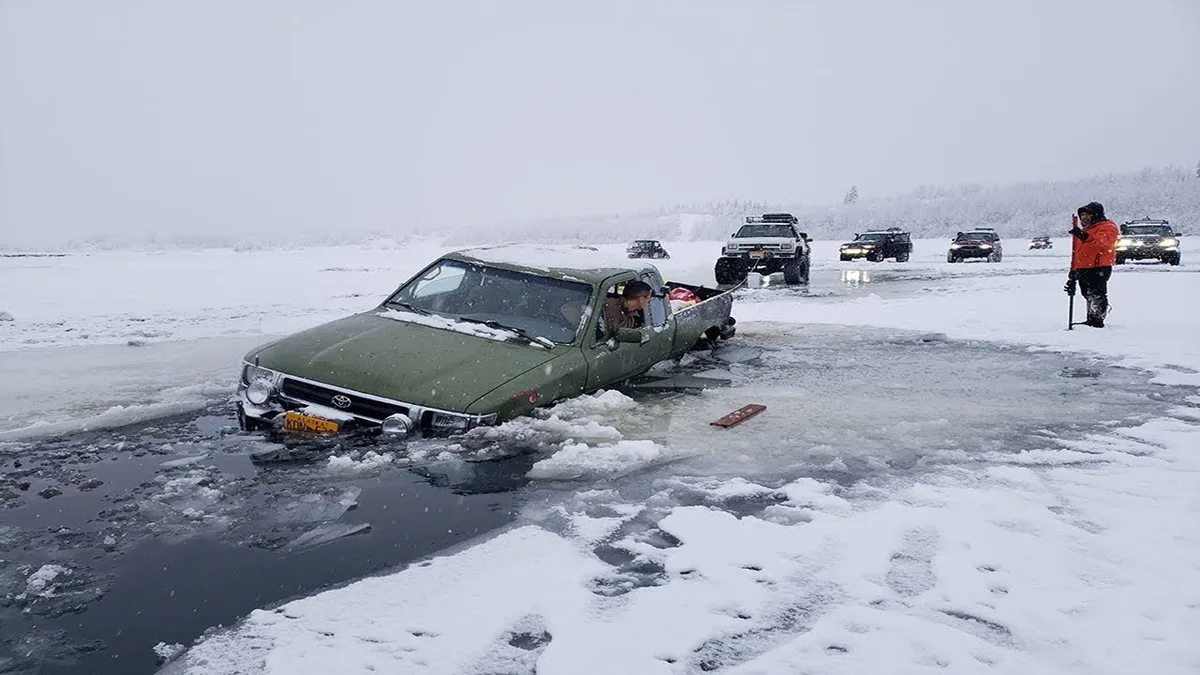
If your vehicle breaks through the ice, fuel, oil, and other fluids enter the waterway. You are responsible for cleanup costs. Those costs can reach tens of thousands of dollars.
ADOT&PF can also require you to remove the vehicle at your own expense. In remote areas, vehicle recovery alone can cost $5,000 to $20,000.
Insurance Voiding
Standard auto policies often exclude losses from illegal activity. Driving without a required permit qualifies. If your vehicle sinks through the ice and you did not have a permit, your insurance company can deny the claim.
You lose the vehicle and still owe cleanup costs.
Criminal Charges in Extreme Cases
If someone is injured or killed because of an unpermitted crossing, criminal charges are possible. Reckless endangerment and even manslaughter charges have been filed in Alaska ice crossing deaths. The permit exists to prevent exactly these scenarios.
After a long winter driving season, your vehicle's exterior takes a beating. For tips on keeping your car's finish in top shape, check our guide on Car Power Washer Spray Gun for effective cleaning without causing damage.
Pro Tips for Driving on Ice: What the Permit Doesn't Tell You
Your permit covers the legal side. It does not teach you how to survive on ice. Here is what experienced drivers know.
Read the Ice Color
Clear blue ice is the strongest. Black ice is new ice and can be deceivingly thin. White or opaque ice has trapped air or water and is weaker.
Gray ice means water is present on top or the ice is rotting. Stay off gray ice.
Drill Test Holes
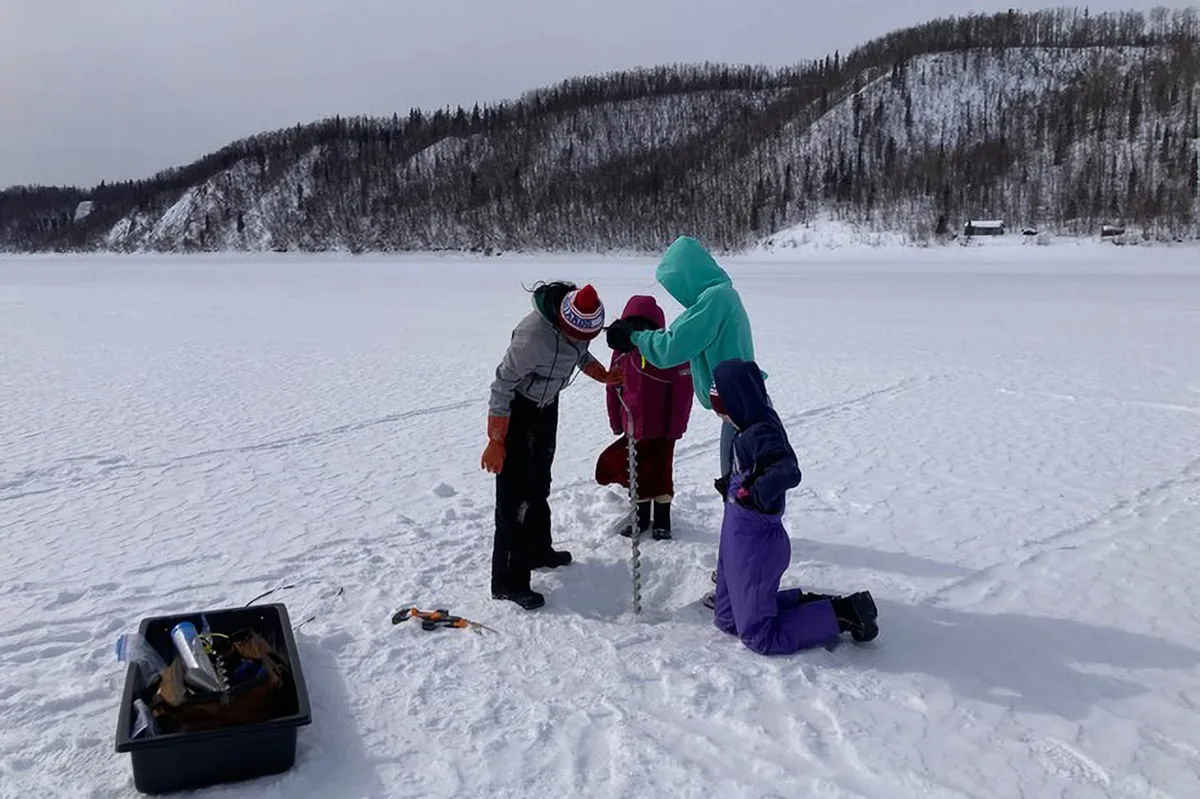
Do not trust one measurement. Drill test holes every 50 to 100 feet along your intended path. Check thickness in multiple spots.
Ice thickness can vary dramatically within a single crossing. Our research shows that variations of 4 to 6 inches are common on rivers with current.
Watch for Overflow
Overflow happens when water pushes up through cracks in the ice and flows on top. It looks like a thin layer of water on the ice. Overflow can be several inches deep and hides weak ice underneath.
If you see water on the ice, stop. Find a different route.
Drive Slow and Smooth
Speed creates pressure waves under the ice. Those waves can cause the ice to flex and crack. Keep your speed under 10 mph.
Avoid sudden acceleration, braking, and sharp turns. Coast across if possible.
Keep Windows Partially Open
If you break through, you have seconds to get out. Roll your windows down before crossing. This gives you an escape route if the vehicle sinks.
Electric windows may fail after contact with water.
Pack an Emergency Kit
Every ice crossing vehicle should carry a dry bag with warm clothes, a flashlight, a whistle, and a way to call for help. A set of ice picks on a lanyard around your neck can save your life if you fall through. Keep them accessible, not buried in a trunk.
For maintaining your vehicle after winter travel, you might want to learn more about Manual Cleaning Equipment Using In Car Wash to remove salt and grime without scratching the paint.
Frequently Asked Questions About Alaska Frozen Waterway Permits
How long does a frozen waterway crossing permit last?
Single use permits cover one crossing on a specified date. Seasonal permits cover the full winter season, typically November through April. Always confirm the expiration date on your permit document.
Can I get a permit online?
Yes. ADOT&PF accepts online applications through their district office portals. You will need to upload vehicle information, proof of insurance for commercial permits, and GPS coordinates for your crossing location.
Do I need a permit for a snowmachine?
Yes. Snowmachines and ATVs require permits when crossing within a state highway right of way. The minimum ice thickness is 6 inches for these vehicles.
Residential permit fees apply.
What happens if the ice melts while my permit is active?
ADOT&PF can suspend or revoke permits at any time based on changing conditions. If the ice becomes unsafe, the permit is void. You must stop crossing immediately.
No refunds are issued for weather related closures.
Can I appeal a permit denial?
Yes. ADOT&PF has an appeals process for denied applications. You must submit a written request within 30 days of the denial.
Appeals are reviewed on a case by case basis. Common reasons for successful appeals include corrected weight information or updated insurance documentation.
Is a permit required for walking or snowshoeing across a frozen waterway?
No. Permits apply only to motorized vehicle crossings. Pedestrians, skiers, and snowshoers do not need permits.
However, you should still follow basic ice safety practices and local guidance.
Final Decision Guide: Is a Permit Worth It for Your Situation?
This is where it all comes together. You know the rules, the costs, and the risks. Now you need to decide based on your specific situation.
If You Drive a Personal Vehicle
You cross once or twice a winter for personal access. A residential permit costs $25 to $50. The application takes minutes.
Compare that to a fine starting at $500 for crossing without one. Get the permit.
If You Drive a Commercial Vehicle
A commercial permit is not optional. It is a legal and insurance requirement. Operating without one exposes your business to liability claims that can run into six figures.
Your insurance policy likely requires a valid permit for coverage.
If You Cross Frequently
A seasonal permit saves money and time. One application covers the entire winter. You avoid the hassle of repeated single-use permits.
The upfront cost is higher but the per-crossing cost drops to nearly nothing.
The Bottom Line
For every situation, get the permit. It protects your wallet, your vehicle, and your life. The paperwork is minimal.
The risk of going without it is enormous.
After a winter of ice crossings, give your vehicle a proper clean. Road salt and ice residue cause long-term rust damage. Our guide on What To Use To Wash My Engine Spot Less helps you keep the engine bay clean without causing electrical issues.
Drive safe out there. Alaska's winters demand respect. A permit is just the first step toward a safe crossing.