ByMax Lee
Guide to Arizona License Plate Frame Obstruction Laws (2026)
Arizona license plate frame obstruction laws trip up more drivers than you'd think. That aftermarket frame you picked up at the auto parts store or the dealer-installed bracket that came with your new car might actually be illegal. The fine isn't cheap.
Expect $100 to $300 plus court costs if you get cited.
Under ARS § 28-2354, your plate must be clearly legible from 100 feet away. That's the enforcement standard Arizona law enforcement uses. If your frame covers even a sliver of the embossed text, the state name, or the validation stickers in the upper corner, you're technically in violation.
Let's walk through what that means for your car.
Bing (Web (fair-use with source credit))
Quick Answer
Arizona license plate frame obstruction laws make it illegal to cover the embossed text, state name, or validation stickers. Your plate must be legible from 100 feet. Tinted covers usually violate the law.
A fix-it ticket costs $100 to $300. Fix the frame, clear the ticket.
Why This Matters More Than You Think
Most Arizona drivers never think about their license plate frame until they see flashing lights. Law enforcement uses plate obstruction as a reason to initiate a traffic stop. It gives them probable cause to check for other issues like expired registration, suspended licenses, or impaired driving.
You might feel it's a minor technicality. But the officer writing the citation sees it differently. The law is clear, and ignorance doesn't waive the fine.
For more on keeping your car in top legal shape, check out our Blog for practical ownership tips.
Photo enforcement cameras also play a factor. Red light cameras and speed cameras in Phoenix, Scottsdale, and Tucson rely on clear plate images. A frame that obscures any part of your plate can make it harder for the camera to read. But you still get the ticket. The registered owner is on file. The frame just makes the process messier.
There's also the simple hassle factor. A fix-it ticket means a trip to your nearest police station or court for inspection. That's time you don't get back.
Ignoring it increases the fine and can lead to a suspended registration.
What the Law Actually Says (ARS § 28-2354)
Let's get into the actual statute. ARS § 28-2354 covers the display of license plates on vehicles in Arizona. The key language states that every license plate must be kept clean and free from foreign materials that obstruct the legibility of the plate.
Bing (Web (fair-use with source credit))
What "Obstruct Legibility" Means
The statute doesn't use vague language. It says the plate must be clearly legible. Every character, every number, every letter, and every sticker must be fully visible.
A frame that overlaps even one millimeter of the plate surface technically violates this requirement.
The 100-Foot Rule
Law enforcement officers are trained to assess plate legibility from approximately 100 feet. If they can't read your plate from that distance, you're getting pulled over. This applies during the day and at night.
Reflective sheeting on Arizona plates helps with nighttime visibility, but a frame can block that reflection.
Enforcement Is Officer Discretion
Not every officer will pull you over for a minor frame overlap. But many will. It's a quick and easy stop.
The officer can verify your registration, check your license, and look for other violations. Keeping your plate fully visible is smart self-defense on the road.
For the full statutory text, the Arizona State Legislature maintains the complete ARS database online.
The Three Things Your Frame Can't Cover
When you check your plate, focus on three critical areas. A frame that covers any of these is a violation.
The State Name at the Top
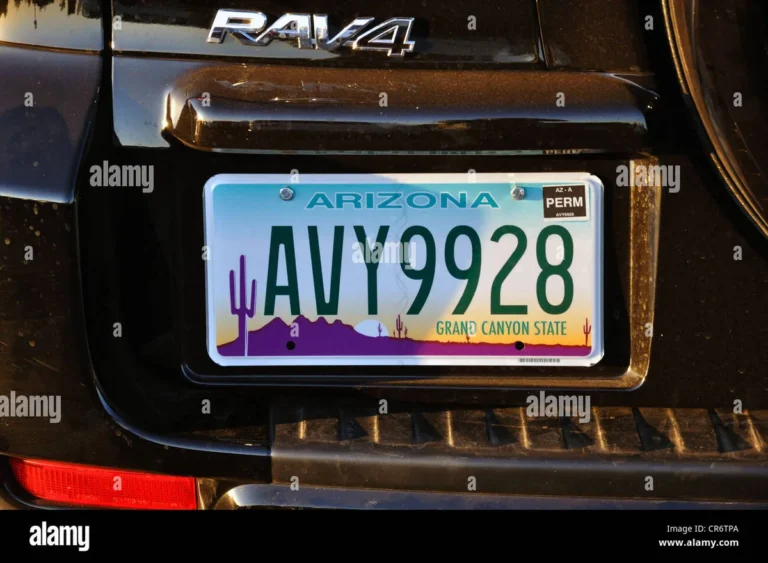
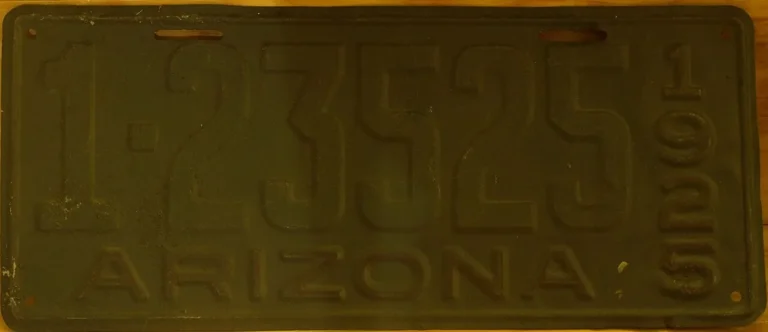
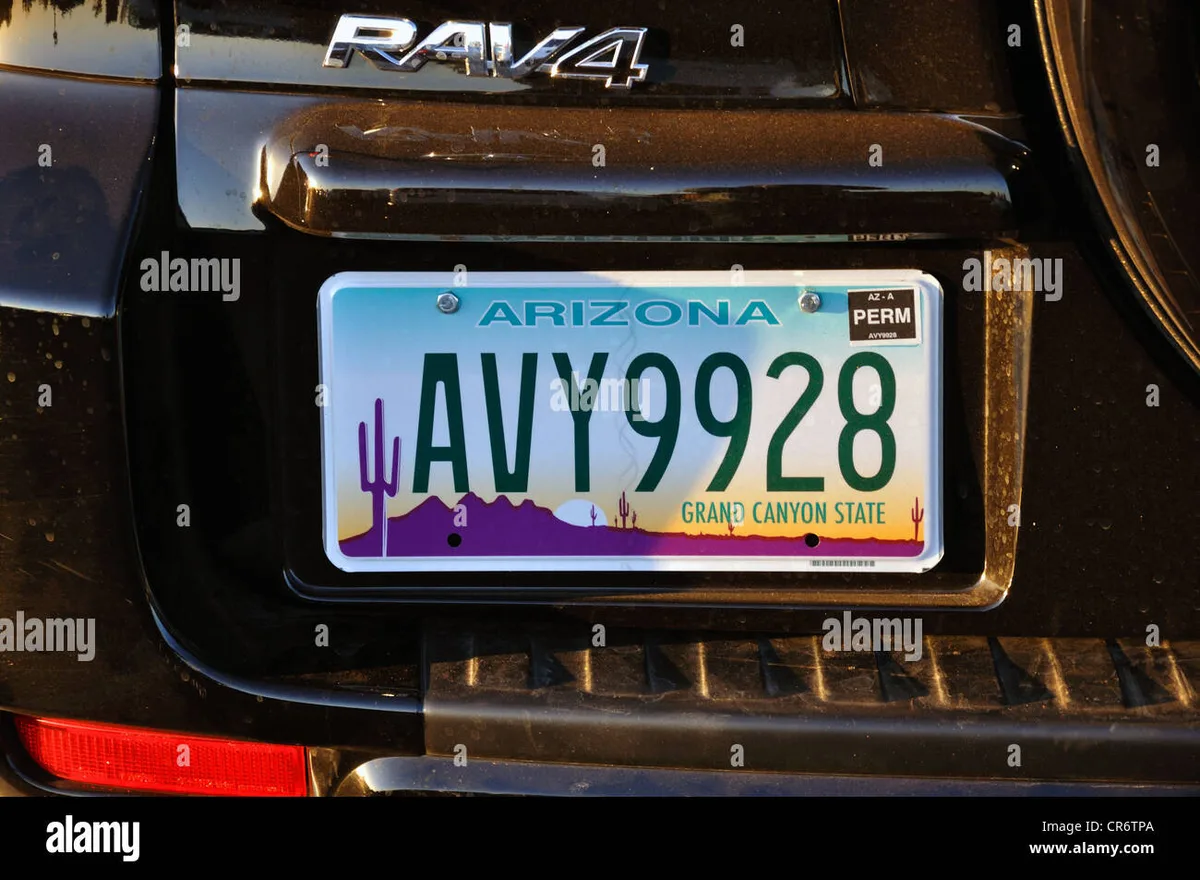
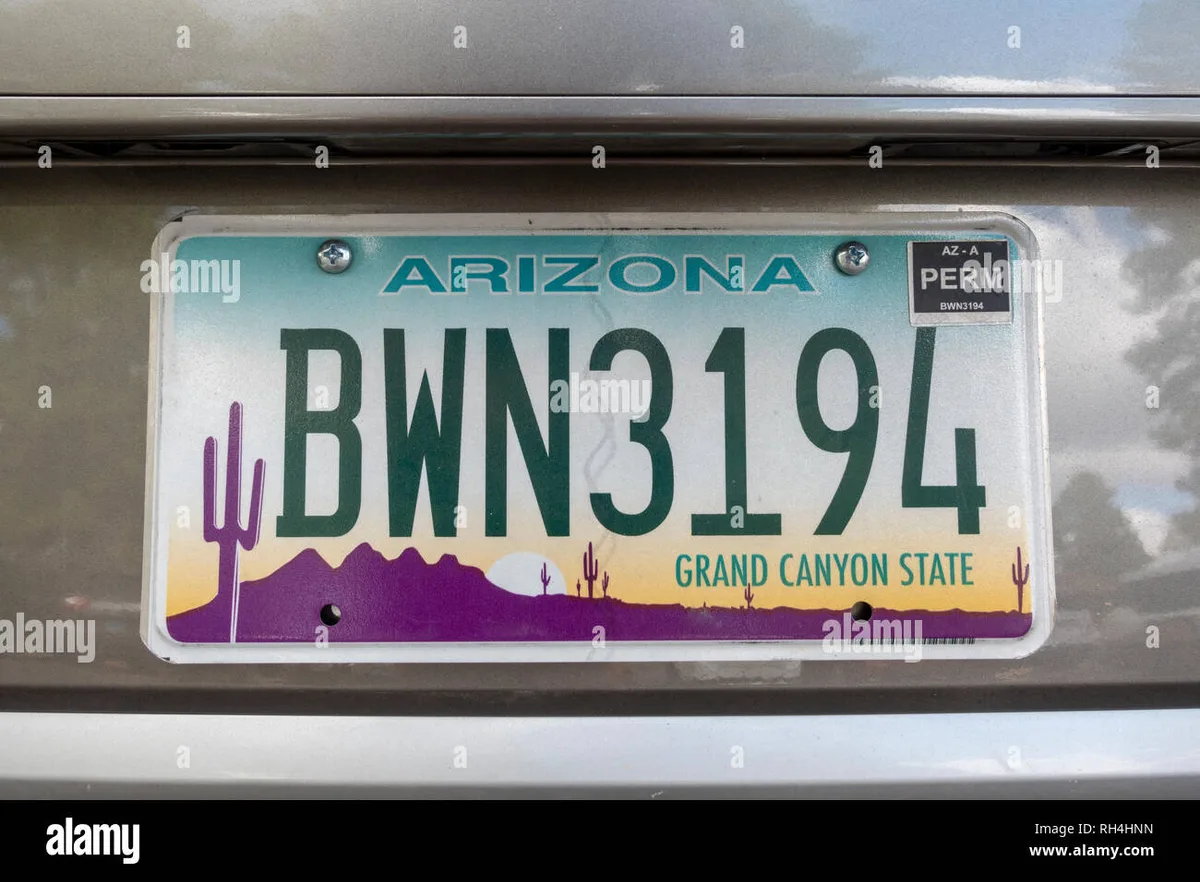
Every Arizona plate has the word "Arizona" embossed at the top. Many aftermarket frames and dealer frames extend far enough to cover part or all of this text. If the officer can't see "Arizona," that's an automatic violation.
The License Plate Number and Letters
The main characters on your plate are the most obvious thing to protect. Any frame that overlaps the numbers or letters is illegal. This includes frames with thick bezels or decorative borders that intrude onto the plate surface.
The Validation Stickers in the Upper Right Corner
This is the most common violation. Your registration sticker sits in the upper right corner of the plate. Many frames have a lip that extends over that corner, partially or fully covering the sticker.
The month and year must be clearly visible. If they're covered, you're getting a ticket.
Here's a quick reference:
| What Must Be Visible | What Happens If Covered |
|---|---|
| State name (Arizona) | Ticket plus fine |
| License plate number | Ticket plus fine |
| Validation sticker month and year | Ticket plus fine |
| Validation sticker color (if applicable) | Ticket plus fine |
Are Tinted Plate Covers Legal in Arizona?
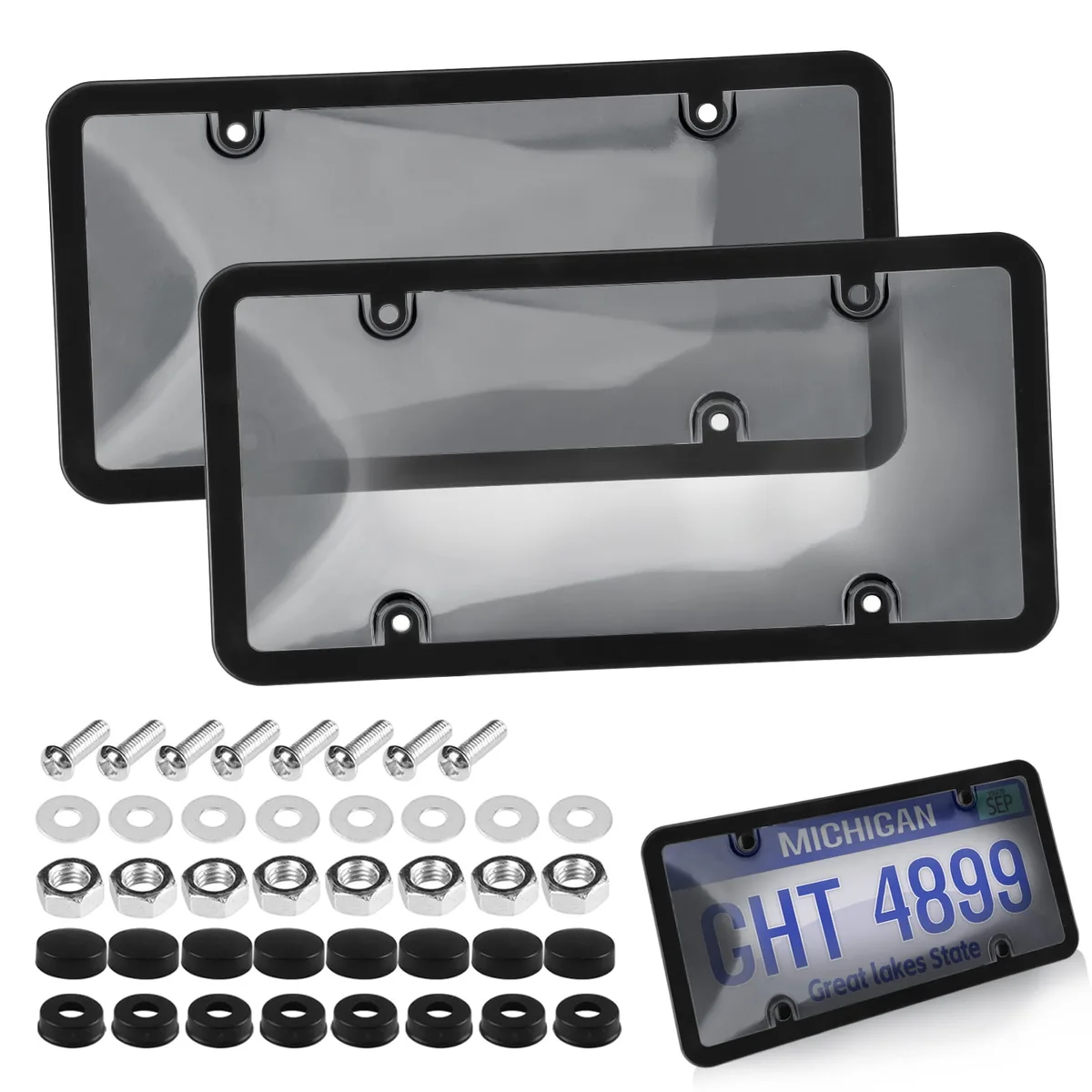
The short answer is no. Tinted or smoked plastic covers over your license plate are almost always illegal in Arizona. Here's why.
Bing (Web (fair-use with source credit))
They Obstruct Legibility
A tinted cover, even a light smoke, reduces the contrast between the plate characters and the background. That makes it harder to read from a distance. Law enforcement considers this an obstruction under ARS § 28-2354.
They Reduce Reflectivity
Arizona plates use reflective sheeting for nighttime visibility. A tinted cover cuts that reflectivity significantly. An officer using a spotlight at night might not be able to read your plate at all.
Photo Enforcement Issues
Tinted covers are especially problematic for red light and speed cameras. The tint can cause glare or reduce readability to the point where the camera can't capture a clear image. Some drivers mistakenly believe this helps them avoid tickets.
In reality, you're more likely to get pulled over for the cover itself.
Clear Covers Are a Gray Area
A completely clear, untinted plastic cover that allows full visibility of the plate and stickers is technically legal. But it's a gray area. If the cover scratches, fades, or yellows over time, it becomes an obstruction.
Arizona sun accelerates this process. Our advice: skip the cover entirely. A bare plate is always legal.
What About Dealer Frames?
Dealer-installed frames are one of the biggest culprits. You buy a new or used car from a dealership, and they've already attached a frame with their name and logo. It looks clean and professional.
But it might be illegal.
Why Dealerships Install Them
Dealers use frames as mobile advertising. Every car that leaves the lot is a rolling billboard. The problem is that many dealer frames are thick.
They often cover the top of the plate, including the word "Arizona" and part of the validation sticker area.
How to Check Your Dealer Frame
Stand about ten feet from your car and look at the plate. Can you read the entire word "Arizona"? Can you see the month and year on the sticker?
If the answer to either question is no, the frame has to go. It's that simple.
Removing a Dealer Frame
Some dealer frames use standard screws and are easy to remove. Others use rivets or security fasteners. If you can't remove it with a basic screwdriver, you might need to drill out the fasteners.
Take your time. Scratching the plate or damaging the surrounding paint creates new problems. When cleaning the plate area after removal, using the right tools matters.
Our guide on manual cleaning equipment using in car wash covers the basics of safe surface prep.
What to Do Instead
Once the dealer frame is off, you have two good options. The first is to mount the plate bare. No frame at all.
This is the safest option for staying legal. The second is to buy a low-profile, minimal frame that doesn't overlap any text or stickers. If you choose a frame, inspect it carefully before installing.
How to Check If Your Frame Is Legal Right Now
You don't need a mechanic or a lawyer to check your frame. Here's a simple three-step process.
Step 1: Stand 100 Feet Back
Park your car on a straight, level surface. Walk back 100 feet. That's about 33 steps for the average person.
Can you read every character on the plate? Can you see the month on the validation sticker? If not, your frame is too obstructive.
Step 2: Check All Four Edges
Look at the top edge of your frame. Does it overlap the word "Arizona"? Check the right edge.
Does it cover any part of the validation sticker? Check the bottom and left edges. Any overlap anywhere on the plate surface is a problem.
Step 3: Run a Night Test
At night, have a friend stand behind your car with headlights on and parking lights engaged. Walk back 100 feet again. If the plate isn't clearly readable, your frame or cover fails the reflectivity test.
If your frame fails any of these checks, remove it before you get pulled over. It takes five minutes and saves you a ticket.
Common Mistakes That Get People Ticketed
Mistake 1: Assuming "It's Fine Because Everyone Has One"
Just because the car next to you has a dealer frame doesn't mean it's legal. Many drivers are unknowingly in violation. Law enforcement sees this every day.
"Everyone does it" isn't a valid defense.
Mistake 2: Ignoring the Front Plate
Arizona requires both front and rear plates. The same obstruction rules apply to both. Many drivers carefully check their rear plate but forget about the front.
That front plate frame might be even worse since it's less visible from the driver's seat.
Mistake 3: Using Zip Ties or Improvised Mounts
A zip tie through the plate frame that covers the validation sticker is still an obstruction. So is a DIY mount that overlaps the plate text. The material doesn't matter.
If it covers plate text or stickers, it's illegal.
Mistake 4: Thinking Tinted Covers Are a "Workaround"
Some drivers buy tinted covers thinking they'll avoid photo enforcement tickets. This backfires. The cover itself is a violation.
You get pulled over for the cover, not for speeding. That's a worse outcome.
Mistake 5: Ignoring a Cracked or Warped Frame
Arizona heat warps plastic frames over time. A frame that was legal when installed can become illegal after a summer in the sun. Inspect your frames every few months.
Replace any that show signs of warping, cracking, or yellowing.
What Happens If You Get a Fix-It Ticket
A fix-it ticket is a citation for a correctable equipment violation. It's not a moving violation. That means no points on your license.
But you still have to deal with it.
The Correction Window
You typically have 10 to 30 days to fix the issue and get the ticket signed off. The exact window depends on the court listed on your citation. Check the citation carefully for the deadline.
How to Get It Signed Off
Remove the offending frame or replace it with a compliant one. Drive your car to a local police station or Arizona Department of Public Safety office. An officer inspects the plate and signs off on the correction.
Some courts accept a photograph as proof. Call ahead to confirm.
What Happens If You Ignore It
Ignoring a fix-it ticket turns it into a more serious offense. The court adds late fees. The fine increases.
In some cases, the court can notify the Arizona Motor Vehicle Division to suspend your registration. That creates a whole new set of problems. For context on how equipment issues stack up, our article on swirling car wash brush damage covers another common vehicle care mistake.
Fines, Points, and Court Fees
Typical Fine Range
Expect $100 to $300 for a plate obstruction citation. The exact amount varies by city or county. Phoenix municipal court might charge differently than Tucson or Flagstaff.
No Points on Your License
Plate obstruction is a non-moving equipment violation. It doesn't add points to your driving record. That's the good news.
The bad news is that insurance companies still see the citation. Some raise rates for any violation on your record.
Court Costs Add Up
On top of the base fine, expect court processing fees. These typically add $20 to $60 to the total. Some courts also charge a separate $15 to $25 "facility fee" for the sign-off inspection.
Here's a typical cost breakdown:
| Fee Type | Typical Amount |
|---|---|
| Base fine | $100 to $300 |
| Court processing fee | $20 to $60 |
| Inspection sign-off fee | $15 to $25 |
| Total with court costs | $135 to $385 |
Photo Enforcement and Plate Obstruction
Photo enforcement cameras in Arizona are calibrated to capture clear plate images. A frame that obscures any part of the plate can interfere with that capture.
How Cameras Handle Obstruction
Most red light and speed cameras use infrared flash and high-resolution sensors. They're designed to read plates under various conditions. A minor frame overlap might still result in a readable image.
A significant obstruction like a tinted cover usually produces an unreadable image.
What Happens When the Camera Can't Read the Plate
The camera system flags the image as unreadable. A human reviewer checks the photo. If they can't identify the plate, the citation isn't issued.
But the vehicle and driver are still recorded. If you're stopped for another reason later, the officer can see the camera record.
The Common Misconception
Some drivers intentionally obstruct their plates to avoid photo enforcement tickets. This is a bad strategy. You're committing a separate violation to avoid a potential citation.
If you're caught, you face fines for both the obstruction and the original offense. That's a much worse outcome.
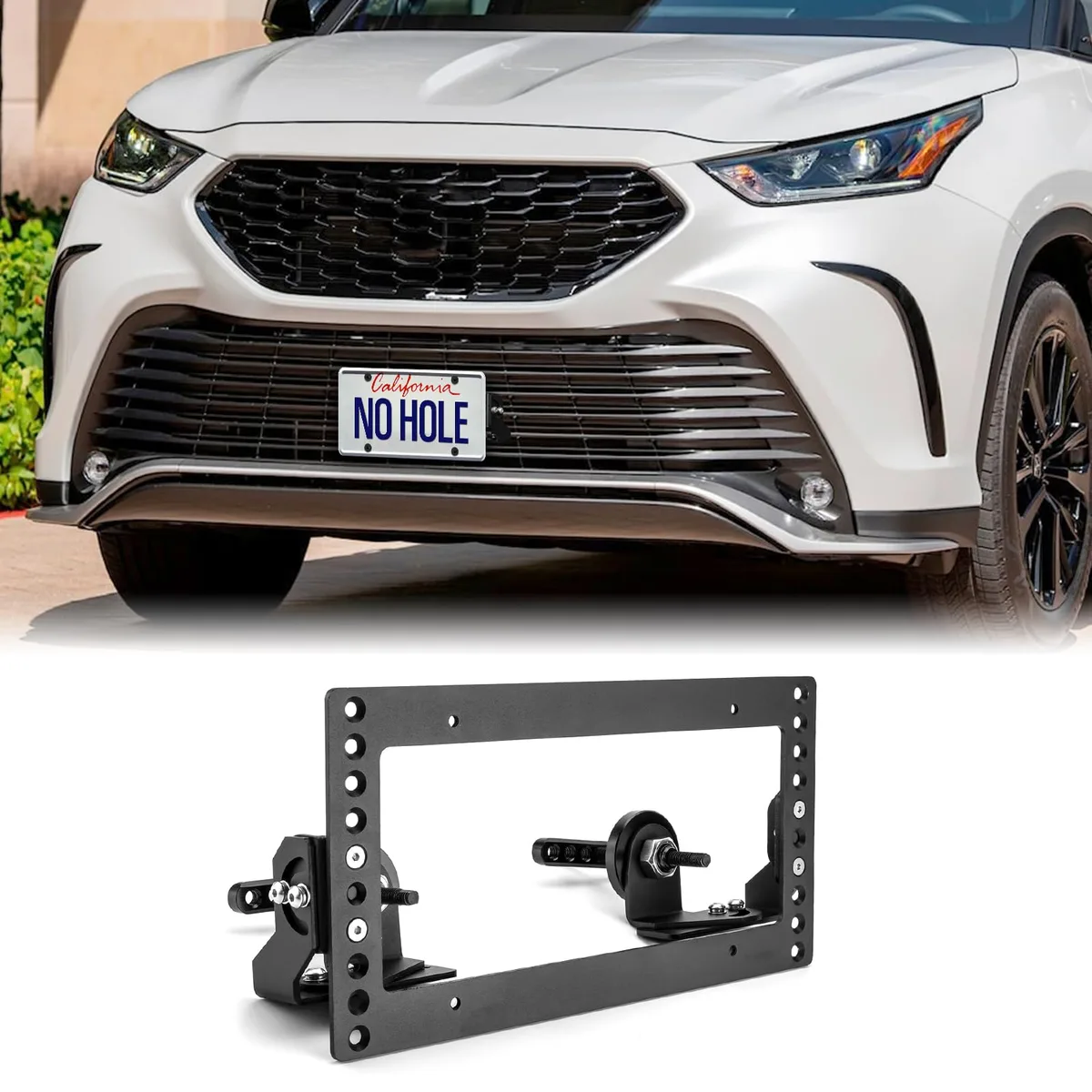
Compliant Frame Options (What to Buy Instead)
Bing (Web (fair-use with source credit))
If you want a frame that keeps your plate protected and legal, here's what to look for.
What Makes a Frame Compliant
A compliant frame must leave the entire plate surface visible. That means no overlap on the embossed text, the state name, or the validation sticker area. The frame should only contact the very edge of the plate.
Slim Metal Frames
These frames have a thin profile, typically 1/8 inch or less. They provide edge protection without obstructing the plate. Look for stainless steel or aluminum to avoid rust in Arizona weather.
Silicone Edge Covers
Silicone covers wrap around the plate edge without covering the front surface. They provide protection against chipping and curling. They don't obstruct any text or stickers.
These are a solid choice for most drivers.
No Frame at All
This is the simplest and safest option. Mount your plate directly to the bracket using the factory screw holes. No frame means zero risk of obstruction.
Use rubber grommets between the screws and plate to prevent rattling.
What to Avoid
Avoid any frame with a thick bezel, decorative border, or logo that extends onto the plate surface. Avoid tinted covers completely. Avoid frames that advertise "photo enforcement protection" because they're usually illegal.
What Snowbirds and Out-of-State Drivers Need to Know
Arizona law applies to all vehicles operating on Arizona roads. That includes vehicles registered in other states.
Out-of-State Plates
Your out-of-state plate must follow Arizona obstruction rules while you're driving here. A frame that's legal in your home state might not be legal in Arizona. Check your plate the same way an Arizona resident would.
The Validation Sticker Issue
Out-of-state plates often have validation stickers in different locations. Some states place stickers in the center or lower corners. Arizona officers look for the same visibility standard regardless of placement.
If any sticker is covered, you can get a ticket.
Temporary Residents
If you live in Arizona for more than seven months of the year, you're required to register your vehicle here. That means getting Arizona plates. The same frame obstruction rules apply.
Update your frame when you update your registration.
When to Call a Lawyer
For a standard fix-it ticket, you don't need a lawyer. Fix the issue, get it signed off, and move on. But there are situations where legal help makes sense.
Repeated Violations
If you've received multiple plate obstruction citations, especially in a short period, an officer might argue intentional obstruction. That can elevate the charge from a civil infraction to a misdemeanor under ARS § 28-2354. A lawyer can help negotiate a better outcome.
Combined Offenses
If your plate obstruction stop leads to additional charges like DUI or driving on a suspended license, the obstruction becomes the least of your problems. In that situation, consult a defense attorney immediately.
Business or Fleet Vehicles
Commercial vehicles and fleet vehicles face different enforcement standards. Some municipalities enforce plate visibility more strictly on commercial plates. If you operate a fleet in Arizona, consult a traffic attorney about compliance requirements.
Frequently Asked Questions
Is it illegal to have a license plate frame in Arizona?
Not automatically. A frame is legal as long as it doesn't cover any embossed text, the state name, or the validation stickers. Slim frames that leave the plate surface fully visible are generally fine.
Can I use a clear plastic cover over my license plate in Arizona?
A clear, untinted cover that allows full visibility is technically legal. But it can become illegal if it scratches, yellows, or reduces reflectivity over time. Most Arizona drivers find that bare plates are simpler and safer.
What happens if I get a fix-it ticket for license plate obstruction?
You correct the issue, then take your car to a local police station or court for inspection. Once verified, the citation is dismissed. If you ignore it, the fine increases and can lead to a suspended registration.
Do I need a front license plate in Arizona?
Yes. Arizona requires both a front and rear plate on all passenger vehicles. The same obstruction rules apply to both plates.
Many drivers forget to check the front plate because they don't see it as often.
Are decorative plate frames legal in Arizona?
Decorative frames are legal only if they don't cover plate text, stickers, or the state name. Thick frames with large logos or borders are the most common cause of violations. Stick with slim, minimal designs.
How much is a ticket for obstructing a license plate in Arizona?
Expect $100 to $300 depending on the city or county. Some municipal courts add court costs on top of the base fine. The stop itself can lead to other citations if the officer finds additional issues.
Bottom Line
Your license plate frame is an easy thing to overlook. But it's also an easy thing to fix. Check your plate from 100 feet away.
Make sure the word "Arizona," the plate numbers, and the validation sticker are all fully visible. If they're not, remove the frame.
A bare plate is always legal. A slim, minimal frame that doesn't overlap the plate surface is also fine. Tinted covers, thick dealer frames, and warped plastic frames are not fine.
Remove them before you get a ticket, not after.
Take five minutes this week to inspect both your front and rear plates. It's the cheapest insurance you'll ever buy.