ByMax Lee
Implements of Husbandry: Road Safety in Northern Marianas
If you're operating farm equipment on public roads in the Northern Mariana Islands, the line between legal and illegal use often comes down to one thing: whether your vehicle qualifies as an implement of husbandry. The Northern Mariana Islands implements of husbandry definition and road safety regulations determine what’s allowed, what’s exempt, and what could land you a citation or worse.
Per ASABE standards, slow-moving vehicles must display a reflective emblem visible from 500 feet, and that’s just the start. Get this wrong, and you risk fines, liability, or even an accident on the islands’ narrow rural roads.
Quick Answer
The Northern Mariana Islands implements of husbandry definition covers farm machinery used primarily for agricultural purposes. These vehicles often have exemptions from standard registration but must display an SMV emblem. They’re typically limited to 25 mph and require proper lighting.
Daytime-only operation may apply for certain equipment.
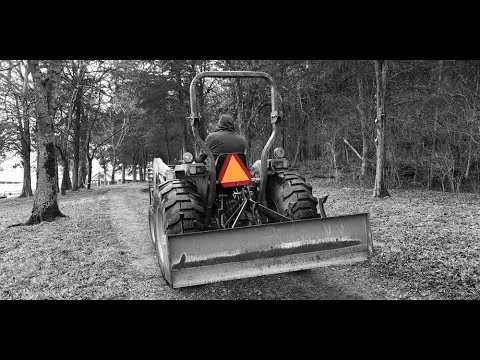
YouTube / Iron Solutions (YouTube thumbnail (fair-use with source credit))
Why Getting This Right Matters in the Northern Mariana Islands
Farm equipment on public roads isn’t just a convenience, it’s a legal and safety issue. In the CNMI, where rural roads are narrow and often shared with faster-moving traffic, a single oversight can lead to citations, accidents, or even lawsuits.
Non-compliance doesn’t just risk fines. It can void insurance coverage if an incident occurs, leaving you financially exposed. On islands like Saipan, Tinian, and Rota, where agricultural operations are vital to local economies, a citation or equipment impoundment can disrupt entire farming schedules.
The Legal Definition of Implements of Husbandry in CNMI Law
An implement of husbandry is farm machinery designed and used primarily for agricultural purposes. This includes tractors, harvesters, and other equipment not primarily for transporting goods on public highways. The key word here is primarily, if your vehicle is mostly used for farming, it likely qualifies.
The CNMI follows a framework similar to many U.S. states, where the classification hinges on the equipment’s primary function. For example, a tractor pulling a plow is an implement of husbandry. The same tractor hauling a trailer of non-farm goods for commercial transport may not be.
What doesn’t qualify? Vehicles primarily used for general transportation, even if they’re occasionally used for farming. Pickup trucks, for instance, are typically registered as standard motor vehicles, not implements of husbandry.
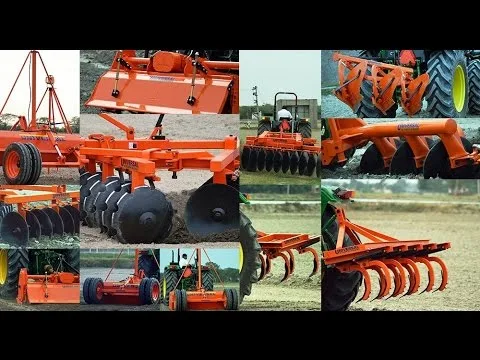
YouTube / Universal Implements (YouTube thumbnail (fair-use with source credit))
Core Requirements: Lighting, Markings, and Operational Limits
Every implement of husbandry on CNMI roads must display a Slow-Moving Vehicle (SMV) emblem. This reflective orange triangle must be mounted on the rear of the vehicle, centered, and visible from at least 500 feet in daylight.
Lighting is non-negotiable. At minimum, your equipment needs:
- Two headlights visible from 1,000 feet
- Two taillights visible from 1,000 feet
- Two red reflectors visible from 600 feet
- Turn signals if the vehicle travels over 25 mph
Speed limits are another critical factor. Most implements of husbandry are restricted to 25 mph or less.
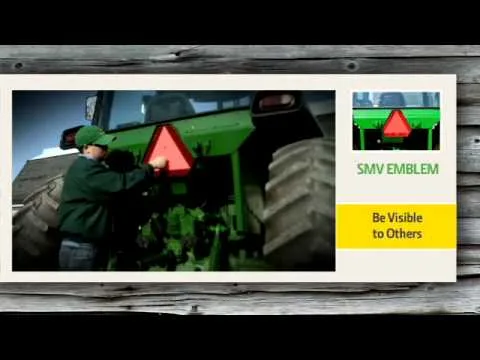
YouTube / JD MachineFinder (YouTube thumbnail (fair-use with source credit))
Risks of Non-Compliance on CNMI Roads
Operating non-compliant farm equipment on public roads can result in fines. In the CNMI, law enforcement takes these violations seriously, especially when they create hazards for other drivers.
But the financial cost is just part of the risk. On the islands’ winding, often narrow roads, a slow-moving vehicle without proper markings can cause rear-end collisions. These accidents aren’t just dangerous, they can be deadly.
Liability is another major concern. If your equipment is involved in an accident and it’s found to be non-compliant, your insurance may deny the claim.
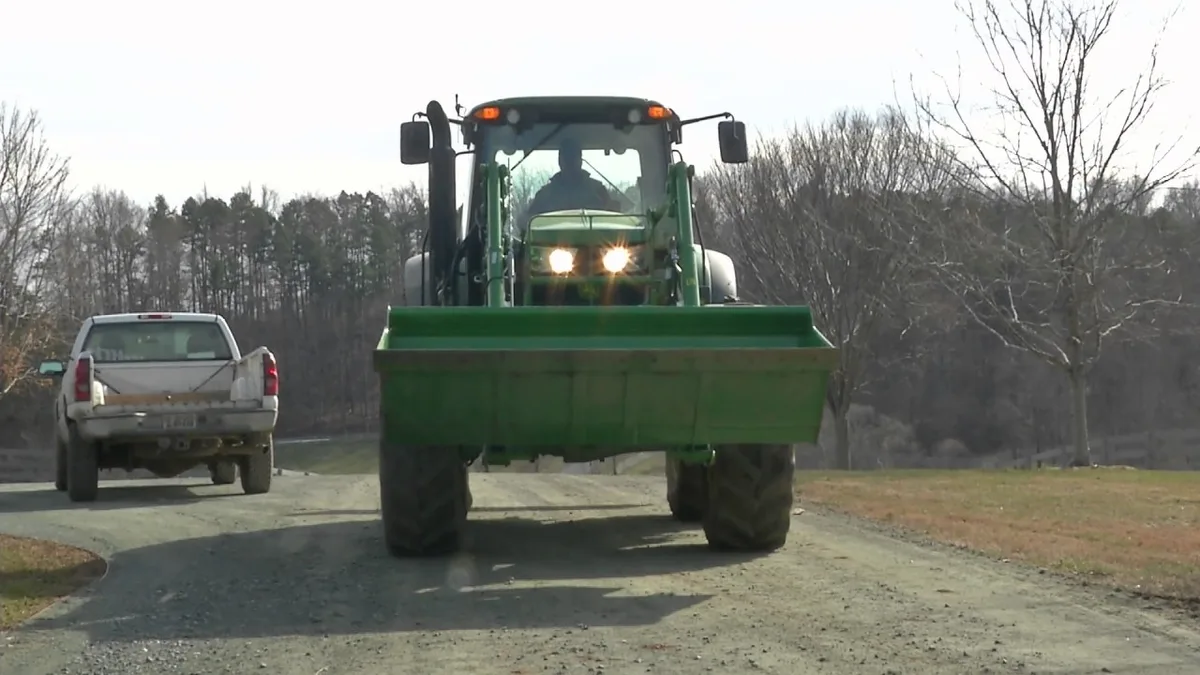
YouTube / VirginiaFarmBureau (YouTube thumbnail (fair-use with source credit))
Step-by-Step Guide to Making Your Equipment Road-Legal
First, confirm your equipment qualifies as an implement of husbandry under CNMI law. If it’s primarily used for farming, it likely does.
Next, check that it meets the basic roadworthiness standards. Install the SMV emblem on the rear, centered and visible from 500 feet. Then verify all required lighting is functional.
Plan your route during daylight hours when possible. Avoid peak traffic times on Saipan’s Beach Road or Tinian’s main thoroughfares. For wide loads, measure your equipment’s dimensions against CNMI road width limits.
YouTube / Arif EHS 0224 (YouTube thumbnail (fair-use with source credit))
When You Need Permits, Escorts, or Professional Help
Oversized or overweight loads almost always require a permit in the CNMI. If your equipment exceeds standard width or weight limits, contact the NMI Division of Motor Vehicles before moving it.
Escort vehicles are mandatory for loads wider than the lane. These vehicles display warning signs and help manage traffic around your slow-moving equipment.
For complex situations, consult a CNMI attorney familiar with agricultural vehicle regulations. They can clarify exemptions, permit requirements, and liability concerns specific to your operation.
YouTube / OVERSIZE LOAD TeamTM (YouTube thumbnail (fair-use with source credit))
Who Should Double-Check Their Compliance Now
Smallholder farmers moving between plots on Saipan or Rota need to verify their equipment meets road standards. Even short distances on public roads require compliance with lighting and marking rules.
Ranchers transporting feed or livestock equipment should pay special attention to towing safety. Improperly secured trailers or loads can create hazards for other drivers.
Municipal crews using similar machinery for public works projects aren’t exempt from these rules. The same road safety standards apply whether you’re farming or maintaining local infrastructure.
Common Mistakes That Put Farmers at Risk
Assuming a pickup truck with farm attachments qualifies as an implement of husbandry is a common error. These vehicles typically need standard registration and insurance, regardless of their occasional farm use.
Missing or improperly mounted SMV emblems are another frequent oversight. The emblem must be centered on the rear and fully visible.
Operating at night without proper lighting is dangerous and illegal. Even if your equipment has daytime exemptions, nighttime use requires full lighting compliance.
Quick Reference: Speed Limits, SMV Emblems, and Lighting Standards
| Requirement | Standard | Notes |
|---|---|---|
| SMV Emblem | Orange triangle, 500 ft visibility | Must be centered on rear |
| Headlights | 1,000 ft visibility | Required for all road use |
| Taillights | 1,000 ft visibility | Required for all road use |
| Reflectors | 600 ft visibility | Red on rear, amber on front |
| Speed Limit | 25 mph max | For most implements of husbandry |
| Daylight Operation | Often required | Check specific equipment exemptions |
Where to Find Authoritative CNMI Regulations
The most reliable source for CNMI vehicle and agricultural regulations is the Commonwealth Code. This legal compendium contains the statutes governing implement of husbandry classification, road use exemptions, and safety requirements.
For practical guidance on equipment standards, the American Society of Agricultural and Biological Engineers publishes widely recognized benchmarks for SMV emblems and vehicle lighting.
The NMI Department of Public Safety also offers resources for operators. Their traffic enforcement division can clarify citation procedures and answer questions about roadside inspections.
Verified Summary and Next Steps
Compliance with CNMI implements of husbandry regulations protects you legally and keeps other road users safe. The requirements may seem detailed, but they boil down to three essentials: proper classification, correct markings, and adherence to operational limits.
Before your next road move, complete these three actions. Verify your equipment qualifies under CNMI law. Install and inspect your SMV emblem, lighting, and reflectors.
If your load exceeds standard dimensions, secure the necessary permits.
For detailed permit applications and registration questions, contact the NMI Division of Motor Vehicles directly.
Frequently Asked Questions
What qualifies as an implement of husbandry in the Northern Mariana Islands?
An implement of husbandry is farm machinery used primarily for agricultural purposes. This includes tractors, harvesters, and similar equipment not designed for general highway transportation.
Do I need a slow-moving vehicle emblem for my farm equipment?
Yes. Any equipment classified as an implement of husbandry must display an SMV emblem on the rear. The emblem must be visible from 500 feet and meet ASABE standards.
Can I operate farm equipment at night in the CNMI?
Night operation typically requires full lighting compliance. Your equipment must have functioning headlights, taillights, and markers visible from the required distances.
What happens if my farm equipment is too wide for the road?
Oversized loads require permits and often escort vehicles. Contact the NMI Division of Motor Vehicles to determine if your equipment exceeds standard width limits.
Are implements of husbandry exempt from vehicle registration?
Some exemptions may apply, but rules vary. Consult the NMI DMV or a legal professional to confirm your specific equipment’s registration requirements.