If you've got a 52-inch LED light bar bolted to your bumper, you've probably asked yourself the same question. Will this get me a ticket on a Nevada highway? The answer isn't a simple yes or no.
Nevada auxiliary lighting and off road light bar highway restrictions depend on what your lights were actually designed to do.
Here's the short version. Nevada law treats auxiliary lighting and off-road lighting as two separate categories. Auxiliary lamps are street-legal in certain forms.
Off-road lamps are not legal to use on public roads unless they're covered or unlit. As of 2026, Nevada follows FMVSS 108, the federal motor vehicle safety standard for lamps, plus state-specific rules under NRS Chapter 484D. That distinction drives everything.
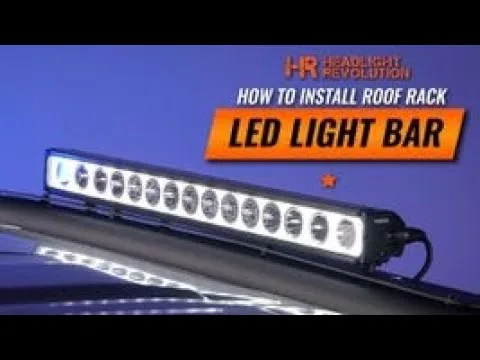
Why Nevada Light Bar Laws Confuse Everyone
The confusion starts with words. When you shop for auxiliary lighting, you'll see terms like "off-road light bar," "driving lamp," and "fog light." These get used interchangeably even though they mean different things in Nevada law.
Nevada's vehicle code defines auxiliary lamps as lights that supplement your high beams or low beams. They have to meet federal design standards and are allowed on highways. Off-road lights, by contrast, aren't designed for road use.
They produce wide, intense beams meant to illuminate trails, not asphalt. On a public road, they create glare for everyone else.
The real stakes: tickets, inspections, and liability
A fix-it ticket in Nevada typically runs $100 to $200, depending on the county. That's not the real cost. The real cost is the violation going on your record.
Insurance companies see moving violations, and your rate can jump.
Worse is the inspection scenario. If you get pulled over in a rural county and your setup looks questionable, the officer can refer you for a safety inspection. Passing one with a non-compliant light bar takes real work.
You might have to unbolt everything and show proof that your lights meet SAE standards.
And if your auxiliary lighting contributes to an accident? That's where things get serious. Nevada courts have held drivers responsible for excessive glare.
You're better off understanding the rules now than explaining them in a courtroom later.
Quick Answer: Can You Run a Light Bar on Nevada Highways?
No. You cannot run a standard off-road LED light bar on Nevada highways while it's switched on. That's the honest answer.
You may mount one, but it has to stay unlit or covered on any public road.
The two words that change everything: "off-road" vs. "auxiliary."
A genuine auxiliary driving lamp, like the kind sold for rally cars and classic vehicles, can be street-legal. It has a designed beam pattern that doesn't blind oncoming traffic. Your typical light bar with dozens of emitters and a wide flood pattern usually doesn't qualify.
| Situation | Legal on Nevada highways? |
|---|---|
| Off-road light bar, switched off | Yes, unless it obstructs or interferes |
| Off-road light bar, covered, switched off | Yes |
| Off-road light bar, switched on | No |
| SAE-compliant auxiliary driving lamps, used with high beams | Yes |
| SAE-compliant fog lamps, used with low beams | Yes |
| Any lighting that projects red or blue to the front | No |
What Nevada Law Actually Says About Auxiliary Lighting
The main statute you need to know is NRS 484D.512. It comes from Nevada's vehicle equipment code, which is part of the larger traffic law chapter. This section covers what lighting is allowed on motor vehicles.
Under Nevada law, you can use auxiliary driving lamps and spot lamps if they meet requirements. The law specifies how many you can have, where they can be mounted, and how bright they can be. It also says that you cannot use them in a way that blinds oncoming drivers.
Here's the tricky part. NRS 484D.512 refers to both federal and SAE standards. SAE stands for the Society of Automotive Engineers, and they publish testing standards for things like beam pattern and light color.
FMVSS 108, the federal standard, also applies. If your light bar doesn't have a DOT or SAE marking, it likely doesn't meet those standards.
Breaking down NRS 484D.512 in plain English
- Auxiliary lights must be mounted symmetrically on the front.
- They can't be higher than 42 inches or lower than 20 inches, depending on the category.
- They have to switch on and off with the high-beam circuit, or have their own switch that can't leave them on accidentally.
- The beam can't spread more than a certain amount, and it has to be aimed so it doesn't create glare.
For reference, Nevada's full vehicle equipment chapter is available online. Also worth checking: the federal lighting requirements from NHTSA. They govern what counts as a compliant lamp in every state.
Auxiliary Driving Lamps vs. Off-Road Light Bars: The Legal Difference
This is where most people get lost. A product may be sold as an "off-road light bar," but that phrase carries no legal weight. What matters is whether the lamp meets the design and performance requirements for street use.
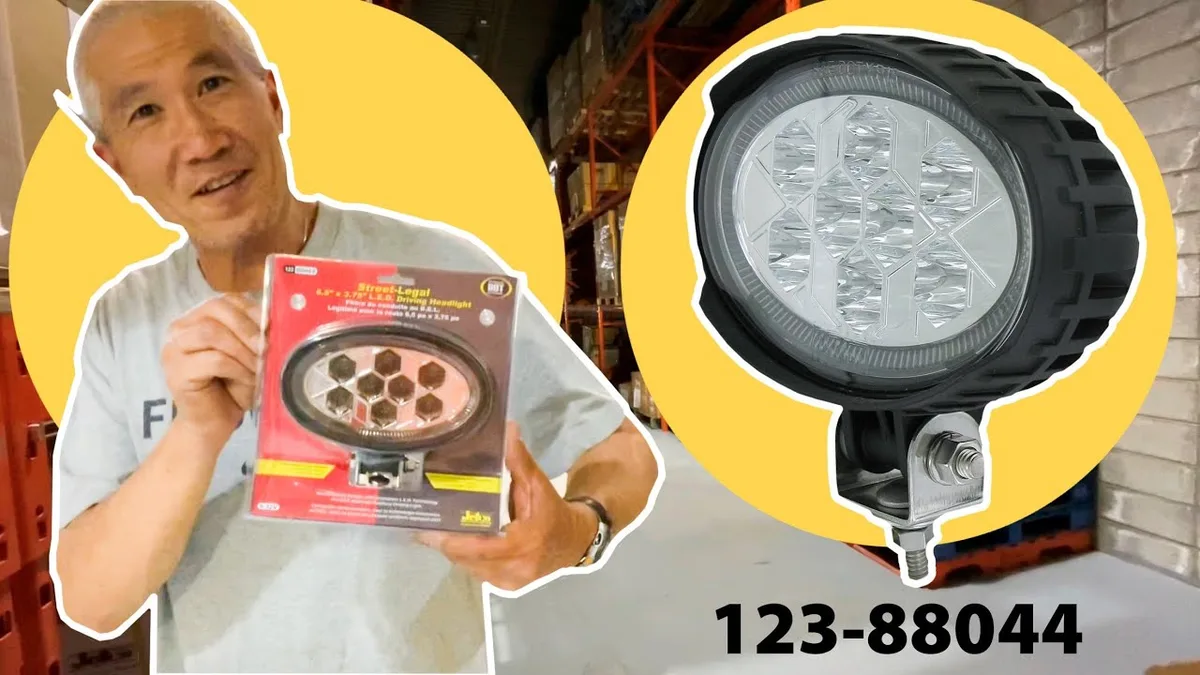
Auxiliary driving lamps are engineered for one purpose: extending your high-beam range. They produce a narrow, focused beam that reaches far down the road. They have a clear cutoff at the top edge so light doesn't scatter into oncoming eyes.
Off-road light bars, especially the rectangular or curved ones, use wide-angle optics. They flood a huge area. That's perfect for slow trail work, but it's blinding at highway speeds.
They also lack the shielding and lens patterns that keep glare down.
| Feature | Auxiliary Driving Lamp | Off-Road Light Bar |
|---|---|---|
| Beam pattern | Narrow, focused | Wide, diffuse |
| SAE/DOT rating | Usually present | Rarely present |
| Street legal on highways | Yes, with high beams | No |
| Typical use | Rally, classic car, truck, tractor | Trail, desert, race course |
| Glare to oncoming traffic | Low | High |
If you want to run a light bar legally on public highways, you have two choices. Buy a bar that's explicitly DOT-compliant and SAE-rated, which still usually means it's a spot beam and not a flood. Or keep your off-road bar covered and off the pavement.
Fog Lamps and Spot Lamps: What's Legal, What's Not
Nevada doesn't just regulate auxiliary driving lamps. It also has rules for fog lamps and spot lamps, and they're treated differently.
Fog lamps are low-mounted, wide-beam lights that help you see in mist and rain. They're designed to be used with your low beams in poor visibility. In Nevada, fog lamps are allowed as long as they're mounted low and don't produce glare.
The beam should be cut off sharply at the top so it doesn't light up the fog above your line of sight.
Spot lamps are a different animal. They're pencil-beam lights that throw a concentrated beam far ahead. Some are legal as auxiliary lights when used with high beams.
Others are only for off-road use. The key is whether the beam pattern meets SAE J581, which is the standard for auxiliary driving lamps.
Color matters too. Nevada law requires forward-facing lights to be white or amber in most cases. Red and blue are reserved for emergency vehicles.
If your bar emits purple, green, or blue light, you're asking for trouble.
Here's what you should check before you hit the highway:
- Does the lens or housing have a DOT or SAE marking?
- Is the beam pattern narrow enough for on-road use?
- Is the color white or amber?
- Is it wired so you can switch it off independently, including the brake?
- Is it mounted within the height limits for its class?
If you're unsure, the safest bet is to treat any "off-road" lighting as off-road only. Many drivers keep a spare mounting bracket and swap lamps when they reach the trail. That's more work, but it never gets you a ticket.
For a deeper dive into how other states approach vehicle equipment enforcement, our coverage of how Montana handles radar detector laws and Minnesota's approach to passenger versus commercial rules shows just how different state regulations can be. Even in U.S. territories, the differences are stark, as seen in the radar detector law breakdown for the U.S. Virgin Islands.
Light Bar Placement: Roof, Grille, Bumper, or A-Pillar
Where you mount your lighting matters just as much as what you mount. Nevada law sets height limits for auxiliary lamps, and roof-mounted bars live in a legal gray zone. Even if your light bar is DOT-compliant, mounting it too high can put you in violation.
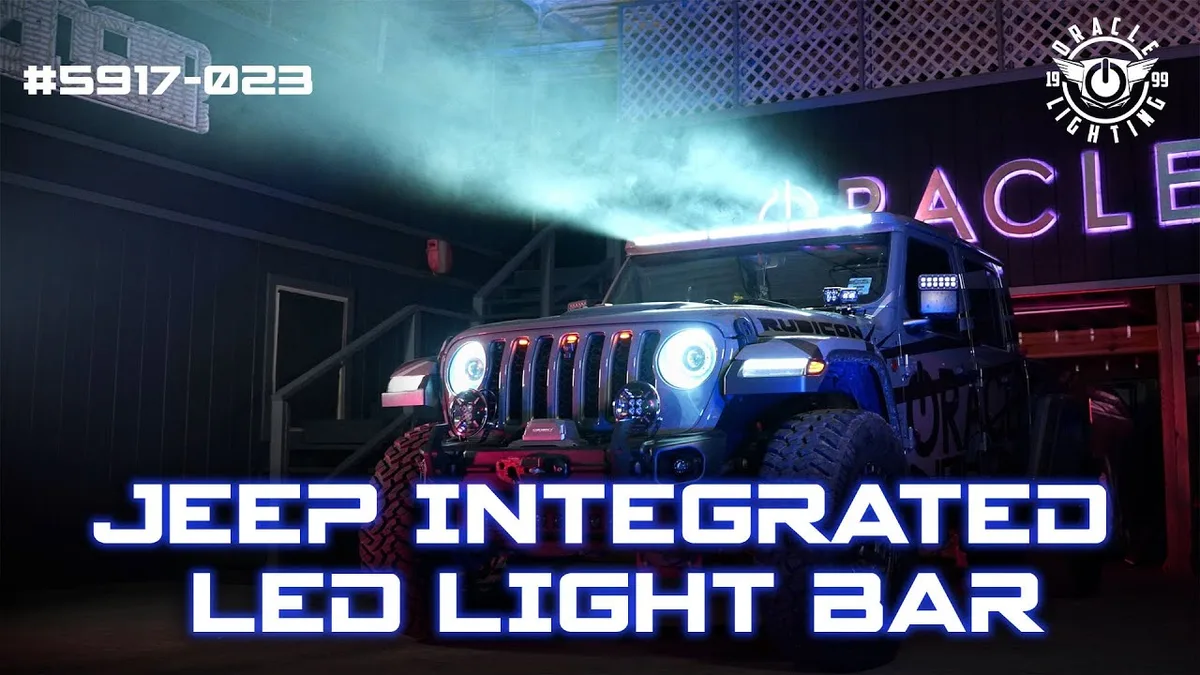
Roof-mounted bars are the biggest issue. At that height, the beam reflects off the hood and creates a blinding glare on your own windshield. Oncoming drivers see a wall of white light before they see your headlights.
Officers notice that immediately.
Bumper and grille mounts are safer. They sit closer to your factory headlights, so the beam pattern stays lower. A-pillar pods, sometimes called cowl lights, are a middle ground.
They work well for off-road visibility, but they can spill light into traffic if aimed wrong.
| Mounting Spot | Height Risk | Practical Use | Enforcement Risk |
|---|---|---|---|
| Roof | High | Trail, desert | High |
| A-pillar | Medium | Trail, highway | Medium |
| Grille | Low-medium | Highway, trail | Medium |
| Bumper | Low | Highway, trail | Low |
The best advice we can give: keep auxiliary lights at or below the height of your factory headlights when you plan to use them on the highway. That keeps the beam where it belongs and reduces your chance of a stop.
The Cover Rule: Does a Cover Make It Legal?
A cover helps, but it's not a get-out-of-jail-free card. Nevada law says off-road lights must be covered or unlit on public highways. A fitted cover satisfies that requirement, but only if it's opaque and properly secured.
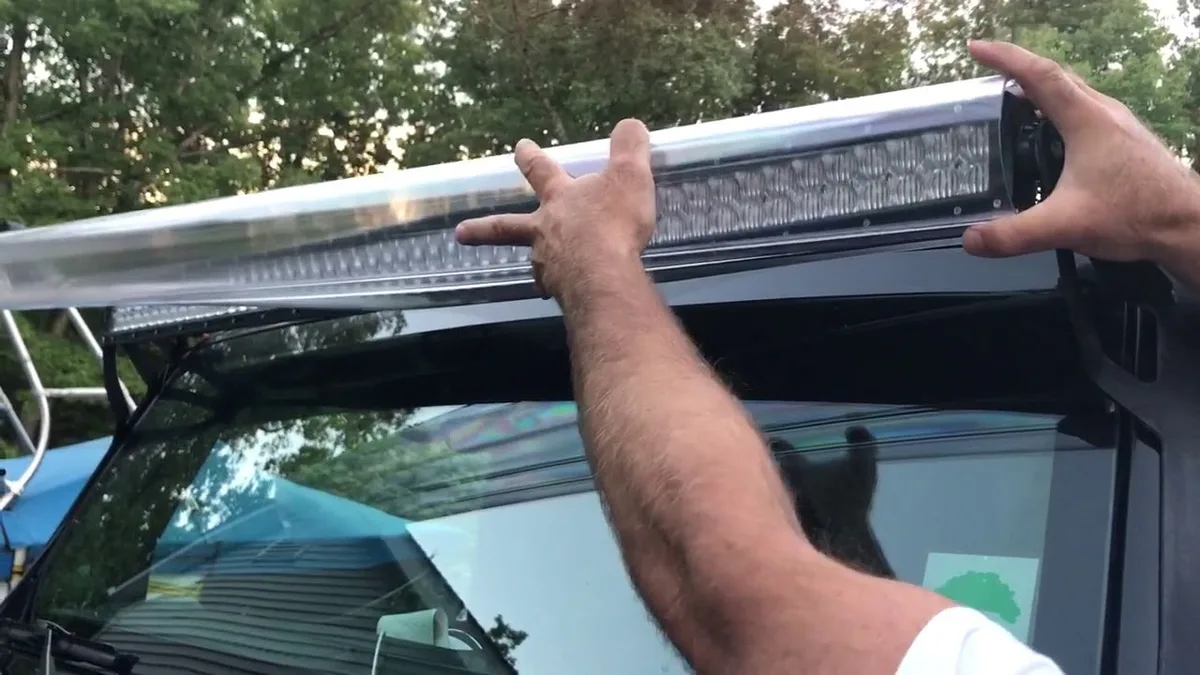
Here's how officers interpret the rule. If they can see a light bar with a cover, you're fine. If they see an uncovered bar, even if it's switched off, they can write a ticket.
Some make exceptions for vehicles that are clearly off-road rigs, but that's not a guarantee.
The other angle is mechanical. A cover prevents dirt, bugs, and rocks from scratching your lens during highway drives. It also gives your wiring a break from constant air pressure.
That's practical, not just legal.
One common misconception: a tinted or smoked lens cover counts as a cover. It does. As long as it blocks enough light to prevent use, it meets the spirit of the law.
A clear plastic shield does not.
What Actually Gets You Pulled Over in Nevada
Most light bar stops start with one thing: visible glare. If an officer sees your bar lit up on the highway, that's an automatic stop. No warning, no guesswork.
The law is clear, and officers know it.

The second most common trigger is an uncovered bar. Even unlit, a rack-mounted bar catches attention. Officers see it as a sign that you'll use it illegally the moment you hit a dark stretch.
So they stop you proactively.
Third is improper color or flash patterns. Any red or blue light to the front is a red flag. Some drivers install strobe functions for trail use, but those same functions get tickets on pavement.
An officer who sees a flash has probable cause.
A fix-it ticket in Nevada usually means you have a week or two to correct the issue and show proof. The penalty for ignoring it is a larger fine and potential registration hold. If you have a commercial vehicle, federal rules under 49 CFR Part 393 apply, and the stakes are higher.
How to Build a Legal and Safe Auxiliary Lighting Setup
Start with compliant hardware. Look for lamps with DOT or SAE markings on the housing or lens. That's your first sign they're built for road use.
If the box says "off-road use only," don't trick yourself into believing otherwise.
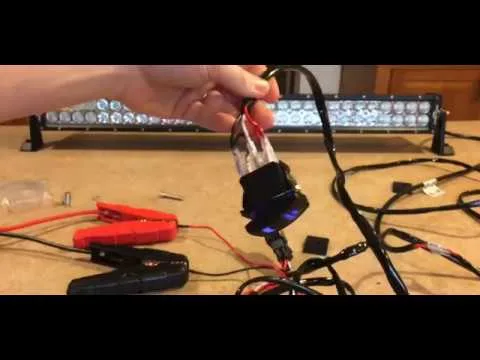
Wire your lights through a relay, not directly to a switch. A relay protects your factory wiring and prevents voltage drop. Use an in-cab toggle switch or an upfitter switch if your truck has one.
Make sure the switch has a separate position for off, not just a momentary setting.
For auxiliary driving lamps, wire them into the high-beam circuit. That way they come on only with your high beams and shut off when you dim to low. It's the cleanest legal setup and the easiest to defend in court.
Here's a simple wiring order:
- Connect the lamp leads to a relay.
- Run the relay trigger to your high-beam wire or a toggle switch.
- Add a fuse at the battery, rated to your lamp's amperage.
- Ground everything securely to the chassis.
- Aim the lamps after installation and check the beam cutoff.
Aiming matters more than you think. Park on level ground, 25 feet from a wall, and mark where the beam hits. The hot spot should sit below the headlight center line.
That kills glare and keeps you visible without blinding anyone.
Common Mistakes and Misconceptions
The biggest mistake is assuming "sold at an auto parts store" means street legal. The packaging says off-road for a reason. That neon orange warning label is not decorative.
Another classic error: thinking your factory high beams are enough to invoke the auxiliary lamps. Some drivers wire their bars to the high beams and assume they're compliant. But if the bar itself isn't SAE-rated, it's still illegal.
The wiring can't fix the hardware.
Then there's the "I'll just never turn them on" crowd. An uncovered, mounted light bar is still a ticket in Nevada, even if it never glows. Officers don't know your intentions, and the statute doesn't require actual use.
The presence of the bar is enough.
Misconceptions about colored covers are common too. A red or blue cover over a white bar looks like an emergency light from a distance. That's a worse stop than a standard white bar.
Keep covers neutral, either black or matching the surrounding trim.
And don't forget: Nevada's restrictions apply to all public roads, not just interstates. County routes, US highways, and even many forest roads are public highways under state law. If it's maintained by the public, treat it like pavement.
For registration-related context, look at how other jurisdictions handle vehicle rules, like the 10-year registration option used in Puerto Rico or the similar 5 vs 10 year setup in Missouri. Different states and territories always interpret equipment law differently, so local research is never wasted.
When to Contact Nevada Highway Patrol or a Legal Expert
If you already have a citation or you run a commercial vehicle, reach out to Nevada Highway Patrol for clarification. Commercial rigs also fall under 49 CFR Part 393, which adds stricter rules. A quick call can save you from repeat tickets.
Frequently Asked Questions
Can I drive with my light bar on I-15 at night?
No. Unless it's an SAE-compliant auxiliary driving lamp wired to your high-beam circuit, keep it off.
Do amber covers make a light bar legal?
No. Covers reduce glare but don't change the hardware. The bar itself must meet federal standards.
Do I need a cover if I never use it on the highway?
Yes. Nevada law requires off-road lights to be covered or unlit on all public roads.
What's the fine for an illegal light bar?
A fix-it ticket typically runs $100 to $200, plus proof of correction.
The Bottom Line
Keep off-road lighting off the pavement. Use DOT-compliant auxiliary lamps on the high-beam circuit, and cover everything else when you're on public roads. That's the full Nevada playbook.