If you own a 1996 or newer vehicle registered in North Carolina, you’ve probably stared at the biennial emissions testing line on your renewal form. You’ve likely wondered if you actually have to complete it. The rules aren’t uniform across the state.
Many drivers pay unnecessary fees or face registration holds because they don’t know their eligibility. North Carolina biennial emissions testing requirements for 1996 and newer change entirely based on where you live, your vehicle type, and whether you qualify for an exemption. That’s where this guide comes in.
Per the U.S. Environmental Protection Agency’s 1996 OBD-II mandate, all 1996 and newer light-duty vehicles sold in the U.S. have standardized on-board diagnostics ports that form the basis of NC’s testing process. Only vehicles registered in the state’s 19 designated non-attainment counties are required to complete testing as of 2026.
We’ll break down exactly how to check your eligibility first, so you don’t waste a trip to a testing station if you don’t have to go.

Quick Answer
North Carolina biennial emissions testing applies to 1996 and newer light-duty vehicles. Testing is required only in the state’s 19 mandatory testing counties. Tests are due every two years with registration renewal.
The test checks emissions function via your vehicle’s OBD-II port. No tailpipe sniffer is needed for most eligible 1996+ vehicles. Passing results clear your registration hold the same day.
Do You Actually Need North Carolina Biennial Emissions Testing for Your 1996 or Newer Vehicle?
Testing only applies if both of the following are true:
- Your vehicle is a 1996 or newer light-duty model with a GVWR under 10,000 lbs
- You are registered in one of the 19 mandatory testing counties, with no valid active exemption
If either condition is false, you do not need to complete testing. If both are true, you must pass a biennial OBD-II emissions test to renew your registration. We’ll break down how to verify each condition step by step below.
You can confirm your status in 2 minutes or less.
Note: Vehicles with a GVWR over 10,000 lbs, including most full-size commercial trucks and RVs, are exempt from testing. This applies even if registered in a mandatory county and are 1996 or newer.
Common Edge Case Eligibility Questions
Two common questions trip up drivers new to NC’s testing rules:
- What if I only drive my 1996+ vehicle in a mandatory county but register it in an exempt county? Testing is tied to your vehicle’s registered county, not where you drive it. If your registration is in an exempt county, you do not need to test, even if you drive exclusively in mandatory counties.
- What if I have a 1996+ vehicle registered in a mandatory county but only drive it on private property? If your vehicle is registered for public road use, you are required to complete testing regardless of how often you drive it on public roads.
If you recently moved to North Carolina from another state, you are required to complete emissions testing within 30 days of establishing residency. This applies if your vehicle is 1996 or newer and registered in a mandatory county.
Baseline Eligibility Reference Table
| Vehicle Type | Model Year | GVWR | Testing Required? |
|---|---|---|---|
| Compact passenger car | 1998 | 4,500 lbs | Only if registered in mandatory county |
| Full-size pickup truck | 1995 | 7,500 lbs | Never, pre-1996 model year |
| Heavy-duty work van | 2002 | 11,000 lbs | Never, GVWR over 10,000 lbs |
| Classic car (25+ years old) | 1998 | 3,800 lbs | Only if no valid NC historic registration is on file |
First Condition: Are You Registered in One of North Carolina’s 19 Mandatory Testing Counties?
North Carolina only requires biennial emissions testing for vehicles registered in its 19 designated mandatory testing counties. All are classified as non-attainment areas for ozone or fine particulate matter under the federal Clean Air Act. As of 2026, these counties cover the state’s largest metro areas.
These include the Research Triangle, Charlotte, and Asheville regions.
The 19 mandatory testing counties as of 2026 are: Alamance, Brunswick, Cabarrus, Carteret, Chatham, Mecklenburg, Cumberland, Davidson, Durham, Forsyth, Gaston, Guilford, Harnett, Johnston, New Hanover, Orange, Randolph, Rowan, and Wake.
The map above highlights all mandatory testing counties. Surrounding exempt rural counties are marked for quick reference. If your vehicle is registered in any county not on the list above or shaded on the map, you do not need to complete emissions testing.
This applies even if your vehicle is 1996 or newer. If you are registered in a mandatory county, move to the second condition to check for exemptions.
You can verify your registration county’s testing status by entering your license plate number on the official NCDMV emissions testing portal.
Second Condition: Do You Qualify for a Full or Partial Testing Exemption?
Even if you live in a mandatory testing county and drive a 1996 or newer light-duty vehicle, you may qualify for a full testing exemption under state law. The NCDMV recognizes three primary full exemption categories. No partial exemptions are available for biennial testing.
Common Exemption Eligibility Criteria
- Active duty military: You qualify if you are stationed outside North Carolina for 12 or more consecutive months during your registration cycle. Submit a copy of your military orders showing your out-of-state assignment to claim the exemption.
- Full-time out-of-state students: You qualify if you attend an accredited NC college or university, hold primary residency outside the state, and are enrolled full-time for the duration of your enrollment. You must submit a copy of your student ID and proof of out-of-state residency.
- Historic vehicle owners: You qualify if your 1996 or newer vehicle has a valid NC historic registration. This requires the vehicle to be 25 or more years old as of the current registration year. Historic registrations are separate from standard registrations. You must provide proof of historic registration status when renewing.
Exemptions are valid for the length of your qualifying circumstance. This includes your military assignment or college enrollment period. You do not need to reapply for the exemption each year as long as your qualifying status remains active.
If you do not qualify for one of these three exemptions, you are required to complete the biennial OBD-II test to renew your registration.
If Testing Applies: How the 1996+ OBD-II Emissions Test Works
For 1996 and newer light-duty vehicles in mandatory testing counties, NC uses the standardized OBD-II emissions test instead of a traditional tailpipe sniffer test for most eligible vehicles. OBD-II (On-Board Diagnostics II) is a standardized system required on all 1996 and newer U.S. light-duty vehicles per federal EPA mandate. It monitors emissions system function in real time.
What the OBD-II Test Checks
The test checks three core components to verify your vehicle’s emissions systems work as intended:
- All emissions-related fault codes: Technicians scan for active or pending fault codes related to the catalytic converter, oxygen sensors, evaporative emissions system, or other emissions components.
- Readiness monitor status: Your vehicle’s computer runs self-tests on all emissions systems after repairs or battery disconnection. If any readiness monitors are unset, the test will fail even if your vehicle runs clean.
- MIL (malfunction indicator lamp) status: Your check engine light must be off for the test to pass. An illuminated check engine light results in an automatic fail, even if no fault codes are stored.
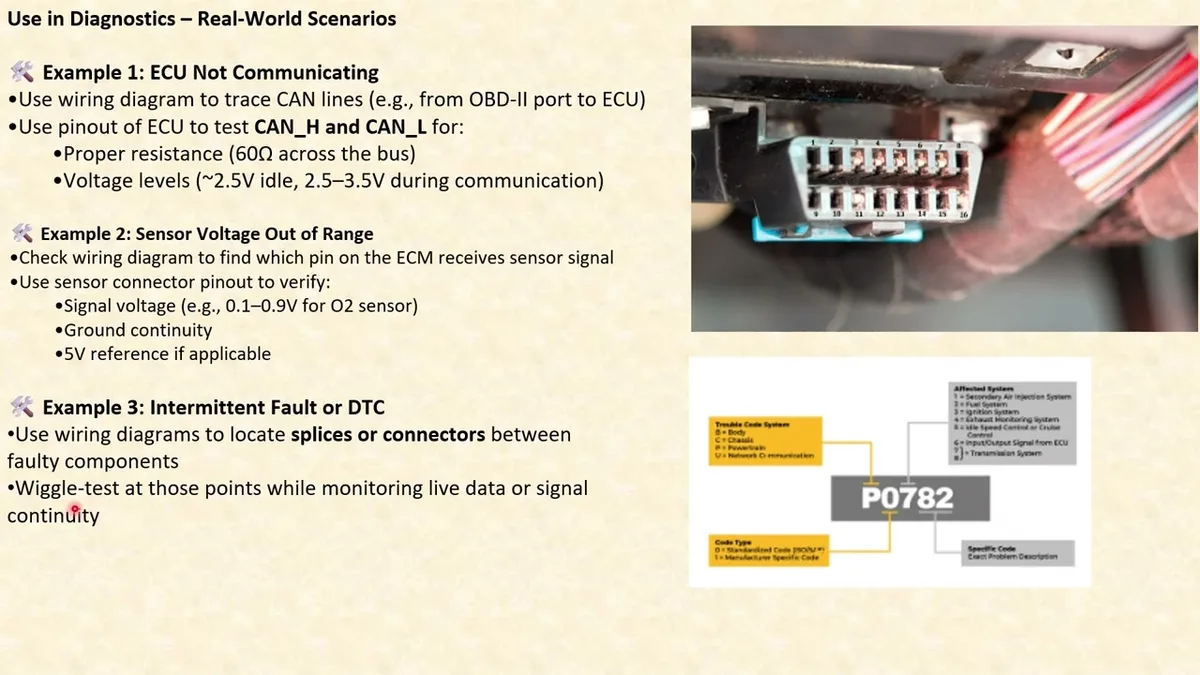
The diagram above shows the standard location of the OBD-II port under your vehicle’s dashboard. It also shows the readiness monitor status screen technicians review during testing. There is no tailpipe emissions measurement for OBD-II eligible vehicles.
This makes the test much faster than pre-1996 tailpipe testing. If your 1996+ vehicle fails the OBD-II test, you have 30 days to complete repairs. You can retest for free at any authorized station.
Before taking your vehicle for testing, confirm your OBD-II port is accessible and not blocked by aftermarket accessories. Make sure your check engine light is off. If your light is on, you will fail the test automatically.
You’ll need to complete repairs and reset the light before testing. If your readiness monitors are unset, you can usually reset them by driving your vehicle for 50 to 100 miles under varied driving conditions. These conditions include highway speeds and stop-and-go traffic.
Do not clear your fault codes right before a test. This will result in an automatic fail.
Common Mistakes That Trigger Registration Holds or Unnecessary Costs
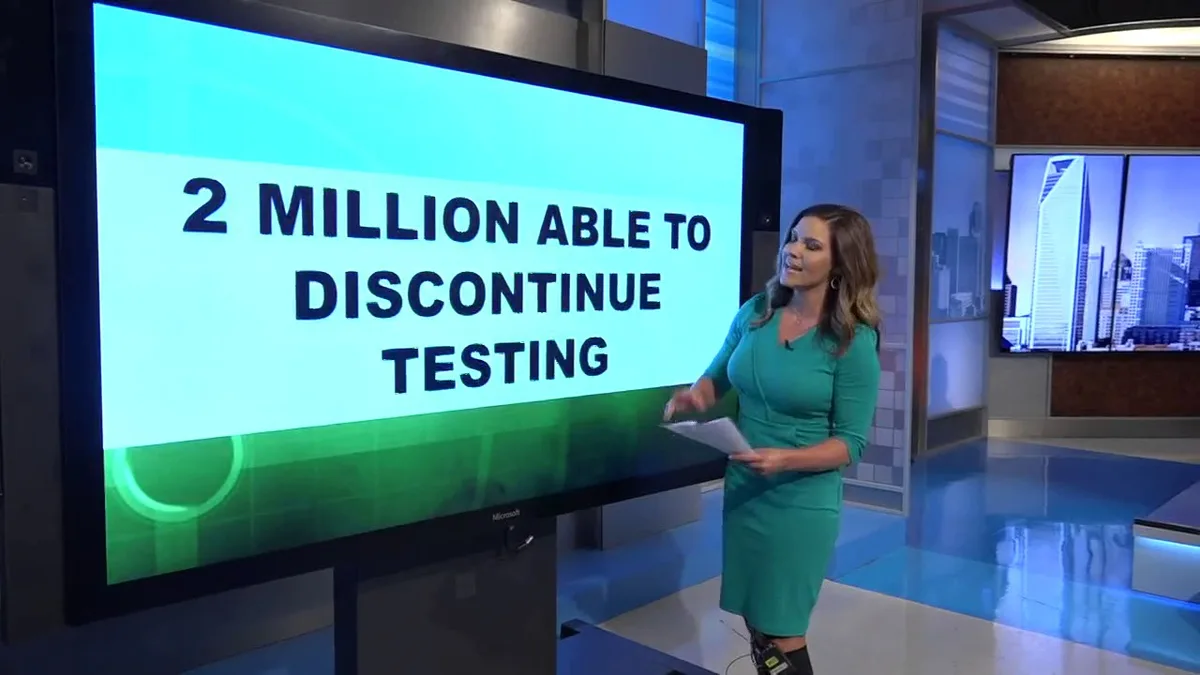
The most common mistake is waiting until your registration deadline to schedule testing. Authorized stations book up fast in peak renewal months. The NCDMV places a registration hold automatically if your test result does not arrive before your current registration expires.
Schedule your test at least 2 weeks before your deadline to avoid this.
Skipping the pre-test OBD-II readiness check causes many avoidable fails. Unset readiness monitors trigger an automatic fail even if your emissions systems work perfectly. Reset your monitors by driving 50 to 100 miles before your appointment.
Do not clear fault codes right before testing, as this also results in an automatic fail.
Many drivers waste money at unauthorized shops claiming to offer emissions testing. Only NCDMV-authorized stations can submit valid results to the state. Verify a station’s authorization on the NCDMV website before you go.
Failing to keep repair receipts for failed tests creates audit risk. The NCDMV can request proof of repairs for up to 2 years after a fail. Keep all receipts in your registration folder.
Special Scenarios: Out-of-State Transfers, New Residents, and Used Vehicle Sales
These three scenarios have rules that differ from standard biennial renewals. Follow these requirements to avoid registration delays.
For out-of-state vehicle transfers, you have 30 days from establishing NC residency to complete testing if your vehicle is 1996 or newer and registered in a mandatory county. NC does not accept out-of-state tests completed more than 60 days before your transfer date. If your previous state did not require testing, you still must complete NC testing if your new registration is in a mandatory county.
New NC residents moving from non-testing states often miss this 30 day window. Set a calendar reminder for your move date to schedule testing immediately. Full-time out-of-state college students attending NC schools do not need to test their vehicles as long as they maintain primary residency out of state.
If you buy a used 1996 or newer vehicle in NC, the seller must provide a passing test completed within 60 days of the sale date. You cannot register the vehicle without this test if your county is mandatory. Sellers who fail to provide a valid test risk buyer disputes and delayed title transfers.
Legal and Compliance Rules for 1996+ Vehicles in North Carolina
NC’s emissions testing program is tied directly to vehicle registration law. Non-compliance carries clear financial penalties as of 2026.
The state caps all biennial testing fees at $30. Stations charging more are violating NCDMV rules. You may only test at a station with a valid NCDMV authorization certificate posted in the lobby.
Passing test results are transmitted to the NCDMV within 24 hours. No additional paperwork is required for a pass.
Registration holds are placed automatically if you do not complete testing by your renewal deadline. Late fees start at $25 and increase by $5 every 30 days the hold remains unresolved. A $50 processing fee applies to all reinstatements after a testing hold.
Selling a 1996 or newer vehicle without a valid passing test is a Class 2 misdemeanor under NC state law.
Quick Decision Guide: Exact Next Steps for Your Specific Situation
Follow this decision tree to land on your exact next action in 2 minutes or less. The flowchart above matches these steps exactly.
- Check if your vehicle’s registration county is on the mandatory testing list. If no, no action is needed. Renew your registration as normal.
- If yes, confirm if you qualify for an active duty military, full-time out-of-state student, or historic vehicle exemption. If yes, submit required paperwork to the NCDMV to activate your exemption.
- If you do not qualify for an exemption, confirm your check engine light is off and your OBD-II port is accessible. Drive 50 to 100 miles to reset any unset readiness monitors.
- Book an appointment at an NCDMV-authorized station within 2 weeks of your renewal deadline. Bring your driver’s license and current vehicle registration.
- If you pass, no further action is needed. Your registration renewal will process without a hold. If you fail, complete the listed repairs within 30 days. Retest for free at any authorized station before your deadline.
Frequently Asked Questions
Is North Carolina biennial emissions testing required for all 1996 and newer vehicles?
No, testing is only required for 1996 and newer light-duty vehicles with a GVWR under 10,000 lbs registered in the state’s 19 mandatory testing counties. Vehicles registered in exempt rural counties, qualifying military and student exemptions, and historic vehicles over 25 years old do not need to complete testing.
How much does a North Carolina biennial emissions test cost for a 1996 or newer vehicle?
The state caps all biennial emissions testing fees at $30 as of 2026. Stations cannot charge more than this amount for the standard OBD-II test. Additional fees may apply for re-inspections after a failed test, but the mandatory free retest window eliminates extra costs for most drivers.
What happens if I miss my North Carolina biennial emissions testing deadline?
The NCDMV places a registration hold on your account automatically if you do not pass testing by your renewal deadline. You cannot legally drive your vehicle until the hold is lifted. Late fees start at $25 and increase by $5 every 30 days until you complete testing and pay all outstanding fees.
Can I get a North Carolina emissions testing exemption if I am active duty military?
Yes, active duty military personnel stationed outside North Carolina for 12 or more consecutive months qualify for a full testing exemption. You must submit a copy of your military orders showing your out-of-state assignment to the NCDMV to activate the exemption for the duration of your assignment.
How long do I have to retest if my 1996 or newer vehicle fails the NC emissions test?
You have 30 days from your failed test date to complete repairs and retest for free at any NCDMV-authorized station. You do not have to return to the station where you failed. Keep all repair receipts for 2 years in case the NCDMV requests proof of completed repairs.