If you drive in North Carolina, you’re legally required to carry North Carolina mandatory liability insurance minimum 30/60/25 coverage limits or proof of equivalent financial responsibility. Most drivers hear these numbers but don’t know exactly what they cover, or how falling short creates real legal and financial risk. We break down the rules, limits, and practical steps to stay compliant without overpaying.
Per North Carolina Department of Insurance data as of 2026, this 30/60/25 split is the state’s set minimum for all licensed NC drivers, with no required add-ons for personal injury protection at this tier. Many drivers assume their state minimum covers their own repair costs after an at-fault crash, a mistake that can cost thousands out of pocket. Let’s start with the plain, fast answer to what these limits actually mean.

Quick Answer
North Carolina’s mandatory auto liability minimum is 30/60/25. This means $30,000 per person for bodily injury in an at-fault crash. It covers up to $60,000 total per accident for bodily injury.
Property damage claims are capped at $25,000 per accident. You must show proof of this coverage to register a vehicle or renew your license in NC.
Why Getting North Carolina 30/60/25 Liability Rules Right Matters
Mistakes with North Carolina’s liability insurance rules carry real, costly consequences. Driving without valid 30/60/25 coverage can lead to immediate fines, license suspension, and vehicle registration holds. If you cause a crash and your coverage is too low, you pay the remaining costs out of pocket.
Per NCDMV published guidelines, drivers with lapsed or insufficient coverage face initial fines of up to $200, plus reinstatement fees that can top $500. Many drivers assume their out-of-state policy works in NC, only to find they are non-compliant when they get pulled over or file a claim. A single lawsuit for excess damages can lead to wage garnishment or long-term credit damage that takes years to repair.
What 30/60/25 Actually Covers in North Carolina
The three numbers in North Carolina’s minimum liability requirement map directly to three separate payout caps for claims when you are at fault in a crash. This coverage is designed to pay for costs you cause to other people, not your own losses.
Bodily Injury vs. Property Damage: How Each Limit Pays Out
The first number, $30,000, is the maximum your insurer will pay per person for bodily injury you cause. This covers the other driver’s medical bills, lost wages, and related pain and suffering costs up to that per-person cap. If you injure one driver in a crash and their costs total $35,000, your policy pays $30,000, and you pay the remaining $5,000.
The second number, $60,000, is the total maximum payout for all bodily injury claims from a single accident. If three people are injured in a crash you cause and their combined costs total $80,000, your policy only pays $60,000. You are responsible for the remaining $20,000, even if each individual’s costs are under the $30,000 per-person cap.
The third number, $25,000, covers property damage you cause to other people’s vehicles, buildings, fences, or personal property. For example, if you rear-end a car and cause $20,000 in property damage to the other vehicle, your policy pays the full $25,000 property damage cap, leaving you with no out-of-pocket cost for that claim. If you hit a commercial storefront and cause $40,000 in damage, your policy only pays $25,000 of that cost.
This 30/60/25 coverage is liability-only. It does not pay for your own medical bills, your car repairs, or damage to your personal property after an at-fault crash. Many NC drivers assume their state minimum policy includes this coverage, a gap that leads to six-figure out-of-pocket bills after even moderate crashes.
North Carolina’s Legal Requirements for 30/60/25 Coverage
North Carolina’s 30/60/25 minimum is not a suggestion, it is a legal requirement under the state’s Financial Responsibility Law, codified in N.C. Gen. Stat. § 20-309 et seq.
All licensed drivers must carry at least this level of liability coverage, or proof of equivalent financial responsibility, to legally operate a vehicle in the state. North Carolina is a fault-based insurance state, meaning the at-fault driver’s liability coverage pays for damages to other parties, rather than each driver filing claims with their own insurer regardless of fault.
Situations That Trigger Mandatory 30/60/25 Coverage Requirements
You must meet the 30/60/25 minimum in several common scenarios, not just when you buy a new policy. You need valid 30/60/25 coverage to register a new or used vehicle in North Carolina. You must maintain this coverage to renew your driver’s license or avoid registration holds with the NCDMV.
The NCDMV publishes full details of state insurance requirements on its official insurance requirements page. If you have had your license suspended for insurance non-compliance, you will need to file an SR-22 certificate of financial responsibility to prove you meet the 30/60/25 minimum before your license is reinstated. Out-of-state drivers who become NC residents have 30 days to switch their policy to meet the state’s 30/60/25 requirements.

The NCDMV runs regular insurance verification checks. Police can request proof of valid 30/60/25 coverage during any traffic stop. Failing to present proof on the spot leads to immediate fines and potential vehicle impoundment.
Insurance providers are required by state law to report new policies, lapses, and cancellations directly to the NCDMV, so there is no grace period if your coverage drops below the minimum.
What Happens If You Don’t Meet North Carolina’s 30/60/25 Minimums
Failing to carry valid 30/60/25 coverage triggers both immediate administrative penalties and long-term financial risk. Even if you have a policy, gaps in coverage or lapses can lead to the same consequences as driving with no insurance at all. NCDMV data shows a consistent rate of license suspensions for insurance non-compliance over recent years.
Coverage Gaps That Leave You On the Hook Even With State Minimum Insurance
The most common financial risk for NC drivers with only 30/60/25 coverage is paying for damages that exceed their policy limits. If you cause a multi-car crash that results in $100,000 in total bodily injury costs, your policy only pays $60,000. You are personally liable for the remaining $40,000, which can lead to lawsuits, wage garnishment, or asset seizure.
Even minor property damage claims can exceed the $25,000 cap if you hit a high-value vehicle or commercial building.
Driving with lapsed or invalid coverage leads to NCDMV fines of up to $200 for a first offense, plus registration and license reinstatement fees that can top $500. Repeat offenses can lead to license suspension for up to 1 year, and a 3-year SR-22 requirement after reinstatement. If you cannot pay out-of-pocket for excess damages, the injured party can sue you directly.
A judgment against you can remain on your credit report for 7 years, making it harder to qualify for loans or new insurance coverage.

How to Confirm Your Policy Is Fully Compliant With North Carolina’s 30/60/25 Rules
Many drivers think they have valid coverage, only to find out their policy falls short of NC’s requirements when they go to register a car or file a claim. Follow these steps to confirm your policy is fully compliant before you need it.
How to Submit Valid Proof of Insurance to the NCDMV
Follow these steps to confirm your policy meets all state requirements before you submit proof:
- Pull your current insurance declarations page and confirm the three listed liability limits: $30,000 per person bodily injury, $60,000 per accident bodily injury, and $25,000 per accident property damage. If any of these numbers are lower than the state minimum, your policy is non-compliant.
- Confirm your policy is issued by a provider licensed to sell auto insurance in North Carolina. Out-of-state policies from providers not licensed in NC do not meet the state’s Financial Responsibility Law requirements.
- To submit proof of insurance for registration or license reinstatement, upload your digital insurance card via the NCDMV online portal, or submit a paper copy in person at a local DMV office. The NCDMV automatically verifies coverage with most major insurance providers, so valid submissions are processed within 24 to 48 hours.
If your policy is non-compliant, contact your insurance provider immediately to adjust your coverage limits. Most providers can update your policy to meet the 30/60/25 minimum within 24 hours, with no penalty for mid-term changes to meet state requirements.
30/60/25 State Minimums vs. Higher Liability Limits
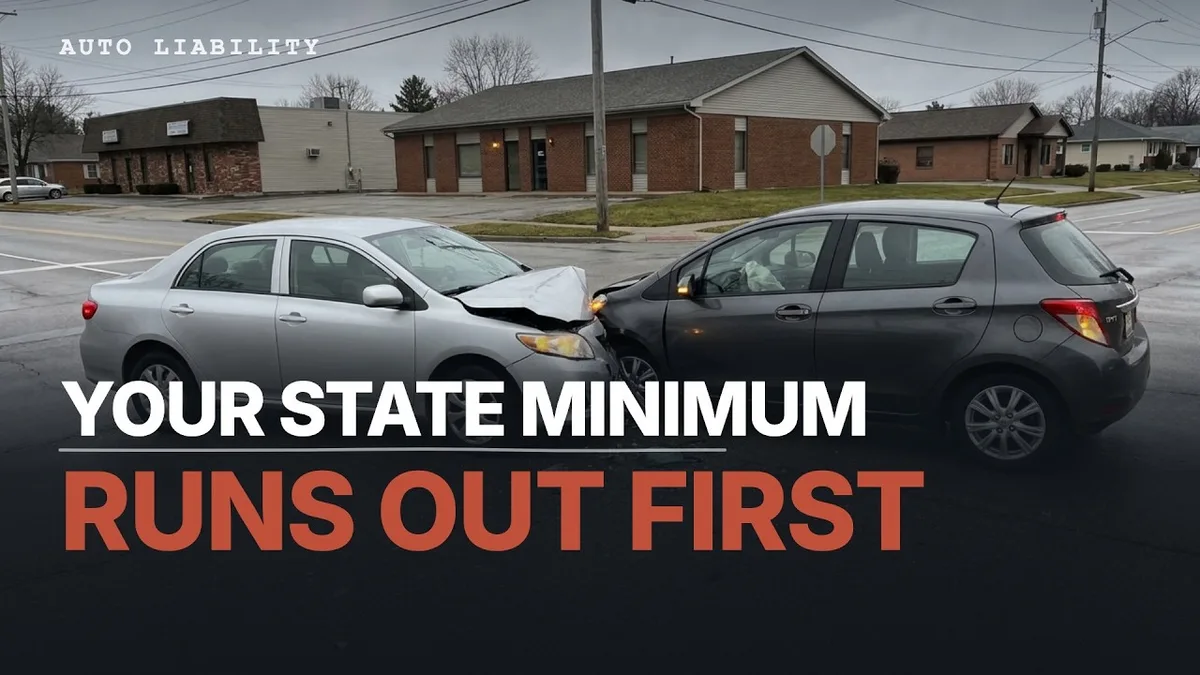
The 30/60/25 minimum is the legal floor for NC auto insurance, not the recommended coverage level for most drivers. Higher liability limits cost slightly more per month but protect your assets if you cause a serious crash. Aggregate rate data from the North Carolina Department of Insurance shows the average monthly premium difference between 30/60/25 and 50/100/50 coverage is only $11 for drivers with clean records as of 2026.
Who Is 30/60/25 Actually Right For?
30/60/25 only makes financial sense for drivers with no savings, no home equity, and a low-value vehicle over 15 years old. If you have any assets to protect, a mortgage, or a newer car, 30/60/25 leaves you dangerously exposed. A single at-fault crash with severe injuries can easily generate $100,000 or more in combined bodily injury and property damage costs, far above the 30/60/25 caps.
We’ve compared the three most common liability limit tiers available to NC drivers below.
| Limit Tier | Bodily Injury Per Person | Bodily Injury Per Accident | Property Damage Per Accident | Average Monthly Premium (NC, clean record, 2026 baseline) |
|---|---|---|---|---|
| 30/60/25 (state minimum) | $30,000 | $60,000 | $25,000 | $47 |
| 50/100/50 | $50,000 | $100,000 | $50,000 | $58 |
| 100/300/100 | $100,000 | $300,000 | $100,000 | $73 |
The 100/300/100 tier is the standard recommendation for most NC drivers with assets to protect. It raises your property damage cap enough to cover damage to newer vehicles or commercial property. The extra $26 per month is a small price to pay to avoid a six-figure out-of-pocket bill after a bad crash.
Common Mistakes North Carolina Drivers Make With 30/60/25 Liability Coverage
Many drivers make simple, avoidable mistakes with their 30/60/25 coverage that lead to fines, coverage gaps, or huge out-of-pocket bills. These errors are easy to fix if you catch them before you need your insurance.
Assuming 30/60/25 Covers Your Own Car Repairs
This is the most common mistake NC drivers make with state minimum coverage. 30/60/25 only pays for damages you cause to other people and their property, it never covers your own car repairs or medical bills after an at-fault crash. If you only carry 30/60/25 and total your car in a crash you caused, you pay 100% of the replacement cost out of pocket.
Letting Your Coverage Lapse Without Updating the NCDMV
Insurance providers report policy lapses to the NCDMV automatically, but many drivers don’t realize their coverage has dropped until they get a suspension notice in the mail. Even a 1-day lapse triggers the same penalties as driving with no insurance at all, including fines and registration holds.
Carrying an Out-of-State Policy That Doesn’t Meet NC Requirements
Out-of-state policies from providers not licensed to sell insurance in North Carolina do not satisfy the state’s Financial Responsibility Law. If you move to NC, you have 30 days to switch to a policy that meets 30/60/25 limits, regardless of what your old policy covered. Failing to make this switch leads to the same fines and license suspension as driving with no insurance.
Special Situations That Change Your 30/60/25 Obligations
Some driver situations require more than just the standard 30/60/25 minimum, even if you think you’re compliant. Use this quick decision tree to check if your situation requires extra coverage.
If you have an active auto loan or lease, then your lender requires full coverage (collision and comprehensive) in addition to 30/60/25 liability. If you drive for a rideshare service like Uber or Lyft in NC, then your personal 30/60/25 policy does not cover accidents that happen while you are logged into the app, and you need a separate rideshare endorsement or commercial policy. If you have a revoked license due to a DUI or repeated insurance lapses, then you will need to file an SR-22 to prove financial responsibility, and most insurers will only issue an SR-22 if you carry higher than 30/60/25 limits.
If you are under 25 years old and a new driver in NC, many insurers automatically require higher liability limits as a condition of issuing a policy to reduce their risk.
Current Cost and Penalty Data for North Carolina 30/60/25 Coverage

Pricing and penalties for 30/60/25 coverage vary by location, driving record, and policy type. We’ve pulled the latest 2026 data from the North Carolina Department of Insurance and NCDMV to give you a clear baseline.
Average 30/60/25 Premium Costs by Location
| Region | Average Monthly Premium (Liability Only) | Average Monthly Premium (Full Coverage) |
|---|---|---|
| Urban (Mecklenburg, Wake, Guilford counties) | $62 | $142 |
| Suburban (average mid-sized county) | $47 | $108 |
| Rural (Cherokee, Swain, Tyrrell counties) | $38 | $87 |
Urban drivers pay higher premiums due to higher rates of crashes, theft, and property damage claims. Full coverage adds collision and comprehensive protection for your own car, which is required if you have a car loan.
Penalty Costs for Non-Compliance
The NCDMV assesses fixed penalties for insurance non-compliance as of 2026. A first offense for driving without proof of valid 30/60/25 coverage carries a $200 fine plus $50 in court costs. License reinstatement after an insurance suspension costs a flat $125 fee.
Registration holds cost $50 to lift. An SR-22 filing fee runs $15 to $25 per year for the 3-year requirement period. Repeat offenses can lead to license suspension for up to 1 year and a 3-year SR-22 mandate.
When to Work With a North Carolina Insurance or Legal Professional
Most NC drivers can handle their 30/60/25 coverage needs on their own, but some situations require professional help to avoid costly mistakes. Reach out to a licensed insurance agent or consumer attorney if you face any of the following scenarios.
If you are being sued by an injured party for damages that exceed your 30/60/25 policy limits, then you need a personal injury defense attorney to negotiate a settlement or defend you in court. If your license has been suspended for insurance non-compliance and you are unsure how to file an SR-22 or meet reinstatement requirements, then a licensed insurance agent can walk you through the process and confirm your policy meets NCDMV rules. If your insurer is denying a valid claim for damages you caused to a third party under your 30/60/25 policy, then you can file a complaint with the North Carolina Department of Insurance for free assistance resolving the dispute.
The North Carolina Department of Insurance consumer assistance page offers free resources for drivers fighting unfair claim denials or rate increases.
Frequently Asked Questions About North Carolina 30/60/25 Liability Insurance
Does North Carolina require 30/60/25 liability insurance for all drivers?
Yes, all licensed North Carolina drivers must carry at least 30/60/25 liability coverage or proof of equivalent financial responsibility to legally operate a vehicle. This requirement applies to both new and existing drivers, regardless of how long you have held a license. The NCDMV enforces this rule for all vehicle registrations and license renewals.
What does 30/60/25 insurance not cover in North Carolina?
30/60/25 liability coverage only pays for damages you cause to other people and their property, it never covers your own medical bills or vehicle repair costs after an at-fault crash. If you want coverage for your own losses, you need to add collision and comprehensive coverage to your policy. Many NC drivers assume state minimums include this protection, a gap that leads to large out-of-pocket bills.
Can I drive in North Carolina with out-of-state insurance that has lower limits?
No, out-of-state policies must meet or exceed North Carolina’s 30/60/25 minimum limits to be valid in the state. If your out-of-state policy has lower limits, you must upgrade your coverage within 30 days of becoming a NC resident or registering a vehicle in the state. Driving with non-compliant out-of-state coverage carries the same fines and license suspension penalties as driving with no insurance.
How long does an SR-22 stay on your record in North Carolina?
An SR-22 requirement in North Carolina lasts for 3 consecutive years from the date of issuance. You must maintain continuous 30/60/25 (or higher) coverage for the full 3-year period, or the requirement resets. The NCDMV automatically removes the SR-22 mandate once the 3-year term ends, as long as you have no further insurance lapses.
Verified Compliance Checklist for North Carolina 30/60/25 Coverage
Use this quick checklist to confirm you meet all state requirements before your next registration or license renewal. Each item is verified directly with the NCDMV as of 2026.
- Your policy lists $30,000 per person bodily injury, $60,000 per accident bodily injury, and $25,000 per accident property damage limits
- Your insurer is licensed to sell auto insurance in North Carolina
- Your policy is active with no lapses in coverage
- You have a valid digital or paper insurance card in your vehicle at all times
- You have submitted proof of insurance to the NCDMV for any recent registration or license reinstatement