ByMax Lee
Northern Mariana Islands Distracted Driving Law Explained
Driving in the Northern Mariana Islands should be straightforward, but the CNMI distracted driving law and handheld device prohibition can trip up even careful motorists. If you're navigating Saipan's roads, understanding what's illegal isn't just about avoiding a ticket, it's about keeping yourself and others safe. Our research into local statutes shows the law is strict, but it has clear exceptions that matter for daily drivers and visitors alike.
As of 2026, the Commonwealth enforces a primary ban on handheld mobile phone use while operating a vehicle, with fines starting around $250 for a first offense. Below, we break down exactly what the law covers, who it applies to, and how to stay compliant without sacrificing convenience.
Quick Answer
The Northern Mariana Islands distracted driving law and handheld device prohibition bans holding a phone while driving. You may use hands-free Bluetooth or speakerphone. Texting, emailing, or watching videos is illegal.
Fines for a first offense start at approximately $250. The law applies to all drivers, including tourists and commercial operators.
What the Northern Mariana Islands Distracted Driving Law Actually Says
The core of the law lives in CNMI Title 6, Division 3 of the Traffic Code. It explicitly prohibits operating a motor vehicle while manually holding or supporting a mobile electronic device. This includes smartphones, tablets, and laptops.
The law is enforced as a primary offense. This means an officer can pull you over solely for observed handheld device use, without needing another traffic violation. Penalties escalate with repeat offenses and can include additional court costs and points on your driving record.
YouTube / SG Road Vigilante (YouTube thumbnail (fair-use with source credit))
Is Handheld Phone Use Completely Banned in CNMI?
Yes, with narrow exceptions. Holding a phone to make a call, text, browse the internet, or record video is illegal while the vehicle is in motion or temporarily stopped in traffic. This includes situations at red lights, stop signs, or in drive-throughs.
You are allowed to use a device if you:
- Are parked completely off the roadway and not in a traffic lane
- Are operating an emergency vehicle in the course of duty
- Are reporting an emergency or hazardous condition to authorities
- Use voice-activated features or a single-touch activation for hands-free calling

YouTube / KARE 11 (YouTube thumbnail (fair-use with source credit))
What Exactly Counts as a Violation (and What Doesn't)
It helps to separate prohibited actions from legal ones. The following are violations when the vehicle is moving or in traffic:
- Holding a phone with any part of your body
- Tapping, swiping, or scrolling on a screen
- Reading, writing, or sending text-based communications
- Watching a video or livestream
- Using a device as a navigation source while holding it
The following are generally permitted when done safely:
- Hands-free voice calls through Bluetooth or an integrated car system
- GPS navigation if the device is mounted and you activate it before driving
- Two-way radios used by commercial drivers
- Emergency calls to 911 or local emergency numbers
Who the Law Applies To (Residents, Tourists, Commercial Drivers)
The statute applies to every operator of a motor vehicle on CNMI public roads. This includes residents, seasonal workers, and tourists renting a car or scooter. No exemption exists for visitors unfamiliar with local rules.
Commercial drivers must follow the same handheld ban. Some limited exceptions may apply for two-way radio use in certain vehicles, but you must verify with CNMI law enforcement.

YouTube / Away Together w/ Nik and Allie (YouTube thumbnail (fair-use with source credit))
The Fines and Penalties You Risk If You Break the Law
A first offense typically carries a fine between $250 and $500, plus court costs. Repeat violations within a three-year period can double the fine and add points to your driver’s license. Accumulating points may trigger higher insurance premiums or mandatory driving safety courses.
Aggravating circumstances, such as causing an accident while distracted, can lead to misdemeanor charges, higher fines, and potential jail time.
| Offense Level | Fine Range | Additional Consequences |
|---|---|---|
| First violation | $250 – $500 | Points on license |
| Second violation (within 3 years) | $500 – $1,000 | Higher points, possible court date |
| Third or subsequent violation | $1,000 – $2,500 | License suspension risk, mandatory driving course |
| Causing injury or fatality | Criminal misdemeanor charges | Jail time, civil liability, license revocation |

YouTube / ABC 10 News (YouTube thumbnail (fair-use with source credit))
Hands-Free vs. Handheld: What’s Legal and What’s Not
The key distinction is manual contact. If you’re holding the device, you’re likely violating the law. If you’re using a certified hands-free setup that requires no more than a single touch or voice command, you’re generally compliant.
Legal Hands-Free Setups
- Bluetooth earpiece or headphones
- Car’s built-in Bluetooth or hands-free calling system
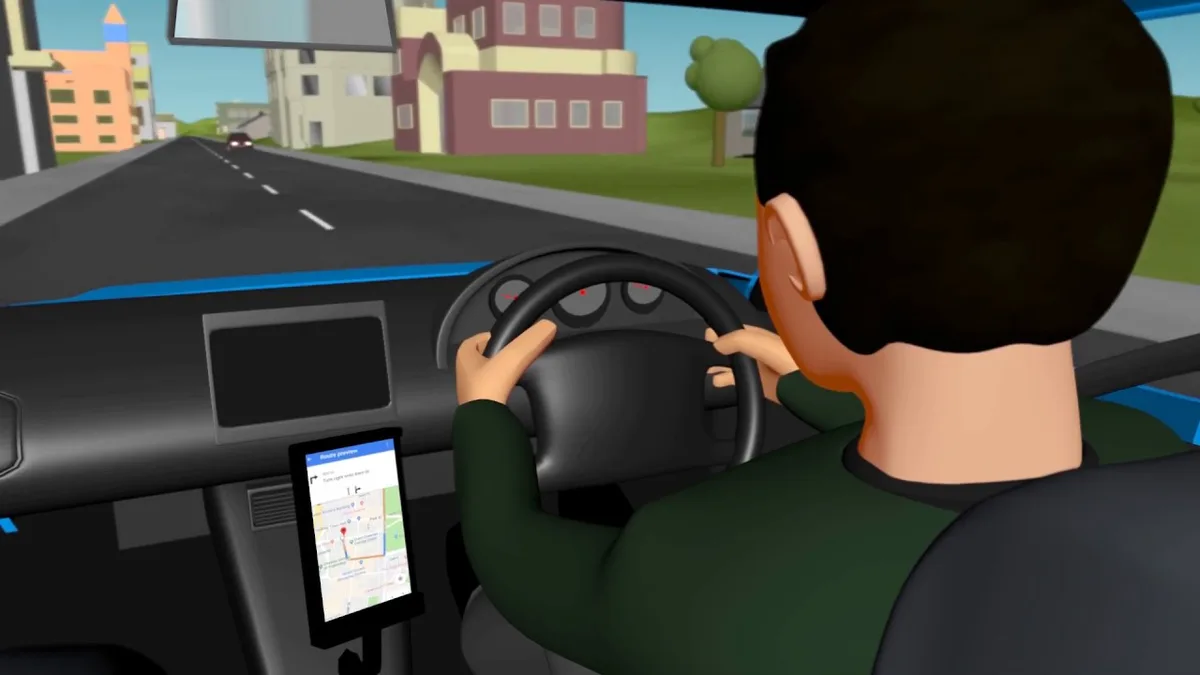
- A phone mount that secures the device without requiring you to hold it
- Voice-activated commands for calls, messages, or navigation
Illegal “Hands-Free” Practices
- Propping a phone on your shoulder or lap
- Holding the device to answer or end a call, even briefly
- Typing or scrolling on a mounted phone while driving
- Using a handheld device for GPS while the car is moving

YouTube / Top Deals Today (YouTube thumbnail (fair-use with source credit))
How CNMI’s Law Compares to Other US States and Territories
CNMI’s distracted driving law is stricter than some states but similar to others. Unlike places with secondary enforcement, CNMI allows primary enforcement. This means officers can stop you solely for handheld device use.
Most US states with handheld bans impose fines between $50 and $500 for first offenses. CNMI sits at the higher end of this range. Some states like California and New York also add license points, which CNMI mirrors.
Territories like Guam and Puerto Rico have comparable laws. However, enforcement intensity varies. CNMI’s focus on tourism-heavy areas means visitors often face stricter scrutiny.
YouTube / Transport For NSW (YouTube thumbnail (fair-use with source credit))
How Police Enforce the Ban (And How to Avoid a Ticket)
Police in CNMI actively patrol for distracted driving. They look for drivers holding phones, swiping screens, or texting. Since it’s a primary offense, no other violation is needed to justify a stop.
To avoid a ticket:
- Keep your phone out of sight and out of hand
- Use a dashboard mount if you need GPS
- Enable voice commands for calls and texts
- Pull over if you must interact with your device
If stopped, remain calm and cooperative. Provide your license, registration, and insurance. Arguing the citation on the spot rarely helps.
Practical Ways to Stay Compliant While Driving
Start by setting up your phone before you drive. Mount it on the dashboard or windshield. Activate GPS and start navigation while parked.
Use Bluetooth for calls. Most modern cars and phones support hands-free calling. Voice commands work for texts and music too.
Enable “Do Not Disturb While Driving” mode. This silences notifications and auto-replies to incoming messages.
If you must check your phone, pull over completely. Park in a safe, legal spot off the roadway. Never use your phone in slow-moving traffic or at stoplights.
Common Misconceptions That Get Drivers in Trouble
Many drivers think they’re safe if they’re stopped in traffic. The law applies whenever your vehicle is on the road, even at red lights or in drive-thru lines.
Some believe Bluetooth means they can hold the phone. Not true. Bluetooth is for audio only.
You still can’t hold the device.
Tourists often assume they won’t get ticketed. Enforcement applies to everyone, regardless of residency. Rental car drivers are not exempt.
Another myth is that mounted GPS is always legal. It is, but only if you don’t interact with it while driving. Set your destination before you start moving.
What to Do If You’re Pulled Over for Using Your Phone
Stay calm and pull over safely. Turn off your engine and place your phone out of sight. Keep your hands visible on the wheel.
When the officer approaches, provide your documentation. License, registration, and insurance are standard requests. Stay polite and cooperative.
Do not argue the citation on the roadside. If you believe the stop was unjust, you can contest it in court. Pay attention to the citation details and deadlines.
If you receive a ticket, you’ll have options. You can pay the fine, request a court date, or attend traffic school if eligible. Check with the CNMI Department of Public Safety for local procedures.
Frequently Asked Questions
Can I use my phone at a stoplight in CNMI?
No. The law applies whenever your vehicle is on the road, including at stoplights or in traffic.
What’s the penalty for a first offense?
Fines start around $250, plus court costs. Repeat offenses carry higher penalties and possible license points.
Are there any exemptions for emergency calls?
Yes. You may use a handheld device to call 911 or report an emergency.
Does the law apply to passengers?
No. The ban is for drivers only. Passengers can use handheld devices.
Can I use a tablet for GPS while driving?
Only if it’s mounted and you don’t interact with it while the vehicle is moving.
Where to Find the Official Law and Updates
The full text of CNMI’s distracted driving law is in Title 6, Division 3 of the Traffic Code. You can access it through the CNMI Legislature’s website.
For enforcement details and updates, check the CNMI Department of Public Safety. They provide the latest on fines, procedures, and compliance tips.