ByMax Lee
Northern Mariana Islands Trailer Towing Safety Rules
Towing a trailer in the Northern Mariana Islands without the right safety setup isn’t just risky, it’s illegal. The Northern Mariana Islands trailer towing safety chain and lighting equipment requirements follow U.S. federal standards, so you’ll need compliant chains, proper lighting, and correct wiring to stay on the right side of the law.
Federal Motor Vehicle Safety Standard 108 (FMVSS 108) sets the baseline for lighting, while chain strength depends on your trailer’s weight. Get this wrong, and you’re looking at fines or worse, a detached trailer on the road.
Quick Answer
The Northern Mariana Islands requires safety chains rated for your trailer’s gross weight. FMVSS 108 mandates tail, brake, and turn signal lights. Chains must be crossed under the tongue and attached to the tow vehicle frame.
Breakaway systems are required for trailers over 3,000 lbs. All lighting must meet DOT standards.
YouTube / Hirepool (YouTube thumbnail (fair-use with source credit))
Why Trailer Safety Rules in the CNMI Can't Be Guesswork
The CNMI adopts U.S. federal towing regulations, so the same rules that apply on the mainland apply here. That means your trailer’s safety chains and lighting must meet Federal Motor Vehicle Safety Standards to pass inspection and avoid penalties.
Skipping these requirements isn’t just a legal issue, it’s a safety hazard. A detached trailer or non-functional lights can cause serious accidents, especially on the islands’ winding roads. The stakes are higher in a tropical climate, where corrosion can quickly degrade equipment.
The Rules That Actually Apply to Your Trailer
Federal Standards Adopted by the Commonwealth
The CNMI follows 49 CFR Part 571, which includes FMVSS 108 for lighting and FMVSS 121 for braking systems. These standards are non-negotiable for any trailer towed on public roads.
Trailer lighting must include:
- Red tail lights
- Red or amber brake lights
- Amber turn signals
- White reverse lights
- Side marker and clearance lights for wider trailers
CNMI-Specific Enforcement and Expectations
While the CNMI adopts federal standards, local enforcement may focus more on visible compliance. That means working lights and properly attached chains are the first things an officer will check.
The Department of Public Safety conducts roadside inspections. Non-compliance can result in fines or orders to correct the issue before continuing your trip.
Commercial vs. Recreational Trailer Differences
Commercial trailers often face stricter scrutiny. If you’re towing for business, expect additional requirements like regular inspections, higher-grade safety chains, and commercial-grade lighting systems.
Breakaway brakes are mandatory for heavier loads. Recreational trailers still need to meet all federal standards, but enforcement may be less frequent unless there’s an obvious safety issue.
Safety Chain Requirements: Strength, Grade, and How to Attach Them
Safety chains are your last line of defense if the hitch fails. They must be strong enough to hold your trailer’s gross weight and attached correctly to prevent detachment.
Minimum Breaking Strength Based on Trailer Weight
Your chains must have a breaking strength equal to or greater than your trailer’s gross vehicle weight rating. For example:
- Trailers under 3,500 lbs: Chains rated at 3,500 lbs minimum
- Trailers 3,500, 10,000 lbs: Chains rated at 5,000, 10,000 lbs
- Trailers over 10,000 lbs: Chains rated at 12,000 lbs or more
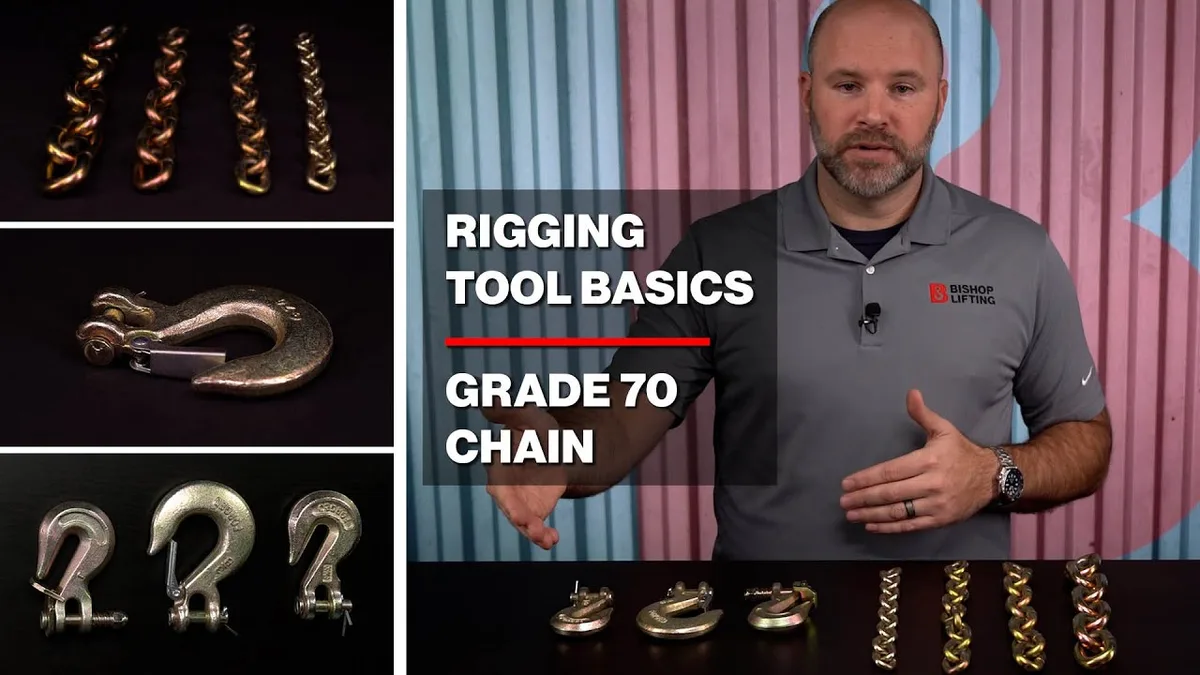
YouTube / Bishop Lifting (YouTube thumbnail (fair-use with source credit))
Grade 70 vs. Grade 30 Chains: What's Actually Required
Chain grades indicate strength and material. Here’s what you need to know:
| Grade | Material | Breaking Strength (per 1/4" chain) | Best For |
|---|---|---|---|
| 30 | Carbon Steel | ~4,700 lbs | Light-duty trailers under 3,500 lbs |
| 43 | Alloy Steel | ~6,900 lbs | Medium-duty trailers 3,500–7,000 lbs |
| 70 | Alloy Steel | ~11,300 lbs | Heavy-duty trailers 7,000+ lbs |
Grade 70 is the most common for recreational towing. Always match the chain to your trailer’s GVWR.
The Cross-Chain Method vs. Straight Chains
Cross-chaining is the standard for safety. Here’s how to do it:
- Cross the chains under the trailer tongue.
- Attach each chain to the tow vehicle’s frame on opposite sides.
- Leave enough slack for turns but not so much that the chains drag.
Straight chains are less effective. They can allow the trailer to swing dangerously if the hitch fails.
Breakaway Switch Requirements for Trailers Over a Certain Weight
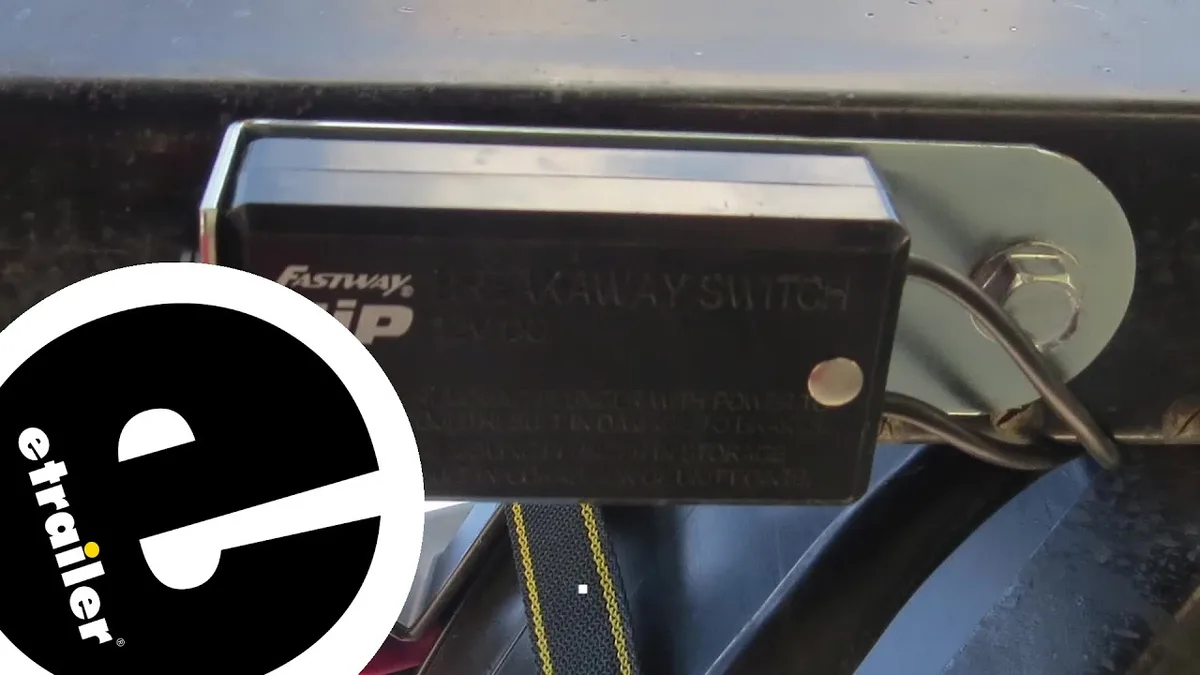
Trailers over 3,000 lbs must have a breakaway system. This includes:
- A breakaway switch or cable
- A battery to power the trailer’s brakes if detached
- Proper attachment to the tow vehicle
The system must activate the trailer’s brakes automatically if the trailer separates from the tow vehicle.
YouTube / etrailer (YouTube thumbnail (fair-use with source credit))
Where Chains Must Anchor on the Tow Vehicle Frame
Chains must be attached to the tow vehicle’s frame, not the bumper or hitch. The frame provides the strength needed to hold the trailer if the hitch fails.
Never attach chains to:
- The trailer’s bumper
- The hitch ball or receiver
- Any non-structural part of the tow vehicle
Trailer Lighting and Electrical Standards
FMVSS 108 sets the lighting requirements for all trailers. These standards ensure your trailer is visible to other drivers, especially at night or in poor weather.
FMVSS 108 Minimum Lighting Requirements
Your trailer must have the following lights, all DOT-compliant:
- Tail lights: Red, visible from 500 feet at night
- Brake lights: Red or amber, brighter than tail lights
- Turn signals: Amber, visible from 500 feet
- Reverse lights: White, activated when the tow vehicle is in reverse
- Side marker lights: Amber (front) and red (rear) for trailers over 80 inches wide
- Clearance lights: Red (rear) and amber (front) for trailers over 80 inches wide or 30 feet long
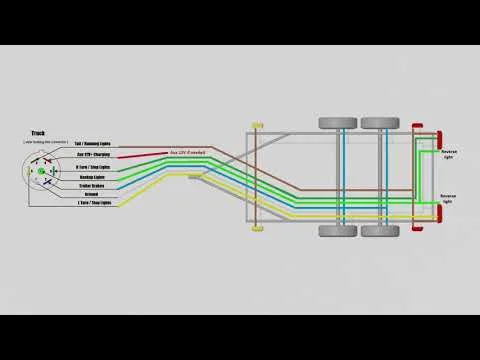
YouTube / Joe The Boat Guy (YouTube thumbnail (fair-use with source credit))
4-Pin vs. 7-Pin Connectors: Which Do You Need?
A 4-pin connector handles basic lighting: tail, brake, and turn signals. It’s sufficient for most small trailers under 3,000 lbs without electric brakes.
A 7-pin connector adds circuits for electric brakes, reverse lights, and a 12V power line. You’ll need this for larger trailers, especially those with brakes or auxiliary power needs.
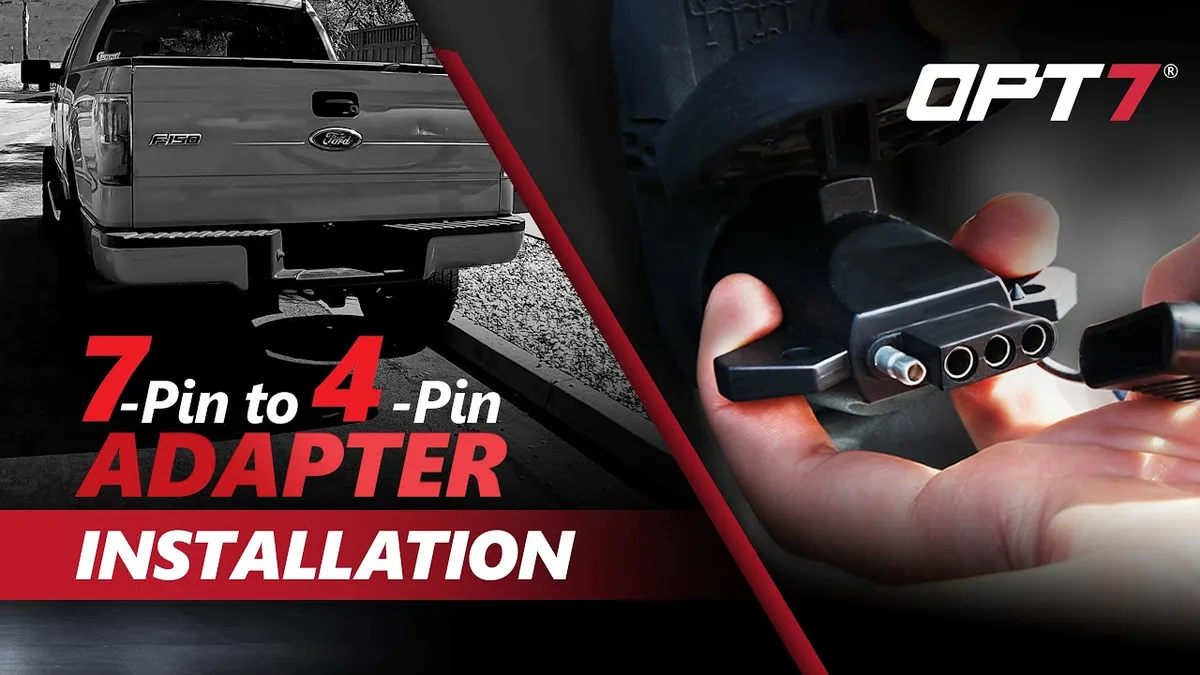
YouTube / OPT7 (YouTube thumbnail (fair-use with source credit))
Here’s the pinout for each:
| Pin | 4-Pin Function | 7-Pin Function |
|---|---|---|
| 1 | Ground (White) | Ground (White) |
| 2 | Left Turn/Brake (Yellow) | Left Turn/Brake (Yellow) |
| 3 | Right Turn/Brake (Green) | Right Turn/Brake (Green) |
| 4 | Tail Lights (Brown) | Tail Lights (Brown) |
| 5 | – | Reverse Lights (Black) |
| 6 | – | Electric Brakes (Blue) |
| 7 | – | 12V Power (Purple) |
If your trailer has electric brakes, a 7-pin is non-negotiable. For simple utility trailers, a 4-pin may be enough.
Wiring Gauge and Protection for Humid, Salt-Air Conditions
CNMI’s tropical climate accelerates corrosion. Use marine-grade wiring and connectors to prevent failures.
10 AWG wire is standard for most trailer lighting circuits. For longer runs or higher loads, 8 AWG may be necessary. Always check your trailer’s manual for specifications.
Protect your wiring with:
- Heat-shrink tubing over connections
- Dielectric grease on connectors
- Waterproof loom or conduit for exposed wiring
Avoid cheap plastic connectors. They degrade quickly in salt air.
Common Mistakes That Lead to Failures and Fines
Using chains that are too weak is the most common violation. If your trailer weighs 5,000 lbs, chains rated for 3,500 lbs won’t cut it.
Attaching chains to the bumper instead of the frame is another frequent error. Bumpers aren’t designed to handle the load if the hitch fails.
Ignoring flickering or non-functional lights is dangerous and illegal. A single burnt-out bulb can get you pulled over.
Non-DOT-compliant aftermarket light kits often fail inspections. Stick to certified components.
Skipping the breakaway system on trailers over 3,000 lbs is a serious safety risk. This system is your last line of defense if the trailer detaches.
Step-by-Step: Towing Safety Inspection Checklist
Before every trip, perform this quick check:
- Visual inspection: Look for rust, wear, or damage on chains, hitch, and coupler.
- Chain tension: Ensure chains are crossed and have slight slack but aren’t dragging.
- Light test: Have someone verify all lights work while you activate brakes, turn signals, and reverse.
- Breakaway test: Pull the breakaway pin to ensure the system engages the trailer brakes.
Monthly, do a deeper inspection:
- Check chain links for stretching or cracking
- Test all electrical connections for corrosion
- Verify the breakaway battery is charged
- Inspect wiring for fraying or exposed copper
Before every trip, perform this quick check:
- Visual inspection: Look for rust, wear, or damage on chains, hitch, and coupler.
- Chain tension: Ensure chains are crossed and have slight slack but aren’t dragging.
- Light test: Have someone verify all lights work while you activate brakes, turn signals, and reverse.
- Breakaway test: Pull the breakaway pin to ensure the system engages the trailer brakes.
Monthly, do a deeper inspection:
- Check chain links for stretching or cracking
- Test all electrical connections for corrosion
- Verify the breakaway battery is charged
- Inspect wiring for fraying or exposed copper
Maintaining Tow Equipment in a Tropical Marine Climate
Salt air and humidity are your biggest enemies. Rinse your trailer and tow equipment with fresh water after each use, especially if you’ve been near the ocean.
Apply a corrosion inhibitor to chains and metal components. A light coat of grease can prevent rust on moving parts.
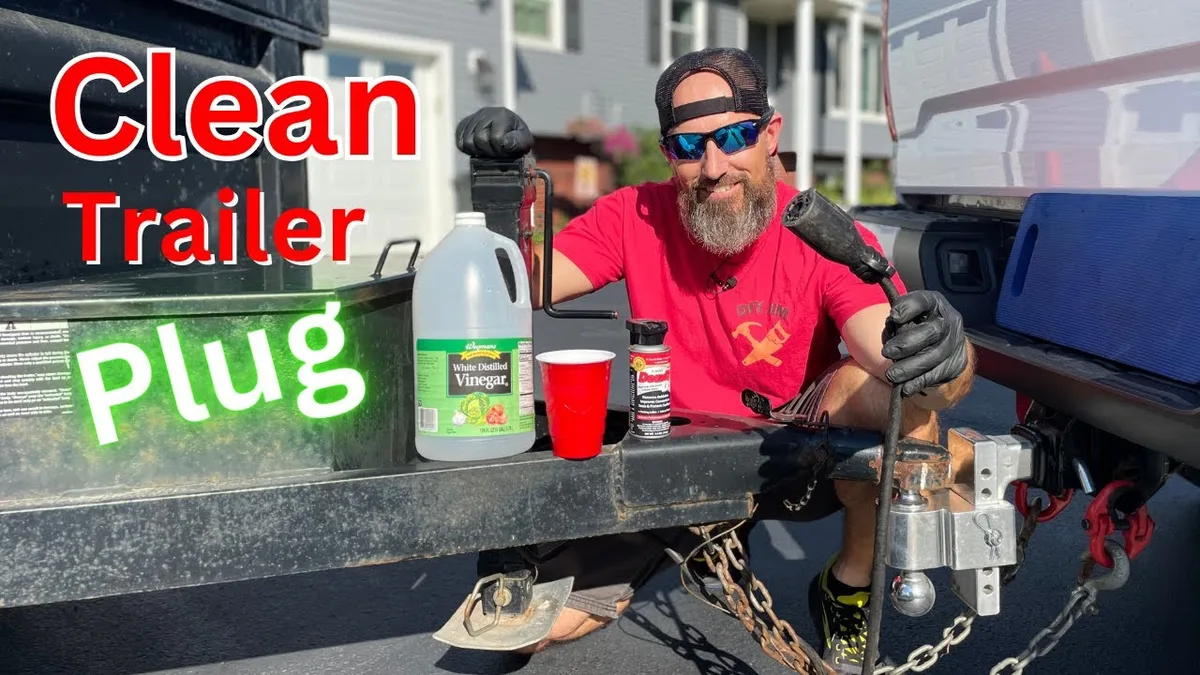
YouTube / DIY JIM (YouTube thumbnail (fair-use with source credit))
Store your trailer in a dry, covered area when not in use. If that’s not possible, use a breathable cover to reduce moisture buildup.
Replace any connector that shows signs of corrosion. Cleaning can help, but once the contacts are pitted, it’s time for a new one.
Choosing the Right Gear for Your Trailer and Use Case
Utility Trailers Under 2,000 lbs
For small trailers, Grade 30 chains and a 4-pin connector are usually sufficient. These setups handle basic lighting and don’t require electric brakes.
A simple wiring harness with 12 AWG wire works for most light-duty applications. Just ensure all lights meet DOT standards.
Boat and Camper Trailers from 2,000 to 7,000 lbs
Step up to Grade 43 or 70 chains for this weight range. A 7-pin connector becomes necessary if your trailer has electric brakes.
Consider marine-grade components for boat trailers. Saltwater exposure demands extra corrosion resistance.
Heavy Trailers and Commercial Use
Trailers over 7,000 lbs need Grade 70 or 80 chains. A 7-pin connector is mandatory for electric brakes and auxiliary power.
Commercial operations should use:
- Heavy-duty wiring (8 AWG or thicker)
- Sealed connectors
- Regular professional inspections
Tow Vehicle Capacity and Wiring Package Limits
Check your tow vehicle’s capacity before hitching up. Exceeding it risks damage to both vehicles.
Many newer trucks come with a factory tow package. This typically includes a pre-wired 7-pin connector, heavy-duty cooling systems, and upgraded suspension.
If your vehicle lacks a tow package, you’ll need to install an aftermarket wiring harness. Ensure it matches your trailer’s requirements.
When to Call a Professional
Complex Wiring or Electronic Brake Controller Installations
If you’re not comfortable with electrical work, hire a pro. Incorrect wiring can cause shorts, fires, or system failures.
Electric brake controllers require precise calibration. A professional can ensure your trailer’s brakes engage smoothly and safely.
Non-Standard Trailers or Out-of-Regulation Equipment
Custom trailers often need special attention. A professional can verify compliance with FMVSS and CNMI regulations.
If your trailer has unique features like hydraulic brakes or custom lighting, expert installation is wise. These systems require specialized knowledge.
Failed Inspections or Unclear Compliance Questions
If your trailer fails a safety inspection, a professional can diagnose and fix the issues. They’ll know exactly what needs correction.
When in doubt about regulations, consult a local expert. They stay updated on CNMI-specific requirements and enforcement practices.
Towing for Hire or in a Commercial Capacity
Commercial towing has stricter rules. Professional setup and regular inspections are often required by law.
A pro can also help with log books for maintenance records, compliance documentation, and insurance requirements.
Frequently Asked Questions
Do CNMI towing rules differ from mainland U.S. rules?
No. The CNMI adopts the same federal standards as the mainland U.S. This includes FMVSS 108 for lighting and chain requirements based on trailer weight.
How often must I inspect my safety chains and lights?
Perform a quick visual check before every trip. Do a thorough inspection monthly, especially in CNMI’s corrosive climate.
Can I use synthetic tow straps instead of safety chains?
No. Synthetic straps don’t meet FMVSS requirements for trailer towing. Safety chains are mandatory and must be rated for your trailer’s weight.
What happens if my trailer lights fail on the road?
You risk a traffic stop and fine. More importantly, you create a serious safety hazard for yourself and others.
Are breakaway switches required for all trailers?
They’re required for trailers over 3,000 lbs. Smaller trailers don’t need them, but they’re still a good safety precaution.
Final Verdict: Compliance Checklist Before You Hit the Road
Absolute Must-Haves for Legal and Safe Towing
- Safety chains rated for your trailer’s GVWR
- DOT-compliant lighting (tail, brake, turn, reverse)
- Properly crossed chains attached to the tow vehicle frame
- Functional breakaway system for trailers over 3,000 lbs
Documentation and Inspection Records to Keep
- Trailer weight and capacity specifications
- Chain and lighting component receipts (proof of DOT compliance)
- Maintenance logs for inspections and repairs
When in Doubt, What to Verify First
Check your chains and lights before every trip. These are the most common failure points and inspection targets.
Where to Find Official CNMI and Federal Guidance
For federal standards, refer to 49 CFR Part 571 and FMVSS 108. The CNMI Department of Public Safety can clarify local enforcement practices.