Black Friday deals are live on Amazon · limited-time discounts, grab them before they’re gone
Grab the deals

ByMax Lee
What Is Ceramic Car Wash: Ultimate Guide to Shine & Protection
A ceramic car wash is a vehicle-cleaning service or product that combines normal washing with a ceramic-based protective treatment. Depending on the service, that treatment may be a ceramic shampoo, spray sealant, rinse-on coating, or a professionally applied ceramic coating.
The result is usually a glossier surface, stronger water repellency, and easier maintenance. However, a ceramic car wash is not a miracle treatment and does not make paint scratch-proof. Understanding the difference between a quick ceramic wash and a true ceramic coating helps you choose the right level of protection for your vehicle. You can also read our guide on how to wash a car with ceramic coating.
What Does “Ceramic” Mean in Car Care?
In automotive detailing, “ceramic” usually refers to silicon-dioxide-based chemistry, often written as SiO₂. When applied to a properly prepared surface, the product can bond to or form a durable film over the paint.
This is different from household ceramic materials such as cups or tiles. Automotive ceramic products are liquid formulations designed to spread across paint, glass, trim, or wheels and then cure into a protective layer. You can also read our guide on are brushless car washes better.
The word ceramic appears on several types of car-care products:
- Ceramic shampoos
- Ceramic wash-and-wax products
- Spray ceramic sealants
- Rinse-on ceramic treatments
- Professional ceramic coatings
These products do not provide identical protection. A shampoo may leave a temporary hydrophobic residue, while a professionally installed coating can remain on the vehicle for years when correctly prepared and maintained.
What Is a Ceramic Car Wash?
A ceramic car wash has two parts:
- Safe removal of contamination such as road film, dust, salt, and bird droppings.
- Application of a ceramic-based protectant that improves gloss and water behavior.
Some car washes apply the product through a foam cannon or hand wash. Others spray it onto the vehicle during the rinse stage. A detailer may also wash, decontaminate, polish, and then apply a spray coating as a separate service. You can also read our guide on best car wash kit for ceramic coating.
This distinction matters. A “ceramic wash” at an automatic car wash may offer short-term protection, but it is not necessarily the same as a paint-correction service followed by a professionally cured coating.
For the safest routine cleaning, the two-bucket wash process helps keep grit away from the paint and reduces wash-induced marring. You can also read our guide on how often should you wash a car with ceramic coating.
Ceramic Wash vs. Ceramic Coating
These terms are often used interchangeably, but they describe different levels of service.
| Feature | Ceramic car wash | Professional ceramic coating |
|---|---|---|
| Main purpose | Clean and add temporary protection | Create a longer-lasting protective film |
| Preparation | Basic wash and dry | Wash, chemical decontamination, clay treatment, and often polishing |
| Application | Spray, foam, shampoo, or rinse-on product | Carefully measured coating applied by hand |
| Durability | Usually temporary and product-dependent | Commonly measured in years, depending on the product and care |
| Curing | Often quick or minimal | Requires controlled curing and careful aftercare |
| Cost and time | Lower and faster | Higher and more labor-intensive |
| Paint correction | Usually not included | Often recommended before application |
A ceramic wash is useful for maintenance. A true ceramic coating is a more involved paint-protection project.
How a Ceramic Car Wash Works
A quality service should follow a logical order rather than simply spraying a product over dirty paint.
1. Inspect the vehicle
The technician should check the paint, trim, wheels, glass, existing waxes, and heavily contaminated areas. Extremely dirty or neglected vehicles may need more than a standard wash.
2. Pre-rinse and remove loose dirt
A pressure rinse or pre-wash loosens sand and road grime before any wash mitt touches the surface. This step is important because rubbing loose grit across dry paint can create fine scratches. You can also read our guide on how to keep a black car clean between washes.
3. Hand wash the exterior
The vehicle is washed with a pH-balanced automotive shampoo and clean microfiber equipment. Wheels and tires should generally be handled with separate tools to avoid transferring brake dust to painted panels.
4. Decontaminate when necessary
Iron particles, tree sap, tar, and bonded environmental residue may remain after washing. A chemical iron remover, tar remover, or clay treatment may be needed before applying a durable protectant. You can also read our guide on how to wash ceramic coated car in winter.
5. Rinse and dry carefully
Water should be removed with clean, plush microfiber towels or filtered compressed air. Blow-drying can be especially useful around mirrors, badges, grilles, and trim, where trapped water later runs onto clean paint. A suitable air-drying setup can help with this step, although the equipment must be used carefully and kept free of oil or debris.
6. Apply the ceramic product
The product may be sprayed onto a towel, panel, wash mitt, or wet vehicle, depending on its instructions. It should not be applied in direct heat or allowed to dry unevenly unless the label specifically permits that method. You can also read our guide on best foam gun car wash for water hose.
7. Level and inspect the surface
Some products need to be buffed with a second microfiber towel to prevent streaks, high spots, or cloudy patches. Good lighting makes uneven application easier to identify.
8. Allow the protection to cure
The vehicle may need to remain dry for a specified period. Follow the product manufacturer’s directions rather than assuming every ceramic product cures the same way.
Benefits of a Ceramic Car Wash
Improved water repellency
A ceramic treatment can increase surface tension, causing water to bead or run off more readily. This can make rinsing easier, but water behavior is not the same as complete protection from water spots. Hard-water minerals can still dry onto the paint.
Easier maintenance washing
When the surface is smooth and hydrophobic, loose dust and light road film may be easier to remove. In practice, this reduces effort during routine washing; it does not eliminate the need to wash the vehicle.
More gloss and visual depth
Ceramic products can make clean paint appear darker, wetter, or more reflective. The final appearance depends heavily on the condition of the paint underneath. A coating cannot hide oxidation, deep scratches, or poorly repaired bodywork.
Limited chemical resistance
A cured coating may provide some resistance to common contaminants, road grime, and mild chemicals. It can give you more time to remove bird droppings, bug residue, and tree sap before they etch the clear coat.
That resistance has limits. Strong acids, harsh alkaline cleaners, fuel, solvents, and prolonged contamination can still damage the surface.
Reduced contact during cleaning
If dirt releases more easily, you may need less aggressive scrubbing. Less rubbing generally means fewer opportunities to introduce wash marks.
What a Ceramic Car Wash Does Not Do
Ceramic protection is often oversold. It does not:
- Make the vehicle scratch-proof
- Stop stone chips or deep impact damage
- Repair existing scratches or swirl marks
- Prevent every water spot
- Replace paint protection film on impact-prone areas
- Make washing unnecessary
- Permanently protect the paint regardless of maintenance
- Guarantee a specific lifespan across every product and climate
A common mistake is treating “hard” as “indestructible.” Ceramic coatings can improve resistance to light abrasion and contamination, but a dirty wash mitt, automatic brush, road debris, and sharp objects can still mark the finish.
How Long Does Ceramic Protection Last?
Durability depends on the product, preparation, climate, washing habits, and how the vehicle is stored.
| Product type | Typical role | General durability expectation |
|---|---|---|
| Ceramic shampoo | Adds temporary slickness and water behavior during washing | Short-term, often fading after subsequent washes |
| Ceramic spray sealant | Maintenance protection | Usually weeks to months |
| Rinse-on ceramic product | Fast application after washing | Temporary protection that requires reapplication |
| Consumer wipe-on coating | More substantial DIY protection | Often many months when applied correctly |
| Professional coating | Long-term paint protection | Commonly advertised in multi-year terms, subject to conditions |
These are broad categories rather than guarantees. Always use the manufacturer’s care instructions and warranty terms. Frequent exposure to intense sun, winter salt, industrial fallout, and automatic brushes can shorten real-world performance.
How Much Does a Ceramic Car Wash Cost?
The price varies according to the vehicle’s size, condition, location, product type, and amount of labor. A quick ceramic treatment added to a wash is generally much less expensive than a full coating installation.
Before booking, ask:
- Is the service hand-washed or automatic?
- Which ceramic product will be used?
- Is paint decontamination included?
- Is polishing included?
- How long must the vehicle stay dry?
- What maintenance products are recommended?
- Is the claimed durability based on ideal conditions?
- Is there a written warranty, and what voids it?
A low-cost ceramic wash can be a sensible maintenance service. It should not be compared directly with the price of a multi-stage detail and professional coating.
Who Should Choose a Ceramic Car Wash?
A ceramic wash may suit you if you:
- Want easier routine cleaning
- Prefer a glossy, water-repellent finish
- Wash your car regularly
- Park outdoors and want short-term added protection
- Already have a ceramic coating and need a compatible maintenance wash
- Want to test ceramic protection before paying for a permanent-style coating
It may not be the best choice if the paint is heavily oxidized, badly scratched, or covered in bonded contamination. In those cases, correcting and preparing the surface should come before applying protection.
For a classic or older vehicle, appearance care is only one part of ownership; documentation and registration requirements may also matter, such as the rules covered in this older-vehicle ownership guide.
How to Care for a Ceramic-Treated Vehicle
Use a gentle wash method
Wash in the shade when the panels are cool. Use clean microfiber wash media, separate wheel tools, and a shampoo approved for ceramic-protected surfaces.
Avoid household dish soap as a regular maintenance product. It is not designed to protect automotive finishes and may strip weaker maintenance layers.
Wash before contamination dries
Bird droppings, insects, tree sap, and road salt should be removed promptly. Place a damp microfiber towel over stubborn contamination for a short period to soften it rather than scraping the surface.
Dry without rubbing aggressively
Use a clean drying towel or filtered air. Do not drag a towel over a visibly gritty panel. If the vehicle becomes dirty again during drying, rinse it rather than continuing to wipe.
Avoid automatic brushes
Brushes can carry abrasive dirt from other vehicles and create swirl marks. Touch-free systems reduce contact but may rely on stronger chemicals, so they are not automatically ideal for every coating.
Use compatible maintenance products
Some coatings benefit from a ceramic topper or maintenance spray, but adding products indiscriminately can create streaks or interfere with the intended surface behavior. Use products recommended for the coating or test them on a small area first.
Remove water spots correctly
If mineral spots appear, do not immediately polish the paint. Try a coating-safe mineral deposit remover according to its instructions. Severe etching may require professional polishing, which can remove part of the coating.
Ceramic Wash Safety and Environmental Considerations
Never assume a ceramic product is harmless simply because it is marketed for cars. Follow the label, use appropriate ventilation, protect your skin and eyes, and keep chemicals away from children and pets.
Wash water can carry oil, brake dust, detergents, and other pollutants into storm drains. Where possible, wash on a suitable permeable surface or use a commercial facility that manages wastewater appropriately. Local rules vary, so check your municipality’s guidance before washing a heavily contaminated vehicle in the street.
The U.S. Environmental Protection Agency provides general information about stormwater pollution and protecting waterways.

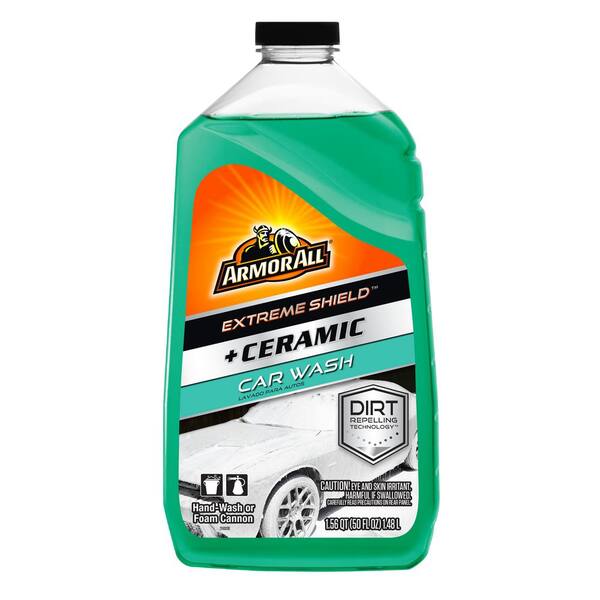
Ceramic wash services combine surface cleaning with a water-repellent protective treatment.
Credit: buysupermaxx.com
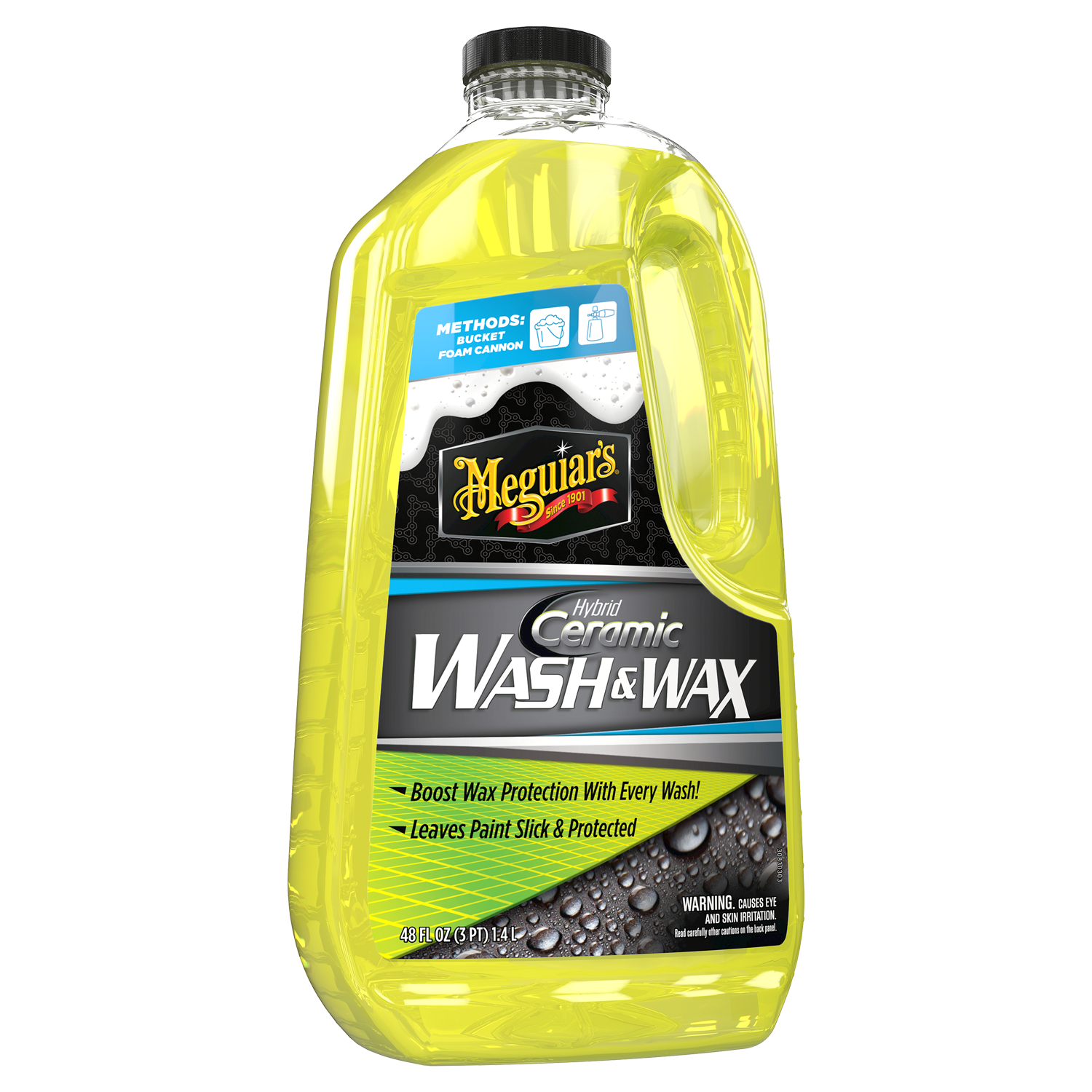
Hybrid ceramic products are designed for quick gloss and hydrophobic maintenance.
Credit: www.meguiars.com
Common Ceramic Car Wash Mistakes
Applying protection over dirty paint
A ceramic product cannot properly bond to a surface covered in grease, traffic film, or bonded contamination. Washing and decontamination are essential for durable results.
Using too much product
More product does not necessarily mean more protection. Excess can leave streaks, smears, or high spots that require additional polishing to remove.
Washing in direct sun
Heat can cause shampoo and ceramic products to dry before they are evenly rinsed or leveled. Work panel by panel in cooler conditions whenever possible.
Expecting the coating to hide defects
Ceramic protection follows the surface underneath it. Swirls and scratches may remain visible, and some may look more pronounced after gloss increases.
Delaying maintenance
A coating performs best when dirt and chemical contamination are removed regularly. Neglect can cause the surface to feel rough and lose its water behavior even if some protection remains beneath the buildup.
Frequently Asked Questions
What is a ceramic car wash?
A ceramic car wash is a vehicle wash that adds a ceramic-based protectant during or after cleaning. It can improve gloss, slickness, and water repellency, but it is not always equivalent to a professionally installed ceramic coating.
Is a ceramic car wash better than a regular wash?
It can provide more short-term protection and water repellency than a basic wash. However, a regular wash may be the better value if the vehicle is already clean, rarely exposed to harsh conditions, or does not need added gloss.
Does ceramic wash damage car paint?
When used correctly on suitable automotive surfaces, a quality ceramic wash product should not damage paint. Problems are more likely when the vehicle is washed with dirty tools, the product is applied to hot paint, or strong chemicals are used incorrectly.
How often should I use a ceramic wash?
Follow the product label. Many ceramic wash and spray products are intended for periodic maintenance rather than use at every wash. Overapplication can cause residue and streaking, so more frequent use is not automatically better.
Can I use a ceramic wash on a car without a ceramic coating?
Yes. Many ceramic shampoos and spray sealants are designed for uncoated vehicles. They provide temporary protection, but their performance and lifespan will differ from a dedicated coating.
Can ceramic coating prevent scratches?
No. Ceramic coating may reduce the effect of light contact and make safe washing easier, but it cannot stop deep scratches, keying, stone chips, or collision damage.
Can I take a ceramic-coated car through an automatic car wash?
It depends on the coating manufacturer’s advice. Brush-equipped washes can introduce swirl marks, while touch-free washes may use aggressive detergents. A careful hand wash is generally the safer long-term approach.
What should I do if water stops beading?
First, wash the vehicle thoroughly to remove surface contamination. If beading does not return, use an approved maintenance product or have the coating inspected. Loss of beading does not always mean the coating has completely failed; dirt and mineral deposits can mask its behavior.
Final Verdict
A ceramic car wash is best understood as enhanced cleaning plus temporary or maintenance-level ceramic protection. It can add gloss, improve water behavior, and make future washes easier, but it does not replace careful washing or provide a scratch-proof shield.
For the best results, match the service to your goal: choose a ceramic wash for convenient short-term maintenance, or invest in full preparation and a professional coating when you want longer-term protection. Whichever option you choose, clean tools, proper drying, prompt contamination removal, and realistic expectations will protect your paint better than the word “ceramic” on the label alone.








