ByMax Lee
Where to Put Windshield Washer Fluid
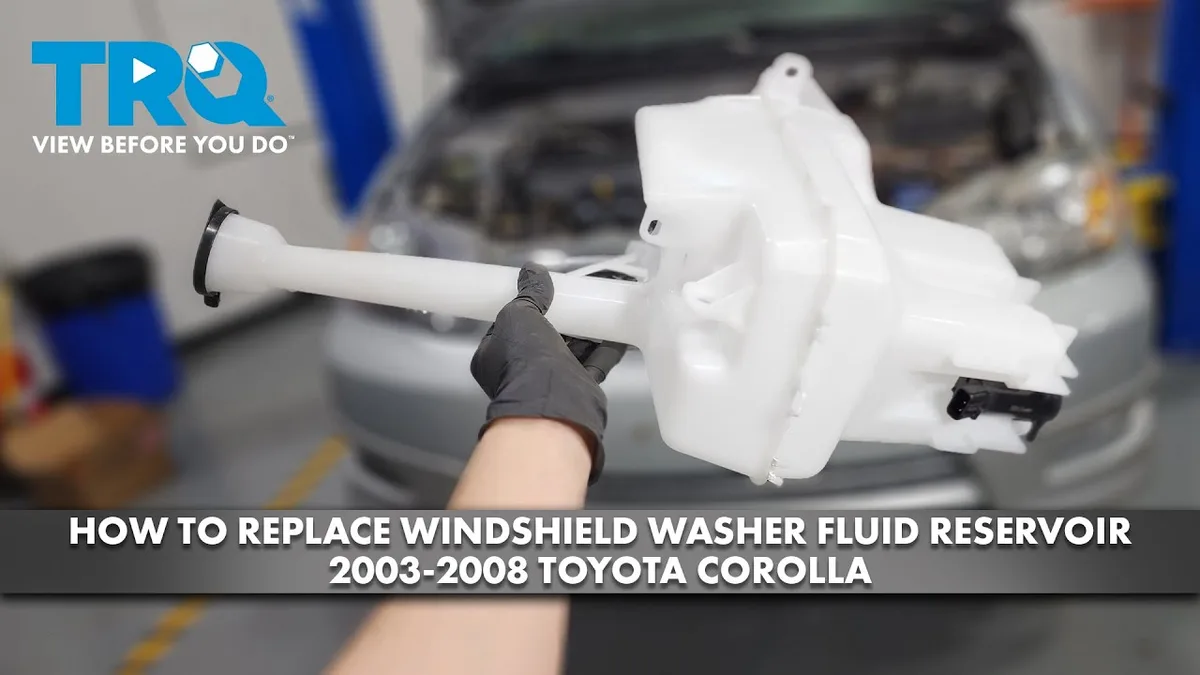
YouTube / TRQ (YouTube thumbnail (fair-use with source credit))
If you’ve ever popped the hood and stared blankly at the engine bay, you’re not alone. Knowing where to put windshield washer fluid is one of those simple car maintenance tasks that trips up even experienced drivers. The good news is it’s almost always in the same spot, and the process takes less than a minute once you know what to look for.
Most vehicles have a clearly marked reservoir under the hood, typically holding between 1.5 to 2.5 liters of fluid. Manufacturer specs confirm the cap is usually blue or yellow and labeled with a windshield symbol.
Quick Answer
Windshield washer fluid goes in the dedicated reservoir under the hood. The cap is often blue or yellow with a windshield icon. Fill it to the max line marked on the side.
Never use plain water in freezing temperatures.
How the Windshield Washer System Works
The system is simple: a small electric pump draws fluid from the reservoir and sends it through tubes to the nozzles on your windshield. When you pull the washer lever, the pump activates, spraying fluid to clear dirt, bugs, or grime.
The reservoir is usually a translucent plastic tank, so you can check the level without opening it. This setup is standard in nearly all modern cars, though some older or custom vehicles may have slight variations.
Where to Look Under the Hood
Start by releasing the hood latch from inside the car, then prop the hood open. The washer fluid reservoir is typically on the driver’s or passenger’s side, near the firewall or fender.
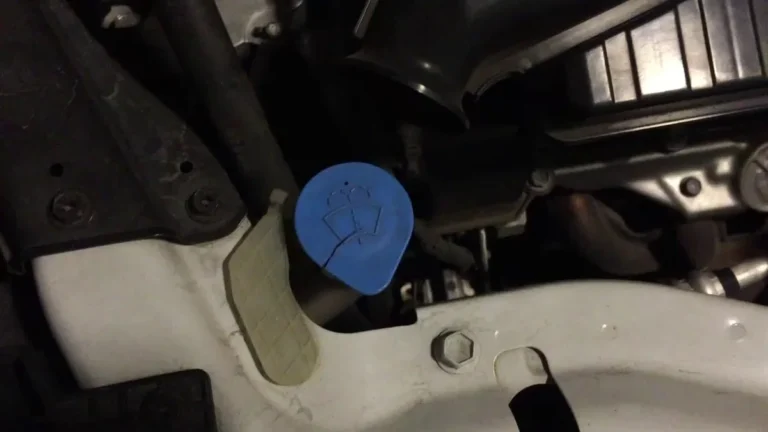
It’s a small, often translucent tank with a colored cap, blue is the most common, but yellow or white are also used. If you’re unsure, look for the windshield symbol on the cap or the reservoir itself.
How to Identify the Washer Fluid Reservoir
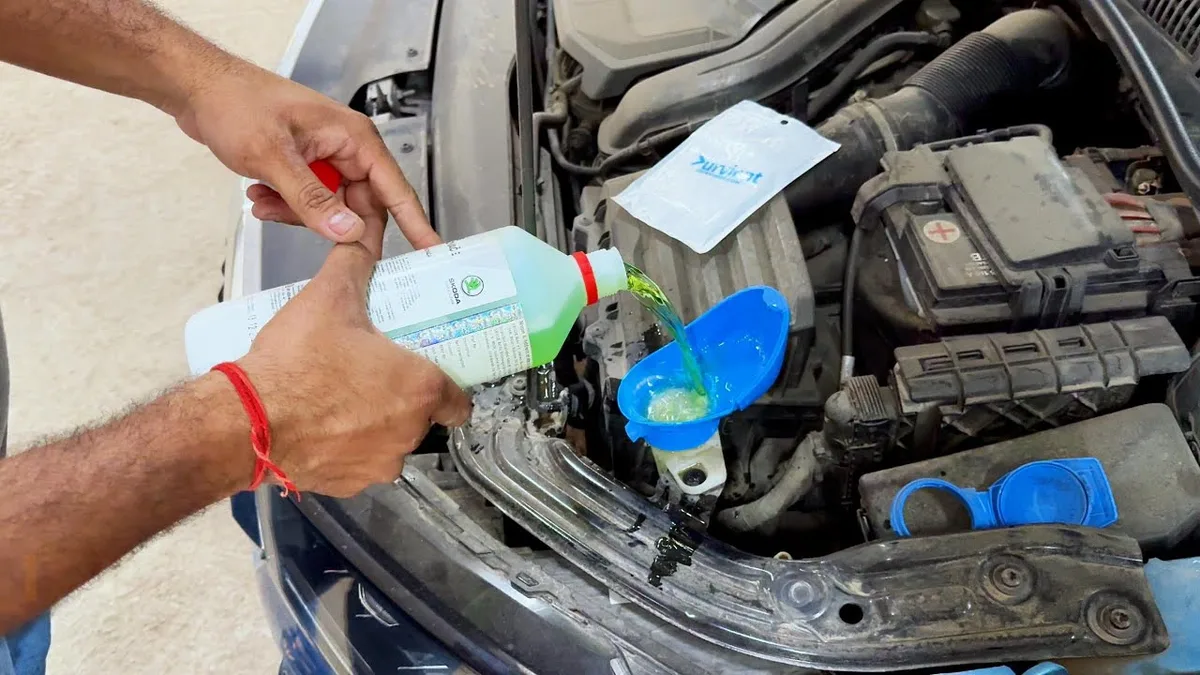
The reservoir cap is your best clue. It’s usually marked with a windshield and spray icon, and the cap color is a dead giveaway. Blue caps are the most common for washer fluid, while yellow or white caps might also be used.
YouTube / Durvient (YouTube thumbnail (fair-use with source credit))
Avoid the coolant reservoir, which often has a different symbol and is usually larger. If you’re still unsure, the reservoir will have a tube leading to the windshield nozzles.
Step-by-Step: Adding Washer Fluid the Right Way
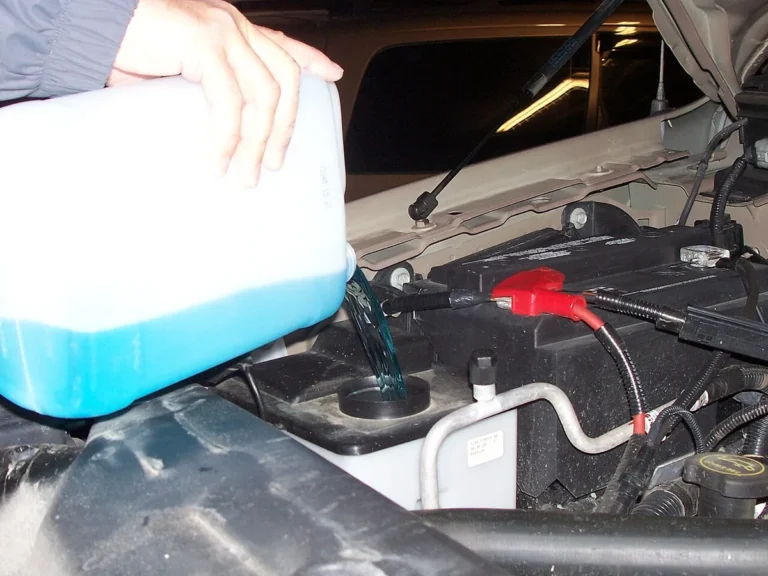
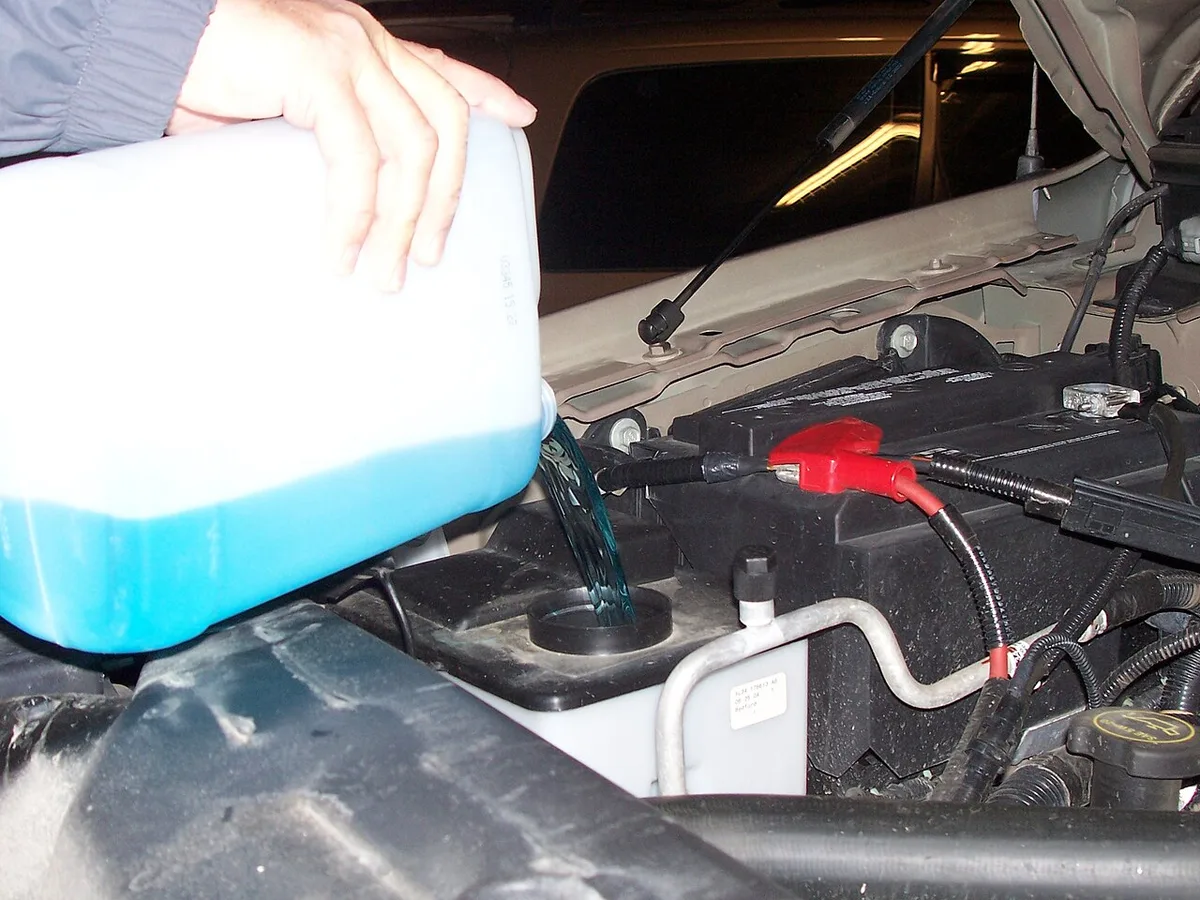
First, park on a level surface and turn off the engine. Open the hood and locate the washer fluid reservoir. Unscrew the cap and set it aside in a clean spot.
Wikimedia Commons / Hamedog at English Wikipedia (CC BY-SA)
Pour the fluid slowly into the reservoir until it reaches the max fill line. Use a funnel if the opening is small to avoid spills. Replace the cap tightly, then test the system by spraying the windshield.
What Type of Washer Fluid Should You Use?
Standard washer fluid works for most conditions. Winter formulas add antifreeze to prevent icing down to -20°F or lower. Summer blends focus on bug and grime removal.
Avoid water entirely in cold climates. It freezes, blocks the system, and can crack the reservoir. For vehicles in dusty areas, a fluid with added detergents helps cut through road film.
Common Mistakes (And How to Avoid Them)
Using water instead of proper fluid is the top error. It lacks cleaning power and freezes in winter. Overfilling the reservoir can cause spills that damage paint or engine components.
Mixing different fluid types can create chemical reactions. Always stick to one brand or formula. Ignoring the max fill line risks leaks and pump damage.
Troubleshooting: Why Isn’t My Washer Fluid Spraying?
A clogged nozzle is the most common culprit. Use a pin to clear the small opening at the nozzle tip. A faulty pump may need replacement if the fluid isn’t reaching the windshield.
Check the reservoir level first. If it’s empty, refill and test again. If the pump hums but no fluid comes out, the line may be disconnected or kinked.
Winter vs. Summer Washer Fluid: What’s the Difference?
Winter fluid contains methanol or ethylene glycol to prevent freezing. It’s rated for specific temperatures, often -20°F or -40°F. Summer fluid skips antifreeze but adds stronger cleaners for bugs and tar.

YouTube / Sweet Project Cars (YouTube thumbnail (fair-use with source credit))
All-season fluid splits the difference. It works in moderate cold but may not handle extreme temperatures. Always match the fluid to your climate.
How Often Should You Refill It?
Most drivers need a top-up every few months. Heavy use in dirty or bug-prone areas may require monthly checks. The reservoir’s translucent sides make it easy to monitor levels.
Refill before long road trips. Running out mid-drive leaves you with no way to clear the windshield. A full reservoir typically lasts 1,000 to 1,500 miles of normal driving.
Pro Tips for Long-Term Maintenance
Check the fluid level every time you fill up with gas. This habit prevents unexpected empty reservoirs. Use a funnel to avoid spills that can damage paint or engine components.
Store washer fluid in a cool, dry place. Extreme heat or cold can degrade its effectiveness. If you notice streaking, switch to a higher-quality fluid with better cleaning agents.
FAQs About Windshield Washer Fluid
Can I use water instead of washer fluid?
No, plain water lacks the cleaning agents and freeze protection of proper washer fluid. It can also promote algae growth in the reservoir.
Why does my washer fluid smell bad?
Old or contaminated fluid can develop an odor. Drain and refill the reservoir with fresh fluid to solve this.
How do I know if my washer pump is bad?
If the fluid doesn’t spray but the reservoir is full, the pump may be faulty. Listen for a humming noise when activating the washer. No noise often means a dead pump.
What’s the best fluid for bug season?
Use a summer formula with strong detergents. These are designed to break down insect residue effectively.
Can I mix different brands of washer fluid?
It’s not recommended. Different formulas may react poorly together. Stick to one type for best results.
How do I unclog a washer nozzle?
Use a fine pin or needle to clear the nozzle opening. Avoid excessive force to prevent damage. If the clog persists, the line may need flushing.