Maine auxiliary lighting and off road light bar highway restrictions can be confusing, but the rules are clear if you know where to look. Many drivers assume off-road lights are fine on public roads as long as they’re not blinding, but Maine has strict limits on color, placement, and usage.
Per Maine’s Title 29-A vehicle equipment statutes, auxiliary lights must comply with SAE J581 standards, and non-compliant setups can lead to fines. Here’s what you need to know to stay legal.
Quick Answer
Maine auxiliary lighting and off road light bar highway restrictions limit colors to white or amber. Red and blue are reserved for emergency vehicles. Lights must be mounted below 54 inches and cannot flash or strobe.
Non-compliant lights must be covered or disabled on public roads.
The Core Rules for Auxiliary Lighting in Maine
Maine follows federal and state guidelines for vehicle lighting, with additional local enforcement. The key regulation is Title 29-A, Chapter 17, which outlines what’s permitted for auxiliary and off-road lighting.
Auxiliary lights are any additional lighting beyond standard headlights, taillights, and turn signals. This includes light bars, fog lights, and driving lights. Off-road lights are designed for non-highway use but often get mounted on daily drivers.
Maine requires all auxiliary lights to meet SAE J581 standards for brightness, beam pattern, and color. Lights that don’t comply are illegal for highway use, even if they’re turned off.
What’s Allowed vs. What’s Not (Colors, Mounting, Beam Patterns)
Not all auxiliary lights are created equal under Maine law. The rules break down into three categories: color, mounting, and beam pattern.
Colors:
- Allowed: White (forward-facing), amber (forward or side-facing)
- Restricted: Red (rear-facing only, except emergency vehicles), blue (emergency vehicles only)
- Prohibited: Green, purple, or any other non-standard color
Mounting:
- Maximum height: 54 inches from the ground to the top of the light
- Maximum width: Cannot extend beyond the vehicle’s widest point (typically the mirrors)
- Forward-facing lights must be below the headlight height
Beam Patterns:
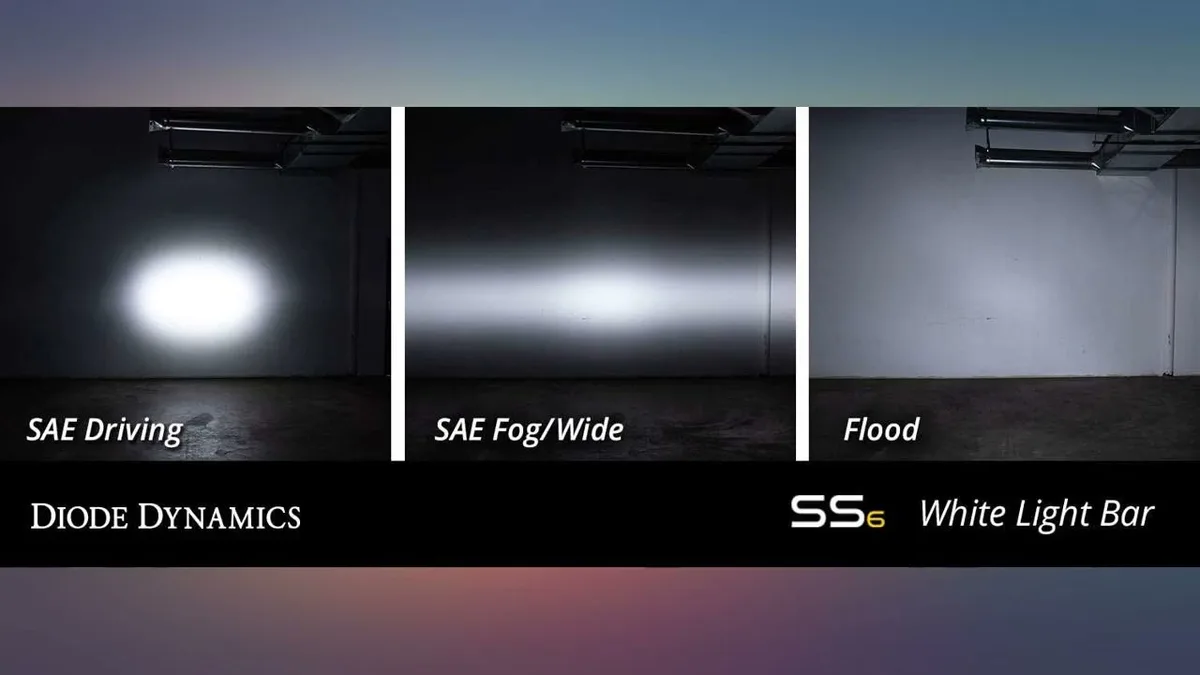
- Spot beams: Narrow, long-range; legal but must not blind oncoming traffic
- Flood beams: Wide, short-range; legal if aimed properly
- Combo beams: Mix of spot and flood; legal if compliant with SAE standards
Non-compliant lights must be covered or disabled when driving on public roads.
Height, Width, and Placement Restrictions You Can’t Ignore
Maine’s height and width restrictions are non-negotiable. Exceeding these limits can result in an immediate citation, even if the lights are off.
Height:
- No auxiliary light may be mounted higher than 54 inches from the ground. This includes roof-mounted light bars on trucks and SUVs.
- Lights mounted above the headlights (e.g., on a roof rack) must still comply with the 54-inch rule.
Width:
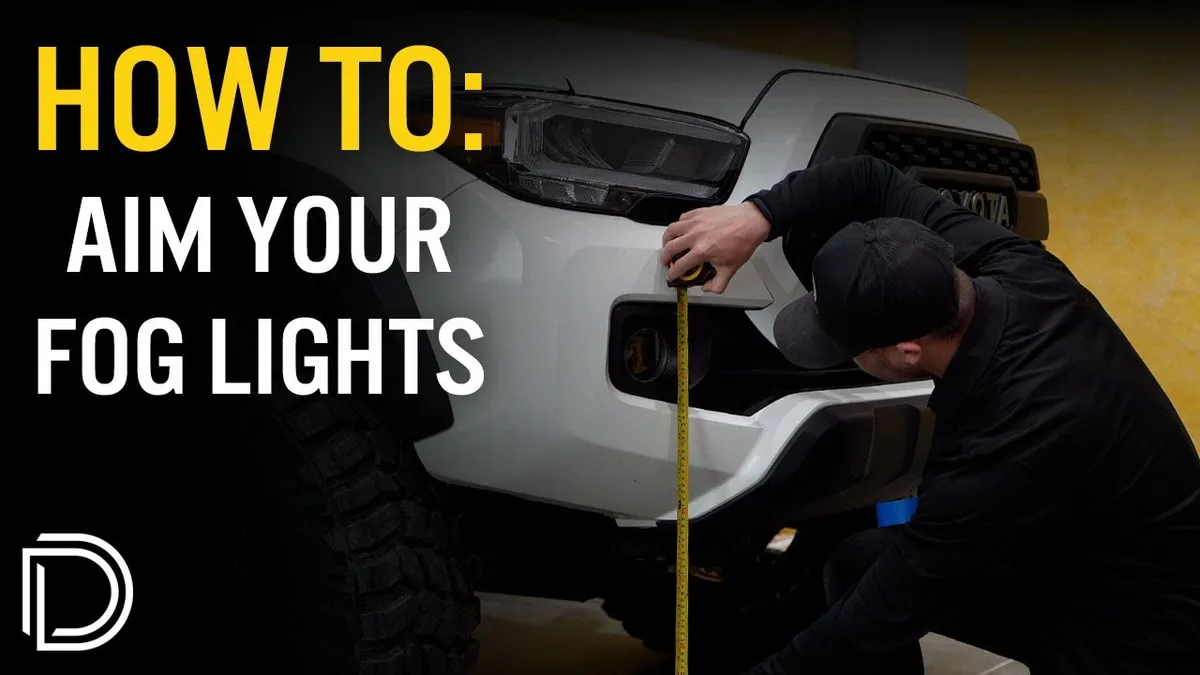
- Lights cannot extend beyond the vehicle’s widest point. For most vehicles, this means staying within the width of the side mirrors.
- Wide light bars (e.g., 50-inch models) often exceed this limit on standard vehicles and are illegal for highway use.
Placement:
- Forward-facing lights must be mounted below the headlights. This prevents blinding oncoming drivers.
- Side-facing lights (e.g., rock lights) must be amber or white and cannot be visible from the front or rear.
Distance from Headlights:
- Auxiliary lights must be at least 12 inches away from the vehicle’s headlights to avoid interference.
DOT and SAE Compliance: How to Check If Your Lights Are Legal
Not all light bars and auxiliary lights are street-legal, even if they’re sold as such. Compliance with DOT and SAE standards is the only way to ensure legality in Maine.
DOT Compliance:
- DOT-compliant lights have a DOT mark or label on the housing or lens. This indicates they meet Federal Motor Vehicle Safety Standard (FMVSS) No. 108.
- DOT-compliant lights are designed for highway use and have specific beam patterns to avoid blinding other drivers.
SAE Compliance:
- SAE J581 is the standard for auxiliary lighting. Lights that meet this standard will have an SAE mark or label.
- SAE J581 covers brightness, beam pattern, and color requirements for auxiliary lights.
How to Verify Compliance:
- Look for a DOT or SAE mark on the light housing or packaging. If it’s not there, the light is not compliant.
- Check the manufacturer’s specifications. Reputable brands provide compliance information for their products.
- Avoid lights labeled “off-road only.” These are not DOT or SAE compliant and are illegal for highway use in Maine.
Common Mistakes That Get Maine Drivers Pulled Over
The most frequent violations involve color and placement. Using red or blue auxiliary lights is an instant ticket, as these colors are reserved for emergency vehicles.
Another common issue is mounting lights too high. A 50-inch light bar on a lifted truck often exceeds the 54-inch height limit. Police measure from the ground to the highest point of the light, not the mounting bracket.
Improper beam alignment causes problems too. Spot beams aimed too high blind oncoming drivers. Flood beams pointed forward can create excessive glare.
Both scenarios lead to citations under Maine’s lighting laws.
Wiring and Installation: Avoiding Electrical (and Legal) Headaches
Poor wiring is a leading cause of auxiliary light failures and legal trouble. Overloading your vehicle’s electrical system can blow fuses or even start fires.
Use a relay for any light bar drawing more than 10 amps. This prevents strain on your switch and wiring harness. Most 20-inch and larger LED light bars require a relay.
Grounding is critical. A bad ground causes flickering or dim lights. Always connect to a clean, bare metal surface on the frame, not the body panel.
Off-Road vs. On-Road Use: How to Stay Compliant in Both
Off-road lights are designed for trails, not highways. The same light bar legal on private property may be illegal on public roads.
Off-Road Use:
- No restrictions on color (except red/blue for emergency vehicles)
- No height or width limits
- Any beam pattern is allowed
On-Road Use:
- Must comply with DOT and SAE standards
- Height limited to 54 inches
- Width cannot exceed vehicle’s widest point
- Only white or amber forward-facing lights
The simplest solution is to use covers. DOT-approved covers turn off-road lights into legal highway lights. Remove them when you hit the trails.
Maine-Specific Enforcement: What Police Look For
Maine State Police and local departments actively enforce lighting laws. They focus on three areas during traffic stops.
First, they check for prohibited colors. Red or blue auxiliary lights are an immediate violation. Amber is allowed, but only in specific locations.
Second, they measure height and width. A tape measure is standard equipment in patrol cars. If your light bar sticks out or sits too high, you’ll get a citation.
Third, they test functionality. Flashing or strobe lights are illegal for civilian use. Police will ask you to turn on your auxiliary lights to verify compliance.
Fines vary by violation but typically range from $50 to $200. Repeat offenses can lead to higher penalties.
Real-World Scenarios: When You’ll Get a Ticket (and When You Won’t)
You’ll get a ticket if your light bar is red and mounted on the roof. Maine law is clear on color restrictions, and roof mounts often exceed height limits.
You won’t get a ticket if your DOT-compliant fog lights are properly mounted below the headlights. These meet all legal requirements for highway use.
You’ll get a ticket if your 30-inch light bar extends beyond your vehicle’s mirrors. Width restrictions are strictly enforced.
You won’t get a ticket if you cover your off-road lights with DOT-approved covers. This simple step makes non-compliant lights legal for highway driving.
You’ll get a ticket if your auxiliary lights are flashing or strobing. Only emergency vehicles can use these patterns.
FAQs About Maine’s Light Bar and Auxiliary Lighting Laws
Are light bars legal in Maine?
Yes, but only if they meet DOT and SAE J581 standards. Non-compliant light bars must be covered or disabled on public roads.
Can I use a 50-inch light bar on the highway in Maine?
Only if it’s DOT-compliant and mounted below 54 inches. Most 50-inch bars exceed width limits on standard vehicles.
What colors are allowed for auxiliary lights in Maine?
White for forward-facing lights and amber for side-facing lights. Red and blue are restricted to emergency vehicles.
Do I need to cover my off-road lights when driving on Maine highways?
Yes. Non-compliant lights must be covered or disabled. DOT-approved covers make off-road lights legal for highway use.
What’s the maximum height for auxiliary lights in Maine?
54 inches from the ground to the top of the light. This applies to all forward-facing auxiliary lights.
Can I get pulled over for my light bar in Maine?
Yes. Police actively enforce lighting laws. Prohibited colors, improper mounting, or non-compliant lights can result in a citation.
Final Checklist: How to Use Off-Road Lights Legally in Maine
Verify your lights are DOT and SAE J581 compliant. Look for the markings on the housing or packaging.
Check the mounting height. Measure from the ground to the top of the light to ensure it’s below 54 inches.
Confirm the width. Lights cannot extend beyond your vehicle’s widest point, typically the mirrors.
Use only white or amber forward-facing lights. Red and blue are illegal for civilian use.
Cover or disable non-compliant lights when driving on public roads. DOT-approved covers are the simplest solution.
Test your beam alignment. Ensure spot and flood beams don’t blind oncoming traffic.
Verify your lights are DOT and SAE J581 compliant. Look for the markings on the housing or packaging.
Check the mounting height. Measure from the ground to the top of the light to ensure it’s below 54 inches.
Confirm the width. Lights cannot extend beyond your vehicle’s widest point, typically the mirrors.
Use only white or amber forward-facing lights. Red and blue are illegal for civilian use.
Cover or disable non-compliant lights when driving on public roads. DOT-approved covers are the simplest solution.
Test your beam alignment. Ensure spot and flood beams don’t blind oncoming traffic.