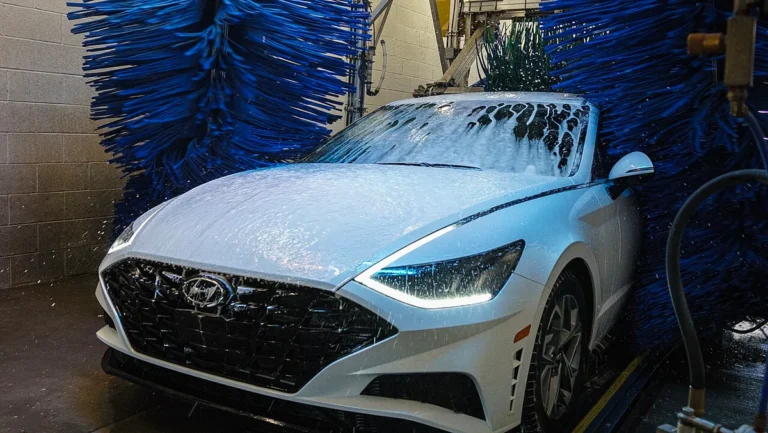
Is brush carwash ok for your car? It depends on your paint, the brush type, and how often you use it. Many drivers assume all automatic washes are equal, but the wrong setup can leave swirl marks or worse.
Manufacturer specs confirm that modern clear coats are thinner than you think, often just 1.5 to 2 mils. That means repeated scrubbing with dirty or stiff brushes can wear it down faster than you’d expect.
Quick Answer
A brush carwash is ok for most daily drivers with standard paint. It’s fast and effective for removing dirt and salt. But it can scratch soft finishes or matte coatings.
Always check brush cleanliness first.
The Quick Answer: It Depends on 3 Things
A brush carwash works fine if your car has a standard glossy clear coat, the brushes are soft and well-maintained, and you’re not using it daily. The risk comes from three variables: your car’s finish, the brush material, and frequency of use.
If your car has a matte finish, ceramic coating, or vinyl wrap, skip the brushes entirely. Even soft foam can leave micro-scratches that dull the surface over time. For older cars with thin or oxidized paint, the abrasion adds up faster.
How Brush Carwashes Actually Work (and Where They Go Wrong)
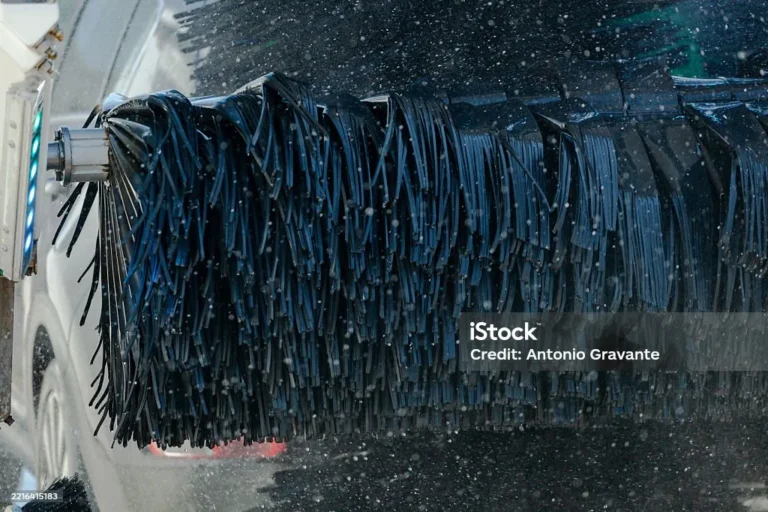
Brush carwashes use rotating foam, microfiber, or nylon bristles to physically scrub dirt off your car. The brushes are paired with high-pressure water and detergent to loosen grime before the scrubbing begins. Most systems also include a pre-soak cycle to soften stubborn debris.
The problem starts when brushes aren’t cleaned between cars. Sand, salt, and old dirt get trapped in the bristles, turning them into sandpaper against your paint. Even soft foam brushes degrade over time, developing rough edges that can cause swirl marks.
Most damage happens in the first 30 seconds, when the brushes make initial contact with a dry or only lightly pre-soaked surface.
The 4 Types of Brush Carwashes You’ll Encounter
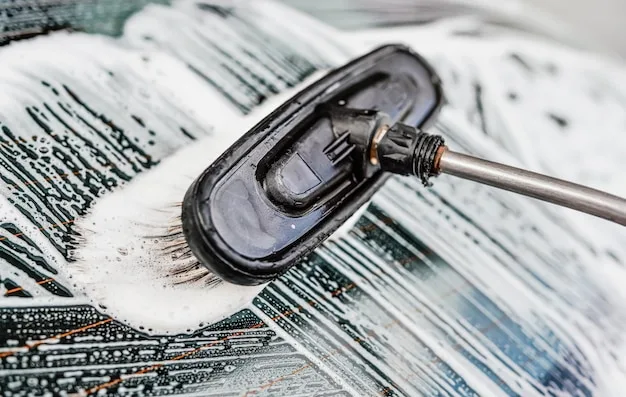
Not all brushes are created equal. The type you encounter changes the risk level for your paint.
- Soft-cloth brushes are the safest option. They use long, flexible strips of fabric that conform to your car’s curves. These are common in higher-end tunnel washes.
- Foam brushes are the most common. They’re gentle when new but can harden or trap debris over time. Most chain carwashes use these.
- Nylon bristle brushes are stiffer and more aggressive. They’re effective for caked-on dirt but riskier for clear coats. Often found in older or budget carwashes.
- Microfiber brushes are the premium choice. They hold less debris and are less abrasive, but they’re rare outside of high-end or detail-focused washes.
If you’re unsure, look for a carwash that advertises “soft-cloth” or “microfiber” brushes. Avoid any place where the brushes look discolored, frayed, or caked with dirt.
When a Brush Carwash Is Safe (and When It’s a Bad Idea)
Best for These Cars and Situations
A brush carwash is a good fit if you drive a daily commuter with a standard glossy finish and no special coatings. It’s also ideal for removing winter salt or road grime quickly. If you’re washing every 2, 4 weeks, the risk of damage is minimal with well-maintained equipment.
Fleet vehicles, taxis, and rental cars often use brush carwashes regularly. Their paint is typically more durable, and the convenience outweighs the minor wear. For these cases, alternating with a touchless wash can extend the paint’s lifespan.
Risky for These Cars and Finishes
Skip the brushes if your car has any of these:
- Matte or satin paint, Even soft brushes can leave visible marks.
- Ceramic coating, The coating can degrade faster with frequent brushing.
- Vinyl wraps, The adhesive can weaken, and the wrap can peel at the edges.
- Older or oxidized paint, Thin or damaged clear coat is more susceptible to scratches.
- Custom or high-end finishes, These often require hand washing to preserve the look.
If you own a luxury or classic car, check the manufacturer’s care guide. Many, like Tesla’s recommendations, advise against brush carwashes for their vehicles.
Brush vs. Touchless vs. Hand Wash: How They Compare
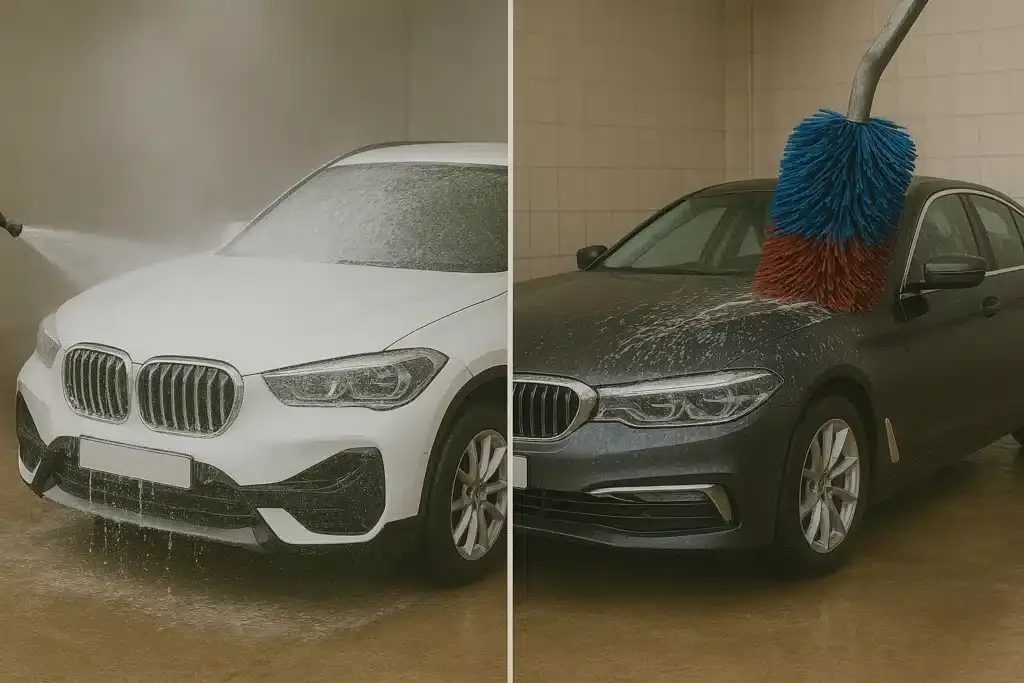
Each washing method has trade-offs in cleaning power, safety, and cost.
| Method | Cleaning Power | Paint Safety | Cost per Wash | Time Required | Best For |
|---|---|---|---|---|---|
| Brush | High | Moderate | $8–$15 | 5–15 min | Daily drivers, quick cleans |
| Touchless | Moderate | High | $10–$20 | 10–20 min | Delicate finishes, frequent washes |
| Hand Wash | Very High | Very High | $20–$50+ | 30–60 min | Luxury cars, detailing |
Brush carwashes win on speed and cost but lose on safety for sensitive finishes. Touchless washes use high-pressure water and chemicals to clean without physical contact, making them safer for paint but less effective for stubborn dirt. Hand washing is the gold standard for safety and thoroughness but requires time and effort.
The Hidden Damage: What Brush Carwashes Can Do to Your Paint
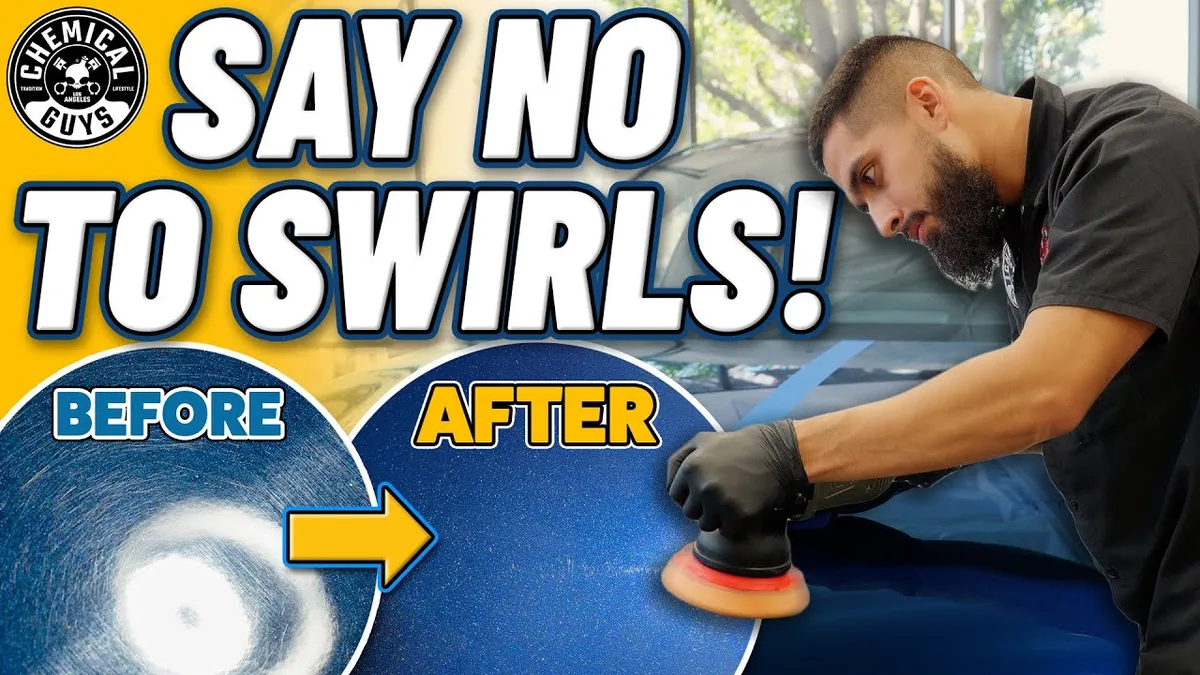
Swirl marks are the most common damage from brush carwashes. These fine, circular scratches scatter light, making your paint look dull even when clean. They’re caused by dirty brushes dragging abrasive particles across the clear coat.
Deeper scratches can expose the base coat or even the primer. This happens when brushes are worn out or the carwash hasn’t replaced them in a while. Once the clear coat is compromised, the paint is more vulnerable to UV damage and rust.
How to Use a Brush Carwash Without Ruining Your Car
Pre-Wash Checklist
Rinse your car with a hose or at a self-serve bay first. This removes loose dirt that could get ground into the paint by the brushes. A quick pre-rinse takes two minutes and can prevent most swirl marks.
Check the brushes before entering. If they look dirty, frayed, or caked with grime, drive to another carwash. Well-maintained brushes should be clean and flexible.
Rinse your car with a hose or at a self-serve bay first. This removes loose dirt that could get ground into the paint by the brushes. A quick pre-rinse takes two minutes and can prevent most swirl marks.
Check the brushes before entering. If they look dirty, frayed, or caked with grime, drive to another carwash. Well-maintained brushes should be clean and flexible.
During the Wash: What to Watch For
Avoid carwashes that use the same brushes for wheels and body. Wheel cleaners often contain harsh chemicals and abrasives that can contaminate the brushes. If the brushes touch your wheels first, they’ll transfer that grime to your paint.
Watch the brush pressure. If they’re pressing too hard or moving too fast, they’re more likely to cause damage. A good carwash will have adjustable pressure for different vehicle sizes.
Post-Wash Care to Prevent Damage
Dry your car immediately after the wash. Water spots can etch into the paint if left to dry in the sun. Use a clean microfiber towel or the carwash’s air blowers if they’re available.
Apply a wax or sealant every 3, 4 months. This adds a protective layer that can absorb some of the abrasion from brush carwashes. Synthetic sealants last longer than natural carnauba wax but may not give the same deep shine.
How Often Should You Really Use a Brush Carwash?
For most drivers, once every two weeks is a safe frequency. This keeps dirt from building up without over-exposing your paint to the brushes. If you drive in dusty or salty conditions, you might need to wash more often.
If your car has a delicate finish, limit brush carwashes to once a month. Use touchless or hand washing for the other cleans. This balance keeps your car looking good without risking damage.
The Cost Breakdown: Brush vs. Alternatives
Brush carwashes are the most affordable option at $8, $15 per wash. They’re widely available and quick, making them a popular choice for regular maintenance. Most offer unlimited wash clubs for $20, $40 per month if you’re a frequent user.
Touchless carwashes cost a bit more at $10, $20 per wash. They’re safer for your paint but may not clean as thoroughly, especially for caked-on dirt. Hand washing is the most expensive at $20, $50+, but it’s the safest and most thorough method.
Common Mistakes That Lead to Swirls and Scratches
Using a brush carwash with a dirty car is the top mistake. Dirt and grime act like sandpaper when the brushes start scrubbing. Always pre-rinse to remove the worst of it.
Ignoring brush maintenance is another common error. If the brushes look worn or dirty, they’re not safe for your paint. A well-run carwash will clean and replace brushes regularly.
Skipping post-wash care can also cause problems. Water spots and leftover detergent can damage your paint over time. Always dry your car and consider a quick wax or sealant to protect the finish.
What the Experts (and Car Manufacturers) Say
Car manufacturers often weigh in on this debate. Tesla explicitly warns against brush carwashes in their owner’s manual, citing potential damage to the paint and sensors. BMW and Mercedes-Benz also recommend hand washing or touchless methods for their higher-end models.
The International Carwash Association notes that modern brush materials are designed to minimize damage. However, they emphasize that proper maintenance of the equipment is key. A poorly maintained carwash can do more harm than good, regardless of the brush type.
Final Verdict: Should You Use a Brush Carwash?
For most drivers with standard paint, a brush carwash is a practical choice. It’s affordable, quick, and effective for regular cleaning. Just stick to well-maintained facilities and follow the pre- and post-wash steps to minimize risk.
If your car has a delicate finish, a ceramic coating, or you’re particularly protective of its appearance, avoid brush carwashes. Opt for touchless or hand washing instead. The extra cost and time are worth preserving your paint’s integrity.
Frequently Asked Questions
Can a brush carwash damage my car’s clear coat?
Yes, over time, dirty or worn brushes can scratch the clear coat. This is especially true if the carwash doesn’t maintain its equipment properly. Regular waxing can help protect the clear coat from minor abrasions.
How do I know if a carwash’s brushes are safe?
Look for clean, flexible brushes without visible dirt or wear. Soft-cloth or microfiber brushes are the safest options. If the brushes look discolored or frayed, it’s best to avoid that carwash.
Is a touchless carwash better than a brush carwash?
Touchless carwashes are safer for your paint but may not clean as thoroughly. They’re ideal for delicate finishes or if you’re concerned about swirl marks. However, they can struggle with stubborn dirt like bug splatter or tar.
How often should I wax my car if I use a brush carwash?
Apply wax or sealant every 3, 4 months if you use a brush carwash regularly. This adds a protective layer that can absorb some of the abrasion. Synthetic sealants last longer than natural wax but may not provide the same shine.
Can I use a brush carwash on a matte finish?
No, brush carwashes are not recommended for matte finishes. Even soft brushes can leave visible marks or dull the surface. Always use touchless or hand washing for matte paint.