ByMax Lee
Missouri Trailer Towing Safety Chain & Lighting Rules
YouTube / GarageMahal (YouTube thumbnail (fair-use with source credit))
Missouri trailer towing safety chain and lighting equipment requirements can be confusing, but getting them wrong risks fines, accidents, or even a detached trailer on the highway. Whether you're hauling a boat, a camper, or a utility trailer, Missouri law sets clear rules for safety chains and lighting to keep everyone safe.
Per Missouri Department of Revenue regulations, all trailers must have safety chains rated for the trailer's gross vehicle weight rating (GVWR) and properly crossed under the coupler. As of 2026, lighting requirements also vary by trailer size, with larger trailers needing additional clearance and marker lights.
Quick Answer
Missouri requires safety chains rated for your trailer's GVWR, crossed under the coupler. All trailers need tail lights, brake lights, and turn signals. Trailers over 80 inches wide require clearance lights.
Over 30 feet long, side markers are mandatory.
How Missouri Regulates Trailer Safety Chains
Missouri law mandates that every trailer must have at least one safety chain, but most setups use two for redundancy. The chains must be attached to the trailer frame and the tow vehicle, not just the hitch, to prevent the trailer from separating if the coupler fails.
YouTube / etrailer (YouTube thumbnail (fair-use with source credit))
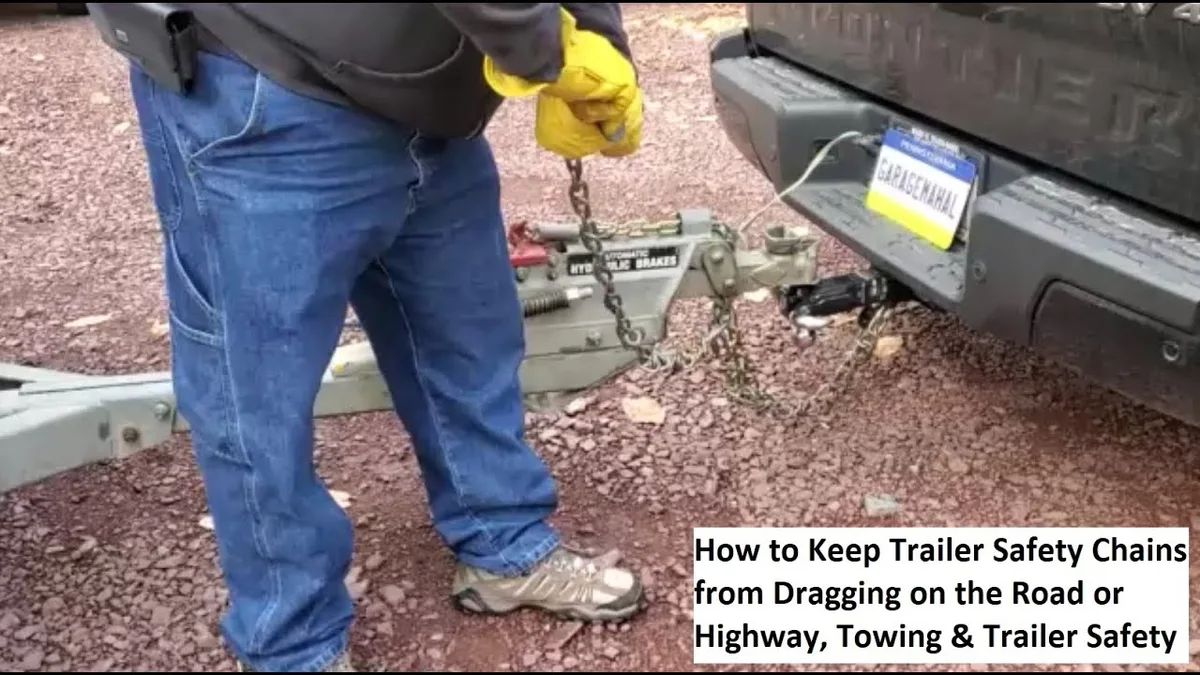
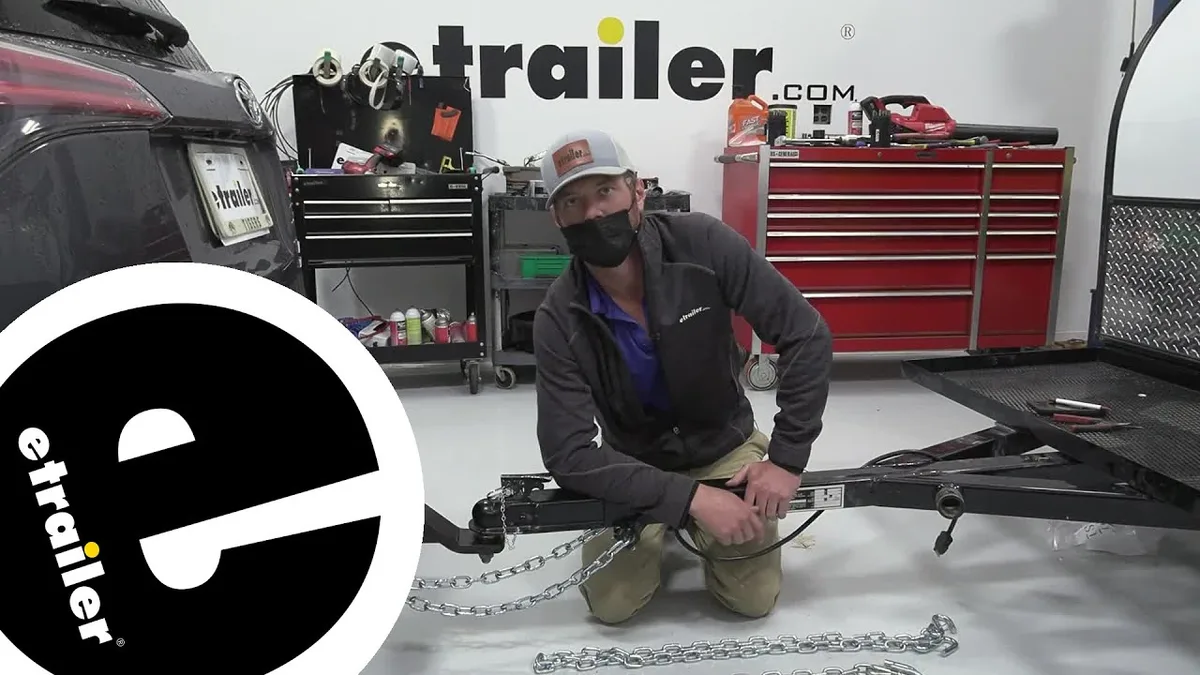
The chains must be crossed in an X-pattern under the coupler. This ensures that if the trailer disconnects, the chains cradle the coupler and prevent it from dragging on the road. The chains should have minimal slack.
They need enough play for turns but not so much that they drag on the pavement.
Manufacturer specs confirm that safety chains should meet or exceed the trailer's GVWR. A trailer with a 5,000-pound GVWR needs chains rated for at least 5,000 pounds. Using under-rated chains is a common cause of failures during inspections.
Missouri also requires that the chains be attached to the tow vehicle's frame, not the hitch itself. This prevents the hitch from being ripped off in a detachment scenario. Inspectors often check this during roadside stops.
If you need to understand how other states handle similar rules, checking Michigan trailer towing safety chain lighting rules gives useful context.
Missouri Lighting & Electrical Requirements by Trailer Size
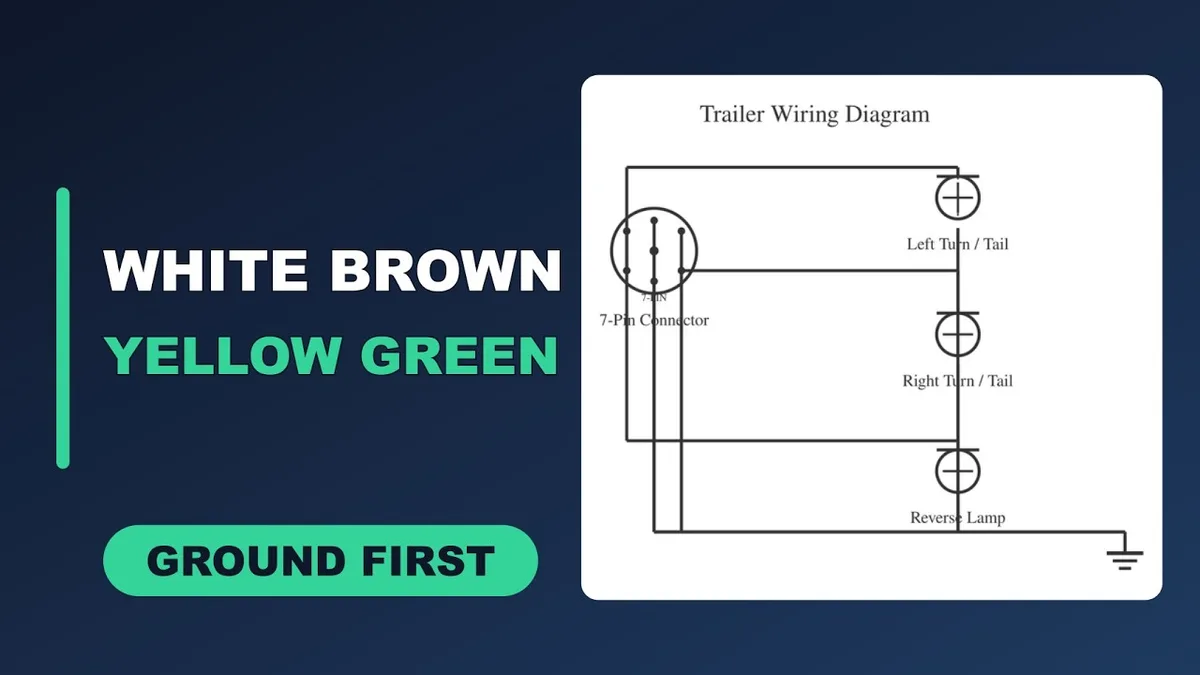
Every trailer in Missouri must have working tail lights, brake lights, and turn signals. These are non-negotiable, regardless of size. Reflectors are also required.
Red reflectors go on the rear, and amber reflectors go on the sides.
YouTube / CircuitDiagramMaker (YouTube thumbnail (fair-use with source credit))
For trailers over 80 inches wide, clearance lights are mandatory. These are typically amber on the front and red on the rear, mounted at the highest point of the trailer. Trailers over 30 feet long must also have side marker lights and reflectors spaced at intervals not exceeding 10 feet.
Here's a quick breakdown of lighting requirements by trailer size:
| Trailer Width | Trailer Length | Required Lights |
|---|---|---|
| Any | Any | Tail lights, brake lights, turn signals |
| Over 80" | Any | + Clearance lights (front amber, rear red) |
| Any | Over 30' | + Side marker lights and reflectors |
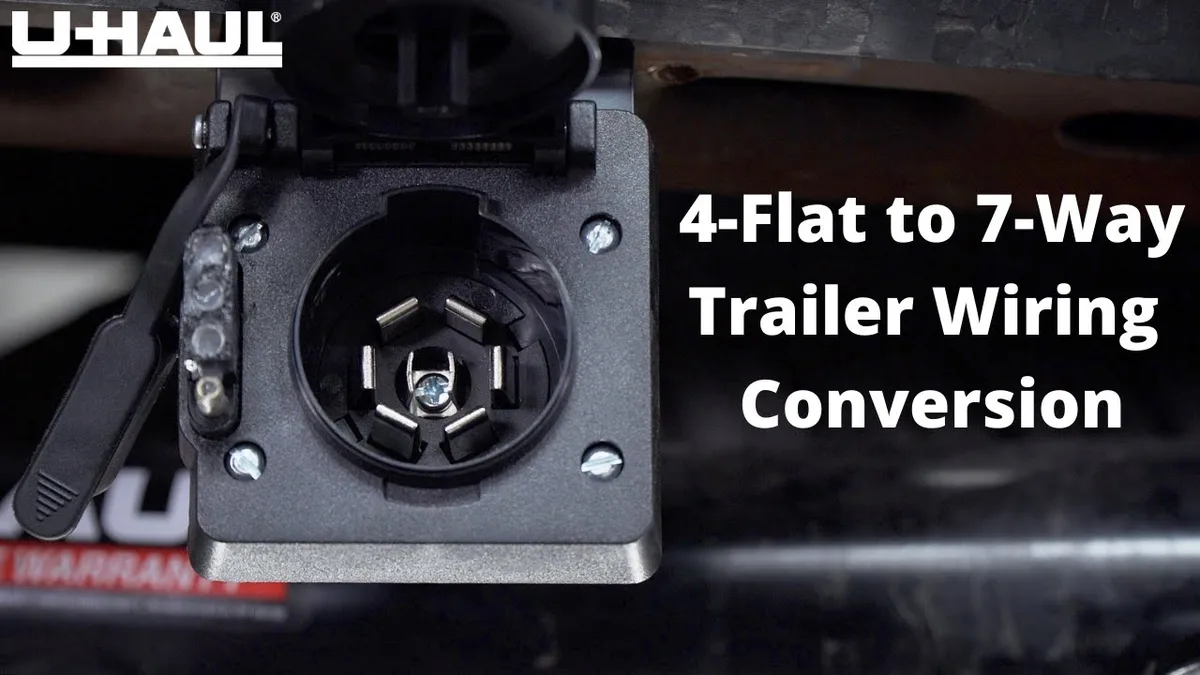
The wiring harness must match the tow vehicle's connector. Most passenger vehicles use a 4-way flat connector for basic lighting. Larger trailers with brakes often require a 7-way connector instead.
The Legal Stakes: What Happens If You're Not Compliant
Missouri treats towing violations seriously. If an officer pulls you over and finds non-compliant safety chains or lighting, you'll likely receive a fix-it ticket. This means you'll need to correct the issue and provide proof to the court to avoid fines.
In some cases, especially if the violation is deemed a safety hazard, you could face immediate fines. Missing or non-functional brake lights can result in a $50 to $100 fine. More severe violations like improperly secured loads or detached trailers can lead to higher penalties and points on your license.
Beyond legal consequences, non-compliance increases the risk of accidents. A detached trailer can cause serious damage or injury. You could be held liable for damages if your negligence caused the incident.
Properly maintained chains and lighting aren't just legal requirements. They're critical for safety on Missouri roads.
Step-by-Step: Inspecting Your Trailer Before Every Trip
A pre-trip inspection takes just a few minutes but can prevent major issues. Start with the safety chains. Check that they're properly crossed under the coupler and have minimal slack.
Ensure they're securely attached to both the trailer frame and the tow vehicle's frame.
YouTube / Trucker Steve , CDL Instructor (YouTube thumbnail (fair-use with source credit))
Next, test all lights. Have a partner verify that the tail lights, brake lights, and turn signals are working. If you're towing alone, use a reflective surface or a mirror to check.
Don't forget to test the license plate light if your trailer has one.
Inspect the coupler and hitch. Make sure the coupler is locked onto the hitch ball and that the latch is secure. If your trailer has a breakaway brake system, ensure the cable is properly attached and not tangled.
Finally, check the tires and load. Ensure the trailer tires are inflated to the manufacturer's recommended PSI. Uneven loads can cause swaying, which is dangerous at highway speeds.
Remember that staying aware of Maryland move over law rules for emergency vehicles helps you understand broader towing awareness principles.
Common Towing Mistakes That Get Drivers Ticketed in Missouri
One of the most common mistakes is using safety chains that are too weak for the trailer's GVWR. If the chains can't handle the weight, they won't prevent the trailer from detaching in an emergency. Always match the chain rating to your trailer's GVWR.
YouTube / Link Lock (YouTube thumbnail (fair-use with source credit))
Another frequent issue is improper chain attachment. Chains should be crossed under the coupler and attached to the tow vehicle's frame, not the hitch. Attaching them to the hitch can cause the hitch to fail if the trailer detaches.
Lighting problems are also a top reason for tickets. Burned-out bulbs, loose connections, or incorrect wiring can all lead to non-functional lights. Regularly check your trailer's lighting system, especially before long trips.
Many drivers also overlook the need for clearance and marker lights on larger trailers. If your trailer is over 80 inches wide or 30 feet long, these lights are mandatory. Missing them is an easy way to get pulled over.
Finally, some drivers forget to secure the load properly. Even if your chains and lights are perfect, an unsecured load can shift and cause instability. Always double-check that your cargo is tied down and balanced.
Using the right equipment, like a quality hose filter for car washing, shows attention to detail that extends to trailer maintenance too.
Choosing the Right Equipment: Chains, Lights, and Connectors
Safety chains should be made of Grade 70 or higher steel to meet Missouri's strength requirements. Avoid cable-style chains, as they can fray and fail under load. The chains must be long enough to allow turns but short enough to prevent dragging.
YouTube / U-Haul Trailer Hitches And Towing (YouTube thumbnail (fair-use with source credit))
For lighting, LED bulbs are the most durable and energy-efficient choice. They last longer than incandescent bulbs and are less prone to vibration damage. Some older vehicles may need a resistor to prevent hyper-flashing with LED turn signals.
The wiring connector is just as important as the lights themselves. A 4-way flat connector handles basic lighting for small trailers. For trailers with brakes or auxiliary power, a 7-way connector is standard.
Here's a quick comparison:
| Connector Type | Pins | Best For | Includes |
|---|---|---|---|
| 4-way flat | 4 | Small trailers, no brakes | Tail, brake, turn signals, ground |
| 5-way flat | 5 | Trailers with basic brakes | 4-way + brake controller |
| 7-way RV | 7 | Large trailers, RVs, brakes | 4-way + brakes, auxiliary power, backup lights |
If you're unsure which connector your tow vehicle has, check the owner's manual or inspect the rear wiring harness. Mismatched connectors are a common cause of lighting failures. Cleaning electrical connections regularly with products like pH-neutral foam cannon soap for streak-free results helps maintain reliable lighting performance.
When to Call a Professional vs. DIY Setup
If you're comfortable with basic mechanical tasks, you can handle most trailer wiring and chain installations yourself. Replacing a burned-out bulb or attaching safety chains is straightforward with the right tools. A multimeter and basic wiring knowledge go a long way.
However, if your trailer has a complex brake system or requires a 7-way connector, professional installation may be worth the cost. Wiring mistakes can cause shorts, blown fuses, or even fires. A certified technician can ensure everything is connected correctly and meets Missouri's standards.
For electrical issues, if you're not familiar with multimeter testing or wiring diagrams, it's safer to consult an expert. Faulty wiring isn't just a compliance issue. It's a safety hazard that affects everyone on the road.
If you've modified your trailer or tow vehicle, a professional inspection is a smart move. They can verify that your setup meets weight ratings and legal requirements. Consider reviewing ideal foam cannon soap mixing ratios for thick lasting foam as another example of following manufacturer specifications precisely.
FAQs
Do I need safety chains if my trailer has a breakaway brake?
Yes. Missouri requires safety chains on all trailers, regardless of breakaway brake systems. The chains act as a secondary backup in case both the coupler and brake system fail.
What's the minimum breaking strength for safety chains?
The chains must have a breaking strength equal to or greater than your trailer's GVWR. A 7,000-pound trailer needs chains rated for at least 7,000 pounds.
Are LED trailer lights legal in Missouri?
Yes, as long as they meet FMVSS No. 108 standards for brightness and visibility. They must also be properly wired and functional.
How often should I inspect my trailer's lighting and chains?
Check them before every trip. A quick pre-trip inspection takes minutes and can prevent costly violations or accidents.
Can I use a 4-way connector for a trailer with electric brakes?
No. Electric brakes require at least a 5-way or 7-way connector to power the brake controller. A 4-way connector won't provide the necessary wiring.
What's the fine for non-compliant trailer lighting in Missouri?
Fines typically range from $50 to $100 for missing or non-functional lights. You may also receive a fix-it ticket requiring proof of correction.